Category Archives: Coaching
There are no magic beans in softball
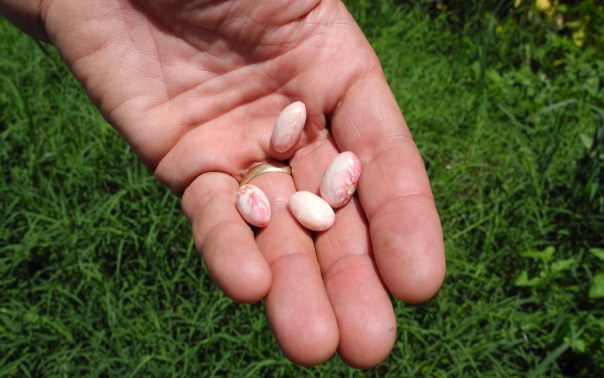
Talk to fastpitch softball coaches, parents, and players and the one thing you’ll find in common is everyone is looking for that one magic solution that will instantly up their games.
Pitchers (and their parents) are always hoping to find that one magical drill or method of teaching that will instantly take them from the low 50 mph range to 60+ mph.
Hitters (and their parents) are looking for that magical drill that will help them go from striking out a lot and hitting weak grounders to driving the ball over the fence. Failing that, they hope a new bat will do the trick.
Fielders, baserunners, everyone at every stage hopes they can discover that secret no one else knows and instantly claim a tremendous advantage over the competition. Instructors know this too, and either get frustrated by it or take advantage of it by giving their instruction method a cool-sounding name and then marketing it as though their version of sound mechanics is different from everyone else’s.
The reality is there are no magic beans in fastpitch softball – no secret drills or approaches no one else knows about. What there is is what many players and parents view as the last resort – hard work.
That’s not just my opinion. I’ve spoken with some of the top instructors in the country, people with tremendous resumes and a track record of developing quality players. Every one of them says the same thing.
I once had a chance to ask a well-known and well-respected pitching coach if he knew of any specific drill or technique to get a pitcher over 60 mph. He said, “I wish I did.” He then went on to say there are things you can do to help, but there are no guarantees.
In my experience, becoming an elite-level softball player requires a few things, some of which you can control and some of which you can’t:
- It definitely helps to have athletic DNA, the kind that develops fast twitch muscles in bulk. For that you have to choose your parents well. Great DNA makes up for a lot of other ills, by the way.
- For most, it also takes sound mechanics. That requires great instruction and a lot of long, boring hours developing those mechanics. Yes, there are players with terrible mechanics who succeed anyway, but they are not the norm. See point #1. For the rest, great mechanics will help make up for a lack of natural athletic ability. For the skill you want to develop, learn what great mechanics are by watching what great players do and learning as much as you can from credible sources, then seek out an instructor who teaches it.
- You need to have the mental game to keep working and trying to improve, even in the face of failure. Think of that old joke about the person who invented 6UP soda. Ooooh, so close! Being able to push through disappointment, or to keep cool and focused when every fiber of your being wants to panic or give up, is a huge asset. Not just in softball but in anything you pursue.
- You need to be in great softball shape. I put this at the end because I find it to be more like spice in the dish than the dish itself. If you have poor mechanics or a weak mental game it’s probably not going to matter if you’re in great shape or not. Lots of players have looked good getting off the bus in their shorts, only to fail repeatedly when they put on their uniforms. But if you’re already well on your way toward being mechanically and mentally sound, being in great softball shape is often a huge difference-maker. It can make up a lot for the lack of #1.
There’s no question it would be nice if there actually was some magic drill or method that could instantly make you better, or guarantee you’ll be successful without all that boring practice time. As I always tell my students, if I could just lay may hand on their head and say, “Go forth and play! You are healed” I’d be charging $1,000 per lesson and there would be a mile-long line to get some of that. Because that’s the dream.
But there isn’t – and don’t let anyone tell you there is. If you want to become the player you’re meant to be, don’t fall for fancy marketing lines and promises of instant or guaranteed greatness. Because no matter what you learn and who teaches you, the bulk of your success – like 90% of it – depends not on them but on you.
So while there are no magic beans that will make you an overnight success, there is a path to it. And the beauty is you can control a lot of that path. You just have to be willing to put in the effort.
This image was originally posted to Flickr by Sustainable sanitation at http://flickr.com/photos/23116228@N07/6908811713. It was reviewed on by the FlickreviewR robot and was confirmed to be licensed under the terms of the cc-by-2.0.
What fastpitch softball coaches can learn from HGTV shows

As a fastpitch softball coach , when you’re looking for ways to improve your players, it’s likely you think of DVDs, YouTube videos, books, and sites like the Discuss Fastpitch Forum as your go-to resources. Yet there is another, kind of out-of-the-box option that might help you from a philosophical point of view: HGTV.
No, they haven’t suddenly started running fastpitch softball content there, although that would be nice. But what they do a lot of is shows such as Fixer Upper and Flip or Flop Atlanta that take an older, cramped-looking, out-of-date house and turn it into an amazing showplace home with giant, airy rooms, lots of sunlight and picture-perfect furnishings.
Of course any of you with kids (or who are players who are part of a family) know that about 10 minutes after the cameras leave the new owners are going to crap it up with all kinds of stuff that doesn’t fit the decorating theme laying everywhere. But for those few brief, shining moments it’s practically a palace.
What’s fun about those shows is seeing how they do it. Sometimes the house they finally pick (usually from two or three options) is just old and outdated. It has gold or avocado appliances, yellowing linoleum floors, a bunch of small rooms, a tiny kitchen, etc. Every now and then, though, they get the big challenge – a house where there is actual garbage (or worse) in every room, the siding is missing, the shingles are coming off, the ceiling is falling apart, and there are holes in the walls.
Whatever the current state of the house, that’s what they work with. Just like a fastpitch softball coach getting a player.
The first step, of course, is evaluating what needs to be done to get the house to its ultimate state. Sometimes that just means some tweaks here or there, such as tearing out a wall or two, adding a fresh coat of paint, and updating cabinets and fixtures in the kitchen and bathrooms. Of course, even their “tweaks” cost tens of thousands of dollars.
Other times, however, the only solution is to tear the house down to the studs and foundation, inside and out, and start over.
That’s what fastpitch softball coaches face too. Sometimes a player comes in with a pretty good swing, or decent throwing technique, or a good pitching motion, etc. and just needs a few tweaks to up their game.
Other times, it doesn’t take long to see that a swing looks like an unmade bed (unorganized, no particular sequence or purpose to the movements). Or the throwing technique makes you wonder how they get the ball anywhere at all. Or the pitching motion was learned at the bowling alley.
In cases like that, it’s not time to be shy. You just have to tear it down to the studs and start over.
Of course, just like on HGTV you first have to get buy-in from the owner – in this case from the player. On the house programs, they draw up plans on the computer and show the owners what they plan to do. As a coach you can also use a computer to show examples of high-level players to demonstrate the swing/technique/motion you’re going for.
But you need to go beyond that as well. You need to paint the picture for them in their minds about what their softball life will be like once they make the fix. You also need to explain it’s not something they can master in a week or two.
The HGTV shows are compressed to fit into an hour, but really they’re like a Rocky training montage. A lot of people put in a lot of work to make the changes happen.
In the case of fastpitch softball players, only one person can really put in the work – the player. Can’t subcontract out drills or practice and expect any improvements to be made. Which is another reason the player needs to be on-board.
The climax of the HGTV shows is the Big Reveal – the point where they walk the owners through their new, way better than before home. Many happy tears are shed and high fives exchanged.
The Big Reveal for players is when they finally get back on the field, and suddenly things that were difficult or nerve-wracking become easy and relaxed. Hitters go to the plate with confidence, knowing they can take the pitcher deep. Fielders can make quick, sharp plays and throws because they’re not worried about whether they’ll catch it or where the ball will go. Pitchers can focus on dominating hitters rather than wondering where the ball will go or if it will do what it’s supposed to do.
Take your cue from HGTV. Figure out what your players need to make them showplace-worthy (or showcase-worthy I suppose) and put your plan together from there. If you do have to take one down to the studs, be kind. It will be worth it in the end.
Photo credit: chumlee10 via Foter.com / CC BY-SA
The challenge of fall ball
 Right now we’re in the midst of the fall fastpitch softball season – aka “fall ball.” Whether you’re a 10U player getting her first taste of travel ball or a college coach hoping to get an idea of what her team needs to work on in the off-season, it’s always an interesting time.
This is a big change from when I first started coaching travel ball. Back then, tryouts didn’t happen in August for teams in my area; most teams did tryouts in the spring. Eventually that backed up to December, and then to the current system where some programs are running their tryouts while others are at Nationals.
Because of that, back in the day fall ball didn’t really exist. When we did start running tryouts in August it was still tough to find games in the fall.
That’s not the case anymore. There are individual games, round robins, and tournaments (real as well as showcase) galore. As they say, you can hardly swing a dead cat without coming across a game somewhere. It’s a bit challenging for older teams with players doing fall high school sports, but somehow people figure it out.
The abundance of fall ball creates several new challenges for everyone. Here’s a look at a couple.
Win or learn?
One of the most obvious challenges is coaches deciding whether they want to focus on winning games or learning what their players – especially their new ones – can do.
You already know what you know. Do you stay with what you believe gives you the best chance of winning the game? Or do you try to learn more about players you don’t know as well, even if it costs you the win?
If you decide to learn, that might mean putting weaker hitters at the top of the lineup to get them more at bats. It might mean playing a girl at shortstop who has potential but hasn’t acquired the skills and game experience yet to really stand out. It might mean putting up with crazy parents who want to know what the (heck) you were thinking.
If you decide to win, you may not get a chance to discover a hidden gem who could make a huge contribution in the future. You may reinforce a lack of confidence in a player who actually has more ability than she’s been showing. It might mean putting up with crazy parents who want to know what the (heck) you were thinking.
Showcase tournaments add another level of complication. The idea is to show college coaches what your players can do. That’s why most don’t have a champion. It’s more like pool play all the time. You want your team to look good to attract coaches, but you also want to make sure all your players get seen.
If one of your pitchers is struggling, do you leave her in and let coaches see how she battles? Or do you get her out so coaches can see how the rest of your team does?
There are no right or wrong answers. It’s simply a matter of knowing what your goals are and sticking to them.
Stay in or get out of your comfort zone?
Players have challenges as well. One of the biggest is whether to stretch your game and take chances when you play or stick with what you already know works?
If you’re new to a team, such as a freshman in college or high school or a new travel ball player, you want to show you can belong and contribute. But you may also be nervous about looking bad if you fail.
The safe decision is to stay within what you already know you can do. But if you do that, you’re not growing as a player. Fall is often a good time to take those chances because people care a lot less about who wins those games. If you make an error, or struggle a bit at the plate as you work on developing more power, the consequences will be less than if it happens in the spring.
Personally, I would recommend making the stretch. Try taking that extra base, or working that new pitch into your arsenal, or sacrificing some accuracy to drive up your speed, or being more aggressive on defense, or unleashing your new swing. It’s your best chance to give it a try and see how it plays in a game. You can also be comforted by the fact you’ll find out what to work on during the long offseason.
Take advantage of opportunities
Fall ball offers all sorts of opportunities. Rather than getting stuck in the same old same old, approach it for what it is. Discover what you want to discover, try the new things you want to try (and are comfortable trying), and most of all, have fun doing it! It’ll pay off in the long term.
Do you really know who’s coaching your child?

Normally I like to keep things focused strictly on topics that relate to the game itself. But this is a subject that really should be of concern to any parent whose kids – male or female – are participating in activities where they have long periods of exposure to adults.
It was sparked by this article, sent to me by my friend Tim Boivin. The article is about the revenge a dad in Pennsylvania was able to extract after one of his daughter’s coaches not only touched her inappropriately (smacked her on the behind, even after being asked to stop) but then tried to smear the dad’s name in the local town. He did it by using his long standing with the league, and the fact that he’d lived there in that town his whole life, to get the dad looked at as an outsider. It’s a pretty good read, and a good lesson about being careful who you mess with, no matter how much power you think you have.
But it also brings up a bigger point. During tryout season, the focus is on making a team. Sometimes it’s the “right” team, and sometimes it’s just any team. But after the stress of tryouts are over and you’re feeling the relief, there’s another question that needs to be asked: how much do I really know about the people who will be coaching my child?
The usual reaction when you find out something terrible about a coach (or other authority figure) is “I had no idea.” Of course you didn’t. Someone who acts like a predator, or a person who will dole out inappropriate physical abuse on players, doesn’t walk around wearing a t-shirt that advertises the fact.
He/she also doesn’t act that way in front of the parents. If he/she did, he/she wouldn’t get access to kids and thus be able to satisfy whatever needs or urges he/she has. Just like a con man trying to convince people to give them money, coaches who want to do terrible things to kids must appear to be completely trustworthy.
Many of them put in the effort to learn the game, too, further helping them hide in plain sight. I remember a guy about 15 years ago who used to contribute regularly to the old eTeamz softball discussion board. His signature phrase was that he would always talk about teaching the FUNdamentals.
The message, of course, being that coaches shouldn’t take themselves too seriously, and remember that it’s a game and games should be fun. Just the kind of person you want coaching your child, right?
Well, one day he just sort of disappeared from the board. Eventually it came out that this guy was arrested, tried, and convicted of several counts of having sexual contact with minors. Now the only FUNdamentals he needs to worry about is watching his back in prison, as many prisoners don’t take too kindly to child molesters.
That’s an extreme case, but it illustrates a point. Not all concerns are around sexual predators, however. For example, would you want a known felon with a history of violence toward women coaching your daughter? Probably not. Or what about someone who had punched a player (or a parent, or an umpire, or an opposing coach) in a fit of anger?
These are all legitimate concerns. Your daughter will be spending a lot of time with the coaching staff in the coming year, especially now that fastpitch softball tends to be a 12-month sport. How can you find out if any of the coaches (not just the head coach) have any skeletons in the closet you should know about?
One way is to ask if the organization does background checks with the state police on everyone who will play a coaching role or be on the bench with the team. If it does, don’t just take their word for it that everything is ok. Ask to the see the reports.
If there’s nothing to hide, they should be more than happy to do it. If they are reluctant to share the information for “privacy” reasons, that could be a red flag. No matter.
You don’t have to be an organization to request a background check on someone. Anyone can do it. If you have any concerns, request it yourself. The cost for a state check is generally $10-$20, while the cost for a nationwide check is typically $25-$45. When you think about what you’re paying to play, it’s worth a few dollars more to gain peace of mind if you have any concerns.
In most cases, the background check is going to turn up clean since it only covers criminal known criminal acts, and despite what the headlines may lead you to believe the people who commit them and get into coaching are rare. Still, there are some out there.
If the organization runs background checks and still allows someone who shouldn’t be there to coach, you might want to re-thing your decision to play for that organization. Clearly they don’t care now. How much are they going to care if you find a problem later and bring it to their attention? It’s obvious that letting that person coach is more important to them than protecting their players.
If the organization doesn’t run the background checks but you do and find something, you should bring it to their attention. Their actions from that point will tell you what you should do. It’s up to you, but if your daughter is going to be coached by someone you don’t want her to be around, and you allow it to happen, you will share in the blame if something happens later on.
Here’s the other thing. As I mentioned, background checks only catch those who have already been caught. You may want to do a background check of your own via Google or another search engine to see if there are comments from past players or parents out there that might give you an indication of the person’s character.
Does this coach have a reputation for being abusive to players, physically, verbally, or emotionally? Is he/she the type of person that will cause excruciating pain to young players despite their screams, as in the story of this cheerleading coach? Will this coach help your young player grow and become the type of person you want her to be, or will he/she teach life lessons you don’t want your daughter to learn?
When you’re with a new team where you don’t know the coaches, one other good idea is to hang around at practices for a while to see how they’re conducted and what the coaches’ approach to interacting with players is. Understand that practices should be hard, and it is not only good but necessary to push players to improve. But there is also a limit to it. They shouldn’t be doing things that are abusive or patently unsafe.
At the same time, understand that you will be going there as a silent observer. It is not your place to offer advice or suggestions, or really do much of anything to interject yourself into the practice unless something truly illegal or inappropriate is occurring. And you’d better have proof.
If you’re told you’re not allowed to watch practice, especially with younger teams, that may be another red flag that something’s not quite right with this team, coaching staff, or organization. As long as you’re silent no one should have a problem with you watching. Heck, it’s probably a good thing, because then you can reinforce what they’re teaching when you work with your daughter on your own.
Again, you hope that none of those bad things are happening. But better safe than sorry. Knowing who is coaching your kids is an important step in ensuring sports/activities participation is a good, positive, and safe experience for your child.
Photo credit: Vetustense Photorogue via Foter.com / CC BY-NC
I love questions. You should too.

Last night I was working with a fastpitch pitcher named Kylie that my old job would have classified as a “boomerang.” I had given her lessons for a few months, then she ended up on one of those teams run through a facility that includes the lessons in the package.
After being dissatisfied with her progress as a pitcher over there, she recently returned to me as a student. (Most of that description has nothing to do with the story, but I just love the term boomerang.)
Anyway, at one point her dad, who was catching for her, told her to ask me the question she had. It turned out to be a really good one. What I liked about it in particular was it showed a desire to understand and get better at a deeper level than “because I say so.”
I love getting questions like that. Actually, I love getting any questions from students, or players on a team, because it shows they’re engaged. Yet I think often times many athletes, girls in particular, are reluctant to ask questions – even when they really want to know the answer.
I’m not sure why this happens, but I can speculate. I think one answer is that they might be concerned that the coach/instructor/other authority figure will feel like his/her position of authority is being challenged. Or maybe the athlete asked a question once and got reprimanded for it. Or maybe the athlete thinks somehow she should already know the answer and doesn’t want to feel stupid for asking. I’m sure there are other reasons as well.
In some cases, those fears may be true. Some coaches really might not like questions because they’re not secure in their own knowledge and don’t want to be trapped, or might be one of those “command and conquer” types who thinks communication should only flow one way. They’re certainly out there.
But athletes should never feel intimidated about asking questions. This is how we learn. How many great discoveries in the world started with, “I wonder why…” or “Did anyone ever consider…?”
Although you do have to be careful around “I wonder what would happen if…?” Often not much good comes out of that question, especially if it’s followed by “Here, hold my beer.”
From my point of view, though, questions are great. Again, they show the athlete is engaged in learning. I’ve always said that the first requirement for improvement is a willingness to change. Athletes like Kylie who ask questions absolutely embody that philosophy.
She heard what I was instructing, and knew she wasn’t quite doing it. She could feel it. But she didn’t quite know how to get where I wanted her to go. So instead of just nodding along and struggling, she asked a question that led to a more in-depth explanation. She tried it, and she got it.
She also asked one of the toughest things I think young athletes can ask: She had gone to a pitching clinic somewhere and they told her about keeping her weight back as she drove out; she wanted to know if that was right, and if so how do you do that if you’re trying to go forward.
That led to an explanation from me about how it’s like riding a skateboard on one leg, then putting your other leg down in front. Yes, you’re moving forward, but you want your entire body to be moving forward at once rather than a piece at a time. If you do that, you can drive into your front leg and get more whip rather than landing down, on top of your front leg and having everything come to a dead stop before you throw.
She got it, and was immediately able to improve her leg drive. Not to mention feel when her weight wasn’t quite where it needed to be. Either way, she now has the tools she needs to improve. And hopefully she’s a little more confident about asking me other questions in the future.
I’m definitely a fan of the Socratic method of teaching, where questions lead to dialog and critical thinking, rather than the “open the top of your head, I will pour in the knowledge, and then we’ll be done” method some coaches seem to favor. The more players understand why they’re doing what they’re doing, the more likely they will be to do it with passion.
It all starts with those questions. Not just from the coaches to players, but players to coaches. Incidentally, if you ask a coach why you should do something in terms of mechanics and he/she doesn’t have an answer, you might want to think twice about doing it. The coach could just be repeating something he/she heard somewhere once, and it may not be what you need to take you where you want to go.
If you’re a player, especially a young one, I know it can be intimidating to ask questions. But get over it and ask anyway. It will help the coach know how to make the information more understandable to you.
If you’re a coach, embrace questions. They show passion and involvement, that so-called “spark” it takes to achieve at a higher level. You want to encourage that behavior as much as you can, because a team full of inquisitive, engaged players are going to win a lot more games than a bunch of disinterested robots.
The only caveat with me is be careful when you ask me a question. You may end up hearing more than you ever wanted to know – especially if you’re the last lesson of the night. I love talking softball!
Building a more effective practice plan

This is probably old hat for those of you who have been around fastpitch softball for a while, but it is definitely valuable for those of you who are new to coaching.
First of all, thank you for stepping up. Coaching isn’t easy, and it can be very time-consuming, but with the right attitude it can also be very rewarding. Not necessarily financially, but personally.
That said, if you’re new to coaching a team here is one of the most important lessons you can learn early: there is nothing more counter-productive to success than players just standing around waiting to do something.
The absolute worst, of course, is the typical rec league practice where the coach pitches to one player while the rest stand around in the field waiting until the ball is hit. Never, ever, EVER make that your practice, because basically you have one player sort of learning something, or possibly improving, while everyone else is having their time wasted.
What you want to do instead is plan out your practices so every player is getting a lot of touches/swings/repetitions throughout the entire time.
One good way to do that is to split your team into two or three groups (depending on what you need to do) and then have each group doing something different. For example, one group can be fielding ground balls that are hit to them, another can be fielding fly balls that are thrown or hit to them, and a third can be working on hitting. The hitting group can even be going through a series of drills/activities to keep things moving even more.
If you have two groups, one can be working on throwing drills/form while the other does hitting or fielding. There are plenty of variations, especially if you have good assistant coaches or even willing parents on hand.
What if you’re by yourself and need to keep the entire team together? You can still keep things moving quickly. Throwing drills like the star drill, or around the horn where you throw left and run right, can build skills while again keeping things moving. If your team needs to hit, you can pair up players and run six or seven hitting stations at the same time. All you need is a fence and some tees, although portable nets also help.
You can even do combo drills. One I liked to do was to have one group hitting off front toss while a second group worked on base running skills such as recognizing ground balls faster or going from first to third on a ball to the outfield. Lots of activities for small groups let you keep practice active. Constant repetitions also allow you to build conditioning into skills rather than having to do it separately during practice.
So how do you work all this in? I used to use the outline function in Word to list out everything I planned to work on that day. There would be a heading, and any notes or specifics would fall under the heading as sub-bullets. But the real key was placing times against each section.
For example, if we were going to do groups for hitting, infield, and outfield, I would look at which would take the longest to get through and place a time against it. Then I would extend that time to the other two groups, making sure to have enough different things to work on to keep them interesting.
In this example, say we had three groups of four. If I set up four hitting stations at five minutes each, that was 20 minutes. Infield and outfield would also be 20 minutes, with two or three drills depending on what was needed. Rotate through all three groups and there’s an hour’s worth of practice right there. Add in warmups, dailies, a five-minute break, and some situational work and you have a great, active 2-hour practice.
Of course, I’d usually have one or two other activities on the list, just in case we ran short (although we rarely did). Anything we didn’t get to this time would go on the list for the next practice.
If we were indoors in batting cages, I often would bring in players in groups of three or four for 45 minutes at a stretch. That was plenty of time to get them lots of hitting reps while keep the group size manageable. When their 45 minutes was up the next group would come in, then the next. It was quick and intense for the players, although it did keep the coaches there for 2:15 instead of a typical 2 hour practice. Still, much was accomplished that way.
One other important element in building practices is one I learned from John Tschida at the University of St. Thomas: never have the same practice twice. Always, always mix it up. It builds more skills, and keeps it more interesting for the players.
Fastpitch softball is a tough game, with much to learn – both in terms of skills and strategy. It requires a lot of anticipation and snap decisions based on a multitude of ever-changing factors. That’s what makes it exciting. But that’s what also makes it critical to use your practice time wisely. There just isn’t any time to waste.
Keep things moving at practice and soon you’ll be the coach everyone wants to play for.
Time to set a good example for our kids

This is a topic I have written about often, but it bears repeating. Especially when it’s stated so well. We often talk about how softball (or any sport) is “for the kids.” But many times our actions don’t match our words, and it becomes clear it’s more about the coach and his/her record than the players. As this guest post points out, maybe it’s time to re-think how we conduct ourselves and become the people we’d like to see our players become. Oh, and if you’re anywhere near the Flower Mound, Texas area, be sure to check into lessons with him. – Ken
Guest post by Dana E. Maggs, Excel Hitting and Pitching 
What kind of example are we setting for our kids? It is a question I have to ask myself often now.
As a coach I hear stories almost every week of a coach or parent losing their temper at a game. I hear stories of HS coaches heaping mental abuse on players, just to drive them off the team. With multiple complaints from parents. Yet the administration continues to ignore the parents. Protecting the coach.
I hear stories of recreational coaches screaming at umpires and walking off the field flipping them off as they get tossed.
I could keep going but the bottom line here is where is the accountability from those who are responsible for stopping this kind of behavior? Not only are they driving kids from a game they love but they are also setting a poor example of how to act like an adult.
We see those same kinds of examples now at the professional level. Just last night a Boston basketball player flipped off a fan at a game. I am sure his wallet will be much lighter for that action. So he will be held accountable for it.
But at the HS, Rec, and Select baseball and softball level there seems to be a lack of accountability from the governing organizations. There is NO excuse for this kind of behavior in my opinion.
Far too often I have had new students who have come to me with their confidence broken and their self esteem torn to shreds because of a coach or an overbearing parent. Do not be that parent. Do not be that coach.
A lot of this comes from a “compete and win at all costs” attitude. It’s not just in sport. Its now in everything you and your kids do in life. And when this happens all sense of responsibility disappears from the coaches and in some cases the parents as well.
Why are we putting so much pressure on them to win? You don’t go into the work place as an adult without training and development. You don’t progress without practice and development in sport.
Ultimately, if done correctly, you will win your fair share of games without putting pressure on the kids every time they step on the field of play. Regardless of the game they choose.
This kind of pressure often manifests itself on the child in ways that will affect them for life. Not just in their performance.
I see it in their body language. I see it in their attitude. I see it in their fear of making a mistake and them waiting to hear a negative comment from an adult.
I sometimes have to cross that line myself as an instructor. But how you go about it is the key to being that coach who wants you to understand that failure is how we learn to improve and get better.
Shouting and screaming at them will not do it. These kinds of behaviors by adults should result in immediate dismissal of the coach or banning parents from attending games based on behavior.
There needs to be a lot more accountability at every level of youth sports now. Not on the kids but on the adults. Sadly, it’s the kids who often pay the price and as a result leave the game they once loved to play.
Tips for winning the cat-and-mouse game between pitchers and hitters

One of the most fundamental elements of a fastpitch softball game, especially at the higher levels, is the cat-and-mouse game between pitchers and hitters. Once you get past pitchers just hoping to throw more strikes than balls, and hitters just hoping to make some sort of contact and get on base, the “game within the game” within the first 35-43 feet of the field is quite something to behold.
I work with both pitchers and hitters, so in writing this post I’m kind of like the arms dealer selling to both sides. But it also gives me a pretty interesting perspective because I have a pretty good idea of what each side is being told.
One of the keys to winning that cat-and-mouse game, however, is a willingness to adjust your strategy as the game goes on. Those who go in with a plan and stick to it, no matter what’s actually happening during the game, aren’t going to be as successful as those recognize a new opportunity has come up or what they’re doing, no matter how well-researched it was, just isn’t working.
Here are a few examples of what pitchers (and their catchers, can’t forget them) and hitters can do to adjust to what’s happening in a game. While this list is by no means all-inclusive, or even universally agreed-to, hopefully it can at least create a starting point for better in-game thinking on both sides.
Aggressive hitters
If there’s one universal taught to every pitcher, it’s the concept of getting ahead of the hitter in the count. Almost all the time that means throw the first pitch for a strike, usually with heat behind it.
When a pitcher is facing an aggressive team, or even a single aggressive hitter, who like to swing at the first pitch, that can get dangerous. You’re throwing a strike to hitters who are looking to pound one.
So the counter to that is to start hitters with a changeup or offspeed pitch. Get them to swing and miss, foul off that first pitch, or even mis-hit it into the field for an out. You might even want to follow that up with another one. After all, who expects two changeups in a row? It’s called fastpitch, right?
By throwing a first-pitch change (or first two pitches offspeed) you will often get the results above, AND upset the hitter’s timing for the rest of the at-bat since your change will make your heat seem even faster. Plus, it’s really tough to hit out of an 0-2 hole.
If you’re a hitter, the counter-move to that is to pay attention and figure out the pattern. In other words, if the three batters in front of you got a first-pitch change, there’s a pretty good chance you’ll get one two. Sit on that pitch and drive it. Then don’t forget to tell your friends.
Drop balls
The first thing hitters need to do when facing a drop ball pitcher is to figure out where the ball is dropping. Once they know that they have a couple of options.
If the ball is dropping pretty much on the plate, or at the back of it, one thing they can do is move forward in the box to catch the ball before it drops. The other option is to move to the back of the box so the ball is pretty much landing even with their front foot.
In doing so you’re pushing the umpire further back, and making it tougher to call the pitch for a strike. Although technically a strike is the height of the ball over the plate, that gets tougher to judge when the hitter is further back. If you’re successful with this strategy you can start taking those drops for balls, and maybe even take that pitch out of the pitcher’s arsenal that day.
For pitchers, the counter to that move is to have the ability to adjust where the ball breaks based on where the hitter is standing. That’s easier said than done.
Most times when pitchers practice drop balls they only practice them to one location. Smart pitchers, however, will practice moving the break forward and backward by having the catcher move up and back and changing their release point slightly to accommodate the different distances. When a pitcher can do that, her drop becomes a more formidable weapon.
The hitter’s counter? Get better at hitting drop balls.
Pervasive changeups
Ever seen a pitcher (or a coach calling signals) who is in love with her changeup? She throws a great one, so every hitter gets one or two each at bat.
If you as a hitter are having trouble with her speed or movement, here’s an idea: you know the change will come. Just wait for it and hit that. I’ve seen that strategy executed very successfully. Not only do you get the hits; you take the change off the table for a while.
I’ve also seen that ignored – even in the Women’s College World Series. I remember Arizona’s Taryne Mowatt win a national championship by feeding Tennessee’s hitters a steady diet of changeups. I also remember thinking “Why isn’t Tennessee sitting on that change?” – a thought even the announcers echoed an inning or two later. Make the pitcher pay and she will stop it.
The counter for pitchers is not to abandon it entirely. Just lay off it while it seems like the hitters are waiting for it. Once they start getting more aggressive at the plate, bring it back.
Working inside/outside
Pitchers who are consistently pounding the inside or outside corner should be fairly easy to deal with after a couple of innings. Hitters simply need to move into the plate when pitchers are living on the outside corner, thus turning an outside pitch into a middle pitch, or back off a bit if the pitcher is living on the inside corner to turn that inside pitch into a middle pitch. By the way, in my world right handed hitters should always start in on the plate against left handed pitchers until they see the pitcher will throw them inside.
The counter for pitchers, of course, is to take advantage of what the hitters are leaving on the table. In other words, if they’re backing off the plate due to inside pitches, then start throwing the outside corner. Conversely if they’re crowding to get the outside pitch, throw them inside.
That said, pitchers also need to be careful about getting baited to throw a pitch the hitter really likes. I’ve had any number of hitting students who were able to turn well on an inside pitch but struggled a little to let the ball get deep enough on an outside pitch. I will also tell them to crowd the plate. If you throw them inside that ball is likely to go a long way. The last thing the cat wants to do is get caught in the mousetrap.
Zoning in
If hitters don’t want to adjust where they stand at the plate, another strategy they can use is to identify where the pitcher is throwing the ball the most and cut the strike zone in half – or even into one quarter.
For example, one former high school coach I know of was very risk-averse, so he only liked to throw on the low outside corner. If you know that, you can narrow your strike zone to that one zone, look for a ball there, and take it downtown.
Most of the time, though, you’ll probably wind up cutting it in half. If the pitcher can’t throw a strike from the waist up, then just put the blinders on (or maybe pull your helmet visor down a little lower) and only swing at pitches below the waist.
The same for pitchers who throw almost all outside or inside. Where you make contact with the ball changes on inside versus outside, so if you know which half of the plate the ball is likely to be on you can adjust accordingly.
The counter for pitchers (at least where you have control over pitch locations) is to start breaking the pattern to keep the hitters honest, especially when you’re ahead in the count and can afford to miss the strike zone. You might even want to do it now and then even if you don’t have control of pitch calling because, hey, everyone misses a location now and then. Just be prepared to take the heat in the dugout afterwards – even if you’re successful in getting the hitter out.
Slappers
The conventional wisdom on slappers is to pitch them low and outside. But since a slapper wants to hit the ball on the ground in the 5-6 hole, throwing low and out may be the biggest gift you can give them. That’s usually where I start the tee when I begin teaching slappers because it’s the easiest way to get the proper results.
I always tell pitchers there are two types of slappers: those who run straight at the pitcher, and those who try to run to first base as they slap. The strategies are different for each of them.
For slappers who try to run to first base first, the low and out strategy will often work. For well-trained slappers, however, not so much.
In that case, you want to throw them up and in or low and in. Get them to pop up, or hit a weak ground ball to the right side of the infield where the throw is shorter.
For those who are anxious and starting a bit early, you can also throw them a change. Maybe they’ll run through the box, make contact outside of it, and get called out. Or maybe they’ll have to hold up to avoid running out, taking away some of the advantage of the running start.
For slappers, the first counter is to run straight at the pitcher every time. If you see the ball coming at you, then peel off a bit. You can also start a little later than normal to let the ball get deeper on you, or even a bit behind before you make contact (assuming the pitcher is throwing you inside consistently). Unlike hitting away, the closer the ball is to you the deeper you want to let it get so you can get it to the left side.
The other key counter for slappers is not to be one-dimensional. Be able to hit, straight bunt, drag bunt up the first baseline, soft slap, or hit up and over depending on how you’re being pitched and where the defense is playing you. The more you can do, the less the pitcher can rely on any one strategy.
Pay attention
The one common thread you may have noticed in all of those cat-and-mouse games is the need to be aware of what’s going on and pick up on any patterns or tendencies the other side has. The more you do that, the more likely you are to win the battle.
Now it’s your turn. What did I miss? What can hitters or pitchers take advantage of, and what is the counter to that move? Leave your thoughts in the comments below.
Also, one quick plug. If you haven’t already done it, you can subscribe to receive notifications every time there’s a new post on Life in the Fastpitch Lane. Fill in your email in the box on the upper left side and never miss a post again!
Making adjustments part of the fastpitch game plan

Establishing a game plan is an important part of approaching fastpitch softball games strategically. Especially when you have the opportunity to scout your opponent.
For pitchers, you want to match your strengths to the hitters’ weaknesses. For defense, you want to play to the tendencies. For hitters, you want to get a feel for what’s coming so you can jump on it when you see it.
Yet all too often I see game plans that look like they were written on stone tablets, dictated by a coach in the form of a burning bush. In other words, the game plan a team starts with is the one they stay with for the entire game.
The problem is, smart coaches on the other side are always looking to figure out what your game plan is so they can adjust theirs. If you just stay with the stone tablets, the game can turn on your pretty quickly.
For example, a coach who notices your hitter are very aggressive at the plate will want to throw more first-pitch changeups. Get you to the pull the ball foul, or swing through the pitch for an easy first strike.
You then have two options. You can continue to go to the plate looking for heat on the first pitch. Or you can recognize what’s happening and sit on the change. Then it’s up to the other team to stick stubbornly to their plan or make an adjustment.
Pitchers may have worked all week on a great sequence of pitches. But if you’re starting every hitter with a rise, or a curve, or a whatever, it probably won’t take them more than 2-3 innings to figure out there’s a pattern to your throwing. Once you see they’re onto you, it’s time to change it up – perhaps literally with a changeup, or a drop, or a screw. Anything to get them to either swing at the wrong pitch or take it for a strike.
The less comfortable hitters are at the plate, the better it is for pitchers.
This mentality also applies to general strategy. Coaches who sac bunt whenever they get a runner on first are pretty easy to defend. In fact, with one team I coached, where I had a very athletic third baseman, I told her if she caught a bunt in the air for an out I would give her an ice cream upgrade, i.e. when the team went for ice cream cones I’d buy her whatever she wanted. Danged if she didn’t win that challenge too. But it was worth it.
The idea of making adjustments shouldn’t be foreign, especially if you watch football. They talk about halftime adjustments all the time. The winning team usually makes them, getting rid of the plays that aren’t working and changing their defenses to match what the offense is trying to do. The losing team usually doesn’t. And guess which coaching staff lasts longer?
The greatest game plan in the world is worthless if it’s not working – or if it stops working during the game. It’s not something you can pre-program for 7 innings.
Yes, know what you want to do going in, but don’t fall so in love with it that you can’t make changes when you need them. Recognize when the plan’s not working anymore and try something else.
If you can’t do it, maybe designate another coach or even a bench player to be that voice that says “Hey, time to change things up.” Then listen. You may just find yourself on the winning side at the end.
College softball not always the Valhalla you imagine

There is a belief by many in the fastpitch softball world that making it to play in college gives you entry into a virtual Valhalla where the coaching is top-notch, the players are dedicated to and fully supportive of one another, and all the problems of school or travel ball disintegrate into the rarefied air of collegiate competition.
I’m here to tell you that’s not actually the case. At least not everywhere all the time. I was reminded of that yesterday while watching a collegiate game.
It was a well-played contest between two very competitive teams, each battling to the last out for the win. The weather conditions were hardly ideal, which made the competitive spirit of the players stand out that much more.
Yet sitting in the stands, I once again noticed how it isn’t all that much different from 10U travel ball. I’ve seen games at all levels, and talked to players and coaches as well. Here are a few of my observations on the similarities from yesterday and the past that will hopefully bring a measure of reality to your hoped-for college experience.
Parents still live and die with their daughters’ performances.
I’m sure this never goes away. But you can generally tell whose daughter is at the plate by the way the parents react. When it’s someone else’s kid, they’re relaxed and enjoying the game. When their kid comes to bat, they suddenly tense up.
Many bring out the smartphone to video the at-bat, probably to go over it later in great detail. I’ve heard tales about this or that dad who is pretty brutal on his daughter’s performance. (Moms not so much, although I’m sure it happens.)
Pitchers’ parents have it worse. They have to sit on the seat cushion of nails for the entire half inning. If their daughter struggles, they either tense up visibly or deflate like a balloon. Not all of them – many actually just sit and watch the game, supporting their daughters with the sheer force of their will as best they can – but there are those who definitely go too far with it.
Yelling at the umpires
Another surprising thing. Although it happens at pro games too so I guess I shouldn’t be too surprised.
But still, do parents really think they’re helping their cause by riding the home plate umpire? In the best care scenario, the plate ump will be a professional and ignore the peanut gallery. That’s usually what happens.
Below the best case, he/she might start giving a little more leeway to the opposing team just to prove a point. Umpires are human beings too (despite what some of you think) and subject to the same human reactions as the rest of us.
There is probably less yelling at and complaining about umpires overall than at a 10U game. But by the time the parents who do it have players of college age, they’ve had a lot of practice at it.
Complaining about the coaches
Pretty much the same thing as with umpires, only different topics. It’s all the usual complaints – playing time, coaching strategy, lineups (why would they put so-and-so in the 5 spot? She hasn’t had a hit since the Democrats controlled Congress!).
They’ll also critique every decision on the field, especially if it goes south. Stealing bases is a great idea until a runner gets thrown out. Then it’s “What were they thinking?” Why are we bunting, or why are we not bunting, is another popular question.
Even the pitch calling gets questioned on a case-by-case basis. Particularly if it results in a home run. Hey, it’s possible the right pitch was called but not thrown. Or the right pitch was called and thrown, but the hitter just did a heckuva job hitting it. That happens too.
Honestly, the parents or fans who do this are in the minority. Versus 10U ball where everyone is an expert and the score doesn’t matter. But it does go on. Why do you think coaches pretty much tell parents at the beginning of the season please come out and support us, but we don’t want to hear from you ever?
Players sniping at one another
I am pretty sure there are some college coaches who are good at keeping a lid on this sort of thing. But softball players are human, and not all humans are good at handling personal responsibility. So when something goes bad on the field, their instinct is to blame others instead of owning their own mistakes.
For example, a player who makes a bad throw might blame the receiver for not moving fast enough to catch it. Or a player who lets a spinner drop in front of her might blame another player for causing confusion by going after the ball – even though every team drills who has priority over who into their players’ heads from day one.
On offense, players might blame one another for lack of production at the plate in a give situation. Especially if the player who struck out with runners in scoring position isn’t a star.
These are the kinds of things losing teams do, even when they’re winning. It happens at 10U, 12U, 14U, etc. And it can happen in college.
Coaches having favorites – and non-favorites
It’s a pretty safe bet that all college coaches have favorites – the kids they count on more than others. The better ones at least make an effort to hide it. But many others make it pretty obvious.
One of the easiest ways to tell is by how long a leash each player has. For example, if player A makes an error, she gets yanked out of the game right away, benched so she can think about her egregious transgression and her sabotaging of the coach’s goal of joining the 500 wins club. If player B makes the same error, however, nothing. “Shake it off,” she’s told. Pretty easy to see who is the favorite.
The problem with this thinking, of course, is that should Player A get back on the field, she will be that much more uptight and cautious. She will be playing not to make an error instead of to make a play. That usually becomes a self-fulfilling prophecy.
Still, not every coach gets that. And the more they play favorites, the more they create the sorts of divisions in their teams that will prevent them from losing.
Focusing on one play as the reason for a loss
Yes, this still goes on in college too, unfortunately. I’ve written in the past about how it’s never just one thing that causes a loss. But not everyone understands that, even in college. Where they should.
That play at the plate where the runner was called safe when she was clearly out. That bad pitch that ended up in the outfield bleachers. That mishandled ground ball that let the winning run on base. And so forth.
All of these are but single incidents over the entire course of the game. In college there are no time limits, so the minimum length is 6.5 innings. That means the visitors have 21 outs to work with. The home team has either 18 or 21 depending on whether they are winning or losing after 6.5.
So yes, that play at home was costly. But how much would you care if your team had scored 6 more runs? A little argument, then you’d be laughing about it. Same for that error, or that meatball served up like you went to Olive Garden. They’re all meaningless if the team scores more runs, or plays better defense overall.
No game turns on just one play. There are ample opportunities to win throughout. But that instinct to make it all about one event can be strong. Even at the college level.
It’s still fastpitch softball
Just as the game itself doesn’t really change from 10U to college, the things around it don’t change much either. If you don’t believe me, try hanging out at a college game – the closer to home plate the better.
Then just listen to and watch what’s happening around you. Playing in college is still a worthwhile goal. Just be realistic about your expectations once you (or your daughter) get there.
It’s fun – but it’s not Valhalla.






 Life in the Fastpitch Lane