Monthly Archives: May 2026
Things Pitchers Can’t Help
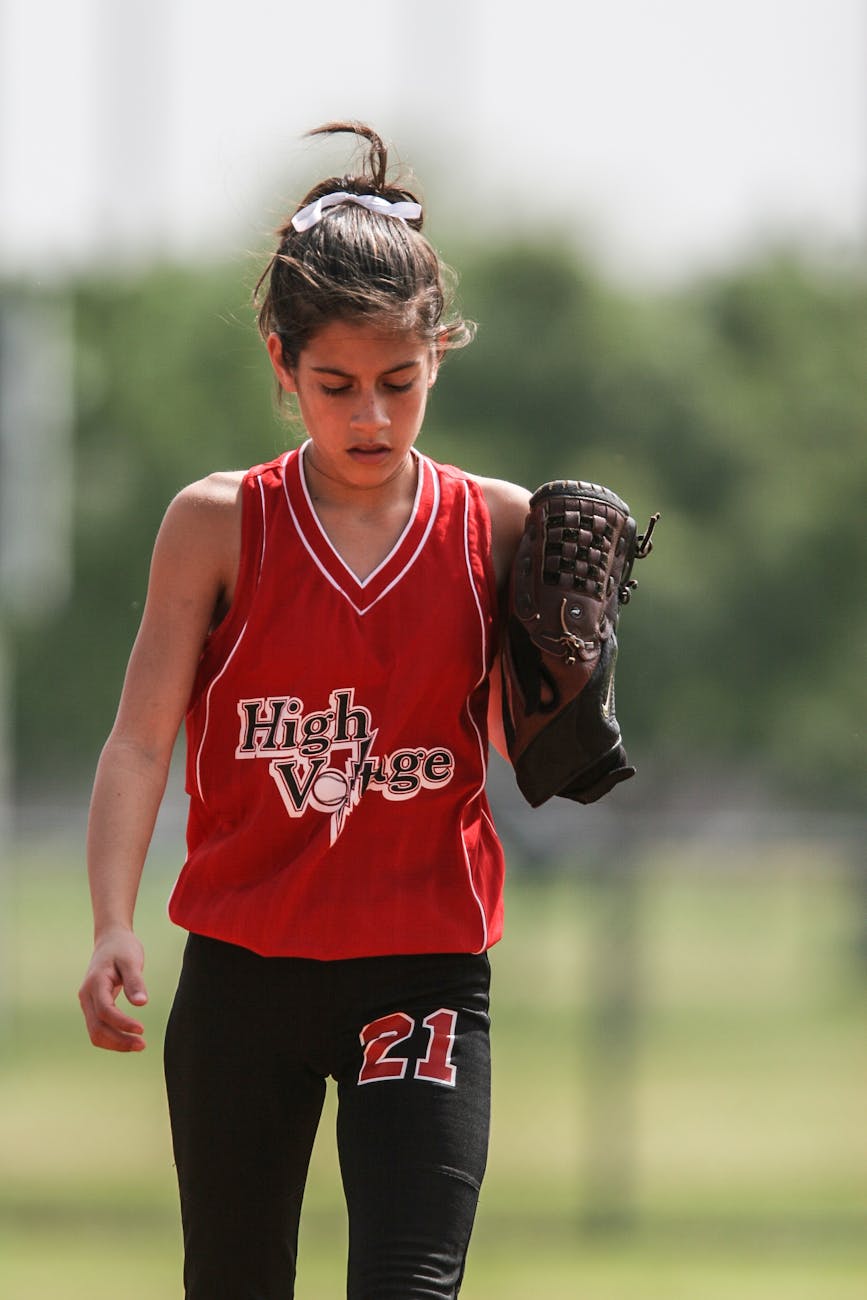
Let’s start today’s post with this simple fact: pitching is hard. In fact, it’s not just hard, it’s incredibly hard.
And I’m not talking about the physical toll only, either, that results from having to bring great energy to every single play of every game they’re pitching. There’s also the mental toll of what happens when things don’t go right, as often happens – even at the highest levels of the game as we’re seeing on TV as they say.
All of that is compounded by the type of personality that says yes, give me the ball, give me the responsibility for initiating every play, and have every single person on the field, in the dugout, in the stands, and in the bad parent section of the outfield watch me intensely every time I step onto the pitcher’s plate o throw a pitch. What kind of normal human being volunteers for that type of pressure?
So with all that said, it’s no surprise that pitchers often accept not only their rightful share of the blame when things go wrong; they often take on all of it, whether that’s warranted or not. And most of the time it’s not.
So for all you pitchers, coaches, and pitcher parents who are living and dying on every pitch and every play, I’ve put together this little guide for which responsibilities actually lie with the pitcher and which do not. If you have a pitcher who is suffering through a crisis of confidence because she isn’t perfect all the time, show this list to her and let her know hey – it’s not all on you.
#1 – The Plague of Dropped Third Strikes (D3Ks)
We see this one a lot. The pitcher is pitching effectively, getting hitters to swing and miss on borderline strikes or even balls that look like strikes, but then – the catcher drops the pitch or even misses it completely. Once or twice in a game you can understand that – things happen, even to good catchers.
But when it becomes a pattern, like, say, happening two or three times in an inning, that becomes a problem. If the affected hitters reach base you not only lose an out you should have had; you have a potential run on base that should never have had the chance to score.
When pitchers – especially younger ones – see this, their tendency is to think they have to do something to fix it and cut down on the D3Ks. The usual solution is to try to throw pitches that are easier for the catcher to catch.

The problem with that is those pitches are also easier to hit. Unless hitters are swinging at pitches way over their heads, or way off the plate to the point the catcher can’t reach them without ordinary or even good effort, those D3Ks are not the pitcher’s problem to solve.
She’s doing her job. The problem needs to be solved by the catcher, her coaches (train her up, even if you have to stay after practice to do it), her parents (work with her on non-practice/game days and/or get her catching lessons), or even the catcher herself asking her teammates or friends to give her extra practice.
If I’m advising the pitcher, I’m telling her to keep doing what she’s doing, and maybe even try to get the pitch out a little more so she’s developing herself to compete against better hitters. Maybe if enough runners reach base someone will take one of the actions above and try to fix it – at which point everyone (including the catcher herself) benefits.
#2 – Errors in the Field
Contrary to popular opinion, it’s not the pitcher’s job to strike out every hitter. Sure, strike outs are nice, and they’re definitely helpful because they take some variables out of the play. They also show well for bragging rights.
But they are not a pitcher’s main job. Instead, the pitcher’s main job is to get outs any way she can. If that means inducing hitters to continually hit weak ground balls and easy pop-ups instead of striking them out, so be it.
I’ve known and coached a lot of successful pitchers who didn’t rack up a huge number of Ks, yet somehow they won a lot of ballgames because they made it easy for the 7 fielders behind them to do their jobs. There’s nothing like a 5-pitching inning on a hot and humid day to keep your team fresh and ready to keep playing. (I’m looking at you, Katie Wirtz.)
But for that strategy to be successful, the fielders do have to do their jobs – catch the ball, throw the ball, get the easy out.
If they’re not doing that pitchers can be tempted to try to take on too much and force strikeouts. That’s usually when they start over-throwing the ball instead of pitching with solid mechanics, causing them to get wild and start tossing the ball all over the place.
Errors in the field aren’t the pitcher’s responsibility unless she’s making them herself. Instead it’s again up to the field players, their parents, and the coaches to help them get better so they cut down on the errors to give their team a better chance of winning.
#3 – A High ERA
Ok, this one is conditional, as I will get to in a minute. But these days stats are pretty easy to obtain thanks to apps such as GameChanger, so it’s tempting for a pitcher to go in, look at her stats, and compare herself to other pitchers on the team, or on other teams. Not to mention for other pitchers to repeat what they heard their parents say about them.
Yet the viability of most stats is directly dependent on the quality of the person scoring the game. God bless anyone willing to keep the book, but there’s a huge difference between someone who knows the ins and outs (no pun intended) of scoring a game and someone who is just doing their best to mark something down out of the goodness of their hearts.
ERA is a stat that is dependent on whether a runner reached base as the result of a clean hit or an error. A scorekeeper who marks every ball that’s put in play as a hit, even if there was an obvious error, is going to cause ERAs to go sky high.
Now, I will say a lot of scorekeepers will mark the most obvious errors, such as Little Suzy (poor Suzy, always getting picked on) dropping a pop-up that’s hit right to her or fumbling a weak ground ball or fielding it cleanly and then throwing it into the parking lot. But there are a lot more possibilities for errors.

The definition of an error is basically the failure to successfully get the out on a play that required ordinary effort. So if an outfielder runs up to a fly ball, stops, and lets the ball hit the ground, that’s an error even though she didn’t touch it. If a shortstop stands like a statue as a medium ground ball goes by her two feet to her left, that’s an error.
Then there are the cases where scorekeepers cook the books a little. They mark an error a hit in one case and not in another not because they don’t know better but because they’re actively trying to help one pitcher look better than another.
I don’t think that happens often, but it definitely does happen.
No matter the reason, if a pitcher has a high ERA because she’s throwing meatballs all day to hitters that’s on her. If it’s because errors are being marked as hits for whatever reason, it’s not.
#4 – A Low Strike/High Walk Percentage
Again, this one is conditional. If a pitcher is throwing the ball into the dirt, wide of the batter’s box, over the backstop, etc., that’s on her and she needs to own it.
But there are other cases where that’s not true. An umpire with an inconsistent strike zone can make it difficult for a pitcher to know where to throw the ball to get a strike.
Same with an umpire with an inappropriately small strike zone for the age group. As we mentioned earlier, pitching is already difficult enough without making the strike zone the size of a shoebox.
Now, that said, if that’s the case the pitcher does have a responsibility to adjust to wherever the umpire is calling strikes. But that can be difficult for pitchers with only a year or two’s worth of experience.
And if they are successful in finding that zone, don’t be surprised if they start getting pummeled. Hitters aren’t stupid, and their job gets a whole lot easier if they only really have to worry about swinging at one location – even if it’s their weakest location.
#5 – Being Overmatched
This can happen too, especially at the younger ages.
Sometimes the coach figures the best chance of winning is to put his/her Ace up against a really strong team, only to realize about 10 minutes in that the Ace isn’t up to the task yet. Sometimes the coach chooses to enter a tournament based on dates and location rather than level of competition and ends up learning the hard way that a little more research can sometimes save a lot of heartache.
Sometimes the coach sees improvement in his/her team and consciously decides to test them against a higher level of competition, only to discover they’re not ready yet. And sometimes the coach takes the old axiom about iron forging iron a little too seriously and I guess figures a weekend of good old fashioned buttkicking is just what the team needs to get better.
Whatever the reason, when a pitcher finds herself in that situation all she can do is do the best she can, learn what she can from it, and keep working with a goal of making a better showing the next time she sees a team or group of teams like that.
The Realities
There are times when pitchers need to step up and take responsibility for their shortcomings in a game. They have to control their controllables and do everything they can to get themselves ready each and every time they step into the circle.
But there are also a whole lot of other factors they can’t control, and if they try to take responsibility for those too they’re going to end up hating the position – and we don’t want to see that.
Helping your favorite pitcher(s) understand the differences between the two is a great way to help avoid unwarranted unhappiness and keep them on a path of learning, and growth. Hopefully this little guide will help.
Lead photo by Pixabay on Pexels.com
Improvement Often Comes In Small Increments
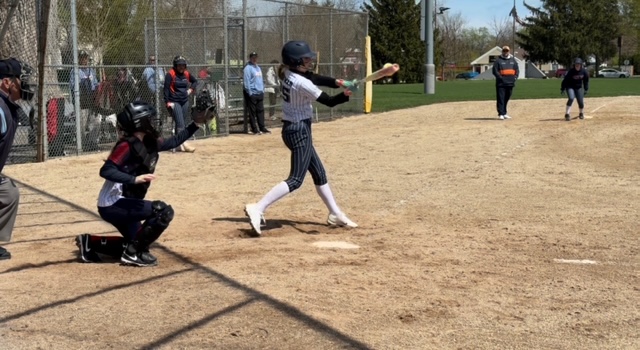
If ’80s training montages have taught us anything, it’s that going from bum or has-been to champion isn’t complicated. You work really hard for a few weeks and before you know it you go from barely functional in whatever sport you’re trying to do to ready to take on the world.
Unfortunately, reality looks a little different – a fact many coaches, parents, and players seem not to understand.
The truth is if you’re expecting miracle improvements after a handful of lessons or practices you’re setting yourself up for a huge disappointment. Because most of the time improvement doesn’t occur in chunks; it happens in small increments.
Take overhand throwing for example. You look at a player and she is standing face-forward the entire time, holding the ball about ear-high and pushing it toward her target. Or maybe she turns her body some and then kind of randomly slings the ball in a motion that vaguely resembles the Kraken attacking the Black Pearl.

You work with her on getting her body into the right position, taking the ball back properly, getting her elbow set at the right height, finding a good arm slot, and releasing with a whipping motion. Then she starts to get the hang of it and looks pretty good.
Problem solved, right?
Probably not. Even if she works at it on her own, the odds of her retaining all those movement changes from this practice or lesson to the next one are pretty small.
The reason is the old pattern is already pretty ingrained, because that’s the movement pattern her body figured out for itself to solve the issue or throwing the ball from here to there. It’s going to take time for the new pattern to settle in – even if she practices.
And if she doesn’t, or doesn’t practice enough, or doesn’t practice with her brain actively engaged? It’s going to take even longer, because every rep she does do will likely be reinforcing the old movement pattern rather than replacing it.
The same is true for any skill – pitching, hitting, fielding, sliding, etc. As humans we tend to be most comfortable with what we know.
This is true even if we are willing to change – which most people aren’t, at least at the subconscious level.
The problem comes when expectations don’t match realities. If you’re expecting a coach or instructor to help your hitter go from striking out to hitting bombs in a couple of weeks, or your pitcher to gain 8-10 mph or go from walking 8 hitters a game to not giving up any walks after a handful of lessons you’re setting yourself up for disappointment.

Instead, the changes will most likely come slowly. You may not even notice them at first, but they will be there.
As you continue they will become more obvious. That doesn’t necessarily mean a great outcome, but it will be trending that way.
So for a hitter, it might be she goes from no or weak contact to hitting the ball hard – right at someone. She still doesn’t get on base, but the contact is better.
In time, the law of averages will kick in and those hard hit balls will start finding gaps between fielders, the strikeouts will go down, and she will be a lot more confident every time she strides to the plate.
Pitchers will start throwing a little harder and a little more accurately. Fewer opposing hitters will get on base, the strikeouts will go up, and she will carry herself with a self-assuredness you haven’t seen before.
So as you start getting more serious and putting in the work keep that in mind. You may not see the improvement at first, but if the player is working at it, and receiving good, quality coaching, the improvement will come.
Hang in there and trust the process. Because from small improvements, larger ones will come.
Take One Last, Sweet Look Around

The weather has gone from wet and chilly to pleasant and sunny (or brutally hot, depending on where you live). Senior night festivities have come and gone.
Conference tournaments have started and in many cases finished. State tournaments are looming.
Yes, it’s that bittersweet time of the year, because it doesn’t just mean the end of the high school softball season. It means the end of high school softball for some players period, and for all too many the end of their softball careers.
You remember how it all started, maybe with a flyer from the school announcing rec league tee ball or coach pitch softball. Your daughter brought it home and said, “Can I?” and you said, “Sure, why not?” After all, it’s just a few weeks April through June, and not much of a time commitment even then.
Hah! Little did you know.

Then came the first travel team, with tournaments on a few weekends turning into tournaments practically every weekend. Trips within a 25-mile radius that were drive in and drive out turned into trips out of state, maybe even across the country, with hotel stays and the other accompanying expenses.
Soon it was consuming much of your time and disposable resources, but you didn’t mind. It was fun to watch your daughter do what she loves.
Yes, there were some bumps along the way. Maybe it was a batting slump. Or a stretch where it seemed like she made more errors than plays, or couldn’t find a radioactive plate with a Geiger counter if she was pitching.
It may have even been a coach who thought yelling and screaming = motivation. Or a group of girls with which your daughter just wasn’t a good fit.
But all of that was minor compared to all the great times you spent watching your daughter play the sport she loves – and all the car rides to and from the field where you not only talked about softball (hopefully in a positive, “wasn’t that fun?” way) but also got to know her better as a person because the two of you were trapped together for hours on end. She shared her hopes, dreams, frustrations, feelings and more in a way she probably wouldn’t have at home.
Now, however, those days are pretty much behind you. You will watch your daughter put on her uniform, lace up her cleats, grab her bat bag, and head out to the field like she has so many times before.
But instead of thinking ahead to where you have to be next weekend, this will be it – your last chance to watch her play in a competitive situation, where every pitch feels like life and death and every triumph is magnified 10-fold.

Sure, as you tried to balance the responsibilities of life with the pleasure of watching your daughter play it all seemed like it was just one mad rush from one event to the next. But soon there will be no need to rush, because you have nowhere special to be today. Next Saturday morning you can sleep in.
Then all that gear will be gathering dust in a closet the way your vehicle used to gather diamond dirt in every crevice. Maybe she’ll grab her glove and bat and play now and then with her friends in a slow pitch league.
But it won’t be the same.
So before it’s all over, remember to take in the aroma of that fresh-cut grass and the sensation of the warm sun on your skin as you wait for the game to begin. Appreciate the feeling of dust blowing onto arms and a face lightly coated with sweat, coating you with grime that never quite seems to wash off, and the sound of cleats crunching on the infield dirt or clattering on the concrete dugout floor.
Not to mention the challenge of washing deep ground dirt out of bright white pants because some idiot coach thought white pants look good. (Guilty!)
Savor every last bit of it. Because when it’s over it’s over.
And when the last out as been recorded, take a moment before you pack up the camp chairs and the snacks and the blankets and everything else you’ve carried from field to field these many years. Burn it into your mind.
Years from now you’ll remember these as some of the best years of your life. Because they were.
Good luck to all the graduates – and their families!
Top photo credit; Michelle Josko
IN Softball or INTO Softball: There’s a Difference
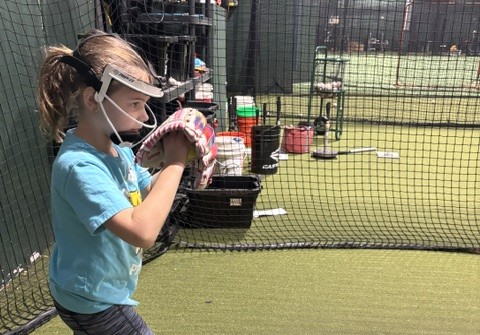
I’ve been listening to a lot of Dr. Rob Gilbert’s Success Hotline calls and the accompanying podcast lately. If you’re not familiar with Dr. Gilbert he’s a sports psychology professor at Montclair State University in New Jersey.
If you’re not listening to him you should be, because he has a lot of great insights on how athletes, or anyone for that matter, can train themselves to be more successful. Thank you to my friend Linda Lensch, the pitching coach at Montclair State, for turning me on to him.
One thing I heard Dr. Gilbert ask recently is a question that is really critical to an athlete’s or a coach’s or anyone’s approach to whatever they do. In our case, though, we will limit it to softball.
The question is, are you IN softball, or are you INTO softball?
What’s the difference you ask? It’s huge. .
Let’s take practice and ask the same question: are you IN practice or INTO practice? In other words, did you show up and are being compliant with whatever the coach says? Or are you really digging in and giving your best effort on every repetition, trying to maximize the value of the drill or the exercise or whatever it is you’re doing?
If you’re at a private lesson, are you going through the motions and/or putting in a little effort, or are you really engaged in whatever the activity is? Are you trying to get through the lesson or really trying to get better?
If you’re playing a game, are you just sort of there, doing what you’re comfortable with and playing it safe or are you pushing yourself to play as well as you can.
You get the idea. But there’s more to it than that, because there are two ways to approach being INTO practice, lessons, games, etc.
If you are INTO the event, are you INTO it some of the time or are you INTO it ALL of the time?
It’s easy to put it into cruise control while you’re doing warm-ups or repeating a drill you’ve done a thousand times before or especially until the game gets critical. The sameness breeds a certain level of mindlessness as you cover the same things over and over or have gaps between plays.

But if you really want to be great at something you can’t approach it like it’s a light switch, turning it on and off depending on whether you feel like giving an effort. You need to be present and mindful (to use what I think is still the current term) on every repetition or every play to take yourself to the next level.
I admit that it’s difficult to be INTO it all the time. While the action of plays may be fast, the game of fastpitch softball moves at a slow pace relative to sports such as basketball or soccer or hockey.
There’s a lot of downtime between plays, and it’s easy to fall into the distractions trap. It’s also easy to decide that what you’re being asked to do is too hard or too unfamiliar and you’d rather do it your way.
But remember if you do what you always do you get what you always get. What you don’t get is better.
For that you have to be willing, even eager, to do more. And a big part of that is being INTO whatever it is you’re doing, not just some of the time but all of the time.
The good news is you don’t need anyone else’s help to get yourself to be INTO what you’re doing all the time. It’s a choice you alone can make.
While I’ve been taking this idea from the athlete’s point of view, it applies to coaches too. (Let’s see how many continue to cheer “right on!” when I apply it to them.)
If you’re going to be IN practice you can keep doing the same general practice plan over and over. You can even buy generic practice plans on the Internet and follow them to the letter.

If you’re IN a game, you can keep the same lineup from the beginning of the season to the end and follow the same strategies over and over regardless of how they work. That’s the easy way to go.
But if you’re INTO practice you’ll take an objective look at what your team does well in games, as well as what it struggles with, and tailor the practice to what they need to do to get better. If you’re INTO games you’ll use data and look at how other coaches are structuring their lineups or the in-game strategies (including pitch-calling sequences) they’re using to decide if perhaps you need to change it up.
Here’s the thing: most people aren’t really INTO games or practices because it’s difficult. It’s much easier to just be IN the game or practice and give a little effort now and then – or maybe none at all – and check it off the list.
But if you really want to become the best version of yourself as a player or coach, don’t just be IN softball. Be INTO it.
And not just sometimes but all the time. You’ll like the results much better.
True Confession: I Can’t Make You Better
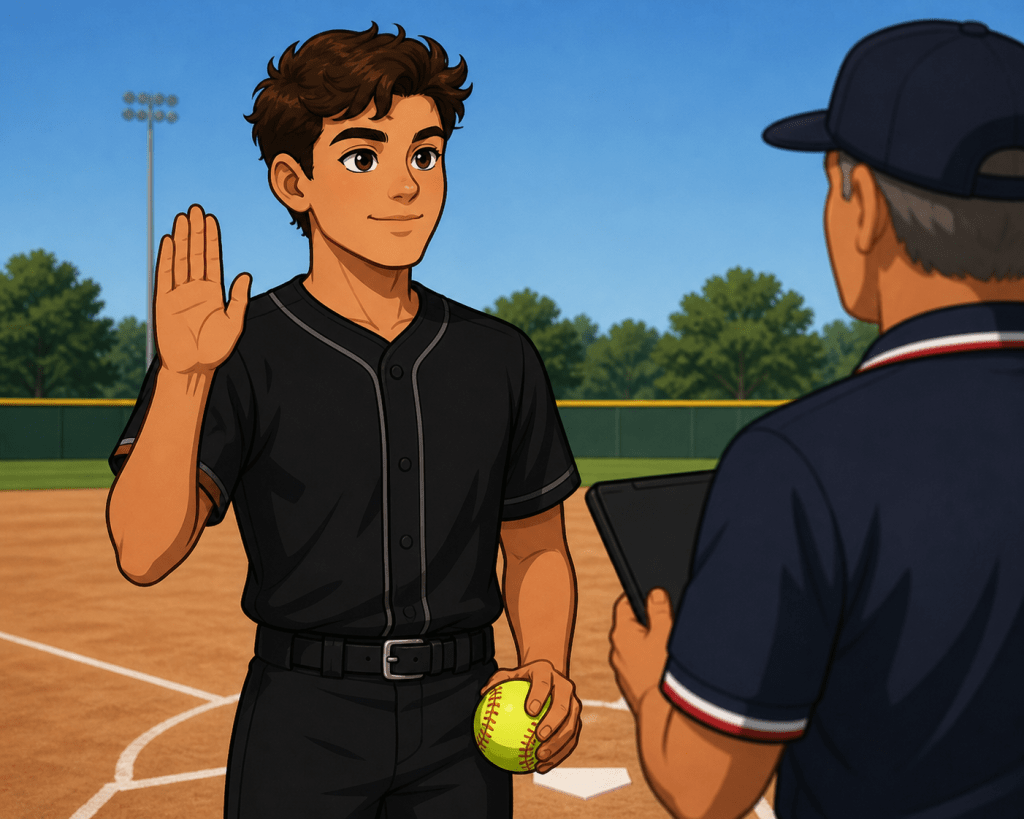
This is a tough admission but I think after all these years of coaching it’s time for me to drop a major truth bomb. And that truth bomb is: I can’t make you/your daughter better.
Shocking, I know, but hear me out I’ve spent a lot of time instructing fastpitch softball players, and even more time studying the latest research and thinking on the subject as well as what the best players in the world actually do (versus what they say they do sometimes).
Yet for all that work and effort, I am admitting that I can’t make the students who come to me better.
I can show them how to perform various skills. I can explain and demonstrate the movements required to perform at a higher level. I can offer corrections to help shortcut the learning process.
I can help them understand the “why” behind the “what” to make it easier to internalize and execute the necessary techniques. I can even help them overcome a crisis of confidence when adversity strikes.
But for all that knowledge and experience, I still can’t make them better. Because in order for students to get better, they have to take an action.

The first action is to listen to and try to understand what I’m telling them. That might seem obvious, but it’s actually not.
Any honest instructor will tell you they’ve had students who showed up to lessons but didn’t want to listen to what that instructor said. They wanted to do it their way.
In my case, I’ve had “students” who, when I said “here, try this” would give me a side eye as if to say, “You can’t make me do that.”
And they were correct. I can’t.
Of course, if you want to keep doing it your way that’s fine, but you’re going to stay where you are instead of getting better. And pretty soon you won’t see progress and decide to move on to the next coach whose instruction you don’t want to follow either.
The second action is to get off your butt and actually work on what the instructor told you during the lesson and whatever homework you’ve been given.
Taking lessons is a good thing, and it’s even better when you’re interested in learning. But the time in-between lessons is where the real magic happens.

Not working between lessons is like buying a really nice car but never actually getting in and driving it. It may look beautiful in the driveway or the garage, but you’re not going anywhere.
The specific actions you take once you decide to take action are also important. For example, a pitcher who is having trouble with accuracy probably doesn’t need to be throwing from the full distance.
She needs to move in closer and work on her release – including the way the arm and hand approach release, the exact point where she releases the ball, and what her hand and forearm do at that precise moment. All of those factors can and will affect where the ball goes.
If the pitcher moves in close she can rid herself of all the distractions of the rest of the pitching movement and just focus on the part that’s doing her in – the release. And the great thing about that is she doesn’t even need a field or facility, a catcher, or much of anything else.
A bucket of balls and a net to throw to, or even a rolled up pair of socks and a handy wall, will give her everything she needs to work on those movements and lock them in.
The same goes for a hitter. Let’s say that hitter is having trouble keeping her hands from leading the swing (instead of letting her body turn first).
She can work slowly on that part of the swing while shooting a video of what she’s doing so she can check. If she doesn’t have access to a phone or other camera, she can look in a mirror.
She doesn’t need a bat or the space to swing it either. She can take a sawed off dowel rod or the core from a roll of paper towels with some rags stuffed in it to work on getting her sequence so ingrained that when she gets back on the tee or even faces a live pitcher again it happens automatically.
That’s the type of work it takes to get better. But I can’t make you do any of that, which is why I say I can’t make you better.
Going back to our car analogy, the instructor or coach is like the GPS system for getting better. He or she can tell a student turn-by-turn how to get started and how to get to her destination.
But it’s up to that student to get in the car, start driving, and then follow those directions. Otherwise she’s either not going anywhere or putting herself at risk of following a path that will take her even further away from her destination.
So again, I fully admit can’t make you better. You have to do that. I can only show you the way.






