Blog Archives
The Problem with Keeping a Foot on Two Different Paths

So, you’ve decided your daughter isn’t progressing anymore You’re thinking it’s a time to make a change so you try a new private instructor.
Your daughter goes through a lesson and you like what you hear. You think this may be the answer, or at least an answer, to help her break through a plateau and start advancing again.
Then at the end, you present your dilemma: your daughter has a tournament in three days. Then you ask the new instructor how your daughter should approach those games.
Should she incorporate the new mechanics or techniques she was just working on (and take a chance on her performance going down), or should she work on the new stuff during the week but stick with the old way on the weekend?
I guess my question back would be are you happy with the status quo or are you looking for actual improvement? Because, as they say, if you do what you always did you get what you always get.

Here’s the problem. Imagine there are two cars riding side-by-side down the street. You’re being a daredevil so you are standing up with a foot in each one of them.
As long as the road stays straight you’re ok. But once you reach a fork in the road you either have to jump fully into one car or you will find yourself torn in two.
Now the question is which car to jump into? Because the two sides of the fork lead to very different destinations.
And here’s the other problem. Let’s say you choose to continue with what you’ve been doing for the moment to minimize the risk of immediate failure. Even though you know full well it’s ultimately a road to nowhere.
Sure, at some point you can backtrack to the fork and then take the other road if you decide you want to make a change after all. But it’s going to take longer and be more painful than it would have because you’ve now spent more time ingraining the mechanics you ultimately want to replace.

And you’re still going to have to deal with the same struggles of the transition from the old way to the new way you’ve been trying to avoid. Only now your daughter is a little bit older, the opponents are a little bit better, and the coaches (your own and recruiters) are a whole lot less forgiving of walks and other accuracy problems.
The bottom line is, if you believe you’re making a change for the right reasons, don’t go into it halfway. Go all in and deal with the short-term consequences now rather than making them longer-term later.
Make the commitment knowing that the sooner you start, the sooner you’ll get through it. And the happier you will be in the end.
Improvement Often Comes In Small Increments
If ’80s training montages have taught us anything, it’s that going from bum or has-been to champion isn’t complicated. You work really hard for a few weeks and before you know it you go from barely functional in whatever sport you’re trying to do to ready to take on the world.
Unfortunately, reality looks a little different – a fact many coaches, parents, and players seem not to understand.
The truth is if you’re expecting miracle improvements after a handful of lessons or practices you’re setting yourself up for a huge disappointment. Because most of the time improvement doesn’t occur in chunks; it happens in small increments.
Take overhand throwing for example. You look at a player and she is standing face-forward the entire time, holding the ball about ear-high and pushing it toward her target. Or maybe she turns her body some and then kind of randomly slings the ball in a motion that vaguely resembles the Kraken attacking the Black Pearl.

You work with her on getting her body into the right position, taking the ball back properly, getting her elbow set at the right height, finding a good arm slot, and releasing with a whipping motion. Then she starts to get the hang of it and looks pretty good.
Problem solved, right?
Probably not. Even if she works at it on her own, the odds of her retaining all those movement changes from this practice or lesson to the next one are pretty small.
The reason is the old pattern is already pretty ingrained, because that’s the movement pattern her body figured out for itself to solve the issue or throwing the ball from here to there. It’s going to take time for the new pattern to settle in – even if she practices.
And if she doesn’t, or doesn’t practice enough, or doesn’t practice with her brain actively engaged? It’s going to take even longer, because every rep she does do will likely be reinforcing the old movement pattern rather than replacing it.
The same is true for any skill – pitching, hitting, fielding, sliding, etc. As humans we tend to be most comfortable with what we know.
This is true even if we are willing to change – which most people aren’t, at least at the subconscious level.
The problem comes when expectations don’t match realities. If you’re expecting a coach or instructor to help your hitter go from striking out to hitting bombs in a couple of weeks, or your pitcher to gain 8-10 mph or go from walking 8 hitters a game to not giving up any walks after a handful of lessons you’re setting yourself up for disappointment.

Instead, the changes will most likely come slowly. You may not even notice them at first, but they will be there.
As you continue they will become more obvious. That doesn’t necessarily mean a great outcome, but it will be trending that way.
So for a hitter, it might be she goes from no or weak contact to hitting the ball hard – right at someone. She still doesn’t get on base, but the contact is better.
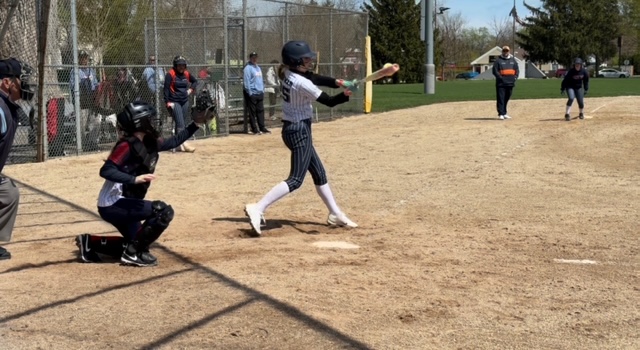
In time, the law of averages will kick in and those hard hit balls will start finding gaps between fielders, the strikeouts will go down, and she will be a lot more confident every time she strides to the plate.
Pitchers will start throwing a little harder and a little more accurately. Fewer opposing hitters will get on base, the strikeouts will go up, and she will carry herself with a self-assuredness you haven’t seen before.
So as you start getting more serious and putting in the work keep that in mind. You may not see the improvement at first, but if the player is working at it, and receiving good, quality coaching, the improvement will come.
Hang in there and trust the process. Because from small improvements, larger ones will come.