Monthly Archives: July 2026
Greatness Starts with Polishing the Forks

The Hulu TV show The Bear just concluded its five-season run. While I get that it’s not for everyone (my wife for example), I thoroughly enjoyed the show and am sorry there will be no more episodes.
Since this isn’t a pop culture blog you’re probably wondering why I’m talking about some random show. The answer is fastpitch softball players (and their parents) can learn an important lesson from what I think is one of its best episodes.
The premise in the second season is that Carmen, a high-end chef as well as the youngest brother in a family that owns a Chicago-style sandwich shop called The Original Beef, wants to create a new high-end restaurant as an offshoot of the sandwich place. As part of that, he has to get one of the employees on board.
He has known this employee, Richie, since childhood. In fact, they call each other “cousin” (although they’re not actually cousins because that’s how close they are). Richie has been managing the sandwich shop since the older brother’s unexpected death, and he’s not too keen on the changes Carmen is making. A lot of detail, I know, but bear with me (no pun intended).

Richie argues with Carmen all the time about the way he’s doing things. But Carmen is the boss, so at one point he sends Richie to go work at a local high-end restaurant owned by a friend of his that is recognized internationally as the world’s best restaurant. Needless to say Richie is not happy about it, but he goes, reluctantly.
On his first day he walks in expecting to be given something important to do. I mean, after all, he’s been running his own successful sandwich shop.
Instead, he’s assigned to polish forks. For nine hours. That’s it, just polish forks.
At one point he asks the manager who has been assigned to oversee him what comes after polishing forks, expecting the next step will be something more at his perceived level. The manager drily replies “spoons.”
Richie is convinced Carmen sent him on this assignment to punish him for disagreeing with him, and his bad attitude continues to get worse. He does a half-baked job of polishing some of the forks and he’s told to do it again to remove the streaks. Richie asks what difference does it make, and he’s told in this restaurant a lot.
Because people don’t come there just for the food. They come for the experience. The restaurant is very expensive, and some people save money for a year just to be able to afford to eat there once.
At one point after more complaining the manager asks Richie to step outside, and Richie says “You’ve really drunk the Kool-Aid here. Why?” The manager tells him why, and from that point on Richie’s attitude totally changes and he launches on the best redemption arc in the entire series. In my opinion. From that point on he buys in to what Carmen is doing with The Bear more than anyone else, even Carmen, and it totally changes his own life.
If you’re still with me, the lesson here is how important doing the little things (like polishing the forks) is within the bigger picture.
All too often players want to skip the drills and working on the nuances of particular movements and go right to the finished skills.
Pitchers want to throw full pitches, not work from the K position or on spins close-up. Hitters want to hit off machines or live pitchers instead of doing one-hand drills off the tee or working on specific elements of their swings.
Fielders want to take ground balls or fly balls off the bat instead of working on their glove work or on positioning from a toss. And so on.
To be the best you can be, you have to realize every detail of what you’re doing matters. A one-degree difference in throwing angle on a riseball can make the difference between a swing and a miss and a walk – or a home run.
A one-degree drop of the bat or reduction of the angle as it’s approaching the ball can make the difference between that home run and just a dramatic fly ball out. A slight rearrangement of the feet when throwing across the infield under pressure can mean the difference between an inning-ending out or a game-deflating two-base error.
To do any of that or a thousand other things that are required for success in fastpitch softball you can’t just take them for granted. You have to work on them. Every. Single. Day.
Yes, “polishing the forks” can be mind-numbingly boring. It can make you wonder who’s going to notice, and it can make you feel like you’re falling behind on learning all the fancier skills your peers are telling you they are learning
But trust me, nothing is more important than perfecting these little details to the best of your ability. They are the foundation of everything else that is to come.
If your foundation is shaky, it doesn’t matter how fancy the rest of the building is. It’s not going to be built to last, especially when the pressure is on.

Breaking things down this way isn’t a punishment, Like polishing the forks, it’s the start of a path to enlightenment that will help you learn and grow and ultimately excel.
So the next time you’re given something basic to do, don’t feel bad or angry about it. Don’t complain about how you’re past this, or you deserve better, or your coach hates you.
Carmen sent Richie to the other restaurant not because he was mad at him, but because he saw something special in Richie that even Richie himself couldn’t see. And Carmen wanted to help Richie get out of his own way so he could fulfill that destiny.
Carmen was also smart enough to know Richie would never learn that lesson directly from him. He needed to hear it, and see it, and experience it through someone else.
So the next time you’re told to “polish the forks,” don’t see it as a punishment or a failure. See it for what it is – an opportunity to rise above where you are now and chase after greatness.
You just may surprise yourself.
6 Things to Know Before Starting Lessons

It sounds good in theory. You want to see your daughter succeed in this difficult game called fastpitch softball, so you decide to hire a private instructor to help her with her hitting, pitching, catching, fielding, strength and conditioning, speed and agility, or whatever other capability with which she needs help.
And in a way you’re right. Good, quality private instruction can definitely shortcut the learning process and help your daughter reach her goals faster, whatever they may be.
Notice, though, that I said “help.” Because there’s more to lessons than finding out who other good or great players go to, arranging a time to get together, and paying a fee.
Following are a few things you should know and/or understand before you take the plunge on lessons.
#1 – They Ain’t Magic
I am often struck by the number of people who think a private instructor is going to wave some sort of magic wand as if they are Headmaster Dumbledore from Harry Potter and magically, instantly turn your daughter into a great player. Sorry, it doesn’t work that way.

Sometimes a good instructor can help a girl who has great ability overcome a temporary struggle and show immediate improvement. Usually, though, that’s more along the lines of “getting her back to where she was” rather than achieving some never-before-seen level.
So if your expectation is that doing a few lessons is going to take your daughter from benchwarmer to superstar, or pool play only to top of the lineup, you are going to be really, really disappointed. The reality is…
#2 – Improvement Takes Time
Not just a little time. Often lots and lots of time.
How much depends on the athlete, the skill she is trying to learn, how hard she works at it (more on that in a bit) how willing she is to change/get out of her comfort zone, how ingrained the techniques she’s currently using are, and any physical, mental, or emotional limitations that may be getting in the way.
For example, if your daughter has a badly sprained ankle or is recovering from ACL surgery, she’s probably not going to be able to put a lot of weight on that leg. So expecting her to add a few miles an hour to her pitch speed is probably not going to happen in a couple or even a handful of weeks.
She will first have to get back into shape, and she will have to build confidence that her ankle, knee, etc. can take the impact a strong leg drive creates. Not all of that is conscious, either.
In the book The Body Keeps the Score, the author talks about how the human body copes with various traumas and especially how the central nervous system’s priority is protection, not performance. There could be all kinds of things going on under the hood, so to speak, that are going to prevent your daughter from driving harder even if she intends to.
It takes time to work through all of that. It also takes time to replace old habits with new ones.
Some adapt easier than others, but it’s not like flipping a switch. And the longer she’s been doing things a certain way, the longer it’s going to take to rewrite that programing with new programming.
It could take a couple of weeks. It could take a few months. It could take a year or more. You never really know until you get started.
But if you trust the process, the improvement will come in its own time.
#3 – A Lot of It Is Boring
In my experience there are a lot of people who think that going to a lesson means executing the full skill while an instructor tweaks it.
Yes, that’s a part of the process. But the bulk of the time is going to be spent working on pieces of the process in a sequence that makes sense until your daughter gets each one in good working order. Not perfect, necessarily, but close enough to make it worthwhile to move on to the next piece of the puzzle.
Unfortunately, not every kid is good at handling that sort of work. Some, especially at the younger ages, think it’s boring and just want to throw pitches, or hit balls off pitchers, or do whatever.
As my friend Eric Egmer of CC Baseball says, you have to “embrace the boredom.” Whether or not you subscribe to the concept of 10,000 repetitions to master a skill, It definitely takes a lot. Over and over and over, each one of them done mindfully to ensure they are taking your toward your goal instead of away from it.
Kids who don’t have the patience or attention span for that kind of work are not going to do well with lessons. Some may shut down entirely, making the experience unpleasant for everyone.

So go into it with your eyes open. Otherwise you’re just wasting your time and money.
#4 – Improvement Is Mostly on the Player, Not the Coach
This is actually a two-way street. Most great coaches will tell you that when a player succeeds, 90% of the credit goes to her. The coach can really only claim 10% at best.
The late, great Bill Hillhouse definitely felt that way. When Jay Bolden and I spoke to him on the From the Coach’s Mouth podcast he flat-out stated what Jay and I always say: we teach all our students the same things, but we get varying results.
That’s a pretty big statement given that one of his students, a young lady you may have heard of named Teagan Kavan, has won back-to-back Women’s College World Series championships with her Texas team.
I always tell my students the most important part of the process isn’t the time they spend with me. It’s what they do in-between visits to me that will determine how good they get and how quickly they get there.
Put in a little effort you might get a little improvement. Put in a lot of effort and you’ll see much greater improvement.
Nobody in my experience gets better just doing lessons once a week and nothing else. And even improvements that are made in lessons go away quickly if your daughter is not putting in the work to solidify what she’s learned.
If your daughter isn’t willing to work at least 2-3 days a week outside of lessons again you’re probably wasting your time and money. But if she is eager to put in the work, that investment will pay off big time.
#5 – Quality of Instruction Can Vary Greatly
I’m not sure how many people realize this but there are absolutely no requirements preventing anyone who wants to hang out a shingle and call themselves an instructor from doing so. None.
So you can get experts, semi-qualified people, folks who are just in it to make a buck, former or current high school or college players who may or may not have any idea of what they do when they play, and so on. A real potpourri of possibilities.
If you want to make sure your daughter is taught well, it’s up to you to do some research. Ask around to see who others are using.
Check out the instructor’s website or other online presences. Try to learn at least a little bit about what your daughter should be learning to help you find a coach that teaches that.
It’s definitely a case of caveat emptor – let the buyer beware. You may get lucky without the research – but why take a chance?
#6 – Not Every Instructor Is a Fit for Every Student
Even if you do a great job and find a highly qualified instructor, that doesn’t mean he or she will be a good fit for your daughter.
Just like anything else there are different personalities and different teaching styles. I know I’m not everybody’s cup of tea (hard to believe, I know, but it’s true!).
You want to find someone your daughter is comfortable learning from. Personally, I would prioritize knowledge and expertise first, with compatibility a close second, because no matter how good a fit the instructor is, if he/she doesn’t know what they’re doing the point is kind of moot.
But if it’s not a good fit, find someone else who is also knowledgeable. Presumably your daughter will be spending a lot of time with that coach; it will help if she looks forward to the experience.
Final Thoughts
Lessons can be a big investment. They can also be a big gamble since there is no governing body or tests that are required in order to offer instruction like there are in many other countries (Canada and the UK for sure).
If you decide to pursue them, be sure to go into it with your eyes wide open to make sure both you and your daughter get what you expect our of them.
Travel Softball’s Greatest Challenge
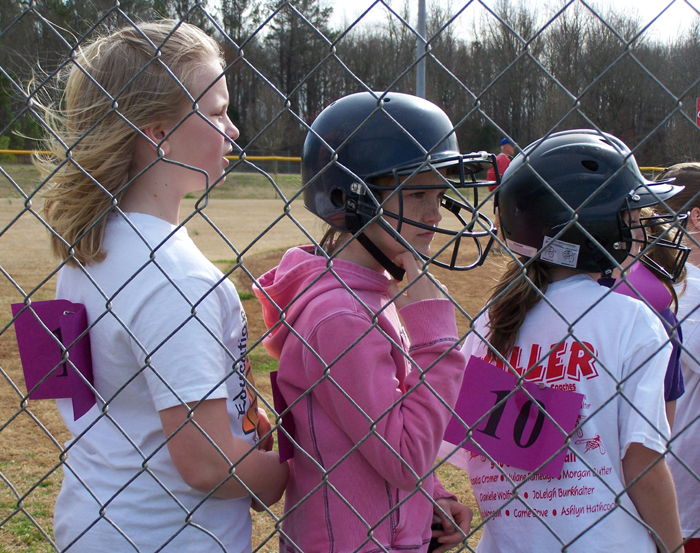
I was talking to a father the other day about how difficult it has been for his 12 year old daughter to find a team that will help her make the leap from rec ball/part-time travel to full travel ball. She had tried out for several teams, and like any good dad when the teams said they were interested he asked what was holding her back, i.e., what she needed to improve in order to increase her chances with the next team.
I found those responses both interesting and disturbing. The one I remember most distinctly was one team, which was touting that it had a “former college player” as a head coach, told him his daughter couldn’t hit the outside pitch.
Really?
First of all, the teams she was trying out for aren’t exactly on the top of the food chain. More like C level teams, perhaps middle B at best, so it’s not like she was overreaching in her ambitions.
But what struck me more about it was a simple thought: shouldn’t any halfway decent coach be able to TEACH a 12 year old how to hit the outside pitch?
It’s not that hard. You put a tee on the outside corner, a little deeper than you would hit a middle-of-the-plate pitch, and work with the hitter to keep her hands in instead of reaching out for the ball first.
But this encounter speaks to what seems to be the biggest issue in travel ball in my opinion. Which is that “coaches” either don’t want to or don’t know how to teach the game anymore.
More and more it appears that coaches just want to find players who already have great skills, throw them on the field, and wait for them to win ballgames. And if turns out the players they do select are lacking in any skills or knowledge, they just throw them on the bench until they figure out what to do – or hire an outside coach to tell them.

That’s just wrong to me. The job of a coach at any level, even college or professional, is to help their players grow and learn and improve.
Sure, at the higher levels it’s more refinement of existing skills than teaching new ones. But they are still looking for areas of improvement that can help each player get better, even if that improvement is incremental.
So there’s no reason a coach at the youth level shouldn’t expect to have to put in some work teaching their players too. At the 10U and 12U levels, that can involve a lot of teaching.
In my experience it’s impossible to know which players will ultimately grow to be the best by the time they’re 18, or 20, or 22. Many of the top players in the game today will tell you they weren’t superstars when they were young.
Everyone grows and learns at their own pace; every player follows her own path to get there. With a little encouragement and guidance a girl who seems weak in her skills, knowledge, or even athleticism today could just turn out to be great pitchers, catchers, fielders, hitters, etc. when they get older.
But they’ll never get the chance to find out if the people running teams are only looking for players they can throw out on the field today and watch them perform while the coaches sit back and watch.
To be honest, there is a lot of value and satisfaction in taking a girl (or a group of girls) who may not be fully baked right now but have potential and teaching them how to swing a bat, throw ball, run the bases, and perform other skills at a level above where they started. Much more so, in fact, than having them end the season at the same level they started – no matter how many trophies you may have won.
And while we’re on the subject of development, I also have to shake my head at all the ads I’m seeing right now from B and C teams looking for “one more bracket pitcher” or “A level pitcher” to round out their rosters. They might as well be wishing for those pitchers to bring a pot of gold along with them to the tryout because it’s just as likely to happen.

The reality is the A level pitchers are generally spoken for first, so it’s unlikely they’re available right now. Especially with the fact that tryouts for next season seem to be starting at the beginning of the current season these days.
A pitcher of that caliber may pop up later, maybe in the middle or end of fall ball if someone isn’t happy with their team choice. But if coaches are looking to settle their rosters today, they’d probably be better served looking for a pitcher who has the potential to be a bracket or A level pitcher if they are given the opportunity to work through a few disasters until they find themselves. Just sayin’.
Again, though, that would require sacrificing a few wins today for more in the future. It would also require actual, active coaching for improvement rather than simply managing lineups.
Look I get it. Coaching is hard. So is losing games, especially when you know you could have won them if your players had just been a little bit better on that day.
But as any good general or business leader will tell you, sometimes you have to accept short-term losses in order to realize longer-term gains.
That’s why it pays to learn how to be a true coach rather than just a manager of players.
If you’re a manager, you are at the mercy of your players’ abilities. If they play well, great; if they don’t, there’s not much you can do but yell and scream for them to do better.
But if you actually put in the work to become a true coach, you can change the equation by helping each and every player learn to play the game better. You can teach them how to hit that outside pitch, or turn the double play, or hit the cutoff, or lay down that bunt, or take the extra base on a hit to right center, or do any of the other hundreds of things that happen in a game that can snatch victory from the jaws of defeat.
And in doing so you don’t just change a game. You could end up changing a life – which beats winning a plastic trophy or a gaudy ring every time.
The Pitcher Who Threw the Golden Softball
Why high performers don’t always perform at a high level by the end of the season.

Stop me if you’ve seen this scenario before. You have a pitcher who has been performing at a high level from the beginning of the spring (or high school) season all the way through the summer.
Yet now, as you’re getting to the most important part of the year, i.e., those big 4th of July tournaments and the Whatever Nationals, she’s suddenly starting to struggle. The speed is a little down, but worse the pinpoint accuracy she used to display has gone away, replaced with pitches in the dirt, over the catcher’s head, and/or wide of the plate.
Her movement pitches have lost their sharp movement, her knee-buckling changeup looks more like an easier-to-hit version of her fastball, and all the while her Ks are going down as her Ws are going up.
You wonder how could this be happening? What could have caused Ms. Ace to be replaced by someone who looks like her but definitely doesn’t throw like her?
There could be a few causes, but one that few people think about (or are willing to admit) is just plain fatigue. She’s still giving all the effort she always has, but at this point there’s not a whole lot left in the tank.
It’s a lot like the fable of the goose who laid the golden egg. Let’s take a high schooler because it’s the most extreme example.
For those who play in the spring, high school softball probably started sometime in February or at the latest the beginning or March. During that time she either pitched bullpens or in games six days a week for at least three months, possibly more if her team did well in the state tournament.
Her high school coach may have tried to split the work between Ms. Ace and one or two others, but let’s face it: everybody loves to win. So if Ms. Ace was the most reliable path to winning, her innings started to increase as the season wore on.
Once it got to conference championships and the State playoffs, the workload increased even more. She probably threw every inning of every game – even the ones that went 12 or more innings – because at that point if you lose you’re done, and no one wants to be done if they don’t have to be.
She may have been hurting, or tired, or feeling like her arm was going to fall off or her legs had turned into Jell-O, but she sucked it up and pitched anyway in a valiant effort to attain glory for the school with a State championship.
Then one way or the other the high school season finished. And did she get a chance to rest?
Nope. She no sooner turned in her high school uniform than she was putting on her travel team uniform. Heck, she might have done that in the locker room at her school.
And then came the grind of the summer. She probably got some breaks early on, as the coach split the time between different pitchers.
In the meantime, the summer got hotter and more humid. Those turf fields that make it easier to get in games when the weather is colder and wetter have suddenly turned into a hot box from a WWII movie, with temperatures running anywhere from 100 degrees to 130 or more (or so I’ve been told; never measured it myself).

And just about the time the hot weather really set in, the tournaments got more serious. Again, the situation started turning into win or go home on a big stage, and Ms. Ace was called upon more and more to lead the team to victory, keep the team in games until the offense catches up, or close out a close game by pitching another inning or two.
Throw in a college camp or a showcase event where she’s trying to look her best for her dream school, or any qualifying school for that matter, and/or maybe a tryout for next year here or there, and it’s a lot. Especially when the schedule doesn’t allow for any days off.
You see where this is headed. All that work all that practice, all that heat, all that everything begins to take a toll Not just physically but mentally.
Even if Ms. Ace is feeling ok physically, she may be mentally exhausted after putting so much energy into softball-critical situations, game after game, weekend after weekend.
At some point she’s like that mobile phone that you keep throwing on the charger when the battery indicator shows red and taking off as soon as the low battery goes off. She may have a little more energy than she did, but it’s really not enough to carry the team like she could a few weeks – or a few months – ago.

And that, my friends, is why her performance may be suffering a bit at the end of the season. It’s not that her mechanics are off, or that she’s not trying, or that she’s forgotten how to pitch.
She just may be exhausted and running on fumes, still doing all she can to help the team win, even if she’s no longer at her best.
So don’t be too quick to hit the panic button if Ms. Ace isn’t quite looking like herself. With a little rest, even if it’s just a couple of days in a row off, she’ll power back up, and before you know it she’ll be kicking butt and taking names again.
Hopefully in time for a nice run at Nationals.
What Fastpitch Pitchers Can Learn from Pro Wrestling

NOTE: What I’m about to describe can be used by any player. But since pitchers are usually the ones who are most directly targeted, I’m going to focus on them.
The other day I was working with a pitching student who had played against a team she used to be on. She and her mom told me she pitched fairly well, but that she had gotten a little upset when the other team started doing a lot of sing-songy chants directed at her with the purpose of trying to rattle her.
This was in 12U travel ball by the way. First of all, I personally believe there is no place in the game for directing insulting chants or remarks at an opposing player.
Trying to ruin a teen or pre-teen’s confidence by saying insulting things to her is just plain classless. There’s enough of that on social media already.

It’s also a comment on the other team’s ability. If that’s what it takes for them to win maybe they’d better go back to the drawing board and work on their own skills.
But if you’re the pitcher who has that stuff being directed at you, there isn’t much you can do to prevent it from happening. You have no control over how the other team acts (and apparently neither do their coaches or parents).
People will tell a pitcher to just ignore it, but that can be difficult to do. In my experience young females are far more likely to listen to the bad things said about them than the good things anyway.
I have another solution that I told my pitching student about, and she seemed to like the idea. It comes from the world of professional wrestling, i.e., WWE, AEW, NWA, etc. and basically involves steering into the insults rather than trying to tune them out.
In pro wrestling there are “Faces” and “Heels.” Faces are the heroes, the ones you’re supposed to admire and root for, essentially the good guys, who represent Mom, apple pie, and all of that.
The Heels, on the other hand, are the ones you’re supposed to root against. They are demeaning to the audience and other wrestlers, cheat by doing dirty things to their opponents when the ref is looking the other way, hit opponents with chairs, and otherwise act outside the bounds of human decency.
When the Faces are introduced, everyone is supposed to cheer (and usually does). They’re there to see that justice is done and the forces of good prevail.
When the Heels are introduced, though, everyone is supposed to boo (and most usually do, although they have their fans too). It’s what the Heels do when they’re booed, though, that is the point of our story today.
They don’t act shocked, or hurt, or look like someone just ran over their dogs. Instead, they steer into the boos, drinking them up like they’re refreshing water. They strut around the ring and motion for the fans to give them more of it with a look of satisfaction or even pleasure on their faces.

That’s the attitude I think pitchers should adopt. When the insulting cheers come on, don’t sink into a shell; embrace them!
Pitchers can start by pretending they can’t quite hear the cheers and signaling to the opposing bench to say them louder by holding a hand to their ears. If they continue, pitchers can smile and walk around in the circle waving their arms as if to ask for more.
By showing it not only doesn’t bother them (even if it secretly does) but the pitchers are apparently enjoying hearing it, they can essentially take all the fun out of it for their opponents. The more the pitchers look like they are loving the insults – and that the only effect they’re having is pumping up the pitchers even more – the less likely the other team is to continue.
After all, why would you continue a behavior that seems to be helping the opposing pitcher instead of hurting her? Seems kind of counter-productive to me.
The thing pitchers need to keep in mind is that in most cases the other team wouldn’t be doing all of this if they thought they could easily win the game without it. No, they’re going to do it when they’re worried they might lose.
And even if that’s how they treat all pitchers regardless of skill level, showing you’re not only not intimidated but actually are enjoying the attention is a quick way to neutralize the other team’s behavior.
The only other X factor in all of this is how the umpire reacts to this little Heel performance. But if he/she says anything to the pitcher, she (or her coach) should just say, “You get them to stop with the negative cheers and I’ll stop what I’m doing.”
Nothing like a little self-awareness to put it all in perspective.
We often say the first step in being confident is to act like you already are confident – even if you’re not. Putting on a little Heel performance when the negative cheers or comments start to fly is a great way to get into the right mindset and help pitchers overcome the risk of their opponents getting in their heads.
And of course, the irony is by acting like a pro wrestling Heel, the pitchers actually present themselves as the heroes of the story who are standing up for themselves and all that is good and right in the world. Not a bad place to be!






