Blog Archives
6 Things to Know Before Starting Lessons
It sounds good in theory. You want to see your daughter succeed in this difficult game called fastpitch softball, so you decide to hire a private instructor to help her with her hitting, pitching, catching, fielding, strength and conditioning, speed and agility, or whatever other capability with which she needs help.
And in a way you’re right. Good, quality private instruction can definitely shortcut the learning process and help your daughter reach her goals faster, whatever they may be.
Notice, though, that I said “help.” Because there’s more to lessons than finding out who other good or great players go to, arranging a time to get together, and paying a fee.
Following are a few things you should know and/or understand before you take the plunge on lessons.
#1 – They Ain’t Magic
I am often struck by the number of people who think a private instructor is going to wave some sort of magic wand as if they are Headmaster Dumbledore from Harry Potter and magically, instantly turn your daughter into a great player. Sorry, it doesn’t work that way.

Sometimes a good instructor can help a girl who has great ability overcome a temporary struggle and show immediate improvement. Usually, though, that’s more along the lines of “getting her back to where she was” rather than achieving some never-before-seen level.
So if your expectation is that doing a few lessons is going to take your daughter from benchwarmer to superstar, or pool play only to top of the lineup, you are going to be really, really disappointed. The reality is…
#2 – Improvement Takes Time
Not just a little time. Often lots and lots of time.
How much depends on the athlete, the skill she is trying to learn, how hard she works at it (more on that in a bit) how willing she is to change/get out of her comfort zone, how ingrained the techniques she’s currently using are, and any physical, mental, or emotional limitations that may be getting in the way.
For example, if your daughter has a badly sprained ankle or is recovering from ACL surgery, she’s probably not going to be able to put a lot of weight on that leg. So expecting her to add a few miles an hour to her pitch speed is probably not going to happen in a couple or even a handful of weeks.
She will first have to get back into shape, and she will have to build confidence that her ankle, knee, etc. can take the impact a strong leg drive creates. Not all of that is conscious, either.
In the book The Body Keeps the Score, the author talks about how the human body copes with various traumas and especially how the central nervous system’s priority is protection, not performance. There could be all kinds of things going on under the hood, so to speak, that are going to prevent your daughter from driving harder even if she intends to.
It takes time to work through all of that. It also takes time to replace old habits with new ones.
Some adapt easier than others, but it’s not like flipping a switch. And the longer she’s been doing things a certain way, the longer it’s going to take to rewrite that programing with new programming.
It could take a couple of weeks. It could take a few months. It could take a year or more. You never really know until you get started.
But if you trust the process, the improvement will come in its own time.
#3 – A Lot of It Is Boring
In my experience there are a lot of people who think that going to a lesson means executing the full skill while an instructor tweaks it.
Yes, that’s a part of the process. But the bulk of the time is going to be spent working on pieces of the process in a sequence that makes sense until your daughter gets each one in good working order. Not perfect, necessarily, but close enough to make it worthwhile to move on to the next piece of the puzzle.
Unfortunately, not every kid is good at handling that sort of work. Some, especially at the younger ages, think it’s boring and just want to throw pitches, or hit balls off pitchers, or do whatever.
As my friend Eric Egmer of CC Baseball says, you have to “embrace the boredom.” Whether or not you subscribe to the concept of 10,000 repetitions to master a skill, It definitely takes a lot. Over and over and over, each one of them done mindfully to ensure they are taking your toward your goal instead of away from it.
Kids who don’t have the patience or attention span for that kind of work are not going to do well with lessons. Some may shut down entirely, making the experience unpleasant for everyone.

So go into it with your eyes open. Otherwise you’re just wasting your time and money.
#4 – Improvement Is Mostly on the Player, Not the Coach
This is actually a two-way street. Most great coaches will tell you that when a player succeeds, 90% of the credit goes to her. The coach can really only claim 10% at best.
The late, great Bill Hillhouse definitely felt that way. When Jay Bolden and I spoke to him on the From the Coach’s Mouth podcast he flat-out stated what Jay and I always say: we teach all our students the same things, but we get varying results.
That’s a pretty big statement given that one of his students, a young lady you may have heard of named Teagan Kavan, has won back-to-back Women’s College World Series championships with her Texas team.
I always tell my students the most important part of the process isn’t the time they spend with me. It’s what they do in-between visits to me that will determine how good they get and how quickly they get there.
Put in a little effort you might get a little improvement. Put in a lot of effort and you’ll see much greater improvement.
Nobody in my experience gets better just doing lessons once a week and nothing else. And even improvements that are made in lessons go away quickly if your daughter is not putting in the work to solidify what she’s learned.
If your daughter isn’t willing to work at least 2-3 days a week outside of lessons again you’re probably wasting your time and money. But if she is eager to put in the work, that investment will pay off big time.
#5 – Quality of Instruction Can Vary Greatly
I’m not sure how many people realize this but there are absolutely no requirements preventing anyone who wants to hang out a shingle and call themselves an instructor from doing so. None.
So you can get experts, semi-qualified people, folks who are just in it to make a buck, former or current high school or college players who may or may not have any idea of what they do when they play, and so on. A real potpourri of possibilities.
If you want to make sure your daughter is taught well, it’s up to you to do some research. Ask around to see who others are using.
Check out the instructor’s website or other online presences. Try to learn at least a little bit about what your daughter should be learning to help you find a coach that teaches that.
It’s definitely a case of caveat emptor – let the buyer beware. You may get lucky without the research – but why take a chance?
#6 – Not Every Instructor Is a Fit for Every Student
Even if you do a great job and find a highly qualified instructor, that doesn’t mean he or she will be a good fit for your daughter.
Just like anything else there are different personalities and different teaching styles. I know I’m not everybody’s cup of tea (hard to believe, I know, but it’s true!).
You want to find someone your daughter is comfortable learning from. Personally, I would prioritize knowledge and expertise first, with compatibility a close second, because no matter how good a fit the instructor is, if he/she doesn’t know what they’re doing the point is kind of moot.
But if it’s not a good fit, find someone else who is also knowledgeable. Presumably your daughter will be spending a lot of time with that coach; it will help if she looks forward to the experience.
Final Thoughts
Lessons can be a big investment. They can also be a big gamble since there is no governing body or tests that are required in order to offer instruction like there are in many other countries (Canada and the UK for sure).
If you decide to pursue them, be sure to go into it with your eyes wide open to make sure both you and your daughter get what you expect our of them.
Pitching Coach Bill Hillhouse Extraordinaire Could Use Your Help
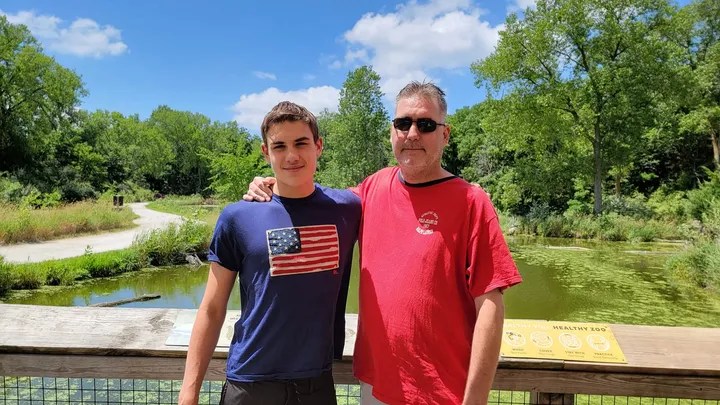
Yesterday Jay Bolden and I had the privilege of talking with pitching coach Bill Hillhouse for an upcoming From the Coach’s Mouth podcast. If you’re not familiar with him, Bill was the youngest pitcher ever to play for the Team USA Men’s National Team when he joined it in 1993, and was an outstanding player who competed all over the world, winning wherever he went.
(If you’re interested in learning more about his softball resume, I’ve included more facts below.)
Bill then started giving lessons, mostly to female players, as his playing career was winding down. He saw the terrible hello elbow mechanics that were being taught widely at the time and became a very vocal advocate for learning to pitch the way the body moves naturally and the way all the top-level pitchers actually threw – what we today call internal rotation, although he’s not a fan of that description either for various reasons.
He named his business the House of Pitching, and he put out a series of DVDs to help spread his teachings more broadly than he could one-on-one. My guess is thousands of pitchers benefitted from the work he did in explaining everything from basic to advanced pitching mechanics in his lessons, clinics, and DVDs.
It was a business that again took him all over the world and afforded him a comfortable although not lavish living. He was also a columnist for Softball Magazine at the same time I was, which is where we met and became friends.

Then in July of 2025 Bill got the news no one wants to hear: he was diagnosed with stage 4 pancreatic cancer. In typical Bill fashion he didn’t make a big deal about it, not wanting to burden others with his issues, but as we all know getting sick here in the good ol’ USA isn’t cheap.
Suddenly, not only did he have all these medicals bills but he was also cut off from his only source of income – giving lessons.
Which brings me to the point of today’s post. After all the years of helping others (including many who were indirectly assisted by his influence on other pitching coaches like me), Bill could use a little help himself.
His girlfriend set up a GoFundMe page to help him with his expenses while he does his best to battle this disease. He knows it’s not a winnable fight – there is no “cure” for pancreatic cancer – but as a competitor he’s not just sitting around waiting for the inevitable.

In fact, he told us he’s been giving lessons again on a limited basis, and while it’s bringing in some revenue it’s less than he needs to live a normal life. So here’s my ask today.
I know times are tough right now, but if you can please go to https://www.gofundme.com/f/help-bill-hillhouse-through-his-cancer-battle and leave a donation. Even $5 or $10 will help, especially if a lot of people choose to do it.
So maybe instead of your morning Starbuck’s or those McDonald’s Diet Cokes you enjoy, take one day and dedicate that money to Bill. The big corporations won’t miss it, but it will sure make a difference to a guy who has made a difference to so many of us in the fastpitch softball world – including many who don’t even know it.
Thanks for considering it. And keep an eye out for our conversation with Bill coming up in a couple of weeks over at the From the Coach’s Mouth podcast. It was a lot of fun and I’m sure you will enjoy it.
Bill Hillhouse Mini-Bio
Bill Hillhouse was a star pitcher in international men’s softball, playing all over the world including eight seasons competing in New Zealand. He was not only a two-time member of the USA Men’s National Team but was the youngest pitcher ever to play for that team when he joined it in 1993. Among his accomplishments are being named the Pan American Games M-V-P, winning the Men’s Major National Championship three times, earning a gold medal at the U-S Olympic Festival, and being inducted into the USA Softball of Pennsylvania Hall of Fame in 2022.
Bill’s coaching career is equally stellar. After stints as a pitching coach consultant for division 1 Drexel University and the University of Georgia, in 2018 he joined the staff at Providence College in Rhode Island. A strong advocate of men’s fastpitch, he also served the sport as a commissioner for the International Softball Congress from 1997 to 2013.
He is probably best known, however, as a private coach. Operating under the House of Pitching moniker, Bill gave individual lessons and conducted group clinics all over the US and the world. While he coached many high-level softball pitchers to successful college careers, including 2025 WCWS winner Tegan Kavan, he never really publicized his association with any of them. As he told Jay and me, “Their accomplishments were theirs, not mine, the result of a lot of hard work and dedication. I teach everyone the same things but get varying results, so the difference is really in them.”






