Monthly Archives: September 2026
Pitchers Don’t Need to Be Strikeout Queens to Win
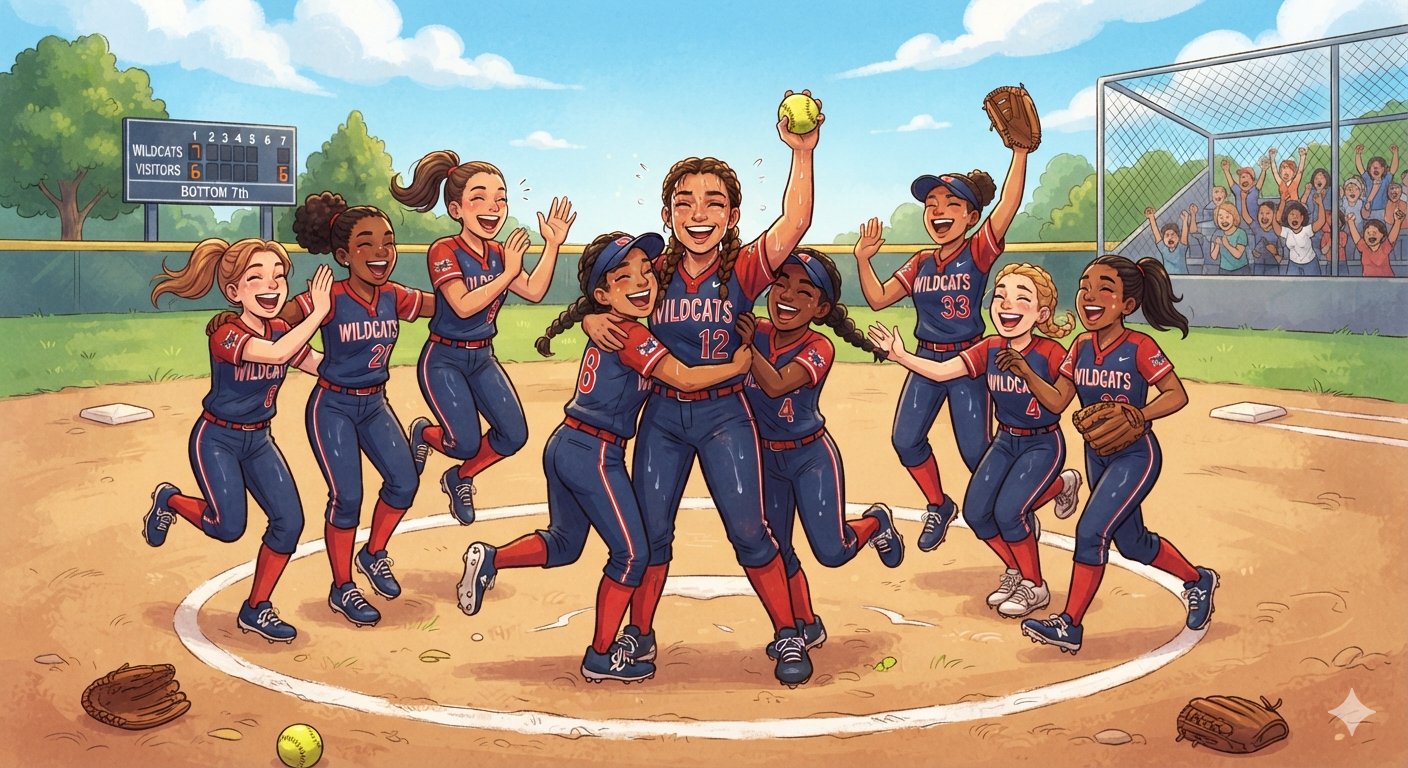
Everybody loves to watch a strikeout queen do her thing. Well, not everybody – I’m sure hitters and their parents are less enthralled – but pretty much everyone else is enamored by the ability for pitchers to get hitters out all by their lonesomes instead of relying on their defense.
I get it too. As a pitching coach, when I check the stats for one of my students on GameChanger the first thing I’m going to look at is A) if she pitched that game, followed by B) how many strikeouts she got. It’s an easy way to measure how well your pitcher did against opposing hitters.

But I think sometimes coaches get a little too enamored of that stat, to the point where they tremendously under-value other pitchers on their staffs that may not get the big K stats but are equally effective, game after game, at getting hitters out. Maybe even more effective in a way, because it takes them fewer pitches to do it.
This whole discussion came up after I read a Facebook post by Kassie Rhodes, a former collegiate pitcher and now a pitching coach herself. (You’ll have to scroll down a bit to read her post at the link because I couldn’t figure out a way to link directly to it. My bad.)
In it she argues that a pitcher who can get her team out of an inning and off the field quickly by inducing weak contact and easy to field balls is every bit as valuable as one who can strike out the side on a regular basis. It’s just not as dramatic.
I agree. In fact, I’d say that pitcher who can produce a 7-pitch inning on a regular basis is probably more valuable to her team on a sunny 95 degree day with 95% humidity when you’re playing on turf than the pitcher who takes 9-15 pitches to strike out the side. Especially if you have a misting fan waiting in the dugout.
Now, I understand the other side of the argument. When your pitcher can get you a strikeout, it removes some of the risk in getting an out.

All you need is a catcher who can avoid dropping the ball on strike three versus a popup/fly ball where one other player will have to touch the ball, or a ground ball where you need a clean field, a good, on-time throw, and a good catch to get the out. More touches equals higher risk.
But if your team is capable of making the plays they’re supposed to make, the risk factor of extra touches should be extremely low. At which point you can say an out is an out no matter how you get it.
And if it’s not, you have some work to do as a coach to get it that way.
Another advantage to the team with a pitcher who doesn’t accumulate a high number of strikeouts per game is that your defense gets more practice. I don’t know about you, but I’ve seen plenty of teams that failed in big games because they were used to their pitcher carrying most of the load.
When she ended up facing a team that actually could hit off of her, the defense was often under-prepared to field the ball and make the play, especially when the heat was on. There’s a difference between doing it in practice and doing it in games.
Teams that regularly have to make those plays often fare better. Repetition in games conditions is valuable.
Here’s another thing to consider. It’s easy to assume that it’s easier to win a championship when you have a high-strikeout pitcher.
But if you look at this list of the top 10 all-time strikeout leaders in NCAA Division 1 play, only three of them won a WCWS, and the top three have zero WCWS championships between them. That’s right, you have to wait until #4 (Danielle Lawrie) before you find one whose team won the last game of the season.
This is to take nothing away from the other 7 in the top 10. They were all outstanding pitchers who won a lot of games and other tournaments with their teams.
But as good as they were, it still takes a team to win.
Oh, and in case you were wondering, the #1 pitchers for the two teams who faced each other in the 2026 WCWS championship series came in at #6 (Tegan Kavan) and #7 (NiJaree Canady) for this season.
The bottom line is, in a standard game each teams gets 21 outs (or 18 if the home team is ahead by the middle of the 7th). They are the currency of the game, and should be treated like gold, because once you’re out of them (no pun intended) your chances of winning are zero.
So the faster you can take away your opponent’s outs, the faster you can get to a victory celebration. And the game doesn’t care how you get those outs.
So if you have a pitcher who is capable of inducing easy outs on a regular basis by getting hitters to pop up, or hit “can of corn” fly balls or weak ground balls, along with the occasional K when you need it, who cares how they got out – as long as they’re out? Instead of considering her as being “less than” your big strikeout stud, take advantage of her abilities and give her the fair share of circle time she’s earned.
Not only will it help you get the wins you desire. It will save some wear and tear on your stud pitcher’s arm for when you really need someone who can blow the ball by the opposing hitters.
Not Doing It Versus Can’t Do It
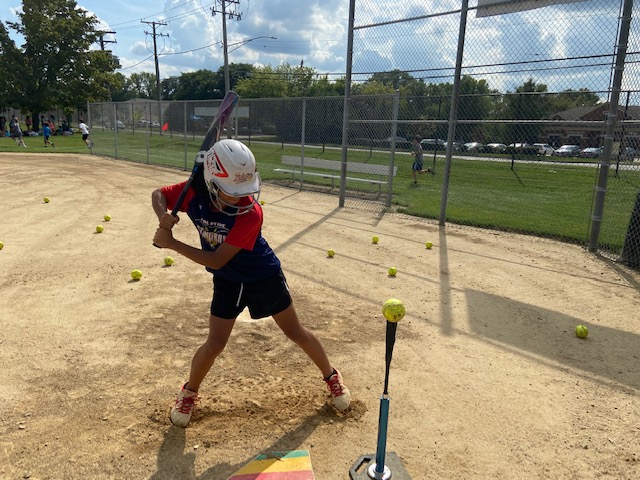
If you’ve been coaching for any length of time you start to recognize certain movement patterns that you know are going to hurt a player’s performance. While there may be a million ways TO do something and still be successful, there are definitely some movements you don’t want to do because they will cause problems up and down the kinetic chain.
Examples of things you don’t want to see are pitchers not letting their shoulders open enough when they go over the top, hitters letting their hands drop to their waists in a “scooping” motion, fielders pulling the ball back like a bow-and-arrow when throwing, and so forth. No matter what your overall approach is, if you see one of these issues you’re going to want to correct it sooner rather than later, both to help players perform better and in some cases avoid injuries.
But just because you show them how to correct it doesn’t mean it will happen right away. It’s easy to attribute that to habits, and to believe with enough coaching and repetitions the player will eventually overcome the issue.
What if it’s not, though? What if the player is putting in the work and trying to do better but she’s still having trouble replacing that old pattern with a new, better one?
In other words, what if the problem isn’t that she’s not using the newly prescribed pattern, but that she CAN’T do it?
The human body is a marvel of engineering. There are so many complex systems and sub-systems, and sub-systems of those sub-systems that you can spend years studying it intensely and still feel like you’ve only scratched the surface.
All of these systems and sub-systems are designed for one basic thing: to keep you alive and safe. My favorite way of putting it is X happens so you don’t fall down and get eaten by a tiger.

But what if X can’t happen? Then your body will find another way to get the job done to keep you from becoming a Fancy Feast for said tiger.
For example, if you’re trying to run away from a threat and the muscles that are primarily responsible for that important task aren’t up to it for some reason, your central nervous system (CNS) will put out a call to the rest of your body essentially asking if anyone else is available to pick up the slack and get you running. That’s when another muscle, or muscle group, takes over.
It may not be the ideal choice, but it’s better than just lying there and waiting to get eaten.
Now put it into the context of playing softball. That hitter is trying to hit the ball but she’s dropping her hands to move the bat toward the ball.
Sure, it could be poor training or a total lack of training. But what if the issue is the muscles that are required to keep the bat on a better path to the ball aren’t up to the job?
Maybe the hitter has some weakness in the muscles or fascial lines that are supposed to keep the bat where you want it to be. She isn’t able to follow the best path for hitting, so her body sends out the call and other muscles or fascial lines that are capable of moving the bat in some way take over instead.
You can tell her to do this or do that until you’re blue in the face. But until the physical issue at the root of the pattern is fixed she’s not going to be able to make the change you want her to make, no matter how willing she is to try (or how much you yell at her in some cases).

Again, the human body is designed for protection, not performance. So in this case if the overriding goal is to move the bat toward the ball instead of standing there like a statue, the body will find a way to do it – even if it’s not a very good way to hit successfully.
All of which points out why it’s important to study not just the techniques but also at least some measure of the underlying anatomy of movement if you really want to help your players perform.
At the very least, read some books or watch some videos that discuss human movement patterns in more general terms. Get an idea of what happens under the hood, i.e., how muscles work together to cause movement and the role fascia plays in it.
If you want to dig deeper there are plenty of ways to do that too. A few years ago I became a certified Corrective Exercise Specialist through the National Academy of Sports Medicine.
It was not an easy course, but it gave me a much better understanding of how to look for deficiencies and compensations in the body as well as how to develop simple stretching and exercise programs to correct them.
I have been trained in identifying motor preferences through Motor Preferences Experts. That training has helped me understand better how each athlete moves naturally – and whether what I’m observing looks like it’s totally natural or perhaps a compensation that might be due to an underlying cause.
I recently attended a course and received Level 1 certification through The Farm System to learn more about the specifics of movement as they relate directly to pitching, hitting, and throwing in softball. In the process, I learned even more about recognizing asymmetries and other issues in the body and how to develop strategies to help players overcome them.
There are plenty of other resources out there as well if you really want to go after it.
But even if you’re just simply volunteering to help with your daughter’s rec team that’s going to play for eight weeks, it’s important to understand there is a difference between not doing something and not being ABLE to do something.
If you have no expertise in these areas yourself, maybe suggest that a player who seems willing but is having trouble making adjustments be checked out by a qualified trainer to see if there is some restriction that may be preventing that player from becoming the player she is meant to be. Especially since some of the issues (such as flat feet) that are causing performance problems on the field may also cause general health problems off of it.
The bottom line is that sometimes correcting performance problems isn’t just a matter of teaching a better technique. Instead, there may be underlying issues that have to be fixed before you focus on those techniques.
The more you learn about the differences, the better-positioned you will be to help all your players become the athletes they’r meant to be.
Don’t Let Throwing Become Throwaway Time

You see it all the time at practices and even at games. One of the first things teams will do is split into two lines of partners facing each other.
Then one side throws the ball, followed by the other side throwing it back. Both lines are doing it badly.
I see the same thing before pitching lessons. Sometimes it’s so bad I can’t stand it anymore, at which point I will stop the student and tell her “Let’s work on your overhand throwing first.” It’s just that bad.
It’s also frustrating, because no matter where it’s happening, I can’t believe coaches aren’t taking the time to correct this clearly terrible throwing motion. I guess they don’t think it’s that important, as long as the ball isn’t getting thrown away too much.
Spoiler alert: it is.
An oft-quoted statistic is that 80% of all errors in baseball as well as fastpitch softball are throwing errors. I believe it.
It’s far more common to see a ball thrown away than booted in the dirt or dropped. And the consequences of a poorly thrown ball are also often more devastating to your team’s chances of winning.
Think of it this way: If an infielder boots a ground ball, or an outfielder fumbles an easy fly ball, the batter gets on base instead of being out. One base.
But if that same fielder throws the ball past the person receiving it, there’s a much higher likelihood that that batter (and anyone else who is on base for that matter) will advance two or more bases, depending on how bad the throw was and where it ended up. Runners now have either scored or moved that much closer toward scoring.
So from that perspective it becomes obvious that working on throwing instead of just using throw as a warm-up before you get to the “real” stuff in practice can have a pretty high payoff. i mean, you don’t have to be Mike White to understand that cutting out 80% of your errors gives you a much better chance of winning more ballgames.

Now we come down to how to improve throwing. Start with the basics.
I personally am a big fan of Austin Wasserman’s High Level Throwing program. If you can get to a clinic of his I highly recommend it; if you can’t, his online program is really good too.
There are other good throwing programs out there as well that will take you step-by-step through the mechanics. If you want to start with some free advice, check out this old blog post of mine that walks you through a progression as well.
(One adjustment I would add to those instructions is that when you pull the hands apart, do it by using the scapulae to pull the elbows rather than pulling the ball or hand back. I didn’t specify in the old post but it works much better.)
Once you have an idea of how to teach throwing, here’s the thing you need to do: make a commitment to helping all your players improve their throwing skills. This is not a “do it once to cover that base” type of thing.
You really need to work on it purposefully at every practice to ensure ALL your players can execute the skill under pressure, when it matters most. Early on, that may mean throwing your overall practice plan out the window and spending an hour or more on it until your entire team can throw the ball 60 without throwing the ball away (or dropping it; might as well work on receiving skills too).
Some key things to look for are:
- Can they transfer the ball after a catch to put themselves in a good starting position?
- Are they making an arm circle/turning the ball away from them to start or are they pulling the ball back like a bow and arrow?
- Are they using their bodies in a hips-shoulders-throw pattern or is all the energy concentrated in their arms?
- Is the throwing hand elbow above or below the shoulder when they are going into the actual throw?
- Is the glove arm doing anything or does it look like they’re holding a loaf of bread?
- Are they letting the arm whip at the end or are they pushing/guiding the ball toward the target?
- Does the motion look comfortable and natural to them (everyone will throw a little different so don’t try to create clones) or does it look forced and tight?
- Again, can they throw accurately from 60 feet away, which is the distance between bases?
Once they are starting to look like they know how to throw without pressure, start adding pressure into the mix. One of my favorite drills was the One Minute Drill.
It’s pretty simple. Start the ball with one set of partners and, while you’re standing there with a stopwatch, tell the team all they have to do is complete 100% successful throws and catches for one minute. There’s no minimum number of throws to achieve, they just have to keep going.

When you’re ready, say “go” and they start throwing. You as the coach can call out 15 second intervals to add a little extra pressure, especially if they make it to the “15 seconds left” mark.
It sounds like you should only have to do it once, but be prepared to spend a fair amount of practice on it, especially the first time you do it. Again, you may end up having to skip major sections of your practice plan, even at the high school or college level.
But it will be worth it. Because once your team knows you take throwing seriously, they will take throwing seriously, and you will see the improvements in their warmups, in their fielding drills, and ultimately in the game.
Make great throwing a priority, and more importantly a habit, and you’ll be amazed at how much better your team plays – and how much better they get at avoiding shooting themselves in the foot at critical times.
It’ll save you a whole lot of heartache too.
Product Review: Fastpitch Fuel Not Just Another Sports Drink

Staying hydrated and maintaining healthy levels of electrolytes and other minerals is always a challenge in hot weather – even with the best intentions. And now that summertime heat and humidity has returned with a vengeance here in September it should once again be top of mind for those participating in round robins, weekend tournaments, even college softball games.
That’s why I thought this would be a good time to talk about a product I came across not too long ago that can help players, coaches, and parents keep themselves from suffering the effects of oppressive heat, including general dehydration and heat exhaustion: Fastpitch Fuel.
(FULL DISCLOSURE: I liked the product so much when I tried it that I became an affiliate, so if you use this link I get a little bit of money from each purchase. But I promise that every word in this review is true.)
Fastpitch Fuel was designed by a guy named Dino Scrivani, an entrepreneur who has developed food supplements for some of the biggest names in the health industry. Yet he is also a fastpitch dad and PaulyGirl certified pitching instructor who recognized that the commercially available sports drinks weren’t really designed for the needs of fastpitch softball players. So he set out to invent one himself, using his years of experience in the food supplement industry.

One big difference with Fastpitch Fuel is that your typical sports drinks focus mostly on delivering two things: electrolytes and sugar. As a result, their effect is quick and temporary; the electrolytes help prevent dehydration while the sugar provides a quick energy spike.
But softball players, and especially female softball players, don’t just lose electrolytes when they sweat. Over the course of a long tournament they can lose other minerals, such as sodium, potassium, magnesium, and calcium, that affect not only immediate performance but their longer-term ability to continue playing.
Fastpitch Fuel replenishes all of those minerals while eliminating the sugar, helping players avoid periods of high energy followed by a crash. It’s made to sustain players through three or four back-to-back games in extreme heat so they can continue to perform at a high level.
I’ve tried it myself on days when I have a lot of lessons stacked up on hot days outdoors, and can say I didn’t feel the usual effects of the heat. Sure, it was uncomfortable and annoying (as you might expect), but I was able to maintain my energy through an extended exposure period to both heat and humidity.
I’ve also given Fastpitch Fuel to a few students to try on those days, and they’ve reported feeling fewer effects from the heat as well. It comes in a powder form that includes a measuring spoon, so it’s easy to add to a standard water bottle – either the plastic, disposable kind or a refillable bottle.

So what about the taste? No matter how good something might be for a player, she’s not going to drink it if she doesn’t like the way it tastes.
Fortunately, everyone who has tried it (including me) has liked it. So far I have only tried the electric lemon-lime flavor, but there is also a sour strawberry that is supposed to be really good. I plan to try that one soon.
One other good thing about Fastpitch Fuel versus the other commercially available sports drinks is that there are no artificial colors, sweeteners, or other ingredients. It was also reviewed by a top-level pediatric specialist to be sure it is safe and healthy for youth players as well as adults.
If you’re looking for a sports drink that provides a healthier approach to hydration on these long softball days or weekends, give Fastpitch Fuel a try. It’s a great way to stay ready to play all day.