Daily Archives: September 18, 2026
Not Doing It Versus Can’t Do It
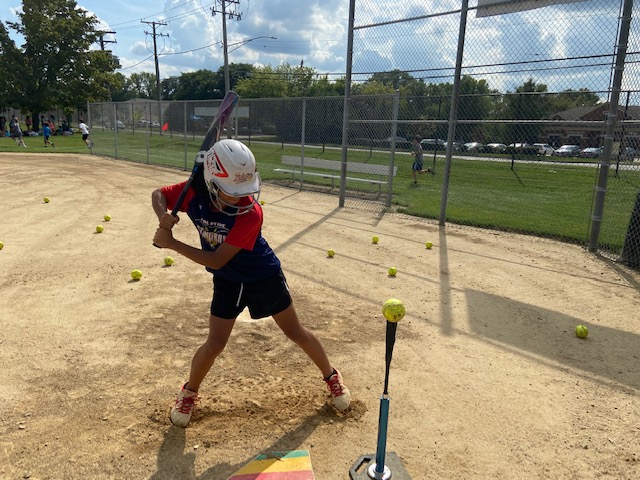
If you’ve been coaching for any length of time you start to recognize certain movement patterns that you know are going to hurt a player’s performance. While there may be a million ways TO do something and still be successful, there are definitely some movements you don’t want to do because they will cause problems up and down the kinetic chain.
Examples of things you don’t want to see are pitchers not letting their shoulders open enough when they go over the top, hitters letting their hands drop to their waists in a “scooping” motion, fielders pulling the ball back like a bow-and-arrow when throwing, and so forth. No matter what your overall approach is, if you see one of these issues you’re going to want to correct it sooner rather than later, both to help players perform better and in some cases avoid injuries.
But just because you show them how to correct it doesn’t mean it will happen right away. It’s easy to attribute that to habits, and to believe with enough coaching and repetitions the player will eventually overcome the issue.
What if it’s not, though? What if the player is putting in the work and trying to do better but she’s still having trouble replacing that old pattern with a new, better one?
In other words, what if the problem isn’t that she’s not using the newly prescribed pattern, but that she CAN’T do it?
The human body is a marvel of engineering. There are so many complex systems and sub-systems, and sub-systems of those sub-systems that you can spend years studying it intensely and still feel like you’ve only scratched the surface.
All of these systems and sub-systems are designed for one basic thing: to keep you alive and safe. My favorite way of putting it is X happens so you don’t fall down and get eaten by a tiger.

But what if X can’t happen? Then your body will find another way to get the job done to keep you from becoming a Fancy Feast for said tiger.
For example, if you’re trying to run away from a threat and the muscles that are primarily responsible for that important task aren’t up to it for some reason, your central nervous system (CNS) will put out a call to the rest of your body essentially asking if anyone else is available to pick up the slack and get you running. That’s when another muscle, or muscle group, takes over.
It may not be the ideal choice, but it’s better than just lying there and waiting to get eaten.
Now put it into the context of playing softball. That hitter is trying to hit the ball but she’s dropping her hands to move the bat toward the ball.
Sure, it could be poor training or a total lack of training. But what if the issue is the muscles that are required to keep the bat on a better path to the ball aren’t up to the job?
Maybe the hitter has some weakness in the muscles or fascial lines that are supposed to keep the bat where you want it to be. She isn’t able to follow the best path for hitting, so her body sends out the call and other muscles or fascial lines that are capable of moving the bat in some way take over instead.
You can tell her to do this or do that until you’re blue in the face. But until the physical issue at the root of the pattern is fixed she’s not going to be able to make the change you want her to make, no matter how willing she is to try (or how much you yell at her in some cases).

Again, the human body is designed for protection, not performance. So in this case if the overriding goal is to move the bat toward the ball instead of standing there like a statue, the body will find a way to do it – even if it’s not a very good way to hit successfully.
All of which points out why it’s important to study not just the techniques but also at least some measure of the underlying anatomy of movement if you really want to help your players perform.
At the very least, read some books or watch some videos that discuss human movement patterns in more general terms. Get an idea of what happens under the hood, i.e., how muscles work together to cause movement and the role fascia plays in it.
If you want to dig deeper there are plenty of ways to do that too. A few years ago I became a certified Corrective Exercise Specialist through the National Academy of Sports Medicine.
It was not an easy course, but it gave me a much better understanding of how to look for deficiencies and compensations in the body as well as how to develop simple stretching and exercise programs to correct them.
I have been trained in identifying motor preferences through Motor Preferences Experts. That training has helped me understand better how each athlete moves naturally – and whether what I’m observing looks like it’s totally natural or perhaps a compensation that might be due to an underlying cause.
I recently attended a course and received Level 1 certification through The Farm System to learn more about the specifics of movement as they relate directly to pitching, hitting, and throwing in softball. In the process, I learned even more about recognizing asymmetries and other issues in the body and how to develop strategies to help players overcome them.
There are plenty of other resources out there as well if you really want to go after it.
But even if you’re just simply volunteering to help with your daughter’s rec team that’s going to play for eight weeks, it’s important to understand there is a difference between not doing something and not being ABLE to do something.
If you have no expertise in these areas yourself, maybe suggest that a player who seems willing but is having trouble making adjustments be checked out by a qualified trainer to see if there is some restriction that may be preventing that player from becoming the player she is meant to be. Especially since some of the issues (such as flat feet) that are causing performance problems on the field may also cause general health problems off of it.
The bottom line is that sometimes correcting performance problems isn’t just a matter of teaching a better technique. Instead, there may be underlying issues that have to be fixed before you focus on those techniques.
The more you learn about the differences, the better-positioned you will be to help all your players become the athletes they’r meant to be.






