Daily Archives: July 17, 2026
Travel Softball’s Greatest Challenge
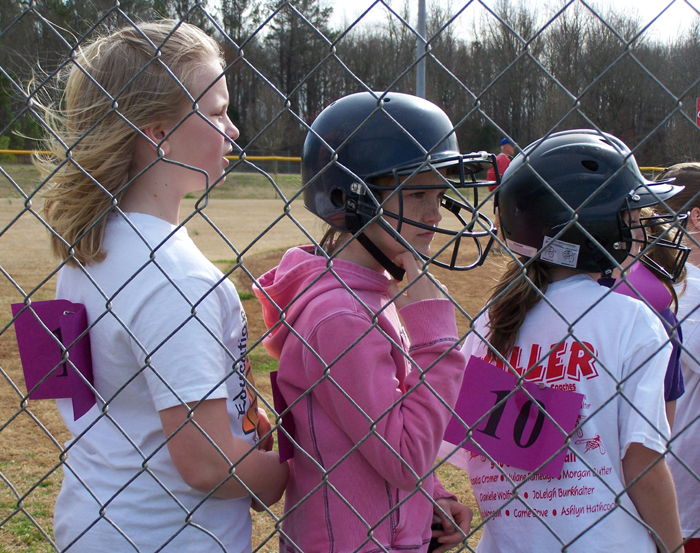
I was talking to a father the other day about how difficult it has been for his 12 year old daughter to find a team that will help her make the leap from rec ball/part-time travel to full travel ball. She had tried out for several teams, and like any good dad when the teams said they were interested he asked what was holding her back, i.e., what she needed to improve in order to increase her chances with the next team.
I found those responses both interesting and disturbing. The one I remember most distinctly was one team, which was touting that it had a “former college player” as a head coach, told him his daughter couldn’t hit the outside pitch.
Really?
First of all, the teams she was trying out for aren’t exactly on the top of the food chain. More like C level teams, perhaps middle B at best, so it’s not like she was overreaching in her ambitions.
But what struck me more about it was a simple thought: shouldn’t any halfway decent coach be able to TEACH a 12 year old how to hit the outside pitch?
It’s not that hard. You put a tee on the outside corner, a little deeper than you would hit a middle-of-the-plate pitch, and work with the hitter to keep her hands in instead of reaching out for the ball first.
But this encounter speaks to what seems to be the biggest issue in travel ball in my opinion. Which is that “coaches” either don’t want to or don’t know how to teach the game anymore.
More and more it appears that coaches just want to find players who already have great skills, throw them on the field, and wait for them to win ballgames. And if turns out the players they do select are lacking in any skills or knowledge, they just throw them on the bench until they figure out what to do – or hire an outside coach to tell them.

That’s just wrong to me. The job of a coach at any level, even college or professional, is to help their players grow and learn and improve.
Sure, at the higher levels it’s more refinement of existing skills than teaching new ones. But they are still looking for areas of improvement that can help each player get better, even if that improvement is incremental.
So there’s no reason a coach at the youth level shouldn’t expect to have to put in some work teaching their players too. At the 10U and 12U levels, that can involve a lot of teaching.
In my experience it’s impossible to know which players will ultimately grow to be the best by the time they’re 18, or 20, or 22. Many of the top players in the game today will tell you they weren’t superstars when they were young.
Everyone grows and learns at their own pace; every player follows her own path to get there. With a little encouragement and guidance a girl who seems weak in her skills, knowledge, or even athleticism today could just turn out to be great pitchers, catchers, fielders, hitters, etc. when they get older.
But they’ll never get the chance to find out if the people running teams are only looking for players they can throw out on the field today and watch them perform while the coaches sit back and watch.
To be honest, there is a lot of value and satisfaction in taking a girl (or a group of girls) who may not be fully baked right now but have potential and teaching them how to swing a bat, throw ball, run the bases, and perform other skills at a level above where they started. Much more so, in fact, than having them end the season at the same level they started – no matter how many trophies you may have won.
And while we’re on the subject of development, I also have to shake my head at all the ads I’m seeing right now from B and C teams looking for “one more bracket pitcher” or “A level pitcher” to round out their rosters. They might as well be wishing for those pitchers to bring a pot of gold along with them to the tryout because it’s just as likely to happen.

The reality is the A level pitchers are generally spoken for first, so it’s unlikely they’re available right now. Especially with the fact that tryouts for next season seem to be starting at the beginning of the current season these days.
A pitcher of that caliber may pop up later, maybe in the middle or end of fall ball if someone isn’t happy with their team choice. But if coaches are looking to settle their rosters today, they’d probably be better served looking for a pitcher who has the potential to be a bracket or A level pitcher if they are given the opportunity to work through a few disasters until they find themselves. Just sayin’.
Again, though, that would require sacrificing a few wins today for more in the future. It would also require actual, active coaching for improvement rather than simply managing lineups.
Look I get it. Coaching is hard. So is losing games, especially when you know you could have won them if your players had just been a little bit better on that day.
But as any good general or business leader will tell you, sometimes you have to accept short-term losses in order to realize longer-term gains.
That’s why it pays to learn how to be a true coach rather than just a manager of players.
If you’re a manager, you are at the mercy of your players’ abilities. If they play well, great; if they don’t, there’s not much you can do but yell and scream for them to do better.
But if you actually put in the work to become a true coach, you can change the equation by helping each and every player learn to play the game better. You can teach them how to hit that outside pitch, or turn the double play, or hit the cutoff, or lay down that bunt, or take the extra base on a hit to right center, or do any of the other hundreds of things that happen in a game that can snatch victory from the jaws of defeat.
And in doing so you don’t just change a game. You could end up changing a life – which beats winning a plastic trophy or a gaudy ring every time.






