Monthly Archives: April 2026
More Drills Does Not Automatically Equate to Better Performance

I recently saw a question in a Facebook group from a parent trying to decide if he/she should change private instructors. While the question was about pitching in particular, I think it can also be applied to hitting, fielding, throwing, and other individual aspects as well as activities team coaches do.
The parent in question said that their daughter’s instructor always uses the same drills. Yet the parent sees all these other drills being promote on the Internet and seemed to be under the impression that performing a wider variety of drills would be better for their daughter.
(TECHNICAL WRITING NOTE: I know right now there are English language purists saying I am using a plural pronoun to reference an individual parent. That usage has actually been acceptable in many areas of grammar for centuries, and was changed in the AP Stylebook {which I generally follow} in March of 2017. So there – defensive rant over.)
There is certainly a case to be made that using a wider variety of drills helps break up the boredom or the so-called “grind” of instruction or practicing. There is also a case to be made that if one particular drill, no matter how well it is designed, isn’t working that you should try something else.
Let’s address those two points. The first is that coaches and instructors are not in the entertainment business – they are in the performance business.

Coaches’ main responsibility is to make sure that players’ skills are at a level where, when gametime comes, the players are able to perform those skills as effortlessly and flawlessly as possible. And that takes repetition.
There’s a reason certain close-in fielding drills are called “dailies” or “every days.” They are meant to be performed not just until players get them right but until they can’t do them wrong.
So yes, they may be mindless and routine, but that’s the goal. The objective is to make the most common plays mindless and routine so when they come up in a game players can perform them with the highest level of confidence.
The second point – that if one drill isn’t working try another (in case you already forgot what the second point was) – has more validity in my mind. You know the old saying about doing the same thing over and over and expecting different results.
A good coach will have a toolbox full of approaches to solving particular problems. Not everything works with everyone so even though the coach may have particular favorites, it’s good to have alternatives for when those favorites just aren’t working.
But no matter which drill you’re doing, it should be designed in a way to either solve a problem or enhance what a player is already doing to make it better. And that’s where getting caught up in the idea that the coach needs to keep coming in with new drills all the time is flawed thinking.
I mean, which would you rather have – a set of drills that the coach knows works, or a bunch of random drills that may or may not have any value?
And here’s a little secret for you: a lot of the drills you see posted on Instagram or TikTok or Facebook groups or other online sources are just garbage. There I said it, and I don’t regret it.

The Internet is a hungry beast, and someone who wants to become Internet famous as a coach needs to keep posting new material all the time in order to get those precious likes, clicks, shares, follows, and comments. Once they run out of good, proven drills they still have to come up with new ones or the algorithm will forget about them.
So then it’s a race to the bottom, posting ideas and drills that may seem ok in the moment but really make no sense when you look at them a little deeper.
Finally, I believe there are certain core principles to every skill that cannot be ignored. Players need to have those in place before they can get to the fancier stuff.
And certain core principles need to be pretty well in order before moving on to others. Work on them out of sequence, or decide to just let players slide by without really internalizing them before moving on, and you’re setting them up for a spectacular failure.
Here’s the challenge I will throw out to those who think quantity is more important than, or even equal to, quality when looking at drills. Is it possible that your favorite player is doing the same drills all the time because they haven’t’ put in the time and effort to get those drills right?
Perhaps the coach sees a particular drill is working but the player hasn’t done it enough to move from something they can do when they think about it to something they can do without having to think about it.
It could also be that there are some drills that are just so important that you want to continue using them regardless of how accomplished the player becomes. I know I have a few of those go-tos that help set players up for success faster.
I may try other things from time to time. But when crunch time comes, I’m going to use what I know is most likely to work, even if we’ve done it a thousand times before. Or even because we’ve done it a thousand times before.
The bottom line is you don’t want to do drills just for the sake of doing drills. They should be purposeful and specific, with an ultimate goal in mind.
Take that approach and you’re far more likely to be satisfied with the gametime performance that comes out of them.
What Seems Bad Today May Look Like a Blessing Tomorrow

We often talk about how softball is a game of failure and disappointment. Sometimes things happen that are beyond our control – not making a preferred team, giving up a home run or striking out in a key situation, losing a game that knocks you out of the playoff, having a bad game when a college coach comes out to see you, and so forth.
At the time it seems devastating – like your (or your daughter’s) whole future just came crashing down around you. That’s when it’s good to remember the story of the Zen master and the little boy, which I fully admit I am stealing from the movie Charlie Wilson’s War because that’s how big of a nerd I am.
Anyway, the story goes like this:
There’s a little boy and on his 14th birthday he gets a horse… and everybody in the village says, “how wonderful. The boy got a horse” And the Zen master says, “we’ll see.” Two years later, the boy falls off the horse, breaks his leg, and everyone in the village says, “How terrible.” And the Zen master says, “We’ll see.” Then, a war breaks out and all the young men have to go off and fight… except the boy can’t cause his legs all messed up. and everybody in the village says, “How wonderful.” To which the Zen master says, “we’ll see.” And so it goes.
The point is, sometimes in softball, as in life, things seem really important in the moment, and if the moment goes wrong it’s easy to think it’s the end of the world. Yet anyone who has been around for a while like I have (quite a while in my case) can tell you, the universe tends to unfold as it should. (I got that one from Harold and Kumar Go to White Castle since I’m on a movie kick, but it’s been around since well before that.)

Us old folks can also tell you that sometimes not having things work out the way you were hoping in the moment turns out to be the best thing that could have happened to you. Let’s take making that team that was so important to you for example.
We can actually look at it two ways. Did you ever hope to make a team, actually have it happen, then find out once you’re there the coaching or the players were actually pretty toxic?
If not, consider yourself lucky. For those who experienced it, it can be pretty devastating – much worse than the temporary pain of not making the team. If it’s really intolerable you may find you need to move to another team which doesn’t have the prestige or the connections of the current team.
Yet as the Zen master said, we’ll see. Having to move to a lesser team may put you in position to gain more opportunities than you would have otherwise, helping you improve your game, and ultimately being ready when a college coach happens to catch your game. None of that would have happened had everything worked out on the first team.
On the other hand, by not making that first team you will be forced to find another, where you may meet a coach who changes your life. That wouldn’t have happened if you had gotten what you wanted in the moment.
Not making the team? How terrible. We’ll see.
What about striking out or giving up a home run in a big game? Certainly that can’t be good, can it?
Not in the moment. But what if there was a college coach there trying to decide between you and another player who has slightly better stats before offering a scholarship?
The coach saw the other player throw a helmet and sulk after striking out, or lose her cool and sulk after getting pulled from a game following having a home run hit off of her.
But when you did one of those things, you picked yourself up and were on the fence cheering for your teammates (or in the case of the pitcher your replacement). The college coach learned something about you that tipped the scales in your favor after a seemingly bad thing happened.
If you had instead gotten the hit or the out your offer might have gone to the other player based on the numbers. But because you had the opportunity to display character and took advantage of it the offer came your way instead.
(Incidentally, don’t think that wouldn’t happen in real life. On the From the Coach’s Mouth podcast Jay Bolden and I have talked to college coaches who made offers in exactly those circumstances.)
It’s kind of like the timeline in time travel movies (there I go again). One little event happens, whether positive and negative, and it sends the timeline in a slightly different direction.

And that slight difference sets you on a path that ultimately ends up being better for you in the long run.
One more non-softball example. Most people experience a bad breakup with someone they love at one time or another. At the time, it can feel like the end of the world; how will you ever live without that person in your life?
Eventually, though, you meet someone who is just flat-out better for you. They want the same things, they share the same values, they just feel “right.”
You may never have met the love of your life had you still been with the person who broke your heart. Again, while sad and painful in the moment, losing that other person set you on a path toward greater happiness than you ever thought you’d have.
So whatever disappointments or heartaches or frustrations you may be facing right now, remember the words of my great friend Tim Boivin. Whenever we faced a tough situation at work, he would always remind us that this too shall pass.
And so it is with softball. It’s very possible that the event or circumstance that is causing you so much heartache today could be the catalyst toward a future that is everything you hoped it would be.
Just be sure to remember the wise words of the Zen master as you’re celebrating your good fortune: We’ll see.
BONUS: For two lesser-known but really good movies which explore these themes, check out Mr. Destiny starring Jim Belushi (believe it or not) and Linda Hamilton, which explores how his life would have changed had he not struck out in the game for the state title, and The Adjustment Bureau starring Matt Damon and Emily Blunt, which takes a much more serious look at “angels” trying to keep a predetermined timeline on track against the free wills of the protagonists.
Main photo by Bryce Carithers on Pexels.com
Keep Your Pitcher’s Strengths In Mind When Calling Pitches
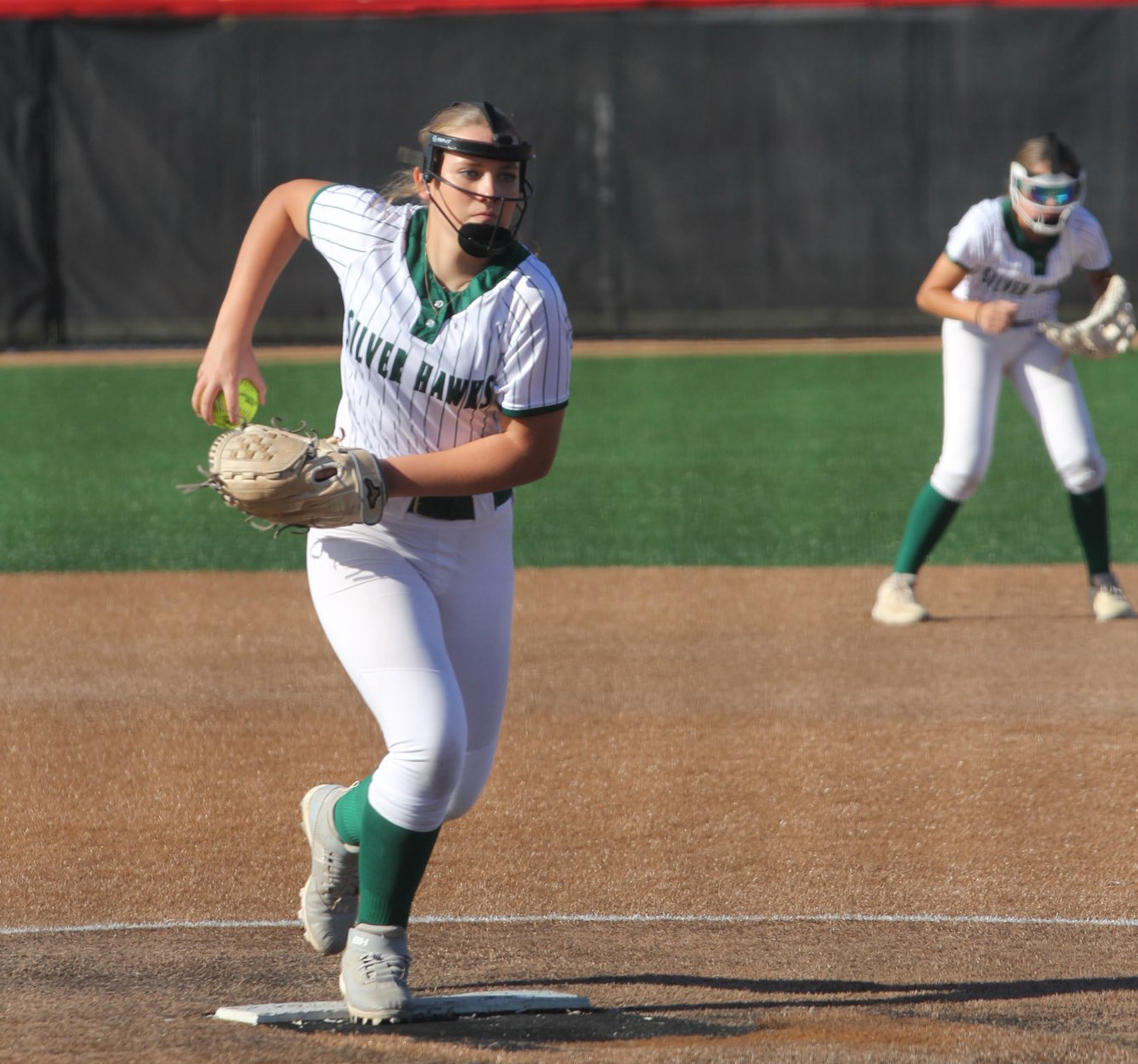
Todays’ headline may seem like a blinding glimpse of the obvious in theory, but from the stories I’m hearing from my students and from other pitching coaches it doesn’t seem to be so obvious in practice.
I know there are all kinds of charts you can keep and stats/heatmaps you can purchase on the Interweb and printed guides (including this one) to help you as a coach determine which pitches to call to attack a hitter’s weaknesses. But before you go diving down that particular rabbit hole it’s important to ask yourself one simple question: what pitches do my pitchers throw well?

For example, in theory a riseball seems like a great choice against a hitter who drops her hands. But if your pitcher has a 50-50 chance of throwing her riseball flat you may want to re-think that strategy so you don’t end up watching Ms. Dream Seam leave the yard.
It gets even more complex when you realize you need to consider the strengths and weaknesses of several pitchers on a staff. Your Ace may have a killer dropball that she can throw on command. But if she has to come out of the game for some reason and your next pitcher up tends to throw all her drops in the dirt, you’d better be ready to change your strategy accordingly. Especially if your catcher isn’t too adept at blocking.
Which pitches your pitchers throw well (or at least Have the most confidence in) is important information you should be gathering well ahead of that pitcher going into the game. Ideally that would be in the pre-season, but if not today is the second best choice.
If you have a great memory (bordering on eidetic) and know your pitchers well you can keep that information in your head and adjust on the fly. If your brain organizes information the way a typical teenager organizes her bedroom floor, you’ll want to write it down and probably laminate the card(s).
Either way, you want to have that information handy before you send any pitcher out to the circle. It’s important for any situation, but critical if you’re using one of those arm band systems with the numbers to call pitches.
You should have a card that is customized for every pitcher you would ever consider sending into a game, whether you plan to today or not. Things happen, and those who don’t plan for the unexpected end up getting beaten by it.

Sending one pitcher out to the circle with the card of another in the hopes you can “work around it” is probably not going to turn out well for anyone. Except the opposing team.
So how do you determine which pitches are your pitchers’ strengths? There are a few things you can do:
- Ask them That’s a great place to start. Your pitchers know which pitches they’ve been working on, and while it’s possible they may have an overblown sense of what they do well, they will certainly know which pitches scare them Find that out and you can avoid calling a good “theory” pitch that causes the pitcher’s body to shudder at the thought of throwing it in that situation. It will also give you an idea of what you can expect from those pitches. If a 10U or 12U pitcher tells you she has 6 pitches, you can pretty much assume all 6 are basically bullet spin fastballs.
- Observe them – and take notes. Whether you’re coaching a 10U team or a Division 1 college team, your pitchers should be working on their games during organized practice activities – whether that’s during practice, before or after practice, or on a different day. While that’s happening, whoever will be doing the pitch calling should be watching closely to see what actually works and what doesn’t. The pitcher may think she has a great changeup, but if all you see is a pitch that comes in looking like a bad fastball or that she has to slow her arm down to take speed off the ball, you’ll know not to throw it in a situation that matters.
- Test them. Ok, so they have their riseball working now. Once you learn a pitch it isn’t that hard to execute it when you’re throwing a bunch in a row and you have the ability to determine when you want to throw it. So test them during bullpen sessions by calling the pitch and watching what happens. Then call a different pitch, then another different pitch. See if they can throw what you’re calling on command versus needing five shots to get it right. This isn’t just for different pitches either. You can do the same with locations to see which they can hit on command and which need more work. Knowing that will help you avoid situations where you call an outside pitch to attack a hitter’s weakness only to watch that pitch go to the inside, which is the hitter’s strength, and then out of the yard..
- Consult with them. Once you’ve gathered your information, tell your pitchers what you’ve learned. Show them the chart you’ve made detailing their strengths and what they need to work on. We all like to work on strengths so we can feel good about ourselves, but that’s not how you get better. The Japanese principle of Kaizen (continuous improvement) applies here. It will be a lot easier for them to become the pitchers you want them to be if you’re telling them where they need to improve. But don’t just tell them what to do – tell them why it will help them become better at their craft. People in general, and young people in particular, generally will work harder on an issue when they understand how it will help them.
- Rinse and repeat. This is not a one-time process you do in the preseason or at the beginning of the season. You should be updating this information constantly to ensure you’re using all your pitchers to the best of their abilities. If you told a pitcher she needs to hit the low outside spot with her fastball or needs to increase the RPMs and spin direction on her riseball, check back frequently to see if they’re making those improvements. Then update your information about them accordingly so when gametime comes you’re taking advantage of everything your pitchers are able to do – and avoiding those things that don’t work so well.
Again, in theory it’s important to attack hitters’ weaknesses whenever you can. But you don’t want to attack weakness with weakness; in most cases you’ll probably be better off attacking a hitter’s strength with your own pitcher’s strength (unless it’s a total mismatch, in which case good luck!) because the odds in softball always favor the defense.
By taking the time to really learn the strengths of every pitcher on your staff, you’ll be in a position to make better decisions come gametime and help not only the pitchers themselves but the entire team succeed more often.
To Get Power, Blow Out the Candle

Fastpitch softball players sometimes struggle with how to get that extra burst of power at the moment it matters the most. Whether it’s whipping the arm into release for pitchers, or accelerating the bat before contact for hitters, or some other skill requiring a ballistic final movement, instead of looking powerful they look anemic.
One of the biggest reasons for this, of course, is the fear of failure. Pitchers focused only on throwing strikes or not walking anyone will slow down when they should be speeding up.
Hitters focused on not striking out or just making contact will do the same. Catchers focused on throwing to the base rather than doing all they can to get the runner out will do it, and so on.
You can try telling them they need to be more energetic in their movements, but while they will nod their heads they will often not really understand what you mean. So here’s a quick way to explain what you’re going for.
Ask them “how do you blow out a candle?” If they give you a blank stare offer them two options: do you do it with a gentle letting out of air, like you’re trying to cool a spoonful of hot soup, or in one quick burst.

Since they’ve probably been blowing out birthday candles since the age of two or three they will tell you in one quick burst. Then ask them why they do it that way. (You can even have them demonstrate both to you, which will force them to demonstrate the principle to themselves.)
They will tell you because without the burst nothing much happens. The flame may dance a little with a reverse sip of air, but it won’t go out.
You can then explain that’s what power does. That one quick burst concentrates the air so it has an effect on the candle.
It’s the same with that final, critical movement in softball. Without that one quick, focused final burst of energy you can’t throw hard or hit hard.
While it may seem obvious to you, you’d be surprised at what isn’t so obvious to your players. Even experienced ones sometimes.

The focus on not failing, usually based on someone else’s description of what failure is, rather than succeeding or excelling, As long as they’re in that mindset it will cause them to hold back from becoming the best versions of themselves on the field.
Use the candle analogy to help them understand the importance of getting that final, powerful concentration of energy and you just may help them unleash the larger beast within them.
Birthday party photo by Alexander Mass on Pexels.com






