Blog Archives
True Confession: I Can’t Make You Better
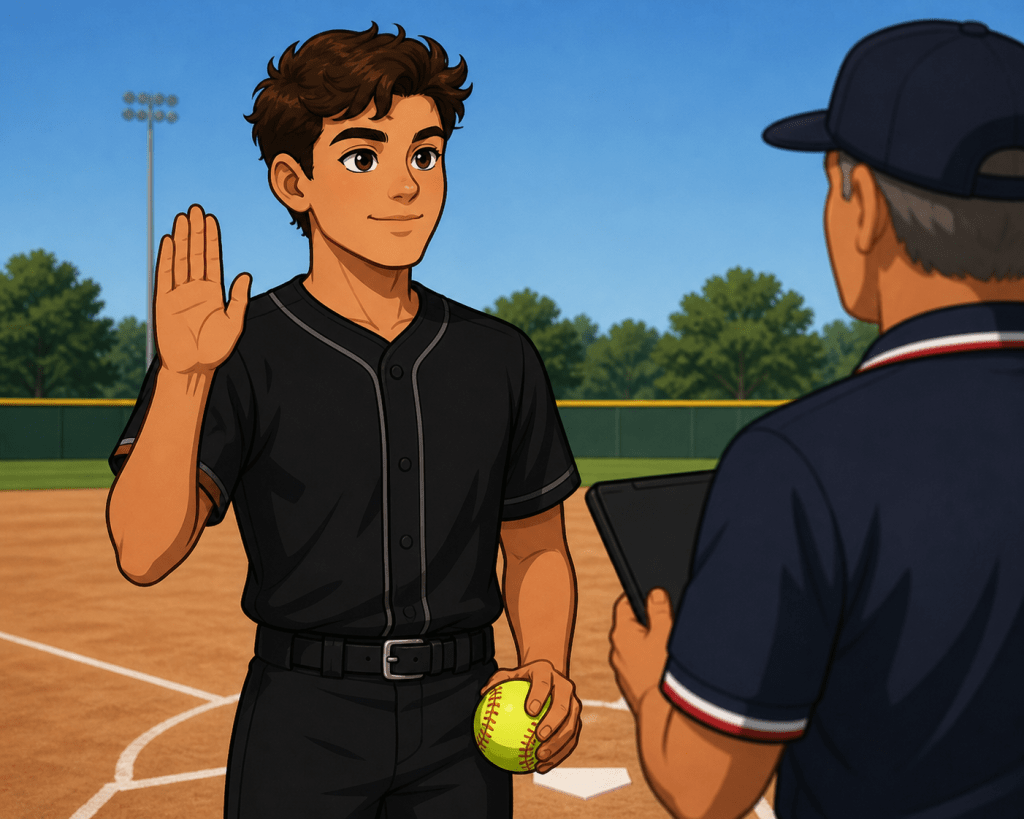
This is a tough admission but I think after all these years of coaching it’s time for me to drop a major truth bomb. And that truth bomb is: I can’t make you/your daughter better.
Shocking, I know, but hear me out I’ve spent a lot of time instructing fastpitch softball players, and even more time studying the latest research and thinking on the subject as well as what the best players in the world actually do (versus what they say they do sometimes).
Yet for all that work and effort, I am admitting that I can’t make the students who come to me better.
I can show them how to perform various skills. I can explain and demonstrate the movements required to perform at a higher level. I can offer corrections to help shortcut the learning process.
I can help them understand the “why” behind the “what” to make it easier to internalize and execute the necessary techniques. I can even help them overcome a crisis of confidence when adversity strikes.
But for all that knowledge and experience, I still can’t make them better. Because in order for students to get better, they have to take an action.

The first action is to listen to and try to understand what I’m telling them. That might seem obvious, but it’s actually not.
Any honest instructor will tell you they’ve had students who showed up to lessons but didn’t want to listen to what that instructor said. They wanted to do it their way.
In my case, I’ve had “students” who, when I said “here, try this” would give me a side eye as if to say, “You can’t make me do that.”
And they were correct. I can’t.
Of course, if you want to keep doing it your way that’s fine, but you’re going to stay where you are instead of getting better. And pretty soon you won’t see progress and decide to move on to the next coach whose instruction you don’t want to follow either.
The second action is to get off your butt and actually work on what the instructor told you during the lesson and whatever homework you’ve been given.
Taking lessons is a good thing, and it’s even better when you’re interested in learning. But the time in-between lessons is where the real magic happens.

Not working between lessons is like buying a really nice car but never actually getting in and driving it. It may look beautiful in the driveway or the garage, but you’re not going anywhere.
The specific actions you take once you decide to take action are also important. For example, a pitcher who is having trouble with accuracy probably doesn’t need to be throwing from the full distance.
She needs to move in closer and work on her release – including the way the arm and hand approach release, the exact point where she releases the ball, and what her hand and forearm do at that precise moment. All of those factors can and will affect where the ball goes.
If the pitcher moves in close she can rid herself of all the distractions of the rest of the pitching movement and just focus on the part that’s doing her in – the release. And the great thing about that is she doesn’t even need a field or facility, a catcher, or much of anything else.
A bucket of balls and a net to throw to, or even a rolled up pair of socks and a handy wall, will give her everything she needs to work on those movements and lock them in.
The same goes for a hitter. Let’s say that hitter is having trouble keeping her hands from leading the swing (instead of letting her body turn first).
She can work slowly on that part of the swing while shooting a video of what she’s doing so she can check. If she doesn’t have access to a phone or other camera, she can look in a mirror.
She doesn’t need a bat or the space to swing it either. She can take a sawed off dowel rod or the core from a roll of paper towels with some rags stuffed in it to work on getting her sequence so ingrained that when she gets back on the tee or even faces a live pitcher again it happens automatically.
That’s the type of work it takes to get better. But I can’t make you do any of that, which is why I say I can’t make you better.
Going back to our car analogy, the instructor or coach is like the GPS system for getting better. He or she can tell a student turn-by-turn how to get started and how to get to her destination.
But it’s up to that student to get in the car, start driving, and then follow those directions. Otherwise she’s either not going anywhere or putting herself at risk of following a path that will take her even further away from her destination.
So again, I fully admit can’t make you better. You have to do that. I can only show you the way.
How Practice Helps Shorten the Trip to Softball Success

At the end of the first lesson with a new student I will often ask her if she knows where New York City and Los Angeles are on a map. I know that’s a gamble given how famously bad we Americans are at geography, but even if she doesn’t know she will usually have an idea of what the U.S. looks like and I can show her Los Angeles is way on the left and New York City is way on the right .
I will then ask her how many different ways there are to get from New York to Los Angeles. Most understand I mean modes of travel, although the ones who are just learning to drive may panic thinking I’m looking for turn-by-turn directions. I’m not that cruel.
Once she understands the question we’ll start listing them out: flying, driving, train, boat, bus, etc. I will also remind her you can walk, run, or bicycle as well.
The final question is, “Which way is the fastest?” Pretty much everyone says “flying,” although there’s an occasional outlier who has to be corrected. That’s when I swoop in with the point.
“If you practice at least two or three times a week between lessons, it’s like flying from New York to Los Angeles,” I tell her. “You’ll get to your destination quickly and refreshed, and be ready to go on and do better things than travel.
“But,” I will continue, “if you only pick up a bat or a ball or a glove when you have a lesson it’s like walking from New York to Los Angeles. You’ll still get to where you’re going, but it will take a lot more time and it will be a lot more painful and frustrating.”
In my mind, that may be the most important thing I teach these young ladies when they come to me. I think players and even parents often have an expectation that if they take lessons, especially from a coach who’s a “name,” it will automatically make them great.
Nothing is further from the truth, however. They may get a little bit better over time but it’s going to be a long time before they notice any substantial improvements.
But if they put in the work on their own that’s where they’re going to see real progress. Because that’s where the real magic happens.
Continuing the transportation theme, I tend to think of coaches as the GPS for the journey. They will give you information, even turn-by-turn directions, so to speak, that will guide players to their desired destination.
Nothing happens, however, until the player puts the “vehicle” (her body) in gear and starts driving toward the destination. Just like with the car, if she just sits there without doing something the directions will be the same day after day, week after week, month after month, etc. instead of moving onward.
A coach shouldn’t be watching his/her players work on last week’s assignment for the first time. The player should have already put in the work on it.
That doesn’t mean the player will necessarily have it mastered after a week or two. But there should be progress toward the goal so the coach is performing a process of continuous refinement – chipping away at the goal layer by layer the way a sculptor chips away at a piece of marble until it turns into a breathtaking work of art.
If the coach has to keep chipping away at the same level of skill, however, progress will be slow and the player is likely to get frustrated and stop long before she turns into the masterpiece she should be.
It can be difficult for players, especially the young ones, to understand the abstract concept of how quality practice leads to excellence. But everyone understand travel, because we all go somewhere every day.
If you have a player (or child) who doesn’t seem to see the need for practice, try the map analogy. It might just help get her moving in the right direction.
My good friend Jay Bolden and I have started a new podcast called “From the Coach’s Mouth” where we interview coaches from all areas and levels of fastpitch softball as well as others who may not be fastpitch people but have lots of interesting ideas to contribute.
You can find it here on Spotify, as well as on Apple Podcasts, Pandora, Stitcher, iHeart Radio, or wherever you get your podcasts. If you’re searching, be sure to put the name in quotes, i.e., “From the Coach’s Mouth” so it goes directly to it.
Give it a listen and let us know what you think. And be sure to hit the Like button and subscribe to Life in the Fastpitch Lane for more content like this.
US map graphic by User:Wapcaplet, edited by User:Ed g2s, User:Dbenbenn – File:Map_of_USA_with_state_names_2.svg, CC BY-SA 3.0, https://commons.wikimedia.org/w/index.php?curid=81990933






