Put A Little Swagger In Your Swing
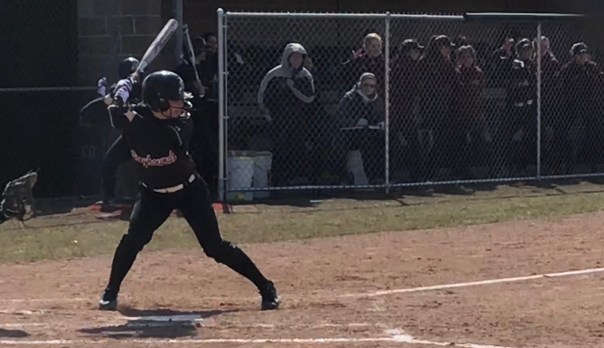
Baseball legend Ted Williams once said that hitting a baseball is the hardest thing to do in sports. I think it’s safe to say that not only does that statement extend to fastpitch softball, but it may apply even more given that the actual time to read, react to, and hit a pitch is comparable, but the pitchers stand closer and the ball can move both up and down through the zone (where a baseball is always traveling on a downward plane).
The point here, however, isn’t to argue that one is tougher than the other. It’s more to acknowledge that they’re both extremely difficult (as anyone who has ever done it can attest), which means any given at bat can be both exhilarating and frustrating.
That’s the reason why hitters (and their coaches) spend so much time studying the swing, and working on the swing, and sweating all the details. The goal is to create mechanics that enable hitters to get to the ball on time and hit it well and effortlessly when they do make contact.
Yet here’s the thing: while better mechanics definitely help you get to the ball more powerfully and efficiently, mechanics alone are not enough. After all, there are no style points in fastpitch softball. A beautiful swing and miss in a game is still a strike. An ugly swing that results in a fair ball no one catches is still a hit.
So yes, it takes more than good (or great) swing mechanics to be a successful hitter. You also have to have the right mental approach – one than enables you to walk to the plate with cool confidence, knowing that you are prepared to win the battle between the pitcher and you. I like to call it the “gunslinger mentality.”
And what better example of that mindset is there than Val Kilmer’s portrayal of Doc Holliday in the movie Tombstone? In the most tension-ridden situations he brings a sense of cool calm that not only helps him prepare for a possible gunfight but also helps avert the crisis by striking fear into the heart of his adversary.
If you haven’t seen the movie (or if you have and just want to enjoy it again), here’s a good example of Doc at his “I’ve got this situation under control” best:
And yes, the man with the rifle really is a very young (and a bit heavier) Billy Bob Thornton.
Here’s another fun example:
The movie is filled with them. In each you see that it isn’t just his reputed skill with a gun but his attitude that carries the day.
(In reality, incidentally, it’s generally believed that while Doc did have a fast draw he wasn’t exactly an accurate shot. He also killed far fewer men than he let on, probably so he wouldn’t actually have to be tested in a gunfight. But I digress.)
The key takeaway here is the swagger he brings when he walks into a tense situation, like the potential showdown with Johnny Ringo in the second clip. His “I’ve got this” attitude helps him prepare for whatever comes next.
That’s the kind of attitude hitters need to bring to the plate. Rather than worrying about the situation, or how good the pitcher is supposed to be, or whether coaches/parents/teammates will be mad at her if she fails, or any of the other doubts that can creep in when one steps into the batter’s box, hitters instead need to believe in themselves and their abilities.
If they’ve put in the work to develop their swings and learn how to see the ball well, it’s not them who should be worried. It’s the other team.
If you know (or are) a hitter who’s great in the cage but struggles in games, I recommend watching Tombstone, or at least the Doc Holliday clips on YouTube, to see what cool confidence looks like. (The whole movie is great, even if you don’t particularly care for Westerns, so it will be time well spent.)
Then encourage them to adopt a similar attitude as they step into the batter’s box. Stare down that pitcher. Give her a little smile. And finally, swing like they have everything under control. You’ll be amazed at the difference a little swagger can make.
5 Common Softball Injuries & How to Prevent Them
Guest post by Chris Salise

Photo by rawpixel.com on Pexels.com
Everyone likes a good game of fastpitch softball, but no one likes to be taken out of it prematurely due to an avoidable injury. Unfortunately, whether it’s due to improper stretching and calisthenics, or faulty equipment, too many people find themselves laid up before they can round the corner to home.
Don’t let it happen to you. What follows is a list of the 5 most common softball injuries and how to avoid them. A little preparation and a good dose of common sense are all you need to keep you in the game and playing at your best.
Tendinitis
Tendinitis is most commonly associated with wrist injuries, but in its most literal form, it’s simply an inflammation of a tendon. This means that pretty much any part of your body where bones connect to muscles is vulnerable to tendinitis. For softball players, that mostly means the wrist, shoulder, and elbow.
Tendinitis can most easily be avoided by doing the proper stretches before a game. Increasing the endurance of your muscles through strength training can also lower the odds of straining your tendons. But in both cases, make sure you’re doing your exercises in proper form—stretching and lifting out of whack can cause tendinitis all by itself!
Ankle Sprains
Ankle sprains are annoyingly common and a big risk for softball players. This is because whether you’re running the bases or trying to catch a pop fly, softball requires a lot of sudden stops and starts in your lower extremities. This puts sudden strain and weight on your ankle joints and can cause them to buckle without warning.
It may surprise you to learn that one of the main causes of ankle sprains in softball, however, is sliding into bases. As such, observing proper sliding techniques can heavily decrease your chances of spraining your ankle. And, of course, don’t forget to stretch!
Rotator Cuff Injuries
The rotator cuff is a series of muscles between the shoulder blade and the upper arm bone. Injuries to this part of the arm are common in fastpitch softball players because the overhand throwing motion puts a lot of stress and pressure here. Most rotator cuff injuries are one-time deals, but they can chronically weaken your shoulder if not treated properly.
To avoid these types of injuries, it’s important to learn and maintain good form, warm up before each game, and always make time for rest and recovery between sessions. Good conditioning is also essential, so don’t neglect your exercise, training, and practice. These simple habits won’t just help prevent shoulder injuries; they’ll improve your game as well!
Hamstring Injuries
Hamstring tears are already pretty common among the general population, but even more so for sports players and especially softball athletes. If you’re dehydrated, if you don’t stretch properly or if you’re wearing shoes that aren’t catered to the shape of your feet, all of these will contribute to the chances of you tearing a hamstring before you even make it to first.
Besides keeping hydrated and stretching, a big help for reducing the chances of tearing your hamstring is to make sure both your hamstring and quadriceps have the same level of strength. Ensuring that each part of your leg is as strong as the other will make it so that one muscle doesn’t have to take on more of a burden than the other. You don’t know how right they are when they tell you not to skip leg day at the gym!
ACL Tears
These thankfully aren’t quite as common in softball as in sports such as soccer, volleyball, and basketball, but they do tend to occur more frequently in female athletes than their male counterparts, largely due to differences in the angle at which the hips connect to the thigh bones (aka Q angle). Still, they can be terrible to deal with when they do happen.
Tears in your ACL most often occur when you rapidly shift directions while running. These injuries are extremely painful and can cause long-term damage.
You can help prevent ACL tears by training with plyometric exercises to get your body more used to bursts of activity. It’s also a good idea to train with a wobble board to improve your balance. Endurance and coordination are the keys to not falling prey to an ACL injury.
You also might want to avoid injury by taking shorter practice sessions and making sure your goals and exercises are evenly paced. Softball injuries happen all the time, but they don’t have to be a fact of life.
Chris Scalise is a freelance writer and fitness enthusiast from Los Angeles, California who writes about sports and health topics for a wide range of publications and brands, including SportsBraces.com.
Eating the Elephant

Photo by Pixabay on Pexels.com
A question I will often pose to my fastpitch softball students is “How do you eat an elephant?” Regardless of age, the first time they hear it they tend to look at me as if I have completely lost my mind.
The correct answer, of course, is “One bite at a time.”* That’s a critical lesson for anyone trying to learn a new skill, or even make improvements to existing skills.
What it means in realistic terms is you don’t have to learn (or master) the skill all in one big gulp. You’re far more likely to have success (and far less likely to give up too soon) if you give yourself permission to learn whatever you’re trying to learn a little bit at a time.
This is particularly true of complex skills such as hitting and pitching that have a lot of moving parts. Trying to learn all the mechanics (or fix all the problems) at once is going to be extremely difficult if not impossible. Our brains simply don’t function that way.
But breaking the skill into smaller components, prioritizing them so you know what to work on first, and then focusing on each of those areas in order will enable you to create a progression where success builds on success.
For example, when I’m working with a new pitching student I like to use a technique called “backward chaining.” That’s a more sophisticated way of saying you start at the end of the skill and work your way backwards, because if you don’t get the end right nothing else you’ve done up until then matters.
So for pitchers we’ll work on starting the ball overhead, palm facing the catcher, bringing the upper arm down until it contacts the ribcage, and pulling the ball through into the release zone so the lower arm whips and the wrist snaps itself. (That’s a simplified version of what goes on and what I look for, but will suffice for now.)
Most young pitchers will tend to want to bring the entire arm through at once, get behind the ball too early, and push it through the release zone. Heck, some have even been taught to turn the ball backwards and push it down the back side of the circle, which is definitely what you don’t want to do.
So it takes a bit for them to learn to relax and let the arm work in two pieces. That’s why we focus on helping them get that feel, because it will serve them well as they get into the full pitch.
But if we tried to do that, plus get a proper launch, plus worry about getting into the right position at each point during the motion, etc. the odds are they wouldn’t learn anything. Especially how to whip the ball through.
The other element that enters this discussion, of course, is the impatience of players themselves. It’s understandable.
They are growing up in a world where they have instant access to everything – information (via smartphones and the Internet), food (microwave and fast food meals), transportation (no need to walk, we’ll drive you!) and so forth. The idea of having to wait for something they want is often foreign to them.
So, they try to eat the elephant like a python – unhinge the jaw and try to swallow it whole.
Again, it doesn’t work that way. As a result, realistic expectations have to be set.
They have to understand that doing this drill or taking a couple of lessons here and there won’t turn them into instant superstars who are mechanically perfect. Progress will come incrementally. Sometimes in increments so small it’s hard to tell it’s being made.
But if they keep working at it, the cumulative effect will take hold and eventually that big ol’ elephant will be gone.
The lesson for coaches (and parents) is don’t try to fix everything at once. It’s been tried. It doesn’t work.
Focus on one thing at a time, adding each new piece to what you’ve already done, and you’ll save a lot of heartache for you and the player.
For players, the lesson is to be patient and, as Bobby Simpson says, get a little better each day. Remember if you want to walk a mile you just need to start putting one foot in front of the other. Eventually you’ll get there.
So grab a fork and dig in! The sooner you get started, the sooner you’ll reach your goals.
*Please don’t leave me nasty comments. I am not advocating eating, or causing any other harm to, actual elephants. They are beautiful, magnificent creatures. It’s simply a metaphor.
The Numbers Don’t Always Tell the Whole Story

While I was tooling around on the Internet I came across this video that I thought was worth sharing. While again it isn’t specific to fastpitch softball (second week in a row, I know) it tells a great story – and one that is particularly timely these days.
Thanks to the ready access to all sorts of measurement devices, our sport is becoming increasingly obsessed with numbers. I get why that is; in theory, having objective measurements of throwing speeds, ball exit speeds, spin rates, grip strength and a lot of other parameters make it easy to compare one player to another.
Basing decisions on the numbers feels “safe.” You take all the personal opinions and favoritism out of it, and just evaluate everyone on the basis of the numbers they produce as measured by the machines.
Unfortunately, the numbers don’t always tell the whole story. There’s also something to be said for having game sense. For example, player A has a home-to-first time of 2.7 seconds, while player B has a home-to-first time of 3.1 seconds.
The natural conclusion? Player A is more desirable, because her speed will make her the better base runner. What those numbers don’t show is that Player A has no idea how to read a pitch, or defense, and take advantage of opportunities while Player B does.
So in an actual game, Player A will run station-to-station very quickly, while Player B will take advantage of a defensive miscue or a fielder who isn’t paying attention to take an extra base when the opportunity arises. She also won’t run herself into trouble, even if the third based coach is “encouraging” her to. Now which one would you prefer?
A lot of those “game smarts” qualities don’t show up in a tryout, because in softball tryouts are primarily about looking at skills. They also don’t show up against a stopwatch or a radar gun. But when the game is on the line, again who would you rather have? The pitcher with the highest speed/spin rates, or the pitcher who knows how to get hitters out?
Don’t get me wrong. I’m not anti-measurement. Taking those readings is important, especially when measuring a player’s progress. There’s also something satisfying about achieving a goal you set for yourself, like a pitcher reaching 50 or 60 mph, a runner going home to first in less than 3 seconds, a hitter reaching a new high for bat speed or ball exit speed, etc. But the empirical number itself is not the be-all and end-all of who will add the most value to your team.
Which brings us back to the video, which is well worth watching. It talks about the 2000 NFL draft (some of you now know where this is going, I’m sure, but read on anyway).
There was a lanky, skinny quarterback at the NFL Combine who produced terrible scores. (If you’re not familiar with it, the Combine is where they do all these types of speed and performance measurements for football to help teams with their draft selections.)
For example, in the 40 yard dash the kid ran a 5-something. For perspective, between 5 and 5.5 is now considered the norm for an offensive lineman. For a quarterback, it’s ugly.
He didn’t have great arm strength either – average at best. Not much of a vertical leap. In the video they said it looked like he had never seen a weight room. So pretty much by any measure, this was a guy who wasn’t much of a prospect to become a backup in the NFL, much less a starter worth spending a draft choice on. Oh, and by the way, the word was his college team (Michigan) had spent his whole senior year trying to put someone in the lineup who they thought would perform better – probably a better athlete.
Still, the quarterback was hopeful. His wish was to play for his hometown team, the San Francisco 49ers, but they passed on him in the third round to take another player with better numbers. Who it was doesn’t matter because that guy was ultimately gone pretty quickly.
Finally, in the sixth round, with the 199th pick, the New England Patriots figured what the heck and selected Tom Brady. You know the rest of the story.
So while the numbers and measurables can tell you some things about a player, they can’t tell you everything. If you’re a player who maybe doesn’t throw the hardest, or hit the farthest, or run the fastest, that’s ok.
Accept that you will have to prove yourself in every new situation, embrace the challenge, and get out there and show everyone what you can do. And remember that the two essential qualities a radar gun or a stopwatch or a strength machine can’t measure are your smarts and your heart.
Just ask Tom Brady.
Keeping the Joy in Youth Sports

By now I’m sure many of you have seen this video (below) that went viral after last weekend (January 2019 for those reading this much later). It’s UCLA gymnast Katelyn Ohashi scoring a perfect 10 on her floor routine during a competition.
If you haven’t, stop right now and watch this video. You will be glad you did.
While the sheer athleticism and artistry of her performance are incredible, that’s not what drew me to writing about it. After all, this is a fastpitch softball blog, so not much of what she does applies to hitting or throwing a softball.
But if you didn’t notice it the first time, go back and watch it again. Only this time watch her face and see how much fun she is having. (And how much fun her teammates seem to be having watching her.)
That is an element that seems to be missing from a lot of youth and school sports these days – fun. Everyone is so focused on winning, and improving their rankings, and securing the almighty scholarship, and all the other things that seem to go with “getting to the next level” that they forget to be in the moment.
That all-consuming drive to win (or for coaches to prove that they’re better than everyone else) is a lot of what causes the yelling and screaming that takes place on fields all across the country at every level – even with the youngest players. It’s what causes coaches to belittle and humiliate their players in the middle of a game, not to mention the postgame speech.
As I’ve quoted many times, softball is a game, and games are supposed to be fun. But it’s kind of hard to have fun if you’re trying your best only to be told you’re not good enough, or talented enough, or smart enough, or whatever enough.
And who is someone who knows that feeling all too well? Katelyn Ohashi herself. The other side of this feelgood story is that she almost quit gymnastics entirely.
She was on a path to go to the Olympics, but the pressure from her coaches, and the negativity from fans and observers, simply sucked all of the enjoyment out of it. Fortunately for all of us, getting off the Olympic path, and going to UCLA, helped revitalize her love for her sport, culminating in a gift to all of us.
Studies have shown that the #1 reason players quit youth sports is that it isn’t fun anymore. In fact, a poll from the National Youth Sports Alliance says 70 percent quit by age 13 for that very reason.
That doesn’t mean practices and games have to be a “birthday party without the cake” as one of my former players once described her high school practice. Working hard toward a common goal with people you value can be fun. Working hard to improve yourself so you can perform better than you did before can be fun.
There is a lot of personal satisfaction in setting a goal and then achieving it.
What’s not fun, however, is working hard and never getting on the field. What’s not fun is constantly feeling like you need to look over your shoulder because if you make one mistake you’re done for the game, and maybe the day.
What’s not fun is receiving a constant barrage of criticism over everything you do, even when you’re giving your best effort. What’s not fun is being embarrassed in front of your friends, teammates, family, etc.
Players need encouragement and support. They need to feel like they can stretch themselves to the edge of their abilities someone constantly coming down on them, even if they fail.
Most importantly, they need the opportunity to get out on the field and try, even if their skills aren’t quite as good as the player next to them yet. Because that’s the reason they signed up in the first place.
When you think about what participating in a sport should look like, remember this video of Katelyn Ohashi. She is the definition of taking joy in what you’re doing. And oh by the way, she was rewarded with an almost impossible to achieve perfect 10 for her efforts.
Then look at your own team. If you’re not seeing the same look from everyone there maybe it’s time to start thinking about how you can make it the kind of experience everyone there – players, coaches, parents, family, and fans – will cherish forever.
Every Expert Was Once a Beginner
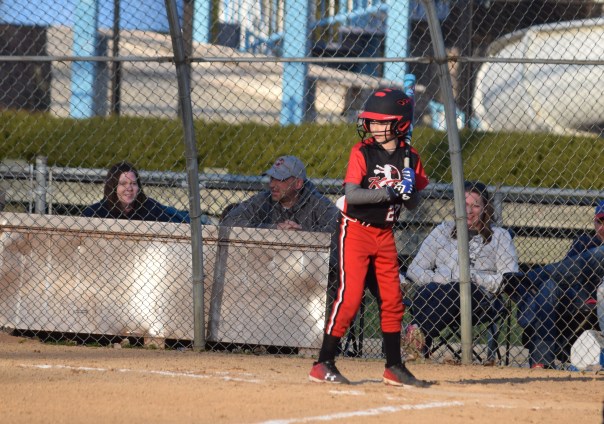
One of the most intimidating things we can do as human beings is start something new. Especially when that something has been around for a while like, say, fastpitch softball.
We look at ourselves and see how ill-prepared we are. Then we look at others and see how much better they are – some are even experts – and we wonder how we’re ever going to survive.
The good news we all have to remember is that no matter how great others are at something, every single one of them was once a beginner. Just like us.
Arizona coach Mike Candrea didn’t start out with 1,500+ wins. He started with one, and probably felt fortunate to get it.
So if you’re a brand new head coach taking a team onto the field for the first time, remember you share that experience with one of the winningest fastpitch softball coaches ever.
If you’re a pitcher (or the parent of a pitcher) who is just trying to learn how to get her arms and legs going in the same direction and get the ball over the plate with arcing (or putting anyone around you in danger) take heart. Some of the game’s best pitchers ever had their struggles as well.
If you’re a hitter who is providing more on-field air conditioning than excitement with her bat, or a fielder who seems like she wouldn’t be able to pick up a ground ball in a game even if it had a handle…
Well, you get the idea.
Everyone has to start somewhere. The ones who go places, however, are the ones who don’t give up, even when learning takes a little longer, or it feels like others have more natural ability, or have a head start because they started at a younger age.
After all, it isn’t where you start the race. It’s where you finish that counts.
I remember as a beginning coach thinking how much better I would (hopefully) be in five years, when I had some experience and had learned more. But that thought didn’t do my first team much good.
So I buckled down, did the best I could, contributed where I knew things, and just faked the rest.
I was once amazed that other coaches could come up with the drills or explanations i would use. To know so much that you could think that way seemed like a hill too great for me to climb. Now, 800 blog posts and roughly 20 years of coaching later I come up with different ideas all the time.
So to all of you beginners and first-timers out there, I say don’t be intimidated. Don’t be concerned about your lack of experience, or get overwhelmed thinking about how much you don’t know.
Just buckle down, get after it, and remember every expert was once a beginner. But it’s only the dedicated beginners who become an expert.
New Year, New You

Photo by Pixabay on Pexels.com
I know the headline sounds like an ad for a diet product or a health club, but there really is something to taking advantage of the turn of the calendar to start making improvements in our lives.
As humans we tend to like to have a clean break from the old when we start something new. The most obvious example is most people like to take a little time off between the time they end their old jobs and the time they start new ones. That little space in-between, even if it’s just a couple of days, helps us decompress and let go of the past so we can focus on the present – and the future.
That’s what’s often magical about the start of a new year. While in reality it’s just another day on the calendar, it feels like the start of something different.
So how can you take advantage of this artificially imposed fresh start? By (dare I say it?) resolving to do one or more things differently this year.
If you’re a coach, spend some time studying new techniques or approaches to the game. Challenge yourself by looking into information that conflicts with your current beliefs – especially if you’ve held those beliefs for a while.
Attend a coaching clinic with an open mind. Watch a current video or read a new book. Not just on fastpitch softball specifically, but also on coaching principles in general. In short, look for ways to be better than you are now.
If you’re a player, think about what a great year would be for you, then think about whether you can get there with what you’re doing now. A good way to do that is to write a letter to your future self describing the awesome season you just had.
If the season you want to have isn’t achievable with your current approach, figure out what you need to change to make it achievable. It could be something as simple as practicing for five more minutes during a session, or finding ways to sneak in an extra 5-10 minutes of practice per week when you can’t get to a field.
It could also mean being willing to change something you’ve been doing for a long time to see if the new way will work better. After all, no one ever created an innovation by continuing to do the same old thing.
If you’re a parent, think about how you can be more supportive, both to your player and to the team. Hopefully you’re already one who cheers in a positive way. But if you’re not sure, maybe set up a video camera and record yourself during your child’s next game to see what you think. Would you want to sit next to you? Or be with you on the ride home?
You might even want to do the same for someone else you may know, assuming they would take the information in the spirit it is intended. Learning to relax and enjoy the game makes it a lot more pleasurable for everyone – including the person who usually gets so upset.
You can also try watching a game where you have no stake to see what you think of how the spectators are reacting. The compare that to how you feel during your child’s game. It can be an interesting perspective.
One other thing you can do as a parent is to educate yourself on what the latest thinking is regarding various skills and see if that matches up with what your player is being taught. Don’t just assume a coach or instructor knows what he/she is doing, or is keeping up with the sport. Learn what to look for so you know whether you’re investing your hard-earned money in the best way possible.
It’s a new year. Why settle for the same old same old?
Take advantage of the energy that comes with a fresh start and use it to create a new, even better you. Best of luck for the upcoming year!
Practice Doesn’t Always Have to Mean Going to a Field or Facility
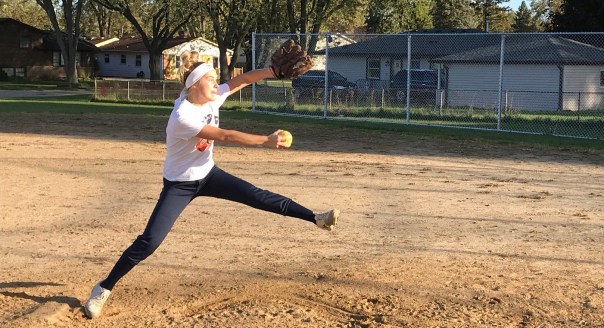
When someone says “it’s time to practice” what’s the first thing that springs to mind? For most of us involved in fastpitch softball the answer is probably grabbing some equipment, running out to a field or facility, and then spending the next 30, 60, or more minutes hard at work (as Paige is doing in the photo above).
While that approach is generally a good thing, it also has a downside (doesn’t everything?). When we’re in that mindset, we tend to think if we can’t do those things (get to a field or facility, spend 30-60 minutes) then we are unable to practice. In fact, “practice” kind of becomes an activity unto itself that requires special effort.
That’s unfortunate because for some players it could mean going a week or more without making any progress to get better. For others, especially those who are trying to learn new skills, it could even mean they get worse, or regress all the way back to step one.
It doesn’t have to be that way, however. Practice doesn’t have to involve going somewhere or making a special effort. And it certainly doesn’t have to be tied to a set amount of time.
Working on fastpitch softball skills anytime, anywhere, for any length of time can help players get better (or at least maintain their gains) versus doing nothing at all. The key is for players to know what they need to focus on and work those movements.
Take pitching, for example. Perhaps a player is having a tough time learning to relax the arm in the circle so she can whip the hand through at the end. In a full practice session with a catcher, she may be too focused on throwing strikes – double if the catcher is her dad. in that case she may continue to lock out the elbow and “guide” the ball to the plate.
But at home in her bedroom, or standing outside waiting for the bus, or marching through the house she can make arm circles and focus on staying relaxed throughout. No ball, field, facility, or catcher required. Learning to make the proper arm movement will help her know what it feels like when she’s actually pitching so she can carry the improvement forward there.
She doesn’t need to spend a half hour doing it either. If she takes 5 or 10 minutes it will help. Do that three random times during the day and she’ll have put in 15-30 minutes without even realizing it.
The same goes for hitters. Maybe the hitter is having trouble learning to lead with her hips, or is having a problem with barring out her front arm during the swing. She can practice the correct movements wherever she happens to be standing, whenever she has the chance.
The more she makes those movements the more natural they will become – and the easier they will be to execute when she’s actually up to bat.
Practicing in small increments may even have some benefits over longer sessions, especially if the longer sessions are focused on one thing. It’s similar to block practice v randomized practice.
In block practice you focus on one thing for a long time. With randomized practice you don’t linger on a single skill for any length of time. You essentially go from skill to skill. Studies have shown that the skills transfer better in game situations when practice is more randomized, at least in part because you get too used to doing the same thing over and over – an opportunity you don’t have in a game.
The other benefit to the shorter sessions in random locations is it lets players concentrate on the specific movements they need to improve on rather than the outcomes of those movements. And as we all know, in the end if you do the right things in the right way the outcomes will take care of themselves.
This isn’t to say longer, more formal practice sessions aren’t necessary. They absolutely are. But they’re not the only way to practice.
Taking advantage of whatever time and space is available is a great way to ensure players continue to improve. And it definitely beats using “I don’t have the time/I can’t get to the field or gym” as an excuse to do nothing.
Product Review: Jugs Short T Comes Up Big for Working on the Low Pitch
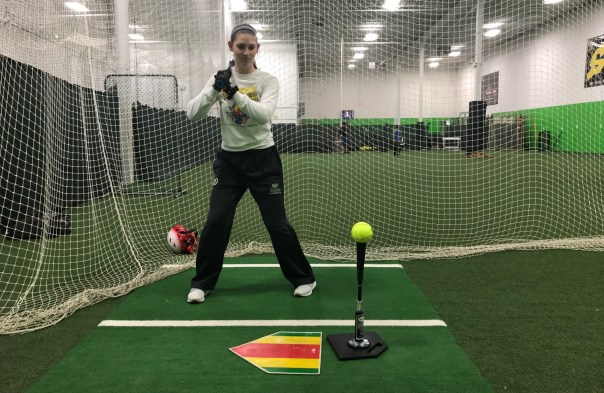
Most fastpitch softball (and baseball for that matter) hitting coaches agree that tee work is one of the most valuable ways hitters can spend their time. By taking the element of a moving ball out of the equation hitters can focus on developing the mechanics that will enable them to hit the ball harder, farther, at better launch angle, and with more consistency rather than simply trying to “make contact.”
The typical tee is great for simulating pitches from just above the knees up to the armpits on all but those on the most extreme ends of the height spectrum. But what about those extra low pitches that umpire strike zones sometimes dictate hitters must be able to cover?
Without understanding the adjustments that need to be made on shin-high, or just-below-the-knee pitches, hitters will be more likely to swing over the top of the ball resulting in a sinking line drive or a weak grounder. Which, of course, is exactly the result pitchers (and whoever is calling pitches) are hoping for when they throw it there in the first place.
This is where the Jugs Short T is such a great addition to your hitting toolbox. Built with  the same durable construction and materials as the regular Jugs T, which was previously reviewed here, the Short T makes it easy to get quality reps going after those pesky low pitches.
Getting down to it
The advantage of the Short T is that it can go as low as 16 inches off the ground, then extend up to 23 inches. (The standard Jugs T starts at 24 inches high.) That should cover the bottom of the zone (and then some) for just about any hitter.
The base is the same as that used for the standard Jugs T, which means if you’re tight on space and don’t mind putting in a little extra effort you can carry one base and two tee heights. They also sell a combo kit with both heights if you are so inclined.
The base itself is heavy enough to keep from getting knocked over even by strong hitters who swing under the ball – no need to carry an extra weight around. It also has a convenient carrying handle built in, making it easy to move from a shed, locker, car, etc. to wherever you plan to hit.
The tee section itself is solid enough to hold its height even after repeated use, yet still slides up and down easily. I’ve had my standard Jugs T for several years now and it holds as well as it did the day I got it – unlike some tees that eventually start sinking the minute you put a ball on them.
You can use it with multiple hitters, day after day, with no worries that it will lose its solid performance over time.
Greater versatility
While the primary reason anyone would purchase the Short T is to work on low pitches, it can also be used to address another issue that is common with fastpitch softball hitters – the desire to stand up straight as they make contact.
Part of that habit, I’m sure, is driven by well-meaning but poorly informed coaches who instruct their hitters to “swing level” or “keep your shoulders level.” That’s just not how good hitters hit. Instead, they tend to have a shoulder angle that tilts in toward the ball.
Or it could just be that they got into the habit of standing up straight and never learned anything different. No matter the cause, the desire to finish standing up with shoulders level is a problem.
When you think about how little surface of the bat and ball contact each other, even a deviation of an inch – say from starting to stand up, which pulls the bat up – can have a significant effect on the outcome of the swing. Demonstrate you can’t hit the low pitch well and you will see a steady diet of dropballs and low fastballs for the rest of the game – especially if you’re a big hitter.
A phrase I like to use is “get on it and stay on it.” In other words, adjust to the pitch and then stay there. The Jugs Short T helps train that behavior by forcing hitters to go lower and stay down. If they try to stand up as they swing they will either miss completely or just tap the ball.
That’s what Grace Bradley, a powerful hitter in her own right, is working on in this video.
She is building a pattern where she can go down and dig the ball out to get the kind of launch angle that helps create her high OPS.
After a few practice swings on the Jugs Short T we switched to front toss and she was digging out even the ankle-high stuff for line drives that move base runners and let her trot rather than sprint around the bases.
That’s bad news for pitchers too. Because if they can’t throw you high, and they can’t throw you low, you’re going to be an awfully tough out.
Worth the money
Whether you (or your team if you’re a coach) is struggling with the low pitch or you just want to train your hitters to adjust better overall, at $75 to $80 retail the Jugs Short T is a great investment. It will help you create better hitters this year. And for many years to come.
Send A Letter to Your Future Self

A couple of weeks ago, as I was preparing for my annual battle with putting Christmas lights on the roof of my house, I came across the note pictured above. It was a message from myself last spring, when I took the lights down, alerting me to a potential issue with some of the strings.
(By the way, a tip of the Hatlo Hat to the TV show How I Met Your Mother for the whole Future Ken/Past Ken thing.)
I had completely forgotten the lights had fallen off the roof (better them than me!), so I was glad I’d done it. I was also quite amused by the whole concept.
Then last week at the NFCA convention I heard a speaker talk about how players should do the exact same thing prior to their season, to be opened at the end. In her case it was to be opened upon winning an NCAA D1 championship (which didn’t happen), but the concept is still a good one.
For players who are serious about their game, what better way is there to end a season than to look at the perspective of their (slightly) younger selves to see how it matched up to reality?
Here’s the idea. Before the season, the player sits down and imagines what the season will be like. Not just the quantifiable goals, but maybe how things went, what the experience was like, what they accomplished, what they liked and disliked, etc.
It should be a personal letter from Past (Player) to Future (Player). It could include encouragement, consolation, congratulations or whatever the player happens to be feeling at the time.
Then seal it up and put it away, not to be opened until after the season. Now that they player has gone through the entire season experience, she can compare what she thought would happen, and how she thought she’d feel, to what actually happened.
An exercise like this can help put things into perspective. For example, if the player is on the fence about whether to stay with this team or look for another, she can compare what her expectations were to what actually happened.
If she had a tough season, she can look back on how hard she expected to work and compare that to how hard she actually worked. If she was feeling awkward around new teammates in the beginning, she can compare that to how she feels about her teammates now. Maybe she made some great new friends and is just grateful to have been part of such an awesome group.
There are so many things to be gained from this exercise. If you’re a parent, try having your favorite player do it. If you’re a coach, have your team do it and hold the envelopes until the end of the season banquet/party.
By the way, this isn’t just for players. Coaches can do the same exercise as well.
I’ve had great seasons where you hated to see them end, and I’ve had seasons where it all couldn’t end soon enough. If nothing else it would have been fun to see how my earlier self viewed what was coming and whether it matched up to what actually occurred.
In our hyper-fast world we tend to only look at what’s right in front of us. In doing so we miss the benefits of a longer-term view.
By taking the time to write out this letter to their future selves, players and coaches can gain a longer-term view, and perhaps use that to change their next future.
So what do you think of this idea? Have you ever tried it? If so, how did it turn out? Leave your experiences below in the comments.






