Blog Archives
Helping young fastpitch pitchers learn to focus
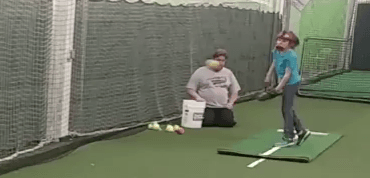
One of the fun but challenging aspects of working with very young fastpitch softball players (under about 10 years old) is getting them to focus for any length of time. There are usually lots of things going on in their heads at any given time, and the slightest activity anywhere else can distract them in a major way.
That can be a problem at any position. But it gets even more noticeable with pitchers. As a fastpitch pitcher you have to be able to dial in to the strike zone. Visualizing the pitch location before you throw it is helpful for improving accuracy. That’s tough to do, however, when the three ring circus is playing in your head.
This is where playing to the player’s competitive nature can be a real asset. Giving her something specific to do, with a prize attached, can help drive that focus level right up.
I actually stole this idea from Cindy Bristow at Softball Excellence. It came in one of her newsletters, which are a great source for drills and games.
Set up a tee on the plate, and place a ball on top of it. Then challenge the pitcher to knock the ball off the tee with a pitch. You’ll be amazed at how quickly she gets dialed in.
That’s what we did here with Kaitlyn, the girl in the accompanying video. She was having a bit of trouble focusing on this day, so I set up the tee and put a 14 inch ball on top of it. It probably would’ve been more fair to use a basketball or soccer ball, but I decided to challenge her.
In the beginning, I offered her a sucker if she knocked it off. Her mom immediately upped the ante and offered her a milkshake on the way home if she succeeded. We then spent the last 10 minutes of that lesson with her pitching balls at the tee. The rule was she had to hit it directly – no fair bouncing the ball into the tee so it falls off. Also she had to use good mechanics, not just aim the ball at the target any old way.
That first night she came close a bunch of times but didn’t quite get it. The following week her mom told me Kaitlyn was in a foul mood on the way home. She really wanted that milkshake.
The video is from that next lesson. We gave her 15 minutes this time. Kaitlyn ratcheted up the focus, and was right around it for much of that time. Thinking she needed a little extra help to succeed, I had her little sister stand directly behind the tee on the other side of the net. A few more throws and Bingo! Success!
Of course as Han Solo says, good against a remote is one thing. Good against the living is something else.
Today I heard Kaitlyn earned a game ball for her pitching. Two scoreless innings with a couple of strikeouts.
I wouldn’t say it was all in the drill. She put in a lot of hard work throughout the off-season. But I will say it helped.
If you have a pitcher who could use a little help zoning in during practice give this drill a try.
Congratulations to Kate Kiser for signing at Bowdoin
 This one is going to be a bit unusual because it’s actually not about a fastpitch softball signing. But I still want to offer my public congratulations to a terrific young woman, Kate Kiser, on her signing to play volleyball at Bowdoin College in Maine next year. Go Polar Bears – coolest mascot ever (pun intended).
So why is a softball guy talking volleyball? Because before she became a bigtime volleyball player with scholarship offers at all levels from all over the country, Kate was also a terrific pitcher and hitter.
I first met Kate when she was 9 or 10 years old. This was shortly after she’d survived a vicious attack by a large dog that had done so much damage she had to wear a pressure mask for a few weeks and had very visible scars.
Her mom Kim (also a terrific woman and a good friend) wanted to get Kate involved in something quickly to take her mind off the trauma, so she signed her up for softball. And knowing her daughter was not one to do anything halfway, she signed her up for some pitching lessons too.
Kate was rather shy and quiet those first couple of lessons, but we hit it off pretty quickly. She was a diligent student, even at that age – one of those you don’t have to worry about whether she will practice in-between lessons or not. She had a rare will to succeed in whatever she did.
I remember after a few weeks she had a game, and was going to pitch. Her mom asked if she should try to do what I was teaching or do it the old way, and I said give it a try, and if it doesn’t work than do what you need to for now. This was during fall ball, so no harm, no foul.
She continued to develop, and after a while hitting lessons were added to the mix, perhaps when she was 11. Because of her busy schedule, as well as mine, lessons often didn’t start until 10:00 pm – pretty late for a young girl. But she was always full of energy.
One of the things I remember most about Kate is her curiosity. I encourage questions during lessons, and Kate would ask them. But then, when we were done, Kate would say “I have one more question,” which really was a lie because she had many more questions. 🙂 We’d chat until her mom decided everyone needed to get to bed.
At first, as a player, she had a rough time. She got onto a Daddy Ball travel team that had its favorites and its “all you others.” You know the type. Whatever Kate did wasn’t good enough for them.
I remember hearing about one tournament at a location where they had to stay in a hotel. She and a good friend of hers didn’t get on the field for pretty much the entire weekend. At 10! It was tough, but she bore it with grace and kept working.
By the time she got to 14U much had changed. By now she was drawing looks from college teams, pitching and hitting up a storm. (Her mom told me at the signing ceremony she was still getting contacts from college softball coaches even though she hadn’t played since her freshman year in high school.)
She built quite a reputation for herself, at least within the general region. People marveled at her “natural talent.” Her mom and I just had a good laugh about that. Because while Kate is undoubtedly a wonderful athlete, none of them were there when she couldn’t find the plate, or I had to cajole her to stop thinking so much and just let the pitch fly, or to “see ball, hit ball” instead of over-analyzing everything. It was her work ethic, not just her athleticism, that got her to that point.
 Unfortunately for me and some college softball team, along the way Kate started playing club volleyball. She became a star there too, and eventually had to make a decision on which sport to play.
I blame myself for her decision. She always said her dream was to play for me as her coach. One day, when my 18U IOMT Castaways were going to be short a player for a practice game, I invited 14 year old Kate to come out and guest play for us. She did fine, and then apparently checked it off her bucket list. Just kidding, Kate. If you see her on a volleyball court you know why she went that way.
I do claim credit for two major things in her life, however. I introduced her to the music of Creedence Clearwater Revival (her tastes ran more to classical music at that time – did I mention she also played piano?) and I talked her mom into buying Kate her first Shamrock Shake. For better or for worse, long after she’s player her last game she’ll have me to thank for those two things.
All kidding aside, I am thrilled that Kate, once again after too much thinking, finally decided on her college. She plans to be a surgeon someday, and Bowdoin will be a great place to get that journey started while still being able to play volleyball. And you never know – maybe the softball team will need one more player to help them out and Kate will agree. Right after she asks one more question.
Congratulations, Kate. I know you’ll do well, and I wish you all the best!
Time to set a good example for our kids

This is a topic I have written about often, but it bears repeating. Especially when it’s stated so well. We often talk about how softball (or any sport) is “for the kids.” But many times our actions don’t match our words, and it becomes clear it’s more about the coach and his/her record than the players. As this guest post points out, maybe it’s time to re-think how we conduct ourselves and become the people we’d like to see our players become. Oh, and if you’re anywhere near the Flower Mound, Texas area, be sure to check into lessons with him. – Ken
Guest post by Dana E. Maggs, Excel Hitting and Pitching 
What kind of example are we setting for our kids? It is a question I have to ask myself often now.
As a coach I hear stories almost every week of a coach or parent losing their temper at a game. I hear stories of HS coaches heaping mental abuse on players, just to drive them off the team. With multiple complaints from parents. Yet the administration continues to ignore the parents. Protecting the coach.
I hear stories of recreational coaches screaming at umpires and walking off the field flipping them off as they get tossed.
I could keep going but the bottom line here is where is the accountability from those who are responsible for stopping this kind of behavior? Not only are they driving kids from a game they love but they are also setting a poor example of how to act like an adult.
We see those same kinds of examples now at the professional level. Just last night a Boston basketball player flipped off a fan at a game. I am sure his wallet will be much lighter for that action. So he will be held accountable for it.
But at the HS, Rec, and Select baseball and softball level there seems to be a lack of accountability from the governing organizations. There is NO excuse for this kind of behavior in my opinion.
Far too often I have had new students who have come to me with their confidence broken and their self esteem torn to shreds because of a coach or an overbearing parent. Do not be that parent. Do not be that coach.
A lot of this comes from a “compete and win at all costs” attitude. It’s not just in sport. Its now in everything you and your kids do in life. And when this happens all sense of responsibility disappears from the coaches and in some cases the parents as well.
Why are we putting so much pressure on them to win? You don’t go into the work place as an adult without training and development. You don’t progress without practice and development in sport.
Ultimately, if done correctly, you will win your fair share of games without putting pressure on the kids every time they step on the field of play. Regardless of the game they choose.
This kind of pressure often manifests itself on the child in ways that will affect them for life. Not just in their performance.
I see it in their body language. I see it in their attitude. I see it in their fear of making a mistake and them waiting to hear a negative comment from an adult.
I sometimes have to cross that line myself as an instructor. But how you go about it is the key to being that coach who wants you to understand that failure is how we learn to improve and get better.
Shouting and screaming at them will not do it. These kinds of behaviors by adults should result in immediate dismissal of the coach or banning parents from attending games based on behavior.
There needs to be a lot more accountability at every level of youth sports now. Not on the kids but on the adults. Sadly, it’s the kids who often pay the price and as a result leave the game they once loved to play.
Tips for winning the cat-and-mouse game between pitchers and hitters

One of the most fundamental elements of a fastpitch softball game, especially at the higher levels, is the cat-and-mouse game between pitchers and hitters. Once you get past pitchers just hoping to throw more strikes than balls, and hitters just hoping to make some sort of contact and get on base, the “game within the game” within the first 35-43 feet of the field is quite something to behold.
I work with both pitchers and hitters, so in writing this post I’m kind of like the arms dealer selling to both sides. But it also gives me a pretty interesting perspective because I have a pretty good idea of what each side is being told.
One of the keys to winning that cat-and-mouse game, however, is a willingness to adjust your strategy as the game goes on. Those who go in with a plan and stick to it, no matter what’s actually happening during the game, aren’t going to be as successful as those recognize a new opportunity has come up or what they’re doing, no matter how well-researched it was, just isn’t working.
Here are a few examples of what pitchers (and their catchers, can’t forget them) and hitters can do to adjust to what’s happening in a game. While this list is by no means all-inclusive, or even universally agreed-to, hopefully it can at least create a starting point for better in-game thinking on both sides.
Aggressive hitters
If there’s one universal taught to every pitcher, it’s the concept of getting ahead of the hitter in the count. Almost all the time that means throw the first pitch for a strike, usually with heat behind it.
When a pitcher is facing an aggressive team, or even a single aggressive hitter, who like to swing at the first pitch, that can get dangerous. You’re throwing a strike to hitters who are looking to pound one.
So the counter to that is to start hitters with a changeup or offspeed pitch. Get them to swing and miss, foul off that first pitch, or even mis-hit it into the field for an out. You might even want to follow that up with another one. After all, who expects two changeups in a row? It’s called fastpitch, right?
By throwing a first-pitch change (or first two pitches offspeed) you will often get the results above, AND upset the hitter’s timing for the rest of the at-bat since your change will make your heat seem even faster. Plus, it’s really tough to hit out of an 0-2 hole.
If you’re a hitter, the counter-move to that is to pay attention and figure out the pattern. In other words, if the three batters in front of you got a first-pitch change, there’s a pretty good chance you’ll get one two. Sit on that pitch and drive it. Then don’t forget to tell your friends.
Drop balls
The first thing hitters need to do when facing a drop ball pitcher is to figure out where the ball is dropping. Once they know that they have a couple of options.
If the ball is dropping pretty much on the plate, or at the back of it, one thing they can do is move forward in the box to catch the ball before it drops. The other option is to move to the back of the box so the ball is pretty much landing even with their front foot.
In doing so you’re pushing the umpire further back, and making it tougher to call the pitch for a strike. Although technically a strike is the height of the ball over the plate, that gets tougher to judge when the hitter is further back. If you’re successful with this strategy you can start taking those drops for balls, and maybe even take that pitch out of the pitcher’s arsenal that day.
For pitchers, the counter to that move is to have the ability to adjust where the ball breaks based on where the hitter is standing. That’s easier said than done.
Most times when pitchers practice drop balls they only practice them to one location. Smart pitchers, however, will practice moving the break forward and backward by having the catcher move up and back and changing their release point slightly to accommodate the different distances. When a pitcher can do that, her drop becomes a more formidable weapon.
The hitter’s counter? Get better at hitting drop balls.
Pervasive changeups
Ever seen a pitcher (or a coach calling signals) who is in love with her changeup? She throws a great one, so every hitter gets one or two each at bat.
If you as a hitter are having trouble with her speed or movement, here’s an idea: you know the change will come. Just wait for it and hit that. I’ve seen that strategy executed very successfully. Not only do you get the hits; you take the change off the table for a while.
I’ve also seen that ignored – even in the Women’s College World Series. I remember Arizona’s Taryne Mowatt win a national championship by feeding Tennessee’s hitters a steady diet of changeups. I also remember thinking “Why isn’t Tennessee sitting on that change?” – a thought even the announcers echoed an inning or two later. Make the pitcher pay and she will stop it.
The counter for pitchers is not to abandon it entirely. Just lay off it while it seems like the hitters are waiting for it. Once they start getting more aggressive at the plate, bring it back.
Working inside/outside
Pitchers who are consistently pounding the inside or outside corner should be fairly easy to deal with after a couple of innings. Hitters simply need to move into the plate when pitchers are living on the outside corner, thus turning an outside pitch into a middle pitch, or back off a bit if the pitcher is living on the inside corner to turn that inside pitch into a middle pitch. By the way, in my world right handed hitters should always start in on the plate against left handed pitchers until they see the pitcher will throw them inside.
The counter for pitchers, of course, is to take advantage of what the hitters are leaving on the table. In other words, if they’re backing off the plate due to inside pitches, then start throwing the outside corner. Conversely if they’re crowding to get the outside pitch, throw them inside.
That said, pitchers also need to be careful about getting baited to throw a pitch the hitter really likes. I’ve had any number of hitting students who were able to turn well on an inside pitch but struggled a little to let the ball get deep enough on an outside pitch. I will also tell them to crowd the plate. If you throw them inside that ball is likely to go a long way. The last thing the cat wants to do is get caught in the mousetrap.
Zoning in
If hitters don’t want to adjust where they stand at the plate, another strategy they can use is to identify where the pitcher is throwing the ball the most and cut the strike zone in half – or even into one quarter.
For example, one former high school coach I know of was very risk-averse, so he only liked to throw on the low outside corner. If you know that, you can narrow your strike zone to that one zone, look for a ball there, and take it downtown.
Most of the time, though, you’ll probably wind up cutting it in half. If the pitcher can’t throw a strike from the waist up, then just put the blinders on (or maybe pull your helmet visor down a little lower) and only swing at pitches below the waist.
The same for pitchers who throw almost all outside or inside. Where you make contact with the ball changes on inside versus outside, so if you know which half of the plate the ball is likely to be on you can adjust accordingly.
The counter for pitchers (at least where you have control over pitch locations) is to start breaking the pattern to keep the hitters honest, especially when you’re ahead in the count and can afford to miss the strike zone. You might even want to do it now and then even if you don’t have control of pitch calling because, hey, everyone misses a location now and then. Just be prepared to take the heat in the dugout afterwards – even if you’re successful in getting the hitter out.
Slappers
The conventional wisdom on slappers is to pitch them low and outside. But since a slapper wants to hit the ball on the ground in the 5-6 hole, throwing low and out may be the biggest gift you can give them. That’s usually where I start the tee when I begin teaching slappers because it’s the easiest way to get the proper results.
I always tell pitchers there are two types of slappers: those who run straight at the pitcher, and those who try to run to first base as they slap. The strategies are different for each of them.
For slappers who try to run to first base first, the low and out strategy will often work. For well-trained slappers, however, not so much.
In that case, you want to throw them up and in or low and in. Get them to pop up, or hit a weak ground ball to the right side of the infield where the throw is shorter.
For those who are anxious and starting a bit early, you can also throw them a change. Maybe they’ll run through the box, make contact outside of it, and get called out. Or maybe they’ll have to hold up to avoid running out, taking away some of the advantage of the running start.
For slappers, the first counter is to run straight at the pitcher every time. If you see the ball coming at you, then peel off a bit. You can also start a little later than normal to let the ball get deeper on you, or even a bit behind before you make contact (assuming the pitcher is throwing you inside consistently). Unlike hitting away, the closer the ball is to you the deeper you want to let it get so you can get it to the left side.
The other key counter for slappers is not to be one-dimensional. Be able to hit, straight bunt, drag bunt up the first baseline, soft slap, or hit up and over depending on how you’re being pitched and where the defense is playing you. The more you can do, the less the pitcher can rely on any one strategy.
Pay attention
The one common thread you may have noticed in all of those cat-and-mouse games is the need to be aware of what’s going on and pick up on any patterns or tendencies the other side has. The more you do that, the more likely you are to win the battle.
Now it’s your turn. What did I miss? What can hitters or pitchers take advantage of, and what is the counter to that move? Leave your thoughts in the comments below.
Also, one quick plug. If you haven’t already done it, you can subscribe to receive notifications every time there’s a new post on Life in the Fastpitch Lane. Fill in your email in the box on the upper left side and never miss a post again!
Fastpitch pitchers: getting the feel of the whip
One of the things that keeps being a fastpitch softball instructor fun and interesting is that there is always some new puzzle to solve. That was certainly the case with a girl named Kate and her pitching.
I started working with Kate on her pitching late in the summer last year. Once the weather turned cold I didn’t see her for a while – schedules just didn’t match up – but she continued to work on her own.
When we did get together earlier in the year her speed just wasn’t quite where it should have been. She was working hard, and putting in plenty of effort, but when the ball came out it sort of floated toward the plate. It was almost as if every pitch was a changeup.
That just didn’t sit well with me, of course. Kate is a terrific girl, always smiling and very polite. If I say “good job” she invariably says “thank you.” I’ve actually told her she doesn’t have to thank me every time I say something nice, but it’s tough to overcome good upbringing.
Anyway, I knew here was more speed in Kate, but we were having trouble finding it. It just didn’t seem like she was driving her arm/hand through release.
I tried a couple of different drills, and even gave her a Jugs Lite Flite ball to practice with, thinking the lighter weight might help her feel acceleration into release a little better. The light ball helped a little, but there was still something not working in her delivery.
The other night she came in for a lesson, and I could see during warmups she still wasn’t getting the ball out properly. So I decided to try the towel drill. This is a drill where the player holds a towel, goes into a K position, then whips the towel through. If you do it right you’ll it snap forward somewhat.
Well, that wasn’t working either. After a couple of attempts I wasn’t seeing what I wanted. Then I had an inspiration. I told Kate rather than holding onto the towel she should bring it down and throw it to her dad, Mark, who was about 10 feet in front of her.
The first time she tried it the towel didn’t go anywhere. The second time it went straight to the top of the cage we were working in. But then she started to get it, and the towel went forward. A few more reps and she was easily throwing it quickly to her dad.
So I backed her up and put a ball in her hand. Sure enough, there was a visible speed jump from before. She did it again and had the same result. We finished normal warm-ups and went into full pitches and whaddya know? Suddenly the ball was hitting the catcher’s glove with a nice “thwack!”
She was a bit wild, but I told her don’t worry about that right now. Let’s just focus on your newfound speed. She was able to maintain it throughout the lesson and we were all happy about the breakthrough.
Still, you never know. Sometimes these gains are only temporary. That’s why I was so delighted to receive this text from Mark a couple of days later:
“(W)e can hardly contain our excitement!!!! We just finished our team practice and Kate absolutely rocked it. IT being the pitching part. Her speed is nearly matching the other girl. Perhaps just a few mph difference, and that’s negligible in pitching speak.
On the way home Kate said the sweetest thing to a dad’s ear. ‘I’m so happy.’ I asked her ‘about what, Kate?’ ‘That you found our coach, Ken.'”
I believe what was happening with Kate was that she was twisting her wrist as she released – probably the result of all those wrist flips she used to do before starting with me. Once I had her throw the towel she couldn’t do that anymore if she wanted it to go anywhere, and that gave her the feeling of how to get the ball through the release zone properly.
So if you have a pitcher who is struggling with speed – especially if it looks like she’s in permanent changeup mode relative to her effort level – give this drill a try. Maybe you’ll get a nice text too!
Making adjustments part of the fastpitch game plan

Establishing a game plan is an important part of approaching fastpitch softball games strategically. Especially when you have the opportunity to scout your opponent.
For pitchers, you want to match your strengths to the hitters’ weaknesses. For defense, you want to play to the tendencies. For hitters, you want to get a feel for what’s coming so you can jump on it when you see it.
Yet all too often I see game plans that look like they were written on stone tablets, dictated by a coach in the form of a burning bush. In other words, the game plan a team starts with is the one they stay with for the entire game.
The problem is, smart coaches on the other side are always looking to figure out what your game plan is so they can adjust theirs. If you just stay with the stone tablets, the game can turn on your pretty quickly.
For example, a coach who notices your hitter are very aggressive at the plate will want to throw more first-pitch changeups. Get you to the pull the ball foul, or swing through the pitch for an easy first strike.
You then have two options. You can continue to go to the plate looking for heat on the first pitch. Or you can recognize what’s happening and sit on the change. Then it’s up to the other team to stick stubbornly to their plan or make an adjustment.
Pitchers may have worked all week on a great sequence of pitches. But if you’re starting every hitter with a rise, or a curve, or a whatever, it probably won’t take them more than 2-3 innings to figure out there’s a pattern to your throwing. Once you see they’re onto you, it’s time to change it up – perhaps literally with a changeup, or a drop, or a screw. Anything to get them to either swing at the wrong pitch or take it for a strike.
The less comfortable hitters are at the plate, the better it is for pitchers.
This mentality also applies to general strategy. Coaches who sac bunt whenever they get a runner on first are pretty easy to defend. In fact, with one team I coached, where I had a very athletic third baseman, I told her if she caught a bunt in the air for an out I would give her an ice cream upgrade, i.e. when the team went for ice cream cones I’d buy her whatever she wanted. Danged if she didn’t win that challenge too. But it was worth it.
The idea of making adjustments shouldn’t be foreign, especially if you watch football. They talk about halftime adjustments all the time. The winning team usually makes them, getting rid of the plays that aren’t working and changing their defenses to match what the offense is trying to do. The losing team usually doesn’t. And guess which coaching staff lasts longer?
The greatest game plan in the world is worthless if it’s not working – or if it stops working during the game. It’s not something you can pre-program for 7 innings.
Yes, know what you want to do going in, but don’t fall so in love with it that you can’t make changes when you need them. Recognize when the plan’s not working anymore and try something else.
If you can’t do it, maybe designate another coach or even a bench player to be that voice that says “Hey, time to change things up.” Then listen. You may just find yourself on the winning side at the end.
Fastpitch coaches: when you’re offering instructions, be specific

One of the challenges of coaching fastpitch softball, or any sport for that matter, is offering directions that are meaningful to the player. While there are several elements that go into meaningful directions, I find that being specific is definitely key.
What does that mean, be specific? Here’s an example I heard today. A student told me she was working on fielding ground balls, and one of her coaches told her she had to get lower. That was probably correct – I wasn’t there so I don’t know, but let’s assume it was.
The problem with saying “get lower” is it leaves out an important element: how to get lower. If you’re bending at the waist, does that mean bend more at the waist? No, that would be silly.
The proper direction would be to lower your hips as you go down to the ball. That makes it easier to get to the ball while remaining in an athletic position where you can make the play.
Non-specific instruction reminds me of a joke that was making the rounds a few years ago. A group of people are in a helicopter in Seattle, checking out the sights, when a sudden fog rolls in.Not only are they having trouble seeing but the instruments go all haywire.
Now they’re lost, and need directions to get back to the airport. The pilot decides to hover next to a building where he sees some lights on. He sees there are people inside, so he quickly writes up a sign that says “Where are we?” and holds up it for the people inside to see.
They see the message, and take a minute to write up their own sign. When they hold it up it says, “You are in a helicopter.” The pilot immediately says “Right” and heads straight for the airport. When the helicopter lands, all the passengers are amazed. “How did you know from their sign where we were?” one asks.
“Easy,” said the pilot. “The information they gave us was completely accurate and completely useless. I knew we were by Microsoft.”
That’s the thing about directions. It’s easy to say do this or do that, but is what you’re saying actually helpful? Or is the message simply, “Play better!” – which I actually used once in a post-game speech to break the tension when the team was down.
For the most part, players don’t need you to tell them they’re doing poorly. If they have any experience at all they can tell they’re having problems. What they need is help fixing them. The more you can give them the “how” instead of just the “what,” the faster they’ll likely be able to address the issue and get it corrected.
Telling a hitter she’s pulling her front shoulder out is true, but useless. Telling her how to keep her front shoulder in, by leaving it strong and driving her back side around it, is helpful. (By the way, telling her she’s pulling her head out is neither accurate nor helpful, because it’s not the head that’s getting pulled out, it’s the front shoulder.)
Telling a pitcher she’s throwing high is useless. Even the least experienced pitcher can see that on her own. Telling her to whip through the release and fire the ball at the plate instead of getting the hand ahead of the elbow and pushing it up through release will help her correct it.
If you don’t know the “why” of common issues, find out. There’s plenty of great information out there. Search around on Life in the Fastpitch Lane (this blog) for ideas. Go to the Discuss Fastpitch Forum (if you didn’t come from there already) and poke around for hours. Search on YouTube – although be careful because there’s a lot of bad information out there too. Buy books and videos. Observe what great players do. Ask a more experienced coach. Attend coaching clinics and/or the NFCA Coaches College.
The more you know, the more specific directions you’ll be able to give them. And the better you’ll be able to help your players perform at the level you want them to.
The importance of tee work in fastpitch softball

Players, especially younger ones, often look at the hitting tee as something that’s only useful to beginners. Yet nothing could be further from the truth. Working off the tee has a huge amoung of value to players of all experience levels, as this guest post by David Morgan of The Planet of Baseball explains.
One thing most new fastpitch softball players realize as soon as they get into the game is there is actually nothing soft about softball. They quickly find that hitting a ball is not as easy as great hitters make it look.
It is common to find that new players have very poor swings and some may not even know how to hit off a tee. However, softball coaches have devised various drills that can help players improve their skills and develop good hitting habits.
One way softball players can learn how to hit off a tee is to regularly engage in tee work. We shall explore how tee work helps softball players to become better at the sport.
Improving accuracy
Accuracy is definitely important in the game of softball. For a player to hit off a tee accurately, he/she must maintain focus; tee work is very useful in achieving this precision.
For example, it`s possible for a coach to hang a target on a pole and ask the players to hit it. This target should be placed at eye level so that the player can easily see it.
The major advantage of this method is the player clearly knows whether he/she hits the target or not. In the event that the player misses regularly, the coach could use this opportunity to help the player work on her swings. In addition, it could help the coach identify if the player has problems concentrating by observing whether he/she regularly take his/her eye off the ball.
Body Timing
One common problem that softball players must combat is knowing how to time their bodies.
In fact it is common for softball players to lower their hands as they begin their swing. The result of this is that they end up missing balls they should have hit. Engaging in tee work helps address this problem.
The easiest way to accomplish this is to have players with this issue hit off a high tee, for instance somewhere around the chest region. If the player happens to drop his/her hands, then her bat would go right under the ball. When players repeat this practice often, the tendency to drop their hands as they begin their swing will be reduced.
Keeps the body in shape
Apart from helping players improve their skills, tee work can also help keep players in good shape.
Sometimes, most players come back from an extended lay off only to discover that their bodies are no longer in tune with the game. This is when tee work becomes very important as it helps to prepare the muscles for the new season.
It can also help players work on specific problems before a game begins, such as an inability to hit to the opposite field. The ability to hit to the backside enables a player to move runners and throw off the defense.
Developing more advanced skills
In most cases tee work is done when the coach is present. However, mature players can also do it on their own.
One of the advanced skills a player can develop from hitting off a stationary tee is the ability to hit to both the left and right sides, again using targets. For instance, if it is an inside pitch work, the targets are placed to the left for a right-handed hitter. The targets are placed to the right for outside pitch work.
In addition, other important skills such as swinging through the ball, as well as hitting further back in the strike zone can be developed from regular tee work.
Final words
In conclusion, we have been able to provide some good reasons why we believe tee work is very important in softball. Having good equipment, including quality tees and the best softball bats, is important as well. The better your equipment, the more you will enjoy practicing – and the more success you’ll have in the game.
My name is David, I am an editor/co-founder of www.theplanetofbaseball.com. Being a software engineer by day and a baseball/softball blogger by night, I also participated in the training activities of a youth baseball team at my hometown. I have passion with baseball, it pertains to my life from childhood until now and I love to share what is related to that passion with others. I believe in the support of other baseball bloggers like me to spread the passion.
Getting the feel of the push off in fastpitch pitching

Getting a strong push-off is essential to maximizing speed for fastpitch pitchers. You need to develop a lot of forward momentum so that when your front foot comes down the stop is very sudden, which helps accelerate or sling the lower arm through the release zone.
Unfortunately, young pitchers often have trouble getting the timing down to create an early push. Instead, they will kick the stride leg forward while just sitting on the drive leg, and then try to push at the end, which is too late.
I’ve had pitchers skip before, because that mimics the sequence, i.e., push off first then reach with the leg. It works for some but not others. So if you or someone you know is still having trouble getting the feel, here’s something to try.


Place an obstacle out in front of her, very low to the ground like the swim noodle Alyssa’s father Tony is holding here. Then have the pitcher jump over it, using a normal forward jumping motion rather than thinking about pitching.
When she does it, ask her what she feels. If she isn’t sure, have her do it again. What she should feel is the drive leg pushing first, then the stride leg reaching out. If she does it correctly you’ll see it, as shown in the photos here.
Yes, this motion would be illegal for a pitch – big time illegal – but that’s not what you’re going for right now. Because if she could get the push legally you wouldn’t be doing this drill.
You just want her to feel the push first. After she does it a few times, have her go back and now try to copy that feeling with an actual pitching motion. If she’s gained the feel, and is driving her body forward first, the back foot should pretty much take care of itself.
So far, every pitcher I’ve tried this with has made an immediate improvement in her drive mechanics. I’m not quite ready to pronounce it foolproof yet, but it’s looking good.
If you’re facing this issue give it a try, and let me know in the comments how it works out. And if you’ve done this before, share your experience and whether it worked for you too.
Congratulations to Wisconsin pitcher Kirsten Stevens
Huge congratulations are in order for University of Wisconsin – Madison pitcher Kirsten Stevens on being named the Big Ten Pitcher of the Week. Can’t say it comes as a surprise, though, after the weekend she had. 
Kirsten toss not one but two shutouts in earning her third and fourth wins on the season. And this after being sidelined for most of the off-season with a broken foot.
When the accident first occurred it looked like the Badger might miss the first part of the season. But with a strong work ethic and help from the Wisconsin coaching staff and trainers, she beat the prognostications and is back on the field.
And what a pre-season it’s been. Kirsten is currently sporting a miniscule ERA of 0.28, which is what happens when you’ve only allowed one run for the season so far. Over the weekend she also had a personal best 11 strikeouts against Hofstra, continuing the blistering pace for Ks she set as a goal before the year.
And the best part? Kirsten is one of the nicest human beings you’ll ever meet. Always with a smile on her face, always remembering to have fun, and always making time to speak with and encourage the young players who look up to her (literally as well as figuratively) when she meets them.
All we can say here is keep up the good work! And again, congratulations to both you and the team who helped you achieve a well-earned honor.






 Life in the Fastpitch Lane