Category Archives: Coaching
Are We Destroying Our Kids?

Injuries have always been a part of participating in youth sports. Jammed fingers, sprained ankles and knees, cuts requiring stitches, even broken bones were an accepted part of the risk of playing. Things happen, after all.
Lately, though, we are seeing a continuing rise of a different type of injury. This one doesn’t happen suddenly as the result of a particular play or miscue on the field. Instead, it develops slowly, insidiously over time, but its effects can be more far-reaching than a sprain, cut or break.
I’m speaking, of course, about overuse injuries.
According to a 2014 position paper from the American Medical Society for Sports Medicine, roughly 46 to 54% of all youth sports injuries are from overuse. Think about that.
There was no collision. There was no tripping over a base or taking a line drive to the face. There was no stepping in a hole in the outfield or catching a cleat while sliding. The injury occurred while participating normally in the sport.
And here’s the scary part. As I said, this report came out in 2014. In the six years since, the pressure to play year-round, practice more, participate in speed and agility training and do all the other things that go with travel ball in particular has only gotten worse.
You can see it in how one season ends and another begins, as we recently went through. Tryouts keep getting earlier and earlier, with the result that players often commit to a new/different team before their finished playing with their current teams.
It’s not that they’re being bad or disloyal. It’s that they have no choice, because if they wait until the end of the current season there won’t be anywhere left to go because all the teams have been chosen.
What is even crazier is that there literally was no break for many players from one season to the next. I know of many for whom their current season ended on a weekend and their first practice for the next season was the week immediately after. Sometimes they were playing their first game with the new team before their parents had a chance to wash their uniforms from the old team.
And it wasn’t just one practice a week. Teams are doing two or three in the fall, with expectations that players will also take lessons and practice on their own as well.
That is crazy. What is so all-fired important about starting up again right away?
Why can’t players have at least a couple of weeks off to rest, recuperate physically and mentally, and just do other things that don’t require a bat, ball or glove? Why is it absolutely essential to begin playing tournaments or even friendlies immediately and through the end of August?
I think what’s often not taken into consideration, especially at the younger ages, is that many of these players’ bodies are going through some tremendous changes. Not just the puberty stuff but also just growth in general.
A growth spurt could mean a reduction in density in their bones, making them more susceptible to injuries. An imbalance in strength from one side to the other can stress muscles in a way that wouldn’t be so pronounced if they weren’t being used in the same way so often.
Every article you read about preventing overuse injuries stresses two core strategies:
- Incorporating significant periods of rest into the training/playing plan
- Playing multiple sports in order to develop the body more completely and avoid repetitive stress on the same muscles
When I read those recommendations, however, I can’t help but wonder: have the authors met any crazy softball coaches and parents?
As I mentioned, I’ve seen 12U team schedules where they are set to practice three times a week – in the fall! And these aren’t PGF A-level teams, they’re just local teams primarily playing local tournaments.
Taking up that much time makes it difficult to play other sports. Sure, the softball coach may say it’s ok to miss practices during the week to do a school sport, but is it really?
Will that player be looked down on if she’s not there working alongside her teammates each week? Probably.
Will that player fall behind her teammates in terms of skill, which ultimately hurts her chances of being on the field outside of pool play? Possibly.
So if softball is important to her, she’s just going to have to forego what the good doctors are saying and just focus on softball, thereby increasing her risk of an overuse injury.
This is not just a softball issue, by the way. It’s pretty much every youth sport. I think the neverending cycle may be more of a softball issue, but the time factor that prevents participation in more than one sport at a competitive level is fairly universal.
In the meantime, a study published in the journal Pediatrics that pulled from five previous studies showed that athletes 18 and under who specialize in one sport are twice as likely to sustain an overuse injury than those who played multiple sports.
The alarm bells are sounding. It’s like a lightning detector going off at a field but the teams deciding to ignore it and keep playing anyway. Sooner or later, someone is going to get struck.
What can you do about it? It will be tough, but we have to try to change the culture.
Leaders in the softball world – such as those in the various organizations (including the NFCA) and well-respected college coaches – need to start speaking up about the importance of reducing practice schedules for most of the year and building more downtime in – especially at the end of the season. I think that will help.
Ultimately, though, youth sports parents and coaches need to take responsibility for their children/players and take steps to put an end to the madness. Here are a few suggestions:
- Build in a few weeks between the end of the summer season and beginning of the fall season for rest, recovery and family activities. There’s no reason for anyone to play before Labor Day.
- Cut back on the number of fall and winter practices. Once a week with the team should be sufficient. Instead, encourage players to practice more on their own so they can fit softball activities around other sports and activities.
- Reduce the number of summer games/tournaments. Trying to squeeze 100+ games into three months in the summer (two for high school players who play for their schools in the spring season) is insane bordering on child abuse. Take a weekend or two off, and play fewer games during the week.
- Plan practices so you’re working on different skills in the same week. This is especially important when it comes to throwing, which is where a lot of overuse injuries occur. Work on offense one day and defense another. Or do throwing one day and baserunning another. Or maybe even play a game that helps with conditioning while working a different muscle group.
It won’t be easy, but we can do this. All it takes is a few brave souls to get it going.
Overuse injuries are running rampant through all sports, including fastpitch softball. With a little thought and care, however, we can reverse that trend – and keep our kids healthier, happier while making them better players in the process.
Photo by Karolina Grabowska on Pexels.com
First Impressions Aren’t Always Right

Most people have probably heard the old cliche “You never get a second chance to make a first impression.” And while that’s technically true, it doesn’t mean you should always cling to your first impression of a player (or coach for that matter) because you may find there’s more there than is on the surface.
That was my experience recently with a young 12U player named Jazmin. Her mom contacted me after getting a recommendation from the father of a teammate.
She told me Jazmin was brand new to softball, and that she would like to get her some hitting lessons. That alone is pretty interesting.
Usually parents don’t look into lessons until after a few games, or maybe even a couple of seasons, so that fact that she wanted to start with lessons right away was surprising but in a good way. I think she was a little concerned that everything would be so new with her daughter but I reassured her it could be a good thing because she wouldn’t have any bad habits to unlearn.
Then came Saturday morning and the day of our first lesson. Jazmin walked up and right away my Spidey-sense started tingling, because honestly I have seen happier looking faces in a hostage photo.
We started the lesson and things didn’t get any better. She seemed very unhappy to be there and as a result it was a struggle to get her to do anything.
I finally stopped and asked her if she wanted to be there. I wasn’t trying to be mean, I was actually trying to be kind, because there is no sense in making yourself miserable just to do something. That’s what work is for.
She mumbled something or other, which may have been “yes” but meant no. Finally her mom, who had been watching her from behind the backstop, called her over and talked to her for a while. Mom did not like that attitude at all and let her know.
I think we tried going on a little more but nothing had really changed so I suggested we stop about halfway through the scheduled lesson. I told her mom there would be no charge – we tried it, it didn’t work.
But mom asked if we could try again the next Tuesday. I give her a lot of credit for that, by the way. A lot of parents would have just chalked it up to a bad idea and been done with it.
I agreed, a little reluctantly, but told her if we had to stop again I would be charging for that lesson. It was only fair, she agreed.
Then came Tuesday. Admittedly I was a bit concerned about how things would go this time given the last experience, but I was willing to give it one more try.
Mom reminded Jazmin to start by apologizing for her prior attitude, which she did, and from that point on it was like aliens had come to Earth, taken away the Jazmin I’d met on Saturday, and replaced her with a new and improved version.
What I discovered was Jazmin is a blast to teach. She has a great sense of humor, and not only laughs at my jokes but throws a few in on her own too – including a couple of good-natured digs at me, which I appreciate.
She’s been all smiles at every lesson since (we’ve only done a few) and has thrown herself into learning how to hit. We’ve only been working on the tee so far but she is coming right along and should be ready to start front toss in the next lesson or two.
Not bad for a totally inexperienced beginner. Hopefully we have a long instructor/student relationship and someday we will have a good laugh about it when she comes back from her college team for a tune-up.
So that’s the lesson for today. Had I assumed that first impression was all there was to Jazmin I would never have booked the second lesson and I would have missed out on a wonderful new student. That would have been a shame for both of us.
On the other side, players, you need to understand that the first impression you make with a coach at a tryout or a conversation after a game or other event could cause you to miss out on an opportunity.
Sure, you could just be having a bad day (as Jazmin apparently was). But you may not get the chance to correct the coach’s impression later. I was very close to saying “no” to the second lesson because I had serious doubts anything would change. Fortunately I was wrong.
In our hyperspeed world, it’s easy to make quick judgments and move on. But every now and then it’s worth taking a chance that your first impression wasn’t the correct one. You never know what you’ll find on the other side.
Photo by Pixabay on Pexels.com
Stop Chasing Rainbows on Technique

Let me start by saying I am a fan of continuous learning. I believe it is every coach’s responsibility to constantly question what they already “know,” look for new information and innovation, and keep up with the latest advances in our sport.
This is one of the reasons I pursued and attained Elite certification in the High Performance Pitching program back in the December/January timeframe, and continue to participate in weekly calls with other accomplished pitching coaches from across the country. I’ve been doing this for a long time and could easily decide to be comfortable with what I already knew. But if there is a chance I can do better in helping the athletes I coach you can bet I will look into it.
All that said, there is another side to this mostly positive coin – what I would term as “chasing rainbows.” A coach who is chasing rainbows isn’t really looking to add to their knowledge and synthesize what they believe so they can teach it in an organized manner.
Instead, this is a coach with no set of firm beliefs to challenge. Instead, he/she merely adopts and repeats whatever he/she heard most recently from someone perceived as being smarter than the coach. Here’s an example.
A hitting coach attends a coach’s clinic where the presenter explains why you want a slight uppercut swing with the hips leading the hands. So she takes furious notes, highlights the handout, and runs back to her team to show them this “new” way to hit.
Note that she doesn’t take time to compare the information to what high-level hitters do, or to think through how it applies to the players on her team. She simply parrots the talking points and hopes for the best.
A few months later, she attends another clinic where the presenter talks about starting with the hands and swinging down on the ball to create backspin. Again, she takes furious notes, highlights the handout, and guess what? Now her team is learning an entirely new way to swing (and an incorrect one, I might add) before the players have had a chance to master the previous way.
What you end up with is a team caught somewhere between their original swings, the techniques of the first clinic and the techniques of the second clinic. Then the head coach wonders why the team has a collective batting average of .257 and can’t seem to produce runs on any sort of scale.
A better approach would be to start with a firm set of beliefs about hitting, preferably based on the teachings of someone who has been successful coaching hitters along with a close study of high-speed video of high-level softball and baseball players actually swinging the bat.
Note that I didn’t say a study of what those high-level players say. Just because they can hit doesn’t mean they know how to explain what they do. You’d be surprised how many of them say one thing and do something else.
Once the coach has a starting point, then start taking in information and comparing it to those beliefs in the same manner. For example the conflict between whether to swing down on the ball or swing with a slight uppercut at contact.
Whichever side the coach starts on, look at information from the opposite side and see how it compares to those high-level swings. If what is being said matches what is being seen, the coach will probably want to re-evaluate her beliefs. If it doesn’t, the coach is probably already on the right track.
When a coach can attend a clinic or other presentation and critically evaluate the material being presented she can be fairly confident that her decision on whether to adopt what is being taught there or discard it will be a good one.
Of course, it doesn’t have to be a binary choice. The coach may find that 95% of what is being presented is just old thinking, but that the other 5% has some value, if not for the whole team at least for one player.
This is especially true when it comes to drills. People talk about “good drills” and “bad drills.” But with rare exceptions, any drill is good that can help a player get to where she needs to go, even if it’s not the best course for everyone.
This idea of working to adopt a firm philosophy doesn’t just apply to hitter. It can apply to any skill within fastpitch softball, even if what you’ve been doing has been successful.
Heck, I’ve taught throwing a certain way for a number of years, based on the best information I had available to me at the time. After being exposed to Austin Wasserman’s High Level Throwing program I’ve changed what I teach to some extent. Not because it’s the flavor du jour, but because what he says makes sense in the context of what I already understand about throwing.
For many of us, change can be difficult. But for some it actually comes too easily.
Find something or a set of somethings you believe in after careful consideration, then work to build from there. Because the funny thing about chasing rainbows is that while you may feel you’re getting closer, you’ll never catch them. And you may actually take yourself farther away from your preferred destination.
Rainbow photo by James Wheeler on Pexels.com
10 Items That Should Always Be In Your Coach’s Bag
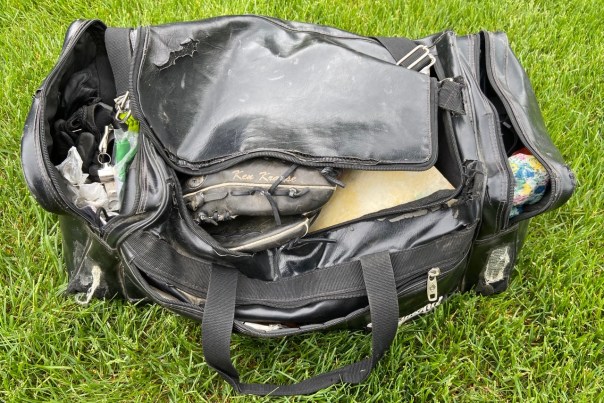
Ask most fastpitch softball coaches what they carry in their bags or backpacks and you’ll likely get the usual answers.
They have their glove, of course, and probably a ball or two. They have stopwatches, whistles, lineup cards, pencils/pens, the chart for arm band signals (if they’re using those systems), a clipboard, maybe a Pocket Radar and a few other assorted items they expect to need.
But effective coaching is really about being ready to deal with the unexpected. Any number of little emergencies can crop up during a game or practice that may seem minor but can have a big impact – especially for their players. It doesn’t take much to throw someone off their game, and you know once they are off the ball is going to find them in the field, or they are going to come up to bat at a crucial moment.
So, the better your ability to solve all those little issues, the better of a chance you have to win.
With that in mind, here are 10-problem solving items you should be sure to have in your bag at all times.
- Duct tape. My Southern friends can tell you that duct tape can fix just about anything. Your pitcher has a hole in her shoe from dragging her toe? Duct tape it. The strap on a backpack broke? Duct tape it. The grip on a bat is coming off? Duct tape it. Your only hitting tee is falling apart or won’t stay extended? Duct tape it. Your clipboard with the lineup card is banging all over the dugout because of the wind? Duct tape it to the wall. A water bottle is leaking? Duct tape it. You get the idea. If you get nothing else out of this article, understand that duct tape is your friend that can repair just about anything. I suggest you grab a roll right now and throw it in your bag. Go ahead. I’ll wait.
- Glove repair kit. This is why I said duct tape could fix “just about” anything. While you can try it on a glove it probably won’t be very successful. For those issues you’re better off having a little kit that includes tools and spare lacing, preferably with black and brown laces. If it hasn’t happened already, some player is going to come to you show that either the lacing on their glove broke entirely, or it pulled out. Either way, the glove is now flapping in the breeze and you’ll need to be able to fix it quickly. It doesn’t have to be pretty, it just has to hold together. Having the tools will save you a whole lot of heartache – especially if it’s your shortstop or catcher with the broken glove.
- Spare set of sunglasses. At some point one of your outfielders is going to be staring directly into the sun. Of course she didn’t bring sunglasses, and yelling at her that she should have thought of it before isn’t going to help right now. Keep a spare pair on-hand in a little bag so when that big fly ball heads her way she has a chance of catching it.
- Batting gloves, assorted sizes. Again, something players should already have, but most only have one pair at most. If a player loses one or both, or a glove develops a giant hole, or the gloves get soaked with Gatorade, or any of a dozen other things happen to them the player may have her mental game thrown off. Having a spare handy (no pun intended) takes care of that. It’s also good for the player who never wears batting gloves but suddenly needs them due to blisters or other injuries.
- Towel. A good towel can serve a couple of purposes. The most obvious is to wipe off a wet ball so it becomes playable again. In 2020 that becomes more important than ever because there’s a lot of pent-up demand to get games in. Unless the lightning detector goes off, or someone spots a tornado, they’re going to be trying to get games in. Having a towel in your bag will help keep the ball from slipping out of your pitcher’s hand. But a towel is also good for absorbing blood from a bloody nose, a large cut or scrape or other injuries. It can also be used as a tourniquet if it comes to that, but hopefully you’ll never find that out.
- Poncho or fold-up waterproof jacket with hood. I personally recommend the jacket because it can also help if you if the temperature takes a sudden dive, but either way you’ll want something available to keep the rain off of you. Especially if you’re sitting around between games. Whichever you choose, throw it in your bag and just leave it there until it’s needed. You’ll thank me one day.
- 100 foot measuring tape. Best-case scenario you need the measuring tape to mark off the distance so your pitcher(s) can warm up properly. Worse-case scenario, you’ll need it to prove to the umpires that when Bubba and Billy Bob set up the field they used the wrong base markers, and the baselines are currently 50 feet or 75 feet long, or the nail-down pitching rubber is not set at the proper distance for your level of play. If you’re really feeling lucky you can also use it to point out that the chalk lines for the batter’s box are not the proper dimensions (especially if you have slappers), but that might be pushing it a bit. If you don’t want to carry a full measuring tape you can also cut a length of mason string to size and mark off all the key dimensions.
- Hair ties. I’ll admit I was kind of late to the party on this one. But I can guarantee there will come a time when you have a player whose hair is bothering her and who doesn’t have any hair ties of her own. They only cost a couple of bucks for a whole bunch of them. Pick some up and throw them in your bag. It’s worth it.
- Travel sewing kit. Sliding in particular can be rough on uniforms. While a small hole here or there isn’t a problem, a larger tear could become an issue. Especially if it’s in an inopportune place. A small travel sewing kit can help make quick repairs until the situation can be dealt with more permanently. Do yourself a favor – find a parent on the team who can help with these sorts of uniform malfunctions, especially if the player’s parents aren’t there.
- Throw-down home plate. Whether you’re warming up pitchers, having hitters take a few swings off the tee before heading into the batter’s box, working with catchers on blocking, etc. it always helps to have a visual available. A throw-down home plate can turn any available space into an instant practice area. It can also substitute for a different base – or cover a small puddle in the dugout in a pinch.
So, did any of those surprise you? Did I miss anything? Add your suggestions in the comments below.
And if you have a topic you’d like to see me cover you put that in the comments as well.
It’s Not the Arrow, It’s the Archer
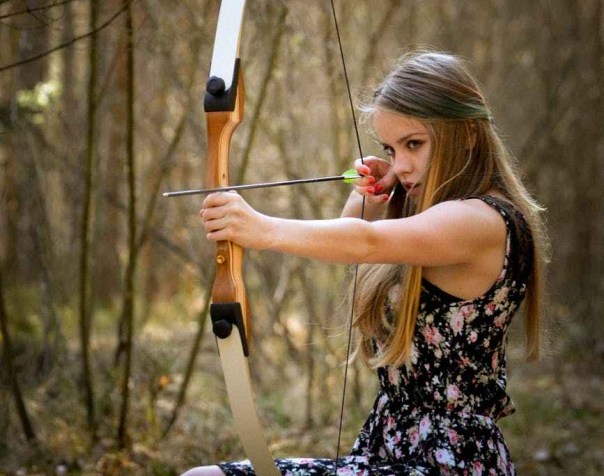
The title of this week’s post is a phrase I use often, especially when I get asked about an equipment recommendation. But it can apply to a lot of things.
It seems like everyone is looking for the “magic bullet” – the bat, or gadget/device, or drill or technique or whatever that will, with no additional effort on their part, create a sudden and dramatic improvement in performance. In my experience, and the experience of many other coaches I’ve spoken with over the years, that magic bullet doesn’t exist.
Take bats, for example. Sure some bats have a better trampoline effect or are “hotter” than others (within the limitations set forth by the various sanctioning bodies) and thus with all else equal will provide an edge. But all else is rarely equal.
First of all, for all that bat technology to work you still have to hit the ball at the right time, and in the right location. If you’re not doing that now a new bat isn’t going to help.
It will look nicer in your bag, and people will be duly impressed when you take it out. But if you have a $500 bat and 5 cent swing they won’t stay impressed for long. It’s not the arrow, it’s the archer.
Since speed is such an important component in pitching, everyone is always looking for the magic drill that will help them gain 8 mph in one or two sessions. An entire industry of DVD sales and online courses has been built by that particular desire.

You might, however, want to avoid taking lessons from this guy.
But again, if such a drill exists I’ve never found it. Neither has Rich Balswick, who is one of the best and most accomplished pitching coaches in the world.
I know, because I’ve talked to him about it. For all he has done he is still looking for that magical drill that can instantly turn a pitcher with average speed into a burner.
In fact, he told me if I ever discover it to pass it along to him. So far I have not been able to do so, and he hasn’t shared one either so I presume he’s still on the hunt as well.
Devices and gadgets are another area where people hope for miracles. Some are valuable teaching tools, like the Queen of the Hill or the Pocket Radar, and others are just fancier ways to lose money than flushing it down your toilet.
None, however, can instantly make you better just by purchasing them, or using them once or twice. Because it’s not the arrow, it’s the archer that makes the difference.
Then there are those who claim to have solved the mysteries of the Sphinx in terms of the techniques they teach. These same people tend to keep exactly what it is shrouded in mystery, as though if they told you (without you paying them huge sums of money) they would have to kill you.

This is the same facial expression many coaches have when you miss a sign.
While there is certainly plenty of bad teaching going on in the softball world in all aspects of the game, it’s not like the optimal techniques are known only to a select, privileged few. The information is out there if you are willing to invest some time looking for it. (I like to think a lot of it is here, by the way, so feel free to poke around some more after you finish with this post.)
Of course, that’s the issue – investing some time. Most of us would much rather buy a “product” that promises instant, guaranteed results than recognize that learning athletic skills is a process that requires a lot of work, a lot of boring repetition, and paying a lot of attention to a lot of little details that can have a large impact on performance.
The first way sounds easier, doesn’t it? Too bad it doesn’t work.
The value of any piece of equipment, drill, gadget or technique lies with the person who is using it.
Put that $500 bat in the hands of a player with a 5 cent swing and it’s going to look like a waste of money. Put that same bat in the hands of a player who has invested the time to develop her swing, her eye at the plate and her mental approach and that same bat is going to look like the smartest thing you’ve ever spent money on.
Remember, it’s not the arrow that produces the results. It’s the archer. Invest your time and money in improving the archer and she’ll be successful no matter what arrow you give her. Spend all your time and money on the arrow and you’ll be forever disappointed.
Like what you see? Be sure to share it with others in your social networks using the buttons below (if you are reading this on the actual Life in the Fastpitch Lane blog). Be sure to hit the Like button too! And if you want to be notified any time a new post goes up be sure to subscribe in the upper left hand corner.
Archer photo by Pixabay on Pexels.com
Creepy magician photo by Nizam Abdul Latheef on Pexels.com
Sphinx photo by Pixabay on Pexels.com
Making the Most of Online Lessons
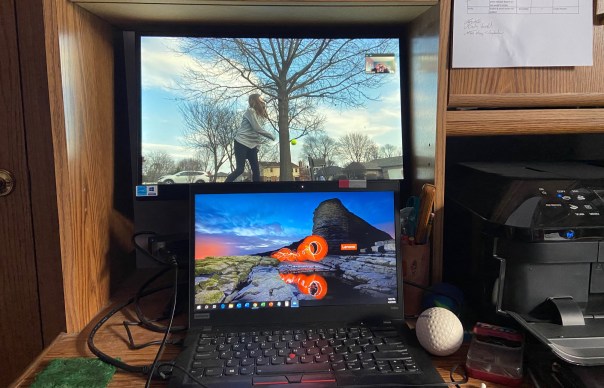
For those who read this in future years, as I write this post we here in Illinois we are still bracing for what is expected to be the worst of the Covid-19 pandemic. Businesses are shuttered (including practice facilities) and we’ve all been told to stay home and practice social distancing.
Although it may not seem like it at times, eventually the danger will pass and our worries will go back to whether a runner was safe or out at home, how much playing time our daughters are getting and whether that six-foot-four flamethrowing pitcher on the other team is really 12 years old. So rather than letting players’ softball skills deteriorate completely (even as they become incredible at making Tik Tok videos) many instructors (including myself) have started offering online lessons.
(I know there are people who have done that for years, especially when distance has been an issue, but it’s new to me and I know it’s new to many others.)
It has definitely been a learning experience. Which I suppose is good because nothing keeps the mind sharp like having to learn something new.
For those who are wondering, I’ve been using Zoom. I tried a couple of other options, but if you want to use FaceTime you cut out everyone who doesn’t have an Apple product, and Skype requires both parties to have an account.
With Zoom the only one who needs an account is me. I create the meetings and send the links. The families just have to click on them when it’s time. And it’s free, which is nice.
So far I have found some good and, well, not bad but maybe less-than-ideal things about it. Let’s take a look at both.
The good
We’ll start with the positives because everyone can use a little lift these days. Perhaps one of the biggest benefits to me is the ability to really focus narrowly on specific aspects that need work.
In a live setting there is often a tendency to try to cover a lot in a short amount of time. Working something over-and-over can be tough, especially with today’s hyper-stimulated kids and their eight-second attention spans. (Yes, I know that figure is up for debate but it makes the point.)

This goldfish has a longer attention span than most kids today. And looks pretty fierce.
In an online lesson, though, it is much easier to get hyper-focused on specific aspects such as posture or release for pitchers or maintaining the sequence for hitters. It also makes it easier to convince players (and parents) who are anxious to go full-distance with skills to stay in close and really work on the nuances – which is where elite players actually spend a lot of their time.
I haven’t done this yet, but Zoom offers the option to record each session. I’m definitely going to try that soon. It would be nice to have a reference to go back to with a lesson later.
I use video a lot, but it’s usually more of a snapshot in time of a couple of repetitions. If I had my own facility and could have a permanent set-up like Rick Pauly I might record every lesson in its entirety. But I already have a lot of set-up to do each time I go to a facility or field so I’m not looking to add more. Online lessons makes that option easy.
Accessibility is another big plus, especially for families with multiple children involved in multiple activities. It’s a lot easier for a working parent to squeeze in a half hour from home than it is to drive 40 minutes each way, plus the lesson time itself, when their other kids need to get to and from their activities. Although honestly that isn’t so much of an issue right now.
Finally, as an instructor it is forcing me to think of new ways to convey the same information. I can’t just rely on what I’ve always done, because some of the options (such as demonstrating a skill) aren’t as available.
Yes, I can back off my camera and sort of show what I’m talking about for small skills. But trying to demonstrate leg drive visually doesn’t work as well so I have to find other ways to produce the desired results. Which I believe will make me a better instructor in the long run.
Oh yeah, one more thing. Not sure if this is a good or bad thing but for the time being I spend most of the lesson sitting in a comfy chair instead of walking around. And there is no heavy equipment to carry to a field or set up. If you’re lazy, and aren’t we all sometimes, it’s certainly the easy way to go.
The not-so-good
There are just some things that work better when you can demonstrate them. It’s kind of tough to do a good demonstration when you’re tied to a computer.
While I am still able to capture video on Coach’s Eye during the lesson, it’s kind of a kluge process. Basically I use my phone to shoot the video I see on my video monitor. When I want to play it back for the student, she has to get in close to her device, then I have to hold the phone up to my laptop’s camera and angle it so there is no glare. It gets the job done, but it’s night ideal.
The other video aspect is that my view of the student is limited to the camera’s point of view. If I want to move from looking at the student from the side to looking at her from the back I can’t just walk behind her. I have to ask someone on-site to physically move the camera, then fine-tune it so I can see what I want to see.

Of course, I could solve that issue by getting one of these.
That’s not too bad with a phone or a tablet. It can be a little less convenient with a laptop because of the size. Regardless, it works best if you have a dedicated person for the camera so the moves can be made most efficiently.
One bit thing I miss is being able to take speed readings of every pitch, which is something I started doing recently. Unless the family has a set-up like mine, where you can run the radar continuously and have some sort of visible display you’re not going to be able to do it too easily. It’s always nice to see if the adjustments you’re making are having the desired effect.
Then there’s the personal relationship aspect, which I believe is critical for generating optimal results. One of the most important things any coach can do is create a personal connection with the people he/she is coaching. This is true not only in softball but in many aspects of life.
Creating that connection would be less effective, I think, if it was solely over an online system. Don’t get me wrong – it’s better than nothing. But there’s nothing like being together in the same space.
Fortunately, I already have that connection (or at least believe I do) with my current students so it’s not really an obstacle right now. I know them and they know me, so a video conference works. But it would probably be a lot tougher to build that same type of relationship with a net new student. (That said, if someone wants to give it a try let me know in the comments or contact me directly!)
Speaking of space, that can be one additional challenge for families versus going to a facility. Particularly right now while the weather is sort of iffy.
Today may be a beautiful day to go out into the back yard and throw a ball. Tomorrow and the next three days might be horrible between the rain or snow and the cold. If the student doesn’t have room indoors to throw, hit, whatever there’s not a whole lot you can do except work on strategy and the mental game until the weather gets better.
So there you have it – a few quick thoughts from my limited experience. The good news is those who have tried it so far seem to like it – especially the focus on specific aspects. They’re happy we’re able to continue working, even on a somewhat limited basis, so they’re ready for the season whenever it eventually comes.
Now I want to know what you think. Have you tried online lessons yet (not just with me but with anyone)? What did you like, and what didn’t you like? Is there anything you’ve liked better about online than in-person lessons?
Leave your thoughts in the comments below. And remember to wash your hands and stay safe!
Drone photo by Pixabay on Pexels.com
Goldfish photo by Gabriel P on Pexels.com
The Up and Down Side of Modeling Elite Players

One of the first (and most important) pieces of advice I give to parents who are trying to decide on a path for instruction for their daughters is to look at what elite-level players do. If you’re not being taught that, you should re-think what you’re doing.
Take pitchers for example. If you want to know whether you should turn the ball toward second base at the top of the circle and push it down the back side of the circle or turn it toward home and then pull it down with your palm face-up, video of elite players will give you the answer.
(SPOILER ALERT: The correct answer is pull it down. Ten points for Gryffindor if you got it right.)
Then there are hitters. Some people will tell you to swing with your bat and/or shoulders level at contact. But again, a quick Internet search of great hitters in both Major League Baseball and Power 25 fastpitch softball will show you that just ain’t so.
So does that mean you should just pick an elite-level player and model yourself after her (or him)? Not necessarily.
The thing you have to keep in mind is that elite-level players get to that level by virtue of more than their mechanics alone. There are a whole lot of other factors, beginning with their DNA, that go into making an elite player.
The hard reality is some players succeed despite their mechanics. Their athletic ability, focus, dedication, etc. is such that they can overcome even significant mechanical flaws.
Some pitchers will be hunched over and will throw their shoulders forward as they throw, even though biomechanics says they would be better off keeping their shoulder locked in around 45 degrees. But when they’re throwing 70+ mph doing what they’re doing, and racking up the Ks and Ws, most coaches aren’t going to worry it until it becomes a problem.
Does that mean you should follow their example? In a word, no. That player is succeeding in spite of her mechanics, not because of them. Us ordinary mortals can’t count on getting the same results.
The same goes for hitters who primarily rely on their upper body strength to hit for power. Somehow they have managed to make it work for them.
Most of us, however, will find if we are upper-body dominant we won’t be able to adjust to pitch speeds/location/movement. We’ll hit the ball a mile if it’s pitched where we’re swinging. But if it’s not – and the whole strategy behind pitching is to NOT pitch to a hitter’s strengths – we will likely swing and miss. A lot.
So what’s the answer? Should we try to understand and follow the mechanics of elite-level players or not?
For an answer, I would look to the wisdom of Thomas Jefferson. Yes, he died long before the first fastpitch softball game was played, but he had a pretty practical view of the world.

Jefferson could call for a sac bunt with just a twitch of his eyebrow.
One of my favorite quotes from good ol’ Tom was “In matters of style, swim with the current; in matters of principle, stand like a rock.” In other words, know what’s important and what’s not.
When looking at mechanics, don’t just look at what one or two elite level players does. Look for the common threads between all of them, and see what the majority tend to do.
Also, look at what other factors may affect the success certain players are having. If your daughter is a 78 lb. stick, modeling the mechanics of a preternaturally strong, thick-bodied beast of a player probably won’t deliver the same level of success.
Your daughter is going to need incredibly clean, efficient mechanics because she needs to get every bit of her body generating energy to transfer into the ball.
If your daughter isn’t an amazing athlete – that’s ok, you can admit it – she’s probably not going to be able to get by with too many standard deviations from what is biomechanically optimal. Again, you’ll want to stick with the things elite players do that are alike rather than excusing non-standard mechanics because so-and-so does the same thing.
Seeing what elite players do and following their example is a good thing – until it’s not.
Use video of elite players to see generally what all (or at least most) tend to do so you have a path to follow. But avoid techniques or mechanics in those players that appears to be outliers.
It’s your fastest path to success.
Main photo by Alexander Dummer on Pexels.com
Photo of Thomas Jefferson via Good Free Photos
Keeping the Softball Skill Plates Spinning

If there is one image that perfectly describes the challenge of keeping fastpitch softball skills (especially pitching and hitting) sharp, it’s the old circus act of the plate spinner. (For those of you who have never seen one in action, here’s a video. Sorry you have to watch an ad first.)
If you don’t feel like watching the video, basically what you had was a set of sticks across a long table. The spinner would get one going on top of a stick, then get another going, and so on until each stick had a plate spinning on top of it.
Of course, the challenge was that while he (it’s almost always a he) was getting the next plate going, the previous ones would be losing momentum. As a result, he constantly had to jump from one plate to another and give them a tweak until he had them all going well at the same time.
Sounds about right, doesn’t it? When you’re working on complex skills such as pitching or hitting, there are a lot of moving parts. Just like there are a lot of moving plates.
While you’re working on one thing, say leg drive for pitchers, another part of the pitch such as the long, loose arm may start “wobbling.” So then you have to take care of that again.
And as you’re doing that, the pitcher starts closing too early or too much, gets off the power line, starts throwing her glove out to the side or develops some other issue.
If you see that happening, the good news is you’re not alone. It’s actually pretty common, and not just among the very youngest players. Even the most accomplished players will start to wobble now and then in one area or another. That’s why college, pro and national teams have hitting, pitching and other specialty area coaches.
So how do you deal with it? Here again you can take a cue from the plate spinner.
When he sees a plate begin to lose momentum he doesn’t try to run over to it before he gets the plate he’s working on spinning properly.
(In fact, I’d bet that seeing plates wobble is good for the act, because it introduces a sense of concern. How interesting would plate spinning be if the plates were never in danger of falling off the stick?)
Coaches and parents should do the same. Work on one thing at a time and get it going well before going back and addressing a previous issue that is cropping up again. If the player is struggling you can let her know what the other issue is to reassure her that all her mechanics aren’t falling apart and that you’ll address the problem later.
Another good idea is to learn your craft so you’re aware of what’s urgent and what can be dealt with later. Again, a plate may be wobbling but it might be capable of going on for a while before it actually becomes an issue. Knowing what to address (and when) is essential for securing long-term success.
Finally, understand that the player is probably going to break a few plates as she learns her mechanics. That’s ok.
Failing in some aspects is part of the learning process. I have no personal experience with plate spinning, but before you pay good money to see someone perform this amazing feat he probably spent a lot of time learning how to get one plate spinning, then two, then three, etc. In the meantime, a lot of dishware was harmed.
Eventually, though, with a lot of effort he was able to put on an entertaining, dramatic show.
Your players will be the same. Pitchers may struggle to throw strikes or hit spots as they work to become the best they can be. Hitters may swing and miss a lot before they start driving the ball.
But if you stay focused on the process rather than the immediate results, the results in time will take care of themselves.
So if you’re facing that situation right now – even if a lot of the plates of wobbling – don’t freak out. It’s a natural part of the learning experience.
If she is motivated, eventually your player will get all the plates spinning fast and tight so she can thrill the crowd. And you can take your bow.
Image courtesy of Henrikbothe [CC BY-SA 4.0 (https://creativecommons.org/licenses/by-sa/4.0)%5D
Honesty Is Still the Best Policy When Talking to Players
There is a joke I heard a long time ago that pretty much sums up the softball player recruitment and retention process. It goes like this:
This guy dies and meets St. Peter at the Pearly Gates. He’s excited about making it to Heaven, but St. Peter informs him that he is required to give the guy a choice about where he wants to spend eternity – Heaven or Hell. The guy is surprised, but figures rules are rules and goes along with it. St. Peter tells him he will get to check out each, then must make his decision.
He starts with a tour of Heaven. It’s everything he’d heard – angels sitting on clouds playing harps, everything white, everything calm and peaceful. It all seems pleasant enough and the guy is pretty sure what his decision will be.
Then he’s sent to Hell for a tour there. The Devil meets him at the Gate and welcomes him in warmly. As they walk inside the guy sees a huge party going on with plenty of alcohol, loud music and beautiful people dancing, singing and having the time of their lives.
“I’m shocked,” the guy says. “This isn’t what I pictured at all. I was expecting fire, brimstone and torture.”
“Fake news,” the Devil responds. “That’s just Heaven’s propaganda to try to keep humans from having a good time while they’re on Earth. It’s like this all the time.”
The guy joins in the party while he’s there, but pretty soon his time is up and he must go back to Heaven and give St. Peter his decision. “What do you think?” St. Peter asks him.
“Well, no one is more surprised than me but I am going to choose Hell,” the man says.
“Really?” St. Peter asks incredulously. “You realize this is for all eternity and there’s no going back?”
“Yes,” the man replies. “I appreciate all you’ve done but I’ve made my decision and that’s where I want to go.”
“Ok,” St. Peter tells him. “It’s your decision.” So St. Peter proceeds to do all the paperwork and send the guy off to his final destination. Once he walks inside, however, the man is shocked. All he can see in every direction is his worst nightmares – fire, brimstone, people being whipped and tortured in all sorts of horrible and creative ways.
“What is this?!” the guy screams. “Yesterday it was all parties and good times, and now it’s just horror after horror.”
At which point the Devil eyes him slyly and says, “Well, yesterday you were a prospect.”
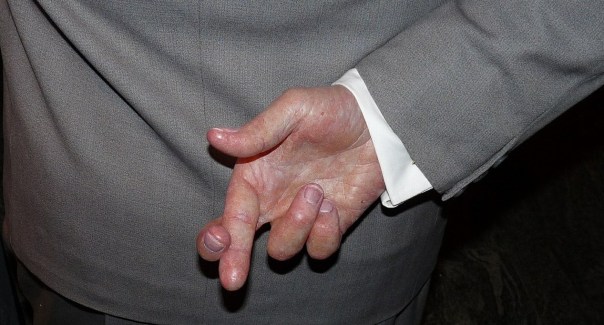
The reason I recounted that joke is more and more I am hearing stories about players being promised the world by coaches during the tryout and/or recruiting process. But once they get there it’s a completely different stories.
Players are told they will pitch, but they never get time in the circle because they “don’t measure up” to the pitchers who were already there. They’re promised they will get plenty of time at an infield position, or catcher, or wherever but when game time comes – not just bracket play but even pool play or round robin friendlies – that playing time in that position never materializes. They’re told they don’t measure up to the girls in those positions (often coach’s kids, no surprise there) even though those girls are booting balls like they think they’re playing soccer, not fastpitch softball.
Hitters with high batting averages and OPS are being pushed down the lineup or sat on the bench entirely because they “aren’t used to seeing the level of competition” – even though they’ve already proven they can handle that level.
What becomes clear is that some coaches, hopefully a very small minority, are telling players and their families anything they want to hear in the courtship phase so they can round out their teams. They have no actual intention of providing those players with the opportunities they seek. They just want them there in case they need body to fill in should one of the “starters” get sick or go down with an injury.
Of course, they don’t want a weak link, so they want to get the best backups they can find. But they’re talking to those backups like they have a legitimate chance of taking over a starting position when that is never, ever going to happen – either because the coach doesn’t think the new player is as good as the current ones, or he/she is looking at his/her own kids through rose-colored parent glasses, or wants to be “loyal” to the current players, or has some other agenda.
It’s ok to view some players as starters and others as backups. It happens all the time at all levels. All I’m saying is then be honest with the player and her parents about the role she will play on the team.
Don’t tell her she will get pitching time when you have no intention of putting her in the circle. And don’t use one bad outing the first time out as an excuse to never pitch her again. She was probably nervous, having joined a new team and all and wanting badly to prove herself. That goes double if the team is a step or two up from her last team.
Instead, give her a few opportunities and then make your judgment. Anyone who works with analytics will tell you that you need a sufficient amount of data to spot a trend. One game, or a couple of innings, isn’t a sufficient amount of data.
The same goes with positions on the field. Don’t tell a player she will get an opportunity in the infield if you feel your infield is set and you don’t want to change it. Let her know where her opportunities are so she can make an informed decision about whether this is the team for her.
The same goes for getting on the field at all. If you see her as a backup or role player, be up-front about it. For example, if you want a speedy player to primarily be a courtesy or pinch runner, tell her that rather than saying she’ll get an opportunity at second base when you know that’s not true.
If you are honest about a player’s opportunities or role, the player and her parents will have no real cause to complain when what you said she would do is what she ends up doing. It’s only when coaches say anything so they can fill up their rosters that the trouble begins.
And it will begin. Because what you’ll likely find is that players who are promised a world of opportunities but instead get nothing of the kind will leave as soon as they figured out they’ve been had.
That, of course, is also the difference between the joke above and the reality of softball. In the joke, the decision of where to go was forever. In our sport, if your coach doesn’t want to play someone there’s always someone else who could use her particular set of skills.
So tough as it can be, coaches, be honest. In the long run it’s better for everyone. Including your own team. Because as big as the sport may seem, fastpitch softball is also a small, tight-knit community, especially at the local level, and people talk.
You build a reputation as someone who makes promises with no intention of delivering on them and it won’t be long before people are avoiding your team/program like the plague.
Yes, it can be tough to have those conversations, and there is a risk of pushing players away you might like to have. But it will save you a whole lot of drama and upheaval. And that alone may be worth it.
Creating Intelligent Players, Not Robots

Photo by Lenin Estrada on Pexels.com
I once worked with a woman, an older lady we’ll call Katherine, who was hired to be a sort of all-around office assistant. The idea was if you needed a package FedExed, or some repetitive data entered into a spreadsheet, or other time-consuming but not exactly brain-taxing help, you could hand it off to her and she would take care of it.
The problem was Katherine was so timid and afraid of making a mistake, she would ask whoever gave her the assignment to sit with her while she did it to make sure she did it correctly. While you can appreciate her desire to get it right, you can probably also see the flaw in this approach.
If not, it’s this: the whole purpose of her job was for Katherine to take the burden of tedious work off of me and others so we could move on to other, more higher-value assignments. If we were going to sit there while she did it then there was no point in giving it to her because, quite frankly, we could do it better and faster than she could. It’s just not what the company wanted us spending our time on.
So what does all this have to do with fastpitch softball? A lot of times players are like Katherine. They become so reliant on coaches telling them what to do that they quit thinking and learning.
In other words, rather than becoming independent and intelligent, they become more like robots, dutifully doing whatever they’re told to do in practice without understanding the reasoning or strategy behind it. This goes double, by the way, if they have a coach who is constantly in their faces screaming any time they make a mistake, but it’s not exclusive to that scenario.
Then when game time comes and they need to make a quick decision (which is pretty much any time the ball is in play) or correct a problem in their mechanics they’re unprepared to do so. Instead, they get more of the deer in headlights look.
Remember the old computer axiom garbage in, garbage out (GIGO). If you program players like robots they will respond like robots.
Which means they will continue to do the same thing over and over, whether it works or not, because that’s what they’ve been told to do. Anyone who has a watched a Roomba frantically moving back and forth for 10 minutes when it gets stuck under a chair or in a corner knows what I’m talking about.
It isn’t enough to tell players what to do. You also need to give them some context and reasoning behind why they’re doing it so if what they’re doing isn’t working they can think their way out of the situation.
This can be as simple as asking questions. For example, when I’m in a pitching lesson and a pitcher throws three fastballs in the dirt in the right-handed batter’s box, unless she’s new I often won’t tell her how to fix it. Instead I will ask, “What usually causes your pitch to go low and in the dirt?” and she will answer “I’m releasing behind my hip.”
I will then suggest she try fixing that. She does, and she’s back to throwing strikes. Miracle of miracles!
Or one of my favorite questions to ask players who are struggling mechanically, especially the older ones I’ve worked with for a while, is “What would I tell you if I were here right now?” They stop and think, give me an answer (almost always the correct one) and I say ok, try that.
When it works I point out that she didn’t need me to fix the problem. She did all of that on her own – I didn’t give her a single clue. All I did was ask her to tap into the knowledge she already had – in other words, think! – instead of mindlessly going through the motions.
(As a side note, I had a high school-age pitcher this week tell me that “What would Coach Ken tell me if he was here?” is exactly what she thinks about when her mechanics break down. How cool is that?)
This is relatively easy to do for mechanical issues, especially for pitchers and hitters. They have some time to reflect and make corrections, and they know they’re going to have to throw another pitch or swing the bat again.
It’s a little tougher for defensive players and base runners because their skills are largely reactive. If they make a physical or mental mistake that may be the only play like that they have all game. Or even all week or all tournament.
In this case, what’s important is that they learn to think and understand so they don’t continue making the same mistake every time the situation arises, such as a runner on third who continually stands 10 feet off the base on a fly ball to medium left with less than two outs instead of tagging up automatically. Or a fielder who doesn’t set her feet before she throws and sails the ball into the parking lot.
The player who learns to think will understand she did something wrong and make a mental note to avoid having it happen again. The player who always waits for a coach to tell her what she did wrong will likely never really internalize the information – which means there’s a high probability she’s going to do it again.
Don’t just tell your players what to do. Instead, insist they learn what to do and why. Help them gain a better understanding of their skills, and the game, and both you and they will be far more successful.






 Life in the Fastpitch Lane