The Fastpitch Zone Video Brings Back Insights, Memories about the King and His Court

One of the pivotal moments in the movie Field of Dreams occurs when the protagonist Ray Kinsella (Kevin Costner) and Terrance Mann (James Earl Jones) pick up a hitchhiker as they are driving back to Iowa. Young Archibald “Moonlight” Graham tells them he is on his way to join a baseball team barnstorming its way across the country – an idea that was quaint and a reminder of a bygone era even in 1989 when the movie came out.
Yet at that same time there was a fastpitch softball team that was still hitting the road every day throughout the summer, traveling across the country when it seemed every small town (and many larger ones) had a men’s team or two. And around the world as well, putting on an amazing yet entertaining exhibition of some of the finest softball ever played.
That team was the legendary “King and His Court” led by the King himself Eddie Feigner. With a rotating crew consisting of only a pitcher (Feigner in the early years, others later on), catcher, shortstop and first baseman, the King and His Court would play standard nine-man teams – and beat them soundly, night after night, throughout the summer months.
Recently The Fastpitch Zone gathered together six former members of the Court for a Zoom call commemorating the 10 year anniversary of the team’s last game in 2011 to talk about Feigner, what it was like to be a member of the team, life on the road, and the impact the team had on the people who came to see them as well as their own lives. Click the link above and set aside about 90 minutes to be enthralled.
As they talk about driving in the team van (they didn’t need a tour bus since there were only four of them) and heading out to the field, I swear you will actually be able to smell the sweet aromas of summer – freshly cut grass, that scent as the heat of the day is cooled by a breeze at night, the leather of well-worn gloves – as well as hear the sounds of tires rolling down the road, gloves popping as a Feigner fastball blows by yet another hitter, and fans cheering in the stands. In short, you’ll be transported back to a time when life seemed a little simpler and entertainment was in front of you, life-sized, or perhaps a bit larger than life, instead of squeezed onto a screen.
Oh, and the stories they tell! The six players represent various era of a team that crisscrossed the nation and the world from 1946 through the last game in 2011.
They share fond memories of how some of them saw the team play when they were 11 years old and then were thrilled when asked to become a player later. They also aren’t shy about laughingly talking about how anyone who played while Feigner was alive and running the team was abruptly fired at one point or another, only to be asked back later. That’s life on the road!
Yet the King and His Court was about more than just softball. Yes, they were amazing athletes – so amazing that it only took four of them on the field to beat a full nine-man opponent. At one point they explain they had to have four players so opposing pitchers couldn’t just walk everyone and leave them without a hitter.
But they were also entertainers, with set routines they would pull out to keep the fans engaged and amazed throughout what was often a blowout.
For example, on the first pitch of a game the catcher would tell the umpire to get in real close to him. Then when the pitch came in, the catcher would catch it and act like he had been blown back into the umpire like you would see in a cartoon.
Another standard bit was for the pitcher (Feigner or later Rich Hoppe) to pitch an entire inning blindfolded, or pitch from second base or even right field – and still blow the ball by the hitter.
The goal was to give the fans more than just a softball game. It was to give them something they’d never seen anywhere else and would want to tell their grandchildren about. Then do it again when they came through town again in a couple of years, like a rock band playing its greatest hits for its top fans.
That’s how legends become legends.
Yet they didn’t do all of this to show up the locals. In fact, they did it in a way to make stars of the locals who faced them. It was all in good fun, like if the Harlem Globetrotters were to play your town’s all-star basketball team. Getting “done in” by the King and His Court was a badge of honor for anyone gusty enough to face them.
The hour and a half moves along quickly. Each of the players speaks reverently about Feigner himself, and the massive amount of work he put in – most of them in the pre-Internet days – to hire his players, find opponents, schedule games, arrange for local accommodations and publicity, handle the financials, and essentially keep this labor of love operating for 65 years.
The men’s fastpitch game doesn’t get a lot of love these days; most people reading this are probably focused on the women’s side, particularly younger players. But the reality is the King and His Court did a lot to popularize fastpitch softball and create the opportunities to play that are available today.
Do yourself a favor and give this video a look. If you’re a lover of history you’ll have a chance to explore some of it first-hand from people who were there.
But even if you’re not big on the past be sure to check it out. I think you’ll find it to be time well-spent.
Changing Teams? Use GameChanger (et. al.) As A Research Tool

So, the new travel team you joined after July/August tryouts isn’t working out quite the way you hoped and now you’re considering other options. But, of course, after being burned once you are worried that you may jump from the frying pan into the fire.
How do you make sure that whatever issues caused your dissatisfaction with the current team aren’t the same (or worse) with the new team you’re thinking of joining?
One way, of course, is to talk to people who are already on the team. If you or your daughter have friends connected to the new team they can give you a “behind the curtain” glimpse into how things run.
Does the coach favor certain players over others, especially in your daughter’s preferred position? Does the team play against quality opponents, which will help your daughter stretch and grow her skills? Is the coach a screamer? Are the other players/families nice to be around or will you be embarrassed to be associated with the team in public?
But what if you don’t have a connection that can give you a reliable word-of-mouth appraisal? That’s where apps like GameChanger/TeamManager and their ilk can come in handy.
They won’t answer all your questions, like whether the coach is a screamer or what the families are like. But they can certainly give you some pretty good insight into a lot of other aspects.
Circle time
The first is what you can expect for playing time. Let’s say your daughter is a pitcher. Look up the prospective team and see how many pitchers they have and what kind of innings they’re getting.
If you see they have six pitchers, each of whom are getting an inning or two per game/tournament, adding your daughter to the mix will probably not go well. Now the pie will be sliced even thinner and she’s not going to learn how to be a #1.
On the other hand, if the same one or two girls pitch almost every inning of every game, that can be a red flag as well. It means the coach isn’t willing to lose a pool play game or a during-the-week friendly to enable his/her other pitchers to develop.
He/she wants the win, so if your daughter isn’t already ready to deliver that level of performance on a daily basis you should probably pass as well. And even if she is, she may still not get the opportunity if the only two pitchers the coach trusts are the ones currently getting all the innings.
Another scenario to look for is the team has two, three, maybe even four pitchers but only one of them gets any quality innings in bracket play. Especially if that pitcher is a coach’s daughter.
You probably won’t be too happy with that situation, particularly if your daughter is ready to lead the team to victory on Sundays but never gets the opportunity. You can pretty much count on having to find another team next season.
Then there is the team that only has one player who even wants to pitch. Your daughter will likely get a lot of opportunity, even if she still needs some development. (Not a guarantee but a likelihood.)
She can prove herself and earn more time as she goes along, which benefits both pitchers.
Finally, if the pitchers on a team never play the field that may also be a red flag for you. This one, however, depends on what your daughter wants from the game.
If she only wants to pitch (and not hit or play the field) this team will be a good fit. If she wants to do more, be aware the coach’s philosophy probably isn’t going to change for your daughter.
What you want to look for is an opportunity that aligns with what you want out of the experience.
Playing time for fielders
For field players you can also look at how many the team has at that position and how many innings they’re getting. If all other positions show two or three players getting quality time but the first baseman is always the same, and your daughter loves playing first base, that team is probably not going to be a fit.
Another thing to look for is how many positions players are playing on a regular basis. At the younger ages (up to 10U or maybe 12U) it’s great to expose kids to a lot of different positions to help them find what they like.
Beyond that, however, they need to start narrowing it down to one or two in my opinion. There are a lot of nuances to fastpitch softball and each position requires time to learn them.
That’s tough to do if you’re being shuffled all over the field.
It’s great to be versatile so you’re ready to take advantage of whatever opportunities present themselves, but there’s a limit. It’s better to learn two, maybe three at the most and learn them well than be all over the field all the time.
Another thing to look for is the difference between the Saturday and Sunday lineups. If some current players consistently are listed on Saturday but not Sunday you’ll know the team has “pool play only” players on their roster.
If that’s acceptable to you, no problem. If not, you may need to do more in-depth research or find a team that is more liberal in its playing time.
One final thing to check is the overall roster size. For travel ball, 12 or 13 is usually the maximum. Anything above that, especially if the team has pool-play-only players, and it’s unlikely you’ll be very happy as the new person coming in.
Playing quality opponents
This one should be fairly easy to do. Take a look at the schedule to see who the team played and the scores of the game.
If you’re familiar with teams in your area you should be able to immediately recognize whether they play strong or weak teams on a regular basis. If your daughter hopes to play in college and the team is only playing weak opponents it’s not a good fit. You have to play quality to achieve quality.
If you’re not familiar with the teams they’re playing, look at their won-loss record and the scores of the games they played. If they’re beating up on teams 12-0, 15-1, 23-1 or some other lopsided score on a regular basis they are probably not playing very good teams.

The better bet is a team that is winning its games by one or two runs on a regular basis, whether that’s 2-0 or 8-6. Those scores indicate the teams were fairly evenly matched.
Likewise, if their Won-Loss record is 43-3 it’s pretty clear they’re not challenging themselves very much. That’s fine if you just want to be on a team that wins all the time but be aware it’s probably not going to make your daughter a better player.
A team that wins 60% to 70% of their games, particularly if they are playing in PGF or USA-sanctioned tournaments, is probably a strong team that plays strong opponents.
At the same time, a team that wins 35-40% of their games against good opponents may just be one or two players away from becoming strong. Perhaps your daughter can be one of those difference-makers.
Number of errors game to game
This one can be a little dicey because it’s entirely dependent on whoever is scoring the game in the app. Some people score everything a hit because they don’t know what constitutes an error, or they want to make the fielders/team look good.
Others score a lot of errors to help keep the pitchers’ ERAs low. The difference between a passed ball and wild pitch may also depend on whether it’s the pitcher’s or catcher’s parent who is scoring the game.
But that aside, looking at error totals game to game can give you a sense for how the team plays in the field. And how well-coached they are.
An occasional high error count happens to everyone. But if it happens consistently, and doesn’t change over time, that team may not be particularly well-coached.
If errors are rarely or never charged, and the team’s record is only so-so, you can pretty much count on it being a deficiency in scorekeeping. In other words, the team probably makes a lot of errors that get counted as hits.
Not saying that’s a reason not to join the team. Just be aware that you’re going to be watching those games and they’re probably not going to get better as they go along.
Opponents’ stolen bases
This one again can be subjective, up to the judgment/knowledge of the scorekeeper. But it can be an indicator of how the team performs.
High opponent stolen base counts can be an indicator of weak catchers. Or weak fielders.
Keep in mind you can have the greatest catcher in the world with a pop time under 1.8 seconds. But if there’s no one on the other end to receive that ball and place the tag, or the catch gets muffed all the time, opponent stolen bases will be high.
But that stat could also indicate that the pitching is, shall we say, somewhat wild. While the advancement of the runner should be scored as a wild pitch or passed ball, those who don’t know better (and some who do) will mark it as a stolen base.
So if you see a lot of stolen bases, especially at the younger levels, take it with a grain of salt and look for other factors, such as the number of strikes versus total pitches. If that count is low, you’re probably looking at advances on wild pitches/passed balls rather than a problem with catcher throws or fielder receives. Which usually indicates a weaker team.
Grain of salt
Of course, everything in an app like GameChanger has to be taken with a grain of salt. Unless you know the scorekeeper personally and can vouch for his/her knowledge of fastpitch softball, the statistical information you glean will always have some doubt associated with it.
But by taking several of these data points together you can get a pretty good idea of who the teams plays, how they play them, and whether your daughter would be a good fit and vice versa. If nothing else you can keep from making some of the same mistakes again – so you don’t find yourself in the same position six months from now!
Photo by cottonbro on Pexels.com
5 Tips to Help Catchers Throw Out More Base Runners

While there are many things that go into being a great catcher, there are really two aspects where catchers “make their bones.”
The first is blocking. In a tight game especially, the ability to block a pitch that’s thrown in the dirt can make the difference between winning and losing. Great blocking can also give pitchers the confidence to throw to the edge of their ability, which also is a factor in winning more often than not.
The other aspect is the ability to throw out base runners. Particularly runners going from first to second. If you can prevent teams from moving runners into scoring position without having to hit the ball or sacrifice an out by bunting, in the long run you will do better than teams with catchers who allow every single or walk to automatically turn into a double.
I’m pretty sure that makes sense to everyone, and is (or at least should be) fairly self-evident.
Probably the most important steal to stop is the first one. Coaches rarely send their slowest runners to test the waters. Instead, they generally send their fastest, or one of their fastest.
Shoot down that rabbit, or at least make it close, and you’ll find opposing teams are less likely to send the rest.

But that’s the what. The bigger question is “how?” As in how do you make stealing bases such a low-percentage play that teams would rather take their chances elsewhere?
Following are a few tips to make that happen.
Tip #1: Start with a good stance
One of the easiest ways to spot an untrained catcher is by her stance, especially with runners on base.
Untrained (or poorly trained) catchers will usually squat on their toes. This is a terrible position to start from as you have little balance and little ability to move in any direction – including up
When I see a catcher in that position, the first thing I usually do when I am training them is push on their forehead. At which point they tip backwards on their butts. Point made.
When there are runners on base you want to use a stance where your feet are flat on the ground, toes pointed slightly outward, you butt above your knees, and your back and thighs fairly parallel to the ground. You are now solid and able to block, pop up, or drop to your knees and throw depending on the situation.

Tip #2: Pop up instead of running forward
Probably the thing that most drives me crazy when I watch a catcher, even a young one, is when the catcher climbs out of her stance to make a throw, runs forward a couple of steps, and then throws. That’s a lot of wasted time.
I get why they do it. They feel like they can throw harder if they build up some momentum, like an outfielder throwing home. And they probably can.
But they can’t throw hard enough to make up the time they lost by running up. Because while they’re running up, the base runner is running to the next base.
The reality is you can throw the ball and have it roll to the base faster than any runner can run. Making it there on a fly is just an added bonus.
So instead of running up, have the catcher pop up/spring up with both legs, drop her throwing side leg back (a little love for your lefty catchers), land with the weight back on that leg, and then drive forward with the legs and body.
Get more body on the ball and you’ll throw harder. It takes a little work but it can be learned.
One way to get catchers to land weight-back is to start by having them pop up and land ONLY on the throwing-side foot in a way that their next instinct is to fall forward. Have them land into the leg, instead of back and over it, and they’ll get the load.
Then have them try it while landing on both feet.
By the way, a faster throw is only one benefit. Another is that the catcher won’t step on the plate – particularly important in those early morning games where the dew is still on the bases, or rainy days where they won’t stop the game.
A slippery plate creates a risk of a bad throw – not to mention a risk to the back of the catcher. Throw from solid ground and you remove those risks.
Finally, if the catcher runs up and the hitter is doing a delayed swing to cover the steal, either the catcher will stop when she sees the bat moving or will get hit with the bat. At which point she is not only in pain, and possibly injured, but also could be called for interference (as long as the late swing isn’t too obvious).

Pop up and throw from where you started and your catcher will avoid all these issues.
If you want to your older catcher to throw from her knees instead, this blog post will help you with that.
Tip #3: Work on the transfer
This is where I see a lot of young catchers have trouble. It takes them too long to get the ball from their glove to their hand so they can throw it. But it can plague even older catchers with weak technique.
Start by teaching your catchers to bring the ball back to their hand instead of reaching forward to take the ball out of the glove and then having to pull it back. Any delays when you reach forward are amplified during the throwing process.
The transfer should really be a part of the throw, not a separate operation. If you’re pulling the glove back to the hand, which is waiting around the throwing-side shoulder or ear, you can slam the ball into your hand and then have the hand go right into the throwing motion.
To train this, start with no glove. From a standing position, put the ball in the glove hand, pull it back and slam it into the throwing hand. For younger catchers you can use a smaller ball, like a tennis ball, to get the process started.
Then progress to doing the same thing but starting with the ball in the glove. No throws yet, just transfers. Then go from a squat, again without a throw.
Finally, toss the ball to a catcher in her squat and have her pop up and transfer the ball. When she can do that cleanly and successfully have her add in the throw. You’ll be amazed at how much faster she can get the ball on its way – fast enough to send a message to the other team to not even bother trying.
Tip #4: Develop great throwing technique on purpose
That sounds like an odd statement but it’s really not. As I’ve said before, throwing is often one of the most under-taught aspects of fastpitch softball.
This despite that fact that good throws are one of the most crucial and controllable techniques you can develop.
Personally, I am a huge fan of Austin Wasserman’s High Level Throwing program.
I’ve observed it, I’ve taught it, I highly recommend it. Your catchers will not only throw harder and more accurately, they’ll also protect their shoulders and arms.
But whatever throwing protocol you follow, be sure to work at it regularly. Hold your catchers accountable for using good technique rather than judging solely on whether they get the ball to the base.
The more you make them accountable, the more frequently they’ll throw well.
As part of that, measure their throws. If you don’t have one, borrow a radar from your local pitching coach and record how hard they throw. Knowing they’re being measured often brings out the best in them.
Also measure their pop times on a regular basis. (If you’re not familiar with it, pop time is the time from when the pitch hits the catcher’s glove to when it hits the receiving fielder’s glove after a throw.)
A good pop time is around two (2) seconds. If your catcher can go 2.0 seconds exactly she’s met one of the requirements to try out for the USA National team.
If your catcher can get under 2.0 seconds consistently your team is probably going to have a pretty good day.
Tip #5: Let her throw, even if she’s not good at it (yet)
This one is about player development, and it particularly applies to coaches of younger teams.
Another of my pet peeves is hearing that a team coach doesn’t want his/her catchers to make a throw to base, whether on a steal or a pickoff, because she might throw it away and cost them a run.
I say so what?
The only way she’s going to learn to make those throws under pressure is by doing it. Every. Chance. She. Gets.
Yeah, it’s always nice to win. But here’s a little secret I will share: Nobody cares how many fall ball games you won at 10U or 12U or in your rec league.
That’s the time to give your players the green light to develop their abilities and learn from their mistakes. Because if not now, when?
These are the same abilities, by the way, that will play into how successful your team is at the older ages. Remember that fastpitch players get faster as they get older. If your catcher doesn’t learn to make the throws now, by 14U/high school the infield will resemble a merry-go-round when you’re on defense.

Let your catchers make those throws and just live with the consequences. They might just surprise you.
Follow these tips and your catcher will be one of the most feared in your league or area. Just prepare her for one thing: Once she builds her reputation her stats will go down. Hard to gun down runners if no one is willing to try running on you!
Yes, Virginia, In Pitching Speed Does Matter

Spin. Spot. Speed. Everyone involved in fastpitch pitching, whether as a player, parent, coach, instructor, or just interested observer loves to talk about those three attributes.
One of the most common statements you’ll see in Facebook fastpitch group discussions is something to the effect of, “Speed is good. But it’s really your ability to hit your spots and spin the ball that matters.”
In other words, don’t worry about whether you have speed. As long as you can throw movement pitches to the spots coaches call you’ll be fine.
The people who say these kinds of things remind me of this little burst of honesty from the movie “Liar, Liar:”
To me, it’s often the same with the speed discussion. “Speed isn’t that important” is usually something parents of kids who don’t have it say.
The reality is, speed is not only important on its own. It’s a door-opener to opportunities someone who doesn’t have it is less likely to get.
Take the idea of playing in college.
A college coach goes to watch a travel or high school game. The pitcher on one side is hitting her spots but doesn’t throw very hard, roughly in the mid-50s. She is getting people out primarily with weak hits, and maybe 3-4 Ks.
The pitcher on the other side is throwing gas, perhaps in the low to mid- 60s, but clearly has control trouble. Still, despite walking 6 hitters she also strikes out 10-12. Which one is the college coach going to talk to after the game?
If you guessed the girl throwing heat you’re right. The college coach will figure he/she can teach that girl to hit her spots a lot more easily than he/she can teach the other one to throw 65 mph.
The same is true at travel ball, high school, or even rec league tryouts. Coaches are generally going to pick the girl who throws the fastest with less accuracy over the one who is spot-on but has mediocre speed at best.

We really saw that at the 2021 Womens College World Series. In closeup after closeup, the camera showed “rise balls,” “drop balls,” “curve balls,” “screwballs” and whatever other variations there were being thrown with bullet/gyro spin.
That’s a ball that isn’t likely to actually move much at all horizontally or vertically, unless there is some seam-shifted wake action going on.
But those pitches, when thrown at 70 mph, were more than effective because, well, it’s just darned hard to hit a pitch going that fast no matter how much of a direct line it takes from the pitcher’s hand to wherever it ends up by the plate. Even if it’s well out of the strike zone by that time.
Here’s another reality. Take two pitchers who are struggling to get hitters out. One is hitting her spots, but the team’s opponents are crushing her in game after game.
The other is more random, but gets more Ks, swings and misses, or weaker hits because she just flat-out throws harder than the opposing hitters are used to seeing. Which one do you think the head coach is going to give more leeway to, or give more chances to prove herself?
Of course, this is about the time that people say, “But Cat Osterman…” Or baseball fanatics say “But Greg Maddux…”
Yup, I will grant you that, although neither were exactly slow. Cat in her heyday threw in the low 60s, which especially at that time was only a few mph under the top speedsters. And Maddux threw around 93 early in his career, which is hardly slow.
So here’s what I’ll on that. IF your pitcher can move the ball like Cat (or Greg), she can probably be pretty successful with just spot and spin. But that’s a pretty big IF.
If not, it will probably be in her best interest to work on adding as much speed as she can, which will make everything else she does more effective.
I’m not saying she has to be Monica Abbott or Yukiko Ueno or Rachel Garcia or any of the other members of the 70 mph club. Those are rare birds.
She may never even hit 60 mph. That’s still kind of a magic number in womens fastpitch softball for a good reason – not everyone can do it, whether due to genetics, training or the desire to work at it.
What I am saying is don’t go thinking if your favorite pitcher is hitting her spots and getting some spin on the ball that the speed of her pitches doesn’t matter. It does.
Keep working at it. Put in the time in mechanics, strength, speed and agility and whatever other training you can find to help her elevate her pitch speeds to the highest level of which she’s capable.
It’s well worth the investment.
Drill to Help Achieve Better Bat Angle
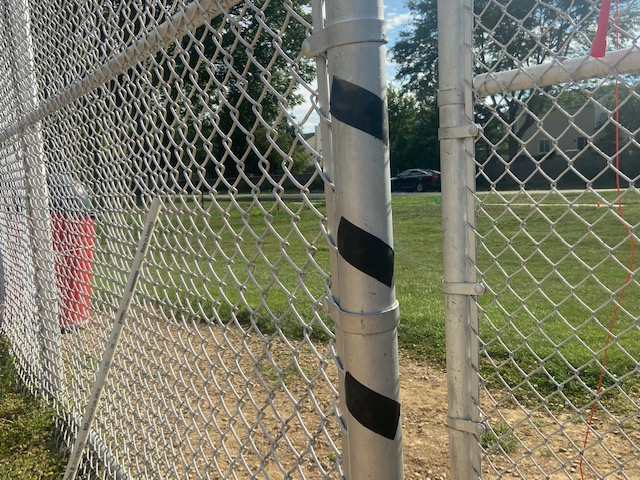
One of the enduring myths in hitting, both in fastpitch softball and in baseball, is the concept of a “level swing.” And by level, most people mean making the bat parallel to the ground.
This is a myth I have attempted to dispel many times, dating all the way back to 2006. Yet still it persists.
In case you don’t feel like following the link, I will briefly go into the problems with this instruction before offering a way to address it. The admonition to swing level causes several issues.
One is that it leaves you very little surface with which to contact the ball and achieve a good hit. If you strike it dead-on in the right spot you can get a rising line. But be off by just a smidge either way and you’ll end up with a popup or a ground ball – neither of which is a great outcome.
If you’re really trying to swing level, you’ll only be able to do that until about waist-high, or however low your arms reach. After that, you’ll either have to bend down awkwardly, killing any chance you have of hitting the ball hard, or you’ll have to lower the bat head anyway.
Not to mention attempting to swing level often leads to casting, or stiffly pulling the bat across the strike zone instead of getting a powerful, sequenced swing.
Swinging level also means you don’t have much adjustability in your swing. You kind of set a bat height early and have little range of motion up or down.

There’s more, but you get the idea.
Of course, players who have had the concept of “swing level” beaten into them for so many years often have trouble developing a new, better swing pattern that results in a good bat angle. They can’t feel what they’re supposed to do so they continue to drop their hands and try to cut across.
So here’s a way to help them develop that feel by using their eyes. Take a roll of duct tape and place a few strips on a convenient poll, tree, or other vertical object at the desired angle at contact at several different heights. In the photo above I just did it on one of the poles on a backstop.
Then have the hitter go through the swing motion and try to match the bat angle at various heights. As she works on matching that angle, the hands naturally stay up and the barrel goes down.
Rinse and repeat as-needed until the hitter can achieve the proper angle without thinking about it or putting in any extraordinary effort.
If you’re worried about the hitter losing control of that $500 bat you just bought, substituted a piece of PVC pipe or a broom handle or any other object that simulates a bat but won’t break your heart if it gets smashed into the pole.

This drill works, and it works pretty quickly -if the hitter does it frequently at home. You’re not going to get instant results at a practice or an individual lesson, but if she does it at home on a daily basis for about a week the pattern will set in and she’ll start to go from popups and grounders to more well-hit, rising line drives.
The best part is it’s very cheap and doesn’t require a lot of supervision. Just make the marks using whatever tape or even paint you have lying around and have the hitter have at it.
If you have a hitter who can’t seem to get the ball out of the infield, take a look at her bat at contact. If it’s flat/level, give this drill a whirl. I think you’ll like the results.
8 Tips for Getting the Most Out of Skill-Specific Clinics

I recently had the privilege of working with Rick and Sarah Pauly (Pauly Girl Fastpitch), along with several of the top pitching coaches in the U.S., at a pitching clinic hosted by Jay Bolden. There were two sessions: the first for beginning/intermediate pitchers that focused on the fundamentals of good mechanics, and a second for more advanced pitchers where we did a lot of data measurement using various technologies such as 4DMotion for overall mechanics and kinetic sequence, Diamond Kinetic Balls for spin direction and rates, Pocket Radar for speed, as well as stations that focused on improving the rise and drop.
It was quite an opportunity for the participants to learn about pitching. Yet when it was all over a few of us had a discussion about how some of them had squandered that opportunity.
So that’s what today’s blog post is about: some tips that will help future campers ensure they get the most from the time they spend. And their parents get the most from their investment.
Tip #1: Come with an open mind
Perhaps the most frustrating comment any instructor in a situation like that can hear is “I don’t do it that way.” Basically that says “I have my way of pitching, hitting, etc. and I don’t want to make any changes.”
Ok fine, but then don’t bother signing up for the clinic. If you’re already doing what you want to do you and have no interest in hearing other perspectives, or perhaps finding a better approach, then there’s no point in driving all that way and taking up three hours of your time.
Stay home and play like you want, and leave the spot open for someone else.
But really the value in a clinic like this is hearing perspectives and learning techniques that could help you become better than you already are. If you listen with an open mind, and try new things even if they’re different from what you’ve done before, you may find you like the new things better. And that they work better for you.
The more open you are to different techniques, or even different cues, than you’ve heard in the past, the more likely you are to find what works best for you.
Tip #2: Sign up for the right level
This one comes from my friend Shaun Walker, an innovative pitching coach with Next Level Softball in Bruno, West Virginia. When you’re signing up at a clinic that offers different levels, it’s important to be honest about your level of accomplishment in the skill being taught.
It’s not just about age. It’s also about what you can do with the ball in your hand. If you’re a 14U pitcher throwing 45 mph who has trouble hitting her spots even though you’ve been pitching for four years, the beginner/intermediate clinic will likely suit you better.
Because pitchers who struggle with control on their fastballs or can’t at least reach the average speeds for their age levels probably don’t need advanced instruction on the rise and drop. They need to improve their fundamentals first.
If you’re going to sign up for an advanced clinic, you should be able to throw decently hard (55+ mph), have a reliable offspeed pitch, and at least have a start on a movement pitch or two. You need a fairly high degree of proprioception (fancy word for body awareness) because the subtle adjustment required to spin the ball in different directions will be tough to accomplish without it.
If you sign up for an advanced clinic and are completely lost and unable to do the things that are required you’ve just wasted three hours of time (plus travel) along with the money you invested. Take that same time and money and invest it in the beginning/intermediate session and you’ll get a lot more out of it.
Tip #3: Use it to see if you/your daughter likes pitching
Becoming a fastpitch pitcher requires a lot of time and effort, and in most cases a significant investment in pitching lessons. Why go down that road if it turns out the player doesn’t actually like it?
Keeley Byrnes, a great pitching coach with Key Fundamentals in Oviedo, Florida says that the beginning clinics are a great way to find out if the player likes and wants to become a pitcher. You can go through some instruction, find out just how challenging it can be to become a pitcher, and determine if it’s a path you want to try without the huge time and money investment of private lessons.
The clinic structure is also more conducive to “sampling” because with multiple players there isn’t as much direct one-on-one contact – particularly important to those kids who are a little more shy. They can give it a try and see if it’s for them without drawing too much attention to themselves.
Tip #4: Pace yourself
The structure of a three-hour clinic is unlike most typical practices. I have seen so many kids come out like a bright comet in the sky, only to burn themselves out quickly and have nothing left by the end.
It gets even worse if you’ve signed up for both sessions at a multi-level clinic like the one last weekend. That’s six hours of pitching. Who does that on a regular basis?
Don’t feel the need to get as many reps in early as you can. Take your time and pace yourself. Your future (six hours from now) self will thank you.
Tip #5: Understand it’s ok to fail
We all hate to fail, especially when standing in a room filled with our peers (or competitors). Yet a clinic is the place to try out new things.
The problem with new things is we’re not good at them, so you’re probably going to fail more often than you’re used to.
That’s ok. This is the place to do it.

If the clinic is any good at all, the instructors will understand and will try to help you get better. They will love your willingness to put yourself out there and do the hard work required to change.
Do that, and the most likely result is that you walk out knowing how to become a better pitcher than you were when you walked in. And you’ll be more ready to try new things as they come along.
Tip #6: Parents should be curious – but resist the urge to interfere
We get it. It’s tough for parents to watch their kids struggle, and it’s tough to resist the urge to step in when it happens.
But don’t.
Shaun says the ideal parents at clinics are those who listen so they can help their kids later, but who don’t get in the way of the learning process during the clinics. They certainly don’t say, “Ah, don’t listen to her, just keep doing it the way I showed you after searching on “fastpitch pitching” on the Internet.
Instructors at a quality clinic will not only tell you what to do but why it’s important. I know Rick Pauly is a master at this.
How much to participate can be a challenge, especially for some parents. You’re going to know your kids better than the instructors do, and will spend a lot more time with them than the clinic instructors will.

But land the helicopter anyway. Listen and learn along with your player, ask questions if you don’t understand something, but otherwise stay out of the way. It’s the best value for your entertainment dollar.
Tip #7: Embrace the different ways of teaching from different instructors
Keeley correctly states that one of the challenges of one-on-one instruction is that they player is only hearing things from one person. That instructor has his or her way of teaching things, but there are many ways to say the same thing.
One of the advantages of a clinic with multiple instructors is the opportunity to hear different explanations for the same thing. While one may not resonate with a particular player, the next one might.
And even if none of them is exactly on the mark for how that player needs to learn, the combination of statements, as long as they’re all basically saying the same thing in different ways, will help the player translate the instruction into a form she can use.
The other advantage of the clinic setting is learning from other players.
The participants are likely to be broken into groups. If there is a group of three, for example, and only one of them understands the instruction, she can also help explain or demonstrate it to the other two.
I’ve seen plenty of great examples of one clinic participant helping another to learn. Both of them benefit.
Tip #8: Gain more exposure to new things
While this sounds similar to Tip #1, it’s more about learning about things or taking in feedback you’ve never received before.
A good case in point is the technology we used at the last pitching clinic. You may think you have a great rise or curve. But the Diamond Kinetics ball will measure and show exactly what spin speed and direction you have.
If your rise is working pretty well but you discover you have a 10:00 spin, you’ll know you have more work to do to get it closer to a 12:00 spin. Make that change and it will be even more effective.
The 4DMotion technology is also incredible. It can measure all types of parameters from simple sequences (are you decelerating Hips-Chest-Arm?) to the speed at which your forearm is decelerating as you release the ball (which indicates the efficiency of your energy transfer).
With hard data in hand you can make improvements that may not have shown up to the naked eye, or even on high speed video. All of which will lead you to becoming the best pitcher you can be.
Get the most out of it
Attending a quality clinic can be great, or even a game-changer, if you approach it with the right mindset. But it can also be a giant waste of everyone’s time and energy if you don’t.
In other words, you’ll want to do more than simply get the t-shirt as Ken Bergren, a pitching coach in Oregon says.
Follow these tips and you’re far more likely to walk out thinking “That was fantastic.” And inspired to go out and work even harder.
Recruiting Advice: Remember There’s Always Someone Watching
In the 2001 remake of Ocean’s 11 (not to be confused with the Rat Pack movie from 1960), robbery target Terry Benedict tells Danny Ocean that “In my hotel, someone is always watching.”

Parents and softball players would be wise to remember that statement as they go about the business of attempting to get recruited by the team of their choice. Especially now, since as I write this we are in the midst of “Showcase Season,” the big opportunity for college coaches to watch potential recruits in action.
This lesson was reinforced on a Zoom with a couple of D1 coaches as part of the National Fastpitch Coaches College (NFCC) Course 401. Both coaches said there is far more to who they, and most of their contemporaries, select than just on-field talent.
One of them went on to talk about a player who is the #1 prospect in his state. Yet neither his school or the other major D1 college in his state has extended an offer to her. Why not?
It’s simple. It comes down to character. Not just of the player but of the parents.
I’ve heard many college coaches talk about this. When they go to watch a game they don’t just watch what happens on the field.
They also watch what happens off of it. Like how the parents act during the game and how the player speaks to her parents.
In the former case, college coaches want to steer clear of any parents who seem like they will be “those parents.” You know the ones – nothing is good enough for them, their daughter is always getting shortchanged by the coaches, the umpires are idiots who need to be called out at every opportunity, etc.
If you see them acting this way now there is no reason to think they won’t act this way if their daughter is on the collegiate team. And since the pressure is magnified in college, willingly taking on a major headache doesn’t seem like a good strategy.
Unless they are incredibly desperate, most coaches would rather take a player with a little less talent and a lot less baggage. Especially those who have a wide choice of players, i.e., your Power 25.
As far as player interactions with their parents (as well as coaches and teammates), that can be another huge red flag. Players who speak disrespectfully to their parents are likely to do the same to college coaches. Who needs that?
They’re also more likely to break rules, get into academic trouble, or become a cancer on the team if they don’t get their way. It doesn’t take much to send a season south, so again coaches will quickly write those players off their lists.
So it might seem like the best solution is for parents and players to be on their best behavior when college coaches are around. The problem with that is you don’t always know they’re there.
Sure, some coaches will wear their team shirts and sit right behind the backstop in the “scouting” section. But others will be a whole lot less obtrusive.
The aforementioned coach said he likes to hang in the background and listen. He wants to hear if parents are running down the coach, or constantly questioning strategies or decisions, or putting down other players.
If they’re doing it now, there’s no reason to think they won’t do it if their daughter is playing at that school. Hard pass.
No, the real solution, and I know this will be a shocker for some, is to be people of good character. Parents, be supportive of the whole team. Not because someone is watching but because it’s the right thing to do.
Players, be great teammates. Be the person who picks up others, encourages the girl who made an error or struck out, and does little things like grabbing a bat that gets tossed toward the dugout or picking up garbage in dugout after the game.
Because college coaches notice that stuff too. And they like it.
While this should be an automatic, it’s not. It’s a learned behavior for some. So learn it.
Be a good person on and off the field. Because remember, there’s always someone watching.
Coaches: Harsh Conditions Do Not a Great Garden Make

One of the things that never ceases to amaze me is the way too many fastpitch softball coaches choose to treat their players. Whether I am walking by a field when a team is practicing or just talking to some of my students, the “tough guy” (or “tough gal”) stereotype seems to be alive and well.
Now understand, I am all for discipline and accountability. There is nothing wrong with demanding the very best from your players on a daily basis.
But that doesn’t mean you have to berate and belittle them on a constant basis. It’s like the only tool in some coaches’ toolbox is a hammer – a big one – and they feel they have to use it all the time in order to draw the best performance out of their players.

I don’t get where they think that will work. If an adult had a job where they were receiving nothing but negative feedback or outright abuse, you can bet they’d be posting a negative review on Glassdoor at the very least and looking for a new job as soon as they could.
It’s like the old saying – people don’t leave jobs, they leave managers. Yet coaches are still surprised when their players don’t return the next year.
It might help to think of your players as seeds that need to be nurtured. Yes, some plants can grow in the concrete under harsh conditions, getting trampled all the time.
But they rarely turn into beautiful gardens. Instead, they look small and sad – not the types of plants anyone is going to stop and admire.
The same is true of fastpitch softball players. Especially the younger ones – those under the age of 14 who tend to take everything adults say at face value.
If all they ever hear is how bad they are, or how stupid they are for missing a play or making an error, they will tend to believe it.
Sure, an occasional player might break through that difficult environment and survive, but most will not. They will find another outlet that helps them feel better about themselves.
Which means if the goal is to grow the game, taking an approach that drives them out makes little sense.
Coaches who want to be tough also have to remember that what they view as “normal” may not seem so normal to their players. As I have said many times, kids are not short adults. They often lack the experience and background to put certain things in perspective.
Harsh criticism doesn’t just roll off their backs. They aren’t yet able to “take it with a grain of salt.”
Kids in many cases are very literal. And females in general are more prone to believing whatever negative things are said about them.
So what winds up happening is that performance under these conditions goes down instead of up, which leads to even more berating and abuse, which hurts performance even more, and the results take a familiar path.

Taking this type of approach may make you feel good as a coach, or like you’re doing your job. But it’s really lazy coaching.
Rather than yelling at or otherwise berating your players for poor performance, why not help them get better? Teach them the game, and understand everyone learns in different ways and at different paces.
Hold them accountable when needed, but understand the difference between a lack of ability (at this time) and a lack of effort. Only the latter should bring out your ire. The former should drive you to find new and better ways to help your players learn and improve.
Provide a little sunshine, a little water, and a good overall environment and your players will grow faster and much healthier in the game.
Tip for Learning to Feel the Separation of Hips and Shoulders When Hitting

One of the most critical moves in fastpitch (or baseball for that matter) hitting is learning to separate the hips and shoulders. By allowing the hips to lead, the hitter can:
- Generate more power by enabling the big muscles to generate tremendous energy (much more than the arms or shoulders alone can do)
- See the ball longer
- Shorten the distance the bat has to travel to make contact with the ball
- Enable themselves to adjust to pitch speed and location more easily than with an arms-driven or one-piece gate swing
- Carry the bat forward so you’re hitting out front instead of across the body
Yet while that makes logical sense, and can be seen in the swings of high-level players, learning to actually do it can be difficult for many players. They tend to want to bring everything forward at once.
What I usually tell them is they need to counter-rotate their upper body when the hips start to fire. In other words, when the front foot lands and the hips start to rotate forward, the shoulders should pull back a little against them. The hips will then pull the shoulders around so they can launch the bat.
Sounds simple, right? But hitters can’t always visualize that move, or feel it. So here’s a way to help them get it.
Take a piece of elastic, the type you can easily find at a fabric store or big box retailer, and tie a loop in one end. Then slip the front foot into the loop, and wrap the other end around the bat handle.
Now, when the hitter lands and the hips start to rotate, tell her to use her hands and shoulders to stretch the elastic further. Bam, you have separation and sequence. Simple!
Here’s how that looks:
You can see the stretch of the elastic as she makes the first move. She does it again as she goes into the swing.
The question then is does it translate? Here’s a video of the swing after the elastic has been removed.
Now, swinging off a tee isn’t the same as swinging at a live pitch. It’s still going to take some practice to lock it in.
But at least she has a great start on it.
If you’re looking for a tactile way to help hitters learn this important move, stop by your local fabric store and pick up some elastic. It help shortcut the learning process.
Coaching, Bearded Dragons and Relationship Building

It was yet another oppressively hot, very humid day here in the Midwest – the type we used to associate with Mississippi but now is happening here on a regular basis.
My first lesson of the afternoon, a young 10U pitcher we’ll call Hermione (for reasons that will become obvious shortly), had the look of someone who wanted to be anywhere but a pitching lesson.
“Jump some rope to warm up,” I told her, and she slowly shuffled over to the fence where the rope was hanging before giving it a half-hearted effort. Then she went out to throw with her mom, and could barely get the ball there despite the fact they weren’t more than 15 feet apart.
This was the second time in a row she had come out that way. “Maybe she just doesn’t want to pitch,” I said to her mom. That’s ok, I said, but then no sense torturing her with a lesson.
Mom left it up to Hermione and she said she wanted to do it so we continued – after I talked to her for a few minutes.
“I know it’s hot,” I told her, “but there’s nothing we can do about that. But attitude is a choice. You can choose to put the effort in or not – it’s totally in your control.”
That worked about as well as you’d expect it to work on a 10U player, but we continued anyway.
“She may be tired,” her mom offered. “We went to the zoo yesterday.”
“Really?” I replied, thinking we might have a different way to approach things. “What zoo?” I asked Hermione.
“Mmph,” she said.
“Milwaukee,” her mom added.
“I love the Milwaukee Zoo,” I said to Hermione. “What are your favorite exhibits?”
“Mmph,” she replied again.
Then mom stepped in again. “We went to the small mammals, (something else I don’t remember), and reptiles.”
“Reptiles?” I said. That’s an unusual choice if you’re only seeing three.
“I like reptiles.” Hermione offered.

Aha! An actual response. I dug into it a little more, and then came the turning point. Her mom said the reptile house didn’t have any bearded dragons.
“Oh, you like those?” I asked.
“Yes,” she said with some enthusiasm. “I have a bearded dragon in my room.”
From then on it was like someone flipped a switch. Instead of looking like someone in a hostage video she became quite animated as we talked about beardies in general (that’s what the “in the know” people call them) and hers in particular.
Over the course of the lesson I learned her beardy’s name as Phoenix Firebolt (for Dumbledore’s pet and Harry Potter’s broomstick), which of course meant I also learned she liked Harry Potter. I learned that beardies eat grain and bugs, and that bugs are a lot more expensive than grain.
I learned she liked to dress Phoenix up in costumes, and that Phoenix wasn’t exactly a fan.
“I just have a couple,” she told me. “A lot of people do it all the time.
I also learned she liked to take Phoenix for walks, and that if she took the leash off outside without an adult present Phoenix would try to escape. A lesson discovered the hard way.
Throughout all of this conversation Hermione continued to pitch. Her throws got harder and more accurate.
I would make corrections here or there, but quickly follow that up with a beardy question. The lesson flew by, with Hermione making tremendous progress.
It was a good reminder for me. There is a saying that players don’t care how much you know until they know how much you care.
In other words, your ability as a coach to build a relationship with a player on her terms is critical to your success.
Whether it carries over automatically to next week remains to be seen. But hopefully, at least with this one player, I have a key to unlock her resistance or reluctance and help her enjoy her pitching lessons instead of just enduring them.
That’s the challenge for all coaches. Get to know your players, especially at the younger ages. Find out what floats their boats.
Because if you can establish some common ground there, they just might let you in a little faster to help them become the players they’re meant to be.
Bearded dragon photo by Saketh Upadhya on Pexels.com






 Life in the Fastpitch Lane