Category Archives: Instruction
A different and fun approach to team building
Any time you have a group of people from different backgrounds, skill levels, experience levels, etc. trying to achieve a single goal, one of the staples has been team building. Whether you’re a corporation, charitable organization or girls fastpitch softball team, a little team building can go a long way.
Some of you may remember how the USA National softball team approached it during their run-up to the 2004 Olympics. They worked with the Navy SEALs to get some strength-building as well as military-style lessons in teamwork and bonding. 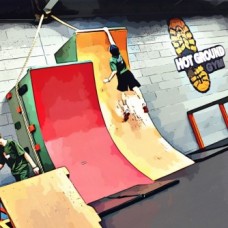
Sounds cool doesn’t it? Maybe you’re thinking you’d like to do something like that with your team – put them through military-style training to help them learn how to work together, overcome obstacles and learn to function as a tighter unit. But of course the SEALs have more important things to do than work with every youth fastpitch softball team that wants to give it a try.
Luckily, at least if you’re in the Chicago area, there’s now an alternative: Hot Ground Gym. Currently located in Northbrook (with a second location set to open in the next few months in Buffalo Grove), it offers that kind of military-style training to kids and teams. They also have a mobile option that will come to you if you have an organization that would like to do it. (FULL DISCLOSURE: My son Adam is one of the trainers, which is how I learned about what they do. This is not a paid advertisement, just an FYI for coaches looking for something different to do with their teams.)
Hot Ground Gym was started by two military veterans, one a former U.S. Marine and the other Israeli Special Forces, to help kids build confidence, discipline, problem-solving and leadership skills in a fun, supervised environment. A lot of what they do is regular classes where kids come almost every day. But they also have birthday party and team-building options where they will do a 1.5 hour or 2 hour program for a specific group.
The core of the Hot Ground Gym program is obstacles. They have all sorts of them, most of which they built themselves, to challenge kids and teach them how to work together. If the trainers see the kids aren’t challenged, they rearrange or alter the course to get them out of their comfort zones and working hard to improvise, adapt and overcome.
The nice thing about this is it’s both mental and physical. Your team parents will likely love it if you do it because their kids will probably pretty sleep pretty well afterwards. The kids are kept moving constantly, running through, around and over obstacles, climbing, crawling, swinging from ropes and so forth.
At the end of the session you can either just go home, or you can have a little celebration (bring your own food and drinks) to talk about what the team learned and enjoy their successes. And maybe have a few laughs about their failures.
The video on the website home page provides a pretty good idea of what they do, although it’s constantly changing. And don’t be discouraged by the fact it’s mostly boys in the video. Adam says they have a lot of girls do their programs, and those are some of their best performers.
If you’re looking for a way for a fairly new team to get to know each other, or for a cliquish team to break down some barriers, or just a way for your team to learn a little more about how to push past their personal boundaries to do more than they thought they could, it’s worth checking out.
You might even ask that Adam be one of the trainers. He’s an Illinois Army National Guard veteran who did a tour of combat duty in Afghanistan so he knows the whole military aspect. And he earned a couple of medals during training for his leadership skills so he knows how to get groups of people working together for a common goal. He also has a wicked sense of humor, so your players will be entertained as well as challenged.
Sometimes you just gotta go with what you’ve got
As both a fastpitch softball instructor and general fanatic for the sport, I have to admit I spend an inordinate amount of my waking hours looking at information and analyzing techniques to try to become as educated as I possibly can. Hi, I’m Ken, and I’m a softball technique-aholic
It’s well-intentioned to be sure. I firmly believe, based on roughly 20 years in the sport that the better-trained a player is, the higher the chance she has for success. And the less raw athletic ability she has, the more specific training she requires.
But I also believe (again based on experience) that there is a Law of Diminishing Returns when it comes to trying to perfect technique. While it’s true that optimal technique should yield the best results, that’s also only true if it’s implemented with optimal effort or enthusiasm.
This is where a lot of players seem to get hung up. Especially the most dedicated. They are focused so much on trying to achieve the optimal mechanics that they get in their own way.
Hitters become tentative trying to achieve the best bat path and as a result slow their swings down. Or they focus so much on one part of the swing that they let the rest fall apart.
Pitchers work so hard on getting just the right launch technique, or keeping the arm circle exactly where it should be, that they get all tight and don’t let their bodies work for them. Catchers worry so much about how they’re making the transfer on a steal that they become over-conscious and thus too slow.
Every part of the game can be affected, regardless of position, or whether you’re on offense or defense.
So here’s my advice: as they say in auto racing world, sometimes you gotta run with the one that brung you. Or in the case, go with what you’ve got.
If you’re a hitter still reworking her swing, do the best you can to use what you’re learning. But don’t focus on doing it perfectly. Do it the best you can while still coming at it with full energy.
After all, the ball doesn’t care how you hit it. A strong contact with an ugly-as-sin swing will beat a soft contact with a perfect swing every time. A strong swing with much-improved mechanics will generally yield better results than a tentative swing that looks good only on slow-motion video.
The same goes for the rest of the game. You may not have perfected that backhand or rake technique on ground balls, but if you go after them like you mean it you may just surprise yourself. Pitchers who continue to try to throw hard will be much more effective than those who again look like they’re trying to make the perfect video instead of getting hitters out.
Believe me, I’m all for perfect mechanics. But they should never be a conscious effort, at least in a game situation. When you’re in the game, go with what you’ve got. You can always work on perfecting it at the next practice.
Private softball instructors level the playing field
As someone who has a broad interest in the state of youth sports in general as well as fastpitch softball specifically, I’m always interested to read articles on the topic. There’s no doubt that the U.S. (along with more and more other countries) has become sports-crazy, to the point where it is having a negative effect on young players. 
There is one aspect that always strikes me as missing the mark, however, which is their description of instructors. Maybe it’s because I’m a private softball instructor myself, but I don’t think it’s just me taking it personally.
When they talk about how crazy parents have gotten, sooner or later the articles will refer to how on top of everything else parents “then drag their kids to an instructor to spend even more time on their sport, usually in the hopes of acquiring that D1 scholarship.” Or something to that effect. It’s not an actual quote, just a sort of paraphrase of what I’ve seen.
That may be true in some cases. But for the most part I see the role as being somewhat different.
In the good old days these pundits like to talk about, they say kids just showed up at the field and learned to play there. They didn’t need all these adults around.
Well, the reality is that was wonderful for the kids with great athletic ability. You know the ones I’m talking about – you give them a ball, or a stick or some other piece of athletic equipment and they’ll instinctively know what to do with it. But maybe not so much for the kids for whom it didn’t come naturally, or who hadn’t grown into their bodies yet, or who were a little slower in developing their motor skills.
Basically what happened was they got left behind quickly and never had the opportunities to advance in a sport they may have loved but weren’t particularly good at yet. They got weeded out early.
That’s why I say a good instructor can level the playing field. He or she can take a player who may not be the greatest athlete and teach him or her to be competitive and find success on the field, court, rink or whatever. Success being defined by the player and his or her family.
I’ve worked with a lot of kids who had no ambition of playing in college – not just at the D1 level but at any level. Some just wanted to be successful in high school, or on their travel team, or in their rec league. They wanted to get off the bench and become important to their teams.
Is there something wrong with that? I don’t think so, and if I can help them achieve that goal where they might not have otherwise it’s terrific.
Not everyone was blessed with great DNA or grew up in a family that played sports all the time. A good instructor can help make up for those “disadvantages” and level the playing field, giving them opportunities they may not have had otherwise and helping them to achieve all they can achieve.
Of course, even the best athletes can use a little help along the way to shortcut their learning curve, and they’re fun to work with too. My point is that most of the parents who take their kids somewhere for instruction aren’t the ones you see in TV documentaries and NY Times ads, relentlessly trying to drive their kids to sports success they themselves never achieved. They’re just trying to help their kids feel good about themselves and build some great sports memories.
Drills for the sake of drills
Check out any fastpitch softball flyer or website offering instructional materials and you will find tons of books and DVDs focused on drills, drills, DRILLS! It almost seems like an arms race sometimes to see who knows the most drills.
Don’t get me wrong – drills can be very helpful. But like anything else they need to be used strategically.
Drills are only valuable when they answer an actual need (other than keeping some players occupied while you work with others). Here’s what I mean.
Take a hitting drill that focuses on extension after contact. Seems like a worthwhile way to spend your time. But if the player already has good extension after contact, it can actually be wasting time that would be better spent on another aspect that isn’t as strong.
The same goes for pitching drills focused on the arm circle. While it can always be a little better, players only have so much time to practice. That circle drill might have already hit the point of diminishing returns, where time spent increases sharply while actual gains don’t rise much at all.
The other issue with doing drills for the sake of drills is that softball skills typically require multiple combinations of movements, whereas drills are designed to isolate movements. As such, drills are great for working on isolated issues.
Sooner or later, however, those individual pieces need to be rolled back into the full skill. Spend too much time on the drills and you won’t have enough time to develop the actual skill that’s required. Sort of like spending the bulk of your time cleaning your boat instead of taking it out on the water.
Once the player has learned the basics, my recommendation is to spend as much time as possible practicing the full skill, end-to-end, and then use drills to address problems you’ve identified within them. As opposed to just running through a set of drills because you saw them on the DVD.
It will be a much more efficient use of time, and will help you turn out more game-ready players.
Like Riding A Bike

People often use the phrase “it’s like riding a bike” To refer to how easy it is to pick up a skill again when you’ve been away from it for a while. When it comes to softball training, however, there’s another use.
Players will often get impatient with themselves when they don’t pick up a skill right away. Pitchers will be wild when trying a new pitch). Hitters will swing and miss while working on improving their swings, or hit a popup or soft dribbler. Catchers will go for a block only to have the ball go between their legs. Lots of different things can happen.
When they do, I will often ask if they can ride a bike. I have yet to run into one who can’t. I’ll ask them if they have to think about how to ride a bike. They always respond no.
Then I ask them if it was always that way. What happened when they first took off the training wheels? Usually mom or dad held onto the seat and ran behind them until they were ready to take a few tentative pedals on their own.
Eventually, though, they figured it out. And once they did, they probably never gave it much thought again.
The same goes for softball skills. At first they can be difficult, and require a lot of thought (as well as a lot of trial and error). The success rate may be fairly low. But the more they do it, and really go after it, the less they will have to think (or worry) about it.
It’s a thought that seems to resonate. They know there were scraped knees and elbows at first on the bike, but today the only remarkable thing would be if they fell off.
When players get frustrated, remind them of their experience riding a bike. It might help them get back on track.
How do you help players learn patience while they’re learning a new skill? Any tips or tricks you’ve found helps them understand?
Why so many reps in instructional videos?
This is something I’ve been wondering about for a long time but kept forgetting to throw out there. It’s the kind of thing that drives me a little nuts.
I love to learn, and will seek out all sorts of information looking for something new to incorporate. As a result, I end up watching a lot of instructional videos.
What I often find is that a lot of time on the videos are spent showing the same drill being executed over and over again. If you’re demonstrating a drill, why do we have to sit there for 30 seconds, or a minute (which feels like an eternity in the Internet age) watching 20 or 30 reps of a drill?
Wouldn’t it make more sense to explain the drill and its purpose, have a player do maybe five repetitions, and then move on? I mean, if I need more reps I can just run the video back with my mouse (if I’m watching on the computer) or a remote (if I’m watch a DVD).
What I often find is that I end up watching a lot of these videos on 2X speed, or dragging the bar forward, just so I can get on to the next piece of information. Unfortunately, if whoever made the video says something brilliant during repetition 20 I’m probably going to miss it.
Maybe this is a holdover from the days of VHS tapes, where fast-forwarding ran a small risk of breaking the tape. Or maybe it’s a function of having 15 minutes of content but needing a 40 minute video in order to sell it.
I don’t know, but please, please, please. Can we minimize the reps when there’s nothing new happening and speed things up?
Am I alone in this? Does it drive anyone else crazy to have watch the same person do the same things over and over and over again?
Helping young hitters with a fear of the ball
Ran into this issue with a 9 year old I recently started working with. She was pretty raw in her fastpitch hitting mechanics when we first started, but with some good tee work (and practice) she was coming along.
Unfortunately, we were started working together at the beginning of the season so there was some urgency to get her game-ready. Which meant moving to front toss to give her some experience with a ball coming at her.
Once we started with that, it became obvious she had some fear of getting hit by the ball since her first move would be to step away and sort of lean away from the pitch. That makes it tough to swing effectively.
(In her defense, given what I’ve heard about the caliber of pitching she’s been facing it’s understandable. Lots of, shall we say, randomly thrown pitches.)
Still, that’s not good. So I started thinking about how to help get her re-focused on attacking the ball rather than being attacked by it. The weather helped me come up with a good answer.
It had rained most of the day when we were getting together for a lesson, so we were stuck using the outfield for front toss. It was pretty soggy out there too, so I thought it might be better to pitch Whiffle balls at her. I figured it would give her less to fear from the pitches as well as prevent my regular softballs from getting waterlogged.
It worked well, and she hit with enthusiasm as I’ve reported previously. She was actually having fun, and seeing that she could hit.
The next step was to mix in the Whiffles with regular softballs at our next lesson. I told her I would throw a Whiffle, then a regular ball, which is what I did. At first she was a little tentative on the regular softballs, but the longer we alternated the more confident she grew.
So much so, in fact, that she nearly took my head off with a couple of line drives with the regular balls, and did nail me in the thigh with one. I hadn’t bothered to set up my Jugs protective screen – I mean, really, she’s nine and just learning to hit. I can handle that, right? But you can bet the next time I met with her the screen was there.
Speaking of the next time, that session was all regular balls. I’m happy to report that the fear was gone (along with the stepping out), replaced by a girl who was looking to do some damage. Hopefully that will carry over into her games too. If it does, I hope that little pitcher she’s facing is wearing a mask.
If you’re working with a hitter who is uncomfortable in the box and afraid of getting hit, give this a try. If you can replace that defensive mindset with one where she is focused on taking aggressive swings it can do wonders.
Softball instructors are like Google Maps for players
A recent series of discussions on the Discuss Fastpitch Forum has been debating the need for or value of private instructors. Perhaps the best way to explain what private instructors bring is to liken them to using Google Maps. (FULL DISCLOSURE: I am a private instructor myself, so naturally I am a little biased on the topic.)
Let’s say you live in Cleveland and you decide you want to drive to Omaha. How are you going to get there? One way to do it is to hop in your car, point it west, start driving and hope for the best. You’ll probably get there sooner or later, but odds are it will take you longer than if you had used one of the other choices.
Another option is to pull out a paper Atlas (like we used to in the old days) and map out your route on paper. That will be better than just randomly driving, but for best results you need to be pretty good at reading maps. Not everyone is. If you misinterpret the map, or the roads have changed since your Atlas was printed, you could end up getting lost. (Think Clark Griswold in the first Vacation movie.) If you do lose your way, you may not even realize it for a while, in which case it will probably take a bit of backtracking to get you back on the right road.
Then there is using Google Maps (or your mapping application of choice). You can plug in your starting point and destination and the entire route will be laid out for you step-by-step. If you’re using a PC you can print it out and take it with you, without all the extraneous information that is in an Atlas. If you’re using it on your smartphone, a pleasant voice will guide you turn-by-turn to your destination, with easy-to-read visuals along with it. If you happen to make a wrong turn anyway, or the roads have changed, Google Maps will recognize you’re heading in the wrong direction and immediately guide you back to where you need to be.
Those are the things a private instructor will do as well. You don’t absolutely need one to get to where you’re going, but like Google Maps an instructor will help you get there faster.
A private instructor will lay out a good foundation using techniques, drills and cues that have proven successful before – but adjust to the specific needs of the player. The instructor will offer that same sort of turn-by-turn guidance that helps players stay on the path to success rather than wandering off into dead ends. If something gets “off” due to any of a dozen reasons, the instructor will help guide the player back onto the right path.
This isn’t just for beginners, either. Even accomplished players need a little help now and then. Every professional team has position coaches and instructors who are there to help players improve their games and overcome problems. When Tiger Woods was at the top of the golf world, he still had a swing coach who worked with him to help him stay there.
In his book The Talent Code, Daniel Coyle lists the three essential elements to achieving excellence. One is motivation, and another practice. But the third is coaching. Not that the coach has any special magic to offer. But because the coach can help make sure that players spend their time practicing the right things in the right way rather than trying to feel their way through the process.
Again, it’s not for everyone. If you’re just planning to drive around your own neighborhood you don’t need Google Maps – or at least you shouldn’t. But if your goals are to get out into the larger world, you might want to have a guide by your side.
The Way It Ought To Be
The other night when I got out to my fastpitch softball lessons I had a pleasant surprise waiting for me. My first lesson was with a high school senior pitcher, and her high school coach was there to observe.
I couldn’t have been more pleased! All too often it seems the relationship between private coaches and team coaches – either in high school or travel ball – is contentious. I’m not sure why but it’s not uncommon. 
It’s much smarter for there to be a sense of cooperation. Private coaches work with players on an individual basis far more than a team coach ever will have the time for. They teach specific skills and learn what cues trigger performance and success for those players.
If the player (or her parents) have chosen wisely, that player comes onto the team with an advanced skillset built over many hours of practice. At the same time, there will be players who have put little effort into learning their skills. That is where the team coach can make a difference. Focusing their limited time on raising the skill levels of those players will pay the best dividends. Because, of course, the chain will only be as strong as its weakest links.
In this particular case, I invited the coach into the cage with us so he could hear the instruction and ask questions if he had any. He brought his iPad in with him and shot video as we went along. I periodically asked if he had any questions, and he had the opportunity to see how I interacted with my student/his player.
It was a very pleasant half hour. I left the coach with an open invitation to come back any time. Kudos to the pitcher’s parents for setting it up, incidentally.
Of course, it’s easy for me to take this position as a private coach. But I have also experienced it from the other side. While I wasn’t able to attend an actual lesson, when I was a team coach and had pitchers who were not my students, I would contact their pitching coaches to learn what to look out for, what cues they used and what they were teaching those pitchers. It may not have been what I taught, but that’s ok. I wanted to work with what they had learned and what they were supposed to be doing rather than trying to re-make according to what I teach.
Presumably, everyone – team coach, private coach, parents and the player – want the same thing. They want the pitcher to be successful. Working together is far more likely to make that happen than constant territorial battles.
Video like an MRI for coaches
After experiencing the healthcare system myself not long ago and having my wife take a visit to the ortho yesterday, I had a realization today. When doctors are trying to diagnose a joint injury they will talk to the patient, try a few manipulations and overall eyeball the problem. More often than not, though, they will send the patient for an MRI to see what they can’t observe with the naked eye.
The coaching equivalent is video. No matter how much experience a coach has, there’s nothing like being able to slow things down and take an in-depth look at a pitch, a swing, a throw, a fielding play or some other technique. And these days it’s easier than ever.
When I first started coaching, shooting and analyzing video meant hooking a handheld video camera on a tripod up to a laptop. If you were planning to shoot video throughout the day or evening, it also mean running an extension cord to a power strip. If you wanted to change angles it could take a few minutes to get everything set up again.
Nowadays all you need is a smartphone or tablet and an app, such as Coach’s Eye, RVP or Ubersense. You can shoot the video, run it back and forth in slow motion and even draw lines, measure angles and perform other actions. And with the advances in the devices, you can shoot at high frames per second rates that make everything very clear and easily visible.
Over the last few days I’ve used my new iPhone 6 and Coach’s Eye to do some valuable analysis – and show the players what we’re looking to do. They weren’t big mechanical issues, but instead the small details that make the difference between good and great. We were also able to see all the things they’re doing right, which was a feelgood. Like the MRI, it exposes things you may not see otherwise – and share them with the player.
Being able to show rather than tell can be incredibly valuable, especially for younger players who may be more visual than audible learners. Showing them what they’re doing often helps them understand what you’re trying to describe as a coach. With modern technology, you can do it instantly – which is what every study of coaching will tell you is most effective.
Doctors love their MRIs. Coaches should love their video apps. They can really help shortcut the learning experience for your players.






 Life in the Fastpitch Lane