Category Archives: General Thoughts
The challenge of fall ball
 Right now we’re in the midst of the fall fastpitch softball season – aka “fall ball.” Whether you’re a 10U player getting her first taste of travel ball or a college coach hoping to get an idea of what her team needs to work on in the off-season, it’s always an interesting time.
This is a big change from when I first started coaching travel ball. Back then, tryouts didn’t happen in August for teams in my area; most teams did tryouts in the spring. Eventually that backed up to December, and then to the current system where some programs are running their tryouts while others are at Nationals.
Because of that, back in the day fall ball didn’t really exist. When we did start running tryouts in August it was still tough to find games in the fall.
That’s not the case anymore. There are individual games, round robins, and tournaments (real as well as showcase) galore. As they say, you can hardly swing a dead cat without coming across a game somewhere. It’s a bit challenging for older teams with players doing fall high school sports, but somehow people figure it out.
The abundance of fall ball creates several new challenges for everyone. Here’s a look at a couple.
Win or learn?
One of the most obvious challenges is coaches deciding whether they want to focus on winning games or learning what their players – especially their new ones – can do.
You already know what you know. Do you stay with what you believe gives you the best chance of winning the game? Or do you try to learn more about players you don’t know as well, even if it costs you the win?
If you decide to learn, that might mean putting weaker hitters at the top of the lineup to get them more at bats. It might mean playing a girl at shortstop who has potential but hasn’t acquired the skills and game experience yet to really stand out. It might mean putting up with crazy parents who want to know what the (heck) you were thinking.
If you decide to win, you may not get a chance to discover a hidden gem who could make a huge contribution in the future. You may reinforce a lack of confidence in a player who actually has more ability than she’s been showing. It might mean putting up with crazy parents who want to know what the (heck) you were thinking.
Showcase tournaments add another level of complication. The idea is to show college coaches what your players can do. That’s why most don’t have a champion. It’s more like pool play all the time. You want your team to look good to attract coaches, but you also want to make sure all your players get seen.
If one of your pitchers is struggling, do you leave her in and let coaches see how she battles? Or do you get her out so coaches can see how the rest of your team does?
There are no right or wrong answers. It’s simply a matter of knowing what your goals are and sticking to them.
Stay in or get out of your comfort zone?
Players have challenges as well. One of the biggest is whether to stretch your game and take chances when you play or stick with what you already know works?
If you’re new to a team, such as a freshman in college or high school or a new travel ball player, you want to show you can belong and contribute. But you may also be nervous about looking bad if you fail.
The safe decision is to stay within what you already know you can do. But if you do that, you’re not growing as a player. Fall is often a good time to take those chances because people care a lot less about who wins those games. If you make an error, or struggle a bit at the plate as you work on developing more power, the consequences will be less than if it happens in the spring.
Personally, I would recommend making the stretch. Try taking that extra base, or working that new pitch into your arsenal, or sacrificing some accuracy to drive up your speed, or being more aggressive on defense, or unleashing your new swing. It’s your best chance to give it a try and see how it plays in a game. You can also be comforted by the fact you’ll find out what to work on during the long offseason.
Take advantage of opportunities
Fall ball offers all sorts of opportunities. Rather than getting stuck in the same old same old, approach it for what it is. Discover what you want to discover, try the new things you want to try (and are comfortable trying), and most of all, have fun doing it! It’ll pay off in the long term.
Do you really know who’s coaching your child?

Normally I like to keep things focused strictly on topics that relate to the game itself. But this is a subject that really should be of concern to any parent whose kids – male or female – are participating in activities where they have long periods of exposure to adults.
It was sparked by this article, sent to me by my friend Tim Boivin. The article is about the revenge a dad in Pennsylvania was able to extract after one of his daughter’s coaches not only touched her inappropriately (smacked her on the behind, even after being asked to stop) but then tried to smear the dad’s name in the local town. He did it by using his long standing with the league, and the fact that he’d lived there in that town his whole life, to get the dad looked at as an outsider. It’s a pretty good read, and a good lesson about being careful who you mess with, no matter how much power you think you have.
But it also brings up a bigger point. During tryout season, the focus is on making a team. Sometimes it’s the “right” team, and sometimes it’s just any team. But after the stress of tryouts are over and you’re feeling the relief, there’s another question that needs to be asked: how much do I really know about the people who will be coaching my child?
The usual reaction when you find out something terrible about a coach (or other authority figure) is “I had no idea.” Of course you didn’t. Someone who acts like a predator, or a person who will dole out inappropriate physical abuse on players, doesn’t walk around wearing a t-shirt that advertises the fact.
He/she also doesn’t act that way in front of the parents. If he/she did, he/she wouldn’t get access to kids and thus be able to satisfy whatever needs or urges he/she has. Just like a con man trying to convince people to give them money, coaches who want to do terrible things to kids must appear to be completely trustworthy.
Many of them put in the effort to learn the game, too, further helping them hide in plain sight. I remember a guy about 15 years ago who used to contribute regularly to the old eTeamz softball discussion board. His signature phrase was that he would always talk about teaching the FUNdamentals.
The message, of course, being that coaches shouldn’t take themselves too seriously, and remember that it’s a game and games should be fun. Just the kind of person you want coaching your child, right?
Well, one day he just sort of disappeared from the board. Eventually it came out that this guy was arrested, tried, and convicted of several counts of having sexual contact with minors. Now the only FUNdamentals he needs to worry about is watching his back in prison, as many prisoners don’t take too kindly to child molesters.
That’s an extreme case, but it illustrates a point. Not all concerns are around sexual predators, however. For example, would you want a known felon with a history of violence toward women coaching your daughter? Probably not. Or what about someone who had punched a player (or a parent, or an umpire, or an opposing coach) in a fit of anger?
These are all legitimate concerns. Your daughter will be spending a lot of time with the coaching staff in the coming year, especially now that fastpitch softball tends to be a 12-month sport. How can you find out if any of the coaches (not just the head coach) have any skeletons in the closet you should know about?
One way is to ask if the organization does background checks with the state police on everyone who will play a coaching role or be on the bench with the team. If it does, don’t just take their word for it that everything is ok. Ask to the see the reports.
If there’s nothing to hide, they should be more than happy to do it. If they are reluctant to share the information for “privacy” reasons, that could be a red flag. No matter.
You don’t have to be an organization to request a background check on someone. Anyone can do it. If you have any concerns, request it yourself. The cost for a state check is generally $10-$20, while the cost for a nationwide check is typically $25-$45. When you think about what you’re paying to play, it’s worth a few dollars more to gain peace of mind if you have any concerns.
In most cases, the background check is going to turn up clean since it only covers criminal known criminal acts, and despite what the headlines may lead you to believe the people who commit them and get into coaching are rare. Still, there are some out there.
If the organization runs background checks and still allows someone who shouldn’t be there to coach, you might want to re-thing your decision to play for that organization. Clearly they don’t care now. How much are they going to care if you find a problem later and bring it to their attention? It’s obvious that letting that person coach is more important to them than protecting their players.
If the organization doesn’t run the background checks but you do and find something, you should bring it to their attention. Their actions from that point will tell you what you should do. It’s up to you, but if your daughter is going to be coached by someone you don’t want her to be around, and you allow it to happen, you will share in the blame if something happens later on.
Here’s the other thing. As I mentioned, background checks only catch those who have already been caught. You may want to do a background check of your own via Google or another search engine to see if there are comments from past players or parents out there that might give you an indication of the person’s character.
Does this coach have a reputation for being abusive to players, physically, verbally, or emotionally? Is he/she the type of person that will cause excruciating pain to young players despite their screams, as in the story of this cheerleading coach? Will this coach help your young player grow and become the type of person you want her to be, or will he/she teach life lessons you don’t want your daughter to learn?
When you’re with a new team where you don’t know the coaches, one other good idea is to hang around at practices for a while to see how they’re conducted and what the coaches’ approach to interacting with players is. Understand that practices should be hard, and it is not only good but necessary to push players to improve. But there is also a limit to it. They shouldn’t be doing things that are abusive or patently unsafe.
At the same time, understand that you will be going there as a silent observer. It is not your place to offer advice or suggestions, or really do much of anything to interject yourself into the practice unless something truly illegal or inappropriate is occurring. And you’d better have proof.
If you’re told you’re not allowed to watch practice, especially with younger teams, that may be another red flag that something’s not quite right with this team, coaching staff, or organization. As long as you’re silent no one should have a problem with you watching. Heck, it’s probably a good thing, because then you can reinforce what they’re teaching when you work with your daughter on your own.
Again, you hope that none of those bad things are happening. But better safe than sorry. Knowing who is coaching your kids is an important step in ensuring sports/activities participation is a good, positive, and safe experience for your child.
Photo credit: Vetustense Photorogue via Foter.com / CC BY-NC
I love questions. You should too.

Last night I was working with a fastpitch pitcher named Kylie that my old job would have classified as a “boomerang.” I had given her lessons for a few months, then she ended up on one of those teams run through a facility that includes the lessons in the package.
After being dissatisfied with her progress as a pitcher over there, she recently returned to me as a student. (Most of that description has nothing to do with the story, but I just love the term boomerang.)
Anyway, at one point her dad, who was catching for her, told her to ask me the question she had. It turned out to be a really good one. What I liked about it in particular was it showed a desire to understand and get better at a deeper level than “because I say so.”
I love getting questions like that. Actually, I love getting any questions from students, or players on a team, because it shows they’re engaged. Yet I think often times many athletes, girls in particular, are reluctant to ask questions – even when they really want to know the answer.
I’m not sure why this happens, but I can speculate. I think one answer is that they might be concerned that the coach/instructor/other authority figure will feel like his/her position of authority is being challenged. Or maybe the athlete asked a question once and got reprimanded for it. Or maybe the athlete thinks somehow she should already know the answer and doesn’t want to feel stupid for asking. I’m sure there are other reasons as well.
In some cases, those fears may be true. Some coaches really might not like questions because they’re not secure in their own knowledge and don’t want to be trapped, or might be one of those “command and conquer” types who thinks communication should only flow one way. They’re certainly out there.
But athletes should never feel intimidated about asking questions. This is how we learn. How many great discoveries in the world started with, “I wonder why…” or “Did anyone ever consider…?”
Although you do have to be careful around “I wonder what would happen if…?” Often not much good comes out of that question, especially if it’s followed by “Here, hold my beer.”
From my point of view, though, questions are great. Again, they show the athlete is engaged in learning. I’ve always said that the first requirement for improvement is a willingness to change. Athletes like Kylie who ask questions absolutely embody that philosophy.
She heard what I was instructing, and knew she wasn’t quite doing it. She could feel it. But she didn’t quite know how to get where I wanted her to go. So instead of just nodding along and struggling, she asked a question that led to a more in-depth explanation. She tried it, and she got it.
She also asked one of the toughest things I think young athletes can ask: She had gone to a pitching clinic somewhere and they told her about keeping her weight back as she drove out; she wanted to know if that was right, and if so how do you do that if you’re trying to go forward.
That led to an explanation from me about how it’s like riding a skateboard on one leg, then putting your other leg down in front. Yes, you’re moving forward, but you want your entire body to be moving forward at once rather than a piece at a time. If you do that, you can drive into your front leg and get more whip rather than landing down, on top of your front leg and having everything come to a dead stop before you throw.
She got it, and was immediately able to improve her leg drive. Not to mention feel when her weight wasn’t quite where it needed to be. Either way, she now has the tools she needs to improve. And hopefully she’s a little more confident about asking me other questions in the future.
I’m definitely a fan of the Socratic method of teaching, where questions lead to dialog and critical thinking, rather than the “open the top of your head, I will pour in the knowledge, and then we’ll be done” method some coaches seem to favor. The more players understand why they’re doing what they’re doing, the more likely they will be to do it with passion.
It all starts with those questions. Not just from the coaches to players, but players to coaches. Incidentally, if you ask a coach why you should do something in terms of mechanics and he/she doesn’t have an answer, you might want to think twice about doing it. The coach could just be repeating something he/she heard somewhere once, and it may not be what you need to take you where you want to go.
If you’re a player, especially a young one, I know it can be intimidating to ask questions. But get over it and ask anyway. It will help the coach know how to make the information more understandable to you.
If you’re a coach, embrace questions. They show passion and involvement, that so-called “spark” it takes to achieve at a higher level. You want to encourage that behavior as much as you can, because a team full of inquisitive, engaged players are going to win a lot more games than a bunch of disinterested robots.
The only caveat with me is be careful when you ask me a question. You may end up hearing more than you ever wanted to know – especially if you’re the last lesson of the night. I love talking softball!
Building a more effective practice plan

This is probably old hat for those of you who have been around fastpitch softball for a while, but it is definitely valuable for those of you who are new to coaching.
First of all, thank you for stepping up. Coaching isn’t easy, and it can be very time-consuming, but with the right attitude it can also be very rewarding. Not necessarily financially, but personally.
That said, if you’re new to coaching a team here is one of the most important lessons you can learn early: there is nothing more counter-productive to success than players just standing around waiting to do something.
The absolute worst, of course, is the typical rec league practice where the coach pitches to one player while the rest stand around in the field waiting until the ball is hit. Never, ever, EVER make that your practice, because basically you have one player sort of learning something, or possibly improving, while everyone else is having their time wasted.
What you want to do instead is plan out your practices so every player is getting a lot of touches/swings/repetitions throughout the entire time.
One good way to do that is to split your team into two or three groups (depending on what you need to do) and then have each group doing something different. For example, one group can be fielding ground balls that are hit to them, another can be fielding fly balls that are thrown or hit to them, and a third can be working on hitting. The hitting group can even be going through a series of drills/activities to keep things moving even more.
If you have two groups, one can be working on throwing drills/form while the other does hitting or fielding. There are plenty of variations, especially if you have good assistant coaches or even willing parents on hand.
What if you’re by yourself and need to keep the entire team together? You can still keep things moving quickly. Throwing drills like the star drill, or around the horn where you throw left and run right, can build skills while again keeping things moving. If your team needs to hit, you can pair up players and run six or seven hitting stations at the same time. All you need is a fence and some tees, although portable nets also help.
You can even do combo drills. One I liked to do was to have one group hitting off front toss while a second group worked on base running skills such as recognizing ground balls faster or going from first to third on a ball to the outfield. Lots of activities for small groups let you keep practice active. Constant repetitions also allow you to build conditioning into skills rather than having to do it separately during practice.
So how do you work all this in? I used to use the outline function in Word to list out everything I planned to work on that day. There would be a heading, and any notes or specifics would fall under the heading as sub-bullets. But the real key was placing times against each section.
For example, if we were going to do groups for hitting, infield, and outfield, I would look at which would take the longest to get through and place a time against it. Then I would extend that time to the other two groups, making sure to have enough different things to work on to keep them interesting.
In this example, say we had three groups of four. If I set up four hitting stations at five minutes each, that was 20 minutes. Infield and outfield would also be 20 minutes, with two or three drills depending on what was needed. Rotate through all three groups and there’s an hour’s worth of practice right there. Add in warmups, dailies, a five-minute break, and some situational work and you have a great, active 2-hour practice.
Of course, I’d usually have one or two other activities on the list, just in case we ran short (although we rarely did). Anything we didn’t get to this time would go on the list for the next practice.
If we were indoors in batting cages, I often would bring in players in groups of three or four for 45 minutes at a stretch. That was plenty of time to get them lots of hitting reps while keep the group size manageable. When their 45 minutes was up the next group would come in, then the next. It was quick and intense for the players, although it did keep the coaches there for 2:15 instead of a typical 2 hour practice. Still, much was accomplished that way.
One other important element in building practices is one I learned from John Tschida at the University of St. Thomas: never have the same practice twice. Always, always mix it up. It builds more skills, and keeps it more interesting for the players.
Fastpitch softball is a tough game, with much to learn – both in terms of skills and strategy. It requires a lot of anticipation and snap decisions based on a multitude of ever-changing factors. That’s what makes it exciting. But that’s what also makes it critical to use your practice time wisely. There just isn’t any time to waste.
Keep things moving at practice and soon you’ll be the coach everyone wants to play for.
Getting Up for a Game When You’re Not Feeling It

Every fastpitch softball player faces this situation sooner or later: it’s game day, and you’re just not feeling it.
Maybe it’s been a long season and you’re tired. Maybe it’s hot and humid out and you don’t handle hot and humid well. Maybe all your non-softball friends are doing something and you wish you could do it too. Maybe you’re so nervous about a big game that you just don’t feel like yourself.
Whatever the cause, feeling that you’re not feeling it can definitely get in the way of your performance. That’s where it helps to take a lesson from some famous musicians.
I’ve read interviews with several famous musicians who were asked how they managed to put so much energy into their performances night after night despite the grueling toll it takes to go from city to city and play for months at a time.
The answer they give is typically something to the effect of: “Yes, it can be hard, and there are times in the hotel or backstage that I just don’t feel like playing. I think maybe I can get by giving it just the minimal amount of effort. But then I think about the fan who saved his/her money to come and see me play, and this will be his/her only chance this year. Maybe it’s a first date, or an anniversary, or a birthday or something else special. Maybe it’s just someone who needs a little lift in their life. When I think about that, I realize I owe it to that person to do the very best I can, if for no other reason than to thank them. And I want them to walk away feeling like it was more than worth the money they spent.”
What a great attitude. They realize that in the line of work they’ve gone into they’ve made a bargain, and they need to keep up their end of it.
For fastpitch softball players it’s a little different. In our case, yes, there are the fans who came out to see the team play. It might be someone’s grandma who finally made it out to a game and hopes her granddaughter’s team will win. Or a little sister who is going to draw her impressions of the game by what she sees on the field. Or the brother home on leave from the military who wants a little piece of home in his life before he goes back to wherever he’s stationed.
But there might also be a college coach, or someone connected to a higher-level team, watching as well. What that person sees, that day, will be his/her first and most lasting impression of you. A great performance might catch his/her eye for the future. A poor one might get in the way of your goals down the line.
Even if none of that is the case, however, think about your coach. He/she made a decision to put you on the team and give you an opportunity to play. You also owe that person your very best. Every. Single. Time. You. Play.
Always remember that putting on that uniform and taking the field is a privilege. A lot of things had to happen the right way for you to have that privilege – starting with being born in a country where playing fastpitch softball is even an option.
Learn to appreciate the opportunity you have and you’ll learn how to feel it even when you’re not feeling it at first. And that, more than anything, will help you become the player you’re destined to be.
Fastpitch pitchers gotta pitch
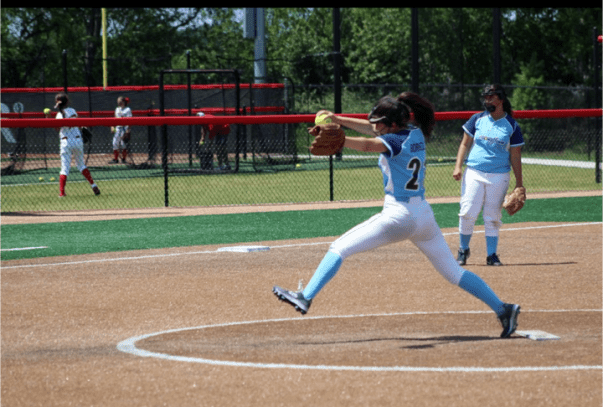
Right now we are coming up on what is probably the toughest time of the year in fastpitch softball – tryout season.
While the current playing season hasn’t quite concluded yet for most players, the finish line is definitely in sight for most. And that means they need to make a decision about next year, asking the musical question:
In some cases it may be whether a player should make the jump from rec ball to travel ball. In other cases it’s whether to stay with the current team or move to a new one, or whether to play up or stay down. So many decisions!
I’m asked my advice on this a lot, and I usually share it on a one-to-one basis because every situation is a little different. But there are a few common scenarios where I can pretty much make a blanket recommendation.
The biggest one is about seeking out opportunity, especially if you are (or your daughter is) a pitcher. As my headline says, pitchers gotta pitch. You can practice all you want, but the only way you’re going to know if you’re getting better is if you get the opportunity to pitch in games. Not just a few scrub innings here or there, but quality innings.
So let’s look at this typical scenario. (I’m going to say you to keep it simple, but you can also read “your daughter.)
You’re on a team that already has two good, established pitchers who get the bulk of the work. You started pitching a year ago, and while you’ve been working hard you haven’t had much opportunity to show your stuff. The coaches are too afraid they might lose a game with you in the circle.
Odds are that situation isn’t going to get any better next year. It’s probably time for you to seek your fortunes elsewhere, even if it’s with a team that isn’t as good overall, or isn’t as likely to win as many games as your current team.
What you need right now are game innings. So what if the team doesn’t play great defense and you take some losses. What you want is the opportunity to get in the circle, make yourself better, and see if you can make the team better to boot. Now, if you improve and the team doesn’t, next year will probably be a different story. But for now, your best bet is to go where the opportunity is.
Another tough one is whether a 10U pitcher should move up when her team goes to 12U or stay down at 10U. There’s no single answer for this one. If you’re rocking it at 10U, you can probably move up to the next level no problem. Especially if you’re a bigger 10U player. A smaller one might have trouble adjusting to the larger ball and extra five feet of pitching distance.
On the other hand, if you’re a developing 10U pitcher who hasn’t had much circle time, the jump to 12U might be pretty rough. If you get rocked a couple of times at 12U that might be the end of your pitching career. My recommendation in general would be to stay down, get a chance to dominate and build some confidence first. It will help ease the transition.
What about going from rec ball to travel ball? That can be a pretty big (and eye-opening) jump. To me, this is more about general attitude toward the game. If softball is primarily a social thing for you, it may not be a good idea. The increased practice and game schedules, even at the lower end of travel ball, might be too much for you.
On the other hand, if you’re a competitive type you’re very likely going to thrive in the travel ball world. You’ll enjoy the harder practices and tougher competition. And you (as well as your parents) will likely make friends for life.
On the other side of the stay/go coin is the desire to win trophies above all else. Yes, there are teams you can go to that will let you clutter your bedroom, and the living room, and the basement with plastic “hardware.” But will they help you become a better player?
Winning teams aren’t always run by great coaches. Sometimes they’re run by a parent who has a very talented daughter (who also has a few talented friends) or they are able to attract very talented, already-formed players and assemble them into a team. The coaches don’t make them better, they just act like NASCAR drivers; the drivers don’t build the cars, they just drive them. Not that it doesn’t take skill to drive a NASCAR vehicle, but it’s a different skillset than getting the car ready for race day.
The point is, you want to know that if you’re not already fully-formed and ready to rock that you will get the training you need to get there. A team that wins less but learns more is probably going to be your better bet.
There are other scenarios as well, but these should form a good start. If you look at what your needs and desires from the game are, you’ll have a lot better idea as where you should be playing next year. Good luck with it!
Oh, and if I missed any scenarios or you have questions, feel free to mention them in the comments below.
10 ways fastpitch softball can change your life

Guest post by Lily Jolie, www.baseballeagle.com.
Most kids who start playing fastpitch softball do so because it looks like fun – and often it is. But there is more to it than that. In fact, it can be life-changing as this guest post points out.
Playing sports and games benefit players in a greater way than most of the players presume. In fact, fastpitch softball can be beneficial in a lot of ways, from your personal life to interacting with other players and forming networks.
For instance, softball players know that there are times that they will lose while other times, they will win. This comprehension of success and failure makes it possible for the players to handle developments and challenges in their lives positively. Here are some of the ways that softball can change your life:
Travel
Playing softball competitively provides you with opportunities to travel far and wide for competitions, tournaments, leagues, and friendly matches. What is more amazing about playing softball is that you also get a chance to travel to different states, countries, and even continents. This in turn provides you with mind blowing travel experiences and enables you to explore the world to learn more about people and different cultures.
Great for body development
Softball players often have better well-developed upper bodies than the ladies who do not play the sport. This is because when playing softball, players engage different muscles in their upper body to swing the bat and hit the ball. Additionally, it is a known fact that softball players have stronger and leaner hand and shoulder muscles than those who do not play the game. When playing softball, the whole body is usually active and as such, it becomes easy to burn fat deposits all over the body. This helps in maintaining a fat-free body hence removing the risk of developing obesity and other lifestyle diseases.
Kills stress
Life is generally very stressful from family members, colleagues, studies and other responsibilities. Softball helps players to remain stress-free as the sport triggers the body to produce high amounts of stress-relieving hormones adrenaline and cortisol. In addition to this, when playing, the players feel relaxed and relieved thereby developing an optimistic feeling that helps them to overcome stress. By extension, the game is also very effective in fighting depression, especially among young players. This is because depression frequently comes about as a result of over-accumulated stress.
Teamwork- How to manage relationships on a team
Softball is a team sport that requires the input of all players if you hope to win. This teamwork helps players outside the sport as they go on with their daily routines at school or at work and become successful in whatever they are working on. This is achieved through collaborating with different people, workmates or students and eventually becoming successful. Working as team brings together different resources and skills thereby making the task easy to accomplish.
Failure and Winning: To never give up
Softball is a very dynamic sport. Failure in softball is inevitable, which makes winning that much sweeter. When players realize this, they are able to cope with loses and work toward triumphing over their opponents. The outcomes in softball translate to what goes on in real life. There are times in life when you will achieve something while you will fail at other times. This realization helps softball players to remain focused on their targets and goals without giving up. The same enthusiasm is very important in life is crucial in enabling people to remain focused on their targets regardless of the challenges and downfalls they experience on the way.
Gives a way for communication
Communication is the pillar of every relationship. Yet how you communicate depends on the situation and those you are communicating with. In softball, players communicate with different people including the coach, teammates, and their fans. To all of these classes of people, the players know the best language and terms to use; those that will easily be understandable to the other party. Likewise, communication is critical in real life and helps strengthen and bind relations. Since communication is a two-way affair, softball helps players to understand the feelings of the other party and hence know how to address them. This is a very important skill in real life as it helps in eliminating conflicts and misunderstandings.
Time management
Time management is a vital skill for everyone; the young and the old alike. When you have loads of tasks to accomplish within a specified time frame, time management skills will help you plan your schedule accordingly. When playing softball, you know how to balance time so that you have time for work/school, family, personal time, and playing softball. With good time management skills, it becomes easy to live a well-organized life with very little time wastage if any.
Learn to live with your mistakes
Most people find it hard to accept their mistakes and end up living in self-denial. This prevents them from collecting themselves after the mistakes and believing in their abilities again. In softball, mistakes constitute a definite aspect of the sport but even so, they do not prevent players from realizing success and winning their games. This enables the players to learn their mistakes quickly, learn not to judge others, and focus on what is at stake; winning. This skill when applied in real life leads to a successful and happy life without any regrets whatsoever.
Improve your interpersonal skills
When playing softball, you get to interact with different kinds of people with different characters and personalities. As such, players need to know how to interact with each player and understand them and handle each of them depending on their personalities. These interpersonal skills also come in handy in life as you interact with different people in the course of your work or studies.
Creative thinking and decisions
Winning in softball like in any other sport requires players to make decisions within split seconds. The game also requires creative thinking to identify the areas you can outshine your opponents in. This decisiveness is a very important aspect of life as it makes it possible to identify what you want and the means for achieving it. Likewise, creative thinking will help you identify opportunities and know how you can use them to your advantage.
Generally, sports influence nearly all aspects of life and make it possible to live a well-balanced life. With softball, you get to enjoy a lot more benefits than in most other sports since the sport is fairly safe to play. The risk of injury or accidents in softball is quite minimal. Whether you are playing softball for recreation or as a career, you should be guaranteed to enjoy a well-balanced life that is success oriented.
Photo credit: Foter.com
A shoutout to all the dads who keep fastpitch softball rolling

With Father’s Day coming up tomorrow I thought it might be a nice idea to say something nice about all the dads who spend hours upon hours keeping this thing we call fastpitch softball rolling.
Parent coaches in general tend to get a bad rap. The term “Daddyball” refers to dad coaches who tend to favor their daughters and their daughter’s friends over other members of the team. That is a real phenomenon for sure, but I like to think it’s in the minority.
Most of the fathers who get involved do it for a simple reason: they love their daughters and want to be sure their daughters have an opportunity to play. Someone has to coach the team, so it usually gets left up to a few fathers to volunteer.
Often they played baseball in their youths, although not always. (Special kudos to those who never played baseball but step up anyway. That’s not easy.) The key thing, though, is they believe their daughters should have the opportunity to experience the benefits of playing this game we love.
Then there are the dads who don’t coach, but still take their daughters out to practice with them, and/or take them to practices and lessons. They could be at home pursuing their own hobbies, or working around the house, or even watch TV. But instead they’re out there, night after night in the heat, the cold, the drizzle, sometimes even the snow.
Sunday is Father’s Day, the special day for dads. And where will they be? Out at a softball diamond, hoping to stay out there all day. No breakfast in bed, no presents, no Bar-B-Qs or other special treatment for them. Instead they’ll be in dugouts, bleachers, and camp chairs, eating bad concession stand food, wiping dust out of their eyes and cheering for their favorite players.
As someone who did it for many years, I can tell you the time spent at and around the diamond was some of the best times of my life. Not to mention all the time spent in cars driving to and from various activities. We had so many great talks, and got to know each other so well. Yes, I’m a little more into it than most, but I think every father who uses fastpitch softball as quality time with his daughter(s) is rewarded abundantly.
So here’s to you, all the dads who spend your summers traipsing all over the area, and sometimes all over the country, so your daughters can build the types of skills and memories that will last long after the last strike has been thrown. Thank you for all you do at every level.
Lessons Learned from the Women’s College World Series
Well, that was quite a Women’s College World Series (WCWS) wasn’t it? Lots of fastpitch softball drama (the good kind) from the Regional games all the way up to Championship Series.
Show of hands: how many stayed up until the bottom of the 17th on Monday? I know I did, and I paid for it the rest of the week with interrupted sleep patterns.
As I did the lessons the last few weeks I also asked my students if they were watching the games. Some were, some weren’t. That’s too bad for the ones who weren’t because there’s lots to be learned from watching the game played at such a high level.
With that in mind, here are a few of my own observations and takeaways coming out of a very fun series.
Catchers need to block
Not just sometimes but every time. I saw several balls get by catchers in crucial situations because they tried to glove a ball and couldn’t quite do it. When pitches are coming in at 65+ mph and hit shinguards, they tend to bounce far away. And usually in odd directions.
Get that ball centered on your body – judging where it’s going, not where it is – get on your knees and get over the ball.
Good framing helps
There were definitely strikes called that could have gone either way. (And some, of course, that should have gone the other way, but that’s a different topic.) Catchers framing pitches well can sometimes – sometimes – make the difference.
More bullet spin than you’d expect
When the TV would show the slow motion replays of certain pitches, I was surprised to see just how many pitches had bullet spin rather than directional spin. 
(For those who aren’t familiar with the term, bullet spin is when the ball is spinning like a clock face as it’s coming toward you, and you can see the “button” on the front. Bullets spin this way so they don’t move off their direct targets when fired. Good for bullets, bad for pitchers because nothing is easier to hit than a ball that doesn’t change direction.)
I know announcing from the press box is tougher than it looks – I’ve done it – but it was rather funny when a commentator would talk about so-and-so’s tight spin on her rise ball, or how the pitcher just threw a late breaking curve ball, and as he/she is saying it you can clearly see the ball with bullet spin.
Rise balls don’t really rise, but if they were going to they’d have to be spinning backwards. Curve balls would have to have side spin on them. And so forth. A ball with bullet spin isn’t going to break – early, late, or otherwise.
It pays to work on baserunning
I saw some really amazing plays where heads-up baserunning definitely gave the team on offense an advantage.
I saw a runner on first take second on a changeup. I saw runners alerting watching as a throw from the outfield was directed toward a base they weren’t going for, giving them a chance to advance unexpectedly. I saw runners sliding away from possible tags to avoid being out.
Then there was the other stuff. I saw runners going from first to second on a ground ball allow themselves to be tagged so the defense could make a double play. I saw runners over-estimating their speed when they were the only play in town and making an out instead of giving their team a base runner. I saw runners run in front of a fielder going for a ground ball instead of behind and getting called out for interference.
Getting runners on base is really the key to success. The more the merrier. But they don’t really matter until they reach one base: home. The more you can do to get them there, the more runs you’ll score and the more likely you are to win ballgames.
Putting the fast in fastpitch
By the time the Championship Series came around we had the opportunity to see some incredible pitching.
It’s hard to imagine thinking of a pitcher who throws in the mid-’60s as “slower,” but when the others are consistently in the 70s – even up to 75! – that kind of is the case.
What was interesting was that 70 mph pitch speeds didn’t make for 1-0 games. Even the 17 inning barn burner wound up with a double-digit run total. But the ability to throw flat-out harder than everyone else does make a difference, especially in crucial situations where a team really, really needs an out.
I think we saw that even at that level, it’s tough not to be enamored of the pitchers who can flat-out bring it.
It takes a pitching staff
It seems that gone are the days when you could just ride one big arm for the entire tournament. Even if she threw 200 pitches the day before.
Both Oklahoma and Florida got to the big dance using two pitchers, and on Tuesday night Florida pulled in a third and Oklahoma used four!
Has the pitching gotten worse, or the pitchers gotten softer? Not from where I sit. The hitters have simply gotten better. They say hitting is about timing and pitching is about disrupting timing. No better way to disrupt a group of hitters and keep them from getting comfortable in the batter’s box than by showing them different looks, speeds, and styles.
Great defense still makes a difference
Maybe more than ever. There were so many great defensive plays throughout the last few weeks that you could easily make a lengthy highlight reel just on that.
The key for the winners in different games wasn’t the spectacular stuff, though. A lot of it came down to making the plays they were supposed to make. You do that, and the rest is icing on the cake.
Great coaches care about their players
It’s unfortunate that at every level – even D1 college – there are coaches who care more about their records and looking good in front of whoever than they do about their players. Those coaches tend to view their players like the do the field or the equipment – pieces that are there to be used as-needed to fulfill the coach’s goals.
That’s not what you saw with the teams who made it to the final 8. Or especially the Championship Series. From the outside at least, both Patty Gasso and Tim Walton seem to genuinely care about their players, and build relationships with them. Not just the stars but also the role players.
I can’t remember who said it, but there is a quote from a coach who said something to the effect of “We all know the same X’s and O’s. It’s what you do with the players on your team that makes the difference.”
While knowing the game and recruiting great talent areimportant, many teams have smart coaches and great talent. There’s a reason Oklahoma and Florida have dominated the WCWS the last few years.
Umpires are human
Yup, saw some bad pitch calls and blown calls on plays at various bases. But while they may be the topic of conversation, those are the minority. That’s a tough job, and there are bound to be mistakes.
I occasionally make mistakes in my job too. I try not to but it happens. Get over it.
Seeing that umpires may blow a call should be that much more incentive to do more so that a blown call doesn’t cost you the game. In high school and college, games last seven innings. (In travel ball usually fewer due to time limits.) Within the allotted 21 outs there is ample time to hit, field, run bases, etc. in a way that will help your team win. Focus on that.
Look at it this way: if your team is leading 10-1 and an umpire blows a play at the plate, calling an opponent safe instead of out, no one is likely to get too worked up about it. Put yourself in that position and the rest takes care of itself.
Those were some of the things I saw. How about you? What stood out to you? What did you see that you haven’t before, or that made you cringe? Leave your thoughts in the comments below.
Sometimes you just gotta say…

Fastpitch softball players know there’s nothing quite like getting caught in the “death spiral.” That’s one of those bad times when it seems like nothing goes right.
For pitchers, it’s giving up too many walks or hits – especially cheap ones. For fielders it’s those bad hops, or those throws that start to sail on you no matter what you do. For hitters, it’s all the things that go with being in a slump.
Things don’t go right for a bit, and you start getting down on yourself. The death spiral part comes when you start over-thinking things, or worrying too much about what your coach thinks, what your teammates think, what the peanut gallery up in the stands think, what the media thinks, even what strangers on the street think. Pretty soon it seems like the whole world is stacked up against you.
It’s at that point that you have to remember the wise words of Tom Cruise’s character Joel from Risky Business: Sometimes you just gotta say what the (heck). (WARNING: Joel doesn’t actually say “heck” in the clip. The link is NSFW, so turn the sound down. If you are not in high school yet, all I can say is don’t click or earmuffs.)
Easier said than done, sure. But I can attest it works, because one of my students went through that this year in her high school season, and that was how she turned it around (although I doubt she used the NSFW word.)
She’d gotten off to a rocky start hitting. This is a girl who can really bang the ball, a true five-tool player.
She’s also someone who really cares about doing well for her team, so underperforming really bothers her.
I hadn’t had a chance to get out to one of her games until a couple of weeks ago. By then I had heard she’d turned it around. I was talking to her and her parents during and after the game, and they all told me the same story.
As she put it, “I went out to play that day and I just said to myself, ‘I don’t care.'” Not that she didn’t care about the game, but she decided to quit worrying about the results and what everyone else was thinking.
It worked like magic. She relaxed and the hits started coming.
Bad things happen to everyone. Even good players. Even great ones. No great hitter ever had a career that didn’t have a slump at some point.
When it happens, just remember: sometimes you just gotta say what the @#$%.






