In Hitting, the Arms Can Only Do One Thing; Choose Wisely

As fastpitch softball hitters begin to experience some success with making contact, their next natural evolution is to want to hit the ball harder. Often what that amounts to is trying to swing the bat harder with their arms.
It makes sense in a way. You’re holding the bat in your hands, which are attached to the arms. The faster the bat moves the harder the ball will be hit (theoretically). So…
The natural tendency is to try to make the bat move faster with the arms and shoulders. There’s just one problem: once you try to maximize batspeed with your arms you lose all ability to adjust the bat to the flight of the ball.
That’s because the arms can only do one job. They can either supply power or they can lag a bit behind the body and then deliver the bat accurately and properly in the path of the ball.
So where does the power come from? The strong rotation of the lower half of the body, which most people refer to as driving the hips.
That’s where the biggest muscles of the body are located, so that’s where you can generate the most power. If you’re trying to push a car out of the snow or mud, you either use your legs or it doesn’t go anywhere.
The problem is, if you don’t develop the power from your lower half it has to come from somewhere. So the body will instinctively try to get it out of the part of the body that’s holding the bat.
And now we’re back to the original issue. With no (or little) hip rotation, the bat has to travel a longer distance to get to the contact zone. That means you have to start developing the power and applying it before you really know where the ball will be.
It’s like trying to throw a dart without knowing where the dartboard is until you’re about ready to release it. Sure, you might get lucky and hit the bullseye. But you’re far more likely to wind up on the edge, or miss the target entirely.
Starting with the lower body gives you a little more time (not much, but every hundredth of a second helps) to see the path of the pitch. It also helps carry the bat closer to the contact point before you actually release it into the ball, creating a shorter path to the ball (as in “short to, long through”).
Just as important, though, when it comes time to launch the bat you are able to control it much more effectively so you can take it right to where it needs to go.
The arms (and shoulders) can only do one job – supply the power or guide the bat in a way that’s adjustable. If they try to supply the power, that will override bat control.
Let the power come from the lower body so the arms and shoulders can do their proper job. It’ll make for a much more successful 2020 at the plate.
And speaking of 2020, happy holidays to everyone, no matter which holiday(s) you celebrate, and best wishes for the New Year. I appreciate you reading Life in the Fastpitch Lane and look forward to sharing more about the fastpitch journey next year.
New Research Notches Another Strike Against Early Sport Specialization

The debate over whether young athletes should play multiple sports or focus on one to develop their skills – often framed around the best way to earn a college scholarship – has been going on for quite a while now.
Up until a few years ago it wasn’t much of a debate. Nearly all kids played multiple sports, and each sport had a season. These days, with nearly all club/travel sports becoming year-round commitments, it gets tougher and tougher to be a multi-sport athlete.
Some new research published in the November issue of the Journal of the American Academy of Orthopaedic Surgeons (JAAOS), a scientific, peer-reviewed publication, weighs in on the topic. Since reading the actual article would require you to purchase it, here’s a press release that provides a pretty good summary.
The article defines early sports specialization (ESS) as “the intensive training or competition in organized sport by prepubescent children (under the age of 12) for more than eight months per year, with a focus on a single sport to the exclusion of other sport and free play.” Does that sound like anyone you know?
The article goes on to point out that the “lack of diversified activity in youth leads to increased risk of injury and burnout.” No surprise there. Young bodies are still developing, and the constant repetition and wear-and-tear in the same ways can certainly take a toll.
As I like to explain, any sort of repetitive motion, done enough, can cause issues. Just look at carpal tunnel syndrome.
Clicking a mouse is hardly intense activity, yet 3-6% of adults in the U.S. acquire it at some point, often leading to surgery that costs thousands of dollars. Now imagine a much more robust series of activities repeated over and over on a body that hasn’t fully developed.
But what about the pursuit of excellence (and more specifically college scholarship opportunities)? The authors of the study state that ESS “may not be necessary for elite athletic achievement, but rather early diversification of sports leads to superior results.” They also say those who diversify show more enjoyment of sports in general, have a lower frequency of dropout, and have “fewer signs of chronic stress, higher levels of motivation and a gradual independence.”
I know I’ve seen the value of diversification in the athletes I’ve worked with over the years. For example, I love working with gymnasts, tumblers and cheerleaders. They have tremendous strength, especially in their core, as well as excellent body awareness that enables them to learn new athletic skills quickly. Skaters also tend to fall into this category.
Basketball, soccer, volleyball and lacrosse players are usually in great shape and very quick. No need to do a lot of conditioning or speed and agility work with them – someone else is already doing that heavy lifting for you. They tend to make excellent middle infielders and pitchers.
Those are just a few examples of how the skills and athleticism gained in other sports translate to fastpitch softball. Feel free to add more in the comments.
Of course, at some point athletes do have to start specializing to some degree if they’re going to pursue higher level play. By the time they reach high school age the time demands for club/travel players make maintaining a competitive level in one sport tough, much less two or three. Although it can still be done if the adults are adults about it and willing to accept that a multi-sport athlete may not make it to every practice and team activity.
By that age, players may also self-select out of multiple sports. They may recognize that they’re better at one than another and decided to focus on it, or may lose interest in some sports they liked in the past. Of course, a few will want to continue playing more than one, at which point they will likely have to choose which to do at a high level and which to do at more of a recreational level.
At the younger ages, however, participating in different sports should not only be allowed but encouraged. Parents and coaches should work together to build a schedule that’s best for the young athlete as well as the team – including total time off from everything now and then so the kid can be a kid.
Coaches can also take heart from the fact that many of the basic skills from other sports will transfer to softball, helping players become better than they would have been otherwise.
Now, if your child isn’t interested in other sports it doesn’t make sense to force him or her into them just for the sake of cross-training. But most kids aren’t that narrowly focused.
As a society we need to dial back our obsession with youth sports (and college scholarships for 10 year olds) and instead focus on helping our kids establish a solid foundation and love for athletics that will carry them through their lives. The evidence increasingly shows it’s best for them in both the short and long terms.
Keeping the Softball Skill Plates Spinning

If there is one image that perfectly describes the challenge of keeping fastpitch softball skills (especially pitching and hitting) sharp, it’s the old circus act of the plate spinner. (For those of you who have never seen one in action, here’s a video. Sorry you have to watch an ad first.)
If you don’t feel like watching the video, basically what you had was a set of sticks across a long table. The spinner would get one going on top of a stick, then get another going, and so on until each stick had a plate spinning on top of it.
Of course, the challenge was that while he (it’s almost always a he) was getting the next plate going, the previous ones would be losing momentum. As a result, he constantly had to jump from one plate to another and give them a tweak until he had them all going well at the same time.
Sounds about right, doesn’t it? When you’re working on complex skills such as pitching or hitting, there are a lot of moving parts. Just like there are a lot of moving plates.
While you’re working on one thing, say leg drive for pitchers, another part of the pitch such as the long, loose arm may start “wobbling.” So then you have to take care of that again.
And as you’re doing that, the pitcher starts closing too early or too much, gets off the power line, starts throwing her glove out to the side or develops some other issue.
If you see that happening, the good news is you’re not alone. It’s actually pretty common, and not just among the very youngest players. Even the most accomplished players will start to wobble now and then in one area or another. That’s why college, pro and national teams have hitting, pitching and other specialty area coaches.
So how do you deal with it? Here again you can take a cue from the plate spinner.
When he sees a plate begin to lose momentum he doesn’t try to run over to it before he gets the plate he’s working on spinning properly.
(In fact, I’d bet that seeing plates wobble is good for the act, because it introduces a sense of concern. How interesting would plate spinning be if the plates were never in danger of falling off the stick?)
Coaches and parents should do the same. Work on one thing at a time and get it going well before going back and addressing a previous issue that is cropping up again. If the player is struggling you can let her know what the other issue is to reassure her that all her mechanics aren’t falling apart and that you’ll address the problem later.
Another good idea is to learn your craft so you’re aware of what’s urgent and what can be dealt with later. Again, a plate may be wobbling but it might be capable of going on for a while before it actually becomes an issue. Knowing what to address (and when) is essential for securing long-term success.
Finally, understand that the player is probably going to break a few plates as she learns her mechanics. That’s ok.
Failing in some aspects is part of the learning process. I have no personal experience with plate spinning, but before you pay good money to see someone perform this amazing feat he probably spent a lot of time learning how to get one plate spinning, then two, then three, etc. In the meantime, a lot of dishware was harmed.
Eventually, though, with a lot of effort he was able to put on an entertaining, dramatic show.
Your players will be the same. Pitchers may struggle to throw strikes or hit spots as they work to become the best they can be. Hitters may swing and miss a lot before they start driving the ball.
But if you stay focused on the process rather than the immediate results, the results in time will take care of themselves.
So if you’re facing that situation right now – even if a lot of the plates of wobbling – don’t freak out. It’s a natural part of the learning experience.
If she is motivated, eventually your player will get all the plates spinning fast and tight so she can thrill the crowd. And you can take your bow.
Image courtesy of Henrikbothe [CC BY-SA 4.0 (https://creativecommons.org/licenses/by-sa/4.0)%5D
Plant the Seeds for Softball Success Early

It is Thanksgiving weekend here in the U.S. as I write this, and I have to say I love Thanksgiving.
It’s the quintessential American holiday. How can you not love a holiday whose sole purpose is to eat until you feel sick, take a break, then go back for dessert?
It’s no wonder American is the most obese nation in the industrialized world. U.S.A.! U.S.A.!
Even the decorating themes for Thanksgiving revolve mostly around food. Particularly the cornucopia, basically a horn with a bunch of vegetables, fruit or other healthy foods (ironically) falling out of it. I say ironically since vegetables are the thing least likely to be eaten at a Thanksgiving dinner.

Not a carb in the entire photo.
(Those of you reading this who are not from the U.S. really need to come here sometime and experience just what this holiday means. You will probably be blown away and appalled at the same time.)
Thinking about all of that food being prepared all over the U.S., however, got me thinking about how all those veggies get on the table in the first place. It’s not like they just suddenly appear out of nowhere. They all start out as seeds that must be planted and cultivated long before they’re actually consumed.
It’s the same with fastpitch softball skills. With rare exceptions, players can’t just walk out on the field and start performing. They also can’t start working on their skills a week or two before the season starts and expect to be able to play at their highest possible level.
Instead, the seeds need to be planted early. And like seeds, at first you may not see much happening.
But then those skills start to sprout a little. You notice little improvements, like throwing a little harder or getting to balls that were out of reach before.

Committing to the metaphor. Photo by John Lambeth on Pexels.com
As time goes on, if you continue to cultivate those skills they continue to grow until they’re ready to be harvested in a game.
On the other hand, if you plant the seeds then ignore the “field” for a while, the skills may appear somewhat but they’ll be smaller, scragglier and less bountiful than they could have been. Which means you’ll be left hungry, wishing you’d done more to ensure a cornucopia of performance that will last the entire season.
So keep that idea in mind as you decide whether you’re too tired, or too busy, or too whatever to start honing your skills right now. The season may seem far away, but it will be here before you know it. Make sure you’re ready.
To my friends and followers here in the U.S., I wish you a healthy, happy Thanksgiving. To those of you from outside the U.S., I also wish you those blessings even if it’s just a regular old Thursday.
Thank you to all of you for joining me on this softball journey. I am grateful to share my thoughts with you.
And remember U.S. friends, if your Thanksgiving celebration gets boring, just bring up politics. That’s sure to get the party started.
Main Thanksgiving image by Annalise Batista from Pixabay
Another Great Life After Softball Story – Christina Smok

One of the best things about coaching fastpitch softball, at least in my mind, is the opportunity to get to know so many great girls and their families. Still, these relationships tend to be fleeting, so it’s always cool to see what’s happened to a former player or student once you’re not sharing the same field.
Today I have the privilege of telling the story of a remarkable young women named Christina Smok. I only had the opportunity to coach her for a year, in her first year of

Christina applies the tag. The girl looks out to me.
playing 14U travel ball, but it was a great year. I’ve included a nice action shot from that year here on the right.
Christina played catcher and third base, and did a great job at both. She worked hard, played hard, and always brought a great attitude. She continued to play through high school, but like many decided that college softball wasn’t for her.
That didn’t mean she gave up the game, however. Instead, unlike so many, she moved into coaching with the program she was a part of in the last few years of her career. She actually coached with her dad Pete, and her mom was always there to watch the team’s games as well. It was a real family affair. I believe she did this every summer while she was in college.
(Incidentally, I know all of this because in one of those “small world” happenings one of my current students, Allison Musgrove, was on her team. That was coincidence because I hadn’t started working with Allison yet when she joined that team, and Allison came to me through a different channel. It was just a common bond we discovered later.)
As great as all of that is, however, it’s not the reason I decided to tell this story. The real impetus was something non-softball I saw about her on Facebook a couple of weeks ago.
While most of us are in our homes getting ready for Thanksgiving, Christina is currently

Looking very medical.
in Tanzania. She has been studying to become a physical therapist (here’s a photo of her from her “white coat” ceremony), and as part of that education she is spending the next few weeks providing care to residents of this underserved* East African nation.
I mean, how cool is that? To go halfway around the world to help people who really need it? It’s not something everyone would do, but it doesn’t surprise me a bit. She had a can-do attitude when I coached her, and obviously she still has it now.
Anyway, I just thought I’d share. In the heat of the moment on the field, or even as the now 12-month season drags on, it’s easy to over-blow the importance of the softball component of your life. But that’s just one piece of a larger puzzle.
I’m sure Christina’s softball experiences throughout her career helped bring her to this point, along with the love and support of her family. But it’s not an end in and of itself.
Whether you go 4 for 4 or 0 for 4 at the plate, make a spectacular diving catch or boot a routine ground ball, strike out 12 or get knocked out in the first inning, etc. isn’t all that critical in the big scheme of things. What’s more important is how you use those experiences to shape your life.
Christina sets a great example for today’s players. Live your best life.
And if you like stories like this about former players giving back, keep an eye on this space. I’ll have another in a few weeks.
*How poor is Tanzania? It ranks 159 out of 187 countries on the U.N.’s Human Development Index, and its Global Hunger Index rating was the second-worst of all East African Community countries. So this isn’t exactly an easy jaunt.
Hit the Back of the Cage? I Don’t Think So

This isn’t actually the topic I’d planned on writing about today, but an email hit my mailbox this morning that I thought was worth sharing. Especially since many of us have moved inside for the winter.
The author was Mike Ryan of Fastball USA, a facility and program located within fairly easy driving distance of my house. I don’t really know Mike, but I definitely know his brother Pat (shout out, dude) who used to coach for their softball program and has raised some pretty darned good fastpitch ballplayers himself.
Anyway, Mike’s email was talking about how deceiving a batting cage can be when judging the success of hits. Here’s an excerpt from the email:
Most balls hit on a line drive in a cage are actually ground balls.
You need to aware of this, otherwise you will look like a powerful
hitter in the cage, and go outside and be a ground ball machine.
👉For example, in our batting cage at Fastball USA we figured out when the L screen is 35 feet away, a ball that hits the top of the screen is roughly at a 8-10 degree launch angle. 10 degrees if it makes it over.
Most hits in MLB happen between a 10-30 degree launch angle.
So common sense tells us, any ball flight below the top of the L screen produces a ground ball in a game.
We also figured out that if a player hit a ball to the top of the net directly over our L screen it was roughly a 20 degree launch angle.
I’m so glad to hear someone else say this. Fastpitch softball still seems to labor under some old beliefs about hitting, including the idea that a batted ball that hits the top of the cage instead of the back is bad.
In fact, I know players who have been dinged/yelled at/cajoled or whatever because their hits were going to the top of the cage toward the back. While I appreciate Mike doing the math to confirm it (evidence is always good) I don’t think you have to be a geometry expert to figure out that a hard-hit ball that hits the top of the net at around 40-50 feet is pretty likely to travel the distance needed to make it close to or over a fence 200 to 220 feet away from home. Or even less if you’re on a shorter field.
Balls going over the fence are good things because, well, they’re really hard to defend. And they produce runs – as many as 4 with one hit.
Which means that if you’re rewarding hitters for hitting the back of the net (even if it’s low) and punishing them for hitting the top, you’re not making your team better. You’re actually killing your ability to score runs and win games.
Ok, that’s the long ones. But what about the balls that are only up to or even a little in front of that screen set at 35 feet?
Surely those must result in can of corn fly balls? Here’s what Mike had to say about that (and I know, don’t call you Shirley):
If the ball hits the top of the net about 5 feet in front of the screen you’re on about a 30 degree launch angle.
Remember that most MLB hits top out at 30 degrees, so you’re still in great shape. He then goes on to say that the lowest you want to hit the ball is the top of the L screen, and the highest is about 5 feet in front.
Of course, if you have your screen set closer to simulate faster pitching (as I usually do) that visual will change. But if you mark off roughly where 30 feet is in the cage you’ll have a pretty good idea of whether that contact was going to be an extra-base hit or an easy out.
So there you go. If you have a girl consistently hitting the top of the net 30-50 out, don’t punish her. Encourage her. She could wind up being a big bat for you next season.
By the way, if you want to see more from Mike, he posts at the Baseball Education Center. This particular article isn’t up there yet but I imagine it will be at some point.
I got on his mailing list through Paul Reddick Baseball, so I imagine if you sign up for Paul’s emails you’ll start getting Mike’s too. (I didn’t see any direct way to sign up with Mike; maybe Mike can comment on how to get more info from him directly.)
Mike’s stuff is oriented toward baseball and boys, but as we all know a swing is a swing so lots of value there for the parents and coaches of fastpitch softball players.
Learning to Fix One Issue at a Time

Photo by freestocks.org on Pexels.com
One of the best AND worst things to ever happen to fastpitch softball training has to be the ready availability of instructional videos on sources such as YouTube.
It’s one of the best things because it has made a whole world of knowledge available to parents (and coaches) that was never available before. Personally, I think it’s one of the big reasons there is far more parity in the sport than there used to be.
Prior to YouTube, much of the best knowledge was concentrated in Southern California among a small group of coaches. If you were lucky enough to live near one, you received high-level coaching. If you were on the other side of the country, maybe not so much.
But once better information started becoming more available on YouTube (and through the Internet generally), enthusiastic players, parents and coaches were able to learn from the best no matter where they lived. Not saying everyone took advantage of it – there’s still a lot of bad coaching out there – but at least the information became available.
So why do I think it’s also one of the worst things that happened? Because parents and coaches could see how their kids/players looked compared to the examples, and the top-level players, and many became obsessed with trying to get their kids/players to look like the ones they saw on video.
That in and of itself isn’t a bad thing either. But where it became a problem is they wanted to make it happen instantly. So rather than addressing one issue at a time, they started trying to fix everything at once. That is probably the least effective way to learn anything.
What does that mean? Take a pitcher for example. The parent/coach sees the pitcher doesn’t have enough leg drive, so he/she starts working on that. Then he/she notices the arm seems a little stiff. So rather than continuing to focus attention on the leg drive, the pitcher now starts focusing on keeping the arm loose.
Then the parent/coach sees the glove swimming out and… well, you get the idea.
All of those are valid corrections. But it’s difficult, if not impossible to make all of them at once. Or even all in one session.
(DISCLAIMER: I know about this from direct experience because I used to do it too. Probably still do now and then, but I try to catch myself before it gets out of hand.)
A better approach is to set priorities, and then work on those priorities – even if other parts of the skill aren’t up to par. Or even if they are affected by the changes you’re making right now.
The reason is despite all the talk and hype about it, science has shown us that there is no such thing as multitasking. (Sorry all you people who think you’re good at it.)
The human brain can only pay attention to one task at a time. And making corrections to softball mechanics, or anything else for that matter, takes time, no matter how much we wish that wasn’t true.
Enabling players to remain focused on making a single correction, then moving to the next, will produce far better results than trying to fix everything at once.
But what about the discussions on how random practice (doing different things each time) is better than block practice (doing the same thing over and over)? That is true after a certain point, once the player has acquired a certain level of proficiency in the skill. For example, fielding ground balls to the left, right and center, hard and soft without establishing a set pattern will help translate those infield skills to a game better than doing 10 to the left, then 10 to the right, etc.
But that presumes the player already knows how to field ground balls to the left, center and right, hard and soft. If not, the fielder must first acquire that skill, which is best accomplished through repetition and focus.
Giving players who are learning new skills, or replacing old skills with new ones, an opportunity to focus on one specific piece at a time (and without pressure for overall results, such as pitchers throwing strikes or fielders not making any errors) will create a better foundation and ultimately shorten the learning curve. Then, once the player has reached a certain level of at least conscious competence you can start moving into ensuring all the pieces are working the way they should.
Yes, there is a lot of great information out there (and plenty of bad too). And yes, it would be nice if you could just say things once and your kids/players would grasp it all right away. But that’s not how things work.
Avoid the temptation to “correction jump” (the coaching version of task jumping) and you’ll find you produce better long-term results – with far less frustration for you and your kids/players.
Great Time to Hit the Reset Button

The summer is a distant memory. Especially for those of us who got snow on Halloween! Can you believe that? Sticking-to-the-ground-over-your-ankles snow on Halloween.
Fall ball is either behind us already as well, or there is one more weekend to go. Then there’s a lull before it all starts again.
It’s definitely a great time of the softball year to take some time off. Rest and recovery is a good thing, and now that we have joined the indoor sports in playing practically year-round it’s tough to find a few weeks you can string together to let your body (and mind) heal from the grind.
For some, however, this might be a great time for something else – i.e., hitting the reset button and either correcting major flaws or making major upgrades in mechanics and approach.
There is never a bad time to work on improving yourself and your game. But making major changes carries some risks when you’re also expected to play at your most effective level during the week or on the weekend.
Let’s take pitchers for example. To achieve all she’s capable of, a pitcher may need to work on her posture, or her leg drive, or her ability to whip the ball through the release zone. But it can be difficult to work on those things if doing so causes her to be wilder than when she sticks with her old habits.
Most coaches would rather have their pitcher bend forward and throw consistent strikes than work on staying upright and throwing too high, or too low, or too wide. Especially if that pitcher is their #1. That’s just the nature of things, and it’s very understandable.
Still, every pitch the pitcher throws bent forward so she can throw a strike is another step in the wrong long-term direction. And it will take her that much longer to get to where she needs to be to reach her potential.
It’s the same for hitters. Working on developing a better swing that will make a hitter more effective at higher levels doesn’t always yield great results at first. Anything that’s different is uncomfortable at first, and hitting is so dependent on quick reactions that walking the line between the old and new swings may throw the hitter off entirely.
Again, most coaches will take a good hit with an ugly swing over strikeout or weak ground ball or pop-up with a good swing. They’re not interested in how many home runs that hitter will hit in two years with her new and improved swing. They’re focused on getting her on base, or scoring that runner on third, now. Can’t say I blame them. I would be too.
Once upon a time there were three distinct parts to the season. There was the off-season, which lasted a few months, then the pre-season for a month or two, then the actual season.
That’s not the case anymore. Fall ball has gone from being a time of once-a-week practices and a game here or there to almost the equivalent of the summer season. Some of the tournaments in the fall are arguably more important than many in the summer for those who play in college, because college coaches are in attendance in droves. You don’t want to look bad in front of a gaggle of college coaches.
So right now, from the beginning of November to the end of December, is about the only time for players to make major changes in a safe environment. Pitchers can work on improving their drive mechanics, or their posture, or other core fundamentals without having to worry about the results of the pitch.
They can throw the ball all over the place for now, as long as they do it with the correct mechanics. It’s a form of failing up. Not to be confused with the version where someone sucks without trying to get better but gets rewarded anyway. As they replace old habits with new ones the control will come back – and be better than ever.
Hitters can work on developing their swings without having to worry about the consequences. As they move from conscious competence (having to think about how to move correctly) to unconscious competence (not thinking about what they’re doing but doing it right anyway) they can shift 100% of their focus to seeing the ball and hitting it hard. Suddenly all those cage pop-ups and ground balls start turning into rising line drives that smack off the back of the cage – and rebound back at the hitter if there is a solid wall behind the far end.
Everyone can work on their throwing mechanics – still one of the most under-taught parts of the game. Instead of measuring success by “the ball got to where they were throwing” fielders can develop mechanics that will help them throw harder and faster while protecting their arms and shoulders from injuries.
Most times of the year the pressure to perform in games out-ranks the desire to make improvements. Not right now.
For those who know they need to make major changes, this is the ideal time. Get to work, either on your own or with a qualified instructor, so by the time you start up again you’re ready to play (and show) better than ever.
And if you’re not in need of major rework, enjoy your time off. You’ve earned it.
Honesty Is Still the Best Policy When Talking to Players
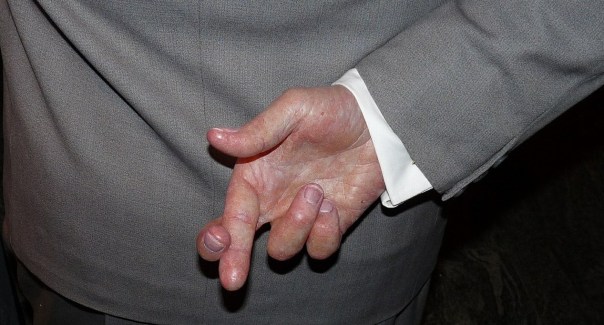
There is a joke I heard a long time ago that pretty much sums up the softball player recruitment and retention process. It goes like this:
This guy dies and meets St. Peter at the Pearly Gates. He’s excited about making it to Heaven, but St. Peter informs him that he is required to give the guy a choice about where he wants to spend eternity – Heaven or Hell. The guy is surprised, but figures rules are rules and goes along with it. St. Peter tells him he will get to check out each, then must make his decision.
He starts with a tour of Heaven. It’s everything he’d heard – angels sitting on clouds playing harps, everything white, everything calm and peaceful. It all seems pleasant enough and the guy is pretty sure what his decision will be.
Then he’s sent to Hell for a tour there. The Devil meets him at the Gate and welcomes him in warmly. As they walk inside the guy sees a huge party going on with plenty of alcohol, loud music and beautiful people dancing, singing and having the time of their lives.
“I’m shocked,” the guy says. “This isn’t what I pictured at all. I was expecting fire, brimstone and torture.”
“Fake news,” the Devil responds. “That’s just Heaven’s propaganda to try to keep humans from having a good time while they’re on Earth. It’s like this all the time.”
The guy joins in the party while he’s there, but pretty soon his time is up and he must go back to Heaven and give St. Peter his decision. “What do you think?” St. Peter asks him.
“Well, no one is more surprised than me but I am going to choose Hell,” the man says.
“Really?” St. Peter asks incredulously. “You realize this is for all eternity and there’s no going back?”
“Yes,” the man replies. “I appreciate all you’ve done but I’ve made my decision and that’s where I want to go.”
“Ok,” St. Peter tells him. “It’s your decision.” So St. Peter proceeds to do all the paperwork and send the guy off to his final destination. Once he walks inside, however, the man is shocked. All he can see in every direction is his worst nightmares – fire, brimstone, people being whipped and tortured in all sorts of horrible and creative ways.
“What is this?!” the guy screams. “Yesterday it was all parties and good times, and now it’s just horror after horror.”
At which point the Devil eyes him slyly and says, “Well, yesterday you were a prospect.”
The reason I recounted that joke is more and more I am hearing stories about players being promised the world by coaches during the tryout and/or recruiting process. But once they get there it’s a completely different stories.
Players are told they will pitch, but they never get time in the circle because they “don’t measure up” to the pitchers who were already there. They’re promised they will get plenty of time at an infield position, or catcher, or wherever but when game time comes – not just bracket play but even pool play or round robin friendlies – that playing time in that position never materializes. They’re told they don’t measure up to the girls in those positions (often coach’s kids, no surprise there) even though those girls are booting balls like they think they’re playing soccer, not fastpitch softball.
Hitters with high batting averages and OPS are being pushed down the lineup or sat on the bench entirely because they “aren’t used to seeing the level of competition” – even though they’ve already proven they can handle that level.
What becomes clear is that some coaches, hopefully a very small minority, are telling players and their families anything they want to hear in the courtship phase so they can round out their teams. They have no actual intention of providing those players with the opportunities they seek. They just want them there in case they need body to fill in should one of the “starters” get sick or go down with an injury.
Of course, they don’t want a weak link, so they want to get the best backups they can find. But they’re talking to those backups like they have a legitimate chance of taking over a starting position when that is never, ever going to happen – either because the coach doesn’t think the new player is as good as the current ones, or he/she is looking at his/her own kids through rose-colored parent glasses, or wants to be “loyal” to the current players, or has some other agenda.
It’s ok to view some players as starters and others as backups. It happens all the time at all levels. All I’m saying is then be honest with the player and her parents about the role she will play on the team.
Don’t tell her she will get pitching time when you have no intention of putting her in the circle. And don’t use one bad outing the first time out as an excuse to never pitch her again. She was probably nervous, having joined a new team and all and wanting badly to prove herself. That goes double if the team is a step or two up from her last team.
Instead, give her a few opportunities and then make your judgment. Anyone who works with analytics will tell you that you need a sufficient amount of data to spot a trend. One game, or a couple of innings, isn’t a sufficient amount of data.
The same goes with positions on the field. Don’t tell a player she will get an opportunity in the infield if you feel your infield is set and you don’t want to change it. Let her know where her opportunities are so she can make an informed decision about whether this is the team for her.
The same goes for getting on the field at all. If you see her as a backup or role player, be up-front about it. For example, if you want a speedy player to primarily be a courtesy or pinch runner, tell her that rather than saying she’ll get an opportunity at second base when you know that’s not true.
If you are honest about a player’s opportunities or role, the player and her parents will have no real cause to complain when what you said she would do is what she ends up doing. It’s only when coaches say anything so they can fill up their rosters that the trouble begins.
And it will begin. Because what you’ll likely find is that players who are promised a world of opportunities but instead get nothing of the kind will leave as soon as they figured out they’ve been had.
That, of course, is also the difference between the joke above and the reality of softball. In the joke, the decision of where to go was forever. In our sport, if your coach doesn’t want to play someone there’s always someone else who could use her particular set of skills.
So tough as it can be, coaches, be honest. In the long run it’s better for everyone. Including your own team. Because as big as the sport may seem, fastpitch softball is also a small, tight-knit community, especially at the local level, and people talk.
You build a reputation as someone who makes promises with no intention of delivering on them and it won’t be long before people are avoiding your team/program like the plague.
Yes, it can be tough to have those conversations, and there is a risk of pushing players away you might like to have. But it will save you a whole lot of drama and upheaval. And that alone may be worth it.
No, Your Head Isn’t Pulling Out

Hang around a softball field even for just a couple of games and you’re likely to hear a well-meaning third base coach tell a hitter “You’re pulling your head out!” The implication is that rather than watching the ball all the way into the hitting zone (or to the bat, which you’re actually unlikely to do due to a concept called angular velocity) the hitter is swinging her neck around in a way that takes her eyes away from the hitting zone.
Seeing the ball for as long as possible IS important, especially as those crafty pitchers develop late-breaking movement pitches. Hitters definitely want to follow the ball in rather than having their eyes looking up the baseline.
But the root cause of the problem isn’t the hitter’s head or neck. They actually have a fairly limited range of motion. The actual problem is that the front shoulder is pulling out, usually in an attempt to get the body to rotate as part of the swing.
Don’t believe me? Try this quick experiment. Stand up in a relaxed position, facing forward. Now, without moving your shoulders try turning your head/neck.
If you’re like me, about the best you can do comfortably is around 90 degrees, which is basically looking straight at the pitcher. It wouldn’t be too difficult from there to continue following the ball.
Now reset to your original position and pull your front shoulder out, allowing your head to go along with it. Now where are you looking? Probably somewhere between the shortstop and the third base line for a right handed hitter.
The only way to follow the ball now is to look back against the direction your shoulder and head are turning. That’s going to be difficult, because your head naturally wants to go in the same direction your torso is turning. Probably has something to do with our primitive survival instincts where we needed to see the danger and be in the best position to react to it.
So the reality is it’s not the head that’s the problem. It’s the front shoulder pulling away.
Of course, it’s not just the ability to see the ball that’s affected. When the front shoulder pulls out the bat’s angle of attack also changes. So instead of driving into the ball, the bat is more likely to deflect it to the opposite field, especially on inside pitches.
The hitter doesn’t fully engage the bat when contact is made either, which affects power. Again tough to drive the bat through the ball effectively when the upper body is pulling away from the ball.
The point is, drills to correct the head pulling out, such as the popular one where the hitter bites down on her jersey, aren’t going to be very effective on their own because you’re treating the symptom rather than the “disease.” In fact, if the front shoulder is pulling out instead of staying in place early in the swing, biting down on the jersey over that shoulder will actually encourage what you’re trying to correct.
The key, instead, is to get hitters to understand the importance of keeping the front shoulder in and driving the hips and then the shoulders, in sequence, around the front side. Take the back side into the ball, rather than pulling the front away, and the head/eyes problem will take care of itself.
Not only that, the hitter will be in a far better position to not only see the ball but attack it with all of her power, at the right time and the right position along its flight path from the pitcher to the plate. It’s a win all the way around.
Understand that when you’re trying to teach a hitter how to rotate the body into the ball it’s easier and more natural to pull the front side out, because that allows her to spin around her center. Just the way you would spin if you were playing “helicopter.”
It takes work and discipline to learn how to drive around the front side instead. But the effort will definitely be worth it.






 Life in the Fastpitch Lane