Author Archives: Ken Krause
Teaching Hitters to Track the Ball More Effectively

Go to any facility where there are teams or individuals hitting in batting cages and sooner or later you’re likely to hear the phrase, “Track the ball all the way into the catcher’s glove.” While it’s doubtful that hitters can actually see the ball hit the bat at the point of contact, the idea of trying to track the ball as long as you can is a good one.
The problem most coaches face when trying to get their hitters to track the ball longer (instead of getting a glimpse then swinging) is that there are no consequences for not doing it. Well, other than not hitting well. But as soon as the coach’s back is turned, hitters are likely to go back to not following the ball all the way to the catcher’s glove.
But, dear blog follower, I have a solution for the dilemma. It actually came up by accident, but I noticed how the pattern had changed so I’m taking credit!

All you need is a batting cage with a tight protective net at the back of it.
For the past few months I’ve been throwing front toss to hitters in a cage that has a very tight net at the back. When one of my errant pitches (and there are many of them) would hit the net, it would bounce back at the hitter with enough velocity to be annoying.

What I noticed was a lot of the hitters would watch the ball all the way to that net so they could get out of the way when the ball bounced back. Some of them then made a game of trying to catch the ball when it popped up off the net, and they got pretty good at it.
Since their first priority was hitting any good pitches I managed to throw, it took some effort to see the ball coming back and catch it.
But today I was in a different cage that didn’t have such a tight net. And that’s where I saw the effect take place.
One of the hitters who liked to catch the ball was still following it to the back screen, even though it wasn’t going to bounce back. She’d built a habit of it in the other cage to the point where she now automatically watches the ball all the way back.
Between that and the Reynaldo drill, which she has become very good at, she is seeing the ball much better – and hitting the heck out of it.
So I guess the lesson here is if you want to encourage your hitters to watch the ball longer, find a nice, tight net and put it behind the plate when you front toss to them. They’ll definitely learn to keep an eye on it all the way in.
(And yes, I know the hitter in the top photo is hitting off a tee. It’s tough to throw front toss and take a picture at the same time. Deal with it.)
Happy New Year! Time to Set New Goals

As John Lennon once sang, another year over, a new one just begun. (Or about to in any case.)
For most of us, the turning of a new year is filled with hope and anticipation. It also marks a great time to at least think about making changes.
We make all the usual resolutions – lose weight, get more exercise/join a gym (not always the same thing) quit smoking, quit or cut back on drinking, learn a language, etc. There’s just something about the finality of one year ending and a new one starting that makes it seem like a great time to do a little personal upgrading.
Of course, as U2 sang, “Nothing changes on New Year’s Day.”
Yet if those changes are going to happen they’re not going to happen magically. You have to make them happen. A big part of this for fastpitch softball players, coaches, and parents revolves around your goals.
Hopefully you’ve written those goals down and posted them where you can see them. Nothing like a visual reminder of where you want to go.
But even if you haven’t you probably know in your heart what they are.
So here’s my question for you: When was the last time you really thought about those goals? And more importantly, do they still apply?
Maybe it’s been a few months, or a year, or more, since you set your original goals. But you’re a different person now than you were then, with additional experiences and knowledge under your belt.
Is what you wanted six months or a year ago the same things you want now? If so, can you add some specificity to them?
For coaches
For example, if you’re a coach perhaps you had a goal of increasing your knowledge about the sport. You took some online classes and attended a couple of coaches clinics, and are now a better coach than you were.
So you’ve achieved that general goal. But are there areas where you could still do better? Perhaps it’s time to change your goals to address those areas.
In my personal experience I always felt like I was good at teaching the technical aspects of the game, along with the rules and what to do in specific situations. But I also felt like I wasn’t as good at the strategic aspects as I should be.
So my goal became to learn more about different strategies and how to apply them and when to apply them. It became a difference-maker for me.
Coaches, make an honest evaluation of your strengths and weaknesses. Where do you tend to lose games or players? How would you attack your team if you were an opposing coach?
Then seek out courses, or a mentor, or some other means that can help you shore up that area.
For players
If you’re a player, think about the major aspects of the game: offense and defense. Then think about the sub-groups.
For offense, you’re basically looking at hitting (including the short game) and baserunning. For defense, it’s fielding and throwing – overhand and underhand for pitchers.
Then break it down further into what you do well and what you don’t. In some cases also take into consideration what you can’t really change and how you can work around it.
Baserunning is a great example. If you’re fast you have a natural advantage. But are you smart?
If you can recognize opportunities sooner, and understand when it’s time to take chances and when it’s time to lay up even if you *think* you can make it, you’ll be a lot more successful. I’ll take average speed with intelligence over blazing speed without a clue pretty much every time.
What if you’re not fast? In fact, what if you’re a complete turtle? There are still things you can do.
Seek out a running coach who specializes in sprinters. He/she may not be able to make you fast, but he/she can probably make you faster than you are now by teaching you how to run better technically and how to condition yourself to run better. Every tenth of a second you can shave off your time going from one base to the next will help.
Then make sure you learn everything there is to know so you’re the smartest baserunner on your team. That’s especially important when you’re the trail runner.
I remember a situation where my team had runners on second and third. Kaity, the runner on second, was one of the slowest on a team that wasn’t too fast to begin with.
A ground ball was hit into the infield and I was entirely focused on getting the runner on third home. I watched the play from the third base coach’s box like a spectator.
Fortunately, Kaity was smart. She didn’t wait for any instructions from me, so when I looked back toward her (finally) she was already standing on third.
I said, “At least one of us was paying attention.” She replied, “Don’t worry Coach, I’ve got your back.”
Over the last six months or a year you’ve probably made many improvements to your game. Think about where you may fall short, or what you’d like to do better, and set that as your new goal.
For parents
Here we’re assuming non-coaching parents. Probably one of the biggest goals you can set for yourself is learning when to keep your mouth shut. Which is probably most of the time.
Just kidding, although in some cases it probably applies. But there are things you can do based on your player’s goals.
For example, if your daughter wants to play in college, and seems like she’s serious about it rather than thinking wishfully about it, start educating yourself about the whole recruiting process. It can be beastly, so the sooner you learn about it the better off you’ll be (and the less likely you are to make a critical mistake).
Step one is to talk to the parents of older players who have already been recruited. Find out what they did, what helped them the most, and what mistakes they made. Softball parents who have been through it can be an invaluable and impartial resource to guide you through it.
There are also tons of resources online. Some are better than others, and some are really just blatant commercials to buy their services.
That’s why you probably want to talk with other parents or coaches who have gone through the process first to give you some background. But those outside resources can help you make better decisions, especially if your player isn’t a can’t-miss P5 prospect.
Outside of that, learning more about the game and pieces of it related to what your player does can help you make better decisions when it comes to selecting teams and private coaches if you so choose. These days softball is a big investment so you want to be sure your money is being spent wisely.
As with players and coaches, think about what’s most important for you to improve on this year and set it as a goal. It’ll improve not only your experience but your player’s as well.
Keep moving forward
Always remember that goals should be concrete and realistic. Not necessarily easily achievable, but achievable.
Once you’ve set those goals, take the time (like now) to periodically evaluate them to determine if you’ve achieved them or even if you want to achieve them. Then adjust your goals accordingly.
The more you keep your smaller goals focused on achieving the bigger ones, the better chance you’ll have of ending up where you want to end up.
Happy New Year to all, and let’s make it a good one!
Photo by cottonbro studio on Pexels.com
Brrrr It’s Cold; Take Advantage of It

As I write this we are not only in the beginning of the Christmas/New Year holiday vortex but also an actual polar vortex. Winter Storm Elliott is hammering much of the U.S., including parts that aren’t used to it, with snow, gale force winds, and bitter cold of the type that makes you run right back inside as soon as you feel it.

It’s so bad where I live that the facility I usually work out of has been closed for the last couple of days. No sense having people risk their health and/or their lives just to come to a lesson when there are no important games on the immediate horizon.
So does that mean all softball-related activities must come to a dead stop? Hardly.
In fact, times like this offer the perfect opportunity to really dig into mechanics and the mental game to work on the little things that can make a huge difference in a player’s overall performance.
It’s like when a player comes to a lesson and says they are feeling a little ill, or tired, or have an injury. I light up – not at their misfortune but at the chance to go deeper in aspects of the game that they might not want to spend so much time on ordinarily.
Not because it’s not necessary, but because it can be really boring to them. When it’s all they can do, however, those things become a lot more interesting.
So while it’s bitterly cold or snowy and you’re stuck at home (or even if it’s bright, sunny, and balmy for that matter) here are a few things to work on that don’t require a cage, a bat, a regular softball, or even much space.
Quick Pitching Release
I have yet to meet a pitcher who doesn’t want to be faster (including a few pretty famous ones). While speed alone isn’t everything, the more you have the better everything else seems to go. And the better you can get by until you can improve other aspects of your game.
One of the keys to speed is the ability to transfer as much of the energy the pitcher has generated through leg drive as possible into the ball. That requires a lightning-quick yet relaxed pronation of the forearm at release.
Building that pronation doesn’t require a lot of space or fancy equipment. You can:
- Throw a rolled up pair of socks into a wall or mirror
- Throw a plyo ball, foam ball, or regular ball into a net
- Walk around the house practicing releases, Ks, and full circles with nothing in your hand
- Perform various exercises (such as squeezing a stress ball) to build your grip strength
Focusing on that one little bit can pay huge dividends the next time you go to pitch at a full distance.
Leg/Body Drive and Timing Off the Rubber
Don’t worry non-pitchers, we’re getting to you. But this is another area that’s often under-trained when pitchers are left on their own.
A lot of pitchers have trouble generating effective leg/body drive off the pitching rubber. After they load they will start to reach forward with their stride (glove-side) leg while essentially standing on the drive (throwing-side) leg.
This type of movement is inefficient, even if it’s done quickly. To generate the kind of energy needed to throw hard you have to get the hips driving forward before the stride leg has gone out fully.
In other words, pitchers have to learn to use their legs together instead of one at a time. Fortunately, this is the same type of leg action used when you skip (or for you multi-sport athletes go for a layup).

Find a few feet of space and skip. Feel how the legs are working. Then try doing the same thing but adding a pitching motion to it.
Take video so you can see if you’re truly getting some spring in your step or if you’re just standing on the pitching rubber as the stride leg goes out.
You can also just stand on the ball of the foot of your drive leg, push forward, then “catch” yourself with your stride leg. This should all occur in a quick, short motion rather than trying to get out far.
Feel the legs working together, then start extending it until you can do it full speed, just as you would in a game.
Swing Mechanics
You probably know from endless hours of lessons what you’re supposed to do at each phase of the swing. But are you actually doing those things?
Here’s a way to find out. Set yourself up in front of a full-length mirror and watch yourself take a swing. If space is limited substitute a curling iron or a short pool noodle for the bat.
Go through it slowly and see what position your body is in at each phase. Check to see that you are:
- Getting positive movement forward
- Leading with your hips
- Getting separation between your hips and shoulders
- Keeping your hands up instead of dropping them to launch the bat
- Driving your back side around your front side
Do it slowly, over and over, checking each aspect. Then do it a little faster, then a little faster, each time checking all those aspects.
While this doesn’t do much for your timing, it ensures that if you are on time you’ll greatly increase your chances of hitting the ball hard.
Ball Transfers
While this applies to any position, it especially applies to catchers. The faster you can transfer the ball from your glove to your throwing hand, the sooner you can get the ball on its way so you can throw out even the fastest of rabbits.

This is a skill that can be practiced in a bedroom or living room.
Start out barehanded, with the ball in your glove hand. Then transfer it to your throwing hand by slamming it from one to the other.
Then add a glove, doing the same thing. Do it over and over, each time trying to go a little faster.
Before you know it you’ll be able to move that ball from one hand to the other with the best of them.
Mental Game
Ask any coach or player how important the mental game is and they’ll likely tell you it’s hugely important. Then ask them what percentage of their practice time is spent on the mental game and, if they’re honest, they will probably tell you little or none.
That’s because physical practice seems like practice. Mental game practice feels like you missed something you should have been working on.
This is your chance. While you’re stuck inside, do some visualization, seeing yourself making great plays or slamming great hits.
Work on your positive self-talk. A kind word from yourself at the right time can work wonders.
Look online for various stress-relieving techniques you can use during a game. Examples include:
- Squeezing a stress ball or other device
- Grabbing a handful of dirt, squeezing it tightly, then throwing it away
- Inhaling deeply through your nose and blowing the air out slowly through your mouth
- Washing your hands with water
- Creating a pre-pitch routine or ritual
Turn on loud music or a talking podcast then try to do something unrelated such as a reading or math problems. It’s amazing what this exercise can do for your ability to focus.
Time invested now in your mental game can pay big dividends when it’s actually time to play.
No Justification Needed
Really, these things aren’t just for bad weather. They are things you should be doing any time if you want to get better.
But bad weather provides the perfect opportunity because there is little else you can do.
Don’t waste this chance. Get on it now and you’ll find you’re than much farther ahead in your goals once you hit the field again.
Photo by Ir Solyanaya on Pexels.com
6 Tips for More Successful Bunts

Most of my time as a fastpitch softball hitting instructor is spent teaching hitters how to drive the ball to – or over – the fence. Yet at some point I will also have each hitter work on laying down bunts.
Now, you might be surprised at that statement given some of my past post about bunting. But those relate to the sacrifice bunt, especially the sac bunts many teams lay down automatically with a runner on first and no outs. (The short version, if you don’t want to follow the link, is it’s a waste of an out.)
The reality is bunting, especially bunting for a hit, still has an important place in our sport. Which means when you’re called upon to do it, you’d better be able to get the bunt down.
That’s why I am so surprised at how poorly it seems to be taught these days. When I ask a hitting student to bunt I see all sorts of easily correctable flaws that are going to prevent success.
Since I doubt any coaches or parents are purposely training their players to fail, I can only conclude that they simply don’t know any better. I’m also pretty sure that, as often happens, they are simply passing along whatever bad techniques they were taught 20 or more years ago.
So to help with this issue I’ve put together this little guide. Follow these tips and you’ll find your players will be better equipped to lay one down when the time comes.
Stance (and getting into it)
A good bunt starts with a stable platform. After all, it’s a lot easier to hit a rapidly moving object if you’re not fighting to maintain your balance.
The mistake many young hitters make (and coaches don’t correct) is how hitters get into their bunting stance. As in the hitters will pivot on the balls of both feet to get turned forward.
The problem with that is the feet will then be in a straight line, one behind the other, instead of spread out side-to-side. To correct that issue, have the hitters pivot on the ball of the back foot and the HEEL of the front foot.
Now there is a little space between them, giving hitters the stability they need to work the bat more effectively.
BONUS TIP: If you are bunting for a hit, do not tell the hitter to move to the front of the box. That’s a dead giveaway as to what your strategy is, which really takes away the element of surprise you’re probably counting on.
Yes, I know moving up in the box improves the angles and gives the bunt a better chance of staying fair. But you don’t have to be Hall of Fame coach Margie Wright to figure out if the hitter moves up she’s bunting. At which point the defense should move their third baseman to 10 feet away from the plate so she can try to catch the ball in the air for the out – or a double play.
Grip
The most commonly taught grip for bunting seems to be to move the top hand up to the top of the handle and then have hitters pinch the bat between their thumb and index finger. This is a grip that comes from baseball – especially old-time Major League Baseball.
There are several problems with this grip, not the least of which there is a huge disparity in the hand strength between a 25 to 40 year old man and an 8 to 22 year old girl. Plus, -3 wood bats are much heavier and denser than -10 composite or aluminum bats, so they can absorb the impact of the ball more effectively.
Then there’s the issue of a softball weighing at least 30% more than a baseball (6.5 to 7 oz. versus 5 to 5.25 oz.). Combine a weaker hand, a lighter, less dense bat, and a heavier ball and you’re going to end up with a lot more balls that get deflect foul.
A better, more effective grip is to grab the bat with all the fingers – the same way you hold it to swing for the fences, just further up the bat. Actually, I prefer both hands up the bat, but the bottom hand can be as close or far away as the hitter is comfortable.
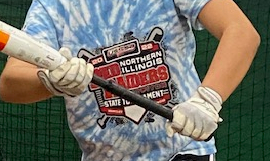
To prove its effectiveness, have a hitter hold the bat in the pinch grip and then use your hand to smack the barrel of the bat. It moves back a lot.
Now try the same thing with a full-on grip. You’re more in danger of hurting your hand than moving the bat much.
But doesn’t that put the fingers at risk of getting smashed by an inside pitch you ask? Not really, as you’ll see in the next sections.
Contact area
Another common mistake I see with hitters is that they try to use the sweet spot of the bat to make contact with the ball when they bunt.
I get it. That’s where they’re taught to hit the ball when they swing away so it’s a natural assumption.
Yet as I tell them, if their bat costs $400, $350 of that cost is in the sweet spot. It’s designed to send the ball as far as it can, and a lot of research and development money goes into making that happen.
But you don’t want the bunt going far. You want it to roll a few feet away from the catcher and then stop so it’s harder for the pitcher and/or infielders to field.
To get that effect, you want to use the $10 part of the bat, i.e., the end of the bat. That’s a major dead spot (as anyone who has felt the bees in their hands after making contact there on a full swing can tell you).

Hit it off the end of the bat – all things being equal – and the ball won’t go nearly as far. It’s also the point that’s farthest away from the top hand’s fingers, so if you’re using the end of the bat the top hand is in no danger of being hit. It’s a win-win.
Contact technique
Then there is the issue of how to make contact with the ball.
Many fastpitch softball hitters, even good ones, tend to punch at the ball with the bat as it comes in. Again, you don’t have to be Hall of Famer Margie Wright to figure out that punching at the ball will add to the power of the impact, making the ball go farther – even if you hit it with the dead end.
Instead of punching at it, hitters should pull back slightly to “receive the ball.” By giving a little they soften the impact and cause the ball to come off the bat gently.
You can explain this to players who play other sports by talking about how they receive a pass. Soccer players pull their foot back; hockey players pull their sticks back; basketball players pull their hands back as the ball comes in. At least they should.
Of course, this is easier said than done with bunting. Everything players have been taught with hitting to this point revolves around driving the bat into contact.
Pulling it away as the ball comes in will be very foreign to them. But with practice they can learn to do it.
One of the best ways to practice this is to draw a circle in the dirt, or lay down some ribbon or a Hula Hoop a few feet away from them and have them try to get the ball to go into (and stay) in the circle. They’ll figure out how to soften it really quickly.
Bat placement in the zone
Untrained hitters will often try to cover the entire width of the plate with their bats. That’s fine if the pitch is outside. But if it’s inside it’s going to be really tough to hit an inside pitch with the end of the bat.
Instead, have them cover roughly half the plate. That way if it’s inside they can pull the hands in a little. And if it’s outside they can stab the bat out to get the outside pitch, with the added benefit they will probably put it up the first base line instead of hitting it at the charging third baseman.
It also helps keep their top hand safer. As you can see, in this set-up if the ball is coming for the top hand it’s also coming for the torso, so the hitter has extra incentive to get out of the way.
You’ll also notice the bat head is higher than the handle. That’s to help hitters hit the top of the ball.
A flat bat, or worse one where the barrel is lower than the handle, is most likely to end up in a pop-up. You don’t want that, especially if you have a bunt-and-run on with a runner on base.
An upward angle, even a slight one, will make it more likely your hitters will get the ball on the ground quickly when it’s hit, and will make it easier for hitters to control where it goes.
Where to direct the bunt
Some of this is a matter of the level of play you’re facing. If your team’s opponents are not particularly skilled, any sort of bunt anywhere is likely to result in success.
A bunt up the third base line may be most effective, too, because it’s the longest throw. (A tip of the cap to Coach JD Koziarski for reminding me of that.)
At higher levels of play, however, the third base line is the worst place to drop the bunt. Third baseman make their bones on their ability to field a bunt and throw out the runner, and they practice that skill constantly.
Pitchers and first basement do not usually spend that kind of time practicing to field bunts, however. So the better strategy is to bunt either at the pitcher (and hope she chucks the throw into right field) or up the first base line where no one may get to it – especially if the first baseman is playing back.
Bunting is still necessary
Yes, all the emphasis for hitting these days is on exit speeds and launch angles. But there is still a place for bunting in our sport, so it’s important to teach optimal technique.
And that’s not just for the rabbits or average hitters either. EVERY hitter, even the big boppers, should know how to bunt well.
You don’t want to find out in the middle of a tight game that your best hitters are a disaster at bunting. And for their sake, someday they may be at a practice where the team is divided into two groups and they compete against each other to see which one gets the most bunts down. You don’t want any of them to drag their teams down.
So teach them all how to bunt properly. It’ll open up new offensive possibilities.
Stupid Things Coaches Say (But Shouldn’t)

People say stupid things every day in all walks of life. All you have to do is watch the news or go onto social media or even listen to conversations happening around you in a semi-crowded area and I guarantee within five minutes you’ll find something that makes you slap your forehead and shudder in disbelief.

Fastpitch softball coaches are not immune to this phenomenon. We all say stupid things from time to time.
Sometimes it’s from frustration, like asking a player if their parents are first cousins. Sometimes it’s because we haven’t updated our information since the last century, like telling hitters to “squish the bug” or “throw your hands at the ball.” Sometimes, like telling a pitcher “just throw strikes,” it’s because we simply don’t know what else to say.
I’m not talking about any of those instances here. What we’re going to cover today is the stuff where coaches should know better but they say those things anyway because they just don’t bother to think before they speak. Starting with…
You Have to Throw 60 mph to Pitch on Varsity
The other day I was talking to one of my pitching students and she passed along a statement her school’s varsity coach had made. He/she looked her right in the eye and said, “To pitch on varsity you have throw 60 miles an hour.”
Now, that’s a great aspirational goal. But what if no one in the school can throw 60 mph? Does that mean the coach is going to cancel the season?
Of course not. There are plenty of high school varsity pitchers who don’t throw 60 mph.
In fact, according to this blog post from Radar Sports, the average 17 to 18 year old (the age of high school juniors and seniors) throws 54 to 57 mph. While this chart from Fastpitcher.com places the average 18 year old at 55-59 mph and the average college pitcher at 68 to 65 mph.
From my own observation (with use of my Pocket Radar Smart Coach) I can also tell you that many college pitchers are actually on the lower, even sub-60, end of that spectrum. Watch enough games on TV and you’ll see some at the D1 level who rarely break 60 mph.
But that’s ok because last time I checked games are not decided based on which pitcher throws the most pitches the fastest. The outcomes are determined by which team can hold the other to fewer runs than their own team scores.
So a pitcher who may not be blazingly fast, but who can hit her spots and make the ball move on-command will often do better than one who throw hard but grooves everything down the middle.
That’s not to say speed isn’t important. It is, as I point out here.
But honestly, I’ll take a pitcher who consistently can throw eight-pitch innings over one who is racking up more Ks but taking substantially more pitches to do it. Especially on a hot, humid day.
We Lost Because Our Bench Was Too Quiet
This is a statement that often pops up in the post-game speech. It’s usually said when the coach’s favorites under-performed and the coach didn’t make the necessary adjustments (i.e., take those kids out and put someone else in).
Of all the stupid statement, this one has to be the stupidest on several levels in my opinion. I mean really? You lost because the bench players, who have no physical effect on the game whatsoever, didn’t make enough noise?

First of all, the players on the field shouldn’t require the people in the dugout to make noise in order for them to get “up” for the game. That’s something that should happen automatically.
Playing is a privilege, and it’s up to every player to get themselves motivated to play the game.
Secondly, it’s one thing if there is a lot of natural team chemistry and the dugout players are excited and supportive of their teammates. It’s another if the team is filled with cliques and the “noise” is an artificial event the bench players are being forced to create, perhaps to cover up for the fact that their team isn’t actually very good.
You lose because you make too many errors and let in too many runs. You lose because you don’t score enough runs. You lose because you didn’t do the things you needed to win on the field. That’s it.
Blaming the bench for being too quiet is like blaming the heat for killing your garden after you failed to water it all week. It’s just an excuse to divert attention from the real problem.
The Umpire Cost Us the Game
Blaming the umpire for a loss is a convenient excuse, and often an emotional reaction to a single incident. But let’s get real.
Even if the game was decided on a blown call in the bottom of the seventh, that’s not the sole (or even main) reason your team lost, Coach.
Your team had seven innings to put up more runs. If they had put up one more run in each of those innings you would have had a seven-run cushion and you’d be laughing about that one blown call right now.
Not to mention if they’d put up one more run in three of those innings you would still have had a lead that took the pressure off your defense and made that one play far less important.
Another thing your team could have done was not give up a couple of unearned runs by bobbling a simple ground ball or dropping a fly ball. Or your outfielder could have prevented the ball from getting by her instead of going for a spectacular diving catch when none was required to help keep some runs off the board.
Perhaps sending the runner home from third when the ball was clearly ahead of her would have kept a big inning going instead of killing it. Who knows how many more runs might have been scored?
The reality is no game comes down to one play. There were many plays prior to that one that could have changed the outcome.
Instead of fixating on one bad call, think of what you can do to ensure the next bad call doesn’t decide the outcome of that game.
I’ve Been Doing Things My Way for 20 Years
This one is often heard from coaches who would rather cling to their old ways of teaching the game than actually learn something new.
Yes, change can be hard at times. It can be even harder if you have to admit that the way you’ve been doing things may not have been the best way. None of us wants to look like we’ve been wrong for years.
But it’s not about being wrong before. It’s about being willing to adjust what you’re teaching when a better way comes along.
It’s one thing if you didn’t know there was a better way, or you misunderstood something you thought you know. Heck, I’ve discovered a whole host of things I was teaching in various aspects of the game that were sub-optimal or just flat-out wrong.
But when confronted with new and better information, I was willing to make that change. No need to defend the old ways.
Think about what you would want in a heart surgeon. Do you want someone who is still operating the way they did in 2002, or someone who has continued to learn and incorporate new techniques, new approaches, new equipment, etc. into their procedures?
I know which one I would choose.
It’s the same for coaches. There has never been as much research into what the most effective strategies and techniques for winning in fastpitch softball are.
We have statistical data that demonstrates why automatically sacrifice bunting when you get a runner on first, especially in this day and age of super hot bats and awesome hitters, will reduce your run production instead of enhance it. (Yes, these are baseball statistics but softball has done similar analytics and come to the same conclusion.)
We have measurable data that shows the pitch locations that produce the most swings and misses for each type of pitch.
We have technology that measures bat paths and arm deceleration speeds to help optimize player performance.
None of that was commonly available 20 years ago. So why not take advantage of it now?

If you’re still doing things the way you always did, you’re not paying attention and the game is leaving you behind. Open your mind to new possibilities.
Ultimately you may still reject some or all of what you hear. But at least you’re doing it as an informed choice rather than just a matter of stubborn habit.
Be Smart
Those are just a few examples of the stupid things coaches say. What have you heard, and why does it drive you crazy?
Don’t Pay a Coach to Watch Your Daughter Practice

The other day I was speaking with my friend James Clark (Coach James), a top-level pitching coach from Indiana. He is the owner and chief instructor at United Pitching Academy.
We were talking about some of the challenges of working with pitchers when he said something I thought was quite profound, and quite accurate.
James said, “Parents really shouldn’t be paying me to watch their daughter practice.”
I totally agree.
What he was talking about was the girl who comes in for a lesson, is given some homework to do to help her get better, then doesn’t pick up a ball again until her next lesson.
I always tell players and their parents that the time they spend with me is the least important part of the whole process. It’s the time they spend in-between visits to me that will determine their level of success.
The reason is they can really dig in and put in the quality reps, doing something specific over and over until they not only get it right, but can’t get it wrong. That’s not going to happen at a lesson.
Or at least it shouldn’t, which brings us back to today’s topic. If a player doesn’t work on whatever skill she’s supposed to work on in-between visits to the coach (and that includes team practice too, not just private lessons), she’s going to have to do it sometime.
So rather than mastering the skill on her own she’s going to have to try to learn it while she’s with the coach. Which (in the case of private lessons) the parents are essentially paying the coach to watch their daughter practice skills that already should have been acquired, or at least well on their way to being acquired.
That is a slow slog, and not a very efficient use of anyone’s time or the parents’ money.
So what should the coach be doing instead? Tweaking any little aspects of current skills that might not be where they should be then moving on to new concepts that will help a player continue to grow.
Let’s use the example of a beginning pitcher. The coach teaches her how to lead the upper arm down from the K position in a lesson, how to keep it relaxed, and how to let the ball go with a pronating motion (turning her hand inward) to maximize velocity.
At first she’s probably going to be a bit awkward with it. But as she goes she starts relaxing and getting better releases. Then the lesson is over.
There are two things that can happen from here. One is that she goes home, mindfully works on the things she learned in the lesson, and comes back to the next lesson with that motion looking pretty natural.
The other is she doesn’t work on it at all, or “pitches” during the week but doesn’t pay attention to HOW she’s doing, and then comes back to her lesson the following week with all the same issues she had at the start of the previous lesson. So the coach has to go over all the same material again, because what I described from the K position is pretty foundational to becoming a quality pitcher.
In the first case, where she has the K motion down pretty well, the coach moves her into full circles or other drills that will help her continue to advance her skills and get her ready to compete. In the second case, the coach is essentially paid to watch her practice to try to get that motion down.
Nothing new is introduced because you shouldn’t move on to part two until you can reliably execute part one.
Where it really becomes a problem is when the coach is being paid to watch the player practice the same things over and over. Every lesson (or in the case of a team every practice) that’s spent on going over the same thing is time that’s not being spent learning new or more advanced concepts.
It doesn’t take long until the player is pretty far behind where she ought to be. Then both player and parent are wondering why they’re spending all this time and money and not getting better.
It would be like a painter working on a painting all day. Then overnight someone covers it with white paint and she has to do it again. It won’t take long before she’s frustrated and wondering if it’s even worth doing.

Coach James is absolutely right. Don’t pay to have your coach watch your daughter practice.
Instead, make sure she’s practicing during the week so the coach can continue to help her move forward. It’s a far better investment for all involved.
Photo by Victor Freitas on Pexels.com
Tough Choice Leads to Sabrina Di Vito’s NLI
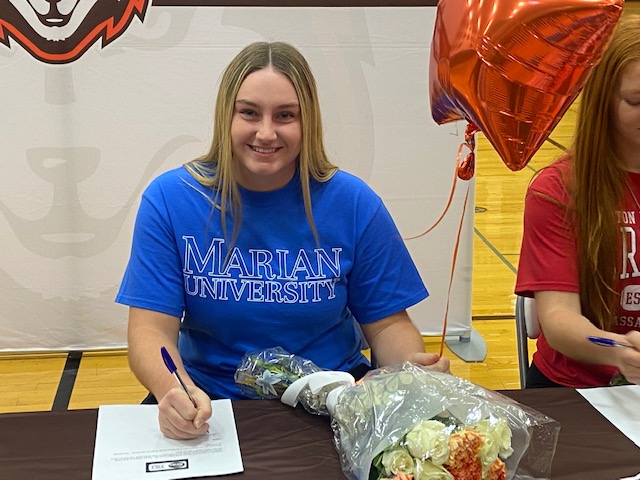
The path to success isn’t always an easy or smooth one. And sometimes you have to make some tough choices along that path to achieve your goals.
That’s what happened with Sabrina Di Vito a few years ago. The decision definitely paid off last week when she signed her National Letter of Intent (NLI) to continue her softball career with Marian University in Wisconsin. But it didn’t come without some soul-searching.
Sabrina is a talented athlete who loves both fastpitch softball and basketball. And is very good at both.
While that is a plus in most cases – I personally believe in the multi-sports athlete – it can be a little tough to play basketball at a high level and still find all the time needed to develop as a pitcher.
I’ve worked with Sabrina since she was 10. Our typical pattern was she would do lessons in the spring, summer, and early fall. Then basketball would kick in and I wouldn’t see her again until the following spring.
She would pitch well during the season, but had pretty much hit a plateau in terms of greater development. For example, she could throw a fastball with good speed, along with a changeup, and drop, but it was tough to move beyond those three pitches because the main focus was making sure she was ready to perform that weekend.
Then one day at the end of the summer before her freshman year Sabrina and her mom/catching partner Brandy told me that they had come to a conclusion: as much as Sabrina loved basketball and would continue to play, they had decided to prioritize softball which meant I would be seeing her throughout the winter as well.

Needless to say I was delighted, because I felt like we’d finally have the chance to find out just how good Sabrina could be. I knew she’d set aside time not just for the lessons but for the homework that would come with it. That’s just who she is.
Well, it didn’t take long for that decision to start paying off. Sabrina started gaining more speed, and added a curve and rise to her arsenal of pitches.
And suddenly she started turning into a pitcher who could dominate hitters on a regular basis. In fact, in 2022 she set the single-season record for most wins by a softball pitcher at her high school – a school that has been around for more than 50 years!
She did very well in travel ball this summer too as part of a pitching troika that helped her Illinois Sluggers-Harms team win a lot of ballgames. Then this fall when two of three legs of that pitching stool were injured for a bit, she stepped up again as the workhorse, throwing game after game and getting stronger as she went.
All of which contributed to a lot of fun culminating in her signing her NLI.
The choice of school, by the way, was driven by the best reasoning too. Sabrina wanted to play college softball, but when she’s done playing she wants to be a nurse.
Those two goals are often mutually exclusive, unfortunately, due to the workload of a nursing program and the demands of college softball. But Marian is known for its willingness to work around the nursing schedule, enabling deserving players like Sabrina to continue to play as they pursue their career goals.
One other fun fact about Sabrina is how unshakably even-keeled she is – an awesome trait for a pitcher. It’s not just how when I give her a piece of instruction she just smiles, says ok, and does it.
Sometimes, just to see if I can get a rise out of her, I will say something that is, shall we say, more like what an “old school” type of coach might say.
Doesn’t bother her in the least. She gets the best of me on that every time by just saying “ok” or “uh-huh” and going on about her business.

In fact I’m told she finds it funny so at least I’m keeping her amused! So it’s a good thing she’s very self-motivated to be the best she can be.
In any case, congratulations Sabrina on securing your ticket to the next level. I’m glad when you reached the fork in the road you chose the one that led to softball.
Persistence Pays Off as Jenna Kosnoff Signs Her NLI

Today’s story is for every fastpitch softball player who may be a little undersized (for now), or perhaps struggles a bit to get all the body parts moving properly, or somehow doesn’t quite measure up to her teammates at the moment. It shows what you can do if you want it bad enough.
First though, I don’t want to bury the lede: earlier this week Jenna Kosnoff signed her national letter of intent to play for Maryville University in St. Louis. She will be pitching for them, yes, but when she’s not pitching she will likely play the field because she has a great glove and a powerful bat.

I’ve worked with Jenna since she was 10 years old. We started out with pitching, then added hitting later at her request.
Over the last few years she has racked up a lot of wins and a lot of strikeouts as a pitcher, and consistently delivered an amazingly high batting average, on base percentage, and on base plus slugging (OPS) in PGF tournaments. If you were to watch her play today it would be easy to say that she is clearly hugely talented so it’s no wonder she’s doing all that.
But the reality is it wasn’t that long ago that she was struggling great. When I first started working with her Jenna was a scrawny little thing with sticks for arms and legs. You would wonder if she would blow away if a stiff breeze came up.
Jenna never let her size define her, however. She was always determined to be a top player – to the point her dad Gary would tell me when they got home from a lesson she would often go down to their basement or in the garage to continue working on whatever we’d just gone over.

One of the things Jenna struggled with was turning the ball back toward second base and pushing it down the back side of the circle. For those who don’t know that is a weak position for the arm, and one that totally eliminates any chance of getting acceleration and whip into release.
I was convinced that if she could get that corrected she’d start throwing a lot harder, so I finally recommended we shut her down completely from pitching (in the middle of the season) so she could focus on that movement. At that time Jenna was the #4 pitcher on a team where at least two of the others are also going to play college ball so it wasn’t much of a loss for the team. Her coach may have even been relieved because he was nice enough to give her innings even when she was under-performing.
It took about four months as I recall to make the fix. A lot of our lessons at that time never got past the K position. But Jenna never gave up or complained. She just worked it and worked it until we could see she was getting great arm bend and lag.
And just as I had said at the beginning of the process, her speed started going up. Her movement pitches also started working better, and she climbed the ladder to become a #1 pitcher who now throws in the low 60s.
To be honest, it wasn’t just the mechanics change. Jenna grew quite a bit too and worked out like a fiend to develop muscle.
She’s still on the slim side but her arms and legs no longer look like sticks. Still, without the mechanics change, and her determination to make it, I don’t think she’d be where she is today.
The other thing she did was learn to put everything she has into every pitch and every swing. When I went out to watch her play in one of her early games I saw her pitching with an arc – something she didn’t do in lessons.

She had to overcome the mentality of being careful to “just throw strikes.” Now, though, she’s the poster child for giving it all you’ve got every time.
So congratulations to Jenna on this tremendous accomplishment. She has definitely earned it.
And for all of you out there right now who may be being told you’re not enough, keep working. Good things will happen.
No Need to Paint the Corners with a Changeup

Recently my friend and fellow pitching coach Linda Lensch, a trainer with the NJ Ruthless and owner of Greased Lightning Fastpitch High Performance Instruction LLC attended an online presentation about how new technologies are improving and changing the game.
Linda was kind enough to share the PowerPoint of the presentation with a few of us pitching coaches. Included was some data, presented by Florida State assistant coach Troy Cameron, that came out of pitching tracking by YakkerTech at five D1 schools.
One of the things I found most interesting was the heat map on changeup locations and results, which you can see on the far left.

Notice how both the vast majority of pitch locations AND the vast majority of whiffs (swings and misses) aren’t on the corners. Instead, they are dead red.
I have been preaching this for years based on my own observations and experience, and have heard many college coaches say the same thing. You don’t have to be clever or try to paint the corners if you have an effective changeup. Just throw it down the middle, mid-thigh-high or below, and you’ll get the desired effect – a whiff.
Now we have the data to prove it.
I’ll say it again a little louder for those in the back, and for those who have been coaching he same way for 20 years and don’t like new information: YOU DON’T NEED TO PAINT THE CORNERS WITH A CHANGEUP. JUST THROW IT DEAD RED.
What does this mean from a practical standpoint?
For one, pitchers can quit wasting time trying to lean how to paint the corners with a changeup and instead focus their time on disguising the fact that it IS a changeup.
Most pitchers start out learning to throw different pitches down the middle, and then once they can do that will move on to moving them out. In this case, once a pitcher can throw it low and slow without giving it away in her motion she can move on to other pitches.
It also means coaches can quit insisting until their hair is on fire that their pitchers must be able to spot their changeups inside and out. Less stress for the pitcher and the pitch caller.

The pitchers’ parents can also relax in the stands if they see their daughters throwing changeups down the middle. It’s fine, dude or dudette. That’s where it’s most effective.
Why is it most effective down the middle? Now we get into speculation and theories, but I have a pretty good suspicion on that topic based on 20+ years of teaching that pitch.
The whole point of a changeup is to either induce a hitter to swing well ahead of the ball arriving at the plate or confuse her on what she’s seeing to the point where she lets the pitch go by before she can process it. The way you do that is by bringing the body and arm at one speed while having the ball travel at a different, slower speed. Easier said than done, by the way.
It’s like a reverse pitching machine. With a machine, the feeder’s arm usually moves glacially slow (and may even fumble putting the ball in the chute) while the pitch is delivered at 55, 60, 65, etc. mph. The arm speed and the pitch speed don’t match up, so the hitter is perpetually behind the pitch unless she know the keys to hitting off a machine.
With the changeup the opposite is true. The body and especially the arm are traveling through space at a rate of speed that matches the pitcher’s fastest pitch (usually the fastball), but the design of the pitch allows it to be delivered 12-15 mph slower than the fastest pitch without any visible clues that it will be slower.
That’s why you see hitters’ knees buckle when a well-thrown change comes at them. The visual clues and the reality don’t match up and they contort themselves into a pretzel trying to adjust on the fly.

And if you can do that as a pitcher, down the middle works just fine. In fact it’s probably preferable because it can fool umpires too, so why not make it easier for them to call?
Now, before anyone starts saying “Oh, that only works at the lower levels” remember where this data comes from. It comes from five colleges that tracked every pitch of their pitchers and their opponents during home games.
And since these are not cheap systems by any means, you can bet that these were some pretty big schools, i.e., ones you see on TV all the time. They’re the only ones with the budgets to afford it.
So if it works at that level, you can be pretty sure it will work at yours.
The data doesn’t lie. It’s all there in black and white and red.
Quit wasting time focusing on painting the corners with changeups and just turn your pitchers loose to deliver them where they will be most effective based on the data: dead red.
You’ll get better results. And your pitchers will have one less thing to worry about.
What Undefeated Records and Huge Run Differentials Really Say About Your Team

You see it just about every weekend in social media. “It” is the excited posts from parents describing their kids’ teams’ great weekend of fastpitch softball.
“Went 6-0 this weekend,” it will start, then go on to add, “And we outscored our opponents 64-3! This team is simply amazing.”
I get that you’re happy the team did so well. But in my mind, going 6-0 with a 64-3 run differential isn’t something to brag about. Instead, you should be embarrassed because clearly your team was in the wrong tournament for their ability level.
The reality is if your daughter’s team is ripping through the competition like that it’s not good for anyone. Even for your daughter’s team.
Yes, I get it that it’s fun to win. But remember that iron is forged in fire, and steel is honed by steel, not foam. If you want to get stronger you have to stress your muscles, not go through “exercise programs” where you don’t break a sweat.
So in order to get better, your team must play opponents who can place them at a risk of losing – not opponents they can tear through like a hot knife through butter. Sure, you may not end up with as much hardware to gather dust in your house.
But you will test yourself and get better as a result. An overall winning percentage of 60% to 70% is the sweet spot.
Of course, there are a couple of reasons teams find themselves playing weaker competition than they should.
Sometimes, especially with new and/or younger teams, there are a lot of unknowns and coaches aren’t sure how good they’re going to be. So the coaches plan a tournament schedule that protects the team against getting discouraged by having their heads handed to them every weekend if it turns out they’re not so hot.
But then it turns out the players are actually as good as the coaching staff thought they were during tryouts and there was no need to play that lower-level schedule. They are stuck with the schedule, however, so they end up playing a level below where they should be.
There’s nothing malicious there, just an unfortunate circumstance that resulted from a lot of unknowns. Good coaches will recognize this disparity and want to move their teams to a more appropriate level of play as quickly as possible.
(Unfortunately, they may find resistance from some of the parents who have fallen in love with winning and don’t want to “risk” losing more. If you’re one of those parents, stop complaining and instead thank your coach for wanting to help your daughter get better.)

The other option is more nefarious. In this case, the coaches knew they had a very good team but purposely opted to play a lower-level schedule so they could win more (and look better).
These types of teams/coaches are typically referred to as “trophy hunters.” They are where they are specifically so they can go 6-0 (or at worst 5-1) every weekend while racking up a 64-3 run differential.
Then when their kids end up in a more competitive softball situation and little Suzy is on the bench the parents can’t understand why the coach doesn’t recognize how great little Suzy is.
No matter which way you find yourself there, you don’t want to stay there.
In reality you don’t want your daughter’s team ripping through the competition week after week. You want it, and especially your daughter, to be challenged every week.
That’s how she will get better. And if the team has to struggle to win, rather than dominating all weekend, the win itself will be that much sweeter.
But if all you care about is winning, then yeah, leave the team that’s trying to better itself by playing better competition and find a trophy hunter. Lord knows there are plenty of those around.
The bottom line is that going undefeated every weekend and posting a huge run differential is nothing to write home about – or write on social media about. Especially if your daughter has aspirations of playing college softball.
Instead, play on a team where your daughter will be challenged every inning of every game of every tournament – one where the team walks out exhausted but proud, knowing it took everything they had to secure each victory. And one where the coaching staff is constantly seeking to challenge the players to play at their tops of their games rather than letting them slide by by beating up on weaker opponents.
It may be tougher to take the additional losses at first. But your daughter will benefit so much more in the long run, because she will develop into the player she’s meant to be.
Photo by Karolina Grabowska on Pexels.com






 Life in the Fastpitch Lane