Blog Archives
The long reach of coaching influence
When you’re coaching it’s easy to get caught up in the day-to-day aspects of it. After all, if you’re a team coach there are practices to plan, tournaments to schedule, equipment to order, insurance to purchase, lineups to make out, etc.

Kate Kiser pitching back in 2011. Those were the days!
If you’re a private coach there is (hopefully) a procession of players, each with different needs that must be considered and planned for, scheduling to do, fields or facilities to work with, promotional materials to get out and so on.
So in all of that it’s easy to lose sight of the longer-term impact you might have. That’s why I wanted to share this article today. It’s about a top-level high school volleyball player named Kate Kiser and how she got to be that way, but bear with me. It’s also a softball story.
In the article, the reporter asks Kate which coaches had the biggest impact on her athletic career, and Kate very kindly named me. What makes it interesting is that this is a volleyball article and I coached her in softball pitching and hitting. Kate stopped playing fastpitch softball a couple of years ago to focus on volleyball, and clearly it’s paid off for her. Not just in local accolades but also in the colleges that are recruiting her.
While I didn’t teach her how to set, or serve, or dig or do the other stuff volleyball players from what she says I did have an impact that wasn’t sport-specific. What better reward could there be for a coach than knowing you’ve had a lasting effect on a player?
What makes this success story of Kate’s more remarkable is that she wasn’t always a superstar. I first met Kate when she was 9 (I confirmed that with her mom Kim, a great lady if there ever was one).
Kate had an interest in softball and wanted to pitch. She and her mom came in to the facility I worked in at the time to give it a try. I was pretty booked up, so they had to start lessons at 10:00, which is pretty late for a 9 year old, but they were there every week. After some early progress we started doing hitting as well.
Yet when she went to her first travel softball team it was a rough ride. The coach had his favorites, and Kate didn’t see the field much. In fact, I remember hearing about at least one out-of-town tournament where she didn’t play an inning all weekend. It was rough, but she never gave up.
Fast forward a few years and by 14U she was usually the talk of the tournaments she played in. She was a dominating pitcher and a powerful hitter. Some great travel coaches gave her the opportunity to demonstrate her skills and she blossomed as a softball player. It didn’t just come out of natural ability, though. She worked hard to get there.
Around 12U, I think, she started getting involved in volleyball as well. She quickly worked her way up the club ranks and started attracting attention. By the time she got to high school she had to make a decision on which sport to play. She went with volleyball (obviously), although I can’t help but think her heart is still on the diamond since she mentions it first when listing sports.
Still, while I hated to see her give up softball it’s hard to argue with the results. In addition to All Area and All Conference honors, she’s also been named to the All State team. As I mentioned, a lot of top schools are looking at her to play there too.
On top of all this, she’s a great student, with a shot at valedictorian. She wants to become a doctor, and I have no doubt she will not only do it but become a great one. She may just be the one who cures cancer. I wouldn’t put it past her.
So coaches, there’s something to keep in mind. While you’re teaching the game of softball you may be conveying other more important things to your players as well. You never know where it might lead.
Taking out the “jump up” when blocking
Last Sunday I had the pleasure, nay, the privilege of working with one of my catching students – a girl named Taylor Danielson. Before I get into the specifics let me just say Taylor is a coach’s dream.
Not only is she incredibly athletic and talented, but she’s also one of the most coachable players you’d ever want to meet. You give her a good piece of advice that will help her and she’s all over it.
Taylor is also very self-aware of what she’s doing at all times. She may not always know the fix, but she definitely knows when something just ain’t right.
That was the case on Sunday. After addressing an issue she felt she was having with proper transfer of the ball on throws I asked her if she wanted to go over anything else. “Blocking.” she said. “I always want to work on blocking.”
Understand that blocking is already one of her strengths. You watch her do it and it’s pretty much textbook. She doesn’t try to catch the ball like most catchers. She makes sure she gets in the path of the ball and keeps it from getting behind her. Just one of the many reasons she’s already verballed to the University of Indianapolis.
I tossed a couple of balls at her and noticed something right away. When she went to block, especially side to side, she made a slight movement up before going down. That can be dangerous, especially with a pitcher throwing some heat. I mentioned it and she said she felt it too.
So I asked her to get ready again, and that’s when I spotted the problem. She had gotten into a habit of being more vertical than is desirable in her runners on base stance. Ideally, with runners on base your back is parallel to the ground and your butt and hips are up, close to even with your thighs. That way you don’t have to lift your center of gravity up to move.
But because she was sitting more upright she was having to lift her butt (and her body) before going down.
That was an easy fix. Once back into a proper stance she was once again pouncing on balls directly and quickly, like a cat on a catnip toy.
So if you have a catcher going up before going down give that a look. One simple change can make a world of difference.
Drills for the sake of drills
Check out any fastpitch softball flyer or website offering instructional materials and you will find tons of books and DVDs focused on drills, drills, DRILLS! It almost seems like an arms race sometimes to see who knows the most drills.
Don’t get me wrong – drills can be very helpful. But like anything else they need to be used strategically.
Drills are only valuable when they answer an actual need (other than keeping some players occupied while you work with others). Here’s what I mean.
Take a hitting drill that focuses on extension after contact. Seems like a worthwhile way to spend your time. But if the player already has good extension after contact, it can actually be wasting time that would be better spent on another aspect that isn’t as strong.
The same goes for pitching drills focused on the arm circle. While it can always be a little better, players only have so much time to practice. That circle drill might have already hit the point of diminishing returns, where time spent increases sharply while actual gains don’t rise much at all.
The other issue with doing drills for the sake of drills is that softball skills typically require multiple combinations of movements, whereas drills are designed to isolate movements. As such, drills are great for working on isolated issues.
Sooner or later, however, those individual pieces need to be rolled back into the full skill. Spend too much time on the drills and you won’t have enough time to develop the actual skill that’s required. Sort of like spending the bulk of your time cleaning your boat instead of taking it out on the water.
Once the player has learned the basics, my recommendation is to spend as much time as possible practicing the full skill, end-to-end, and then use drills to address problems you’ve identified within them. As opposed to just running through a set of drills because you saw them on the DVD.
It will be a much more efficient use of time, and will help you turn out more game-ready players.
Some resolutions for 2016
It’s that time of year again. The time when we all get a little reflective and start thinking about how we can become better versions of ourselves in the coming year.
Perhaps we’re thinking it’s time to get serious about losing weight, which is always a popular theme. As a meme going around Facebook right now says, I’ve started on my plan by getting rid of all the bad-for-you food in my house, and it was delicious.
Or it could be to stop smoking or some other unhealthy habit, or to exercise more, get a new job or clean the house once a week instead of letting everything pile up until family is coming over. There are lots of things you can resolve.
That applies to softball as well. To help you get started, here are a few suggestions for resolutions you can make to help you become a better coach or player:
- Resolve to learn something new. Take a skill you’re sure you already have down and seek out new information about it. Or look for things you weren’t aware of before. If you’re a coach, learn new offensive or defensive strategies.You’re either moving forward or falling behind. Get out there and learn.
- Resolve to stay more in the present. The current buzzword for this is “mindfulness.” Google is offering classes on it on its campus, and other schools are teaching it as well. It’s a form of meditation that helps you block out distractions and worries so you can focus on the present, reduce stress and keep control of your feelings. In softball, you can only hit, pitch, throw, catch, etc. one ball at a time. Play the game one pitch at a time and it becomes far easier. This book can help you learn to do it more effectively.
- Resolve to enjoy the game more. Most people get involved in fastpitch softball because they love to compete. But sometimes in the desire to compete we forget that at the end of the day it’s a game, and games are supposed to be fun. (I know I definitely fall into this category.) Remind yourself from time to time to just enjoy the beautiful day, and the opportunity to spend time with so many great people. Smile more, especially in tense situations, and be glad your biggest worry at the moment is whether you’ll get on base instead of whether you’ll be able to find food or clean water. The days, weekends and even the seasons may seem long, but believe me the career is short.
- Resolve to put people first. If you’re a player, try to help those players who may be struggling. We’re not all given the same athletic gifts, or the same opportunities to learn, so it may seem like some players are dragging the team down due to lack of ability. If that’s the case, and they’re willing to get better, help them out instead of complaining. If you’re a coach, remember that kids don’t sign up to play ball so they can get a closer seat. They sign up to play. Be willing to sacrifice a few Ws to ensure all your players have a great experience. Besides, you never know who might develop. Pro sports are filled with undrafted players who outshine the top prospects once someone lets them on the field.
- Resolve to follow the rules – even if you don’t like them. This is part of respecting the game. If you are a pitcher who leaps (or coach one who does), work on stopping it. Don’t block the baseline (obstruction) just because you think the umpire won’t call it. Don’t throw a hard tag on a baserunner with the intent to injure them because you don’t think you’ll get caught. Know the rules and follow them. They’re there to make the game safe and fair for everyone.
- Resolve to respect the umpires. Again, you may not always agree with them, but it is a tough job. There will always be a few bad apples, but 99% of umpires are doing the best they can, and are out there game after game because they love the sport. Here’s another hint: just about every umpire could care less about the outcome of the game, i.e., who wins. So they’re not making calls to screw you over, no matter what you may think.
- Resolve to practice better. Notice I didn’t say “more.” That may be a part of it. But practicing better means being focused and productive for whatever time you dedicate to it. As a player, instead of just knocking balls off a tee to fulfill a time requirement, use that time to improve your swing. If you’re a catcher, use the time you’re spending catching for the team’s pitchers as an opportunity to work on your framing, blocking and other skills too. Be present, know what you’re working on and why. If you’re a coach, work to increase the number of touches each player gets while eliminating downtime or standing around time for each. Small groups doing multiple things often work better than one big group doing the same thing.
- Resolve to say “thank you.” Those may be the two most powerful words in the English language. Players, thank your coaches after a practice session, game or tournament. Coaches, thank your players and parents for their dedication, help, support, etc. Everyone thank the umpires. If a tournament director does a great job, thank him/her and the staff, and let others know what a great tournament they ran.
- Resolve to take better care of your equipment. Clean helmets, bats and catcher’s gear. Throw a little conditioner on gloves/mitts, and keep a ball in them. Avoid throwing your equipment when you get angry. Take care of your equipment and it will take care of you.
Those are some good starting points. What did I miss? What are you resolving to do for 2016? And oh, have a Happy New Year!
History of pitch speed measurement
We tend to take pitch speed measurement for granted today. It’s a common sight at MLB games, and TV coverage of women’s college softball and even Little League softball often displays the speed of ev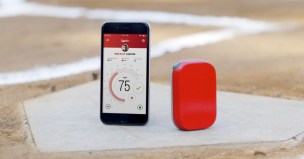 ery pitch – sometimes accurately, sometimes not so much.
At the local level, speed measurement with radar guns used to be pretty much limited to pitching coaches who could afford a Jugs or Stalker gun. But the introduction of several new quality products over the past few years, such as the Glove Radar and Pocket Radar/Ball Coach, has put it into the hands of the average bucket dad or mom. Whether that’s good or bad remains to be seen.
But it wasn’t always that way, as this article from the Scoutee blog points out. (Scoutee is another new radar-based speed measurement product that in this case works with a smartphone. What will they think of next?)
Back in the day they tried all kinds of crazy set-ups and devices to measure pitch speed, including having a pitcher throw as a motorcycle raced by at 86 mph. The article provides a pretty comprehensive description of the search to accurately measure speed.
Be glad you live in the times you do. It’s far easier to annoy your daughter or players with speed measurements than it used to be!
Different throws for different positions
The other day as I was getting ready to start teaching a catching clinic I was watching the participants as they warmed up to throw. It was clear that they had been taught the old rhyme, “Thumb to the thigh, raise it to the sky, wave bye bye.” 
That’s fine as an early teaching tool, or for outfielders who need a big arm circle to throw far. But for many positions that same motion is a time waster.
Once players get their basic throwing motions down, it is important to start making adjustments based on position. As a rule of thumb, the closer a player starts to home, the shorter the arm circle should be.
Clearly, catchers will have (and need) the shortest arm circles. The most they have to throw is 84 feet, 10.25 inches (home to second), and when they do it they usually have about 2 seconds or less to make that throw. Dropping the thumb to the thigh takes up way too much of those 2 seconds.
Instead, they should bring the almost (but not quite) straight back, making a very small arm circle that dips down and then comes up quickly before throwing – all in one continuous motion. That last part is very important, as any hesitation at all gives the runner more time to get to the base.
Infielders will likely have a little larger circle, although part of that depends on whether they are moving toward or away from the base they’re throwing to. A shortstop going into the hole, for example, will need a larger arm circle to make the long throw. The same shortstop moving in and to her left will make a quick release.
Third or first basement fielding a bunt will also have a minimal arm circle, trading that extra power for a faster release. Generally they’re a little stronger and can put some zip on the ball without too much circle.
But it can’t be a straight pullback either – what I call a Katniss Everdeen throw because it looks like you’re firing a bow and arrow. A small arm circle will provide the action/reaction needed to get the ball there quickly.
Once you understand this, it’s important to have players practice these throws. Which means they may need to consciously work on different types of throws during warmups if they play different positions. For example, a catcher who also plays outfield may want to start with a full motion to loosen up, switch to a catcher throw around 60 feet, then go back to a longer motion if you’re extending it further.
The more they understand the different types of throws, the better they’ll be able to execute them in the games – and the better chance you’ll have of getting more outs. Especially on close plays.
Do you have your players work on different types of throws by position? If so, has it helped? Anything you wish your players did differently?
Like Riding A Bike

People often use the phrase “it’s like riding a bike” To refer to how easy it is to pick up a skill again when you’ve been away from it for a while. When it comes to softball training, however, there’s another use.
Players will often get impatient with themselves when they don’t pick up a skill right away. Pitchers will be wild when trying a new pitch). Hitters will swing and miss while working on improving their swings, or hit a popup or soft dribbler. Catchers will go for a block only to have the ball go between their legs. Lots of different things can happen.
When they do, I will often ask if they can ride a bike. I have yet to run into one who can’t. I’ll ask them if they have to think about how to ride a bike. They always respond no.
Then I ask them if it was always that way. What happened when they first took off the training wheels? Usually mom or dad held onto the seat and ran behind them until they were ready to take a few tentative pedals on their own.
Eventually, though, they figured it out. And once they did, they probably never gave it much thought again.
The same goes for softball skills. At first they can be difficult, and require a lot of thought (as well as a lot of trial and error). The success rate may be fairly low. But the more they do it, and really go after it, the less they will have to think (or worry) about it.
It’s a thought that seems to resonate. They know there were scraped knees and elbows at first on the bike, but today the only remarkable thing would be if they fell off.
When players get frustrated, remind them of their experience riding a bike. It might help them get back on track.
How do you help players learn patience while they’re learning a new skill? Any tips or tricks you’ve found helps them understand?
ASA finally eliminates the helmet chin strap
In case you haven’t already heard, the Amateur Softball Association has finally eliminated the rule requiring fastpitch softball players to use a chin strap on their helmets at all levels of Junior Olympic play. If you’re not up on their lingo that basically means everything from 18U on down. The new rule takes effect January 1, 2016.
All I can say is it’s about time. Someone from ASA must have finally gone out to a game or two and seen how silly the rule was. While there probably were a few, I can’t recall ever seeing any player in the last few years who had the chin strap snugged up on her chin in a manner that would keep her helmet on.
Most times, they were sagging well below the chin line, like a bunting on the Fourth of July. If the helmet came off, the player was probably in more danger of being choked by the chin strap than being hit in the head with an errant throw.
Probably wouldn’t hurt to keep the chin strap in your bag just in case you run into a tournament or organization that still requires them. But it’s good that this rule, at least, has finally caught up to reality.
By the way, ASA is also now allowing hitters to use on-deck hitters to use either on-deck circle. That’s great, because it’s always been a safety issue.
Maybe not in Oklahoma City or other areas where big tournaments are held. They have plenty of distance between the on-deck hitter and the plate.
But in community ballparks all across the US, and I’m sure other countries as well, often times the next hitter up is about 10-15 feet away from getting slammed with a foul ball.
Many tournaments already allowed it anyway as a local rule. But now it’s official – on-deck hitters can warm up behind the current batter, no matter which bench their team is occupying.
Glad to see both of these rules enacted, even if it should’ve happened a long time ago. Better late than never.
The “Whiplash” effect on greatness
I know this may be hard to believe for anyone who knows me personally, but apparently I was a little behind in my movie watching because I just saw the movie “Whiplash” on cable. Released in 2014, it was the winner of three Academy Awards  earlier this year, including one for J.K. Simmons as the brutal band director.
If you’re not familiar with it, here’s a capsule description from IMDB:
A promising young drummer enrolls at a cut-throat music conservatory where his dreams of greatness are mentored by an instructor who will stop at nothing to realize a student’s potential.
And by “stop at nothing” they mean he screams at, berates and humiliates the musicians playing for him without pause, prejudice or mercy. It’s fascinating (although sometimes difficult) to watch, especially Simmons’ performance. Be warned he drops F-bombs the way ET drops Reese’s Pieces – as though he needs them to find his way back to his music stand.
So why am I talking about a movie about a jazz band in a fastpitch softball blog? Because Simmon’s character Fletcher is less like a band director and more like many youth sports coaches we see out on the field. I played in bands through high school and never ran across anyone even remotely like him.
Understand in the movie his methods work. The fictional Shafer Conservatory #1 jazz band is the top jazz band in the country. Not sure if they’d work in the real world, but that’s kind of the point of this post.
At one point Fletcher is talking to the young drummer (Andrew, played by Miles Teller) he browbeat and ultimately threw out of the band when the two run into each other at a jazz club where Fletcher is performing on piano. He explains his methodology essentially by saying no one ever achieved greatness by being told “good job.”
For support he points to a story about jazz great Charlie “Bird” Parker having a cymbal thrown at him during a performance by Jo Jones. (According to IMDB’s trivia section that didn’t actually happen. Jones dropped the cymbal, essentially “gonging” Parker off the stage.) Fletcher then says Parker could’ve quit right there, but instead the incident drove him on to become a great. That’s what Fletcher says he is trying to do for his students – even literally throwing a cymbal at Andrew at one point.
So here’s the question: is Fletcher right? Is the only way to push someone to achieve greatness to abuse them until they either sink or swim? If it’s not the only way, is it the best way? Or even an acceptable way? Can people achieve greatness through encouragement and supportive behavior rather than abuse, or does it hold them back?
Me personally, I don’t believe it requires abuse. Do you need to set high standards? Yes, absolutely. I hate hearing “good job” when something clearly wasn’t. But you don’t have to be abusive to have high standards.
That’s just me, though. What do you think?
Great article from Cindy Bristow on pitch calling
Just had to share this article from Cindy Bristow at Softball Excellence. It’s about the four biggest mistakes you can make when calling pitches.
Cindy really hits the nail on the head! No surprise there – she’s brilliant. And very realistic when it comes to the subtleties of coaching fastpitch softball.
I have certainly seen all of the mistakes she mentions made at one time or another. The first two in particular – not knowing your pitcher’s capabilities overall and THAT DAY, and calling YOUR favorite pitches instead of the pitcher’s best ones.
One major example was what happened to a former student of mine when she went to pitch in college. The team’s pitching coach (who was maybe a second-year coach) didn’t seem too interested in helping the pitcher become the best she could be. Instead, it was almost like she went out of her way to make her look bad.
The two biggest mistakes were 1) not calling the girl’s best pitch (a dynamite curveball) because the coach preferred screwballs and 2) calling almost nothing but screwballs, thereby making the pitches predictable. This pitcher had a great screwball too, and could survive on it for a couple of inning. But after a steady diet of them college hitters figured out if they backed off the plate a little bit they could feast on them.
And even then the PC wouldn’t call a curve, or a rise, or change, or a drop. Instead she’d let her get pounded, then have the coach take her out because “she wasn’t effective.”
I don’t know of any pitcher anywhere who can throw the same pitch time after time and be effective. Even the greats mix it up. But when you insist on making a pitcher one-dimensional it doesn’t take long for good hitters to make them look bad.
Absolutely check out this article, if for no other reason than to make sure you (or your PC) isn’t falling into one of these traps. And be sure to sign up for Cindy’s newsletter while you’re there. Tons of great information lands right in your email every couple of weeks.






 Life in the Fastpitch Lane