Category Archives: Instruction
Be the River, Not the Rock

Here’s a simple question for you today: which is strong, the river or the rock that sits in the middle of it? The answer is it depends on your point of view.
Taken at a glance, a snapshot in time if you will, it appears the rock is stronger. After all, the rock stands steadfast, unmovable, while the river must divert around it.
But if you take a longer-term view, the answer is the river, because over time it will erode the rock until the rock is no longer an obstacle to its path.
I know, very Kung Fu of me (which is probably where I got the idea). You can hear the pan flutes even as you read this.

That doesn’t make it any less true, however. Which is a good lesson for playerstrying to learn or improve a challenging skill such as pitching or hitting, as well as for coaches trying to get the best out of their teams.
Players
Let’s start with players. They can take the rock approach to learning new skills or improving/revamping current ones for a variety of reasons, including:
- What they’re currently doing has worked for them before. For example, a 12 year old pitcher who is used to pushing or lobbing the ball toward the plate instead of using her whole body to throw. She threw more strikes than the other pitchers she knows and if that’s her only measurement of success why change? .
- They’re not comfortable doing something new. With minor exceptions, who is? It’s a lot easier to do what you’ve always done than to change it.
- When they try something new their performance goes down (in their mind). Such as a hitter who used to make weak contact but is now swinging and missing while trying to learn a new way to swing the bat.
- They just don’t want to change. Typically seen with players who are forced to take lessons by their parents or players who believe they are better than they actually are (big fish in a small pond).
The problem here, as they say, is if you do what you always did, you’ll get what you always got. But if others around you are improving their games, what you always got may not be good enough anymore and you’ll find yourself sinking down the batting order or the pitching rotation – or maybe even out of the starting lineup.
The important thing to remember when players make a change is that it doesn’t have to be permanent. Try something for a little while and see if it works. If it doesn’t, you can always try something else.
I do that a lot with my students. I have an idea, based on science and experience, of what will work, but I’m not omniscient. (That means all-knowing for those who don’t feel like looking it up.)
Try it and see how it feels. Sometimes you’ll hit farther or throw faster.
Sometimes it will throw you off your game completely. But you don’t know until you try it.
Remember, as the rock wears down the river changes its course. Be the river.
Coaches
Coaches, too, can benefit by taking the river approach instead of being the rock.
We see the rock approach a lot. Something new will come along and you’ll have a percentage of the coaching popular who will say “I’ve been doing it my way for 10/20/30 years and have had success. Why should I change?”
The answer, of course, is because new discoveries are being made all the time – data-based discoveries that can help players get better, shortcut the learning process, overcome deep-seated challenges that are built into the DNA, or otherwise improve.
It’s the same with game strategies. You may have followed the same playbook for X number of years, but what if there is information out there that could turn a few more of those losses into wins because you knew how to use it?
The best coaches I know are constantly scouring every source they can find to obtain new information in the hopes that it might help them. They are moving their knowledge forward like the river instead of standing in one place like the rock.
Imagine if you could discover just one little tip or trick or way of looking at things that would give you a significant advantage over your rivals. That’s the premise of the book and the movie Moneyball.
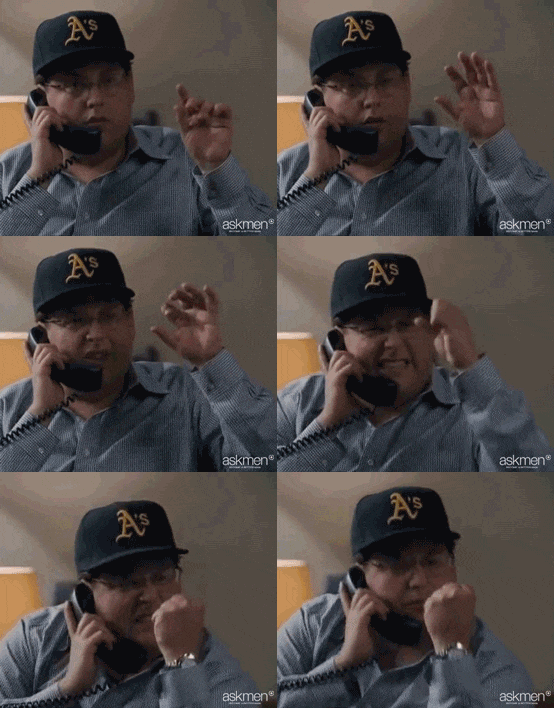
The Oakland Athletics used data to find players others didn’t value very highly to help them field a team that could win 100 games while fitting their very limited budget. It was a game-changer for them, and for the rest of Major League Baseball who followed that example.
Besides, learning new things is fun. Again, you may try something only to find it doesn’t work for you.
That’s ok. Now you know more than you did before.
But if you do discover some new strategy or approach that pays dividends you’ll be glad you gave it a try. Even if you had to change your world view a little.
It’s easy to be the rock, staying in one place while the world rushes past you. But eventually it will wear you down too. Be the river.
Check Out Our New Podcast
Speaking of learning new things, my good friend Jay Bolden and I have started a new podcast called “From the Coach’s Mouth” where we interview coaches from all areas and levels of fastpitch softball as well as others who may not be fastpitch people but have lots of interesting ideas to contribute.
Our first two episodes are in the books. In the first we spoke with pitching guru Rick Pauly of PaulyGirl Fastpitch, and in the second we heard from Coach Sheets (Jeremy Sheetinger), head coach of the Georgia Gwinnett College baseball program.
You can find it here on Spotify, as well as on Apple Podcasts, Pandora, Stitcher, iHeart Radio, or wherever you get your podcasts. If you’re searching, be sure to put the name in quotes, i.e., “From the Coach’s Mouth” so it goes directly to it.
Give it a listen and let us know what you think. And be sure to hit the Like button and subscribe to Life in the Fastpitch Lane for more content like this. Commercial over.
River photo by Matthew Montrone on Pexels.com
The Way You’re Training Your Players Could Be Hurting Their Performance – And Health

We’ve all been there. We have a player who turns out to be great, or we watch what great players do, and we study them intensely to figure out what they’re doing so we can replicate it with all our other players.
But then when we try to apply what we’ve learned we find it works really well for some, pretty well for others, and little or not at all for the rest. Some even see their performance level go down or even get hurt trying to implement what we’re telling them.
How can that be? we wonder. We did our due diligence and we know what we’re saying works. We’ve seen it work. So why isn’t it working here?
The answer is very likely to be related to something called “motor preferences®,” which can be simply defined as working with the way each body is designed to move from birth.
This is a concept I have been dabbling with for the last few months since learning about it from my friend and colleague Linda Lensch over at Greased Lightning Fastpitch. (If you’re in the Jersey Shore area she’s definitely the person to see about fastpitch pitching.)
I had previously taken an online course offered by Volodalen, a French organization that has performed 20 years of research into motor preferences and how they help athletes in all sports perform at a higher level while reducing injuries. But last weekend I had the opportunity to join a couple dozen of the best pitching coaches in the country for a two-day, in-depth, in-person training clinic hosted by James Clarke at United Pitching Academy in Centerville, Indiana. (Again, James is the guy to see in that area.)
The clinic was led by David Genest of Motor Preferences Experts, the only organization in North America authorized by Volodalen to teach how to identify and take advantage of motor preferences in this part of the world. To say it was mind-blowing and potentially game-changing is still greatly understating the impact that understanding your players’ motor preferences can have.
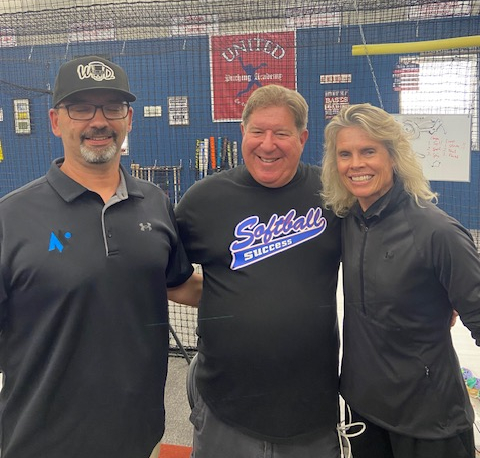
I’m not going to go into a lot of detail here, but I’m going to share some of these concepts to help you get a better feel for how learning about your players’ motor preferences can help you train them better.
One of the core concepts is that athletes can be classified into one of two groups: aerials and terrestrials. These are not black and white classifications but, as David told us, more 50 shades of gray.
So while some players may be totally aerial or terrestrial, most will fall somewhere along a spectrum in-between those two extremes.
Aerials tend to move rather light and bouncy, especially when they run. They like being up in the air, with their center of balance leaned more forward. Think of a kangaroo.

Terrestrials, as the name implies, tend to be more earthbound. Their center of balance tends to sit further back, and they pull themselves forward rather than bound forward. Think more like an elephant.
Those are two very different movement patterns. So you can see why, if you tell an aerial to spring forward when they move you’ll get great results, while telling a terrestrial to spring forward will probably not get the success you’re looking for. One is designed to do it, the other is not.
Another key factor is which side of the body favors being in extension and which side favors being in flexion. All of us have one of each, and it’s built into our DNA.
So if you have, say, a catcher who can block well to her right but struggles to get to her left, it could be her left leg is her extension leg, which is good at pushing/extending, while the right flexion leg is not so much.
There are many other motor preferences, such as a preference for red or blue, that need to be taken into consideration to develop a complete, individualized profile of a player, but you get the idea. The more you understand how their body is designed from birth to move, the better you can train them to take advantage of what they can do easily while avoiding what will be more difficult for them to do..
Now, I don’t claim to be an expert in motor preferences. While I am now certified in motor preferences use by MPE as well as Volodalen, I am still very early in this journey.

But I have already seen results within a single lesson after testing a few students and making suggestions based on the outcomes. For example, a hitter who hitting pop flies on front toss suddenly started hitting bombs after we adjusted her swing to use her motor shoulder more effectively.
I’ve also seen a pitcher improve her stability and pick up a couple of mph in a lesson after changing how she launches. Several pitching coach friends who were at the clinic are reporting similar improvements just through understanding their students’ motor preferences better.
If you are serious about helping your players become the best they can be – whatever that ceiling is – I highly recommend signing up for a Motor Preferences Experts clinic. You can find a list the upcoming dates and locations here.
I will tell you it’s not cheap. Attending a clinic is a $900 investment, although you can then attend additional clinics for a refresher at no charge, at least as of this writing. But in my opinion it is well worth the expense, especially if you plan to keep coaching or teaching for a while.
If you want to get started but can’t make it to a live clinic right now you can also do the Volodalen online course as I did. That will be a $990 cost (which cannot be applied to the cost of live clinics in case you were wondering because they are offered by separate organizations). It is not as complete as the live training, nor as valuable in practical application in my opinion, but you do get videos you can refer back to again and again.
Either way you go, however, spread that cost out over a few years, and compare it to the benefits you and your players will receive, both in terms of improving their performance and helping them prevent unnecessary injuries, and I think you’ll find as I did that it is an incredible bargain.
And you’ll better understand not only why things that work with some players don’t work with others but also how to change what you’re teaching to what WILL for those players. You can’t put a price on that.
Beware What You Believe on Social Media

Don’t worry, I haven’t suddenly gone political here on Life in the Fastpitch Lane. But there definitely is a need to be careful about what you find on social media when you’re looking for information on how your daughter or players can become better hitters, pitchers, fielders, catchers, etc.
Here’s the primary issue, which I think many parents and team coaches don’t seem to realize: anyone can call themselves a coach and post videos on Facebook, Instagram, YouTube, Twitter X, or whatever your favorite platform is.
That’s right, anyone. There are no qualifications or tests required to say you are a pitching expert, or a hitting expert, or a fielding expert, or anything else.
Sure, there are certification and training programs; I’ve completed several rigorous programs as a matter of fact. But it’s not like there’s a Board somewhere that checks up on what coaches post on social media and calls them out or pulls their certifications if it’s demonstrably incorrect.
Which means anyone can post anything, whether it’s good, bad, nonsense, or even downright harmful without any overall authority evaluating the validity of that information.
And this can be true of famous names in fastpitch softball as well as someone you’ve never heard of before. It’s amazing how many great players past and present have no idea how they actually do the things they do (or did).
Here’s the second issue that comes into play: social media is a hungry beast. You constantly have to feed it with new posts in order to maintain a healthy social media presence.

That can be harder than you think. So for those who are dependent on social media likes, clicks, and shares to drive their businesses, they must develop and post new content on a regular basis, often multiple times per week, to sustain their presence.
You can see where this is headed. Once they’ve exhausted all their good, proven drills and other material, the need to post is still there.
So they end up posting a lot of crazy stuff that looks cools and draws eyeballs but has little to do with hitting, pitching, throwing, or catching a softball. If it also helps promote their latest product gimmick so much the better.
It’s definitely a case where the buyer must beware, because if you follow some of this garbage down the rabbit hole and your daughter’s/players’ performance suddenly falls off, or she/they get hurt, it’s your daughter/players who will pay the price. In the meantime, the “coach” who posted the bad content moves on to the next crazy drill.
So what are you supposed to do? If you’re a well-meaning parent or coach, how do you separate the good from the bad?
One way to do that is to look for the “why” behind the “what.” Did the poster explain why the drill or other instruction exists, what problem it is trying to solve, how it will solve it, etc.? Or did he/she merely post the demo and say “have at it?”
A coach who is looking out for his/her players/students will want you to understand the purpose behind the drill or technique or product if there is one, as well as exactly how it solves the issue.
It’s then up to you to apply some common sense to determine whether what’s being presented seems like it will actually solve the intended issue or make it worse. Or even create a new, bigger issue in the process (see: the law of unintended consequences).
You might also want to do a little more research on the issue itself to see if what’s being presented in the social media content is aligned with what others are saying, and what you see the best players in the world doing, or if it’s more of an outlier.
Now, if it’s different it doesn’t necessarily mean the new content is wrong. Breakthroughs and new discoveries happen all the time.
But if it goes against the science in particular, you might want to let others try it first to see how it works out for them before jumping into that new technique yourself.
Remember that the great thing about the Internet is that there’s a lot of information out there. And the bad thing about the Internet is that there’s a lot of information out there.

It can be hard to tell the good from the bad.
But if you take a little time to think things through and dig below the surface or the excitement of finding a shiny new object, you can save yourself a lot of wasted time and money in the long run.
Lead photo by Pixabay on Pexels.com
Keep Dancing Until It Rains

There is a proverb (or an anecdote, or a story, I’m not sure which) about a Native American medicine man who was particularly renowned for his ability to overcome droughts by performing a rain dance.
One day he decides to retire and so takes on an apprentice to whom he can teach all his secrets. He shows the younger man a whole variety of treatments and such, but of course the younger man is particularly interested in learning the skill for which the medicine man is most famous.
Finally, the younger man just flat-out asks him, “Teacher, what is your secret for being so successful in performing the rain dance?” The medicine man gives him a sideways look, then says, “It’s simple: you have to keep dancing until it rains.”

This is the aspect many young softball players (and their parents) miss when it comes to improving their games. All too often they are looking for that quick fix – do a one-day clinic, take a handful of lessons, stay after practice for an hour one day, etc. and then they’ll be great.
It would be nice, and for an ultra-gifted athlete that may be all they need. But for the overwhelming majority improvement isn’t going to come that fast.
Instead it will happen in small, often unnoticeable increments that add up over time. If the player (and her parents) are willing to keep chipping away at it, they will see the results. Mostly because they kept working until the results showed up.
Take a story I heard the other day. The father of a couple of my students who is also a head coach was telling me about another girl I work with on his team.
When I first got her she struggled with hitting. A lot of strikeouts, and when she did hit the ball it was usually an easy ground ball or pop-up in the infield.
We worked at it and she got better, but it wasn’t exactly a straight line. If she was away from lessons for a few weeks due to being a multi-sport athlete who had other commitments we’d see a lot of backsliding and often have to start all over again.
When that happened I could see the sadness in her face. She was frustrated with the results, and probably frustrated with me that I was telling her she had to go backwards and re-learn how to hit.
Honestly, I thought I was going to lose her at least a couple of times. But she kept dancing.
Fast forward to the other night. The coach told me this girl was raking the ball in practice. I wasn’t surprised because she’d been doing that lately in our lessons too.

The key difference, though, was that although she had taken a few weeks off again, when she came back we were no longer going back over the basics. She had locked them in so all I was left to do was make little tweaks here and there to help her elevate her hitting to a level above where she’d been in the past.
If you looked at her swing now you’d probably think, “Wow, what a natural.” She is smooth and powerful (despite still having what I would call a slight build) and she is bringing the bat with authority. And she’s able to hit the ball hard in multiple zones, not just when it’s thrown down the middle.
None of that would be happening now if she had just given up when things got discouraging, i.e., when the swing mechanics reverted to her old ways. Instead, she kept working at it not just until she could do it right but until she couldn’t do it wrong. And boy is she having fun at the plate now.
Of course, not all roads lead to success. If you’re a parent, coach, or parent/coach you still have to do your due diligence to see if what your daughter is being taught lines up with what you see the majority of high-level players doing – whether that’s hitting, pitching, throwing, or some other skill.
If, however, you are sure of the mechanics or techniques, then keep working at them. Persistence pays off, and eventually it will rain.
Otherwise you may find yourself like the person who invented 6UP, wishing you would have hung in there just a little bit longer.
Rain photo by Aleksandar Pasaric on Pexels.com
The Power of Using Video When You Practice

One of the tools I use the most when I give lessons is my iPhone. If I see a player making some sort of awkward or inefficient movement, out comes the ol’ phone and I immediately shoot a video I can show that player (and often her parent, guardian, team coach, etc.).
Now, I can stand there and tell the player what she’s doing without using video, but often it seems like they either think I’m exaggerating the movement they’re making or I am making it up entirely. I said that because it has little impact on what they’re doing, and they frequently will go right back to doing it.
But when they see the video, they suddenly know I was not exaggerating for comic effect but if anything was dialed back a bit on it. Seeing is believing, and believing enables them to start making the correction. Things usually get better from there.
That’s great during lessons. But what about the other 90% of the time, when the player is practicing on her own or with a teammate, parent, guardian, team coach, etc.?
There is a solution that will help shortcut the time-to-improvement. It involves a little practice secret that I’m now going to share with you.
The Revelation
These days pretty much everyone’s personal phone has the ability to shoot video. And those video capabilities can be used for more than a Snapchat or a Tik Tok dance video.
Why not set up the phone to the video setting, hit the “Record” button, then take a video of whatever skill she is trying to master? Then she can play it back, watch herself, and see if she is leading with her hips (if she is a hitter), getting some elbow bend over the back side of the circle (if she is a pitcher), or making whatever movement she is supposed to be making at whatever point she’s working on.
I know, genius, right?
Sure, when I shoot video I use the OnForm app so I can easily slow it down, scrub it back and forth, draw on it, measure angles, or do whatever else I need to do. It’s really cool to be able to do that, as I describe here.
But you don’t absolutely need all of that, especially if your coach has told what to look for/work on specifically. The basic video any smart device shoots is enough to give you eyes to see what’s happening and whether the movements that player is making are the movements that player SHOULD be making.
I know on an iPhone you can even scrub it back and forth by tapping on the video and then using one finger to move the little frames at the bottom back and forth. I imagine Android and other operating systems offer the same capabilities.
Different Learning Styles
So what makes video so valuable?
Science has documented that different people learn in different ways. Some of us learn better from reading directions. (Most of those people tend not to be male, as most males tend to jump in first and then only read directions when they get in trouble – usually halfway through the project.)

Some learn better from hearing things explained, the way it would typically happen in a lesson or team practice. “Suzy, you have to get your butt down on the ball.”
Some learn best by actually performing the skill we are attempting to perform. Although in my experience a lot of young players actually have trouble feeling whether they are doing something correctly while they are in the middle of it.
But the vast majority of us (65%) are visual learners. If we see it, we can understand what we’re supposed to do, or what we’re not doing now, better.
Yet when it comes to actual practice sessions, players and coaches rely almost entirely on the two weakest preferences for learning – auditory/listening to instructions (30%) or kinesthetic/doing it and feeling it (5%). Doesn’t make much sense, does it?
By incorporating video into the learning process players can learn faster by using the method most prefer. And even if they are in the other 35%, augmenting auditory and/or kinesthetic instruction with video is neutral at worst and a plus beyond that.
Video Power in Your Pocket
The beauty of all this is that it doesn’t require a lot of work. Today’s teen or preteen carries more video power in her pocket or purse than was available when Debbie Doom (yes, that was her real name, and what a great name it was) was dominating hitters, Lisa Fernandez and Sheila Cornell-Douty were winning gold medals in the Olympics, and Linda Lensch was becoming a USA Softball Hall of Famer.
All you have to do is take that device out of wherever it is, prop it against a nearby bench, bat bag, or rock, and hit “record!” Then you have instant feedback on where you are and whether what you’re practicing is making the player better – or worse.
She can even do it by herself. And if the coach says it’s ok, she can even send it to the coach’s phone or other device to receive additional feedback to make sure she stays on track.
That’s sure a lot faster and easier than the early 2000s, when I started coaching. Back then it was a production.
I had to bring a laptop and separate video camera, set up the camera on a tripod, connect the video feed to the laptop and then whatever video tool I was using, and then manipulate it all to run it back. I had to plan it all ahead too, and hope an errant throw didn’t knock out the camera or laptop.
Now it’s just pull out the phone, open the app, shoot, and review.
Opportunity Knocks
The opportunity here is tremendous, and the cost is nil if you already have a phone or tablet. So why wouldn’t you take advantage of it?
By incorporating video into their practice sessions players can learn more effectively – and reach their goals faster.
Seems like a no-brainer to me.
Phone photo by Wendy Wei on Pexels.com
Proper Form? The Shadow Knows!

You’ve no doubt heard that different people learn best in different ways. The four basic learning styles are visual (watching the skill performed), audible (listening to instruction about the skill), kinesthetic (learning by doing), and reading/writing (using written words to understand).
Fastpitch softball instruction typically uses audible (coach explains) or visual (coach demonstrates, or at least tries to) learning, then expects that to translate into kinesthetic as the player tries to emulate the instruction. The idea is to get the “feel” of the movements so they can be carried forward later.
While this is important, some players have difficulty moving from visual/audio to kinesthetic learning. They are trying, but they can’t quite get the feel of it and thus go right back to old habits.

A great example is a pitcher trying to learn to keep an elbow bend down the back side of the circle to allow her arm to whip at the end. She may be trying to bend it, but as she goes into the back side her elbow straightens out and the arm becomes stiff, which means no whip.
One solution is to video the player so she can see what she is doing. Sometimes it helps, but often she has trouble translating what she sees into what she does.
A better approach is to use a mirror so she can see what she’s doing AS she tries to feel it. The combination of the two is very powerful, and often helps shortcut the learning curve.

But what if you are outside and don’t have access to a mirror? Not to worry – there is another solution: her shadow!
If you place the pitcher with her back to the sun, her body will cast a shadow. She can then watch that shadow as she moves to see if she is maintaining elbow bend or coming out of it over the top.
This quick, crude video demonstrates how that works:
Note how rather than reaching back with the hand I pulled the upper arm or elbow down, maintaining bend that leads into release. By watching the shadow while moving her arm, your pitcher can begin to feel where her arm needs to be as she practices.
She can continue to observe as she builds up speed, first without a ball and then throwing a ball into a net or screen. Over time she will feel it more and more until she no longer needs the visual cue – at which point you can really turn her loose.
This is just one example of how you can use a player’s shadow to enhance learning. For example, if she tends to drop her hands or flatten out her back too early while hitting, her shadow will show it, enabling her to make that adjustment.
If she is pulling her hand straight back while throwing instead of retracting her elbow with her scap and then letting her hand rotate behind her, that will be easy to spot in a shadow too.
Next time you’re outdoors on a sunny day and a player struggles to get the feel of a skill, give this idea a try. It’s quick, easy, and free – and the shadow always knows!
Don’t Just Put In the Time – Put In the Effort

One of the most common questions coaches get at the end of a lesson or practice session is, “How long and how often should my daughter practice?”
While it’s a legitimate concern – parents want to their daughters get the full benefit and they get a better return on their investment – I tend to think they’re asking the wrong question. Here’s the reason: practicing is not actual time-based; it’s quality-based.
Take two players who are at the same skill level and have been assigned the same drill(s) as “homework:”
- One diligently does the homework, being mindful of her movements and attempting to execute the skill the way she has been taught. She does this for 20 minutes three times before she has her next lesson.
- The other goes out to practice for a half hour three days a week between lessons. But she doesn’t like doing drills because it’s “boring,” so she instead just decides to pitch from full distance or take full swings or field ground balls hit by a partner etc. the whole time.
Which one do you think will show improvement in the aspect that needs the most help as well as in the overall skill?
Player two put in more time – an extra half hour to be exact. If time were the only factor that counted she should do better at the next lesson.
But I will tell you from experience, and bet you dollars to donuts, that player two will be the one who is most likely ready to advance further at the next lesson. She may not have put in as much time, but she put in more effort to solve her biggest issues – the one that is most limiting her.

So if she’s a pitcher who was straightening out her arm on the back side of the circle, she is now far more likely to have a nice elbow bend or “hook” as her arm gets ready to throw the ball. If she is a hitter who was dropping her hands straight to her waist before swinging, she’s far more likely to be keeping them up and turning the bat over to get the ball.
That’s because she mindfully worked at changing what she was doing. She is serious about improving so she put in the effort to make those changes.
Player two, on the other hand, actually put herself further away from her goals by practicing as she did, because all she did was reinforce the poor mechanics she should be trying to move away from.
Yes, she put in the time and could mark it down on a practice sheet, but she didn’t put in the effort. Without the effort to improve, the time is pretty much meaningless.
She would have ended up in exactly the same place at best if she hadn’t practiced at all. And she may have ended up further behind because now those extra reps with the wrong techniques will make it that much more difficult to get her to the right path.
If your daughter is going to spend her valuable time on practicing her softball skills, or anything else for that matter, make sure it’s on something that will help her advance her abilities forward.
Have her make the effort to concentrate specifically on the areas that need improvement rather than spending all her time making full pitches, full swings, etc. and you’ll see faster progress that leads to greater softball success.
P.S. For any parents of my students who may think I’m talking about their daughter, don’t worry. I’m not. It’s a big club. But do keep it in mind as you work with your daughter anyway!
Navigating the Maze of Fastpitch Skills Development

People often talk about the “path to greatness” when it comes to fastpitch softball skills development. But when you think about it, it’s not really a path – it’s more of a maze.
Everyone starts out in the same place – at the entrance. Everyone knows the end goal is excellence.
But it’s really not a straight-line journey, i.e., you hire a coach, join a team, or try to try to train your daughter yourself. Instead, the journey can be full of twists, turns, blind alleys, and dead ends.
Go the wrong way and you’re going to spend a lot of your time backtracking or trying to get your bearings again. Get in deep enough and you may never find your way back to a lane that will take you to your goal.

Take pitching for example. There are those who believe it doesn’t really matter what you teach to budding pitchers; they say eventually those pitchers will find their way to the mechanics that will lead to success.
I can tell you wholeheartedly that that is not true. Yes, some can overcome learning “hello elbow” (HE) when they start out, replacing them with more body-friendly internal rotation (IR) mechanics as they mature. They are usually exceptional athletes.
But that is not the case with everyone. I’ve acquired many pitching students who were taught turn the ball back toward second and push it down the back side of the circle who struggled to unlearn that early, sub-optimal teaching.
It can take them months just to learn how to keep the ball facing forward at the top of the circle (and just past it) so they can set themselves up to whip the ball through release. It’s not that they’re bad pitchers or poor athletes.
It’s just that the habit has been so ingrained into them that it’s difficult to break. They essentially got deep into the maze and then have to find their way back to nearly the beginning to get on the right track.
Hitters can have this too. They’re taught to “squish the bug” or “throw their hands/knob of the bat” at the ball or over-use their arms, or some other outdated concept.
Or maybe they’re just allowed to swing the bat however they want because they are big enough and strong enough at the younger ages that the techniques they use really aren’t important.
However they get there, they follow that path thinking they’re on their way, only to discover after their habits become ingrained that it’s been a series of blind alleys once again leading to a dead end. The other players have matched (or surpassed) them in size and strength, and suddenly what made them look like studs when they were young has them seeing more bench time today.
Just like in an actual maze, it’s important to start out in the right direction early. So how do you know which way to go when you’re just starting out so you ensure you don’t waste a whole lot of time and money that you will never recover?
Fortunately, unlike an actual maze there are plenty of signs and guideposts that will help you find the most expedient path to your goal. Some of those include:
- Watch high speed video of what actual high-level players do, then match that up to what potential coaches are teaching. If they’re not closely aligned you probably don’t want to go that way.
- Research the topics that interest you on the Internet. Yes, the Internet has as much bad information (or more) than good, but if you’re really interested in doing what’s right it shouldn’t take you too long to separate the gold from the garbage.
- Ask other parents, especially those whose daughters stand out, about their journey and what their daughter is being taught now They can help you avoid the pitfalls they themselves fell into.
- Try what’s being taught yourself to see if it makes sense. Many people actually seem to miss out on this simple test. See what it feels like to move your body the way it’s being described. Be aware of what you feel and whether it feels natural or forced. The goal is for it to feel natural and easy, because it means you’re working with your body instead of against it.
- Once you’ve gathered the data, think through it carefully to see what makes sense. Don’t just accept what Famous Player A says, because Famous Player A may not have a clue as to what she does on the field. She was probably one of those who found her way to good mechanics DESPITE what she was taught. Yet when it comes to teaching herself, she just goes back to what she was told when she was young because that’s all she consciously knows.
Starting down the wrong path in the beginning, or taking a bad detour along the way isn’t unrecoverable. But it definitely makes achieving one’s playing goals a lot more difficult because there’s going to be a lot of backtracking (and angst) before you can move forward again.
Take the time to determine which path will lead you through the maze of softball skills development more efficiently and you’ll find the entire journey to be a lot more enjoyable.
Maze photo by Tom Fisk on Pexels.com
5 Reasons Lefties Should Be Trying to Hit to Right
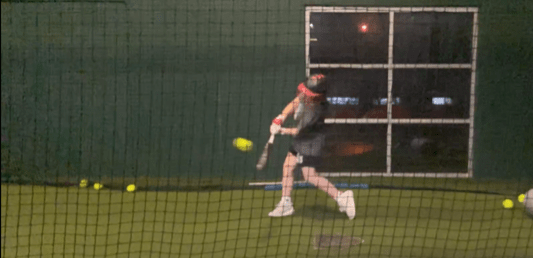
The other day I was working with a left-handed hitter and noticed two things.
The first was that her sister, who went out to shag balls after her own lesson, set herself up in left field. The second was that the sister was correct – everything was going out that way.
I told the girl who was hitting that she was late, needed to get her front foot down earlier to be on time, especially on inside pitches, and all the usual advice for someone who is behind the ball. But then it occurred to me – she might have been going that way on purpose.
So I did the most sensible thing I could – I asked her about it. “Did someone tell you to hit to left all the time?” I asked.
“Yes,” she replied. “My old team coach.”
This is the second time I’ve heard that from a lefty. The first actually got that advice from a supposed hitting coach.
Forcing lefties to try to hit to left on every pitch makes no sense to me. Sure, if the pitch is outside you should go with it. That’s hitting 101.
But on a middle-in pitch? No way! Here are five reasons why that’s just plain old bad advice.
Giving Up Power
This is the most obvious reason. The power alley for any hitter is to their pull side.
You get the most body and bat velocity on an inside pitch when you pull it. Laying back on an inside pitch to try to hit it to left is taking the bat out of the hitter’s hands, which you don’t want to do – especially in today’s power-driven game.

Encouraging the hitter to barrel up on the ball and hit to her pull side will result in bigger, better, more productive contacts. And a much higher slugging (SLG) and on base plus slugging (OPS) percentage, leading to more runs scored and opportunities taken advantage of.
Creating a Longer Throw from the Corner
If a left-handed hitter pulls the ball deep down the first base line and has any speed at all there’s a pretty good chance she will end up with a triple. It’s a long throw from that corner to third base, and will likely actually involve two long throws – one from the corner to the second base relay, and another from the relay to third.
A hit to the left field corner, however, will more likely result in a double. It’s a much shorter throw and one that doesn’t (or at least shouldn’t except for the younger levels) involve a relay. One less throw means one less chance for something to go wrong for the defense.
I don’t know about you, but I’d much rather have my runner on third than on second. As this chart from 6-4-3 Charts shows, your odds of scoring go up considerably regardless of the number of outs when your baserunner is on third:

You probably didn’t need a chart to show you that – it’s pretty easy to figure out on your own – but it always helps to have evidence.
Hitting Behind the Runner
Coaches spend a lot of time talking screaming at their right-handed hitters about the need to learn how to hit behind the runner at first. Then why shouldn’t lefties be encouraged to do it as well?
It ought to come natural to a lefty. Now, part of the reason for hitting behind the runner is to take advantage of a second baseman covering second on a steal, which is less common in softball and probably doesn’t happen with a lefty at the plate.
But what about advancing a speedy runner from first to third? Again, longer throw from right.
A well-hit ball to right, even one that doesn’t find a gap, gives that speedy runner a chance to get from first to third with one hit. A well-hit ball to left that doesn’t find a gap will probably still require the runner to hold up at second because the ball is in front of her.
So if you’re teaching your lefties to go to left all the time you’re leaving more potential scoring opportunities on the table. In a tight game, the ability to go to right instead of left could mean the difference between a W and an L.
Taking Advantage of a (Potentially) Weaker Fielder
This isn’t always the case. There are plenty of great right fielders, especially on higher-level teams.
But for many teams, right field is where they try to hide the player who may have a great bat but a so-so ability to track a fly ball or field a ground ball cleanly.

Why hit to the defense’s strength when you can hit to its weakness instead? At worst, if right field is a great fielder you’re probably at a break-even point.
If she’s not, however, you can take advantage of the softball maxim that the ball will always find the fielder a team is trying to hide.
Reducing Their Chances of Being Recruited
Most of today’s college coaches want/expect their hitters to be able to hit for power. Not just in the traditional cleanup or 3-4-5 spots but all the way through the lineup.
A lefty who only hits to left looks like a weak hitter. (And is, in fact, a weak hitter.)
Unless that lefty is also a can’t-miss shortstop, college coaches are going to tend to pass on position players who don’t look like they can get around on a pitch. That’s just reality.
Teach your lefties to pull the ball when it’s appropriate and they stand a much better chance of grabbing a college coach’s attention. And keeping it until signing day.
Don’t. Just Don’t
Teaching lefties to hit to left as their default is bad for them and bad for the team. It also doesn’t make much logical sense.
Encourage them to pull the ball to right when it’s pitched middle-in and you -and they – will have much greater success.
The One Tool Every Fastpitch Coach Needs in His/Her Bag

There are all kinds of devices and training tools available to fastpitch softball (and other) coaches today. A quick scan of Amazon or any sporting goods website will offer all kinds of ways to solve all kinds of problems at all kinds of price points.
But there is one tool today’s coaches need to make sure they have in their bags if they want to meet the expectations of many fastpitch players and especially parents today: a magic wand.
(Mine happens to be a Sirius Black model, as I’m sure Coach Katie McKay Phillips has already identified. If you don’t know who Sirius Black is, you really need to read more.)
The reason you need a magic wand is simple: many players and parents want to see instant improvement in individuals and teams.
They don’t want to spend hours practicing skills such as hitting, throwing, and pitching in the basement, backyard, or batting cages. They don’t want to spend hours out at the field learning their positions and what plays to make in specific situations or how to communicate where the ball will go.
Instead, they want you as the coach to wave a magic wand and take the team from looking like a group of misfit toys to a unit that can compete for tournament championships every weekend. So you’d best have a magic wand in your bag to show them you’re trying to give them what they want!
Now, of course, as any Harry Potter fan knows the wand is only as good as the wizard who wields it. So you’d best be practicing your spells and charms.
Once you have your wand, here are a few you can try. Some are directly from the Hogwarts courseware, while others are spells and charms of my own design.
Just remember, if you are a total Muggle and can’t get them to work, you’ll have to acquire the results the long, old-fashioned way – with lots of practice and repetition.
- Wingardium Leviosa – This one is one of the first Hogwarts students learn. It’s a levitation charm used to lift objects. Comes in mighty handy when your team can’t hit too well. Throw a little Wingardium Leviosa at a weak ground ball and watch it turn into a soaring line drive. You can also use it more subtly to turn a weak pop-up into a duck snort that sails just out of reach of every converging fielder. I’m sure you’ve seen that before.
- Expellliarmus – Good for when an opposing fielder is about to make a play that will result in a costly out. Originally designed to pull an opponent’s wand from his/her hand, it’s also great for turning a routine fielding opportunity into an instant error. No doubt you’ve seen this one being used by your opponents to make you look like you’ve never taught your players how to play. Naturally some coaches over-use it and then your team makes error after error, giving up a big inning. After all, the team couldn’t be that bad on their own after spending THE ENTIRE WEEK working on fielding ground balls and bunts.
- Petrificus Totalus – This is a full body binding spell that causes temporary complete paralysis. You have probably seen this one in action when your hitters were at the plate. The opposing pitcher throws a meatball down the middle of the plate and your hitter watches it go by for strike three. They didn’t freeze up on their own – they were hit with Petrificus Totalus by a wizard on the other side of the field. What other explanation could there be?
- Oblivius – This one is really handy becaue it enables you to erase the memory of people or events you don’t want someone to remember. It can be used in a couple of different ways. When used on opponents you can cause them to forget what to do with the ball on defense so they just stand there confused, holding it and looking around. No doubt you’ve seen this one in use as well. For your own team, you can use it when your pitcher just gave up a home run or other big hit to an opposing hitter and has now lost total confidence in herself and her ability to throw a strike. A little Oblivius and she’s right back in there. Coaches can also use it on themselves to forget bad innings or entire games before it gives them ulcers.
- Accio – The summoning spell that brings things to you. You’ll have to teach it to your players so the ball goes to them. How else do you explain a sure home run that hits a phantom gust of win and stays in the yard so the worst fielder in the game can catch it?
- Confundus Charm (Confundo) – Ever see three fielders converge on a ball only to let it drop between all of them? That’s Confundo in action.
- Instanteous Pitchus – Learning to pitch can be a long, arduous journey filled with hard work and major disappointments. But it doesn’t have to be. If you use this charm correctly you can turn any wannabe-pitcher into an instant ace in just one lesson. Which is what many parents expect of their coaches. No long, boring practice time or hours spent chasing balls around a backstop. Any pitcher can go from zero to hero if you apply this charm.
- Sluggeraramus – Does for hitters what Instanteous Pitchus does for pitchers. Or what parents expect purchasing a $500 bat will do for a kid with a 5 cent swing. If you can cast this spell, which is not easy to do, you won’t have to use Wingardium Leviosa so much in a game because every hit will already be a great one.
- Awareweed – Not so much a spell or charm as an herbal potion you can feed your players in lieu of spending practice time teaching them what to do with the ball in specific situations. Somehow they will just know where the ball should go, such as whether they should throw home to try to cut down the lead runner or realize that run is already scoring so go after one who is more vulnerable. It also gives them situational understanding, such as throwing to first for the sure out when your team has a 10-run lead rather than trying to get the runner heading home on a tag play. When your team is loaded up on Awareweed, coaches and parents can just sit back and enjoy the magic happening on the field.
- Silencio – While this silencing spell can be used on players when their incessant cheers are giving you a headache, it’s best applied to all the parent “coaches” in the stands who are yelling advice to their players (especially at the plate) or providing a running monolog of every play you as the coach should have made (after the fact, of course), criticisms of personnel or baserunning decisions, ideas on how to improve run production, and whatever else pops into their mind at the time. It can (and should) also be applied to those who have decided it’s their job to teach the umpire how to do his/her job.
That’s a fairly comprehensive list – enough to keep you studying for at least a year until you can pass your Ordinary Wizarding Level (O.W.L.) exam and more on to more advanced spells, charms, and potions.
That said, if you don’t have access to a wand, or can’t make it work, you’re going to have to do it the old-fashioned way – and explain it to your players and their parents as well.
The old-fashioned way isn’t quite as easy for them, and it takes longer, but it brings its own kind of magic as players achieve capabilities on their own they never dreamed they could acquire. And in the long run it’s a lot more satisfying because it’s been earned.






 Life in the Fastpitch Lane