Category Archives: General Thoughts
Failure Is a Key Element in Player Development

Today’s topic was a suggestion from Tim Husted, who was the founder and guiding force behind the Danes fastpitch softball program, which gave players in Wisconsin and Minnesota the opportunity to play at the highest levels. Tim knows a thing or two about developing players so they can continue their careers in college, having done so for many young ladies while the program was active.
Tim was commenting on my post “Accuracy Without Speed = Batting Practice,” saying essentially that too many parents and coaches these days are focused on achieving short-term success rather working toward longer-term greatness. But, he added, it also shows up in parents being afraid to let their kids fail because they don’t understand that failure is an essential component of developing great players.
I know, it sounds counter-intuitive doesn’t it? No parent likes to see their kid(s) fail.
Our hearts bleed for them, and our kids’ pain becomes our pain – only amplified. It can be particularly debilitating for parents who are living vicariously through their kids’ sports careers.
The result is we do whatever we can to help our kids avoid failure, and the negative feelings associated with it.
Sometimes that means an “everybody gets a trophy” approach. Which I personally believe is ok at the younger ages to reward participation, but not after about the age of 10, and then only in rec leagues.
Sometimes that means jumping from team to team to find a starting spot rather than competing for one. There are definitely times when leaving a particular team is the right decision, such as when all positions are set and there is no opportunity to compete for a starting job.
That happens more than people like to admit too. But leaving in lieu of working hard is not a good solution.
And sometimes it means disgruntled parents starting their own teams or agreeing to coach with the express purpose of making their kid the star, whether it’s deserved or not.
Here’s the reality, however: failure is not necessarily a bad thing. In fact, it’s pretty rare to find anyone who is successful as an adult who did not face some level of failure earlier in his or her life.
Amanda Scarborough often talks about how early in her career she was not at the top of the pitching depth chart on her travel and high school teams. One of the all-time greats, three-time Olympic Gold Medalist Lisa Fernandez, says she walked 20 batters in her first pitching outing and was told by a well-known pitching coach in California that she’d “never be a pitcher.” Many other greats in all walks of life have similar backstories.
The thing is, they didn’t let failure or disappointment define them. Instead, they learned from it and used it as fuel.
This is what coaches, and especially parents, need to understand. Failure isn’t a bad thing. It’s an essential part of the learning process.
People who succeed all the time (if there is such a thing) don’t learn how to overcome obstacles. They aren’t driven to hone their skills to improve. They don’t gain the mental toughness required to play at the highest level.
The pain of failure drives us to not want to feel that way again. Which either means we stop doing the activity or we work to ensure (to the best of our abilities) that it doesn’t happen again.
And that’s where the development comes in. Failure doesn’t mean you’re not good enough. It means you aren’t good enough right now.
But that can change. While your DNA, which defines your base athletic ability, is what it is, mental and physical skills can be developed.
As a team coach and an instructor I’ve worked with many, many kids who didn’t start out as superstars, or even competent players for that matter. But with guidance and dedication they went on to pass more naturally gifted players in terms of performance on the field. And I know many coaches, including Tim, who have similar stories.
Failure helps point out the flaws in your game so you can work on them. It drives us to achieve more than success alone ever will.
Good players like to work on their strengths. Great players prefer to work on their weaknesses.
Then there’s the idea of failure as fuel, which I mentioned earlier. Sometimes failing at something is just the kick in the pants we as humans need to drive us to improve beyond what we may have done otherwise.
I know this from personal experience. My first year as a travel ball coach my oldest daughter’s team was very successful, winning the bulk of our games along with taking first place in the highly competitive travel league we were a part of.
I remember feeling really good about myself as a coach – until I found out half the team was leaving to join a new team in our organization coached by the dad of a girl who was more popular than my daughter. I was shocked and disappointed.
But rather than quit, or whine about it, I took that failure and used it to drive me to become the best coach I could be. I took classes, read books, watched videos, talked to other coaches, and did everything I could to become so good that no player would ever even consider leaving.
While I can’t say I fully achieved that goal – there will always be some attrition, and there’s always more to learn – it definitely made me a much better coach and put me on the path that I still follow today. I’m not sure the same would have happened had that first team all stayed.
Another benefit failure brings is that it makes success that much sweeter and more satisfying. It’s difficult to appreciate triumph if you’ve never experienced defeat.
Not to mention if you are afraid of failure you’re more likely to play weaker competition to ensure you’ll win. I’ve known teams like that.
Their coaches play teams they know they can beat, thinking a better won-loss record makes them look like better coaches. But all it really does is stunt the development of their players because those players aren’t being challenged.
If you’re going undefeated in every tournament and posting up 80-3 run differentials you’re not a great team. You’re playing in the wrong tournaments.
A 60% – 70% win rate will do far more to ensure player development than a closet full of trophies, medals, plaques and rings.
The bottom line is that while failure is painful, it can be a good kind of pain – like what you feel after a particularly grueling workout. It’s not something that should be feared and avoided at all costs.
Instead, it should be embraced as part of the learning process.
Failure doesn’t have to be a dead end. In fact, it can be the starting point for something much, much better.
The choice is yours.
Photo by Karolina Grabowska on Pexels.com
6 Tips for Winning at Tryouts
Much of the U.S. is about to enter tryout time for high school ball. Over the next few weeks, players will have the opportunity to demonstrate their skills and intangibles in the hopes of making the team of their choice.
For most, the preference will be making varsity because, well, that’s the top team and who doesn’t want to be the best? For some, however, it will be just getting on a team at all, or being placed on a team where they will have the opportunity to play for their school rather than cheer others on from the bench.
At this point there isn’t much players can do about their skills. Wherever they are now in their journeys is what they will take into tryouts.
There are some things they can do, however, to give themselves their best chance of making their desired team. While the best thing they can do is be amazing talented and proficient at softball, the type of player that can carry a team to a state title, very few are in that category. So here are a few tips for the rest.
Be On Time and Ready to Go
The simple act of being on time seems to be a lost art today.

That’s a shame, because in my book being late sends a message of “My time is more important than your time.” And since making a team relies on the judgment of the person to whom you’re sending that message, it automatically puts the player who’s trying out in the hole.
A good axiom to follow is “If you’re 15 minutes early you’re on time; if you’re on time you’re late.”
But there’s more to it than just being there. Players also want to make sure they have everything they need out and organized.
For example, if hitting is part of the tryout (and most likely it will be), they shouldn’t wait until it’s time to hit to dig their helmet out of their bat bags, dump out the old granola bar wrappers and find their batting gloves. Those items should already be out so they can be picked up whenever the coach sends them to the cage.
Being on time and ready helps players look like they know what they’re doing. All else being equal, it might be the deciding factor between varsity and JV, or being cut.
Don’t Wait to Be Asked to Show Every Skill
This is something I particularly talk to hitters about, but it’s important at every phase.
Take a hitter who can slug bunt (show a bunt then quickly pull back and slap the ball on the ground). While fastpitch softball has gone crazy for home runs there are still a lot of coaches who understand the value of the short game as well. Having a player who can draw a defense in and then slap the ball through the holes, potentially moving a runner from first to third or second to home would be attractive to many.
Yet the coaches evaluating the tryout won’t have any idea the player can do that unless she demonstrates it during hitting. If the coach doesn’t ask about it (and he/she probably won’t), it’s important for the player to say, “Would you like to see me slug bunt?” or whatever it’s called locally.
The same goes for pitchers. Often coaches will line up prospective pitchers and either use a radar or eyeball who throws the hardest and make decisions from there. So a player with good movement and deceptive speed changes but average speed won’t necessarily stand out.
It’s incumbent upon the pitcher to ensure the coach sees her other pitches. That will help separate her from the girls who throw as hard, or even harder, but can’t do anything else. A smart coach will understand the value of movement and speed changes.
Be Positive and Talkative
A big part of succeeding at tryouts is getting noticed. Now, if a high school player can pitch a legit 70 mph, or hit 300 foot bombs, it’s likely she will be noticed even if she’s as stone-faced and quiet as the Sphinx.

For those who don’t possess those superhuman skills, which is most players, they need to make more of a connection to the coaches and potential new teammates. One way to do that is to engage coaches and other players in conversation.
That doesn’t mean be a mindless chatterbox. But a little friendly conversation goes a long way toward showing what a great team member that player might be.
Even something as simple as, “Hi Coach, good to see you. How is your day going?” will help a player stand out from most of their peers. And if the decision comes down to a player who is pleasant and positive versus one who is quiet or a downer, with skill levels being equal, the coach is more likely to select the friendly one. That’s just human nature.
Try to Be First to Each Station
Coaches like players who hustle. One way to demonstrate that quality is by trying to be first to each station (if different stations are being used).
Say that the tryout players are broken into infielders, outfielders, and hitters, and each group is expected to rotate to all three stations. When the coach calls “switch,” the smart player will not walk or jog but will run to the next station.
Getting there first shows enthusiasm. Getting there not only first but a couple of minutes before everyone else helps demonstrate the type of hustle that every coach wants but rarely finds. If a player is on the bubble, showing hustle can be a key differentiator.
Wear Something Memorable
This tip probably isn’t so important in a small school where everyone pretty much knows everyone, coaches and players alike. But in a larger school with many players trying out for a few slots, it helps to stand out from the crowd.
That doesn’t mean wear something outrageous. A lot of coaches aren’t looking for “colorful” players.

But it does mean players should wear something that makes it easier to identify or recall them with. It could be neon green shoes, or regular shoes with neon green laces. It could be a Metallica t-shirt in a sea of travel team jerseys, or a big ol’ bow in a player’s hair. Anything that gives a coach an easy way to identify that player even if he/she doesn’t know the player’s name.
Of course, some people have built-in identifiers. If a player is the only redhead, or the only member of a particular race or ethnic group, or the only left hander, she’s going to stand out automatically.
For everyone else, find a way to make it easy for all the coaches to recall who the player is instantly.
Help Clean Up at the End
After a long day of tryouts everyone usually just wants to get out and go home. That’s understandable, but it does present another opportunity to win the tryout.
Odds are the group (or a group, such as freshmen) will be told to clean up and put things away. Most players will slop through the process as quickly as possible to get out.
Motivated players, however, can take this opportunity to not only pick things up but help ensure they are organized when they are put away. They may even have the opportunity to speak with the coach a bit while they are doing it.
Smart coaches are always looking for ways to improve team chemistry. Players who show they have that ability will be that much more attractive when it’s time to decide who stays and who goes – and who goes where.
Need the Goods
Of course, none of this makes a difference if the player isn’t very good to begin with. But for those whose fate is hanging in the balance, going that extra mile as laid out here might just make the difference and help them get on the bus. What they do from there is up to them.
Clock photo by Stas Knop on Pexels.com
Clown [hoto by Nishant Aneja on Pexels.com
Sphinx photo by Rene Asmussen on Pexels.com
Homework v Herework

You have probably heard the statement that it takes 10,000 hours to master a particular skill. While there is definitely some dispute about this statement, especially since one size never fits all, the more critical point is that for 99.999% of the population it takes a lot of repetition to truly get good at something.
What most don’t realize, however, is that in most endeavors there are two types of work.
One can be classified as traditional “homework,” i.e., you learn the basics at practice or lessons and then you continue to work on them at home. The other is what I call “herework,” or the work you do during those practices or lessons.
The challenge for many players is they (and often their parents) think they can accomplish everything they need during the herework and don’t feel the need to do the homework. Here’s why that’s a critical mistake.
Let’s say you’re a pitcher who has been taught to turn the ball back toward second, lock your arm, and push the ball down the back side of the circle. You’ve come to realize that’s not what elite pitchers do, so you go to an instructor who can teach you how to keep a bend in the elbow and the ball oriented to generate whip.
The coach can show you how to do it, and walk you throw various drills that will encourage the change in behavior. That’s good herework and very valuable to the learning process.
But if you leave the practice and don’t work on those same drills while you’re on your own (homework), you’re probably not going to be able to replace your old habits with new ones. So you will continue to perform the movements the way you’ve always done them because that’s what is ingrained into you.
The problem with that is the next time you go to practice or a lesson, you’re right back to square one. Which means instead of building on what you’ve learned already you have to go back and try to learn it again. That’s not much fun (or very efficient) for either you or the coach.

What it comes down to is herework is about making changes, or learning how to make changes. Homework is about locking those changes in so you can continue to move forward.
The same is true with hitters dropping their hands. You know it’s a bad thing, and you can learn what to do instead of dropping your hands to swing the bat in practice. But if you don’t work on that new approach at home, it’s pretty unlikely you will quit dropping them any time soon.
Now, I don’t want to imply that this is a one-week process. How long it takes depends on how long you’ve been doing what you’re doing and how badly you want to change it.
After all, many players want the reward of improvement but are reluctant to put in the hard work to achieve it. I think many also hope their coach will wave a magic wand and make them instantly better.

But it doesn’t work that way. While it may not take 10,000 hours, it does take some investment of time, on your own, to replace old habits with new and see the types of improvements you want to make.
Understanding the difference between herework and homework will help you get there much faster.
Is Better Technique Worth the Effort?

We’ve all seen it at one time or another.
A player comes in with lots of raw ability. She can throw harder, hit farther, pitch faster, etc. that the typical player her age. Yet she looks like an unmade bed when she executes those skills.
Ah, we think, if only she had better technique. Then imagine what she could do.
So, we begin working with her to clean up her mechanics and what happens? Her measurables drop.
The speed reading on overhand throws or pitches isn’t quite as high as it was when she walked in, and maybe she’s having more trouble hitting the target than she used to. Instead of hitting bombs she’s hitting pop-ups or ground balls – or even missing the ball completely.
At that point you begin to ask yourself whether all that time spent working on improving her did her any favors.
In the short term, the obvious answer would seem to be no. As ugly as her technique was it was working for her, while what she’s doing now doesn’t seem to be.
But those early impressions can be deceptive. And in the long term, especially as the level of competition increases, the work she’s putting in now is almost guaranteed to pay off well later.
How do we know? There are a few factors.
Physics and biomechanics
The laws of physics are immutable. Unless you’re this guy.

Which means if what you’re doing takes better advantage of the laws of physics, all else being equal the outcome will be better.
The same goes for biomechanics. If you use your body in a way more in line with how it’s designed to be used, again all else being equal, you will achieve better results.
The key is all else is rarely equal. Our bodies are marvelous things, capable of doing all sorts of things.
But they also prefer to be comfortable when doing them. So if you’re comfortable with bad technique you will tend to do it with more enthusiasm/energy than you will something new.
That additional energy is often more than enough to compensate for any lack of solid application of physics or biomechanics, especially in younger players. As a result, the measurables created with weaker technique will often outshine those of the new, better technique.
The trick here is to get comfortable enough with the new mechanics so you can execute them with the same energy and enthusiasm as the old ones. That takes time – time which impatient players, coaches, and parents are often unwilling invest.
They’re looking for the “get rich quick” scheme, and when one doesn’t pay off immediately they’re on to the next. But any smart investor knows your best path to getting rich is to make targeted investments now and let time take care of the rest.

Removing randomness
Another factor that plays into it is our memories tend to be selective. Sure, that player may hit a bomb with poor technique. But we tend to forget about all the popups and easy ground balls that come between those bombs.

One of the goals of better technique, however, is to remove the randomness from the performance. Players with poor technique are often all over the place with what they do. If you compare video from one swing or one pitch to the next you may see vastly different approaches.
The goal of improving technique is to lock the player into a single set of mechanics that are easily repeatable. Once she has mastered those mechanics it’s simply a matter of learning how to apply them in various situations.
That repeatable approach enables the player to adjust more easily to whatever happens because she’s always starting from the same baseline. This consistency in approach leads to consistency in outcomes.
Greater flexibility
We also tend to filter out other factors, such as the player with poor technique hits bombs against weaker pitchers but struggles against better ones – especially if the rest of the team does too. We often see only what we want to see.

Essentially, the player’s technique works up to a certain point, then fails her miserably (most of the time anyway).
With a more organized, disciplined approach, however, she will have the flexibility to apply the technique she has as the situation requires. She’ll be able to catch up to fast pitching, and wait on slow pitching, because she understands how to adjust her technique to each situation – as opposed to yanking the bat as hard as she can in the general direction of the ball and hoping for the best.
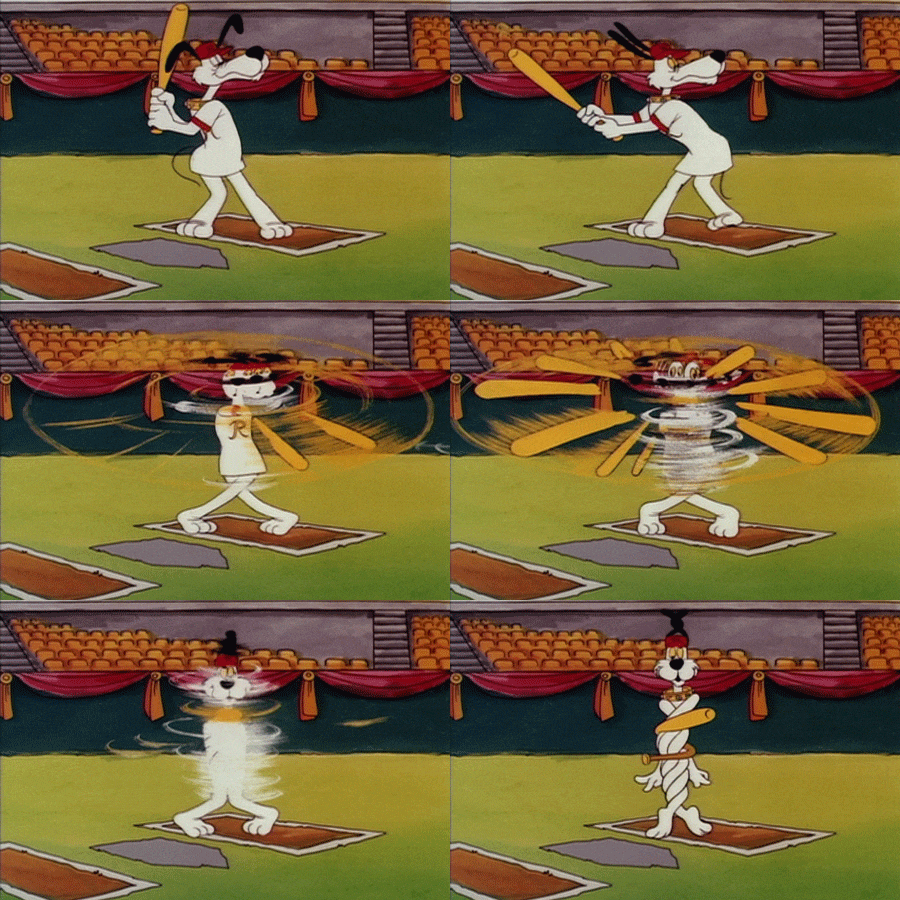
The more the player understands how to adjust her technique to each situation, the better chance she will have for success. A disciplined, informed approach will almost always yield better results in the long term.
You get out what you put in
With all of that said, it isn’t enough to have someone show you how to do something. No matter how famous they may be or how many social media followers they have.
The player has to put in the time to learn and internalize the new technique. Otherwise it’s not going to make her better, and may even make her worse since she’s now trying to walk in two worlds at the same time.
So is better technique worth the effort? In my opinion, yes – as long as you’re willing to change what you’re doing an embrace what you’re being taught.
It can offer a huge advantage to everyone from beginners to seasoned veterans. You just have to have the patience to work through the challenges, and maybe even accept lesser performance, until you reach the pot of gold at the end of the better technique rainbow.

Why Focusing on Energy Transfer Is Critical
Whether the goal is hitting farther, throwing harder, pitching faster or executing some other movement at a higher level, the first place many of us go is energy generation. Let’s take pitching, for example.
Pitchers will be encouraged to spend a lot of time on improving their drive mechanics. They’ll be told to do endless box jumps, lunges, dead lifts and other exercises to build more explosiveness into their legs. They’ll be put on devices such as the Queen of the Hill to help them learn to drive out even harder.
Yet improving the amount of drive is only half the battle. What often gets ignored in all this heavy lifting is the importance of being able to transfer the energy they’re generating into the ball efficiently, i.e., with as little energy loss as possible.
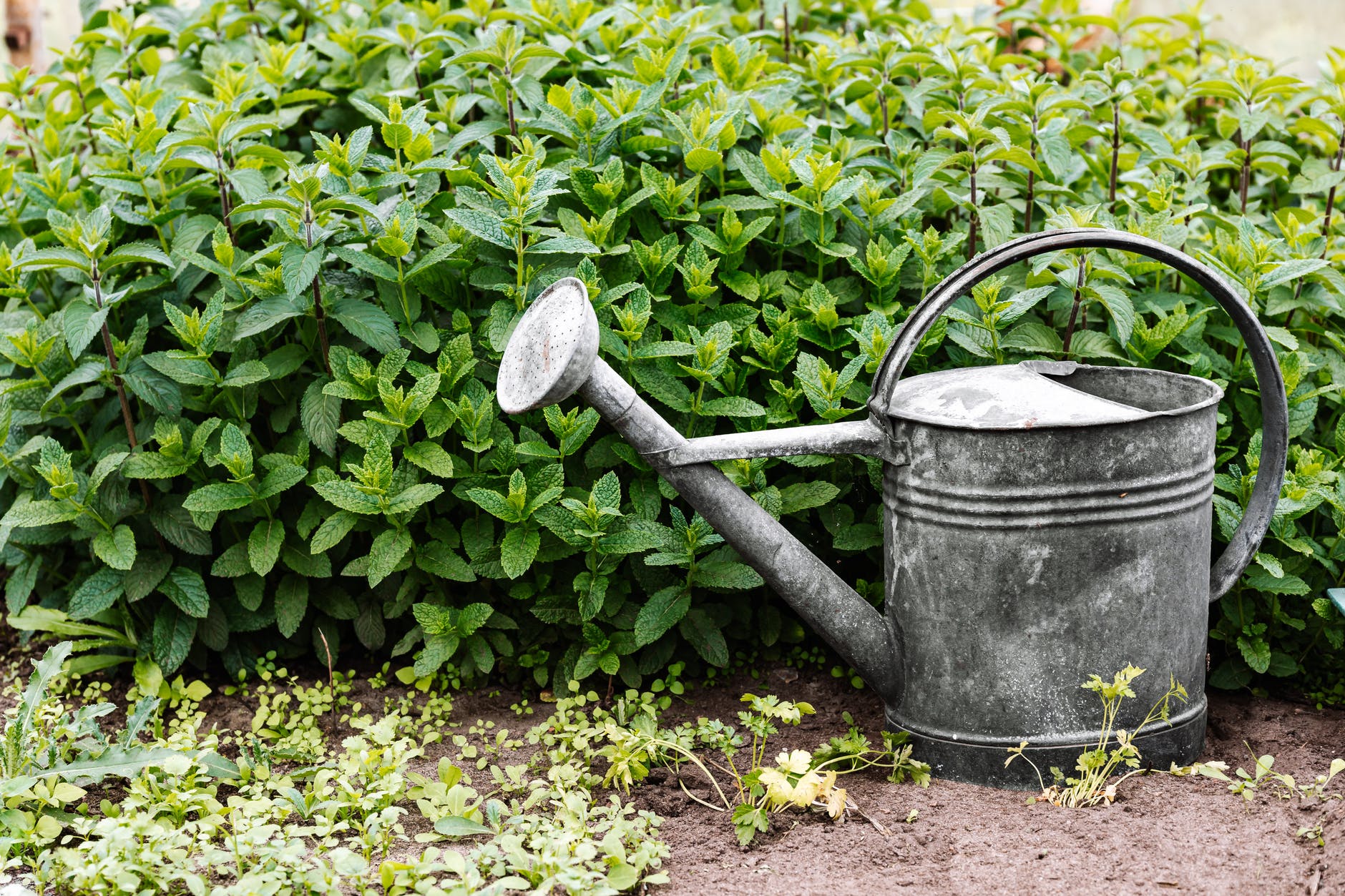
Here’s why that’s important. Imagine you need to move 20 gallons of water from point A to point B, but all you have available is a one gallon bucket. It’s going to take a lot of little trips to move all that water.
Not very efficient.
Now imagine you have a 10 gallon bucket instead. You’ll be able to take a lot more water in each trip while minimizing the number of trips you need to make to accomplish the same task.

The same is true for fastpitch softball skills. No matter how much energy you generate on the front end, that energy is only as useful as your ability to transfer/apply it to the skill you’re performing.
Of course in softball it’s not just about how much energy you can transfer but how quickly you can do it. A sudden transfer will delivery more of the energy into the ball versus a slow one. That’s just physics.
In hitting that means a quick swing that rapidly accelerates the bat to meet the ball at the optimum contact point. In throwing and pitching, that means a rapid series of accelerations and decelerations into the release point.
This, by the way, is one of several reasons why “hello elbow” pitching prevents pitchers from reaching their maximum levels of velocity.
Hello elbow finishes, where you try to muscle the ball through release by straightening out the arm as it goes around the circle, deliberately snap the wrist and then yank up on the arm (mostly after the ball is already gone), are slow, forced movements.
There is no sudden acceleration and deceleration sequence that enables the upper and lower arms, as well as the wrist, to move at different speeds at different times. It’s all one big forced movement, which prevents energy from being transferred – as opposed to internal rotation which accelerates and decelerates the upper and lower arm in sequence and allows the wrist to react to what the arm is doing, amplifying the energy instead of limiting it.
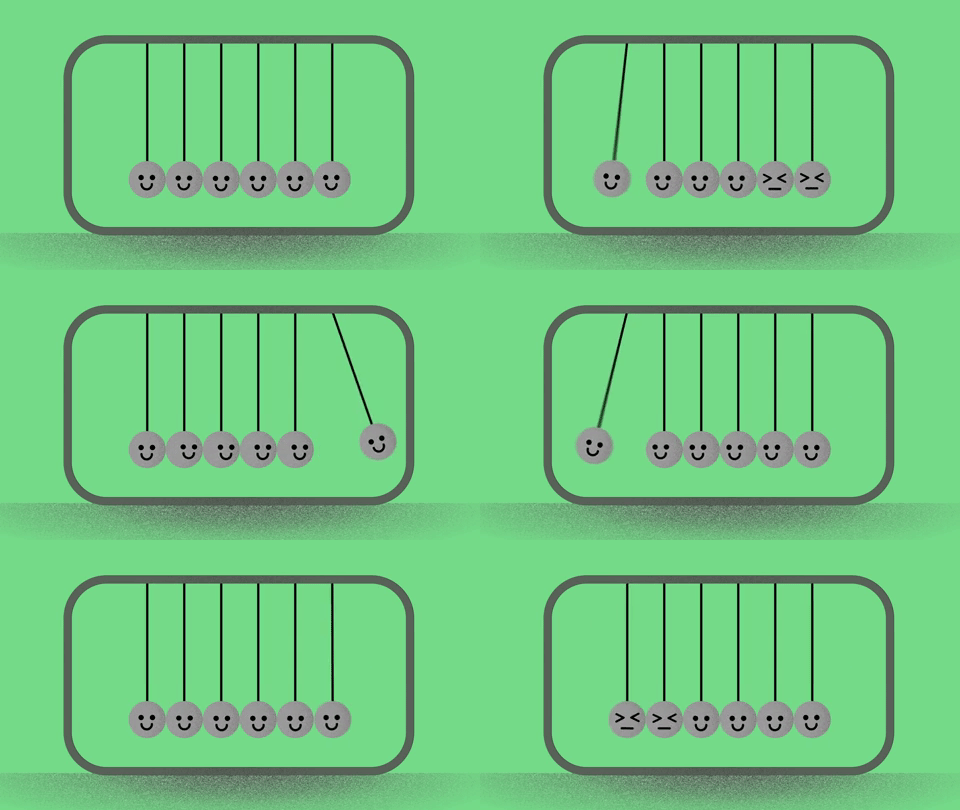
The point is spending all your time on learning how to generate maximum energy isn’t enough. You need to spend an equal amount of time, or maybe even more, on learning how to transfer that energy you’re generating efficiently. Otherwise it’s a lot of wasted effort.
Build yourself a bigger energy “bucket” and you’ll maximize your results with whatever your bring to the table today – and tomorrow.
Photo by Karolina Grabowska on Pexels.com
7 Tips to Make 2022 Your Best (Softball) Year Ever

First of all, let me tell you I had quite a debate with myself on whether to write a New Year’s post or just go with a more general topic. But when the stars align – as in the last day of 2021 is also the day I usually put up a new post – it’s a good idea to just go with it.
So here we are. Hopefully 2021 was a great year for you.
We actually had somewhat normal high school, college, and youth softball seasons, although COVID-19 protocols often impacted the spectator part of spectators sports. At least the fans who got in didn’t have to wear a mask on 90-degree days.
Also in 2021, fastpitch softball temporarily returned to the Olympics, albeit in eerily quiet and empty stadiums and played on baseball diamonds. It was sort of like watching a dome game with a field set up for football. The fact that the oddly formatted mini-tournament was finished before the opening ceremonies took place tells you all you need to know about what the International Olympic Committee (IOC) really thinks about our sport.
The Women’s College World Series (WCWS) on the other hand was a TV rating juggernaut, averaging more than 1.2 million viewers per game. That’s 10% more than the 2019 WCWS.
The three-game championship series between Oklahoma and Florida State fared even better, drawing an average of nearly 2 million viewers per game. In the process, we got to see a lot of great softball.
Speaking of great softball, Athletes Unlimited entertained a lot of fastpitch softball fanatics with its playground-brand of choosing up teams and having no coaches on the sidelines. Maybe they’re on to something.
And hopefully you personally had a successful 2021 as well.
Of course, as the disclaimer on every “get-rich-quick” scheme quickly says, past performance does not guarantee future gains. So following are a few tips to help you make 2022 an even better year.
Tip #1: Practice with a purpose
Yes, I know many of you have t-shirts with that very saying on them. But how often do you actually take that approach?
It’s easy to get into the rut of “putting in time.” i.e., going off somewhere and going through the motions of a skill for a half hour or an hour or whatever, or coaches having players performing activities for two, or three, or four hours. None of which will actually help you get better, and could make you worse if the practice is sloppy enough.
If you’re going to practice, then have a goal and go after it wholeheartedly. For example, if you’re a pitcher working on leg drive, then work on getting yourself out faster each time rather than mindlessly doing the leg drive drill you were assigned.
Master the skill, not the drill, and you’ll be a lot better off.
Tip #2: Grow your knowledge
In today’s Internet-accessible world there’s no reason to do things a certain way because that’s how you’ve always done them. There is an incredible amount of research being done in our sport and an incredible wealth of knowledge being shared – if you will open your mind to it.
The National Fastpitch Coaches Association (NFCA) is one of the best. Right now they are in the midst of hosting a series of live coaches clinics around the country that enable top-level coaches to share their expertise with the rest of us.
If you want to go more in-depth on a topic, the NFCA also has its Master Coach program, which offers a combination of live and online courses. I took their very first online Coaches College course earlier in 2021 and it was well worth the time and money. Give it a shot.
There are plenty of private resources as well. PaulyGirl Fastpitch has its High Performance Pitching courses at the beginner, intermediate, elite, and pro levels.
You can learn all about great throwing mechanics from the High Level Throwing program. There’s a cornucopia of hitting courses out there as well.
Then there are resources such as the Discuss Fastpitch board and the Fastpitch Zone and The Bullpen Facebook groups that connect coaches from around the world with one another to share their knowledge and experience. And that’s the just the start.
If you want more knowledge it’s out there. Just be sure to come in with an open mind because some of what you hear may go against everything you’ve ever believed. And that can be a good thing.
Tip #3: Use video
This one doesn’t require a lot of explanation. There’s what we think we see or feel, and there’s what’s actually happening. They’re not always the same.
Virtually every mobile phone includes a high-definition, high-speed camera for free that would be the envy of coaches and players from just 10 years ago. Take advantage of it.
Video yourself or your players often, and see if what you think you’re doing is what you are in fact doing. Compare what you see to the best players in the world.
While you don’t have to match exactly, you should match in principle. If you’re not doing what you think you’re doing, adjust accordingly.
Tip #4: Work on your mental game
Ask any group of coaches or players “who thinks the mental game is a critical contributor to success?” and you’ll probably see every or nearly every one of them raise their hands. Then ask how many take the time during practice or during their free time to work on it and you’ll likely see few (if any) hands.
It’s sort of like Mark Twain’s famous admonition about the weather: everyone talks about it but no one does anything about it.
That is a mistake in my opinion. There are (again) plenty of books and other resources that focus on this aspect of sports. Here’s a list of a few:
- Head’s Up Baseball
- Mind Gym
- The Champion’s Mind
- Championship Team Building
- The Mindful Athlete
- Winning State
- Mental Conditioning for Softball
- The Energy Bus
Invest some real time in developing the mental game – especially the part about overcoming adversity – and you’ll be amazed at what you can do.
Tip #5: Make some time for recruiting activities
This is for those players who want to (or think they want to) play softball in college. If that’s not you, go ahead and skip to Tip #6.
For those still reading, playing softball in college at any level is an accomplishment – and ultra-competitive these days. You’re unlikely to be randomly discovered playing during a local tournament.
If you want to play in college, you need to make an effort to build a relationship with coaches at different schools, and at different levels.
One obvious way is to attend skills camps at schools where you might like to play. While some are just money grabs that have minimal involvement from the college coach, most are both an opportunity for coaches to give back to the game while checking out potential future talent. What better way is there to get them interested in you than to demonstrate your skills in their “house?”
Social media in general, and Twitter in particular, is another great way to establish and maintain contact with coaches. Follow coaches at schools you’re interested in and hopefully they will follow you back.
Share their Tweets with your followers. Send Tweets of your own about your/your team’s latest accomplishments and activities and tag the coach or the program. Be active and be visible.
Just one word of caution about social media: keep it positive at all times. The Internet is written in ink, and more than a few players have eliminated themselves from consideration by their dream schools because of things they’ve posted. That includes photos and negative comments about their parents or current coach.
Present yourself as if the coaches you want to play for are watching every post. Because they are.
Email is still a valid way to contact coaches too. Just keep it brief – they’re busy people and many get hundreds of emails a day. If you want to share a video, be sure the coach can see what you want him/her to see in ONE click. Any more than that and they’ll pass.
This isn’t just for high school players either. While the D1 rules changed and they can no longer contact players before September 1 of their junior years, it doesn’t mean they’re not paying attention to who can play and who is interested in their schools. And there are no such restrictions for D2, D3, and NAIA, although they tend to recruit later anyway.
Recruiting is a marathon, not a sprint, so get out there early and often if you think playing in college might be for you.
Tip #6: Make time for rest and recovery
When you’re dedicated to something it’s easy to overdo it. Don’t let that happen.
Rest and recovery is just as important to high performance as training. Your body needs time to build itself back up after intense activity. So does your mind.
It’s ok to take a day or two off each week during the season as well as during the offseason. Your body and your brain will tell you how much you need for peak performance. You should also plan on taking at least a couple of weeks off at some time during the year for deeper recovery.
Oh, and this applies to coaches too. You’ll find coaching is a lot more enjoyable if you let your batteries recharge now and then.
Tip #7: Resolve to have fun
This is probably the aspect that has been most lost over the course of the last 10-20 years. Yes, we have more technology that can tell us more things, and more practice facilities that enable us to keep working even when the weather is at its nastiest, and more opportunities than ever to take our game to a higher level.
But the tradeoff has been more pressure and more stress to the point where playing (and coaching for that matter) feels like a job. And not a particularly pleasant one.
It’s important to remember that softball is a game, and games are supposed to be fun.
That doesn’t mean it should be like a birthday party without the cake. But it shouldn’t be like studying for finals while waiting to see the dentist either.
Fun in most cases is what you make it. Some people enjoy really digging into things and pushing themselves to their limits. That’s right for them.
But it’s not right for everyone. Others will find their fun in getting a little better each day without killing themselves, competing (in a friendly way) with their teammates, or in being part of a team.
Understand what’s fun for you and then find/create a team with others who share your definition and goals. Like using the wrong pair of cleats, being on a team that isn’t a good fit can be painful.
Good luck to everyone, and I hope you make 2022 your best year ever!
Photo by Damir Mijailovic on Pexels.com
Light Bulb Moment: Athletic Efficiency

One of the concepts that can be tough for a young athlete (not to mention many adults) to understand is that stronger is not always better.
What I mean by that is that in their desire to throw harder, hit harder, run faster, etc. fastpitch softball players will often equate muscling up or tightening up with improved performance. They tend to take a brute force approach to their movements, assuming that if they work harder or produce more energy then they will ipso facto see better results.

Yet that isn’t always the case. In fact, sometimes the attempt at creating more energy through brute force works in the opposite manner by locking up joints or slowing down movements which reduces the amount of that energy that can be transferred into the activity.
In other words, despite the increase in energy the overall usage of energy becomes less efficient.
The reality is there are two key elements to maximizing athletic performance in ballistic movements such as pitching, throwing, hitting, and running.
First you have to create energy. Then you have to transfer that energy.

The brute force approach may work with part one. But it often gets in the way of part two, which means much of the energy the player worked so hard to create is wasted.
Makes sense, right? But how do you explain that to a player without making it sound like a science class lecture – at which point your voice starts to sound like Charlie Brown’s teacher?

The light bulb moment for me came when I was thinking about a light bulb I needed to replace during a lesson. Perhaps this will help you too.
Think about two types of light bulbs: the standard, traditional incandescent bulbs most of us grew up with (and that are now difficult to find) and LED bulbs.
If turn an old-school incandescent bulb on and leave it on for a few minutes, what happens to its surface? It gets hot. Very hot. As in don’t touch it or you will get burned.
That’s because while an incandescent bulb may be labeled 60 watts, not all of that wattage is going into creating light. In fact, much of it is being wasted in the form of heat.
Now think about an LED bulb. You can leave a 60 watt LED bulb on for an hour, then go over and put your hand on it without feeling much of anything. (DISCLAIMER: Don’t actually do that, just in case.)
The reason is that 60 watt LED bulb isn’t actually drawing 60 watts. That’s just a label the manufacturers use to help consumers know which bulb will give them the light level they’re used to.
In fact, that 60 watt equivalent bulb may be drawing as little as 8 actual watts to deliver the same amount of light as a 60 watt incandescent bulb. Since its purpose is to create light, not heat, the LED bulb is almost eight times as efficient as the incandescent bulb.
Now that’s apply that to softball. A pitcher who is nearly eight times as efficient in her mechanics as the next player will throw much harder with the same level of effort.
Conversely, she can perform at the same level as the other pitcher with almost no apparent effort at all. She is just much better at harnessing whatever level of energy she is creating and delivering it into the ball.
The same is true for hitters. Most of the time when you see a home run hit it doesn’t look like the hitter was trying to go yard. She just looks smooth as the ball “jumps” off her bat.
This is not to say strength isn’t important. It is.
Remember part one of the formula: you have to generate energy. Great training in mechanics along with intelligent sport-specific or even activity-specific training is critical to achieving higher levels of success.
But it’s not enough.
Understanding how the body moves naturally, and using those movements to take full advantage of the energy being created, will help players deliver higher levels of performance that enable them to achieve their goals and play to their greatest potential.
Hope this has been a light bulb moment for you. Have a great holiday, and take some time to relax. You’ve earned it.
The Challenge of Making Changes
“If you always do what you’ve always done, you’ll always get what you’ve always gotten.” This quote, generally attributed to car magnate Henry Ford, explains in a nutshell why fastpitch players, parents and coaches should constantly be seeking new information and new techniques. After all, who doesn’t want to get better?
What’s hidden underneath the surface, however, is a fairly large obstacle: change is (or at least can be) difficult. Which means even if you’re making the right changes for the right reasons it doesn’t always work right away.
How many times have you watched a pitcher attempt to improve her mechanics and seen her speed go down a little instead of up? How many times have you watched a hitter take her swing from looking like an unmade bed to a well-organized attack and yet she suddenly struggles to hit the ball as hard as she did?
At that point its tempting to wonder if you’re actually helping her, or if she is helping herself. Why is she losing ground instead of gaining it?
To answer that question I have a little challenge for you. If you are over the age of 5 I presume you know how to use a fork and a spoon competently enough to feed yourself without making a mess. You can probably do so fairly quickly, without thinking about it.

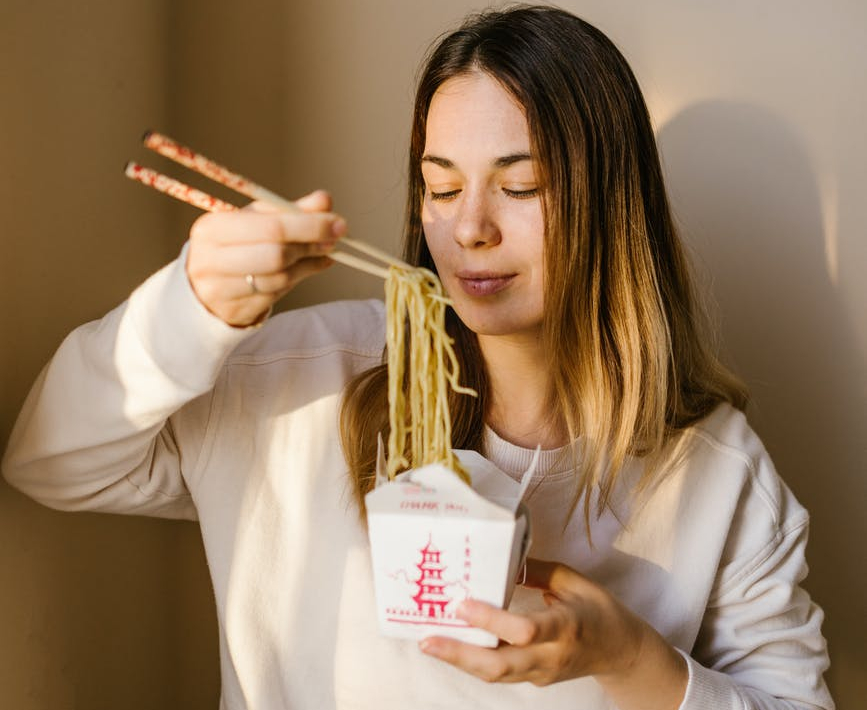
Now try switching hands and doing the same. In other words, if you normally eat with your right hand, try eating with your left. (For extra challenge, try it with chopsticks, especially if you are not native to them.)
Suddenly, something you do every day without even thinking about it becomes more awkward and difficult. You have to think about how to scoop/stab the food to keep it on the spoon/fork/chopsticks, the angle of the utensil as it approaches your mouth, keeping the utensil steady as you get close to your mouth and a few other things you probably haven’t considered since you were a toddler.
And if you go long enough, or try to go too fast, you will probably find some of that food dribbling down your chin or dropping into your lap. You will probably also take longer than if you had used your usual hand.

It’s not that you don’t know how to eat. It’s that you’re doing it in a way that is unfamiliar.
That is the same experience athletes typically have when they are trying to make changes or learn something new. The technique they were using previously may not have been ideal, but they were comfortable with it and could execute it quickly and without thinking.
Now, as they try something unfamiliar, those same movements feel awkward and uncomfortable. They actually have to think about what they’re doing, and that slows the entire process.
So rather than quick, energy-driven, ballistic body movements they’re making movements that are labored – slowed by the conscious thought of trying to do what they’re now supposed to do.
So what’s the solution? Time. You know, that thing that all of us try to rush through to get to the great results.
Essentially what has to happen is the new movements have to be able to be performed with the same comfort level as the old ones to see the gains. That doesn’t usually happen right away, even with elite athletes.
Instead, it takes conscious work and effort to learn the new movements properly and build the confidence required to execute them with 100% energy.
The best way to do that is start slowly and work from short distances, preferably into a net, wall or other large surface. Get the feel of the new movements, then gradually increase the speed.
The coach or athlete should use video to check her movements and be sure she is not falling back into old habits as speed increases. If she is falling into old habits, slow it back down, get it right, then try increasing the speed again.
Once she is comfortable at a good speed, start moving toward a more game-like experience. For pitchers (and overhand throwing), that’s increasing the distance to see if the quick movements can be maintained.
For hitters, it’s moving off the tee into front toss – easy at first, then gradually increasing the speed. If you have access to a pitching machine and can feed it competently, you can use that as another step before having the hitter face a live pitcher.
This gradual, stepped progression will give the athlete an opportunity to replace old habits with new in a way that allows her to focus on the process, not the outcomes. By the time outcomes come into play she should be able to execute the skill with full energy and attack – at which point you will see the gains you’re looking for.

It’s not easy to do this. Most athletes just want to do the full skill rather than step through progressions, at least a first. But it’s worth it in the long run.
If you have an athlete who is working to make changes but not seeing the benefits yet, be patient and trust the process. If she’s working on the right changes, and working diligently, it will happen.
In the meantime, grab that carton of chow mein and try eating it with the opposite hand. It will give you a greater appreciation of just how difficult it can be to do something old in a new way.
Photo by RODNAE Productions on Pexels.com
Fastpitch Player’s Holiday Gift Guide

Ok, I know I’m a little late on this for Hanukkah but who knew it would be so early this year? I guess just bookmark it and have it ready for next year.
For those with holidays still coming up, however, here are a few ideas for gifts that I think will not only be good for immediate satisfaction but could potentially have an impact on your favorite player’s entire career. I am not including gloves or bats since you probably have already thought of those. I wanted to go a little outside the box.
And in case you’re wondering, no, I’m not being compensated by any of the companies mentioned or linked to for including them (or anything else for that matter). These are just products or services I’ve found to be valuable and think you will do.
Enough preamble. Let’s go shopping.
High-quality batting tee
This is an essential piece of equipment for any player. Even non-hitting pitchers can use it to practice locations as I showed in this post.
The typical use, of course, is for hitting. Tee hitting is for working on mechanics without the challenges of timing a moving ball. If you’re trying to get the proper sequence (hips-shoulders-bat), fix your bat path, learn to tilt properly or solve any other mechanics issues a tee is your best friend.
That said, there are a lot of choices for tees out there. I prefer one that doesn’t have a base that looks like home plate, because when it does look like home plate hitters tend to line up on the tee in a way that is not conducive to great hitting.
Tanner Tees were the original to develop the particular design I favor, although for durability (and resistance to getting easily knocked over) I really like the Jugs T. For younger players, or older players who have trouble with low pitches, the Jugs Short T is also a great choice. You can read more about the Short T in my product review here.
Jugs is also apparently coming out with a combo package that includes both heights. Doesn’t look like it will be available until next year, though, so maybe save it for a birthday or graduation gift.
Large, easy-to-set-up net
If you are getting a tee you’ll probably want to get a net to hit into. That way you can hit in the back yard, basement, garage, or other space without damaging your home or having to chase after the balls.
Bownet is probably the best-known brand at this point. You see their distinctive orange nets at pretty much every game and tournament (although they have a variety of colors available now). But Tanner, Jugs and others also have nets that will do just fine.
Of course, it’s not just hitters who can use a net like this. Pitchers can use one to practice their mechanics from a short distance. Field players and catchers can use them to develop their overhand throw velocity. And so on.
A net like this will pay for itself many times over. And when you’re done with it, if you’ve bought a good quality one you’ll be able to sell it and recoup part of your investment in cash. Pretty good deal overall.
Quality softballs
There’s something about working with nice, bright, shiny new softballs that helps players feel better about their practice time. After all, it’s a lot easier to take pride in your practice time if you’re not using crappy old, beat-up, dirty softballs.
That said, there are all kinds of softballs from many different manufacturers, from the really cheap to the really nice. It’s hard to know which ones to purchase.
My ball of choice right now is the Mark One NFHS 12″ softball. They are real leather balls with a .47 COR and raised seams, among other features.
What I like about them is they are comparable in quality to Worth Dream Seams but generally cost less. I use them for hours a day, nearly every day (including having hitters beat them into metal backstops on a regular basis) and they hold up well. They also have great grip so pitchers like to use them.
But check around the Internet and you can find several high-quality softballs to make your favorite player happy.
Video analysis app
I recently did an extensive product review on a video analysis app called OnForm. It has a lot of great features, including an auto-detect function that would allow a player to set up a device on a tripod and then have it record pitches, swings, throws, etc. when it sees motion.
But there are others out there as well. Kinovea is one that comes to mind, although you can only use it with a computer, not a phone or tablet.
With this type of software a player can record herself and scrub through it to see if what she’s doing is what she thinks she’s doing. Or she can send the video to a coach who can help her with it.
The value of being able to see yourself in slow or stop motion cannot be overestimated. In fact, high speed video analysis has been crucial to busting many myths and mis-teachings that grew up over the years.
If you can’t find a free version, find something you can afford. It’s worth it.
Polyballs
These are the pliable balls with different weights that you can use for a variety of different types of arm training. They’re great for pitchers, catchers and field players to help develop safe throwing mechanics and improve overall arm and shoulder strength.
Polyballs have grown in popularity over the last couple of years so there are a variety of sources from which you can obtain them. I personally use the balls from Velolab Softball, which comes with a free training program. Austin Wasserman’s High Level Throwing is another source, where they are called Lightning Balls.
One of the great things about them is you can throw them into concrete walls, or plywood, or pretty much any solid wall without damaging the wall or the balls. They make an audible “slam” sound too, so the harder you throw the more satisfying the sound. The lighter ones might even be able to be thrown into drywall, although I would test that theory in an out-of-the-way place first before tossing one in the living room.
Radar device
In my opinion, having some way to measure speed is critical to the development of pitchers, extremely helpful for overhand throwing, and even has some benefits for hitters. I like to call the radar the “pitcher’s accountability meter” because if she takes a pitch or two off, or goes the other way and tries to over-throw/over-muscle the ball, the radar calls her out immediately.
I am personally a huge fan of PocketRadar devices. The Ball Coach is good, but the Smart Coach is worth the extra money if you can swing it because it will not only capture the speed but enable you to embed it in a video capture at the same time. You can read my review of the Smart Coach here.
(If you use your PocketRadar often you’ll also probably make up for the cost difference pretty quickly with the money you’ll save using power blocks instead of alkaline batteries.)
Whatever brand you decide to get, however, my suggestion is to do it often rather than just bringing the radar out now and then.
If you only use it occasionally it becomes a big deal and the pitcher tends to tense up. If it’s part of a regular routine she will not be as intimidated and you’ll ultimately get better readings. I learned that lesson the hard way!
Pitching mat
There are a few good reasons to give your pitcher a good quality pitching mat for the holidays. One of which is saving wear-and-tear on your floors, especially if your pitcher has a heavy drag.
But beyond that, a pitching mat with a built-in pitchers plate can help pitchers learn to use the plate as part of their launch. A center white stripe can help them feel whether they’re going straight or striding out to the side.
If you do decide to get a mat one thing to check into is the type of backing it has. Some are better than others for different types of surfaces.
For example, a rubber backing will be great on a gym floor or other wood floor but may tend slip on turf. There are mats specifically designed for turf surfaces (although not all turf will hold the mat equally well), but they don’t translate too well to a fieldhouse or gym floor.
They have varying lengths as well. Some will extend roughly eight feel in front, pretty much covering the whole stride, while others are just designed to hold the pitcher’s plate itself. A little Internet research will turn up many options and sellers at various price points.
And for outdoors or long turf, the Portolite Mat with the spike backing will hold in conditions where other won’t. You can read my review of this product here.
Pitcher launch aids
One of the greatest challenges many pitchers face is getting a strong launch/leg drive. While some come by it naturally, most have to have it trained into them at some level.
The key is to get pitchers to get their hips moving out in front of the pitching rubber as they go into launch rather than sitting down on it. Three devices I’ve used to help them feel it are the Power Pod, the Softball Power Drive, and the Queen of the Hill.
Each of these goes about it in different ways. The Power Pod from Softball Excellence adds a little springiness to the initial move to go out, helping get away from “dead leg syndrome.” As a bonus, I also find it pretty handy for helping pitchers learn how to spin the curve and rise (although it wasn’t designed for that) and for teaching hitters to stride straight instead of away from the plate.
The Softball Power Drive, which is endorsed by Amanda Scarborough, helps pitchers feel the sprinter’s lean and forward angle of the body rather than sitting straight down on the pitching rubber. If they’re dragging the drive leg like an anchor they’ll feel it pretty quickly.
Then there’s the Queen of the Hill, which I’ve reviewed previously. Its sliding plate is great for teaching pitchers to drive their drive foot back instead of just running past it. If you push into it you’ll hear a “click-click” which tells you you did it right. If you don’t, no click.
You can also use these devices in combination. For example, put the Queen of the Hill behind the stride foot to encourage that foot to engage the ground before moving forward, and then the Softball Power Drive or Power Pod on the drive foot to encourage more drive as you come through.
Generating forward energy is critical to maximizing pitch speed. These devices can help.
PaulyGirl Fastpitch/High Performance Pitching online program
So, this is probably more of a secondary gift. I’d guess 99% of pitchers wouldn’t be interested in doing the training themselves, but if a parent or coach did the worked through the High Performance Pitching training program he/she could convey the information to the pitcher – at which point she would benefit greatly in my opinion.
Renowned pitching coach Rick Pauly has put together an extensive, detailed program broken into Beginner, Intermediate, Elite, and Professional levels. It’s all video-based and self-paced, which means you can go as slowly or as quickly as your time budget allow.
You can also pick and choose what you want. So if you just want help with the curveball you can take that module without having to go through the entire Elite level course.
If you’re interested in more information you can read this blog post which goes into much greater detail.
That’s a wrap
So there you have it – fairly exhaustive list. I could probably do more but if you’ve made it this far you’re already made of stern stuff. Have to stop somewhere.
Of course, for other ideas, you can use the search function in the left column and put in “Product Review.” You’ll no doubt find a few other ideas.
In any case, happy holiday shopping! Just remember, no matter what you buy it’s the archer, not the arrow, that really makes the difference.
Check the Big Picture Before You Hit the Panic Button

One of the most important characteristics that drives (or at least should drive) youth athletes is the desire to be better this week than they were last week.
That doesn’t mean leaps and bounds better, like suddenly jumping 5 mph in pitching or hitting the ball 50 feet farther as a hitter. But, as Bobby Simpson says, getting a little better every day.
So it can be pretty distressing when, say, a pitcher goes to a lesson or practice and her highest pitch speed that day is a couple miles an hour off of her personal record. The pitcher may get discouraged and question her self-worth, and her parents may panic thinking something is horribly wrong. And, of course, her coach will be doing everything he/she can think of to try to get the numbers back up.
Sometimes, however, the issue isn’t a mechanical flaw or a lack of effort. Sometimes that’s just all that player has to give that day.
This is especially true for multi-sport athletes. A fastpitch softball player who is also in-season for a high-impact, energy-draining sport such as basketball, volleyball, ice hockey, field hockey, swimming, tennis, etc. may find it difficult to maintain her highest level of performance when she leaves her other sport’s game or practice and goes to her softball event.
Think of it like a glass of water. The player starts out with a full glass.
During the other sport’s game or workout, the glass begins to empty. Depending on the intensity she may drain it completely.
When it’s over, she moves on to softball. Along the way the glass starts to fill again, but it may not quite make it back to the top before she has to go out and perform again. So she’s starting with a less-than-full glass.
In some cases, it may not have even filled halfway again. So to expect her to perform at her highest level will be unrealistic because the energy is simply unavailable.
And that’s just the physical side. There is also the mental component.
It can be tough to switch gears, especially after a game where there is competition and pressure. She comes down from that, then has to crank it back up for softball? It may not happen.
Of course, this isn’t just limited to mental drains due to sports. Other factors can be involved as well.
Students struggling with a course load, or a particularly difficult class, or facing a tough test or finals may find they can’t work up the fine level of focus required to do your best. Musicians preparing for a concert, recital or competition, actors looking at the premiere of a play, debate team members in deep preparation and so on all have distractions that could prevent them from performing at their best.
Finally, there are friend and family dramas and social media issues to consider. While they may seem small to you, to an adolescent or pre-teen the issues may seem overwhelming – or at least challenging enough to get in the way of top-level performance.
Now take two or three of those issues and combine them and it’s easy to see that while the player may be willing she just doesn’t have enough in the tank to perform her best.
With pretty much all sports and activities (not to mention life in general) being year-round, there are no easy solutions. Just saying “suck it up and rub some dirt on it” doesn’t do anything but add to the frustration (and anger).
Best we can do is understand that, just like at work, kids are going to have good days and bad days. Some days they’ll be all charged up no matter what is going on in their lives. And some days, well, they’re just going to have to give the best they have and call it a day.
The measurables may not be there, but it doesn’t mean they’re not getting value. If anything, they’re learning how to perform in the last Sunday game of a long tournament played in 95 degree heat and high humidity.
So if your daughter doesn’t seem to be performing at her highest level don’t be too quick to hit the panic button. Take a look at what else is going on her life.
It could just be a temporary bump in the road that will solve itself when she’s not so pressed with everything else.
Photo by Pixabay on Pexels.com






