Softball Takeaways from Simone Biles
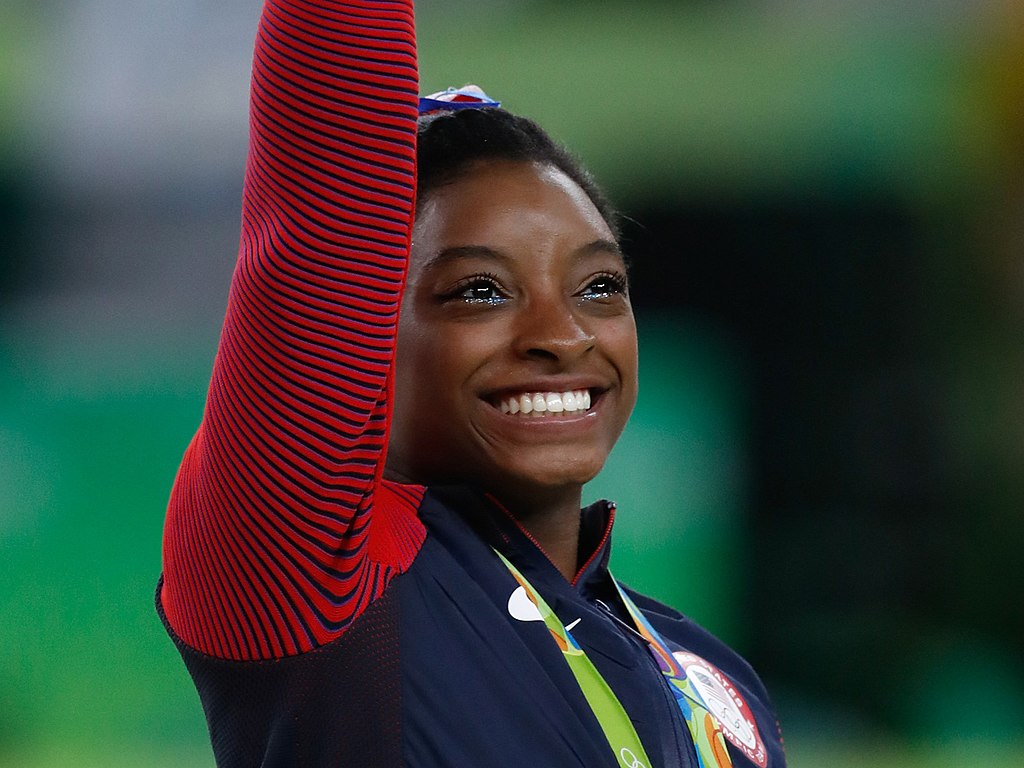
While the return of fastpitch softball to the Olympics was the big story for many of us who are fanatics for the sport, for the general populace of course one of the biggest stories was gymnast Simone Biles deciding not to compete in the team or most of the individual events. She did, of course, eventually take Bronze on the balance beam which is hardly her signature event.
It’s hard to imagine what a difficult decision that must have been for her. Here she has spent the last five years training for the opportunity to win more medals, presumably Gold medals, in her sport’s biggest showcase.
Yet when the time came something in her just snapped. She knew she couldn’t do it mentally at the level she needed, and that put her at risk of serious injury or perhaps even death given what she had planned to do. After one vault she decided it would be best to withdraw and give someone else a chance instead.
How did she get to that point? Part of it, of course, was relentless training. I doubt she’s taken many days off since she became a serious competitor, and that can take a physical and mental toll on you after a while.
While softball players don’t train at the same intensity or risk level as national team gymnasts (most of them anyway), it is possible to get so caught up in what you’re doing that you forget why you’re doing it. When softball starts to feel like more of a burden than an escape from life’s many real burdens, it’s time to take a little time off.
Another issue Simone Biles faced was a distinct lack of support, especially from people at the highest level of her sport. Those people loved showcasing her to the media to promote their own agendas, but when she told them about irregularities around the training they did their best to brush it under the rug and forget about it.
Parents, if your softball-playing daughter tells you physical or mental abuse is happening, don’t just tell her to suck it up or quit whining. Do all you can to find out if there is any reason to be concerned – even if it might mean losing a scholarship opportunity or being removed from a team that wins all its tournaments.
Your daughter’s safety and mental health are worth more, and not worth trading for any amount of money or plastic trophies. When she says something is wrong, be sure to listen.
Coaches, you have the same responsibility. If your player is suddenly having problems don’t get stuck thinking your job is simply putting a winning team on the field. Take an interest and find out what’s wrong.
Maybe she just has a softball version of the “twisties” and needs some help working through them. She’s lost confidence and needs someone to help her fill her confidence bucket back up.
Maybe she’s in a hitting slump and just needs someone to believe in her. The thing that prolongs most slumps is over-thinking the cause. Help her remember who she is and what she can do, even if it takes a little while. It will be worth the effort.
Or maybe, just maybe, something is going on at home or in her personal life that has her all off-kilter. You caring enough to find out and help her could have a lasting effect on her life that she will remember and appreciate long after she’s left her cleats at home plate.
Finally, when you’re performing at a high level there will always be haters – people who want to tear you down and then delight in your failure. Especially if you’re a female.
Many of the people leveling those criticisms have never put in the effort to do anything at a high level, But they’ll be more than happy to tell you why you’re weak and undeserving because you suddenly feel the pressure you were able to shut out before.
Players, don’t listen to them! Those ignorant couch potatoes know they don’t have the drive or dedication to be like you, so they want to drag you down to be like them.
Do what you need to do to get right in your own head – even if it means stopping for a bit to let it clear. This is the perfect time of year to do that, by the way.
The summer season is over, tryouts are over, and fall ball is still a few weeks away. Go to the beach or the movies or an amusement park. Listen to music all day, or sit and read a book or three. Hang out with friends who you don’t share a uniform with.
In other words, find something else to do with your day. Softball will still be waiting for you when you get back.
Anyone who has watched her career knows Simone Biles is the ultimate competitor. She’s never met a challenge she didn’t take head-on.
So when she says she has the “twisties” and the best way to deal with them is by pulling out of the Olympics it’s worth taking note.
If Simone Biles needs to walk away for a bit, the same can be said for any of us.
Take care of yourself, even if some around you don’t quite understand. Softball will be here when you’re ready. And you just may enjoy and appreciate it a little more.
Simone Biles photo from Agência Brasil Fotografias, CC BY 2.0 https://creativecommons.org/licenses/by/2.0, via Wikimedia Commons
A Few Post-Olympic Thoughts

Last week I wrote about some things to watch for as fastpitch softball made its return to the Olympic stage. If you haven’t read it already you may want to follow the link above and give it a look as it is both insightful and brilliant. Or at least marginally interesting.
Now that the tournament is finished I thought it might be a good idea to see what takeaways we might draw from what actually occurred while it was going on. There are definitely some lessons to be learned.
SPOILER ALERT: This post will refer to outcomes, so if you’re one of the few softball fanatics who have not watched the games and are trying to keep yourself from learning who won until you do, you may want to do that first – or explore other posts here on the blog.
Nice to see softball back in the Olympics
Let’s start with the obvious. After a 13 year absence it was great to see fastpitch softball back in the Olympics in any form.
The Olympic games draw a LOT of eyes and are considered to be a major international event. Yes, you have the Pan Am Games and the World Cup of Softball, but those are essentially “in the family” events. IOW, only softball people are interested in them.
The Olympics, on the other hand, allow people who have no real interest in softball to randomly stumble across them. This is also helped by the fact that they appear on a major network (in this case NBC), even though in reality the games were on offshoot networks rather than NBC proper.
Plus the Olympics have built-prestige of their own despite all the problems and scandals of recent years. It’s great for popularizing the sport and exposing it to new potential fans. Lots of good things about it.
That said…
The tournament format was awful
Really? Five pool play games and then you go straight to the Gold and Bronze Medal games?
I would expect more from a local rec league tournament.
Anyone who knows anything about this sport knows a game can turn on a single hit, a bad bounce, a single throwing error, an umpire’s call, etc. At the highest level the margins are even more razor-thin.
Take the U.S. v Australia game. It was won by one fortunate, well-timed hit by the U.S. It could have easily gone the other way.
We also know teams can bounce back from a bad or unfortunate game to come back and take it all.
It should have been a double elimination tournament. I’m sure there were financial reasons it wasn’t, but the format they had made it look like the International Olympic Committee (IOC) just caved to pressure and let it in with the minimal effort possible. Softball was the red-headed stepchild of these Olympics.
This is further evidenced by the fact that half of the pool play occurred BEFORE the opening ceremonies, which most people consider to be the beginning of the Olympics. Which means they were less likely to stumble into the games on TV.
If you wanted to “prove” that not enough people are interested in softball to include it in the future, this was the way to do it.
The U.S. Team’s Offensive Plan Was Poor
If the goal was to prove that softball is an international sport and the U.S. doesn’t dominate it anymore, then mission accomplished. If the goal was to put together a team and a game plan to keep U.S. scoring to the minimum required to get into the Gold Medal game, then well done.
Yes, I realize the pitching is the best in the world (at least in theory), and great pitching beats great hitting. But other teams didn’t seem to have as much trouble scoring runs against each other.
Yet the U.S. managed a measly nine (9) runs in six (count ’em 6) games, and no more than two (2) in any single game. That’s pathetic.
I’m guessing part of that strategy was to support dominating pitchers with the best defense they could, then count on being able to scratch a couple of runs together to win 1-0 or 2-1. So forget worrying about finding big hitters and just get defensive stars.
The problem with that is it’s not 1996 anymore. Softball players work harder these days at hitting overall, and the bat technology is way better than when the Louisville burgundy bottle bat was THE bat to have. You wouldn’t use that in practice now.
A game can turn on a single swing, and if you get behind by a couple of runs early it can be tough to come back if you don’t have players who can hit the gaps for extra bases. As the U.S. found out in the Gold Medal game.
Then there was the offensive philosophy, which was incredibly predictable. As soon as the U.S. got a runner on first, the next hitter up was required to sacrifice bunt. Every. Stinking. Time.
That meant that a hitter like Jamie Reed, who tripled in the first inning of the Gold Medal game against the worlds best pitcher, spent most of the tournament laying down bunts instead of trying to drive runs in.
Even a fly ball to the fence could have advanced the runner on first as effectively as a bunt, with the added benefit that it might hit the fence or go over, resulting in a better offensive position.
I haven’t seen the stats, but to the best of my recollection the number of runs that were manufactured by sacrifice bunts was zero. In the meantime, the U.S. gave up a whole bunch of outs that might have come in handy later in the game.
Yes, I am prejudiced against the sac bunt anyway, and have been for a long time. It’s a waste in most cases. This just proved the point.
The other downside of being so predictable was that opposing teams, Japan in particular, could just sit on it and use it to their advantage. Like by pulling the corners in and pulling off a double play against a sac bunt.
Keep in mind the U.S. win against Japan in pool play came off a home run. They needed more of that.
Especially since, according to the announcers, Japan has spent the last few years trying to put MORE offensive firepower into their game. If Japan is your Gold Standard (no pun intended) the U.S. may want to look for players who can bang the ball – and then let them do it.
The defense was unreal
In my last post I talked about watching the speed of the game. These games did not disappoint.
The defense across the board was incredible. So many great plays by so many players on all teams. That is an aspect everyone got right.
The whole thing looked like an old timer’s game
Perhaps the oddest thing about these Olympics were how old many of the players were. Especially in the circle.
Monica and Cat for the U.S. are both mid- to late-30s. Yukiko Ueno is 39. Team Canada had several recognizable names from the past. All of them played in the last Olympic games.
It’s almost as if the people in charge felt they owed it to these players to let them play in one more Olympics. Not that they didn’t perform – they did.
But in a sports culture obsessed with youth it’s hard to believe there weren’t younger players who could have done just as well. Have we done such a poor job of training the next generation that the last generation had to step in? Or were they just trying to go with glory names from the past?
The problem with that is you lose the younger audience who didn’t grow up watching Cat and Monica and the others dominate the sport. I think a lot of younger fans want to see the names they’ve been watching in the Women’s College World Series – players they know and can relate to.
In my very informal survey of my students, most did not watch the Olympics. They had little interest. If you can’t get current players to watch the game played at that level how are you going to grow softball as a spectator sport?
From a marketing standpoint it’s time to leave the past behind and start focusing on the future. We apparently have eight years to get it right. Let’s do it.
It was essentially an American tournament
For those who still complain about U.S. dominance of the sport, they do have a point. Despite the different names on the jerseys, many of the players – especially for Italy, Canada and Mexico – were either U.S. citizens or played college ball in the U.S.
I think that was less true for Australia, but I believe they had a few too.
About the only team that wasn’t made in America essentially was Team Japan.
It’s great that more deserving players get an opportunity to play in the Olympics by going with teams representing their heritage instead of where they were born and/or raised. But if softball is going to become a permanent part of the Olympics we need more locally raised players for these teams.
Especially the European teams, because their Olympic Committees hold a lot of sway over how the Olympics are run.
Hopefully softball can generate enough publicity to get girls in these countries interested in playing softball at a high level against each other as well as against U.S. players. I guess we’ll see.
So there you have it – a few of my observations. Now it’s your turn.
Did you watch? If so, what did you think? Leave your observations in the comments below.
What to Watch for In the Olympic Softball Games
As you may have possibly heard as a fastpitch softball fanatic, our sport is back in the Olympics for the first time since 2008! This is a rare moment to watch the best players in the world compete on a huge stage with presentation budget of a major network production.
It’s also the last time for the next eight years as the sport is not included in the 2024 Paris Olympics. It is expected to return in 2028 and 2032 when the games flip to the U.S. and Australia. Who knows what will happen after that?
So since this is such an unusual opportunity you’ll want to make the most of it. Not just to sit back and enjoy the games (although that’s great) but also to learn all you can while you have the opportunity.
So to help with that, here are a few pointers on some things to pay closer attention to. The Speed of Play.
The Speed of Play
I’m not talking about pitch speeds, although they are incredible too. I’m talking about what happens when a ball is put in play.
Look at what happens on a ground ball. It is scooped up and on its way to first in a “blink and you’ll miss it” fashion. There is no double-clutching, no calmly standing up and then casually firing it over. It’s there and gone.
Or look at the baserunners. Even the ones you would think are more powerful than fleet are incredibly fast. If a ball is hit between two fielders in the outfield there’s a good chance the runner on first is going to third. Bobble it at all and she’s heading for home.
Everything is amazingly fast. If you want to know what to work on in your/your daughter’s/you players’ games, work on that.
For example, don’t just hit them ground balls. Run a stopwatch and challenge them to make the play in less than three seconds. I find blowing an air horn when the stopwatch hits three seconds provides a pretty good indicator of whether they were successful enough.
Work on just pure running too. I know most people get into softball because they don’t like all the running in other sports, but it’s something that does need to be addressed.
While you can’t make everyone fast you can help them get faster. The faster your team is the more pressure it puts on the defense and the more runs you can score when you need them.
Here you can start by making sure your players are running on their toes instead of heels or flat feet. Then do a lot of short, quick sprints.
Run down a hill. Have two or more players run against each other, perhaps letting one player start in front of the other. Have them play tag around the basepaths. Anything to get the feet and arms moving faster.
Watch the Pitching Mechanics
The coverage I have seen so far has been amazing at showing pitching mechanics. We are getting great closeup shots of what is happening at release on great pitchers such as Cat Osterman, Monica Abbott, and Yukiko Ueno.
Notice how close they are to their bodies at release, to the point where their forearms brush against their hips. Note how on a curve ball the hand kind of wraps around the back hip instead of being out and away.
Watch how they release the ball with a smooth, whipping motion. Note that they are vertical or leaning slightly back instead of being bent forward.
Also watch how they seem to glide on their back leg, like they’re riding a skateboard, until the front foot lands. Then they go into whip and release.
While you’re watching that, also note that they don’t drag their back legs behind them like zombies. The leg stays under them, which is what allows that skateboard-like movement.
It’s really a Master Class on pitching, happening pitch after pitch.
Listen to the Communication
With no crowd noise to speak of you can hear what’s going on down on the field more clearly. While at first you may list to the description of the play, maybe watch a second time and listen to what’s happening on the field.
They’re not down there keeping to themselves. Those players are communicating.
They’re talking before the play to make sure everyone knows their responsibilities. They’re talking during the play to help direct throws and avoid confusion. And they’re talking afterward to clean up any issues and pick up their teammates if something went wrong.
The more you communicate the better you’ll play as a team. Learn from the best.
What Happens Away from the Ball
The initial camera work is going to follow the ball. That makes sense because that’s where the main action is.
But during replays from other angles, look at what other players are doing. Who is backing up at a base? What is the right fielder doing on a throw from center to third?
If there is a steal or a bunt, who is fielding it and what are the other players doing?
For example, with a runner on first, if the third baseman fields the ball who goes to cover third in her place when the ball is bunted? Is it the shortstop, leaving second uncovered?
Unlikely since they may want to go for the lead runner. So is it the catcher? Pitcher? Left fielder?
The more you see how Olympic teams operate in particular situations the better idea you’ll have of what your team/daughter should be doing. Or at least learning.
How Tough Hitting Is Against Great Pitching
So far there hasn’t been a ton of offense in most of the games. That’s to be expected with such great pitchers.
Maybe it will change as the tournament goes on and the hitters get used to the high level of pitching they’re seeing. But right now it does demonstrate how challenging hitting can be – even for the best players in the world.
That’s something to keep in mind when your daughter goes 0 for 8 on a Saturday, or your team hits a collective .225. No matter how hard you work, a lot of good things have to happen to succeed at hitting.
That said, practicing properly (and often) gives you your best chance to succeed. Each of the players you’re watching works incredibly hard to do what she does.
Imagine where those hitters would be without all that hard work.
Softball is a game built on failure. It’s those who can push past it who will ultimately succeed.
They Make Mistakes Too
I think this is an important lesson for parents (and some coaches) to learn. These are the very best players in the world, presumably. But at some key moments, usually when their team can afford it the least, you will see a player here or there make an error.
It happens. It’s unfortunate but it does, even to the best. Especially in a pressure situation.
What parents (and some coaches) need to take away from that is these things are going to happen occasionally so you can’t freak out or get down on your daughter/player or scream at her in a way that makes her feel bad about herself.
This applies not to just physical errors but mental errors. If you’re a coach, make the correction in a non-judgmental way and move on. Believe me, she didn’t do it just to make you look bad or ruin your day.
If you’re a parent, be supportive. She’s probably already feeling horrible about it. Instead of making it worse help her learn from the experience so she doesn’t repeat it.
Realizing even the best players in the world make mistakes now and then will help you enjoy your daughter’s/players’ playing more and avoid turning one bad play into a bad inning – or a bad game.
Anyway, those are a few of the things I think you should be watching for as you enjoy softball in the Olympics. Any other thoughts? Leave them in the comments below,
Photo by Anthony on Pexels.com
The Back Leg Can Be a Propeller – or an Anchor
As I write this we are in the middle of summer vacation time here in the U.S. Families all over America are packing themselves up from wherever they live and traveling to a different area, state, time zone, etc. in search of a little R&R.
Even softball families are in that process. Some have already finished their seasons, while others are fitting in a little vacation time before or after tournaments.
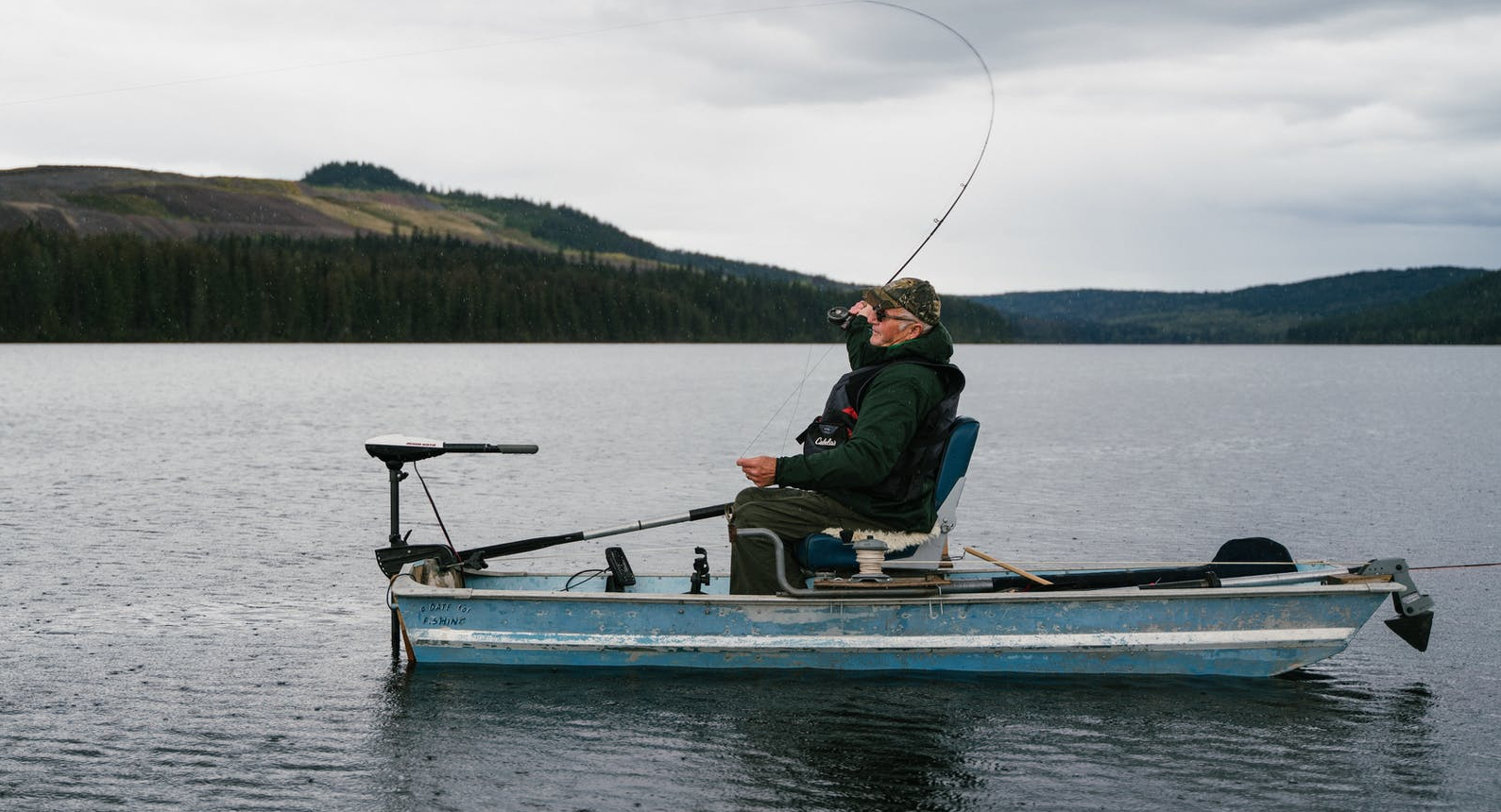
For me, when I think of vacations I am reminded of taking my family to a lake for some serious downtime. Originally that meant the North Woods of Wisconsin, where we and various members of my wife’s family would rent cabins.
As part of the rental, we would get motorized row boats that we could use to go fishing. I’ve never been much of a fisherman, and didn’t grow up rowing boats so I found that a bit of a challenge at first, but when in Rome…
Now years later I’ve come to realize that those motorized row boats are the perfect analogy for the role of the back leg in pitching and hitting. Because it can either be a propeller or an anchor when you’re trying to be explosive.
A propeller will help you get where you’re going faster. Being fairly incompetent at rowing a boat, at least at first, I found the propeller to be a much easier way to get from point A to point B, even if those two points weren’t that far apart.
As long as you can fire up the motor (not always easy in a free rental), you can open the throttle and steer your way there while relaxing. That’s a lot easier than using oars to move through the water, especially if you’re using one oar more than the other, in which case you tend to make more of a circle than a straight line.

An anchor, on the other hand, is designed to hold you in place once you get to where you’re going. If you leave the anchor down, even with a motor, it will be much hard to get to your destination.
So it is in softball. In pitching, you want the “drive” leg to propel your center forward, enabling you to glide lightly along the ground until your front leg lands. Do it quick and powerfully enough and the sudden stop will help sling/whip your arm through the release zone.
But if you don’t engage your drive leg, and instead just run past it with your stride leg, the drive leg will turn into an anchor, lifelessly dragging behind you and slowing you down. When that happens, the drive leg doesn’t drive at all, but instead gets pulled along in the classic zombie walk. This is why it’s often called “zombie leg.”
Clearly one is better and more effective than the other in creating speed and enabling stability at release. Hopefully I don’t have to tell you which one that is.

While not quite as obvious or debilitating, the same effect occurs in overhand throwing. If the throwing side isn’t engaged actively as a propeller it becomes an anchor, which affects both speed and accuracy.
What about hitting? The same is true, although in a different way.
In hitting, you want the lower body to create the power. While that is really more of the core than the legs themselves, the rear leg contributes by having its knee start pulling toward the front knee, unweighting the leg so the hips can fire forward at maximum velocity.
If the hitter doesn’t get off the back foot the hips are unable to rotate rapidly or fully, and you wind up with more of an upper body swing that pulls the contact point further back. You’re then not hitting in the green zone.
The bottom line (no pun intended) is the back leg can either be an aid or a hindrance in making athletic movements in softball. Which it is depends entirely on the player.
Get it actively engaged, doing what it should do, and it becomes a propeller that helps drive better performance. Leave it behind and it will be an anchor, slowing the player down and creating a huge drag on performance.
Photo by Mount Polley on Pexels.com
IR Won’t Put Young Pitchers in the ER

Let me start by declaring right in the beginning I am a huge advocate of the pitching mechanics known as “internal rotation” or IR. While it may also go by other names – “forearm fire” and “the whip” comes to mind – it essentially involves what happens on the back side of the circle.
With IR, the palm of the hand points toward the catcher or somewhat toward the third base line as it passes overhead at 12:00 (aka the “show it” position), the comes down with the elbow and upper arm leading through the circle. From 12:00 to 9:00 it may point to the sky or out toward the third base line. Then something interesting happens.
The bone in the upper arm (the humorous) rotates inward so the underside of the upper comes into contact with the ribs while the elbow remains bent and the hand stays pointed away from the body until you get into release, where it quickly turns inward (pronates). It is this action that helps create the whip that results in the high speeds high-level pitchers achieve.
This action, by the way, is opposite of so-called “hello elbow” or HE mechanics where the ball is pointed toward second at the top of the circle and is then pushed down the back side of the circle until the pitcher consciously snaps her wrist and then pulls her elbow up until it points to the catcher.
Note that I don’t call these styles, by the way, because they’re not. A “style” is something a pitcher does that is individual to them but not a material part of the pitch, like how they wind up. What “style” you use doesn’t matter a whole lot.
But mechanics are everything in the pitch, and the mechanics you use will have a huge impact on your results as well as your health.
IR is demonstrably superior to HE for producing high levels of speed. The easiest proof is to look at the mechanics of those who pitch 70+ mph. You won’t find an HE thrower in the bunch, although you’ll probably find a couple who THINK they throw that way, which is a sad story for another day.
It also makes biomechanical sense that IR would produce better speed results. Imagine push a peanut across a table versus putting into a rubber band and shooting it across the table. I know which one I’d rather be on the receiving end of.
So when trying to defend what they teach, some HE pitching instructors will respond by questioning how safe it is to put young arms into the various positions required by IR versus the single position required by HE. They have no evidence, mind you. They’re just going by “what they’ve heard” or what they think.
Here’s the reality: IR is so effective because it works with the body is designed to work rather than against it. Try these little body position experiments and see what happens.
Experiment #1 – Jumping Jacks Hand Position
Anyone who has ever been to gym class knows how to do a jumping jack. You start with your hands together and feet at your side, then jump up and spread your feet while bringing your hands overhead. If you’re still unsure, Mickey Mouse will demonstrate:

Look at what Mickey’s hands are doing. They’re not turning away from each other at the top, and they’re definitely not getting into a position where they would push a ball down the back side of the circle. They are rotated externally, then rotating back internally.
Experiment #2 – How You Stand
Now let’s take movement out of it. Stand in front of a mirror with your hands at your sides, hanging down loosely. What do you see?
If you are like 99% of the population, your upper arms are likely touching your ribs and your hands are touching your thighs. In other words, you’re exactly in the delivery position used for IR.

To take this idea further, raise your arms up about shoulder high, then let them fall. At shoulder height your the palms of your hands will either be facing straight out or slightly up unless you purposely TRY to put them into a different position.
When they fall, if you let them fall naturally, they will return to the inward (pronated) position. And if you don’t stiffen up, your upper arms will lead the lower arms down rather than the whole arm coming down at once.
What this means is that IR is the most natural movement your arm(s) can make as they drop from overhead to your sides. If you’re using your arms the way they move naturally how can that movement be dangerous? Or even stressful?
When they fall, you will also notice that your upper arms fall naturally to your ribcage and your forearms lightly bump up against your hips, accelerating the inward pronation of your hands. This is what brush contact is.
Brush contact is not a thwacking of the elbow or forearm into your side. If you’re getting bruised you’re doing it wrong.
Think of what you mean by saying your brushed against someone versus you ran into them. Brushing against them implies you touched lightly and slightly altered your path. Bumping into them means you significantly altered your path, or even stopped.
The brush not only helps accelerate the inward turn. It also gives you a specific point your body can use to help you release the ball more consistently – which results in more accurate pitching. It’s a two-fer that helps you become a more successful pitcher.
Experiment #3 – Swing Your Glove Arm Around
If you use your pitching arm you may fall prey to habits if you’ve been taught HE. So try swinging your glove arm around fast and loose and see what it does.
I’ll bet it looks a lot like the IR movement described above. That’s what your throwing arm would be doing if it hadn’t been trained out of you.
And what it actually may be doing when you throw a pitch. You just don’t know it.
Reality check
The more you look at the biomechanics of the IR versus HE, the more you can see how IR uses the body’s natural motions while HE superimposes alternate movements on it. If anything, this means there’s more likelihood of HE hurting a young pitcher than IR.
The forced nature of HE is most likely to show up in the shoulder or back. Usually when pitchers have a complaint with pain in their trapezius muscle or down closer to their shoulder blades, it’s because they’re not getting much energy generated through the HE mechanics and so try to recruit the shoulders unnaturally to make up for it. That forced movement places a lot of stress on it.
They may also find that their elbows start to get sore if they are really committed to pulling the hand up and pointing the elbow after release, although in my experience that is more rare. Usually elbow issues result from overuse, which can happen no matter what type of mechanics you use.
The bottom line is that if the health and safety of young (or older for that matter) pitchers is important to you, don’t get fooled by “I’ve heard” or “Everybody knows” statements. Make a point of checking to see which way of pitching works to take advantage of the body’s natural movements, which will minimize the stress while maximizing the results.
I think you’ll find yourself saying goodbye to the hello elbow.
You Won the Genetic Lottery. Now What?

Most of the time my blog post are more oriented toward players (and their parents) who, shall we say, don’t have the greatest athletic gifts. Not to mention coaches who are trying to make their teams competitive through sheer hard work.
Today, though, I am going to turn that concept on its head. This one is for those players who won the genetic lottery.
You know the ones. They are naturally bigger, stronger, faster, with better eyesight, better hand-to-eye coordination, more fast twitch muscles and other attributes that most of us wish we (or our kids/players) had.
They are always a big fish, no matter what size pond they’re in.
Here’s my message to those players and their families: that genetic lottery has more than one winner. In fact, while the total number may be small compared to all the players who play the game, it’s still much larger than the number of spots on coveted teams.
Which means if you want one of those spots you need to keep working hard. Probably even harder than players with lesser natural ability because all your real competition is at least as able as you. Maybe even more gifted.
I know that may be hard to believe, especially if you don’t get to see a lot of ultra-talented players wherever you play. But believe me, they’re out there.
When you have more natural ability than everyone else it’s easy to fall into the trap of relying on it. After all, if your overhand throw is 60 mph and all your teammates’ (and opponents) are closer to 50 mph it’s easy to think you take it easy in practice or just rely on your ability in a game.
But in the end, you’re not competing against the players around you for those coveted spots. You’re competing against a small universe of players you may not see but who are definitely out there.
Which means you need to make sure your skill level and understanding of the game, not to mention your mental game, is on a par with them.
My suggestion, if you want to find a local role model, is to look at the player on your team, in your league or conference, etc. who doesn’t seem to have a lot of natural ability but is succeeding anyway. That player got there by working harder than everyone else and not getting discouraged when she failed.
Instead, when she failed she used it as fuel and a learning experience to help her get better.
That girl has to have better technique at whatever she does because if she doesn’t she’ll never see the field. Coaches aren’t falling all over themselves to get her on their team or put her in their lineup, so she has to prove herself every time she steps across the chalk line.
Study her. Learn from her. Do what she does.
If she boots a ground ball, she probably asks for another one. Do the same.
If she’s struggling to hit she doesn’t go into a funk. She pulls the tee out and works on whatever she knows her issues are. And believe me she knows what they are because she pays close attention when a coach is working with her.
Basically, instead of acting like a “super talent,” instead become a grinder. Work to gain the best technique not because you have to today, but because one day you will need it. Gain that mentality and you’ll find the road to the top is significantly easier than it would have been otherwise.
Talent, athleticism, whatever you want to call it, is definitely a good thing. If you won the genetic lottery be sure to thank your parents early and often. Genetics can’t be taught.
Don’t let that ability sucker you into complacency, however. Approach the game like you were the last one to make the roster instead of the first one invited and we just might see you on ESPN one day.
Photo by Lay Low on Pexels.com
To Improve Your Hitting Think Like a Predator

One of the things that probably holds more hitters back than anything is having a tentative approach at the plate. They stand nervously in the batter’s box, shifting from foot to foot, death grip on the bat as they await the next pitch.
Then it comes and they wait until they can wait no longer, then finally flail at the ball as it goes whizzing by them.
It isn’t that they don’t know how to hit, or that they haven’t practiced the physical act of hitting. The problem is that they don’t have the right mindset.
They may be worried that they will strike out, looking bad in the process. Or that they will pop up, or hit a weak ground ball, particularly if they have been doing that a lot lately.
They may also be looking at how many runners are on base and thinking about the possibility of stranding them. They may be thinking if they screw up the coach will yell at them or take them out of the game.
Whatever it is, they’re thinking about the possibility of negative outcomes and therefore not focusing on the task at hand – which is to see the ball and hit it.
What they should be doing instead is adopting the mindset of a predator. A predator doesn’t worry about what might happen if it doesn’t catch the prey. It simply goes for the prize.
In fact, as my friend and fellow coach Heather Cole once told me, the predator loves the hunt more than it loves the kill.
In softball terms, that means the hitter shouldn’t be so focused on the outcome. Great hitters are all about the process of the at-bat.
They are not trying to defend themselves or the plate against the pitch. They are there to attack the pitch.
They are on the hunt, and every pitch is an opportunity to drive the ball into a gap or over the fence. They don’t worry about whether it will happen or not. They place all their focus on making it happen.
The funny thing is when you approach every plate appearance like a predator you start walking to the plate with a bit of a swagger. When you have that swagger you have more confidence in your abilities, which lets you get even more aggressive.
Before you know it all those outcomes you were worried about start taking care of themselves.
In this world there are two options. You can either be the prey or the predator.
If you want to be a great hitter, start thinking (and acting) like a predator.
Little Sisters Are Natural Choices for Catchers

While it’s the pitchers who tend to get all the glory and adulation, there’s no denying that behind (or technically in front of) every great pitcher is a great catcher on the receiving end.
Catching is a tough job. Unlike other players, who spend most of their time standing around, catchers spend a good portion of every game contorted into a squat that gives them mobility while still allowing the umpire to see the bottom of the strike zone.
Catchers also wear all that gear, which not only adds weight but heat – just what you want when the temperature and humidity are both in the 90s or above. If you think a fielding mask is uncomfortable, trying wearing a full-on helmet as well as a chest protector and shinguards. They’re not called the “tools of ignorance” for nothing.
There are other downsides to it as well, which means if you’re going to be a catcher you REALLY have to want to be a catcher. It’s not the sort of thing one dabbles in.
It also takes a certain type of personality to do it well. That’s why I believe there is no one better-suited to the position than a little sister. Here are a few reasons why.
Little sisters tend to be bossy.
A great catcher will tend to have a take-charge personality. She is essentially the coach on the field, putting players into position and, since she’s the only one who can see the whole field, directing throws in live plays (among other duties).
Most of the little sisters I have known tend to have that personality trait. Growing up with older siblings they learn they have to be aggressive if they’re going to be included in group decisions. They also love conveying directions from their moms or their coaches to the others.
They tend to be sharp and direct and are used to yelling/speaking loudly in order to be heard above the noise. They also tend to do it without worrying about consequences because they know as the baby of the family their parents always have their back. All traits most coaches desire in a catcher.
Little sisters relish being annoying. If there is a little sister manual, the first page surely explains that your primary job as a little sister is to annoy all of your siblings – whether that is one or many. Little sister know how to push buttons and don’t hesitate to do so, all for their own amusement.
That’s what catchers are often expected to do as well. As a catcher you should be working on living rent-free in the head of every hitter who comes to the plate.
You want to talk to them, distract them, feed their own doubts about their abilities, exploit their fears, etc. Who is better at that than a little sister?
I have personally witnessed a little sister who is a catcher reduce her older sister to near tears during a hitting lesson with casual comments and snotty remarks. “Oh, there’s a big miss there,” she says on a swing and miss. Or big sis will hit a ball down the line and little sis will say “Foul ball,” not because she thinks it’s foul but because big sis reacts to the comment.
Another little sister catcher I know doesn’t hesitate to point out problems during her sister’s pitching lessons. She will also just give her general grief, making also sorts of negative comments to her just to make her mad.
There’s no real agenda behind it. I think she just likes the turmoil and chaos that results.
Catchers who can get opposing players to lose concentration, especially when it comes naturally to them, can be a huge asset in winning a tight game. Nothing like a catcher who can instinctively and immediately zero in on an opponent’s mental weaknesses. Little sisters are born with that ability.
Little sisters are tough. So not only are you in all that hot gear on a hot infield on a hot day, you’re the player on the field mostly to find your body being hit by the ball on a regular basis. It could be a foul tip, a ball in the dirt you’re expected to block, or even a pitch that is supposed to break right but breaks left.
Whatever the reason, if you’re lucky it hits your equipment, which still has an impact – particularly if it’s hitting your face mask. But it can also hit your arms, your hands, your legs, or other areas fairly easily.
You can also get hit by a bat if you have a bat thrower at the plate. While there aren’t supposed to be collisions at most levels anymore they do happen sometimes.
You also spend a lot of time in the dirt, squatting in it, kneeling in it, diving in it. Of course if you look between innings half the time you’ll find the catcher playing in the dirt anyway so that part probably doesn’t matter as much. But still.

Little sisters know the game. It’s not that they put in any more time studying the nuances of softball than anyone else. But after years of being dragged to their older sisters’ games, and listening to the in-game and post-game analyses of their parents, they’ve picked up a thing or two about how it’s supposed to be played.
Little sisters just seem to know that the first look should be at the lead runner instead of just automatically throwing to first. They know that if they can pick off a runner at first with two outs the runner on third won’t score.
They know that not every pitch that goes up is a rise ball and not every pitch that goes down is a drop ball. Which incidentally not only puts them ahead of many parents of pitchers and team coaches but also most softball announcers on ESPN.
They know which base to throw to when the ball is coming from the outfield and which player has priority when two fielders are going for a pop-up. Although they usually think it should be her if she is involved in the play (see point #1).
If you want someone on the field who knows the game and can direct the others, a little sister will get that job done.
A great choice
Figuring out which of your players will make the best catcher is an important decision that can affect your whole season. Finding out who the little sisters on your team are is a good place start.
Loyalty Is a Two-Way Street

This is the time of year when the rubber starts to hit the road in travel ball. All the promises of tryouts, all the good intentions, and all the talk of “we’re in it for the girls” starts getting tested as games get real and the outcome of the season is at stake.
The result is that some players/families begin to get disenchanted with their positions on the team and start thinking they might be better-served somewhere else.
They may or may not be correct. If you’re a player or parent who thinks playing time should be handed out like Halloween candy, regardless of effort or output, you’re probably not going to be any happier on the next team than you are on this one.
Your lack of skills and knowledge will be a detriment to whatever team you’re on, and coaches will recognize that pretty quickly. Your lack of effort to improve will also be noticed, making it easier for you to be left watching the game from the dugout.
But there is another class of player who may also be facing this decision. She has been working hard, showing improvement, earning her right to be on the field. But for whatever reason, the coaches have made their decision not to play her and that’s the end of that.
No matter what that player does or shows she can do, her fate on this team is sealed. Those are the ones who may find it necessary to seek a team.
Yes, I’ve seen all the bloviating on Facebook and other sources about how you just have to stick it out, and how horrible it is that players switch teams so quickly these days – whether that’s at the youth or college level.
I’m all for having to work your way up, and quite frankly think you should never join a team where you will clearly be the best player, either overall or at your position. The competition will make you better.
But all of those memes and rants presume you are working with a level playing field. Unfortunately, there are a lot of ways the field can be made permanently unlevel.
One common example is a player might play the same position as the coach’s daughter, or the coach’s daughter’s best friend. For a certain type of coach, that means his/her daughter or her friend will always play every inning at that position – no matter how many errors she makes or how many times she strikes out with runners in scoring position.
At that point, you either resign yourself to playing another position or playing your position with another team. If there isn’t an opportunity to ever show what you can do, the only option left is the status quo. Or as my friend Ray Minchew puts it, “It’s tough to build a track record when you never get on the track.”
What that often means is that you fall into the category of “spare parts.” A team needs a minimum of nine players to field a full team, but it’s likely that all nine won’t be able to be at every game. So it also needs people to fill in.
That’s where you come in. If one of the starters can’t make it, and the coach can’t find a guest player to fill that spot, you get on the field. Just know that once the starter comes back you will be back to the bench, no matter how well you did when you had that opportunity.
One of the things the “just tough it out” proponents will tend to bring up at this point is loyalty. They will moan how players are selfish and no one shows loyalty to the team anymore.
In my opinion, however, loyalty is a two-way street. If a coach isn’t loyal enough to his/her players to give them opportunities to demonstrate their abilities and legitimately compete for a spot, why should any of the players be loyal to the coach or team?
The reality is they probably won’t be. If all decisions are transactional, i.e., either the coach wants to win and doesn’t care if players are happy or the coach is more interested in keeping certain players happy or making them the “stars.” there is little reason to stick around if you’re not part of the “in-crowd.” Your situation isn’t going to change.
All anyone should be able to expect is a fair shot at playing. They then have to show what they can do.
But if they do, they should be rewarded appropriately. Otherwise, what is the incentive for working hard or for sticking it out?
If you’re a coach who wants loyalty from your team, start by showing loyalty to your players. ALL your players, not just your favorites or the ones who share a last name with you.
No one signs up for a team for the opportunity to ride the bench all season with no hope of parole. They want to play. Every. Single. One. Of. Them.
Give them that opportunity and they will be yours for life. But if you don’t do it, don’t be surprised when your “spare parts” decide they’d rather seek their fortunes elsewhere.
How A Can of Marking Paint Can Help Hitters Hit Better

There is no shortage of companies out there that manufacture a variety of devices to help hitters hit better. Some are worth the money, others may be well-meaning but detrimental, and still others may be just another ploy to separate you from your money.
One thing I have found to be both helpful and affordable, however, is a $5-$7 can of plain old white marking paint. (You may even be able to find it for less.)
Here’s how I came about this amazing discovery.
I was working with a couple of college players last summer on a large field with no fences. They were hitting bombs off front toss, but both felt like they were just popping it up because their hits weren’t getting all that far from the infield. Or at least that’s what they thought.
The problem was it as a HUGE open field with a lot of grass in the outfield. Enough to put a full-size soccer field behind it.
So when they hit the ball, it was a lot closer to them than it was to the other side of the field. Hence their thought that it didn’t go far.
It was at that point I decide to go to the local hardware store and pick up a can of line marking paint. With the can in hand, I paced off 200 feet from home plate and marked a line. I chose 200 feet because that is the typical fence distance in high schools and colleges, so a fly ball past the line would be a home run just about everywhere.

I did this once to left, once to center, and once to right. I then marked lines in-between just to make them easier to spot depending on where you stood.
(I followed this up by measuring with a 100 foot measuring tape. Proud to say I was within one foot of the tape measure thanks to skills I learned in marching band.)
The next time we did a hitting session I was able to show those hitters that those little can-of-corn fly balls they thought they were hitting were actually traveling 210, 230, sometimes 270 feet. That certainly helped them gain a whole different feeling about what they were doing!
I now try to mark those lines on any field I use. Even if a hitter doesn’t hit anything “over,” just getting close can be quite the confidence-booster. Line drives that fall short but roll past are now seen as getting to the fence, which is a whole different feeling as well.
The only downside, of course, is when whoever owns the field cuts the grass. You then have to re-mark the lines or you will lose them. Worst case you simply have to measure again. (PRO Trick: Try to find landmarks out to the sides, like a shed or a permanent sign, to help you find your markers when they fade.)
I have done this with multiple girls and it has produced tremendous results for me. Knowing the lines are out there gives them a goal, keeping them accountable and encouraging them to give their all on every repetition – kind of like using a radar gun on a pitcher.
As great as it is physically, however, I think the best effect is psychological. When a girl sees she is CAPABLE of hitting the ball to or over a fence it changes her entire approach at the plate.
Rather than just hoping to make weak contact she will then intentionally start trying to hit the ball hard. When that happens, the results tend to improve.
If you have a hitter who needs a little perspective like this, try stopping by your local hardware store or home center and picking up a can of line marking paint. It could pay huge dividends for you.






