Category Archives: Throwing
To Get Power, Blow Out the Candle

Fastpitch softball players sometimes struggle with how to get that extra burst of power at the moment it matters the most. Whether it’s whipping the arm into release for pitchers, or accelerating the bat before contact for hitters, or some other skill requiring a ballistic final movement, instead of looking powerful they look anemic.
One of the biggest reasons for this, of course, is the fear of failure. Pitchers focused only on throwing strikes or not walking anyone will slow down when they should be speeding up.
Hitters focused on not striking out or just making contact will do the same. Catchers focused on throwing to the base rather than doing all they can to get the runner out will do it, and so on.
You can try telling them they need to be more energetic in their movements, but while they will nod their heads they will often not really understand what you mean. So here’s a quick way to explain what you’re going for.
Ask them “how do you blow out a candle?” If they give you a blank stare offer them two options: do you do it with a gentle letting out of air, like you’re trying to cool a spoonful of hot soup, or in one quick burst.

Since they’ve probably been blowing out birthday candles since the age of two or three they will tell you in one quick burst. Then ask them why they do it that way. (You can even have them demonstrate both to you, which will force them to demonstrate the principle to themselves.)
They will tell you because without the burst nothing much happens. The flame may dance a little with a reverse sip of air, but it won’t go out.
You can then explain that’s what power does. That one quick burst concentrates the air so it has an effect on the candle.
It’s the same with that final, critical movement in softball. Without that one quick, focused final burst of energy you can’t throw hard or hit hard.
While it may seem obvious to you, you’d be surprised at what isn’t so obvious to your players. Even experienced ones sometimes.

The focus on not failing, usually based on someone else’s description of what failure is, rather than succeeding or excelling, As long as they’re in that mindset it will cause them to hold back from becoming the best versions of themselves on the field.
Use the candle analogy to help them understand the importance of getting that final, powerful concentration of energy and you just may help them unleash the larger beast within them.
Birthday party photo by Alexander Mass on Pexels.com
Easing Young Arms Into the Season

On our From the Coach’s Mouth podcast yesterday, Jay Bolden (St. Xavier University, BeBold Fastpitch) and I discussed several topics related to the start of the high school and outdoor travel season. During that conversation Jay brought up a topic that I believe is critical to both the health of the athletes and the success of the team over the long haul: the importance of easing young arms into the season.
I get how challenging that can be, especially for high school (or college, for that matter) coaches. You get a couple of weeks with your athletes and then you have to start playing games.
In that couple of weeks, you have a mountain of things you feel you need to go over or get done to be prepared for the start off the season, and many of them involve overhand throwing. In the heat of those preparations it’s easy to lose track of just how much stress is being placed on those arms and shoulders – stress they are not ready for even with the best of arm care programs.
Let’s start with your athletes who are softball-only. During the offseason they have probably been practicing 1-3 times per week, which is very different than the six times per week a high school or college team will practice/play. Or a travel team will play in the summer.
Within that time they may or may not have done some arm care exercises as part of their warm-up and cool-down, but kids being kids they probably didn’t approach it with the same level of intensity they would in-season. Even if they did, though, there’s only so much an arm care program can do.

For example, one of my students is very diligent about her arm care program. But one weekend in the fall she went to a college camp where they spent three hours doing non-stop overhand throwing.
She came back with a sore shoulder that ended up requiring her to take some time off from overhand throwing and pitching while she did physical training to relieve the pain and repair the damage. Fortunately she was able to recover but it definitely set her back some.
Now imagine all the players who didn’t do that much arm care, or didn’t put in the effort to do it right when they did it. They’re not prepared to suddenly start throwing intensely in speed drills or distance drills day after day after day.
It won’t take long before they’re in some level of pain. Keep it up and by halfway through the season you may have a few athletes on the IR list and others who are gritting their teeth just trying to make it through the end of the season. Not exactly the formula for a long run to state.
Another complicating factor for many teams is the transition from indoor to outdoor practice. If you live in California, or Arizona, or Florida, or another area with warm temperatures during the winter it may not be a big deal.
But for those going from throwing in a cage or a small practice are to a full-size field it can be a huge risk factor. A little over-enthusiasm on the part of the coach can have even the best cared-for arms dragging in short order.
Then there are the athletes who come to softball after playing another overhead sport such as basketball or volleyball. Whether it was a school team or a club team, those other sports with their intense schedules have probably put a lot of stress on the shoulder joints.
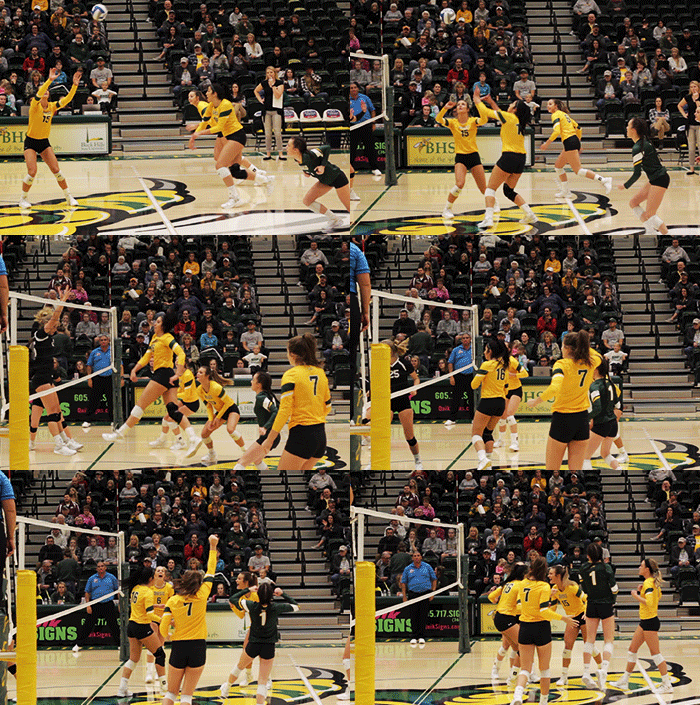
There is a high risk for labrum tears, bicep tendonitis, and other issues even before you start lengthy practices involving throwing. You could easily lose a couple of your best overall athletes before the season starts even if the softball-only players are doing ok.
So what can you do to avoid these issues while still getting your team ready to play? Jay had a great suggestion that he uses with his teams.
For starters, during fielding practice have buckets available near the fielders on some days, especially early in the pre-season. When you hit fly balls or ground balls, instead of having your players throw the ball back to the fungo hitter have them toss the ball in a bucket.
When the fielder’s bucket is full, have one of them run it back in to the hitter and take the empty bucket out. That way you get the fielding work done while reducing the strain on the arms and shoulders.
You can also spend time working on short tosses, the type you would do when one player is close to another and doesn’t need to make a full through. This part of the game is probably under-practiced by most teams, so it has the added benefit of shoring up a potential problem area while saving wear-and-tear.
It can also be fun if you work on a variety of throws. Jay mentioned hearing a coach at a clinic suggesting you can also work on crazy situations such as the glove scoop and toss or throwing behind your back.
Not all the time, obviously, but every now and then just to spice up practice a little. Think Savannah Bananas.
Dailies are another great way to get fielding practice in for infielders without stressing arms. You can get a lot of reps for straight-in, forehand, and backhand fielding in in a short amount of time – and with no stress to arms or shoulders. Although it can be a little tough on the knees.
Along the way, do your best to address throwing mechanics as well. If you’re not sure how to teach good mechanics ask a more experienced coach or check out programs such as Austin Wasserman’s High Level Throwing program to learn how to set up an organized, structed throwing program designed to ensure your athletes’ long-term arm health.
Finally, as with any other type of strenuous exercise program, be smart about what you’re doing. Start with low intensity activities and lower reps, then build your way up to more reps and longer throws.
A commonly quoted statistic is that 80% of all errors in baseball and softball are throwing errors. I couldn’t find a source to absolutely confirm it, but based on my experience it certainly sounds correct.
While some of those errors are no doubt just flat-out mistakes, I’d bet if you looked under the surface a fair percentage could be attributed to arms that are sore or just plain tired. Help your players go into the long season with healthy (or at least healthier) arms and you’ll be far more likely to make a deeper run into the postseason.

Energy Creation: The Rolling Snowballs Corollary

This seems like an apt analogy since as I write this much of the USA is still dealing with a fair amount of snow, including many places that rarely get any. Welcome to my world, although we actually haven’t gotten much all winter.
Anyway, the other day I was trying to explain the concept of acceleration to a young pitcher. We were talking about the need for her arm to pick up speed down the back side of the circle instead of staying at one speed if she wants to throw harder.
Then an idea hit me, thanks to a childhood misspent watching Saturday morning cartoons.
“Think about a snowball rolling down a hill,” I said. “At first, the snowball is small. But as it rolls down the hill, the snowball starts picking up more snow, getting bigger and bigger. Then, when the snowball reaches the bottom and stops, the snow explodes all over the place!
“That’s what needs to happen with your pitching arm,” I continued. “As you come down the back side you start moving your arm faster, which gathers more energy like the snowball gathers snow, until the ball explodes out of your hand at the end.”
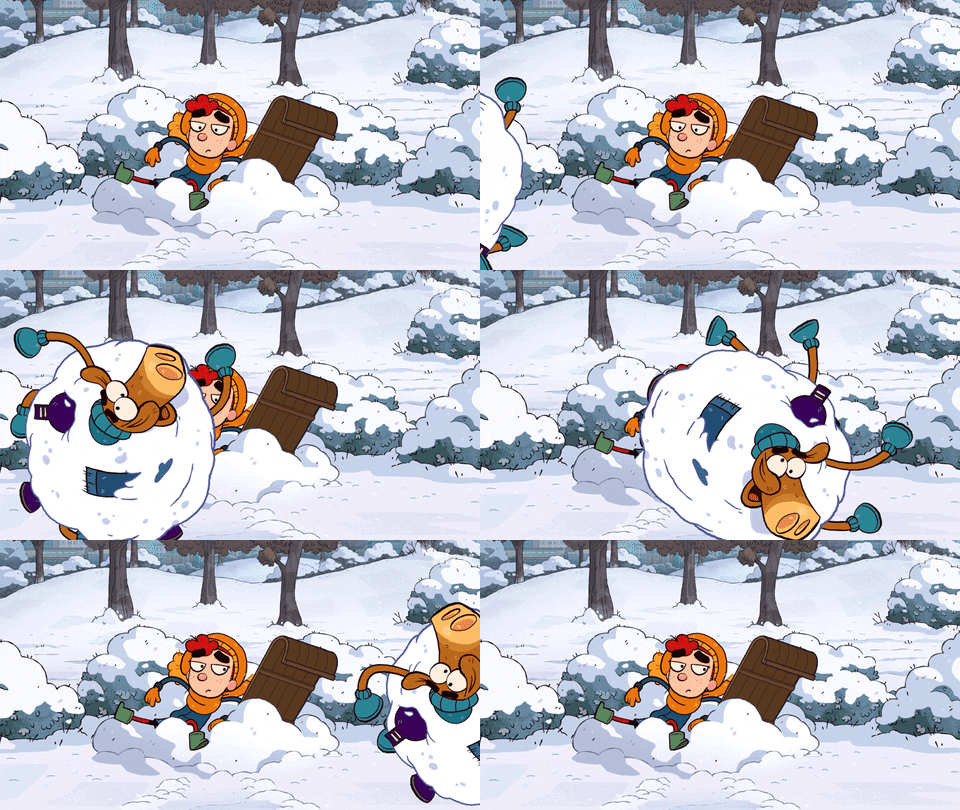
That made perfect sense to her. The more the snowball moves downhill the faster it goes and the more snow (energy) it picks up.
Ergo (love that word, rarely get to use it in a sentence), getting that arm to move faster down the back side of the circle is critical to maximizing speed. Logical, right?
But that doesn’t mean pitchers can always do it. Some will do it naturally. Others will do it once your bring it up. But some have to unlearn old movement patterns and replace them with new ones before they can execute it.
One of the best ways to help them learn that acceleration is by moving the pitcher in close to a net or tarp, having her stand with her feet and body at 45 degrees to the target, and then throwing with a full circle, emphasizing the speed on the back side of the circle. You can also do that with six or eight ounce plyo balls into a wall.
I also prefer they move their feet as they do it since body timing is also crucial to great execution.
The key here is feeling the arm moving as quickly as it can. But there’s another caveat.
To really make this work and get the acceleration, the arm has to be loose and the humerus (upper arm) has to be leading with the forearm trailing behind, i.e., throwing with whip. Moving the whole arm in one piece, as you do when you point the ball toward second base and push it down the circle, will not yield the same level of results. In fact, it could cause injuries.
Once the pitcher can execute this movement from in-close, start moving her further away and trying it again. Take your time with this process, because if you move her back too fast and she perceives the target is too far away she will start muscling it to make sure it gets there rather than letting it move naturally.
At each step, take a video and look to make sure there is at least somewhat of a bend or hook at the elbow instead of a straight arm. If not, move her back up or slow her down temporarily so she can get the proper mechanics.
Then speed it up and try again.
By the way, the energy snowball concept is not just for pitchers. This type of acceleration into release or contact is also critical for overhand throwing and hitting.
Or pretty much any other athletic skill requiring power.
Now, if you’re an adult with lots of real-world experience, all of this may seem obvious to you. You may even be wondering why I’m spending so much time on it.

But a young player, or even a young adult player, may not have the real-world understanding of basic physics or biomechanics to tie acceleration into energy production. For them, it’s helpful to put it in a context that they can easily comprehend based on what they have already seen.
Even if it comes from a Saturday morning cartoon.
If you have a player who’s struggling to understand the concept of acceleration into action, try talking about the rolling snowball. It just might break the ice with them.
My good friend Jay Bolden and I have started a new podcast called “From the Coach’s Mouth” where we interview coaches from all areas and levels of fastpitch softball as well as others who may not be fastpitch people but have lots of interesting ideas to contribute.
You can find it here on Spotify, as well as on Apple Podcasts, Pandora, Stitcher, iHeart Radio, or wherever you get your podcasts. If you’re searching, be sure to put the name in quotes, i.e., “From the Coach’s Mouth” so it goes directly to it.
Give it a listen and let us know what you think. And be sure to hit the Like button and subscribe to Life in the Fastpitch Lane for more content like this. Commercial over.
Snow roller photo by Perduejn, CC BY-SA 4.0 https://creativecommons.org/licenses/by-sa/4.0, via Wikimedia Commons
Want to Get Better? Try Doing Nothing!

Ok yes, today’s title was purposely click baity. Because I don’t mean literally to sit around all day on the couch staring at a screen or eating Cheetohs (or doing both; I’m not here to judge).
Sorry all you players who hoped to use my blog to justify telling your parents to chill, or whatever you say nowadays.
What I’m actually talking about is learning to use your body the way it’s meant to be used rather than trying to do too much and getting in the way of your best performance.
A great example, and one I’ve talked about many times here, is using “hello elbow” (HE) mechanics for pitching.
With HE, you push the ball down the back side of the circle and try to get your hand behind the ball early going into the release zone. You then pull your arm through the release zone with your bicep while (supposedly) snapping your wrist hard as you let go of the ball, finishing with your elbow pointing at your catcher.
While this may seem like a way to add energy into the ball in theory, in practice the opposite is true. It actually slows down your arm, because your using the small bicep muscle instead of the larger back muscles to bring the arm down, and gets in the way of your arm’s natural movements as it passes your hip.

It’s also an unnatural movement pattern. To prove it, stand up, let your arms hang at your sides, and see which way your hand is facing. Unless you have something very odd going on your palm is in toward your thigh, not turned face-forward.
Your arm wants to turn in that way when you’re pitching too. In order for that to happen, all you have to do is NOTHING – don’t force it out, don’t force a follow through, really don’t do anything. The ball will come out as your hand turns and you will transfer way more energy into the ball than you would have if your tried to do something.
This, incidentally, is something I often use to help pitchers whose arms are naturally trying to do internal rotation (IR) but are also using an HE finish because that’s what has been drilled into them for the last three years gain a quick speed boost. They start out using their HE mechanics from the K position and we look at the speed reading.
I then have them lose the forced finish and just let the arm naturally pronate at it reaches the bottom of the circle. They can usually add 2-3 mph immediately just by doing nothing.
Or let’s look at hitting. Many young and inexperienced hitters will try to over-use their arms and shoulders when bringing the bat to the ball.
It makes sense on some level because the bat is in your hands and you want to hit the ball hard.
Yet that is the one of the worst things you can do. When you pull the bat with your arms and shoulders you have to start your swing before you know where the ball is going to be (never a good idea).
You will also lose your ability to adjust your swing to where the ball is going because you’ve built up so much momentum in whatever direction your started. Not to mention that muscles get smaller and weaker as you move away from your core so you’re not generating nearly as much energy as your body is capable of producing.
Again, the better choice is to do nothing with your arms early in the swing, and instead let your lower body and core muscles generate energy and start moving the bat toward the ball (while the bat is still near your shoulder). Then, once you’re well into your turn and you see where the ball is headed you can let the bat head launch, resulting in a much better hit, and a more reliable process.
Does doing nothing work for overhand throwing as well?
How many times have you seen players lined up across from each other, throwing arm elbow in their glove and wrists snapping furiously while their forearms don’t move? Probably more times than you can count.
This is a completely pointless drill because no one, and I mean NO ONE, purposely snaps their wrists when they throw overhand. Instead, they relax their wrists and allow the whipping action to snap their wrists for them – which is far more powerful.
To prove it, close your fingers up and try to fan yourself by snapping your wrist. Not much air there, right?

Now relax your wrist and move your forearm back and forth quickly. Ahh, that’s the stuff. That breeze you now feel is more energy being generated, which moves more air into your face.
So if that’s the case, why would you ever try to do something when you’re releasing the ball rather than doing nothing and letting biomechanics produce better results for you?
There are countless other examples but you get the picture. The point is, forcing unnatural movements onto your body, while they might make you “feel” like you’re working harder, are actually very inefficient.
If you want to maximize your performance, make sure the energy you’re producing is delivering the results you’re going for. Just doing nothing and watch your numbers climb.
Photo by Oleksandr Pidvalnyi on Pexels.com
Why Focusing on Energy Transfer Is Critical
Whether the goal is hitting farther, throwing harder, pitching faster or executing some other movement at a higher level, the first place many of us go is energy generation. Let’s take pitching, for example.
Pitchers will be encouraged to spend a lot of time on improving their drive mechanics. They’ll be told to do endless box jumps, lunges, dead lifts and other exercises to build more explosiveness into their legs. They’ll be put on devices such as the Queen of the Hill to help them learn to drive out even harder.
Yet improving the amount of drive is only half the battle. What often gets ignored in all this heavy lifting is the importance of being able to transfer the energy they’re generating into the ball efficiently, i.e., with as little energy loss as possible.
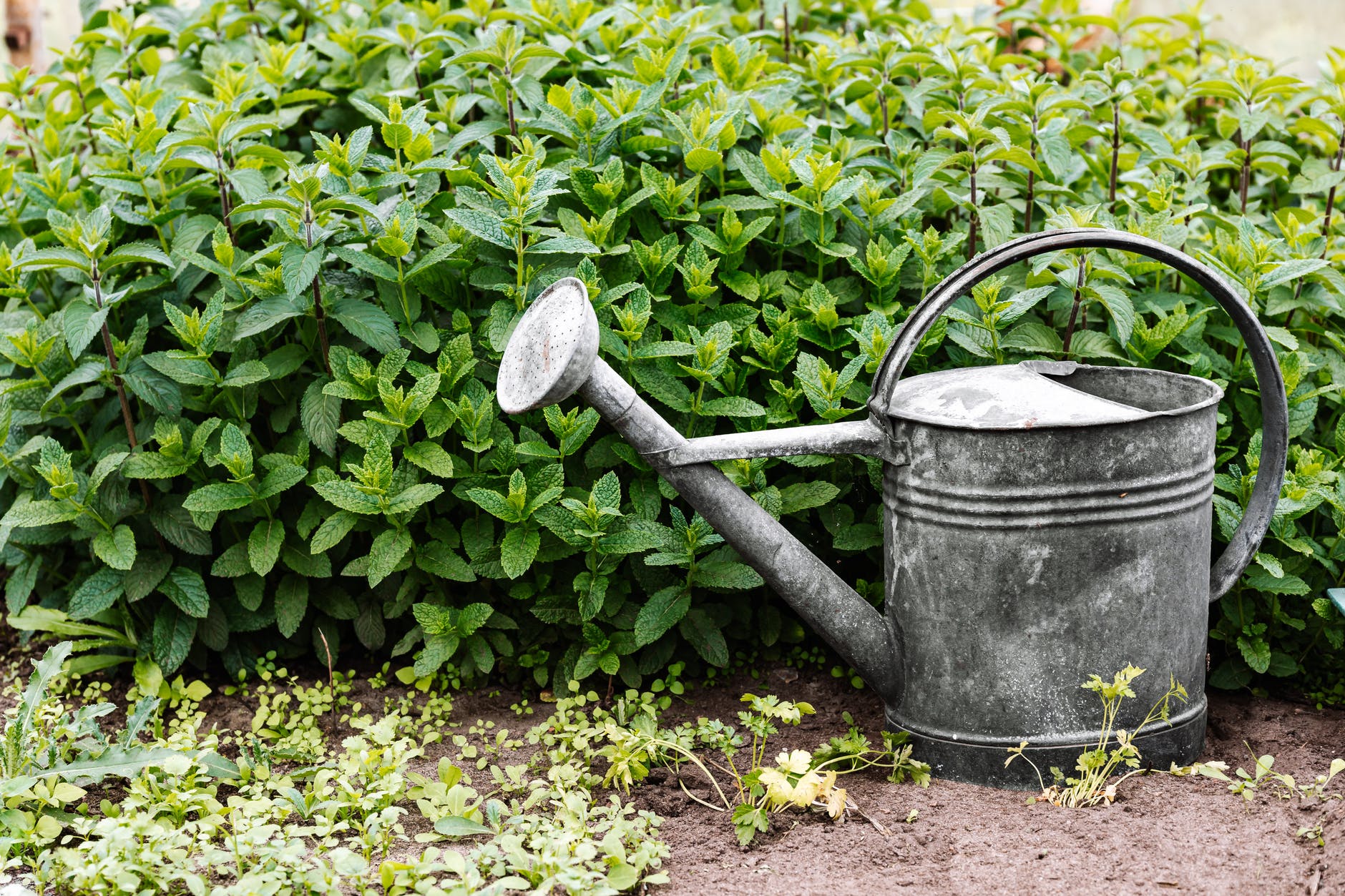
Here’s why that’s important. Imagine you need to move 20 gallons of water from point A to point B, but all you have available is a one gallon bucket. It’s going to take a lot of little trips to move all that water.
Not very efficient.
Now imagine you have a 10 gallon bucket instead. You’ll be able to take a lot more water in each trip while minimizing the number of trips you need to make to accomplish the same task.

The same is true for fastpitch softball skills. No matter how much energy you generate on the front end, that energy is only as useful as your ability to transfer/apply it to the skill you’re performing.
Of course in softball it’s not just about how much energy you can transfer but how quickly you can do it. A sudden transfer will delivery more of the energy into the ball versus a slow one. That’s just physics.
In hitting that means a quick swing that rapidly accelerates the bat to meet the ball at the optimum contact point. In throwing and pitching, that means a rapid series of accelerations and decelerations into the release point.
This, by the way, is one of several reasons why “hello elbow” pitching prevents pitchers from reaching their maximum levels of velocity.
Hello elbow finishes, where you try to muscle the ball through release by straightening out the arm as it goes around the circle, deliberately snap the wrist and then yank up on the arm (mostly after the ball is already gone), are slow, forced movements.
There is no sudden acceleration and deceleration sequence that enables the upper and lower arms, as well as the wrist, to move at different speeds at different times. It’s all one big forced movement, which prevents energy from being transferred – as opposed to internal rotation which accelerates and decelerates the upper and lower arm in sequence and allows the wrist to react to what the arm is doing, amplifying the energy instead of limiting it.
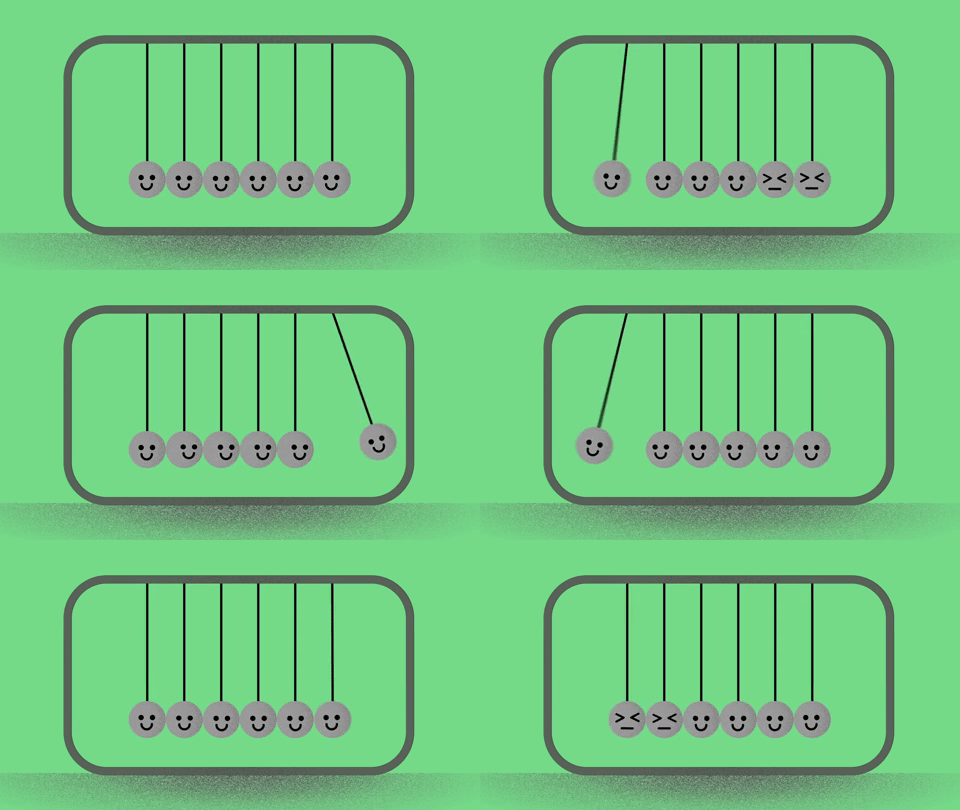
The point is spending all your time on learning how to generate maximum energy isn’t enough. You need to spend an equal amount of time, or maybe even more, on learning how to transfer that energy you’re generating efficiently. Otherwise it’s a lot of wasted effort.
Build yourself a bigger energy “bucket” and you’ll maximize your results with whatever your bring to the table today – and tomorrow.
Photo by Karolina Grabowska on Pexels.com
The Back Leg Can Be a Propeller – or an Anchor
As I write this we are in the middle of summer vacation time here in the U.S. Families all over America are packing themselves up from wherever they live and traveling to a different area, state, time zone, etc. in search of a little R&R.
Even softball families are in that process. Some have already finished their seasons, while others are fitting in a little vacation time before or after tournaments.
For me, when I think of vacations I am reminded of taking my family to a lake for some serious downtime. Originally that meant the North Woods of Wisconsin, where we and various members of my wife’s family would rent cabins.
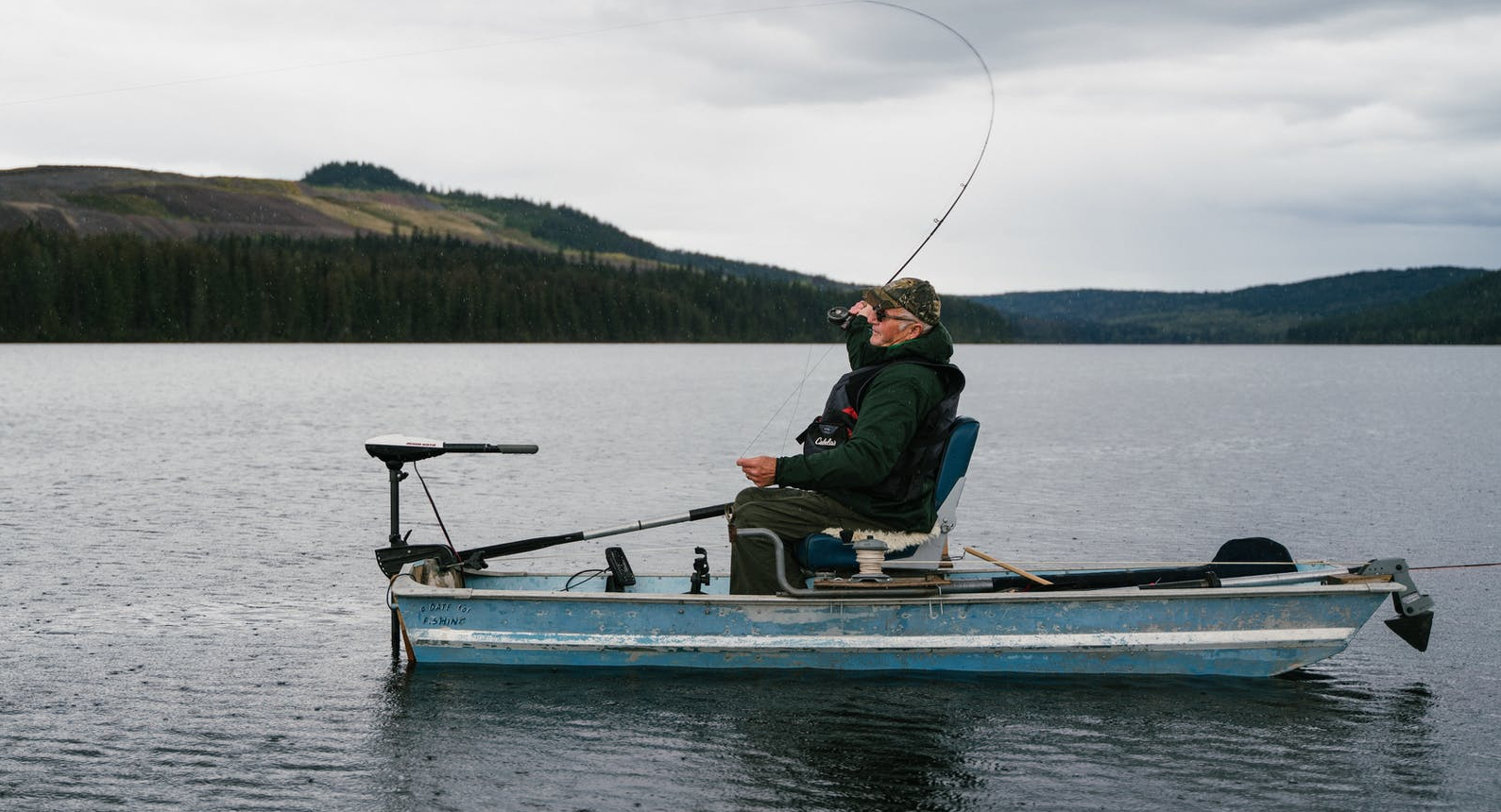
As part of the rental, we would get motorized row boats that we could use to go fishing. I’ve never been much of a fisherman, and didn’t grow up rowing boats so I found that a bit of a challenge at first, but when in Rome…
Now years later I’ve come to realize that those motorized row boats are the perfect analogy for the role of the back leg in pitching and hitting. Because it can either be a propeller or an anchor when you’re trying to be explosive.
A propeller will help you get where you’re going faster. Being fairly incompetent at rowing a boat, at least at first, I found the propeller to be a much easier way to get from point A to point B, even if those two points weren’t that far apart.
As long as you can fire up the motor (not always easy in a free rental), you can open the throttle and steer your way there while relaxing. That’s a lot easier than using oars to move through the water, especially if you’re using one oar more than the other, in which case you tend to make more of a circle than a straight line.
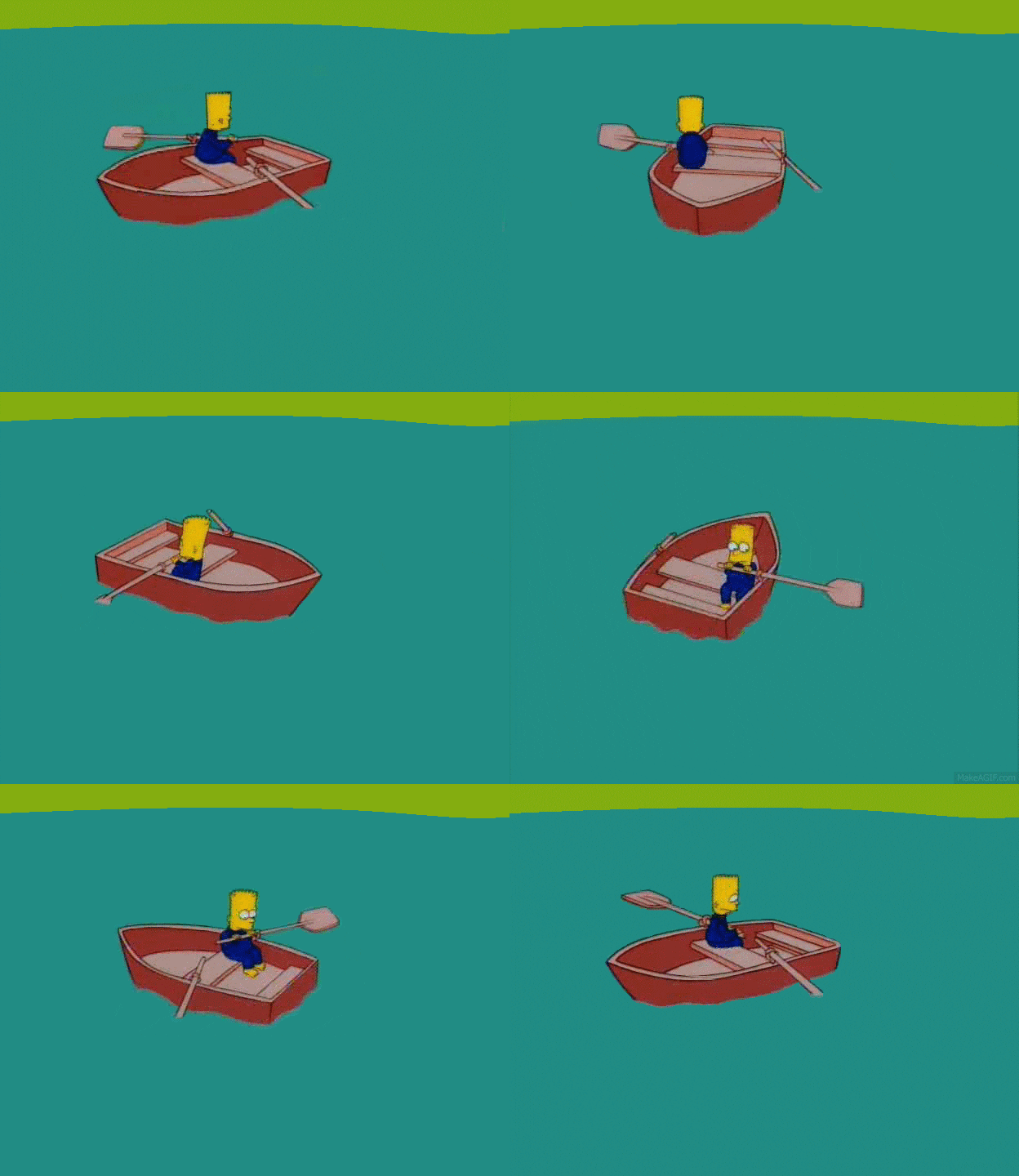
An anchor, on the other hand, is designed to hold you in place once you get to where you’re going. If you leave the anchor down, even with a motor, it will be much hard to get to your destination.
So it is in softball. In pitching, you want the “drive” leg to propel your center forward, enabling you to glide lightly along the ground until your front leg lands. Do it quick and powerfully enough and the sudden stop will help sling/whip your arm through the release zone.
But if you don’t engage your drive leg, and instead just run past it with your stride leg, the drive leg will turn into an anchor, lifelessly dragging behind you and slowing you down. When that happens, the drive leg doesn’t drive at all, but instead gets pulled along in the classic zombie walk. This is why it’s often called “zombie leg.”
Clearly one is better and more effective than the other in creating speed and enabling stability at release. Hopefully I don’t have to tell you which one that is.

While not quite as obvious or debilitating, the same effect occurs in overhand throwing. If the throwing side isn’t engaged actively as a propeller it becomes an anchor, which affects both speed and accuracy.
What about hitting? The same is true, although in a different way.
In hitting, you want the lower body to create the power. While that is really more of the core than the legs themselves, the rear leg contributes by having its knee start pulling toward the front knee, unweighting the leg so the hips can fire forward at maximum velocity.
If the hitter doesn’t get off the back foot the hips are unable to rotate rapidly or fully, and you wind up with more of an upper body swing that pulls the contact point further back. You’re then not hitting in the green zone.
The bottom line (no pun intended) is the back leg can either be an aid or a hindrance in making athletic movements in softball. Which it is depends entirely on the player.
Get it actively engaged, doing what it should do, and it becomes a propeller that helps drive better performance. Leave it behind and it will be an anchor, slowing the player down and creating a huge drag on performance.
Photo by Mount Polley on Pexels.com

Helping Young Players Get Away from Bow & Arrow Throwing

Anyone who has been around fastpitch softball, even for a little while, has seen it – what I call the “bow and arrow” or “Katniss” style of throwing. (Although I will admit the Katniss reference used to work a lot better a few years ago.)
The player will bring glove and throwing hand together, then draw the ball and her elbow straight back, like she is pulling back on a bow string, and finally bring the hand forward, essentially pushing the ball out of her hand.
Over a short distance that can work. But if you want to throw hard, or over a long distance, or both, that throwing pattern is not the way to go.
At some point the hand and ball need to continue moving backward past the elbow before it reverses course and comes forward. For some players, that can be a challenge.
So, I came up with the little drill you see here.
Instead of trying to throw the ball forward, the player focuses on trying to throw it backward instead. In order to do that she can’t just draw the ball back like a bowstring. She has to let the hand pass the elbow before flicking the ball away.
It’s all about finding a way to give the player the “feel” of what you want her to do in a way that breaks ingrained patterns. Giving her something different to work on – especially something she’s unlikely to do otherwise – helps overcome those previous patterns.
One thing to be careful of is not to let the player toss it backward like you would do a backhand toss from the ground. That’s not going to set up a repeatable pattern either, and could end up replacing one bad habit with another.
Instead, you want the new pattern to resemble the desired outcome as closely as possible. The backward flip will do it.
If you have a player who is having trouble learning to take the ball back properly give this a try. If you have a team full of them you can even have them try playing catch this way.
Either way, you’ll start them on the road to better throwing patterns.
Austin Wasserman High Level Throwing Clinic in Chicago Area
Good news for my readers who live in the general north suburban area of Chicago – or are willing to get there from further away. The Pro Player Hurricanes are sponsoring a High Level Throwing clinic with Austin Wasserman November 14-15 in McHenry, Illinois. It’s at the Pro-Player Consultants facility, 5112 Prime Parkway, which is a great place for a clinic. I should know, because I teach lessons there.
There are two three-hour sessions each day that break down as follows:
Saturday, November 14
- Session 1: 10:00 am – 1 pm (10U-12U players)
- Session 2: 2:00 – 5:00 pm (13U-18U players
Sunday, November 15
- Session 1: 12:00 – 3:00 pm (10U-12U player)
- Session 2: 3:00 – 6:00 pm (13U-18U players)
The cost for a session is $150 per player. This is a rare opportunity to learn how to throw more powerfully – and safer – from one of the leading experts in the world.
Full information is available on the flyer (click the download button. If you want to up your daughter’s game with the overhand throw, be sure to get signed up by going to https://www.wassermanstrengthfl.com/high-level-throwing-clinic-mchenry-il/
Time To Take Some Time Off From Throwing

Photo by Rendy Maulana Yusup on Pexels.com
The season is over. Tryouts are over (at least for the most part.) What to do now?
Gung-ho fastpitch softball families (are there any other kind?) might be tempted to start going at it hard and heavy to get ready for fall ball and the upcoming spring season. After all, if you’re not working to get better, your opponents probably are.
But I have another idea. Take a break. Not just lighten up the workload to three days a week, but take an actual break.
Give your body a chance to rest, recover and build itself back up. Give your brain a chance to let go of whatever was happening before and get rejuvenated.
But it’s not just psychological. It’s also physical.
These days it seems like there is a secret prize for the team that plays the most games in the shortest period of time, and everyone is going for that prize. You’ll see programs bragging that their teams play 100 or even 150 games in a year (with a 12-player roster). Much of that playing time is compressed into September and October in the fall, and then April-July in the summer.
High school-age players may even have a heavier workload, because they have their school season and then their travel/summer season. Except Iowa, where high school is the summer season for whatever reason.
What all this has led to is a rash of overuse injuries. Not just for pitchers, although we are seeing more and more of it as this article points out. A pitching staff that throws 90 pitches a game (a conservative number for most) across 100 games will have thrown 9,000 pitches. Divide that by a three-person rotation and it’s roughly 3,000 pitches each.
That’s a lot of pitches – especially when you consider that typical college pitchers in one study, who have the benefit of daily weight training and conditioning run by a professional staff, threw an average of just 1,243 pitches during the season.
Now, Rachel Garcia, the NCAA D1 player of the year and winner of this year’s Women’s College World Series did throw 3,178 pitches total this season. But do you really think the 12 or 14 year olds you know are comparable in strength and conditioning to Rachel Garcia? Doubtful.
It’s not just about pitchers, however. Position players can also get overworked, especially when it comes to throwing. Even if you have great mechanics, the effort and stress placed on the shoulder throwing overhand a hundred times a day every day in practice can cause wear and tear that needs to be addressed.
Overuse injuries such as tendinitis and small tears in soft tissue can easily build up over time. They may not be bad enough to require surgery, but they can cause pain. And as the pain builds, the mechanics break down to work around the pain.
Over the course of a season things can get pretty sloppy. If you just launch right into the next season those issues aren’t going to magically get better. They’re going to get worse.
Finally there’s the mental side. If you’re working hard (as you should), it’s easy to become mentally fatigued as well. That’s not good either.
Taking a little time off – like professional players in all sports do, incidentally – can help recharge the ol’ batteries and get you ready to tackle new challenges.
So my advice to you is to walk away from the practice field (or area) for a bit and let your body heal itself. See a doctor or a physical therapist if you need to. But one way or another, give yourself a break and go do something else for a little while. You (and your body) will really be glad you did.
Product Review: The Softball Rope Trainer
It doesn’t take too much time going through Life in the Fastpitch Lane to see that I am pretty fanatical about good throwing mechanics. I definitely feel overhand throwing is one of the most under-taught skills in the game, which is a shame because it’s such a big part of the game (unless you have a pitcher who strikes out 18 hitters a game, every game).
So that’s why I was excited to receive a new (to me) product to test – The Softball ROPE Trainer by Perfect Pitch and Throw. According to the manufacturer it is designed to help softball (and baseball) players learn the proper mechanics for a powerful, strong and safe throw by unlocking the joints in the proper sequence. From their website:
“Using The ROPE Trainer allows players to work the throwing muscles in all parts of the kinetic chain. Using The ROPE Trainer optimizes the mechanics of the throwing sequence by building the muscles and joints used during the throwing process. Over time, using The ROPE Trainer will allow for better muscle memory, improved strength and endurance without the excessive stress caused by releasing the ball.”
You can read more about the theory behind it and how it helps prevent injuries here.
The basic design is fairly straightforward. It’s basically a softball with a plug system that lets you attach one or two sets of ropes. By focusing on getting the ropes to work 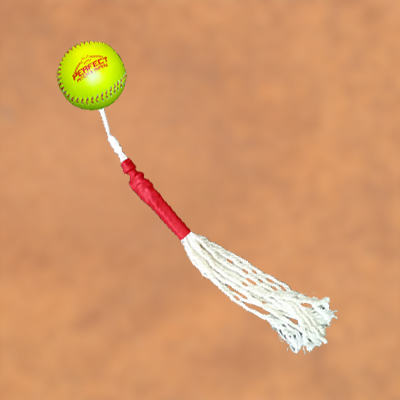 properly (and not smack the player on the head, legs or other body parts), The Rope Trainer helps players find the right path to slot their arms and follow-through properly.
You can add more resistance by using both sets of ropes to create more of a strength workout, although the grip will then not be the four-seam grip most players are used to. No worries, though. You’re not actually going to throw the ball anyway.
The manufacturer positions it as an upgrade over the old “towel drill,” where a player holds a small towel and goes through the throwing motion with the same goal in mind. In fact, here’s an article that tests The ROPE Trainer versus the towel drill. They tested the baseball version rather than the softball version, but I’m sure it’s the same.
One of the big differences in my eyes is that the ropes can swing around more than a towel, so the player has to be more precise in her arm and hand path to get the right results.
Ok, sounds good in theory. How did it work in practice?
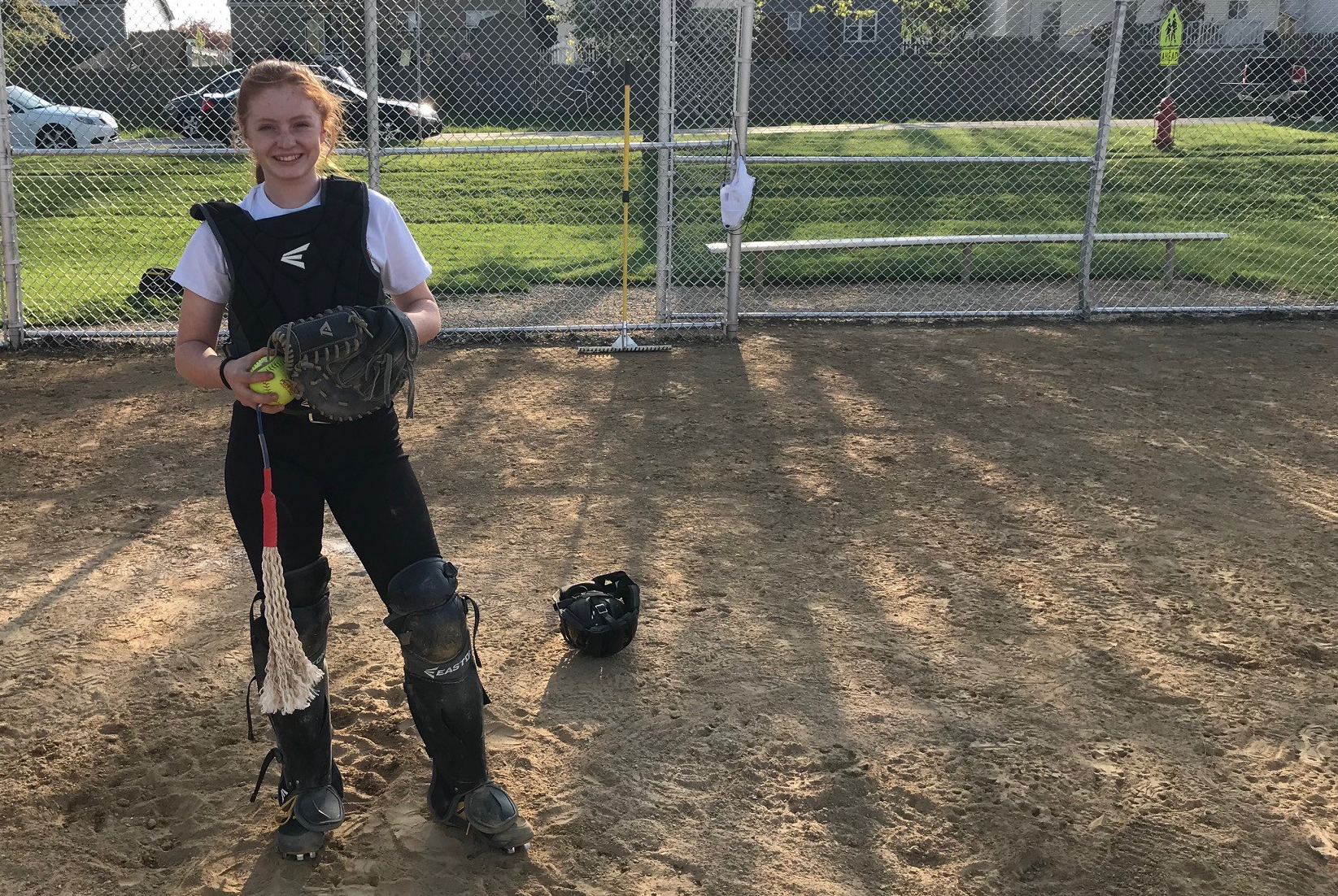
The first girl I had try it was a terrific 14U catcher named Liv. She wanted to learn how to throw from her knees, so it seemed like the perfect opportunity to check it out.
One of the big issues with catchers, especially young ones, learning to throw from their knees is that they tend to only use their arms. They don’t get into a good position to use their shoulders, torsos, glutes, and other big muscles, and they have a big tendency not to follow through after throwing.
So I put on one of the sets of ropes, handed Liv the ball, and had her get into a runners on base stance. When I said “go” she reacted, getting into position and using The Rope Trainer as if she was actually making the throw.
As I said, Liv is awesome so after a couple of attempts she got the hang of getting the ropes to whip through to her left side at the end. Here’s a video of her as she’s using it:
Then we switched her to an actual ball. She immediately was able to make the throw with good juice on the ball, and with great accuracy too. Most important, she was using a strong throwing motion that will protect her arm and shoulder.
To give you an idea of how strong her throw was, this is what happened to her mom’s wedding ring after receiving a few at second then at first. Oops. 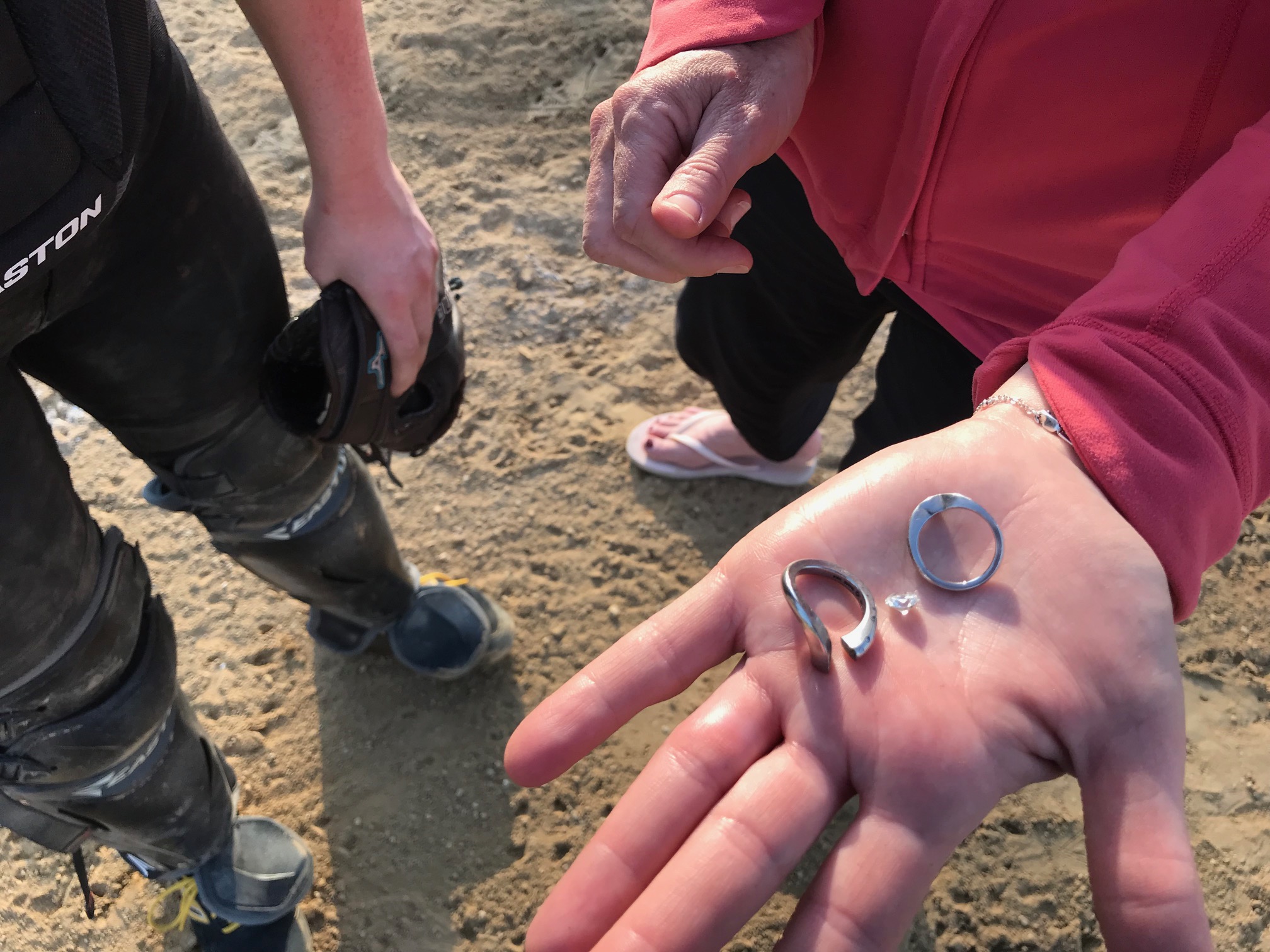
Of course, it’s easy to get something to work when you have an excellent player using it. So for another test I went the other way.
I took a younger girl (who shall remain nameless) who did not have a particularly good throwing motion and had her try The Softball ROPE Trainer as well. While the results weren’t quite as instantaneous, she also showed improvement.
This particular girl was doing the classic “throw like a girl” of dropping her elbow below her shoulder and just sort of shoving the ball forward with her arm.
(NOTE: Don’t even bother telling me how horrible I am to use the phrase “throw like a girl” and wonder how such a nasty misogynist could ever work with female athletes. I encourage my students to throw like softball players, and will put them up against any male player their age – or any dad who doesn’t think girls can throw hard. So chill.)
After working with The Softball ROPE Trainer for about five minutes she was doing better with her overhand throws. I doubt that little session was permanent, but I wanted to see if it would make a difference.
I believe it did, and that with repetition at home and/or practice someone with poor throwing mechanics could re-learn how to throw properly, most likely within 2-4 weeks with regular work.
The other nice thing about The Softball ROPE Trainer is that it doesn’t cost very much. You can purchase it direct from the manufacturer for just $67.49. I know, weird price, right?
For that money you get the ball, two rope sets (I think – the website says one but mine came with two), instructions and a nice drawstring bag to hold it all. If you wear out the ball or one of the rope sets you can purchase new ones as well, which is always nice.
If you have or know players with poor throwing mechanics, or have someone with good mechanics who want to get better, give The Softball ROPE Trainer a try.
Oh, and in case you’re wondering, I don’t know how it is for fastpitch pitching yet. That’s next on my list to try. Seems like if you have mechanics that focus on whipping the ball through the release zone instead of pushing it The Softball ROPE Trainer might work. We’ll see.
If it works, I’ll do another post on that. If not, I’ll update this one.






 Life in the Fastpitch Lane