Category Archives: General Thoughts
Take One More Look Around the Dugout
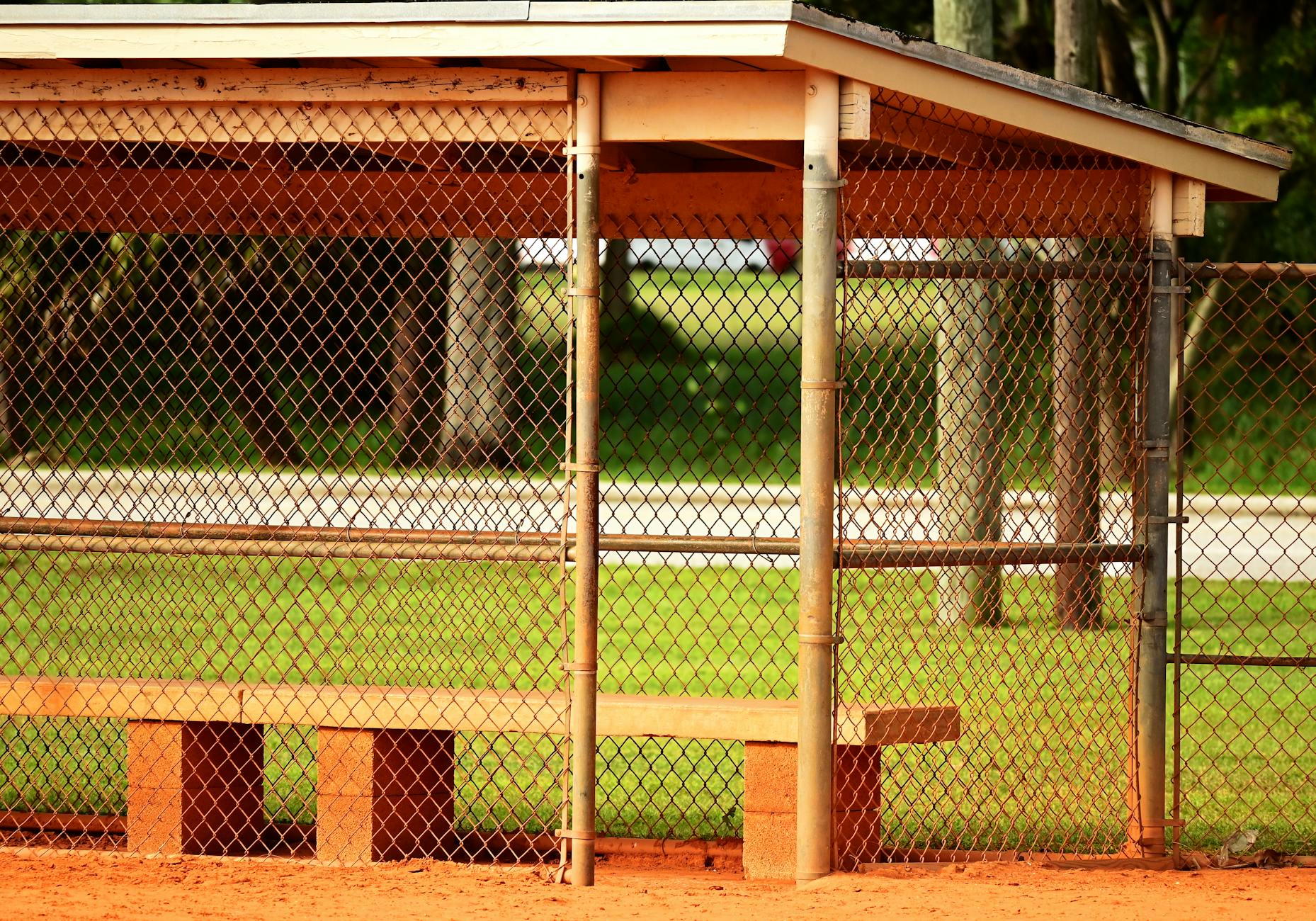
I’m not sure if it’s just human nature or perhaps a cultural thing, but it certainly seems like it’s common for most people to be always looking ahead to the future.
As graduation approaches, high school seniors look forward to starting a new era of freedom in college or their careers; college seniors look forward to starting their first jobs; older adults look forward to their next jobs or even retirement.
Yet at this time of the year, it’s important for players, parents, and coaches who are leaving the sport of fastpitch softball to take one more look around the present to appreciate all the good things that have been a part of the experience for the last several (or many years).
Players and parents can think about the first time those players grabbed a glove or bat, put on a uniform with their team’s name on it, and stood in the dirt.

They probably had no idea about the journey on which they were about to embark; they just knew they were excited to feel the sun on their faces and the breeze in their hair as they stood there waiting for someone to teach them where to go and what to do.
Along the way they made friends and established rivalries – some of them friendly, some of them not so much. At times those friendships and rivalries shifted as they joined different teams or went to different schools.
But always, always, there was the thrill of competition and the quest to get a little bit better so they could feel the thrill of external praise or the inner satisfaction of a job well done.
From those first days where they could barely lift the ball or the bat or take it in the right direction to the days when others marveled at their skill, they kept at it, game after game, week after week, year after year. Sometimes that meant waking up at zero dark thirty in a strange hotel room to get to a distant field, spending 12, 14, 16 hours at the ballpark through chilly, damp, foggy mornings followed by blistering heat followed by cool, damp night air, all in search of a championship trophy, ring, bat, or other memento.
Then, when it was done, making that long car ride home.

Or it meant enduring an uncomfortable, noisy ride in a bus that smelled like sweat socks, stale snacks, and the occasional vomit to play in freezing cold temperatures on rain-soaked or snow-soaked fields for the opportunity to represent their school and perhaps earn a conference title or perhaps a state tournament berth.
On the coaching side there was all the preparation and planning and looking for new drills or new ideas or new techniques that could give your team an edge. There were the unseen hours taking care of a field, planning lineups, reviewing stats, pricing and purchasing equipment, taking part in live or online coaching clinics, all to have every move you made on the field questioned by everyone who hadn’t done any of that.
For the parents it was all the hours spent sitting on a bucket or hitting ground/fly balls or pitching batting practice or chasing after balls that had been hit or driving one child to practice or lessons while trying to manage everything for your other children. Then feeling your breath catch and your blood pressure soar every time your favorite player toed the rubber or had a ball hit to her or stepped up to the plate.
Sometimes it seemed like it would never end. Yet now it has, or is about to.
The last out comes to us all. Some experience it sooner, some experience it later, but we all experience it.
When that final out comes to you, my advice is not to just rush off like it’s another game in a long line of games, because it’s not. It’s the end of a part of your life that was probably pretty important.
Before you pack up, take a little time to look around the dugout and the sidelines and experience as many of the sensations as you can one more time.
The refreshing touch of a cool breeze on a hot, hot late spring or summer day.
The sound of cleats clattering on concrete and scrunching in the dirt as the team goes to take the field. The music of balls popping sharply into gloves or cracking off a bat. Someone yelling “heads up” as you frantically try to avoid being plunked by an errant foul ball from another field. Or the low din of dozens of camp chairs and pop-up tents all being folded up at once.
The smell of hot dogs and hamburgers grilling in the distance, that whiff of a quick afternoon rain shower making its way toward you, or that unmistakable aroma of a new glove or fresh ball. Not to mention the fragrance of freshly mowed grass intertwined with the morning or evening dew, lying like a comfy blanket over the entire area.
Mostly, though, take a moment to remember all the souls that touched yours, and that you in turn touched, along the way.
Some may have been along for the whole journey. Others may have been there for a fleeting moment.
In reality, though, most were only there in your life because you shared a common interest in fastpitch softball. How lucky you were to have spent time with each and every one of them – even the ones you didn’t particularly care for.
Because they all had an impact, large or small, on shaping you into the person you are today.
You will move on to other challenges and adventures happy times and sad times, triumphs and failures. You may even go on to play other sports. I hear pickleball is popular now.
But there will never be anything like the thrill of competing (or watching your child/team compete) for all the marbles on a fastpitch softball team.
Hope you enjoyed it while it was happening. And if you’re not quite to that point, you can also take heed to appreciate it now, in the midst of all the craziness, because one day you’ll miss it all.
To all of those who have played, watched, or coached their final out, or are about to, I salute you. Thanks for your contributions to this great sport, and good luck to you whatever the future brings!
Just remember to take that last look around before you leave. You’ll be glad you savored the moment.
My good friend Jay Bolden and I have started a new podcast called “From the Coach’s Mouth” where we interview coaches from all areas and levels of fastpitch softball as well as others who may not be fastpitch people but have lots of interesting ideas to contribute.
You can find it here on Spotify, as well as on Apple Podcasts, Pandora, Stitcher, iHeart Radio, or wherever you get your podcasts. If you’re searching, be sure to put the name in quotes, i.e., “From the Coach’s Mouth” so it goes directly to it.
Give it a listen and let us know what you think. And be sure to hit the Like button and subscribe to Life in the Fastpitch Lane for more content like this.
Dugout photo by Nelson Axigoth on Pexels.com
6 Benefits of Playing Under Sandlot Rules

Let me start by acknowledging that today’s ballplayers are far more technically skilled and athletically knowledgeable than they were when I was young lad, and even when I started coaching more than 25 years ago. If you go out to a ballpark this weekend, even to a local B-level or C-level 10U tournament, you’re likely to see a higher level of overall performance than you would have even 10 years ago.
Don’t even get me started on how crazy good high school and college softball players are today.
We can attribute a lot of that growth, in my opinion, to the tremendous amount of information that is available to coaches today as well as the tremendous amount of time teams and individuals invest in structured, organized training sessions and practices. With competition levels already high and improving each year, you’re either getting better or getting left behind.
Yet for all their technical prowess, I think today’s players may be missing out on a few things that are equally important to their level of play – and probably more important to their development as human beings: the benefits of playing under what’s called “sandlot rules,” i.e., unstructured playtime.
Following are some of the benefits that could be gained by downsizing the organized team activities (OTAs) and giving players more time to play under “sandlot rules.” And not just softball but whatever games those players want to play at the time.
1. Acquiring decision-making capabilities
In OTAs, coaches or other adults decide what players are going to do pretty much every minute of every practice or game. They determine who’s going to play where, what order they will bat in, what strategies they’re going to follow, even what uniforms to wear, right down to the color of socks.
Under sandlot rules all of those decisions have to be made by the players themselves. They pick the teams (if teams are needed), agree on the rules, determine what equipment is needed, set the boundaries for play, etc.
Whatever needs to happen to get game or activity going, players get to decide on them. If they can’t decide, that leads to the benefit of…
2. Learning conflict resolution
Let’s say the players want to play a game of softball, but there are no lines on the field. A batter hits a ball down the line and the defense says it’s foul while the offense maintains it was a fair ball.
With no umpire to look to, the players on both sides will have to come to a conclusion. If neither side can convince the other of its position, the likely outcome is the ol’ do-over.
No matter what they determine, however, they will have worked the problem and decided on an outcome. Or they won’t agree on one, in which case the game is probably over and no one gets to play anymore.
Either way, they will have learned a valuable lesson about the value of cooperation and compromise to achieve a higher goal (in this case continuing to play).
3. Developing problem-solving skills
Certainly the situation in point #2 also involves an element of problem-solving too, but I’m thinking of more general problems for this benefit.
For example, let’s say there are enough players to have 7 on each side. But a full team requires 9 on each.

When I was a kid and that was the case, we would close an outfield section (usually right field except for me, who hits left-handed) and have the team on offense supply a catcher. It was understood that the supplied catcher was obligated to perform as if he was a member of the defensive team and do all he could to get the out if there was a play at home, or backup any plays out on the field.
If you only had 4 or 5 kids available to play, you’d switch to a different game such as 500, which incidentally is where most of us learned to fungo, helping build hand/eye coordination and bat control. Whatever the issue is, under sandlot rules there are no adults to solve the problem even make suggestions so it forces the players to work together to overcome any obstacles themselves.
What a concept.
4. Improving athleticism
There is a lot of talk these days about the benefits of playing multiple sports instead of specializing early, especially in terms of cross-training muscle groups. Heck, I’ve written about it myself.
But you don’t need OTAs to get that benefit. It’s all available on the sandlot, or at least your local park.
Want to improve speed, quickness, and agility? Playing tag is a great way to do it, especially if you have two people serving in the “it” role. Nothing brings out competitiveness and causes people of all ages to run fast, cut hard, and move their bodies in impossible ways like trying to avoid being tagged. Remember, though, to let them set the rules.

Want to build some upper body strength? Go find some monkey bars or something else to climb and let them go wild.
They’ll do it with an enthusiasm you don’t usually see during formal pull-up sessions. Add a competitive element of some sort and they’ll drive themselves to exhaustion.
Just be sure to avoid the temptation to tell them what to do. Simply put them in the situation, or better yet encourage them to do it in their free time, and you’ll all reap the rewards on and off the field.
5. Elevating their mental health
Mental health among young people has reached a crisis level, and the decline of independent activity is often cited as one of the leading causes. According to data from the Centers for Disease Control and Prevention (CDC), 4 in 10 high school students (40%) said they had a persistent feeling of sadness or hopelessness, and 2 in 10 (20%) said they seriously contemplated suicide while 1 in 10 (10%) actually attempted it.
This was a significant increase over the same questions asked just 10-15 years prior. And even more younger students are exhibiting these tendencies at the same time school days and years are getting longer, homework is increasing, and recess time is being cut to just 29.6 minutes a day on average – if they get recess at all.
Giving players of all ages more unstructured free time to “just go and play” may help turn this trend around, resulting in happier, healthier, more well-adjusted, and more productive young people – and adults.
6. Letting them have fun
Always remember that fastpitch softball is a game, and games are meant to be fun. Nobody signs up thinking “boy, I hope we do a lot of work today.”
In pretty much every survey of young athletes you’ll find, the #1 reason they quit sports (often around the age of 13 or 14) is that they’re not fun anymore. Inject more fun in their lives and we can keep more of our players playing longer.
Back to the sandlot
The game of fastpitch softball requires a lot of learning, both on the mental and physical sides, so it’s easy for coaches and parents to not want to “waste time on nonsense.” But that nonsense may be exactly what your players need to perform their best.
Give them the opportunity to get back to the sandlot now and then and you’ll help enhance their overall experience with sports – and help them become the adults they’re meant to be one day.
The Path to Improvement Is Rarely Linear

So you decided to start taking your daughter to private lessons, or to buy an online package, or do a bunch of research and teach her yourself. That’s terrific – way to step up and help your daughter get better at the sport she loves.
Now it’s time to set some realistic expectations. In my experience, when people think of improvement in sports through lessons, more practice time, etc. they tend to expect it will look like this:

When the reality is it’s far more likely to look like this:


So why can’t it be more linear in the classic “hockey stick” style, especially if you’re putting in the work? Why does it seem like it always has be be two steps forward and one step back?
A lot of it comes down to two things: human nature, and how the human body (and the brain that controls it) works.
Humans are amazingly adaptable to their environments. We can learn how to accomplish incredible things based on what our goals are.
Once we’ve learned how to do those things, however, we tend to internalize the movements that got us there. Which means we stick with them even if the goals have changed.
Let’s take a young pitcher, for example. All her coach really wants from his/her young pitchers is for them to get the ball over the plate, i.e., throw strikes.
“We can’t defend a walk,” the coach keeps calling out, so the pitcher starts using her body in a way that allows her to accomplish the #1 goal – throwing strikes. Doesn’t matter if the movement to do so is efficient, or yields a pitch velocity that makes everyone say “Wow!” or even results in many strikeouts or weak hits.
As long as there are no walks the coach is happy, and the pitcher is a star who gets the bulk of the innings.
Sooner rather than later, however, that strategy is no longer good enough. The pitcher is getting pounded by hitters who can blast a meatball coming over the heart of the plate, so she needs to learn to throw harder, hit spots, and eventually spin the ball too if she wants to continue getting innings.
Unfortunately, the movement patterns that made her so effective at age 9 or 10 are not very conducive to throwing hard or hitting spots or spinning the ball. So she now has to learn new movement patterns.
Only she’s kind of locked into the old ones, and since her body and brain remember that those patterns were great at accomplishing the goals associated with the pitching motion at that time they’re having a hard time giving them up. We are a product of our habits, after all.
As a result, the pitcher’s performance could drop down for a while as she attempts to replace old movement patterns with new ones. Sure, the new patterns will yield more success in the long term by making her movements more efficient and effective, which will make it easier to perform at a higher level.
But it could be discouraging as she sees that temporary performance dip while her body re-learns how to move to accomplish something that used to seem easy and familiar.

The same is true with every aspect of fastpitch softball – hitting, overhand throwing, fielding, even running and sliding. Because before you can achieve any type of improvement you first have to change what you’re already doing, no matter how successful it has been in the past, and change is hard.
At this point you may be wondering if there is a statute of limitations on the backward steps. After all, once you get to a certain level of competence, or even excellence, shouldn’t it be easier to just keep going up without hitting a plateau or (gasp!) seeing performance go down?
No, for the same reasons it’s a problem in the beginning stages. In order to drive improvement, even for those at the highest levels, you have to change something you’re doing, because as the adage says, if you do what you always did you get what you always got.
In fact, it may be tougher at the higher levels because there is more to lose. A player has to decide if the potential improvement to be gained is worth the risk of a temporary loss of performance – especially if that performance has been serving the player well.
Doing something different in a high-pressure situation is likely to result in at least a slight loss in confidence due to its unfamiliarity, which leads to not putting in the same level of effort as the player would with the more comfortable movements. She may also lose some energy temporarily because she now has to think about what she’s doing rather than simply executing the movements at 100% effort with no thought involved.
That’s why high-level players usually make these changes in the offseason.
A high-level player won’t take on that risk, though, without a clear view of the rewards on the other side. She will also have been through the process before too, so should understand the ups and downs of continuous performance improvement.
Sure, it would be great if making changes automatically resulted in an immediate improvement in performance. While that can happen sometimes, more often than not it takes some time (and some missteps) before the benefits of all that work show up on the radar or in the box score.
But just like a butterfly emerging from a cocoon, if you put in the work on the right things, and remain patient, the reward will be there on the other side.
My good friend Jay Bolden and I have started a new podcast called “From the Coach’s Mouth” where we interview coaches from all areas and levels of fastpitch softball as well as others who may not be fastpitch people but have lots of interesting ideas to contribute.
You can find it here on Spotify, as well as on Apple Podcasts, Pandora, Stitcher, iHeart Radio, or wherever you get your podcasts. If you’re searching, be sure to put the name in quotes, i.e., “From the Coach’s Mouth” so it goes directly to it.
Give it a listen and let us know what you think. And be sure to hit the Like button and subscribe to Life in the Fastpitch Lane for more content like this.
Butterfly Photo by Pixabay on Pexels.com
A Tribute to the Parents Who Show Up Just in Case their Daughter Plays

You see them at every high school (and sometimes college) ballfield. In cold weather climes they are bundled up in parkas, blankets, quilts, wool hats, mittens, and whatever else they can find to keep them warm, sitting in their camp chairs either alone or maybe in pairs, steeling themselves against March and early April winds that cut through all their layers like a knife.

In warmer climes they might have rain ponchos or even makeshift shelters to protect them against the showers that can crop up out of nowhere and drench them in a matter of minutes if they’re not prepared.
They do all of this without the assurance of a reward for their efforts. Because these aren’t the parents of the starters or regular players.
No, they’re the parents who show up game after game, putting up with the elements and the difficult conditions, hoping against hope they will get a chance to see their daughters get into the game for an inning or two.
I remember watching them when my daughters were playing high school softball. When I was at a game, no matter how cold or wet it was, I knew I would get the opportunity to see my daughters play the game they loved.
I could count on seeing them pitch, hit, play the field in just about every inning.
But then I would look at these parents and admire their fortitude. They had no such assurances their daughters would get into the game.
They could go days or weeks at a time and never see their daughters so much as pinch run. Their only real hope of seeing their daughters on the field was for their to be a blowout, i.e., their daughter’s team getting either so far ahead or so far behind that the coach would take the starters out and give an inning or two to the bench players.
But you know what? They showed up anyway, game after game, braving the cold, the wind, the occasional rain or even sleet, cheering for the team and just being there supporting their own daughters.
That, my friends, is love.
While honestly I was glad I wasn’t one of them, and even felt a little bad for them in a way, I also couldn’t help but be impressed by their dedication and their quality of character. It would have been easy for them to figure there’s not much point in going, especially when the team was playing against a close conference rival where one run might be the difference between winning and losing.
They could have easily thought, “She’s never going to get in so I might as well use the time more productively.” But they didn’t.
Instead, they showed up before the game started and hung around until the end, supporting their daughters in their sport of choice.
So here’s to all of you who make that choice and sit through all the weather and other challenges just on the off-chance your daughter gets an opportunity to play, even if just for an inning. You are good people, and your dedication hasn’t gone unnoticed.

Dress warm (if needed), keep dry, and I hope your patience is rewarded sooner rather than later.
My good friend Jay Bolden and I have started a new podcast called “From the Coach’s Mouth” where we interview coaches from all areas and levels of fastpitch softball as well as others who may not be fastpitch people but have lots of interesting ideas to contribute.
You can find it here on Spotify, as well as on Apple Podcasts, Pandora, Stitcher, iHeart Radio, or wherever you get your podcasts. If you’re searching, be sure to put the name in quotes, i.e., “From the Coach’s Mouth” so it goes directly to it.
Give it a listen and let us know what you think. And be sure to hit the Like button and subscribe to Life in the Fastpitch Lane for more content like this.
Top photo by Yakup Polat on Pexels.com
The Best Tryout Advice You’ll Ever Receive

Tryouts are beginning soon for high school fastpitch softball in many parts of the U.S., and with them comes all the anticipation, hopes, dreams, and yes, anxiety typically associated with trying to earn a spot on a team.
Plenty has been written about things you can do to improve your chances of making the team you want, such as hustling, going out of your way to talk to the coaches, taking chances by doing things like diving for balls and so on. Heck, I’ve written a few of them myself.
Today, though, I want to tell you about a secret most players don’t know that can help free them to show the coaches (or evaluators at an open selection event) what they can really do. If you’re a parent, guardian, or friend of a player, please be sure to pass this tip along to them.
Okay, are you ready? Here it is:
The coaches doing the evaluations want you to do well. In fact, they’re really hoping you do.
That’s right. They’re not standing there waiting for you to mess up or looking for things they can criticize to make you feel bad. Instead, they want you to look good.

How can that be, you ask? Why would they care one way or the other?
It’s simple: they have a need to fill or a problem to solve, and if you come out looking great they can fill the need or solve the problem without having to worry about it anymore. In other words it’s in their best interest for you to be awesome.
I actually had this epiphany while listening to the SmartLess podcast with Jason Bateman, Sean Hayes, and Will Arnett. It’s very entertaining as the three of them interview other celebrities and interesting people; it’s perfect for those long car rides to far-flung games and I highly recommend it.
They were talking about how nervous they would get as young actors auditioning for roles in movies or on TV shows. Then they started directing and producing, putting them on the other side of the audition table, and they realized their main thought there was “I hope this guy/gal is what we need for this role so I can move on to other things.”
It’s the same in fastpitch softball tryouts or evaluation events. The folks with the clipboards have X number of slots to fill.
They want to fill them with quality players as quickly as they can – players about whom everyone will say, “I see why they were selected.” So when you step onto the rubber or into the cage or on the field, they want you to be good.
They need you to be good. They are basically rooting for you to be good.
While I don’t coach teams anymore I can personally confirm from past experience that this approach is true. I never thought about it that way but yes, I hoped every girl I looked at would be awesome because it would make my job easier, especially when it came time to take the field in a game.
Now, I will say in many high school situations the term “tryouts” can be a misnomer. Often most of the team is already selected before the first day.
Still, there is usually a need somewhere, an open slot that needs to be filled for the team to be complete. The coach isn’t trying to eliminate those who can’t fill the spot; he or she is looking for the one person who can.

So when you step into the spotlight, don’t think or worry about the outcome. Focus on the process, which is going out there and showing the coach why you are the solution he/she is hoping to find today.
If you perceive the coach or evaluators as rooting FOR you instead of AGAINST you, you’ll stand a much better chance of setting any nervousness aside and performing to the best of your abilities. With the result of greatly increasing your chances of being selected.
Now go out there and show them what you can do! Good luck to all.
My good friend Jay Bolden and I have started a new podcast called “From the Coach’s Mouth” where we interview coaches from all areas and levels of fastpitch softball as well as others who may not be fastpitch people but have lots of interesting ideas to contribute.
You can find it here on Spotify, as well as on Apple Podcasts, Pandora, Stitcher, iHeart Radio, or wherever you get your podcasts. If you’re searching, be sure to put the name in quotes, i.e., “From the Coach’s Mouth” so it goes directly to it.
Give it a listen and let us know what you think. And be sure to hit the Like button and subscribe to Life in the Fastpitch Lane for more content like this.
Lead photo by Liza Summer on Pexels.com
A $500 Bat Won’t Fix a $5 Swing

Softball bat technology has certainly come a long way from the days when an $80 Louisville Slugger burgundy bottle bat was what every fastpitch hitter dreamed of owning. (Linda Lensch I’m looking at you.)
The materials and construction of today’s bats are designed to maximize distance and power, turning even so-so contact into a potential dinger. At least that’s the promise.
Yet while it’s true that the stiffness of advanced carbon fiber or other materials and “trampoline effect” of the specially engineered barrels do tend to yield better results (all else being equal), there’s one thing they can’t make up for: a poorly engineered swing. That’s something to keep in mind as you start to look at where to spend your money to try to create better results at the plate this season.
I know that $500 bat sure looks tempting in the online ads. These days bat manufacturers are doing a great job of making their bats not only powerful but beautiful.
Heck, a lot of them will let you customize the colors and graphics yourself, which is a wonderful option if you have an eye for that sort of thing and can be a disaster if all your taste is in your mouth, as an old boss of mine used to say. Still, as long as it’s beautiful to you it’s the stuff dreams are made of.
But while they may make your socks roll up and down when you look at the bat, all the pretty colors and cool graphics in the world won’t help when you take it up to the plate and are staring down a pitcher. At that point you’d better know how to swing it.

It comes come down to which you think will work better: a great swing with a cheap bat or a great bat with a terrible swing.
Sure, it’s possible with today’s technology that you can get a few great or at least decent hits with any ol’ swing. All you need to do is get the bat on the ball and the bat will do the rest, right?
That, however, is more of a “hope” or a “law of averages” strategy. Swing it enough times and you’re bound to hit something sometime – or at least you’d assume so.
But the reality is you’ll probably do a lot better making sure your swing itself is in order – that it is sequenced properly, you understand how time a pitcher, you are capable of making the fine adjustments to the swing once you get a better look at the pitch, etc. – before you go spending your limited budget on the shiny new bat.
Think of it like a guitar player. If you go to hear someone play who hasn’t been at it that long, he or she may have a $20,000 Martin acoustic guitar but it’s still going to sound like someone hacking away at an instrument they don’t really know.
But if you go to hear a great guitarist, he or she will draw amazing, mesmerizing sounds out of a $200 special from Sweetwater. Because the tone and technique is in the hands of the player, not the instrument.
It’s the same with that $500 bat you’re coveting. The only way to get the results you want from that big ticket expenditure is to first make sure you know how to use it.
Rather than investing in that fancy new bat, first make sure you’re investing in yourself. Get some lessons from a qualified hitting instructor.
Put in time in the cages to work on what the instructor is telling you. Get comfortable with your swing mechanics and your approach at the plate.
See someone about your mental game if you find you’re great in the cage but struggle in games. In other words, get your house in order.
Then, when you’re sure you’re ready, have at it. Search the Internet or better yet go to a local store or facility where you can try out various bats to see which one feels and sounds best to you – there can be a huge difference even between bats with similar specs.
Then make your purchase knowing you not only have a $500 bat but a $1 million swing to go with it.
By the way, this thought also applies to pitchers and fielders too. Before you go spending money on new gloves or shoes or gimmicks, invest in yourself and what you’ll do with those things first.
You’ll probably like the results a whole lot better.
How Practice Helps Shorten the Trip to Softball Success

At the end of the first lesson with a new student I will often ask her if she knows where New York City and Los Angeles are on a map. I know that’s a gamble given how famously bad we Americans are at geography, but even if she doesn’t know she will usually have an idea of what the U.S. looks like and I can show her Los Angeles is way on the left and New York City is way on the right .
I will then ask her how many different ways there are to get from New York to Los Angeles. Most understand I mean modes of travel, although the ones who are just learning to drive may panic thinking I’m looking for turn-by-turn directions. I’m not that cruel.
Once she understands the question we’ll start listing them out: flying, driving, train, boat, bus, etc. I will also remind her you can walk, run, or bicycle as well.

The final question is, “Which way is the fastest?” Pretty much everyone says “flying,” although there’s an occasional outlier who has to be corrected. That’s when I swoop in with the point.
“If you practice at least two or three times a week between lessons, it’s like flying from New York to Los Angeles,” I tell her. “You’ll get to your destination quickly and refreshed, and be ready to go on and do better things than travel.
“But,” I will continue, “if you only pick up a bat or a ball or a glove when you have a lesson it’s like walking from New York to Los Angeles. You’ll still get to where you’re going, but it will take a lot more time and it will be a lot more painful and frustrating.”
In my mind, that may be the most important thing I teach these young ladies when they come to me. I think players and even parents often have an expectation that if they take lessons, especially from a coach who’s a “name,” it will automatically make them great.
Nothing is further from the truth, however. They may get a little bit better over time but it’s going to be a long time before they notice any substantial improvements.
But if they put in the work on their own that’s where they’re going to see real progress. Because that’s where the real magic happens.
Continuing the transportation theme, I tend to think of coaches as the GPS for the journey. They will give you information, even turn-by-turn directions, so to speak, that will guide players to their desired destination.
Nothing happens, however, until the player puts the “vehicle” (her body) in gear and starts driving toward the destination. Just like with the car, if she just sits there without doing something the directions will be the same day after day, week after week, month after month, etc. instead of moving onward.
A coach shouldn’t be watching his/her players work on last week’s assignment for the first time. The player should have already put in the work on it.
That doesn’t mean the player will necessarily have it mastered after a week or two. But there should be progress toward the goal so the coach is performing a process of continuous refinement – chipping away at the goal layer by layer the way a sculptor chips away at a piece of marble until it turns into a breathtaking work of art.

If the coach has to keep chipping away at the same level of skill, however, progress will be slow and the player is likely to get frustrated and stop long before she turns into the masterpiece she should be.
It can be difficult for players, especially the young ones, to understand the abstract concept of how quality practice leads to excellence. But everyone understand travel, because we all go somewhere every day.
If you have a player (or child) who doesn’t seem to see the need for practice, try the map analogy. It might just help get her moving in the right direction.
My good friend Jay Bolden and I have started a new podcast called “From the Coach’s Mouth” where we interview coaches from all areas and levels of fastpitch softball as well as others who may not be fastpitch people but have lots of interesting ideas to contribute.
You can find it here on Spotify, as well as on Apple Podcasts, Pandora, Stitcher, iHeart Radio, or wherever you get your podcasts. If you’re searching, be sure to put the name in quotes, i.e., “From the Coach’s Mouth” so it goes directly to it.
Give it a listen and let us know what you think. And be sure to hit the Like button and subscribe to Life in the Fastpitch Lane for more content like this.
US map graphic by User:Wapcaplet, edited by User:Ed g2s, User:Dbenbenn – File:Map_of_USA_with_state_names_2.svg, CC BY-SA 3.0, https://commons.wikimedia.org/w/index.php?curid=81990933
Debunking the “One Size Fits All” Myth

Take a look at fastpitch softball discussion groups on Facebook or other corners of the Internet for any length of time and you’ll find parents and coaches looking for the magical drill that will yield faster speeds with greater accuracy for pitchers, longer distances and higher batting averages for hitters, more sure-handedness for fielders, or some other tremendous improvement. You’ll also find plenty of responses.
Here’s the thing to know, however: there is no magical, one-size-fits-all drill that will accomplish those goals for everyone. They may work for a percentage of the player population, large or small, but there are no universal panaceas out there. Here’s why.
Each human being is unique, with his or her own ways of standing and moving. Two players may look similar, but they aren’t identical.
In fact, from my own set of experiences working with players generally and testing them more specifically for Motor Preferences®, even identical twins will have differences in the way their bodies work.

The reason, as David Genest at Motor Preferences Experts (MPE) will say, is that people aren’t machines. Or sci-fi replicants.
With machines, you can build every single one of them to perform the same way every time as long as you’re using the same parts and following the same blueprint. That means when you put them to work they will perform identically and interchangeably.

Not so much with human beings. While we all have arms, legs, torsos, bones, muscles, fascia, neuroreceptors, etc. – in other words all the same parts – the way those parts work individually and in concert with each other varies from human to human.
What that means is that the drill that is a breakthrough for one player could be a detriment, or even an injury risk, to another.
Take some of the drills for improving the leg drive of pitchers. A drill that emphasizes driving the hips could be great for someone classified as a terrestrial or “bottom mover.” They initiate movement from their hips, so enhancing that movement will likely yield some pretty good results.
Apply that same drill to an aerial or “top mover” – someone who initiates movement from her shoulders – and you could actually make her worse because you’re focusing your efforts on the wrong body segment at the expense of the preferred segment.
The same goes for hitters, fielders, and everyone else. If you use drills that place too much emphasis on one movement over another because you’ve seen them work for some famous player, without any consideration for how the individual in front of you moves, you can actually do more harm than good.
Both performance-wise and health-wise.
Does that mean you shouldn’t use any drills? Of course not. Drills are an important way of breaking down skills to help players improve.
But it does mean you should be careful about what you apply to whom.
Let’s look at team hitting practices. Unless all your players move the same way/have the same motor preference profiles, having one set of generic drills for everyone to perform is likely to be beneficial to some and detrimental or even harmful to others.
A better approach would be to create a set of drills for each group and have them work within their preferred profiles. That doesn’t mean you can’t have some crossover, for example hip drive drills for players who are more shoulder-oriented.
For best results, however, you’ll want them to spend 70-80% of their time doing drills that fit their preferred way of moving.
The same goes for conditioning and strength training. Terrestrial/bottom movers will benefit more by working on exercises that keep them closer to the ground, such as bear crawls, than by spending a lot of time on plyometric drills that require bounciness.

Aerials/top movers, on the other hand, will respond best to plyometric conditioning drills. That doesn’t mean either group should be exclusively one way or the other, especially since most people are not on the extreme end of either.
But for best results the bulk of their time should be spent working on the things that will help them take best advantage of their natural tendencies.
So how do you know which drills to assign to whom if you haven’t hand any specific training in this area? Glad you asked.
For that we can turn to science. When you assign drills initially, see who responds to what. Then keep what works and discard or modify what doesn’t.
You can even do that within profiles. When I’m working with a pitcher or hitter I will often ask them to try something different. After all, if you do what you always did you get what you always got.
After a few attempts, though, I will look at what the effect has been. Does the player seem to be moving/performing better or worse?
If it’s better we’ll keep working on it. If it’s worse (adjusted for the fact it’s new), we’ll move on to something else.
And sometimes I will suggest something I’m pretty sure will create an improvement but doesn’t work immediately for that player. In that instance I will tell her to stay within the general idea but find a way that works better than I originally described.
You’d be amazed at how well that can work, because she’s not only doing the right thing but doing it the right way for her.
Also, don’t forget to ask the athlete for her feelings about a drill or exercise or movement instruction too. Athletes can sometimes be a little too coachable and thus won’t tell you when something feels awkward or out of place to them. Instead, they’ll just keep pushing through.
But if you ask them for their feedback, and encourage them to be honest, you’ll often get a better idea of whether a new idea is worth pursuing further or something you should save for someone else.
The bottom line is the idea of a “one size fits all” drill that can be universally applied to every player is a myth. It’s magical thinking that simply doesn’t work in the real world.
You need to know your players, try different things with them, and only keep what works. If you look for similarities in what works with your players you can build a profile for each of them that will save you time in the future because you’ll have a better idea of what they will respond positively to.
The net result will be happier, healthier, and better-performing players. And that’s a fact.
My good friend Jay Bolden and I have started a new podcast called “From the Coach’s Mouth” where we interview coaches from all areas and levels of fastpitch softball as well as others who may not be fastpitch people but have lots of interesting ideas to contribute.
You can find it here on Spotify, as well as on Apple Podcasts, Pandora, Stitcher, iHeart Radio, or wherever you get your podcasts. If you’re searching, be sure to put the name in quotes, i.e., “From the Coach’s Mouth” so it goes directly to it.
Give it a listen and let us know what you think. And be sure to hit the Like button and subscribe to Life in the Fastpitch Lane for more content like this.
Elephant and mouse photo by Vindhya Chandrasekharan on Pexels.com
Be the River, Not the Rock

Here’s a simple question for you today: which is strong, the river or the rock that sits in the middle of it? The answer is it depends on your point of view.
Taken at a glance, a snapshot in time if you will, it appears the rock is stronger. After all, the rock stands steadfast, unmovable, while the river must divert around it.
But if you take a longer-term view, the answer is the river, because over time it will erode the rock until the rock is no longer an obstacle to its path.
I know, very Kung Fu of me (which is probably where I got the idea). You can hear the pan flutes even as you read this.

That doesn’t make it any less true, however. Which is a good lesson for playerstrying to learn or improve a challenging skill such as pitching or hitting, as well as for coaches trying to get the best out of their teams.
Players
Let’s start with players. They can take the rock approach to learning new skills or improving/revamping current ones for a variety of reasons, including:
- What they’re currently doing has worked for them before. For example, a 12 year old pitcher who is used to pushing or lobbing the ball toward the plate instead of using her whole body to throw. She threw more strikes than the other pitchers she knows and if that’s her only measurement of success why change? .
- They’re not comfortable doing something new. With minor exceptions, who is? It’s a lot easier to do what you’ve always done than to change it.
- When they try something new their performance goes down (in their mind). Such as a hitter who used to make weak contact but is now swinging and missing while trying to learn a new way to swing the bat.
- They just don’t want to change. Typically seen with players who are forced to take lessons by their parents or players who believe they are better than they actually are (big fish in a small pond).
The problem here, as they say, is if you do what you always did, you’ll get what you always got. But if others around you are improving their games, what you always got may not be good enough anymore and you’ll find yourself sinking down the batting order or the pitching rotation – or maybe even out of the starting lineup.
The important thing to remember when players make a change is that it doesn’t have to be permanent. Try something for a little while and see if it works. If it doesn’t, you can always try something else.
I do that a lot with my students. I have an idea, based on science and experience, of what will work, but I’m not omniscient. (That means all-knowing for those who don’t feel like looking it up.)
Try it and see how it feels. Sometimes you’ll hit farther or throw faster.
Sometimes it will throw you off your game completely. But you don’t know until you try it.
Remember, as the rock wears down the river changes its course. Be the river.
Coaches
Coaches, too, can benefit by taking the river approach instead of being the rock.
We see the rock approach a lot. Something new will come along and you’ll have a percentage of the coaching popular who will say “I’ve been doing it my way for 10/20/30 years and have had success. Why should I change?”
The answer, of course, is because new discoveries are being made all the time – data-based discoveries that can help players get better, shortcut the learning process, overcome deep-seated challenges that are built into the DNA, or otherwise improve.
It’s the same with game strategies. You may have followed the same playbook for X number of years, but what if there is information out there that could turn a few more of those losses into wins because you knew how to use it?
The best coaches I know are constantly scouring every source they can find to obtain new information in the hopes that it might help them. They are moving their knowledge forward like the river instead of standing in one place like the rock.
Imagine if you could discover just one little tip or trick or way of looking at things that would give you a significant advantage over your rivals. That’s the premise of the book and the movie Moneyball.

The Oakland Athletics used data to find players others didn’t value very highly to help them field a team that could win 100 games while fitting their very limited budget. It was a game-changer for them, and for the rest of Major League Baseball who followed that example.
Besides, learning new things is fun. Again, you may try something only to find it doesn’t work for you.
That’s ok. Now you know more than you did before.
But if you do discover some new strategy or approach that pays dividends you’ll be glad you gave it a try. Even if you had to change your world view a little.
It’s easy to be the rock, staying in one place while the world rushes past you. But eventually it will wear you down too. Be the river.
Check Out Our New Podcast
Speaking of learning new things, my good friend Jay Bolden and I have started a new podcast called “From the Coach’s Mouth” where we interview coaches from all areas and levels of fastpitch softball as well as others who may not be fastpitch people but have lots of interesting ideas to contribute.
Our first two episodes are in the books. In the first we spoke with pitching guru Rick Pauly of PaulyGirl Fastpitch, and in the second we heard from Coach Sheets (Jeremy Sheetinger), head coach of the Georgia Gwinnett College baseball program.
You can find it here on Spotify, as well as on Apple Podcasts, Pandora, Stitcher, iHeart Radio, or wherever you get your podcasts. If you’re searching, be sure to put the name in quotes, i.e., “From the Coach’s Mouth” so it goes directly to it.
Give it a listen and let us know what you think. And be sure to hit the Like button and subscribe to Life in the Fastpitch Lane for more content like this. Commercial over.
River photo by Matthew Montrone on Pexels.com
Compete Against Yourself First

The desire/urge to compete is pretty much baked into our DNA. Where originally it was a survival mechanism – those who were best at finding resources (or taking them from others) were the most likely to live – that drive lives on today in many forms, including the desire/urge to score more runs than an opponent.
It can be good thing, spurring us on to achieve more than we would have otherwise had we not had an example to compete against or a level of performance to aspire to. But it can also turn ugly when it moves from helping us establish goals to judging our self-worth by how we compare to others – either specific individuals or others in general.
The problem with these types of comparisons is they often don’t take into account the fact that the competition is often not occurring on a level playing field.
Take a couple of beginning pitchers for example. They both start learning at the same time, so it’s easy to think that they will progress at the same pace.
But maybe one is a little more naturally athletic or simply more coordinated than the other because physically they’re developing at different paces – each at her own pace, incidentally. The more athletic one is likely to jump out to an early lead, throwing harder, throwing more strikes, being ready for a second pitch, etc. before the other.
The one who falls a little behind may look at it and feel bad about herself. She can say, “I work just as hard and practice more, but I am not getting the same results. Therefore I must not be very good.”
That’s the wrong way to look at it, in my opinion. Rather than comparing herself to the other pitcher, the second girl should instead look inward to see if she is better than she was a week ago, a month ago, six months ago, etc. She might like what she sees a whole lot better.

Perhaps when the girl who’s feeling bad started out she was arcing the ball in, or having trouble making it to the plate. For an older girl, maybe she was throwing hard but it was anyone’s guess where it might go.
Now she is getting to the point where you could put her in a game when it matters. She may not be quite as spectacular as the other one (at this moment), but she is leaps and bounds better than she used to be.
And here’s the funny thing. Just because she’s behind right now doesn’t mean she will be forever.
Some kids are just naturally more coordinated than others at younger ages. Some kids have earlier exposure than others to quality coaching, which shortcuts the learning process. Some kids just take a little longer to grow or gain strength than others.
But when player two catches up, look out! She may just end up being the best of the bunch.
I recently heard a story about the legendary pitcher and Olympian Cat Osterman talking to a group of youth players at USA Softball’s High Performance Program (HPP) national player selection event. After watching the quality of the talent that was there, she told them that when she was their age there was no way she would have been invited to such an event, much less have been able to win a spot on the roster.
She didn’t become the Cat Osterman we know until a little later. She was tall and gangly and hadn’t quite figured out how to get those long arms and legs all moving together in a way that would dominate hitters.
Had she primarily been comparing herself to the other pitchers around her she might have become discouraged and given up. And the sport would have missed out on one of its all-time greats.
But instead, she just kept going, focusing on making herself better so she could get more opportunities to pitch. I’m sure at times she looked at who was ahead of her and thought, “If I can get better than her (or them) I’ll be pitching all the time.” She is a competitor, after all.
Yet she apparently never let the fact that she wasn’t as good right now discourage her from trying to become better. She kept plucking away at it, and eventually passed them all – to the point where she was good enough to compete and medal in the Olympics in 2004, 2008, and 2020. A pretty remarkable feat by any standards.
The bottom line is each of us has a path to walk, and we walk it at our own pace. You can’t control how good someone else is at any given point in time, but you can control your own progress toward your goals.
It’s ok to look ahead and say you want to beat this person or that person as a way of measuring progress toward those goals. But in the end remember the main person you’re competing against is yourself.
Keep trying to better yourself, little by little, day by day, step by step, without overly worrying that this person or that person is ahead of you right now. Keep walking the path and one day you’ll look back and be amazed at how far you’ve come.






 Life in the Fastpitch Lane