Category Archives: College softball
It’s a Short Walk from the Bench to the Stands

Today’s post is primarily aimed at softball players and their parents, although coaches could also learn a thing or two. Especially those who wonder why they keep having trouble filling their rosters.
The basic premise is that whether you’re talking travel ball or even college ball, when you pick a team to play on it’s important to choose one where you might actually play. (High school ball is a separate animal because in most cases where you play is determined by where you live.)
Sounds obvious, doesn’t it? Yet when you look around even casually you’ll see it’s not as obvious as it might seem.

All too often parents will choose teams for their players, or players will make their college decisions, based on the perceived prestige of being there rather than considerations such as “Can I/my daughter actually get on the field?”
Yes, you can enjoy bragging rights for a while. You can get heads to turn when you wear the jersey or other spirit wear and walk into a room of softball people.
But ultimately the shine will wear off (see what I did there?) if you’re not actually on the field playing the game.
Ok, you say, but my goal is to get recruited to a P4 school, and to do that you have to be seen by those coaches. So I need to be on a team that’s playing at (and preferably winning) the tournaments those coaches are watching.
Sure, that’s true. But if you’re not on the field, all the coaches are learning about you is that you’re apparently not good enough to play, particularly when it matters. Do you think that helps or hurts your recruiting chances?
Not playing on Sundays not only means the P4 coaches don’t get a chance to see what you can do. It also means a whole lot of other coaches on other college teams that might have a wonderful opportunity available for you to play and to shine aren’t getting that look either.
No matter what level you’re talking, no college coach wants to take a player sight unseen because their jobs are on the line with every selection they make. They’re not going to make an offer simply because you were on a “name” team, no matter how big the name. If you’re not playing they’re going to figure there must be a reason for it and move on.
At which point you take that short walk from the bench to the next logical step – sitting in the stands while others play the game.
The same is true for playing in college – maybe even moreso. College athletics is about winning, because winning attracts money.

You may dream of playing at the University of Wherever, but if you don’t have a realistic chance of getting on the field, or at least playing an important role, you’re probably not going to be happy with that decision for very long. You need to at least be able to compete for a position.
If you’re simply outclassed by the other players at your position it’s likely your passion for the sport will fade and you’ll be taking that short walk before long.
So what can you do to avoid ending up in the stands before you’re ready for that to happen? There are a couple of things.
To begin with, choose your team wisely and realistically. Take off the rose-colored glasses and do you best to objectively determine whether you can compete for a spot on the field. That includes not only skill level but how set the coach seems to be on his/her lineup. If the same nine are always playing when it counts, regardless of whether they’re performing well or not, you might be better off somewhere else.
If you’re already on a team and you’re not playing, you have two options: get better or get moving.
The first thing you need to do is to look inward and ask if you’re giving everything you have every minute you’re there.
That starts with practice. Are you hustling and working your butt off at practice all the time, or do you take reps off or sleepwalk through certain drills/activities? Are you vocal and enthusiastic, even when you don’t feel like it, or do you it and sulk if you’re not playing regularly?
Coaches notice who wants to be there and who doesn’t, who works hard and who doesn’t. Your effort and enthusiasm are totally within your control, so make sure yours is saying you really want to be there contributing.
You can also keep working to improve your skills. Ask what you need to do to earn more playing time, then work on whatever you’re told until it meets the standard that’s required.
And if you do get that opportunity, be sure you make the most of it to show why you should get more. Otherwise you’re simply reinforcing the coach’s previous decision to keep you on the bench.
The other situation you might face is the realization that for whatever reason this is not the right team for you. At that point, it’s time to start looking at where you might be a better fit.
It could be that your skill level doesn’t match the other players – and never will. It could be that the coach simply doesn’t like you for whatever reason (it happens). It could be any number of things.
If it’s something you can’t change no matter how hard you work, though, there’s no sense staying where you are. Find a place where the team actually needs what you have to offer and then take advantage of that opportunity.
You’ll be happier, and your old team will have the opportunity to replace your roster spot with someone they feel is a better fit for them as well. Everybody wins.
Even great players can find themselves on a team where the path to the stands is shorter than the path to the field. If you’re in that position, don’t sit around waiting for things to get better.
There’s a place in this sport for everyone. Find yours and you’ll be a lot more satisfied with the outcomes.
Bleachers photo by Julion Santos on Pexels.com
A Couple of Common Recruiting Myths Busted

As I write this we are heading into one of the most important periods for softball players looking to get recruited to play in college – especially at a Power 4 or other Division i school. Because we are right in front of the major tournaments in Colorado, as well as a few other events across the U.S.
Players (and their parents) at various age levels are eagerly anticipating their opportunities to get on one of the big stages, show what they can, and hopefully get discovered by one of the myriad of college coaches who are scouting at these tournaments. It’s the softball equivalent of the story about actress Lana Turner getting discovered at the Top Hat Cafe soda fountain and going on to a fame and fortune as a leading lady in numerous Hollywood movies.

I hate to be the one to burst anyone’s bubble, but the odds of being “discovered” at a tournament, even a big one, are about the same as the odds of being discovered sitting in a restaurant in Hollywood – basically one in a million. I’m not saying it can’t happen (more on that in a bit), but it’s extremely unlikely to happen. Here’s why.
First, all of these major tournament have multiple sites, and which site you play on plays a large part in determining which college coaches (if any) will be at your site. You may be at the Biggest, Baddest tournament in Colorado, for example, but the field you’re on could be 20 or 30 miles away from the epicenter of the tournament.
As a result, you’re not going to see Patty Gasso, or Mike White, or Gerry Glasco, or Karen Weekly, or others of their stature. Or their assistants.
There may be a handful of coaches at your site, but they’re more likely to be from smaller schools. This, incidentally, is the reason so many local teams are abandoning their local organizations and becoming franchisees of bigger-name programs.
They’re hoping that more well-known name will get them on the better fields at the bigger tournaments. Although you do have to wonder if we’ve already reached the saturation point on that play, particularly with organizations that aren’t too choosey about who they award a franchise to.
The more important reason the idea of being “discovered” is pretty much a pipe dream, though, has to do with the way college coaches recruit. They don’t go to tournaments to see who’s playing and try to find kids they don’t know about.
Ask any college coach and they will tell you they are going to those tournaments to look at specific players in whom they’re already interested. They have had contact with them before, maybe seen some videos of them, or seen them play at another tournament, or know them from their camps.
They have a list of who is playing where and when, and they have mapped out in advance where they plan to be each day (and probably each hour of each day) of the tournament.

There are a couple of reasons for this. One is the rules around recruitment.
College coaches are allotted X number of days they can spend on recruiting activities, and that X is a small number. For example, in the summer recruiting for Division 1 is only allowed between June 1 and July 31. (Other divisions and organizations have their own rules.)
As a result D I coaches can’t waste time wandering from field to field, or complex to complex, hoping against hope they can find some undiscovered talent. They need to check out the players they’re already interested in to see not just how they play but learn about how they handle adversity, what type of teammate they are, how they respond to their coaches and parents, and other “character” information.
Now, if you happen to be playing on the same field as one of those players they’re looking at and you happen to have the opportunity to do something spectacular (such as hit two home runs or pitch a no-hitter) you might earn a look from one of those coaches, or at least get on his/her radar. But again, that’s leaving a lot to chance.
The other reason is those coaches are just not very likely to take a chance on a complete unknown even if you DID look great in the one game where they saw you. They’re likely to figure if they haven’t heard of you until now there’s a reason for it.
There are way fewer slots, especially at the big schools, than there are people who want to fill them. If you haven’t been tagging those coaches on X, texting them, emailing them, calling them, attending their camps, and doing whatever else you can to let them know you’re interested they’re probably going to think you’re not very serious about going there.
Getting recruited is a numbers game and a persistence game. You have to be in it for the long haul and doing all you can to stand out from the crowd. Starting that effort your freshman year is not too early.
Sure, some of the showcases and ranking organizations can help you gain some attention, particularly if you are toward the top of your class. But you still have to be making that individual effort on a regular basis if you want them to know who you are well enough for them to say “Yes, I will make an effort to check you out at the such-and-such tournament.”
So here is what I can tell you: If you haven’t been in touch with any college coaches as outlined above, if no one has said “Send me your schedule” or if you haven’t sent your schedule anyway, there’s no real reason for you to get too uptight about the upcoming tournaments. The coaches you want to impress probably won’t even be looking at you, so enjoy the trip and the opportunity to compete against high-level competition.
Then, when you get home, start your campaign right away so when you find yourself in Colorado or another, similar location next year you can maybe get some of those coaches to spend a few of their valuable minutes watching you. And don’t forget to start upping your skills (including your interpersonal skills and mental game) so they like what they see if/when they do come out to see you.
Again, I’m sure there’s a player every now and then who legitimately gets “discovered” at one of these big tournaments, but that’s not the way to bet. Understanding how recruiting works in the real world, and then following those steps, will do far more to help you achieve your dream.
My good friend Jay Bolden and I have started a new podcast called “From the Coach’s Mouth” where we interview coaches from all areas and levels of fastpitch softball as well as others who may not be fastpitch people but have lots of interesting ideas to contribute.
You can find it here on Spotify, as well as on Apple Podcasts, Pandora, Stitcher, iHeart Radio, or wherever you get your podcasts. If you’re searching, be sure to put the name in quotes, i.e., “From the Coach’s Mouth” so it goes directly to it.
Give it a listen and let us know what you think. And be sure to hit the Like button and subscribe to Life in the Fastpitch Lane for more content like this.
7 Lessons from the 2025 WCWS

Like many coaches I’m sure, over the last couple of weeks I’ve been telling my students that they should watch the Women’s College World Series games. See what they do and how they do it, because in most cases
it’s a master class in how to play the game.
Students aren’t the only ones who can learn from it, however. There were a lot of lessons in there for coaches at all levels as well.
In some cases it was the strategies those coaches followed, whether it was using the element of surprise (such as a flat-out steal of home) or how they used their lineups. In others it was how they dealt with their players through all the ups and downs of a high-stakes series, or even their body language (or practiced lack of it) when things went wrong.
So with the WCWS now concluded and a champion crowned, I thought it would be a good opportunity to recap and share some of those lessons (in no particular order). Feel free to add any you think I may have missed in the comments.
WARNING: There be spoilers here. If you have games stacked up to watch and are trying to avoid learning the outcomes of those games stop reading now, go fire up your DVR, then come back afterwards.
Individual Greatness Doesn’t Guarantee Success
Ok, quick, think about who were the biggest names going into this year’s WCWS. Odds are most of you thought of three pitchers in particular: Jordy Bahl, Karlyn Pickens, and NiJaree Canady.
They have been the big stories all season, and for good reason. All are spectacular players who make a huge difference for their teams.
Yet only one of those names – NiJaree Canady – was in the final series, and her team did not win the big prize. This is not a knock any of these women, because they are all outstanding.
It is merely an observation that for all their greatness, it wasn’t enough in this particular series. To me, the lesson here is not to get intimidated by facing a superstar and fall into the trap of thinking your team simply can’t match up.
Teagan Kavan, the Ace for Texas had almost double the ERA and WHIP versus NiJaree Canady, almost double the ERA of Karlyn Pickens (although their WHIPs were close), and a somewhat higher ERA and WHIP than Jordy Bahl. Yet in the end Kavan was the one holding the champion’s trophy.
Get out there and play your game as a team and you can overcome multiple hurdles as well.
Riding One Pitcher Doesn’t Work As Well As It Used To
Back in the days of Jennie Finch, Cat Osterman, Monica Abbott, Lisa Fernandez, etc., teams used to be able to ride the arm of one pitcher all the way to the championship. That is no longer the case.
One reason for that is the change in format, especially for the championship. It used to be you only had to win one final head-to-head matchup to take home the prize. Now, it’s best two out of three, which extends how much a pitcher in particular has to work, especially if you’re the team coming back through the loser’s bracket.
It’s not that today’s athletes are any less than those of the past either. I’d argue they’re probably better trained and better conditioned that even 10 years ago.
But the caliber of play has continued to increase, and every one of the players is now better trained and better conditioned than they used to be, with science and data leading the way. That elevation in performance makes it that much tougher to play at an athlete’s highest level throughout the long, grueling road to the final matchup.
The stress and fatigue of playing on the edge takes it toll, especially on the pitchers who are throwing 100+ pitches per game. And while the effort of pitching in fastpitch softball may not create the same stresses on the body as overhand pitching, repetitive, violent movements executed over and over in a compressed time period are going to take their toll.
Smart teams will be sure to develop a pitching staff and use that staff strategically to preserve their stars for as long as they can. Yes, when you get to the end you’re going to tend to lean on your Ace more.
But the more you can save her for when you need her at the end, the better off you will be.
(NOTE: This is not a critique of either coach in the championship series. This is more advice for youth and high school coaches who over-use their Aces to build their won-loss record instead of thinking ahead to what they will need for the end of the season.)
In a 3-Game Series, Winning Game 1 Is Critical
Winning that first game gives you some luxuries that can help you take the final game.
When you win game one, you have the ability to start someone other than your Ace because worst-case if you lose you still have one more game to try to win it all. You can bring your Ace back fresher, and you won’t have given opposing hitters as many looks at your Ace as they would have had otherwise.
If you lose game one, it’s do-or-die. You need to do what you need to do to keep the series going so you will pretty much be forced to use your Ace. She gets more tired, and opposing hitters get more looks at her in a short period of timing, helping them time her up or learn to see her pitches better.
That makes it rougher to win game three for sure.
Even the Best Players Make Errors Under Pressure
So there’s Texas, sitting on a 10-run lead in the top of the 5th inning with three outs, then two outs, then one out, then one strike to go. One more out and the run rule takes effect, making them the 2025 WCWS champions. I’m sure their pitcher, Teagan Kavan, was looking forward to it all being done since she’d throw her fair share of pitches in the WCWS too.
But then disaster struck. Texas Tech put the ball in play and a throwing error by Texas put what should have been the third out on base. Another throwing error and a couple of hits later the score is now 10-3 and Texas Tech feels revived.

I’m sure the original error was a play they’ve practiced a million times. But in that situation the throw pulled the first baseman off the bag and kept Texas Tech in the ballgame.
That’s something to remember with your own teams. Even the best players make mistakes and/or succumb to pressure. The key is to not hit the panic button (or the scream at players button) and instead keep your cool so the players calm down and get back to business.
Also notice Texas coach Mike White didn’t pull his shortstop in the middle of the inning because she made an error. Instead, he put his faith in her and she made plays later that preserved the win.
It Ain’t Over ‘Til It’s Over
Same situation but from the Texas Tech side. It would have been easy for them to say 10-0 was an insurmountable lead and begin to let up a little.
Instead, they battled to the final out, and played like they always believed they could still win it. While it would have been tough, if a few more things went their way who knows?
Every player on that side did their jobs to the best of their ability, always believing they could still take the lead. And for a while there it looked like they might.
Now, one thing they had was the luxury of time. With no time limits and no run limits, they had the potential to score enough runs to get back in the game.
It didn’t happen, but it could have. As long as you’re not restricted by time there’s always that chance you can come back. Keep doing your best and you never know what might happen.
Pay Attention to the Little Opportunities
You have to admit the steal of home by Texas Tech was both fun and a gutsy call. I don’t have any inside information on it, but I’m guessing Coach Gerry Glasco knew it was an opportunity long before he called for it. He just had to wait for the right situation.
In watching the replays, it looked to me like the catcher wasn’t paying attention when she threw the ball back, because who would be crazy enough to try to steal home like that? The Texas Tech runner, though, was on a flat-out sprint from the moment the pitch was released and she ended up scoring pretty much unchallenged.
The lesson her isn’t just to keep awareness of what’s happening when you’re on defense, although that’s important. It’s also to think ahead and see what’s happening on the field when you’re up to bat, to see if there are opportunities to advance baserunners or score without putting the ball in play.
It was a gutsy call for sure. But I doubt it was done without a lot of forethought.
Practice the Little Things Too
On the other side of the coin was the hit off the intentional walk in the first game of the championship series. After throwing the first three balls, NiJaree Canady apparently lost a bit of control on the last pitch and Texas took advantage of it, swinging on a pitch that was too close to the plate while the defense was relaxed knowing it was an intentional walk.
Again, I don’t have any inside information but I’ll bet Texas Tech didn’t spend much time practicing intentional walks. Why would they when they had the two-time NFCA Pitcher of the Year throwing for them? Why would she need to walk anyone intentionally?
So when the situation came up, perhaps she wasn’t quite as ready as she should have been. I know you may be thinking “how hard is it to throw a pitch to a spot off the plate for someone who has pinpoint control everywhere else?”
It’s actually harder than you think, and a skill that has to be practiced like any other. Your pitchers are used to throwing strikes. Throwing a ball on purpose may seem as foreign to them as throwing with the opposite hand.
If you think you might throw an intentional walk, or do anything else out of the ordinary for that matter, be sure you practice it first. The less you leave to chance the better chance you have of it working.
Murphy’s Law In Action
Cindy Bristow once told a clinic full of coaches “My girls make the same mistakes your girls do. They just make them faster.” Over the years I have found that to be true.
If things can go wrong they will go wrong. Nothing you can do will change that.
But you can be as prepared as possible, and remember that no one ever sets out to perform poorly. Those things just happen.
Even the best players and coaches make mistakes or have good intentions blow up in their faces. Hopefully we can all learn from them and use that knowledge to help us get better for the next time.
The Dark Side of College Softball

Like many of you I’m sure, my Facebook feed has recently been filled with photos from Signing Day ceremonies across the country. Congratulations to all those who have officially achieved their dream of becoming a member of a college softball team.
Yet as the classic W.W. Jacobs tale “The Monkey’s Paw” illustrates, getting your wish isn’t necessarily all sunshine and puppy dogs. It can come with a variety of unforeseen consequences that can turn a positive into a negative so it’s important that players and their families enter into this next phase of their careers with their eyes wide open.
Probably the biggest risk factor new college players must understand is that college softball at all levels is a business. Sure, you can probably still find some places where it’s still considered more of an extracurricular activity.
But for the most part being a head softball coach at a college isn’t a sideline or an avocation; it’s someone’s job,. And keeping that job depends on the team performing well, which means the head coach in particular probably isn’t going to have a lot of time for you if you’re not able to help him/her put Ws on the scoreboard.

I recently heard about a highly touted local player who went to play at a Power 5 (P5) conference team – one of those you’ll often see on TV at the Womens College World Series (WCWS). A couple of years ago there was tremendous excitement when she received her offer and signed the paperwork; the future looked rosy indeed.
Fast forward a couple of years and she’s been told she’s no longer on the team and her scholarship has been taken away. Not for doing anything bad or against the rules as I understand it. As far as I know (and I honestly don’t know her personally) she’s a fine, upstanding student athlete and a true team player.
Instead, she was basically shown the door because the coaching staff didn’t feel she was good enough to compete for a starting role and decided to give her spot to someone they thought might do better. If that girl doesn’t, in a couple of years she’ll probably suffer the same fate. That’s just business.
But that’s not the only bad thing that can happen. There have been plenty of stories about college softball coaches who are physically, emotionally, and/or verbally abusive to their players.
I’m not talking about coaches who lose their tempers after a tough loss or throw a clipboard now and then or make their teams run foul poles after sleepwalking through a game they should have won. That can happen even with caring coaches.
No, I’m talking about those who still subscribe to the idea that they need to intimidate and abuse and belittle their players on a constant basis to get them to perform. Then, if anyone complains the coach calls them weak (among other names) and tries to get the rest of the team to ostracize them and drive them out so they don’t have to be accountable for their abuses.
In a time when suicide rates among young females continue to rise according to the Centers for Disease Control and Prevention (CDC), that sort of approach can have far-reaching affects on young lives. And their families.
Not all of the negatives are so dire, though. One thing that is an eye-opener to many players entering college is how little the coaching staff may actually know about the technical aspects of the game.

It’s easy to assume that someone coaching at a high level has worked hard to gain expertise in skills such as hitting, pitching, throwing, fielding, general human movement, etc., and are constantly looking for new information that can give their players an edge. Yet as many have discovered to their chagrin, that is not always the case.
There appears to be plenty of coaches who figure they learned everything they needed to learn years ago and thus don’t need to keep up with new developments. Old dogs, new tricks, and all.
But that thinking isn’t limited to the old guard. Even young coaches fresh off their playing days can fall prey to it.
They assume that because they were successful they should teach the current crop of players what they were taught, without ever looking to see if that is what they actually did. They repeat the same old cues and use their position of power to force compliance onto the players under their control.
And what happens if that coaching makes the current players worse? Do they look into it and think maybe they should reconsider what they were saying?
Sometimes, perhaps. But more often than not, if a player’s performance or metrics go down, they simply move on to the next player who is performing at the required level. Sad to say, but many a career has been stunted or dashed completely all because of a lack of understanding about A) the core concepts of a particular skill, and B) how an individual’s DNA, body type, conditioning approach, mental approach and more can affect how their body moves in space.
Look, I’m not saying playing college softball has to be a bad experience. To the contrary, I know many, many former players who cherish those years – even some who experienced some level of the issues discussed above.
But it’s important to go into it with complete awareness of the risks that accompany the rewards so you’re more ready to face those challenges.
Like anything else, college softball has its upsides and downsides. If you go into it knowing what the pitfalls can be (rather than viewing it all through the proverbial rose-colored glasses) you’ll stand a much better chance of creating a positive experience – and choosing a program that best matches your personality and playing ability so you spend your four years of eligibility on the field instead of watching from the bench. Or the stands.
Webinar: What to Do When a College Coach Calls

A few years ago, the college recruiting rules changed to restrict NCAA Division 1 coaches from speaking to potential student athletes until September 1 of their junior year. That was a huge improvement over the Wild, Wild West of recruiting that had seen verbal offers going to eighth grade (or even younger) players on a widespread basis.
Well, September 1 is rapidly approaching, which means there are a whole lot of rising juniors sitting on pins and needles waiting to see if they’re going to get a call or email from the coaches of their first-choice schools. If you are one of those, how prepared are you to take that call or respond to that email? After all, what happens next could determine whether that offer finally comes.
If you’d like to make sure you have your bases covered, Rick Pauly of PaulyGirl Fastpitch has put together a tremendous webinar that explains the process and talks about what you should say as well as how you should say it should you get the opportunity.
It’s about a half hour long, chock full of information that will help prospective student athletes and their parents prepare to make the most of any opportunities that come their way. It’s definitely worth taking a half hour out of your day to see what Rick, a former college coach himself and someone who has helped many players through the process, has to say.
Give it a listen sooner rather than later, and practice the recommendations he makes – just like you would any other skill. Good luck, and hopefully you’ll receive the call of your dreams come September 1.
12 Ways Fastpitch Softball Has Changed Over the Last 25 Years

It is always tempting to think that the way things are today is the way they have always been. After all, it can be difficult to imagine things being significantly different if you’ve never known anything else.
Well, I’m here to tell you that the game HAS changed significantly over the last (roughly) 25 years since I became involved with it. Sometimes for the better, sometimes for the worse, and sometimes somewhere in between, depending on your point of view.
So for those of you who enjoy a little history, or who wonder if things were better in the “good old days,” or would just like a little perspective on how we got to where we are today, here are X ways the game has changed over the last 25 or so years.
#1 – The Increase in Offense
If you look back at scorebooks, especially at the higher levels of play such as D1 college games, you would find a lot of games ended with a score of 1-0 or 2-1. You would probably also find that many of those games went into 8, 10, 12 or more innings to arrive at that finaly score.
There were a lot of reasons for that phenomenon, some of which we’re going to get into below. But regardless of the reasons, there typically wasn’t a whole lot of offense being produced back then.
Hits were a rarity – never mind the powerhouse slugfests we typically see today. Many of the “old school” types who played or coached in that era believe that’s when the game was at its best.
But the reality is unless you were a pitcher or a pitcher’s parents those games were kind of boring to watch, especially for the casual fan. So much so that on those rare occasions when ESPN would televise a game they would typically tape it, run it later, and edit out two or three innings where there were no hits or runs scored because they figured nothing happened so viewers weren’t missing anything.

That’s why many of the changes that follow were made – to make the game more accessible and interesting to the casual viewer so they could hike up ratings and capture those big TV dollars. Turns out that strategy was the right one because the 2024 Womens College World Series final games averaged 2 million viewers per game, and softball at all levels is more visible than ever on TV.
#2 – The Ball
This was one of the big changes made to try to increase offense.
The original ball for fastpitch softball was white with white seams. As a result, hitters would tend to see a screaming blur of white coming at them from a close distance, making it difficult to pick up on how the ball was spinning (which might give them a clue as to what it was going to do).
Today, of course, it is optic yellow with red seams. That makes it at least a little easier for hitters to pick up and follow to the plate overall, and gives them at least a shot at identifying the type of pitch being thrown so they can react accordingly.
That said, with all the bullet spin pitches being thrown these days picking up the seam direction is probably less important. Still, when facing pitchers who do have true spin on their balls it can help.
#3 – Pitching Distance
This was probably one of the biggest changes that helped the offense. Believe it or not, when I first became involved with the sport, the pitching distances were 35 feet up through 12U, and then 40 feet from 14U up.
That’s right – the college and international pitching distance was 40 feet!
Today, of course, only 11 and 12 year olds pitch from 40 feet. The extra three feet has helped older hitters gain a little more time to see the ball and execute their swings, resulting in more offense.
With so many more pitchers throwing at or near 70 mph, however, don’t be surprised if you start seeing a movement to push the pitching rubber back a little more in the near future.
#4 – More Offseason Training for Hitters
Today it’s almost a given that fastpitch softball players will go for hitting lessons pretty much year-round. That wasn’t always the case, though.
In fact, many players rarely picked up a bat when they weren’t in-season, or at least in the pre-season. Contrast that with pitchers training constantly in the offseason and you can see another reason why there was such an imbalance.
Today it’s pretty common to see players from 10 years old up either taking lessons or showing up to work on their swings in batting cages two or three times per week. They may not always have the greatest swings, but sheer repetition has helped them out-perform many of the players in the past.
#5 – The Proliferation of Facilities
The increase in the number of players who want to work out in the offseason has led to the growth of batting/pitching cage facilities throughout the U.S.
Back when my oldest daughter started playing you had to travel pretty far to find a space where you could pitch or hit in the offseason. And I live in a pretty high popular suburban area.
Today you can hardly swing a dead cat without hitting a high-quality facility that offers not only cage space but also a weight training area, speed and agility classes, and a host of other options to help youth players develop their games. Sure beats trying to sneak into the local high school so you can get a few reps in.
#6 – More Instruction
When my oldest daughter announced she wanted to start pitching I had no idea of what to do to help her. I felt lucky to come across a coach from another team who gave pitching lessons, and would drive an hour to take her to those lessons either at a field in the summer or in a middle school gym in the winter.
This was pre-Internet, by the way, so it’s not like I could have done a Google search to find someone. It was all pretty much word of mouth.

It’s not too hard to find an instructor today. They are in every local facility, and most can be found through social media or a quick search on “fastpitch pitching instruction near me.”
Now, that’s good and bad. Good because you can find them, but bad because it allows a lot of unqualified people to hang out a shingle and take your money while leading you down a rabbit hole.
Still, with a little due diligence you can find someone who can help your daughter develop faster than she would through the trial-and-error method on her own. Which is a good thing.
#7 – The Uniforms
Now we get to some of the fun stuff.
When my oldest daughter started playing, college teams and international teams wore shorts. So naturally all of the youth players wore or wanted to wear shorts too.
In fact, the travel program my daughter was in had pants and I had to fight on their behalf to get the standard changed to shorts.
Then college teams started going to pants, largely driven by Arizona who was a powerhouse at that time. And then everyone else went back to pants.
There is that saying that what goes around comes around, so I can’t help but wonder if one day shorts will make a comeback. I’m sure all the manufacturers who sold those calf-length sliding pads are hoping that’s the case.
The other significant change in uniforms is how many today’s players often have. Back in the day it was normal to have two, which meant if you had a three- or four-day tournament someone was going to be doing laundry at home or in the hotel.
Today, of course, teams can have four or five uniforms, plus maybe a specialty one for a cause, plus practice uniforms. The players of the past are likely pretty jealous of all the options today’s players have.
#8 – Time Limits
This may be hard for today’s players and parents to believe, but once upon a time EVERY game went a minimum of seven innings. Longer if there was a tie at the end of seven, because in fastpitch softball games could not end in a tie.
Nowadays it’s common in travel ball tournaments for there to be an 1:15 time limit. Sometimes that means no new inning, other times it’s that the game stops at 1:15 and if the inning isn’t over you revert back to the previous inning.
The addition of a time limit definitely makes it a different game. It’s critical for your team to start fast on offense and not make too many errors on defense early on, because you may not have the time to make up for any issues later.
It’s also a challenge for coaches who want to give all of their players ample playing time. One rough inning and those kids who started on the bench may not see the field. Or else the coach will have to put in subs in the middle of an inning, which usually doesn’t make anyone happy.
Time limits have also had a lot of other effects on the game. You can read more about my thoughts on this big topic here and here.
#9 – Offseason Training
For much of my early coaching career it was rare for teams in areas where there was a lot of cold and snow to do any practicing during the offseason. Dedicated facilities were rare, and local schools often didn’t like to rent out there gyms to outside programs so they’d charge an arm and a leg and then make it difficult to schedule times.
The program I was with was a rare exception. We worked out a deal with the local Park District to offer “open clinics” on Saturday mornings, which would give us an hour a week to work with our teams, plus any other players in the area who wanted to sign up. We’d actually draw a pretty good cross-section of dedicated players from various teams, essentially training our competitors.
Today it’s not uncommon for teams to practice two or three times a week in dedicated baseball/softball facilities, either their own or facilities they rent. It shows up in the way they play, which quite honestly is far better overall than many of the teams of yesteryear.
#10 – Winter Games
Readers in California, Florida, Arizona, and other southern states will have no idea what I’m talking about, but for those of us in cold weather states the addition of games and tournaments during the winter has been a huge change.
There are more domes and other large turf facilities than ever, which opens up the ability for teams to play two or three times a month if they choose. While I still believe there is more value to practice than games in terms of learning the sport, I will also admit that practicing all the time without any games to measure your progress can be boring.
Having the ability to mix games in with offseason practice has been a huge plus for today’s players.
#11 – The Technology
This has been a huge advance for today’s players over those in the past. Let’s start with bats.
Back in the day if you had a Louisville Burgundy bat (old timers, you know the one) you were highly privileged. Today most players wouldn’t use that for a practice bat.
Bat technology has advanced so much that now even a checked swing can result in a double if you hit a gap. One more reason scores now are more like 7-5 instead of 1-0.
But there is also technology like 4D Motion, Rapsodo, Blast, Pocket Radar and others than can deliver hard data instead of just having coaches eyeball a pitch or a swing and guess what’s going on. Not to mention high-speed video such as OnForm that lets you slow down the skill, mark it up, and really analyzed it to the Nth degree.
Finally, there is game scoring technology such as GameChanger that not only lets family and friends who can’t attend the game follow along (or see how their favorite players did afterwards) but also provide coaches with a lot of statistical data about how their teams are doing without all the hassle of transferring the information from a paper scorebook to a spreadsheet.
Of course, the data is only as good as the person who is keeping the book, but that was also true for a paper scorebook. The nice thing is it’s easier to pull it up when you want to get a feel for how your players are doing.
#12 – The Cost
Most of the changes we have talked about have been positive. This one might be more of a negative.
Back in the day, a typical team fee for a travel ball team was $400 – $800 dollars, either with or without uniform. Those fees would cover not only tournament and practice field fees but also team equipment such as bats, helmets, and catcher’s gear.
(Yes Virginia, in the old days teams would actually supply a few bats and helmets for shared team use. We’ve come along way since then.)
These days travel ball fees can run into the thousands of dollars. It’s not unusual for families whose daughters are playing on high-level teams to pay $10,000 a year or more, not counting travel fees which are additional.
Sure, we can talk about inflation and the numbers not quite being the same. But I guarantee even if you account for those differences the cost has gone up significantly.
The price of progress, I suppose. But it does mean young ladies who once might have been interested in playing fastpitch softball have now been priced out of the market, unfortunately.
Ok, those are some of the changes I have seen. What have I missed? What have you seen change within your time in the sport, whether that’s two years or 20 years? Leave your thoughts in the comments section below.
Tough Choice Leads to Sabrina Di Vito’s NLI
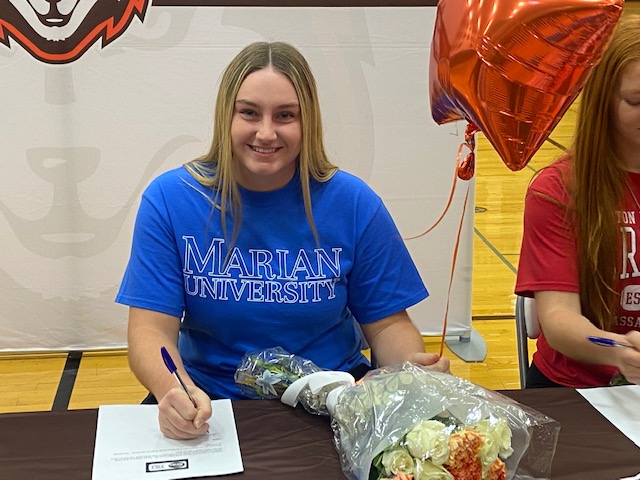
The path to success isn’t always an easy or smooth one. And sometimes you have to make some tough choices along that path to achieve your goals.
That’s what happened with Sabrina Di Vito a few years ago. The decision definitely paid off last week when she signed her National Letter of Intent (NLI) to continue her softball career with Marian University in Wisconsin. But it didn’t come without some soul-searching.
Sabrina is a talented athlete who loves both fastpitch softball and basketball. And is very good at both.
While that is a plus in most cases – I personally believe in the multi-sports athlete – it can be a little tough to play basketball at a high level and still find all the time needed to develop as a pitcher.
I’ve worked with Sabrina since she was 10. Our typical pattern was she would do lessons in the spring, summer, and early fall. Then basketball would kick in and I wouldn’t see her again until the following spring.
She would pitch well during the season, but had pretty much hit a plateau in terms of greater development. For example, she could throw a fastball with good speed, along with a changeup, and drop, but it was tough to move beyond those three pitches because the main focus was making sure she was ready to perform that weekend.
Then one day at the end of the summer before her freshman year Sabrina and her mom/catching partner Brandy told me that they had come to a conclusion: as much as Sabrina loved basketball and would continue to play, they had decided to prioritize softball which meant I would be seeing her throughout the winter as well.

Needless to say I was delighted, because I felt like we’d finally have the chance to find out just how good Sabrina could be. I knew she’d set aside time not just for the lessons but for the homework that would come with it. That’s just who she is.
Well, it didn’t take long for that decision to start paying off. Sabrina started gaining more speed, and added a curve and rise to her arsenal of pitches.
And suddenly she started turning into a pitcher who could dominate hitters on a regular basis. In fact, in 2022 she set the single-season record for most wins by a softball pitcher at her high school – a school that has been around for more than 50 years!
She did very well in travel ball this summer too as part of a pitching troika that helped her Illinois Sluggers-Harms team win a lot of ballgames. Then this fall when two of three legs of that pitching stool were injured for a bit, she stepped up again as the workhorse, throwing game after game and getting stronger as she went.
All of which contributed to a lot of fun culminating in her signing her NLI.
The choice of school, by the way, was driven by the best reasoning too. Sabrina wanted to play college softball, but when she’s done playing she wants to be a nurse.
Those two goals are often mutually exclusive, unfortunately, due to the workload of a nursing program and the demands of college softball. But Marian is known for its willingness to work around the nursing schedule, enabling deserving players like Sabrina to continue to play as they pursue their career goals.
One other fun fact about Sabrina is how unshakably even-keeled she is – an awesome trait for a pitcher. It’s not just how when I give her a piece of instruction she just smiles, says ok, and does it.
Sometimes, just to see if I can get a rise out of her, I will say something that is, shall we say, more like what an “old school” type of coach might say.
Doesn’t bother her in the least. She gets the best of me on that every time by just saying “ok” or “uh-huh” and going on about her business.

In fact I’m told she finds it funny so at least I’m keeping her amused! So it’s a good thing she’s very self-motivated to be the best she can be.
In any case, congratulations Sabrina on securing your ticket to the next level. I’m glad when you reached the fork in the road you chose the one that led to softball.
Persistence Pays Off as Jenna Kosnoff Signs Her NLI
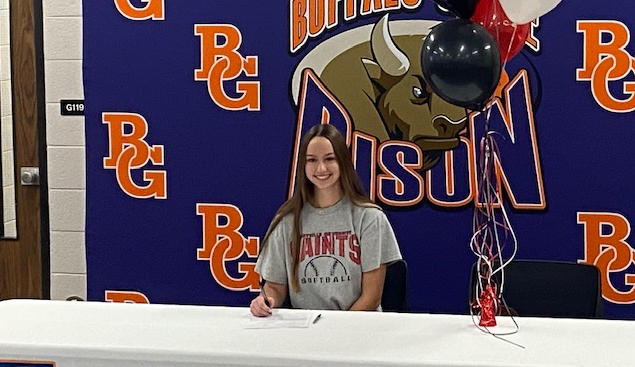
Today’s story is for every fastpitch softball player who may be a little undersized (for now), or perhaps struggles a bit to get all the body parts moving properly, or somehow doesn’t quite measure up to her teammates at the moment. It shows what you can do if you want it bad enough.
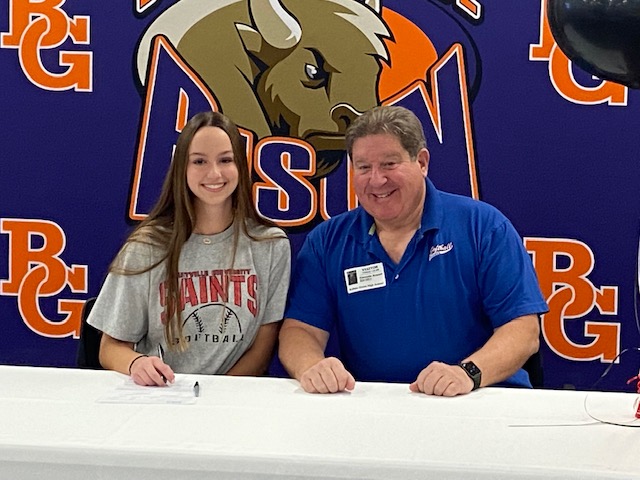
First though, I don’t want to bury the lede: earlier this week Jenna Kosnoff signed her national letter of intent to play for Maryville University in St. Louis. She will be pitching for them, yes, but when she’s not pitching she will likely play the field because she has a great glove and a powerful bat.

I’ve worked with Jenna since she was 10 years old. We started out with pitching, then added hitting later at her request.
Over the last few years she has racked up a lot of wins and a lot of strikeouts as a pitcher, and consistently delivered an amazingly high batting average, on base percentage, and on base plus slugging (OPS) in PGF tournaments. If you were to watch her play today it would be easy to say that she is clearly hugely talented so it’s no wonder she’s doing all that.
But the reality is it wasn’t that long ago that she was struggling great. When I first started working with her Jenna was a scrawny little thing with sticks for arms and legs. You would wonder if she would blow away if a stiff breeze came up.
Jenna never let her size define her, however. She was always determined to be a top player – to the point her dad Gary would tell me when they got home from a lesson she would often go down to their basement or in the garage to continue working on whatever we’d just gone over.

One of the things Jenna struggled with was turning the ball back toward second base and pushing it down the back side of the circle. For those who don’t know that is a weak position for the arm, and one that totally eliminates any chance of getting acceleration and whip into release.
I was convinced that if she could get that corrected she’d start throwing a lot harder, so I finally recommended we shut her down completely from pitching (in the middle of the season) so she could focus on that movement. At that time Jenna was the #4 pitcher on a team where at least two of the others are also going to play college ball so it wasn’t much of a loss for the team. Her coach may have even been relieved because he was nice enough to give her innings even when she was under-performing.
It took about four months as I recall to make the fix. A lot of our lessons at that time never got past the K position. But Jenna never gave up or complained. She just worked it and worked it until we could see she was getting great arm bend and lag.
And just as I had said at the beginning of the process, her speed started going up. Her movement pitches also started working better, and she climbed the ladder to become a #1 pitcher who now throws in the low 60s.
To be honest, it wasn’t just the mechanics change. Jenna grew quite a bit too and worked out like a fiend to develop muscle.
She’s still on the slim side but her arms and legs no longer look like sticks. Still, without the mechanics change, and her determination to make it, I don’t think she’d be where she is today.
The other thing she did was learn to put everything she has into every pitch and every swing. When I went out to watch her play in one of her early games I saw her pitching with an arc – something she didn’t do in lessons.
She had to overcome the mentality of being careful to “just throw strikes.” Now, though, she’s the poster child for giving it all you’ve got every time.
So congratulations to Jenna on this tremendous accomplishment. She has definitely earned it.
And for all of you out there right now who may be being told you’re not enough, keep working. Good things will happen.
No Need to Paint the Corners with a Changeup

Recently my friend and fellow pitching coach Linda Lensch, a trainer with the NJ Ruthless and owner of Greased Lightning Fastpitch High Performance Instruction LLC attended an online presentation about how new technologies are improving and changing the game.
Linda was kind enough to share the PowerPoint of the presentation with a few of us pitching coaches. Included was some data, presented by Florida State assistant coach Troy Cameron, that came out of pitching tracking by YakkerTech at five D1 schools.
One of the things I found most interesting was the heat map on changeup locations and results, which you can see on the far left.

Notice how both the vast majority of pitch locations AND the vast majority of whiffs (swings and misses) aren’t on the corners. Instead, they are dead red.
I have been preaching this for years based on my own observations and experience, and have heard many college coaches say the same thing. You don’t have to be clever or try to paint the corners if you have an effective changeup. Just throw it down the middle, mid-thigh-high or below, and you’ll get the desired effect – a whiff.
Now we have the data to prove it.
I’ll say it again a little louder for those in the back, and for those who have been coaching he same way for 20 years and don’t like new information: YOU DON’T NEED TO PAINT THE CORNERS WITH A CHANGEUP. JUST THROW IT DEAD RED.
What does this mean from a practical standpoint?
For one, pitchers can quit wasting time trying to lean how to paint the corners with a changeup and instead focus their time on disguising the fact that it IS a changeup.
Most pitchers start out learning to throw different pitches down the middle, and then once they can do that will move on to moving them out. In this case, once a pitcher can throw it low and slow without giving it away in her motion she can move on to other pitches.
It also means coaches can quit insisting until their hair is on fire that their pitchers must be able to spot their changeups inside and out. Less stress for the pitcher and the pitch caller.

The pitchers’ parents can also relax in the stands if they see their daughters throwing changeups down the middle. It’s fine, dude or dudette. That’s where it’s most effective.
Why is it most effective down the middle? Now we get into speculation and theories, but I have a pretty good suspicion on that topic based on 20+ years of teaching that pitch.
The whole point of a changeup is to either induce a hitter to swing well ahead of the ball arriving at the plate or confuse her on what she’s seeing to the point where she lets the pitch go by before she can process it. The way you do that is by bringing the body and arm at one speed while having the ball travel at a different, slower speed. Easier said than done, by the way.
It’s like a reverse pitching machine. With a machine, the feeder’s arm usually moves glacially slow (and may even fumble putting the ball in the chute) while the pitch is delivered at 55, 60, 65, etc. mph. The arm speed and the pitch speed don’t match up, so the hitter is perpetually behind the pitch unless she know the keys to hitting off a machine.
With the changeup the opposite is true. The body and especially the arm are traveling through space at a rate of speed that matches the pitcher’s fastest pitch (usually the fastball), but the design of the pitch allows it to be delivered 12-15 mph slower than the fastest pitch without any visible clues that it will be slower.
That’s why you see hitters’ knees buckle when a well-thrown change comes at them. The visual clues and the reality don’t match up and they contort themselves into a pretzel trying to adjust on the fly.

And if you can do that as a pitcher, down the middle works just fine. In fact it’s probably preferable because it can fool umpires too, so why not make it easier for them to call?
Now, before anyone starts saying “Oh, that only works at the lower levels” remember where this data comes from. It comes from five colleges that tracked every pitch of their pitchers and their opponents during home games.
And since these are not cheap systems by any means, you can bet that these were some pretty big schools, i.e., ones you see on TV all the time. They’re the only ones with the budgets to afford it.
So if it works at that level, you can be pretty sure it will work at yours.
The data doesn’t lie. It’s all there in black and white and red.
Quit wasting time focusing on painting the corners with changeups and just turn your pitchers loose to deliver them where they will be most effective based on the data: dead red.
You’ll get better results. And your pitchers will have one less thing to worry about.
WCWS Demonstrates the Value of Great Outfield Play

I have written in the past about how many parents of travel ball and high school players view the outfield as a punishment or a sign that their coach believes their child somehow doesn’t measure up to her teammates. They will tell anyone who will listen that their daughter “deserves” to be in the infield – I guess because the cool kids play infield and the nerds play outfield.
Yet as the recent Womens College World Series (WCWS) demonstrated once again great outfield play is often the difference between winning and losing – as well as advancing or going home.
The obvious ones are the spectacular catches – going up over the wall to rob an opposing hitter of a home run. Those are dramatic and make for great candidates for endless SportsCenter Top 10 replays.
Yet those are also the rarities. Often the difference-makers are more the everyday plays or even the approaches to the position that the best teams adopt to ensure their success.
Here’s a good example from my own observations. As I was watching one of the teams warm up I looked at how their outfielders were throwing the ball back to the coach hitting fungoes.
It is common practice among colleges to recruit the best athletes then put them into positions where they are expected to use their athleticism. (The stated exceptions are pitchers and catchers, who are recruited specifically by position.)
As a result, many college players at all positions were once shortstops on their travel and/or high school teams. The best defensive players out of that group will actually play shortstop, and the rest will be spread around to other positions based on need or their ability to hit.
As I watched those outfielders it was clear that was the case for this team. All their throws were that quick, low arm slot, almost sidearm throw that shortstops make. That type of throw is great within a certain range, but after that range it can be a liability.
Sure enough it was during the game. I remember at least two balls hit to medium-deep left or left center where the outfielder picked up the ball and “shortstopped” the throw to third as a speedy runner went for the extra base.
Understand these weren’t balls to the fence. They dropped in front of the fielders.
As expected, the throws took two or three hops to get to third. By that time the runners had already safely slid in and stood up – it wasn’t even close.
A better, stronger outfield throw would have at least given them a chance to get the out. But it didn’t happen and the runners ended up scoring later.
Another example came during one of the Oklahoma State/Texas games. It was the play that was shown endlessly with the miscues that pretty much let Texas back into the game.
If you watch closely, when the throw goes to second after being cut off, the center fielder and the left fielder are nowhere near the line of the throw. When it goes awry, the center fielder has to chase the ball down to the outfield fence, which allows the runners to keep running.
Had she moved to the line of the throw earlier the damage may have been minimized and perhaps we would have seen an all-Oklahoma WCWS instead. We’ll never know.
Throughout the whole NCAA tournament we also saw examples of outfielders diving for balls when they didn’t need to only to see the ball skip past them for extra bases. We saw outfielders lose a ball in the lights or the sun because they didn’t shade their eyes properly or were using a closed-web infielder glove instead of an open web outfielder glove.
We saw balls drop between two outfielders or out fielders and infielders because the outies weren’t forceful enough in calling off the innies (which is what they should do, because they have priority). We even saw simple catches botched because outfielders were trying to make a throw before they caught the ball or just didn’t track the ball well enough.
These types of plays happen every day at levels of competition. And unlike an error in the infield, where most play is self-contained, problems in the outfield can quickly be amplified because there is no one behind them to help minimize the damage.
All of this points to the importance of having a well-trained outfield that is focused on their own position instead of why they’re not playing in the infield. Taking enough pride in outfield play to learn how to read the ball off the bat, re-learn to throw for more power and distance, and develop the type of situational awareness and focus required when the ball comes your way just a few times a game is invaluable to a team’s overall success.
So if you/your daughter is assigned to the outfield, don’t feel like the coach is saying you are “less than.” Instead, look on it as an opportunity to make a huge contribution to your team’s success and be the best outfielder you can be.
In other words, make sure you’re a difference-maker.






 Life in the Fastpitch Lane