Category Archives: Coaching
Offseason Games: The Perfect Time to Try New Skills

Fall ball 2023 is now behind us for most teams, or will be after this weekend.
For many that will mean a welcome break from organized team activities (OTAs), at least until after the first of the year. For the rest, it will probably mean more of a maintenance schedule (e.g., once a week instead of three times) to give everyone (including coaches) a chance to unwind and refresh themselves for 2024.
Of course, that doesn’t mean that the game schedule will come to a complete halt until the summer, or until high school ball kicks in for those who play in the spring. These days, the proliferation of domes and other large structures in the northern climes means teams still have an opportunity to get some games in once or twice a month. (Southern states just carry on as usual.)
So for those who will be playing throughout the cold, dark months of winter, I have a suggestion on how to get more benefit from these essentially meaningless games. Are you ready for it? Here it is:
Try something new.
Brilliant in its simplicity, isn’t it?
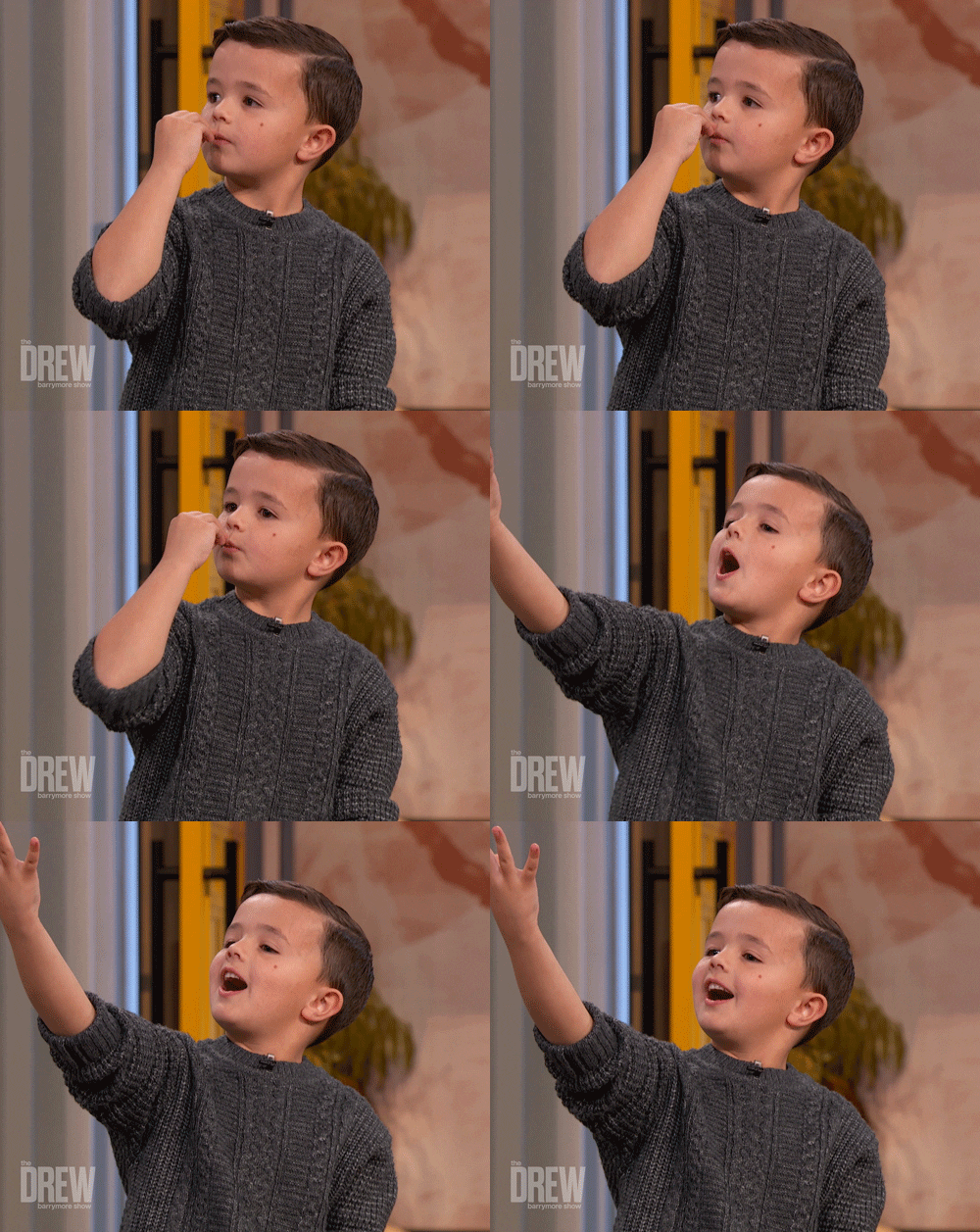
Wait, you don’t understand what I mean?
During the offseason many players work on new developing new skills. For example, a naturally left-handed hitter may learn how to slap in addition to swinging for power. Or a right-handed hitter may get turned around to the left side to take advantage of her speed.
A pitcher may learn a new pitch. An infielder may learn how to throw sidearm from a crouch on a bang-bang play.
A catcher may learn how to throw from her knees. A coach may attend a coaching clinic, such as the ones offered by the National Fastpitch Coaches Association, and learn a new offensive strategy or defensive sets.
But then when they actually play in an offseason game, the slap, the new pitch, the new throwing motion, the new strategies, etc., get stuck in the back pocket in favor of what the player or coach is most comfortable with.
That’s a missed opportunity in my mind. What better time to experiment with something that could be very valuable next summer than when you’re basically just playing for fun or to break up the boredom of practice?
Back when I was coaching teams, that was actually fall ball. You’d basically scrape a few double headers or round robins together on a Sunday, or maybe if you were lucky you’d find a local tournament or two that would give you a chance to play beyond the summer.
Today, fall ball is basically equivalent in importance to the summer. If you’re of recruiting age it may even be more important due to all the college showcase events around the country.
No one wants to risk looking bad in that atmosphere. So even if they’re learning new things they’re reluctant to trot them out on a stage where they could embarrass themselves mightily.
Winter/offseason ball doesn’t have that same level of risk. It’s perhaps the last bastion of “who cares about the outcome?” left in our sport.
So again, what better time to put on the big girl (or big boy in the case of coaches) pants and try something you’ve been working on but haven’t executed in a game yet?

Sure, it could be disastrous. A slapper could end up striking out every at-bat, including in a situation that causes her team to lose.
A pitcher could try out her new riseball and watch as it sails into the upper reaches of the net, scoring not just the runner on third but the runner on second as well. A coach could try a suicide squeeze only to watch in agony as the bunt is missed and the runner is hung out to dry.
Again I say unto you, so the heck what?
Yes, it would be temporarily sad. But it would also break the seal on using those skills or strategies in a game situation.
It would become a learning experience as well, helping the player or coach do better with them the next time. Do it a few times over the course of the offseason and the player or coach just might have the experience – and confidence – to execute them effectively and subsequently become better than they were before.
Remember, if you do what you always did you get what you always got. You’re spending considerable time, and perhaps money, to learn new things. Those new things don’t do you any good if they never get out of your back pocket.
Take full advantage of games without real pressure or consequences to try out new things and get more comfortable with them. If you’re a coach, find out what your players are learning and make them give it a try.
Because that little pebble you toss now may have a significant, positive ripple effect for you next year.
Greatness Comes With A Cost

A whole bunch of years ago there was a series on cable called Camelot. It was yet another retelling of the King Arthur legend, although with a grittier feel to it.
Of course one of the key characters was Merlin, the King’s magician/adviser. Normally he is portrayed as someone who can wave his hands or wand or whatever and easily conjure up whatever is needed at the time.
But in Camelot it didn’t happen quite so simply. On the rare occasions when Merlin needed to summon up some magic, it took all his concentration and an extreme effort, which would often see him bleeding from his eye before he finished.
When asked about it, he would painfully reply, “Magic has a cost.”
The same is true for learning how to play fastpitch softball. (You knew there had to be a point to this story somewhere.)
If you want to be great at it, or even really, really good, you don’t simply walk out onto the field and start playing. There is a cost to achieving greatness – a price to be paid in exchange for the glory you seek.
Often that price is paid in time. You may stay need to stay after practice when everyone else is going home to get some extra reps in or solve a particular issue.
It likely will also involve working on your own, even when you don’t feel like it, to improve a skill that’s deficient or take one that’s good to the next level. (Often the second one is tougher to get going on than the first, because it’s easy to convince yourself you’re already good enough.)

The price may come in terms of missed opportunities for other things. While your friends are all going to a concert or an amusement park or a birthday party or some other fun event, you’re going to a college camp or a tournament or maybe even staying behind because your team has practice.
The price could be financial. If your family doesn’t have a lot of disposable income you may need to pass on that new phone or skip getting a new outfit so you can pay for team fees or a new bat or a college camp – anything that’s outside of the core fees.
Or it could mean you’re not able to get a job to make some “fun” money of your own because your practice and game schedule doesn’t allow it.
The price could be pain from a particularly tough speed and agility class or perhaps the result of an injury – especially if you’re attempting to play through it. Or it could be the feeling of being tired all the time.
College players experience that a lot. Between early morning lifting, classes, practice (team or on their own depending on the time of year), study tables, and making up for lost time in the classroom due to games they can pretty much be in a fog much of the year.

The cost can manifest itself in many ways. But there is always a cost if you have that burning desire to stand out on the field and do all you can to help your team win.
This isn’t just for players, by the way. There is also a cost is you want to be a better coach.
You will find yourself putting in far more time than just the couple of hours at the field a few days a week or even the 12-hour days of a tournament. There’s practice planning, coordinating schedules, managing budgets, talking to parents and players, and a whole host of other tasks to be performed while still trying to stay employed at your day job.
If you want to be great you also have to allow for continuing education. You’ll need to take online courses or attend in-person clinics such as those offered by the National Fastpitch Coaches Association as well as local events.
You’ll invest an inordinate amount of your own money on books and videos as well as training devices – even if it seems they will solve one problem for one player.
And, of course, at some point you will miss a family birthday, or a school reunion, or a work outing, or something else because, well, games. At which point the cost will also include the internal stress it puts on your personal relationships because “you’re always at some field somewhere” instead of where others think you should be.
So is achieving your goals on the field worth the cost? Only you can answer that.
The key, though, is to understand that there will be a cost if you want to aspire to greatness – or even “really, really goodness.”
Your willingness to pay it is where the true magic happens.
Magician photo by cottonbro studio on Pexels.com
Coaches: Remember What You Do Makes A Difference
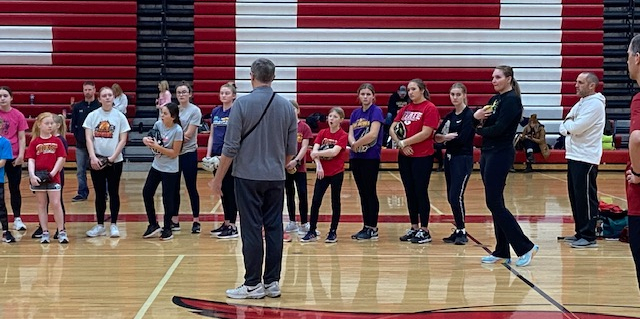
Coaching fastpitch softball can be a grueling grind. The seemingly never ending games, practices, organizational meetings, fundraising concerns, educational seminars, late night calls from concerned parents. etc. can all take their toll after awhile.
That’s why coaching burnout is such an issue and threat to everyone who is crazy enough to grab a clipboard (or tablet) and step onto a fastpitch softball diamond.
It’s easy to become overwhelmed by the sheer volume of work, not to mention the intensity of trying to help 12-15 players become the best versions of themselves as athletes and human beings. That’s a huge responsibility.
But underlying all of that is something else – something embodied in a great scene in the movie Star Trek Generations. (If you’re not familiar with it, this was the movie that handed off the film series from Star Trek the Original Series [TOS to you Trekkers out there] to Star Trek: The Next Generation [TNG]. I so rarely get to use the [square brackets] so what a treat for me.)

This scene takes place shortly after TNG’s Captain Picard runs into TOS’ Captain Kirk in a place called The Nexus, which is sort of a Field of Dreams for sci fi. In it, Captain Picard has been trying to convince Captain Kirk to come back to our reality and help him stop the bad guy who is killing billions of people in his attempt to get back into The Nexus.
At first Captain Kirk turns him down because he is perfectly content in The Nexus. No surprise there because it’s where your life can be whatever you want it to be.
But then Captain Kirk has a realization. (It takes a minute to get to the payoff in this clip but it’s worth it, trust me.)
If you didn’t bother to watch the clip, or weren’t able to, Captain Kirk’s realization is that while he was in Star Fleet he could make a difference in the world. Since he left, though, nothing he does really matters that much.
That’s what coaching enables you to do – make a difference in the lives of your players. And by extension their families.
None of us knows what goes on behind the scenes in the lives of others. So it’s easy to assume that everything is all hunky-dory with them, and that the face you see is indicative of what’s happening “under the hood.”
That may not be the case, however. I can’ remember who originally said it, but I once saw a statement that admonished coaches to remember that their practice might be the best part of their players’ day.
Maybe the player is struggling in school, or had a fight with her parents. Maybe she’s being bullied, or has had a close friend abandon her.
Maybe there is some food or housing insecurity in her family, or a favorite pet is on the brink of crossing the rainbow bridge. (Don’t click the link if you are in public and susceptible to emotional demonstrations.)

There could be hundreds of different things happening in your players’ lives. But when they get to your practice or game they have opportunity to set all of that aside and do something that makes them feel good about themselves and their lives, providing you’re doing it correctly.
The guidance you provide in helping your players overcome various softball hurdles is very likely to carry forward into the rest of their lives.
As a result, you can help a shy kid learn to make friends. You can help a kid who is always down on herself or feeling she isn’t good enough develop self-confidence.
You can help a kid who always follows the crowd (for better or worse) step up and learn to become a leader instead. Or at least learn to make better decisions rather than succumbing to peer pressure.
You can help a kid who has always been coddled and over-protected by her parents learn to manage adversity. You can help a kid with behavioral issues learn to work in a team setting.
You can help a naturally lazy kid develop a work ethic. You can help a kid who over-thinks everything learn to let go of her conscious thoughts (and fears) and trust her gut.
You can help a kid who feels like a failure learn what it’s like (and what it takes) to succeed. You can help a kid who feels unloved and unwanted at home to feel like she’s part of a family of sorts.
You might even prevent a kid from doing harm to herself or others. All while you are helping those kids learn to catch, throw, pitch, and/or hit a softball.
In other words, you can make a difference.
And you never know the ripple effect of making that difference either. Perhaps that kid you helped in some way goes on to cure cancer, or improve the environment, or become an elected official who enacts policies that make everyone’s life better.
Or even becomes a coach herself someday and pays what you did for her forward. Or maybe just grows into a great human being who has a family and/or contributes to society in some small but meaningful way.
All because you were there as her softball coach, making a bigger difference than you could have possibly realized.
Yes, coaching fastpitch softball, like any sport, can be a grind after a while. You definitely need to pay attention to your physical and emotional wellbeing if you’re going to help others. Just like how on a jet they tell you to put on your oxygen mask before you try to help others.
But when things get tough, keep in mind how empty your life would be if you weren’t coaching. Because as Captain Kirk says, while you’re in that chair you can still make a difference.
Make that difference for someone today.
Proper Form? The Shadow Knows!

You’ve no doubt heard that different people learn best in different ways. The four basic learning styles are visual (watching the skill performed), audible (listening to instruction about the skill), kinesthetic (learning by doing), and reading/writing (using written words to understand).
Fastpitch softball instruction typically uses audible (coach explains) or visual (coach demonstrates, or at least tries to) learning, then expects that to translate into kinesthetic as the player tries to emulate the instruction. The idea is to get the “feel” of the movements so they can be carried forward later.
While this is important, some players have difficulty moving from visual/audio to kinesthetic learning. They are trying, but they can’t quite get the feel of it and thus go right back to old habits.

A great example is a pitcher trying to learn to keep an elbow bend down the back side of the circle to allow her arm to whip at the end. She may be trying to bend it, but as she goes into the back side her elbow straightens out and the arm becomes stiff, which means no whip.
One solution is to video the player so she can see what she is doing. Sometimes it helps, but often she has trouble translating what she sees into what she does.
A better approach is to use a mirror so she can see what she’s doing AS she tries to feel it. The combination of the two is very powerful, and often helps shortcut the learning curve.

But what if you are outside and don’t have access to a mirror? Not to worry – there is another solution: her shadow!
If you place the pitcher with her back to the sun, her body will cast a shadow. She can then watch that shadow as she moves to see if she is maintaining elbow bend or coming out of it over the top.
This quick, crude video demonstrates how that works:
Note how rather than reaching back with the hand I pulled the upper arm or elbow down, maintaining bend that leads into release. By watching the shadow while moving her arm, your pitcher can begin to feel where her arm needs to be as she practices.
She can continue to observe as she builds up speed, first without a ball and then throwing a ball into a net or screen. Over time she will feel it more and more until she no longer needs the visual cue – at which point you can really turn her loose.
This is just one example of how you can use a player’s shadow to enhance learning. For example, if she tends to drop her hands or flatten out her back too early while hitting, her shadow will show it, enabling her to make that adjustment.
If she is pulling her hand straight back while throwing instead of retracting her elbow with her scap and then letting her hand rotate behind her, that will be easy to spot in a shadow too.
Next time you’re outdoors on a sunny day and a player struggles to get the feel of a skill, give this idea a try. It’s quick, easy, and free – and the shadow always knows!
Fear of the Ball? They’re Not Wrong!

Every coach knows that being afraid of the ball, whether said ball is being hit, pitched, or thrown at a player, is one of the greatest performance-killers. It’s kind of like Maslow’s Hierarchy of Needs: players need to feel safe before they put all their energy into whatever activity it is they’re trying to do.
Those who have coached the littles know exactly what I’m talking about. You can see it when they step sideways to catch a thrown or fly ball, or automatically back out of the batter’s box when they’re hitting, or do the “matador” as they try to field a ground ball.

This isn’t just a problem with the littles, however. Many older players also harbor some level of fear of the ball; they’re just better at hiding it.
The typical coach reaction when these things happen is to yell at the player to “stay in there” or “stay in front of it.” But given a choice between being yelled at and actually feeling physical pain, it’s pretty obvious what their subconscious is going to opt for.
I think the thing coaches with players who are afraid of the ball have to acknowledge is that in many or even most cases those kids aren’t wrong. If the ball hits them instead of their bat or glove, it’s going to hurt. That’s just science.
So if you want to get your daughter or your players past moving away from the ball preemptively it’s going to take more than telling them “don’t do that.” Here are some tidbits that may help you with that task.
The Fear Is Often Worse Than the Reality
A lot of the kids who are afraid of the ball haven’t necessarily experienced the pain before. Their brains are simply making assumptions based on other past experiences.
Take a hitter who backs out of the box when the ball is pitched. She’s never been hit by a pitch before. But…
She has been hit by other flying objects before. Maybe a sibling threw a toy at her with sufficient force that it caused bruising or bleeding.

She also knows from picking it up that the ball is hard. So even though she has never actually been hit with a ball while hitting she is afraid of similar pain.
Once she has been hit by the ball, however, she’ll then have a frame of reference for it and it won’t seem so bad after that.
Does that mean you should throw balls with the intention of hitting your players? Of course not. But you can toss them lightly into their arms to help them start overcoming their fear.
You can also give them some incentives. When I pitch to girls who like to automatically step back I tell them if they do it again I will start throwing behind them, and may even toss one back there (lightly) to give them more reason to stay in.
If you’re going to do that, however, be careful. I have hit one or two unintentionally because I didn’t get it far enough behind them. It worked to solve the problem, but it’s not exactly the way to build the player-coach relationship.
Take the Reason for Fear Out
Most of the time a fear of the ball is driven by a lack of confidence that the player can avoid being hit. She feels like she doesn’t have the skills to catch the ball, for example, so she sidesteps to avoid any mishaps that may result from that lack of skill.
The solution here is to give them something less threatening to work with. For example, have players who are afraid play catch with foam balls like a Jugs Lite Flite ball.
The light weight and softer texture will make the entire process less threatening to them. And unless they’re hit right on the nose by a hard-thrown ball at close distance – something you should control in practice – being hit by the ball won’t produce any pain.
When they realize that they will be less inclined to bail out right away, enabling them to build proper skills so they are more confident when a real ball is introduced again.
SIDE BENEFIT: The lighter weight will also encourage them to adopt better throwing mechanics because you don’t need as much strength to throw them.
Be Smart With Practice Reps
One of the temptations coaches have when hitting ground balls is to hit them as hard as they can so the girls “are ready” for hard-hit balls in games.
The problem is, an adult coach (male or female) can hit a ground ball a lot harder than a 99% of 10 year olds will at that age. So rather than teaching their players to get in front of the ball and move into it, they’re teaching their players to sit back and try to avoid getting nailed with the ball.
This approach not only instills fear, it also teaches them to wait on the ball rather than charging it if it’s not hit hard. I don’t know how it is where you live, but the majority of ground balls in a 10U game in my area require being charged.
A better approach in my opinion is to start easy and let them build the confidence in their glove skills – especially if you’re playing on a dirt field that hasn’t been laser-leveled and groomed. Then gradually build the speed until it’s realistic for what they’re going to face.
You might even want to start by rolling balls to them rather than hitting them so they can put their entire focus on learning how to field and make the throw properly. THEN get into hitting them.
This isn’t just for the littles by the way. College and even national team-level teams do this all the time to refine their skills.
Obviously they’re not dealing with fear of the ball at that level (at least hopefully not). But this approach works for both.
Acknowledge the Fear
As an adult it’s really easy to think players should just ignore their fear of the ball. You have 2X, 3X, maybe even 4X as much experience dealing with the issue.
But try to think of it from your players’ experience. As mentioned above, maybe they’re never been hit and so have built the outcome up in their minds more than the reality will be.
Maybe they have been hit and it’s the worst pain they’ve experienced so far in their young lives. You know may know that getting by the ball is nothing compared to a kidney stone or an automobile accident injury, but they don’t. It’s all a matter of scale.
Whatever the reason, it’s not a monster under the bed you can tell them to ignore. It’s very real.
Be understanding and help them work through it little by little. If they feel safe with you they’ll overcome the fear quickly – and could turn out to be your best players in the long run.
5 Reasons Lefties Should Be Trying to Hit to Right
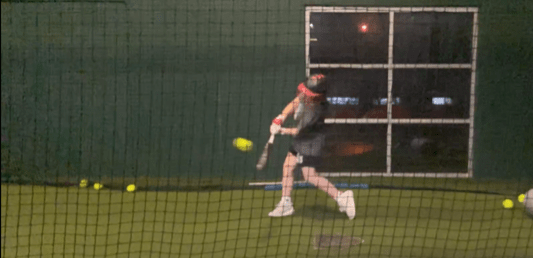
The other day I was working with a left-handed hitter and noticed two things.
The first was that her sister, who went out to shag balls after her own lesson, set herself up in left field. The second was that the sister was correct – everything was going out that way.
I told the girl who was hitting that she was late, needed to get her front foot down earlier to be on time, especially on inside pitches, and all the usual advice for someone who is behind the ball. But then it occurred to me – she might have been going that way on purpose.
So I did the most sensible thing I could – I asked her about it. “Did someone tell you to hit to left all the time?” I asked.
“Yes,” she replied. “My old team coach.”
This is the second time I’ve heard that from a lefty. The first actually got that advice from a supposed hitting coach.
Forcing lefties to try to hit to left on every pitch makes no sense to me. Sure, if the pitch is outside you should go with it. That’s hitting 101.
But on a middle-in pitch? No way! Here are five reasons why that’s just plain old bad advice.
Giving Up Power
This is the most obvious reason. The power alley for any hitter is to their pull side.
You get the most body and bat velocity on an inside pitch when you pull it. Laying back on an inside pitch to try to hit it to left is taking the bat out of the hitter’s hands, which you don’t want to do – especially in today’s power-driven game.

Encouraging the hitter to barrel up on the ball and hit to her pull side will result in bigger, better, more productive contacts. And a much higher slugging (SLG) and on base plus slugging (OPS) percentage, leading to more runs scored and opportunities taken advantage of.
Creating a Longer Throw from the Corner
If a left-handed hitter pulls the ball deep down the first base line and has any speed at all there’s a pretty good chance she will end up with a triple. It’s a long throw from that corner to third base, and will likely actually involve two long throws – one from the corner to the second base relay, and another from the relay to third.
A hit to the left field corner, however, will more likely result in a double. It’s a much shorter throw and one that doesn’t (or at least shouldn’t except for the younger levels) involve a relay. One less throw means one less chance for something to go wrong for the defense.
I don’t know about you, but I’d much rather have my runner on third than on second. As this chart from 6-4-3 Charts shows, your odds of scoring go up considerably regardless of the number of outs when your baserunner is on third:

You probably didn’t need a chart to show you that – it’s pretty easy to figure out on your own – but it always helps to have evidence.
Hitting Behind the Runner
Coaches spend a lot of time talking screaming at their right-handed hitters about the need to learn how to hit behind the runner at first. Then why shouldn’t lefties be encouraged to do it as well?
It ought to come natural to a lefty. Now, part of the reason for hitting behind the runner is to take advantage of a second baseman covering second on a steal, which is less common in softball and probably doesn’t happen with a lefty at the plate.
But what about advancing a speedy runner from first to third? Again, longer throw from right.
A well-hit ball to right, even one that doesn’t find a gap, gives that speedy runner a chance to get from first to third with one hit. A well-hit ball to left that doesn’t find a gap will probably still require the runner to hold up at second because the ball is in front of her.
So if you’re teaching your lefties to go to left all the time you’re leaving more potential scoring opportunities on the table. In a tight game, the ability to go to right instead of left could mean the difference between a W and an L.
Taking Advantage of a (Potentially) Weaker Fielder
This isn’t always the case. There are plenty of great right fielders, especially on higher-level teams.
But for many teams, right field is where they try to hide the player who may have a great bat but a so-so ability to track a fly ball or field a ground ball cleanly.

Why hit to the defense’s strength when you can hit to its weakness instead? At worst, if right field is a great fielder you’re probably at a break-even point.
If she’s not, however, you can take advantage of the softball maxim that the ball will always find the fielder a team is trying to hide.
Reducing Their Chances of Being Recruited
Most of today’s college coaches want/expect their hitters to be able to hit for power. Not just in the traditional cleanup or 3-4-5 spots but all the way through the lineup.
A lefty who only hits to left looks like a weak hitter. (And is, in fact, a weak hitter.)
Unless that lefty is also a can’t-miss shortstop, college coaches are going to tend to pass on position players who don’t look like they can get around on a pitch. That’s just reality.
Teach your lefties to pull the ball when it’s appropriate and they stand a much better chance of grabbing a college coach’s attention. And keeping it until signing day.
Don’t. Just Don’t
Teaching lefties to hit to left as their default is bad for them and bad for the team. It also doesn’t make much logical sense.
Encourage them to pull the ball to right when it’s pitched middle-in and you -and they – will have much greater success.
5 Ways to Help a Player Look Really Bad

You would think that one of the core parts of a coach’s job is to help ensure all of his/her players look good whenever they step onto the field. After all, pretty much every program at every level includes some form of “We are here for the girls” in their mission statement.
Yet the reality is you would be wrong. Because while most coaches sincerely love what they do and helping young people succeed, experience shows that is not true in every case.
Unfortunately, some are so caught up in their petty grievances and vendettas against individual players, families, outside coaches, other organizations or administrators at their schools or in their programs, etc., they kind of lose sight of their purpose and instead tend to make their decisions more to gain revenge or right perceived wrongs against them than to help players and win ballgames.
I know this sounds strange to some of you. But I’m sure many have experienced it first-hand.
In fact, this whole post was inspired by a rant a friend and fellow pitching coach had about exactly this type of situation. Not going to share his name because he hasn’t posted it publicly but I’m sure he knows who he is.
So if, rather than wanting to win ballgames and being willing to put a literal elephant on the field to do it, your first goal is to ensure that the targets of your anger feel the full weight and glory of your wrath, here are some suggestions to make it happen.
Throw pitchers into games cold
No better way to make even a great pitcher look bad than to just yank her off the bench, or better yet off another position on the field, and send her into the circle without a proper warmup. (BONUS: You also have the opportunity to help her get hurt! What a marvelous two-fer.)
Every pitcher needs time to warm up. Modern windmill pitching requires and incredibly complex and precise set of movements that must be intricately timed to produce the best results.
That’s why even the greats such as Lisa Fernandez, Cat Osterman, Monica Abbott, Sarah Pauly, Yukiko Ueno, etc. all would take their time loosening up their arms, finding their way to timing, and working on spinning the ball properly before games.
So if you want to “prove” to everyone that a particular pitcher isn’t good enough (and justify why you’re pitching another girl ahead of her) throw her in the game cold, preferably with runners on base, and let her struggle as she tries to find her rhythm. Very satisfying!
Put players in positions they haven’t practiced
Fielding and catching are the same skills no matter where you stand on the field, right? So why can’t any player play any position?
The reality is there are all kinds of nuances, physical and strategic, that go into every position. Which means there is a big difference between playing, say, third base and first base, or shortstop and first.
There’s even a different feel between outfield positions – not to mention different responsibilities. And forget about going into the outfield all of sudden when you’ve always trained as an infielder.
So if you want to make a player look bad, put her in a position she’s never practiced and has zero level of comfort in. If you can do it in a pressure situation so much the better.
Then be sure to yell when she bobbles or drops a ball, or throws to the wrong base, or makes some other type of mistake. That always helps.
Yell instructions to hitters while they’re at the plate
But don’t just yell out the instructions – insist that they follow them. For example, if a hitter likes to hold her hands a little low, tell her to hold them higher, and keep telling her until she does it.
Hitting is a tough skill to master to begin with. But giving her instructions she’s not comfortable with and insisting she follows them will really help throw her off her game and ensure she looks bad.
Or here’s another great idea. If you know a hitter’s flaws, yell them out loudly so the person calling pitches on the other side knows how to pitch to her.
For example, if she’s a sucker for high pitches, loudly state “Lay off the high ones” before the first pitch. If she tends to swing at pitches in the dirt, you can jauntily yell, “Don’t chase pitches in the dirt.”

The combination of changing her swing in the middle of an at-bat AND ensuring she sees a steady diet of pitches to her greatest swing flaw ought to help drive that batting average right down to where you want it.
Blame Player B for Player A’s mistakes
There’s nothing quite as much fun as taking the mistake of a player you like and foisting it on a player you don’t. This sort of deflection can really help bring down the spirits of the one you don’t like while simultaneously avoiding having to hold your favorites accountable.
Take the throw from short to first on a ground ball. The shortstop (who is “your kind of player”) picks up a routine grounder and proceeds to three-hop it to the first baseman (who is on your you-know-what list for whatever reason).
There was no reason for the ball to bounce once, much less three times, but the first baseman fails to pick it cleanly and the runner reaches base. You can let the shortstop slide while screaming at the first baseman that she has to “get those.”

Or what about a pitch in the dirt? This time you love the pitcher but find the catcher annoying.
The ball goes into the dirt in the opposite batter’s box for the fifth time that inning and finally gets away from the catcher, advancing a runner. Do you talk to your pitcher about hitting her spots?
No, of course not. You yell at the catcher because she missed it. Now everyone knows the pitcher is doing great but the catcher just sucks. Mission accomplished.
Hold players to different standards – and embarrass them when you do it
One of the best ways to ensure a player looks bad when you want her to is to put her under different scrutiny than her teammates. Bonus points if you can make it obvious you have favorites and non-favorites.
For example, a time-honored classic is to allow your “good” or favored players to make multiple errors in a game (or even an inning), but pull those you don’t like after a single error. If you can pull her off the field in the middle of an inning so she has to do a “walk of shame” in front of everyone at the field, even better.
For pitchers, you can sit idly in the dugout twiddling your thumbs while a favored pitcher walks several hitters while yanking a pitcher you don’t especially care for after one or two. Again, bonus points for yelling “We can’t defend a walk” after the first one. Double bonus points if the reality is you actually can’t defend a ground ball, pop up, or fly ball either.
You don’t even have to be that obvious, though. You can simply grunt and groan loudly in frustration whenever a player you don’t like does something bad while sitting silently or offering words of encouragement to one you do. The message will come through loud and clear.
Put ’em in their place
These are just a few examples. I’m sure many of you have seen more – perhaps some even more egregious.
It doesn’t take much, really. All you need is a little imagination and a burning desire to make sure players you don’t like for whatever reason look as bad as possible.
All it takes is a toxic combination of pettiness and ignorance.
Whether your goal is to make yourself feel big and important or just to drive girls you don’t like off the team and maybe even out of the sport, these tips will help. Now go show them who’s the boss.
Top photo by Ketut Subiyanto on Pexels.com
To Be a Great Coach, Be Curious

Since this is a fastpitch softball blog I will be writing about this in fastpitch softball terms. But the reality is it applies to any type of coach, instructor, teacher, etc. in any line of work where the goal is to help others learn new things or do things better.
There are many characteristics that combine to make a good coach. But if there is one that the truly great coaches share it is that they are curious.
I don’t mean they stick their noses into other people’s business or go rummaging through their garbage cans late at night. No, I’m referring to the kind of curiosity about why things work the way they work – and how they can work better.
You might think that would be an automatic, but you’d be wrong. It’s very easy for coaches to get stuck in their ways.
Certainly that applies to older coaches. I hear all the time, “I’ve been doing it this way for X number of years and it’s worked great for me so why should I change?”
The answer, of course, is that new research and new discoveries are being made all the time. If you had a choice of teaching something that is adequate or teaching something that is life-changing, wouldn’t you want to go with life-changing?
You’ll never know if something new is life-changing, however, if you aren’t curious enough to check it out.
But even young coaches can be stuck in their ways and un-curious. Take all the players who, when they transition to becoming coaches, don’t bother expanding their horizons and seeing what the latest thinking is in techniques or strategies.
Instead, they simply repeat what THEIR coaches told them.
A good example is pitchers who were taught “hello elbow” (HE) methods of pitching. They dutifully did all the drills (wrist snaps up-close, T drills, big finishes, etc.) their coaches told them to do. Never mind that when they pitched they actually used internal rotation (IR) mechanics.
Now that they’re starting to teach other pitchers do they go to clinics, or look at videos of high-level pitchers, or high speed videos of themselves pitching for that matter, or invest the time to take an online course such as the Pauly Girl Fastpitch High Performance Pitching certification?
Nope. They just keep repeating what their coaches told them. Who probably repeated what their coaches told them. And the cycle continues.

There is an amazing treasure trove of information out there from highly respected experts and highly accomplished and innovative coaches. Sure, there’s a lot of crap out there too.
But if you’re curious you can sort the great from the garbage pretty quickly to ensure that what you’re spending your time learning will actually be helpful.
This idea of being curious applies to more than just softball-specific training. The best coaches I know are looking to other sports to see how they train and how that information can be applied to their players.
They’re learning more about nutrition, stretching, exercise, rest and recovery, mental game strategies and other areas that can impact a player’s performance. They are using technologies they couldn’t even have dreamed of having when they started their careers.
In short, they are in constant search of new and better information and techniques that will allow them to serve their players better – and help those players learn how to achieve success off the field as well as on.
Look, I know it’s easy to get stuck in a particular way of doing things, especially if you’ve had success with it as a player or a coach. But why limit yourself only to what you know now?
Think of it this way: someone offers to give you a new car for free. You can choose between one built in the 90s (still brand new and in perfect working condition) or one that was built this year.
Which would you choose?
I’m pretty sure you’d take the one built this year because it will have a lot more capabilities and be more suitable for today’s world.
It’s the same with knowledge. Why remain stuck in the 90s, or the 2000s, or whatever previous decade you want to name, when there is so much more available to you today?
In our fast-paced world you’re either moving forward or falling behind. If you want to keep moving forward and become (or continue to be) a great coach, don’t just settle for what you’ve always done.
Be curious. You might just be amazed at how valuable (and thrilling) it can be.
Photo by Anna Shvets on Pexels.com
Be the Scarecrow, Not the Tin Man

One of the world’s most beloved movies is “The Wizard of Oz.” Audiences young and old love the story of Dorothy and her quest to follow the Yellow Brick Road so she can return home to Kansas (after ungratefully wishing she could go somewhere else; you parents can relate).
Along the way she meets three traveling companions. We’ll set aside the Cowardly Lion for now because he doesn’t have much to do with today’s subject.
That leaves us with the Scarecrow and the Tin Man.
These two characters offer the perfect way to describe how your athletes should be moving on the field.
Basically you want them to be the Scarecrow, not the Tin Man.
The Scarecrow is loose and relaxed. While yes, he does fall down a lot, the looseness of his limbs is the way you want your players to be when they are pitching, throwing overhand, hitting, fielding, running, etc.

By contrast, the Tin Man is very stiff. Even after he gets his joints oiled up he’s not exactly fluid when he moves.
He looks rather, well, clunky – because he is. As the Wizard of Oz himself says, he is a “clinking, clanking, clattering collection of caliginous junk.”
(In case you were wondering, “caliginous” is an archaic word that means misty, dim, obscure or dark. I looked it up. So it really doesn’t fit the rest of the description other than sounding like the other words. You’re welcome.)
In pretty much any athletic movement you want the body to be fluid. The energy should flow from one part to another (usually from the ground up) and the joints should remain unlocked.
But it can be difficult for players, especially younger ones, to understand exactly what that looks or feels like. If they’re used to be stiff when they walk or do other things in their daily lives they may not know how to get that flow.
But if you tell them to be the Scarecrow rather than the Tin Man, they instantly have a visual to help them put it into context. They may not get the Scarecrow part right away, but when you contrast him with the Tin Man it becomes a whole lot clearer.

Remember that coaching isn’t just about saying the right things or having the greatest amount of knowledge. It’s about being able to explain what you’re going for in a way your players can understand – and apply.
Telling them to be like the Scarecrow is a fairly specific way of telling them to “be loose and flexible” that gives them a model they can draw from based on their past experiences.
And if you find they can’t because they haven’t seen the movie – you now have a new team building activity to help them along their own Yellow Brick Road of success.
The One Tool Every Fastpitch Coach Needs in His/Her Bag

There are all kinds of devices and training tools available to fastpitch softball (and other) coaches today. A quick scan of Amazon or any sporting goods website will offer all kinds of ways to solve all kinds of problems at all kinds of price points.
But there is one tool today’s coaches need to make sure they have in their bags if they want to meet the expectations of many fastpitch players and especially parents today: a magic wand.
(Mine happens to be a Sirius Black model, as I’m sure Coach Katie McKay Phillips has already identified. If you don’t know who Sirius Black is, you really need to read more.)
The reason you need a magic wand is simple: many players and parents want to see instant improvement in individuals and teams.
They don’t want to spend hours practicing skills such as hitting, throwing, and pitching in the basement, backyard, or batting cages. They don’t want to spend hours out at the field learning their positions and what plays to make in specific situations or how to communicate where the ball will go.
Instead, they want you as the coach to wave a magic wand and take the team from looking like a group of misfit toys to a unit that can compete for tournament championships every weekend. So you’d best have a magic wand in your bag to show them you’re trying to give them what they want!
Now, of course, as any Harry Potter fan knows the wand is only as good as the wizard who wields it. So you’d best be practicing your spells and charms.
Once you have your wand, here are a few you can try. Some are directly from the Hogwarts courseware, while others are spells and charms of my own design.
Just remember, if you are a total Muggle and can’t get them to work, you’ll have to acquire the results the long, old-fashioned way – with lots of practice and repetition.
- Wingardium Leviosa – This one is one of the first Hogwarts students learn. It’s a levitation charm used to lift objects. Comes in mighty handy when your team can’t hit too well. Throw a little Wingardium Leviosa at a weak ground ball and watch it turn into a soaring line drive. You can also use it more subtly to turn a weak pop-up into a duck snort that sails just out of reach of every converging fielder. I’m sure you’ve seen that before.
- Expellliarmus – Good for when an opposing fielder is about to make a play that will result in a costly out. Originally designed to pull an opponent’s wand from his/her hand, it’s also great for turning a routine fielding opportunity into an instant error. No doubt you’ve seen this one being used by your opponents to make you look like you’ve never taught your players how to play. Naturally some coaches over-use it and then your team makes error after error, giving up a big inning. After all, the team couldn’t be that bad on their own after spending THE ENTIRE WEEK working on fielding ground balls and bunts.
- Petrificus Totalus – This is a full body binding spell that causes temporary complete paralysis. You have probably seen this one in action when your hitters were at the plate. The opposing pitcher throws a meatball down the middle of the plate and your hitter watches it go by for strike three. They didn’t freeze up on their own – they were hit with Petrificus Totalus by a wizard on the other side of the field. What other explanation could there be?
- Oblivius – This one is really handy becaue it enables you to erase the memory of people or events you don’t want someone to remember. It can be used in a couple of different ways. When used on opponents you can cause them to forget what to do with the ball on defense so they just stand there confused, holding it and looking around. No doubt you’ve seen this one in use as well. For your own team, you can use it when your pitcher just gave up a home run or other big hit to an opposing hitter and has now lost total confidence in herself and her ability to throw a strike. A little Oblivius and she’s right back in there. Coaches can also use it on themselves to forget bad innings or entire games before it gives them ulcers.
- Accio – The summoning spell that brings things to you. You’ll have to teach it to your players so the ball goes to them. How else do you explain a sure home run that hits a phantom gust of win and stays in the yard so the worst fielder in the game can catch it?
- Confundus Charm (Confundo) – Ever see three fielders converge on a ball only to let it drop between all of them? That’s Confundo in action.

- Instanteous Pitchus – Learning to pitch can be a long, arduous journey filled with hard work and major disappointments. But it doesn’t have to be. If you use this charm correctly you can turn any wannabe-pitcher into an instant ace in just one lesson. Which is what many parents expect of their coaches. No long, boring practice time or hours spent chasing balls around a backstop. Any pitcher can go from zero to hero if you apply this charm.
- Sluggeraramus – Does for hitters what Instanteous Pitchus does for pitchers. Or what parents expect purchasing a $500 bat will do for a kid with a 5 cent swing. If you can cast this spell, which is not easy to do, you won’t have to use Wingardium Leviosa so much in a game because every hit will already be a great one.
- Awareweed – Not so much a spell or charm as an herbal potion you can feed your players in lieu of spending practice time teaching them what to do with the ball in specific situations. Somehow they will just know where the ball should go, such as whether they should throw home to try to cut down the lead runner or realize that run is already scoring so go after one who is more vulnerable. It also gives them situational understanding, such as throwing to first for the sure out when your team has a 10-run lead rather than trying to get the runner heading home on a tag play. When your team is loaded up on Awareweed, coaches and parents can just sit back and enjoy the magic happening on the field.
- Silencio – While this silencing spell can be used on players when their incessant cheers are giving you a headache, it’s best applied to all the parent “coaches” in the stands who are yelling advice to their players (especially at the plate) or providing a running monolog of every play you as the coach should have made (after the fact, of course), criticisms of personnel or baserunning decisions, ideas on how to improve run production, and whatever else pops into their mind at the time. It can (and should) also be applied to those who have decided it’s their job to teach the umpire how to do his/her job.
That’s a fairly comprehensive list – enough to keep you studying for at least a year until you can pass your Ordinary Wizarding Level (O.W.L.) exam and more on to more advanced spells, charms, and potions.
That said, if you don’t have access to a wand, or can’t make it work, you’re going to have to do it the old-fashioned way – and explain it to your players and their parents as well.
The old-fashioned way isn’t quite as easy for them, and it takes longer, but it brings its own kind of magic as players achieve capabilities on their own they never dreamed they could acquire. And in the long run it’s a lot more satisfying because it’s been earned.






 Life in the Fastpitch Lane