Blog Archives
Losing Doesn’t Build Character – It Reveals It

Today’s post was actually suggested to me by my partner in podcasting Jay Bolden of BeBold Fastpitch. Not sure why he didn’t keep it for himself since he writes some great posts on his own Facebook page, but I will definitely take it. Thanks, buddy!
I think we’d all agree that it’s easy to look like a good coach, and a good person, when your team is winning., because it’s true that winning covers up a lot of other problems. You may be the most clueless coach in the world, but if your team is winning a lot more than it’s losing no one is likely to have any complaints.
That’s understandable. As Nuke LaLoosh says, winning is a lot more fun than losing.

Where you truly see the measure of a coach, however, is when things aren’t going so well. When the team is having a rough season, or maybe just going through a rough patch, how the coach reacts reveals a lot about who he or she really is.
First, let’s talk about how a good coach will or should handle losing, just to do a little level-setting.
No one likes losing. I know I sure don’t, and especially didn’t when I was coaching teams. I was one of those “I hate losing more than I like winning” types.
So with that in mind, you have to look at WHY you’re losing. The first place a good coach will look is in the mirror, asking questions such as:
- Have I been training my team well enough?
- Have I been making good decisions about who is on the field?
- Have I been putting together the most potent batting order, based on facts, not feelings?
- Have my in-game decisions been good ones?
- Are we playing the right level of competition?
- Are our strategies appropriate for the personnel we have?
- Have I built an atmosphere where players are playing with confidence or with fear?
That’s a great starting point. But the truth is you could be doing all the right things and the team is still losing. The softball gods are funny that way, and when you make them angry for some reason you may have to sacrifice a chicken to get back on track.

If you noticed, all of the above had the coach looking inward, at him or herself first, to ensure that the problem isn’t staring him or her in the mirror.
Now let’s talk about what bad coaches do: they blame. They will:
- First and foremost blame their players for not playing well enough or trying hard enough.
- Blame their facilities or their budgets for not giving them enough money to be better.
- Blame the administration for not supporting them.
- Blame the parents (yes, even in college) for expecting too much, or questioning the coach, or I suppose for not having better DNA.
- Blame the umpires for not calling a fair game.
- Blame whoever happens to be out of earshot at the time.
- Blame whoever happens to be in front of him or her.
I’ve heard stories where a coach’s idea of coaching is to essentially yell at her players to “play better.” That’s the sum and total of her advice.
No advice on HOW to play better after a problem, such as stay down on a ground ball, or go for the lead runner first, or you have to look up to see where the ball is before trying for another base, or anything else helpful like that, So it’s no surprise when the same problems keep coming up. Thanks, coach.
We’ve also all seen the coaches who scream at their players, telling them how bad they are after they make a mistake. No attempt to build a positive atmosphere, or encourage them instead of letting them get down on themselves. Just constant berating.
And do things get better? Maybe by luck sometimes. But for the most part, that type of approach is counter-productive for one simple reason: it’s addressing the wrong problem.
Look, no one likes to lose. Some take it harder than others (like me) but no one actually likes it.
So screaming about it or blaming others doesn’t address the core issue. It’s an attempt to cover it up with bluster instead.
So what types of things does losing reveal about a coach’s character? One is their maturity level.
Good coaches will attempt to work the problem and maybe change the atmosphere or the mindset if needed to try to change the outcomes. They will look to support their players, and look for solutions to the problems the team is facing.
Bad coaches will deflect the problems and substitute anger and noise for a thoughtful approach. They don’t know what to do to change things so they throw tantrums in the moment in an attempt, I suppose, to hide their lack of a viable solution.
Losing also reveals their ability to see the larger picture. Good coaches know they will get through the current series of loses, and develop a plan to help expedite that process.
Bad coaches let their emotions take over and focus on the immediate.
Then there’s the worry about what others think of them. Both good and bad coaches will often have that concern. I mean, after all, we all want to be thought of as being good at what we do.
But good coaches understand they have to set those temporary perceptions aside; after all, if all else was the same except for the won-loss record, those people calling for their heads would instead be scheduling a parade.
Good coaches realize they have to separate themselves from the current unfortunate circumstances and think about times when their teams were winning so they can clear their heads and address whatever the causes are. If they truly believe in what they’re doing, and stay true to it, they know the wins will come again.
Bad coaches, on the other hand, will try to cover up their insecurities by directing their anger and blame at others, never stopping to think about the fact that they may need to change what they’re doing or how they’re approaching the team in order to flip the script and back on track. And the more they let those negative thoughts creep in, the worse things are going to get for them.
As we often say, softball is a game filled with failure and adversity. There’s absolutely no reason to think those things will affect you as a coach at some point, or more likely many points, in your coaching career.
How you handle losing when it comes, though, will say a lot about who you are and what you truly believe in. It is entirely a test of character, graded on a pass-fail scale.
Be sure you’re ready to pass that test. Not just for the sake of your players, or your program, but for yourself.
It’s OK To Go After the Lead Runner. At Least Sometimes.
With my heavy lesson schedule I don’t often get a chance to go out and watch actual youth softball games. But over the last couple of weeks – thanks to the miracle of modern streaming technology – I’ve been able to watch several games online.
While I was mostly watching some of my students as a fan, the coach in me couldn’t help but notice something rather, well, odd. Let’s set up the situation then we’ll get to what was strange to me.
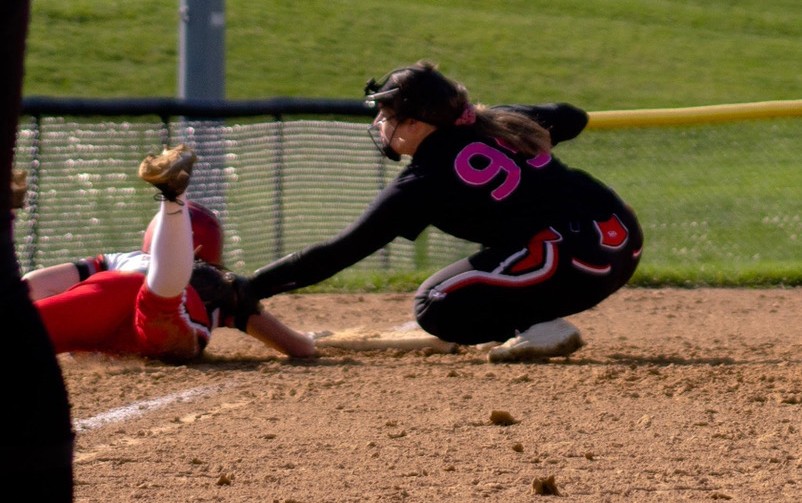
In the plays I’m talking about there were runners on second and/or third base with less than two outs, and only a run or two separating the team on defense (which was behind) from the team on offense. A ground ball was hit right to an infielder or the pitcher and – and the fielder immediately picked up the ball and threw it to first base.
No checking to see what the lead runner was doing – which in most cases was taking off immediately. No awareness that I could see that there even WERE runners on base.

Just automatically making the play at first, which resulted either in a runner scoring, putting the team on defense even further behind, or a runner advancing to third, increasing the offense’s chances of scoring again, especially if the out at first was the first of the inning.
I don’t get that at all. Why wouldn’t coaches be teaching their players to at least take a look at that lead runner, and if there is a play there go for that instead of throwing to first?
To be honest, in the plays I saw the lead runner should have been caught dead to rights. There was plenty of time to make a play if the fielder had been trained to think, “I should see what that lead runner is doing and throw her out if I can.”
In one example, the lead runner on second ran right past the shortstop. Had the shortstop noticed her, she could have made a quick pivot to throwing side and either gotten the runner immediately on a tag play or else created a rundown situation.
But instead, the shortstop showed no awareness at all of the runner who had just passed right in front of her and instead opted to make the long throw across the diamond. Yes, she got the out, but the lead runner eventually went on to core.
Had the shortstop made the throw to third instead that runner would have likely been erased. And since the chances of scoring from third with two outs are more than double than the chances of scoring from first with two outs (.321 v .144) according to 643 Charts, the defensive team wouldn’t have had as a big a hole to climb out of when it was their turn to hit.
Another situation was a combacker to the pitcher with a runner on third. Rather than checking the runner to see if she was going (she was), the pitcher automatically threw the ball to first, allowing an easy score.
Had she looked at the runner she would have seen that a simple toss home would have resulted in either an easy tag play or at least a rundown that, if it was properly executed but didn’t get an out, would prevent a run from scoring.
So does that mean you should always go after the lead runner? Of course not.
There are a number of situations where the out at first is your best option – not the least of which is when your team is having trouble getting outs at all. In that case get an out somewhere and get out of the inning!

Another obvious situation is a ground ball to the second baseman, especially if she is playing somewhat deep. She probably doesn’t have the arm to make a throw home and get the runner so going to first is the smarter move.
Even if she does have the arm, though, if it’s going to be a close play at home but an easy play to first, take the out. There’s probably little likelihood of getting the out at third either so take the out at first.
Bunts in general tend to be another exception. If the catcher fields the bunt she might have a chance of making the play at second because she’s used to making that throw and she’s moving in the right direction to do it.
For everyone else, unless there’s an extremely slow runner on first, take the out with the hitter.
There are some other factors as well, such as whether your team is good at putting up runs. If you’re struggling on offense already, either overall or in that game, you might want to do everything you can to keep the game close, including not giving up runs when you don’t have to. On the other hand, if you’re confident you can trade a run for an out because you’ll make it up in your next at bat, take the out at first.
Another factor is where you are in the game. The fewer outs you have left on offense, the more important those runs given up on defense become.
Even if your philosophy is “take the easy out,” you may need to adjust if you’re coming down to the last inning or two. Yes, there is a risk of making the situation worse if your team can’t execute the throw and tag, but hey, that’s what practice is for.
On the other hand, if your team is up by six runs late in the game, trade that run for the easiest out. You have runs to spare, while the offensive can’t spare any outs.
Early in the game, keep in mind that a well-executed play on a lead runner may cause the other team’s coach to become more cautious on the basepaths. No one wants to get a runner thrown out at home so if you can show you’re able to do it you might just keep the pressure off your defense for the rest of the game.
Speaking of which, the other big factor is your team’s ability to judge whether they can make the throw in time and your confidence that they can execute the play overall. There’s a big difference between trying it with a college or 16-18U travel team versus a 10U travel team versus a rec league team.
Clearly, there is no “one-size-fits-all” solution here. But going for the lead runner is at least worth considering.
Teach your players HOW to do it, then teach them when. You never know when that one out your saved can mean the difference between winning and losing.
Compete Against Yourself First

The desire/urge to compete is pretty much baked into our DNA. Where originally it was a survival mechanism – those who were best at finding resources (or taking them from others) were the most likely to live – that drive lives on today in many forms, including the desire/urge to score more runs than an opponent.
It can be good thing, spurring us on to achieve more than we would have otherwise had we not had an example to compete against or a level of performance to aspire to. But it can also turn ugly when it moves from helping us establish goals to judging our self-worth by how we compare to others – either specific individuals or others in general.
The problem with these types of comparisons is they often don’t take into account the fact that the competition is often not occurring on a level playing field.
Take a couple of beginning pitchers for example. They both start learning at the same time, so it’s easy to think that they will progress at the same pace.
But maybe one is a little more naturally athletic or simply more coordinated than the other because physically they’re developing at different paces – each at her own pace, incidentally. The more athletic one is likely to jump out to an early lead, throwing harder, throwing more strikes, being ready for a second pitch, etc. before the other.
The one who falls a little behind may look at it and feel bad about herself. She can say, “I work just as hard and practice more, but I am not getting the same results. Therefore I must not be very good.”
That’s the wrong way to look at it, in my opinion. Rather than comparing herself to the other pitcher, the second girl should instead look inward to see if she is better than she was a week ago, a month ago, six months ago, etc. She might like what she sees a whole lot better.

Perhaps when the girl who’s feeling bad started out she was arcing the ball in, or having trouble making it to the plate. For an older girl, maybe she was throwing hard but it was anyone’s guess where it might go.
Now she is getting to the point where you could put her in a game when it matters. She may not be quite as spectacular as the other one (at this moment), but she is leaps and bounds better than she used to be.
And here’s the funny thing. Just because she’s behind right now doesn’t mean she will be forever.
Some kids are just naturally more coordinated than others at younger ages. Some kids have earlier exposure than others to quality coaching, which shortcuts the learning process. Some kids just take a little longer to grow or gain strength than others.
But when player two catches up, look out! She may just end up being the best of the bunch.
I recently heard a story about the legendary pitcher and Olympian Cat Osterman talking to a group of youth players at USA Softball’s High Performance Program (HPP) national player selection event. After watching the quality of the talent that was there, she told them that when she was their age there was no way she would have been invited to such an event, much less have been able to win a spot on the roster.
She didn’t become the Cat Osterman we know until a little later. She was tall and gangly and hadn’t quite figured out how to get those long arms and legs all moving together in a way that would dominate hitters.
Had she primarily been comparing herself to the other pitchers around her she might have become discouraged and given up. And the sport would have missed out on one of its all-time greats.
But instead, she just kept going, focusing on making herself better so she could get more opportunities to pitch. I’m sure at times she looked at who was ahead of her and thought, “If I can get better than her (or them) I’ll be pitching all the time.” She is a competitor, after all.
Yet she apparently never let the fact that she wasn’t as good right now discourage her from trying to become better. She kept plucking away at it, and eventually passed them all – to the point where she was good enough to compete and medal in the Olympics in 2004, 2008, and 2020. A pretty remarkable feat by any standards.
The bottom line is each of us has a path to walk, and we walk it at our own pace. You can’t control how good someone else is at any given point in time, but you can control your own progress toward your goals.
It’s ok to look ahead and say you want to beat this person or that person as a way of measuring progress toward those goals. But in the end remember the main person you’re competing against is yourself.
Keep trying to better yourself, little by little, day by day, step by step, without overly worrying that this person or that person is ahead of you right now. Keep walking the path and one day you’ll look back and be amazed at how far you’ve come.
The #1 Measure of the Quality of a Fastpitch Pitcher

Ask a group of fastpitch softball coaches or fanatics what the best way is to measure the quality of a pitcher and you’re going to get a variety of answers. Most of which come down to the three S’s – speed, spin, spot.
The most popular, in most cases, is likely to be speed. There’s no doubt about it that speed is important (it is called FASTpitch, after all). The higher the speed, especially at the younger or less experienced levels, the harder it will be (generally) for hitters to put a bat on the ball.
Speed is also easy to measure. You set up your radar gun, turn it on, and the highest number wins. Often you can also eyeball it, particularly if there is more than a couple of miles per hour difference between pitchers.
Others will tell you that speed is less important than spin. Being able to make the ball break – not just angle or bend toward a specific location but actually change direction as the pitch comes in – can really give hitters fits.

They think the ball will be in one location and orient their swings accordingly only to realize the ball is somewhere else by the time it reaches the bat. That phenomenon can either induce a poor hit or a swing and miss, depending on the pitch and the amount of break it has.
Finally, there will be those who insist that pitchers hitting their spots, i.e., throwing the ball to the location that is called within a couple of inches of that location, is really the be-all and end-all measure of a fastpitch pitcher. These are usually coaches who 1) believe in the infallibility of their pitch calling and/or 2) are looking for a reason not to pitch a particular pitcher who is otherwise doing just fine.
In my opinion, though, none of those three S’s are the most important measure of the quality of a pitcher. So what is?
It’s simple: the ability to get hitters out. Preferably with as few pitches as possible each inning.
Think about it. What does it take for your team to come off defense and get the opportunity to put runs on the board so you can win?
You need to get three outs, hopefully in a row but definitely at some point.
You’re not awarded any outs for your pitcher hitting a particular speed with her pitches, or getting a certain number of revolutions per minute/second on her breaking pitches, or nailing her locations 8 out of 10 times. The only thing you’re given an out for is the hitter either swinging and missing up to three times or hitting the ball in a way that your fielders can get her out.
(I was going to say easily out, but while that is preferred even a difficult out is an out. But it sure is safer when they’re easier.)
To me, a perfect inning for a pitcher is when she induces three shallow pop-ups to the first baseman. Easy to field, and if the first baseman fails to catch the ball in spite of that she can still pick up the ball and step on first rather than having to make a throw.
Not to mention a pitcher who can get hitters out with just a few pitches is going to keep her pitch count low, enabling her to throw more pitches throughout the weekend.
After all, the minimum for striking out the side is nine pitches. If your pitcher can get the side out in seven or eight pitches, that difference is going to add up over time. Particularly because even the best strikeout pitchers rarely require only nine pitches inning after inning.
Outs are the currency of our game. You only get so many – 21 in a non-timed game, maybe 12 or 15 in a typical timed game – so a pitcher who can make them happen efficiently is going to be more valuable at game time than one who merely looks good on paper.
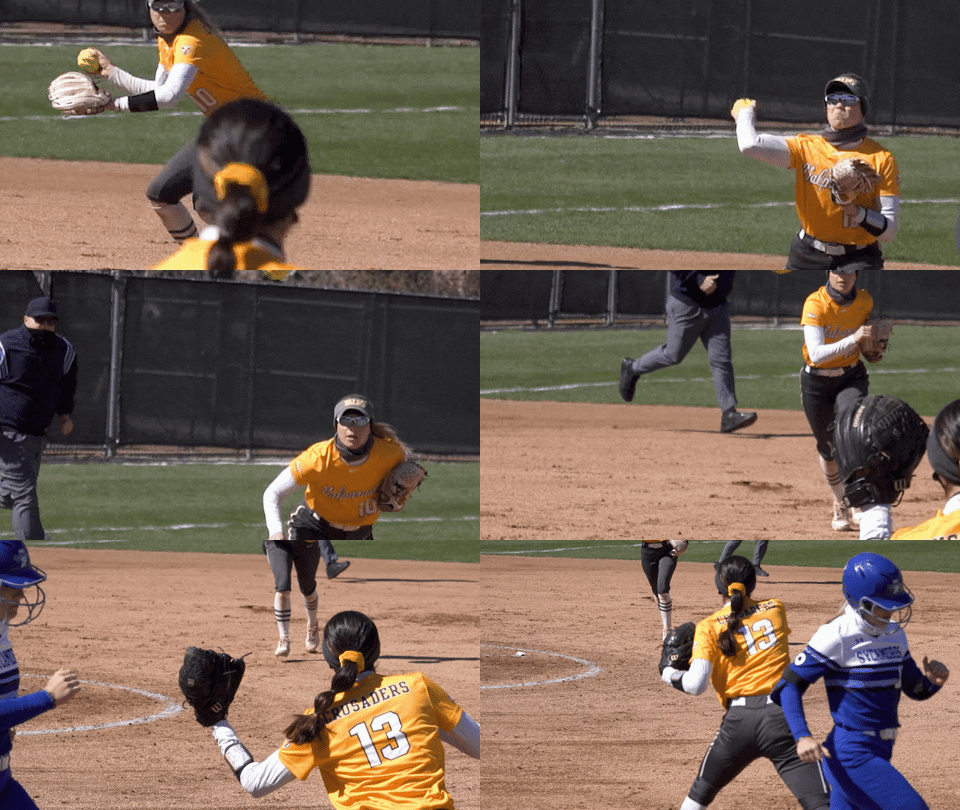
So how does a pitcher become that low-count, efficient pitcher? Really, it’s through a combination of the three S’s.
Sure, she needs some measure of speed with which to challenge hitters. But she doesn’t have to be overpowering.
One of the most effective pitchers I ever coached, a young lady whose pitch counts were typically in the 8 to 12 per inning range, never threw above 54 on my Pocket Radar. But man could she throw to a hitter’s weakness and make the ball move as well as change speeds while making every pitch look like it would be the same.
In other words, she could also spin and spot the ball. All three together were a deadly combination for her, even against quality hitters.
She wasn’t the flashiest pitcher you’ve ever seen, and she probably wouldn’t be the one most coaches would choose first if they were watching several pitchers throw in a line. But when the game or the championship was on the line, she was usually the one her team wanted in the circle.
Because she knew how to get hitters out, plain and simple.
There’s no doubt that overpowering speed is impressive, and it can often make up for deficiencies in other areas. Just ask all those bullet spin “riseball” pitchers.
But if you want to win more games, don’t make speed, or spin, or spot alone your only deciding factor.
Look for the pitcher who knows how to get hitters out, doesn’t matter how. She’ll make you look like a smarter coach.
Why “I Don’t Know” Is Not a Sufficient Answer

If you asked the average person whether playing fastpitch softball is a physical or mental activity, there’s a good chance the answer would be “physical.” After all, there’s a lot of movement involved, and these days many softball players are training their bodies to the point of constant exhaustion (a topic for another day).
In reality, however, it’s a trick question. Because while it is obviously physical, there is also a huge element of mental activity that goes into it as well.
Or at least there should be.
When I train a player, I tend to use what’s known as the Socratic Method. The short version is I don’t just constantly tell them what to do; instead, once they’ve been taught something I will ask them questions to try to ensure they actually understand what we’re trying to do instead of just blindly following directions.
For example, if I am working with a pitcher and she throws a pitch in the dirt on her throwing hand side, rather than saying “You released too early” or “You were too open at release” or whatever the issue was, I will instead ask her “Why did that happen?” It is then up to her to think through what she has (supposedly) learned, plus what she felt, in order to provide an answer to the question.
The goal, of course, is to help the player become her own pitching, hitting, fielding, whatever, coach.
We want that so when she’s practicing on her own she can make corrections to keep her on the right path. We also want that because I’m sure the last thing that player wants is for Mom, Dad, Team Coach, or the spectators on the sidelines to be shouting instructions out to her in a game.
When I ask these questions the answers I receive aren’t always right. But to me there is one answer that is always wrong: I don’t know.
Because even if a player provides an incorrect response to the question, at least she’s making an effort to figure it out. She may not quite understand what she should be doing yet but she’s trying.
Saying I don’t know, however, to me shows a total lack of mental engagement in the process of whatever we’re doing. It’s the easy way out, basically saying, “Tell me so I can robotically follow directions” rather than really digging in to understand the movement we’re trying to achieve at a deeper level.
When I hear “I don’t know,” I always think of Mr. Hand and Spicoli.
In a softball context, in turning the tables the conversation would go, “Will I be able to get hitters out Coach?” “I don’t know.” “Will I get some hits instead of striking out?” “I don’t know.” “Will I be able to make the quick throw?” “I don’t know.”
And that’s the reality of it. If a player’s brain is not engaged as she practices she could just as easily be practicing the wrong things – in which case when she goes into a game she won’t have the skills she needs to succeed.
Now, I’m not saying “I don’t know” is always the wrong answer. If the coach who is asking the question of a player hasn’t taught her whatever he/she is asking, the player shouldn’t be expected to know. In which case “I don’t know” is correct.
Or if a player asks a coach about something out of his/her area of expertise, like how to throw a riseball if the coach has no background in pitching, or what strengthening exercises they should do at home if the coach hasn’t researched it, “I don’t know” is a better answer than just making something up so the coach doesn’t look “stupid.”
I actually wish more coaches would give that answer when it’s appropriate.
But when the activity is something fundamental that has been taught and reinforced dozens or hundreds of times before, “I don’t know” is not a sufficient answer. The player should know and be able to self-correct.
That’s the fast track to improvement and advancement. Because players who can identify issues on their own can correct them on their own and keep themselves moving forward; those who can’t, well, they’re doomed to repeat those mistakes over and over.
If you’re a coach, hold your players accountable by asking questions they should know the answers to and then making them accountable for it. If you’re a parent, reinforce the importance of players getting their brains engaged instead of mindlessly going through whatever motions they’re being told to do at the time.
And if you’re a player, take ownership of your softball education and really learn what you’re being taught. Not just the movements but the reasons for them, and why things go wrong when they go wrong.
It’s one of the biggest keys to producing better, more consistent results. Which makes the games a lot more fun.
Photo by Anna Shvets on Pexels.com
This Softball Tryout Process Has Gotten Out of Hand

So there I was a couple of weeks ago (early June 2022), scrolling through Facebook mindlessly (as if there is another way), when suddenly I saw it: a notification about upcoming tryouts for the 2023 travel season.
“What the what?” I thought. The high school season hasn’t even ended for everyone here in Illinois, they’re still playing the Womens College World Series, and we are just starting to get into the heart of tournament season for most teams.
How in the name of Jessica Mendoza can teams be advertising for 2023 already?
But that’s what it has come to now. In the arms race to capture every potential recruit before anyone else can get their grubby mitts on them teams are now looking to replace their current players, or programs are looking to add more teams to their rosters, before they’ve even gotten a chance to see what their current teams/players can do.
I’m sorry, but this is insanity people.

When did players and teams become so disposable that the actual season you’re in doesn’t matter? What’s next? Are we going to start seeing ads for 2025 tryouts in December 2022?
I thought the point of all of this was to play the games. In order to play the games you need to focus on the here and now.
“Take it one game at a time” we always tell our players. But what message does advertising tryouts for NEXT season at the beginning of THIS season send?
Here’s an idea. Let’s focus on winning the current inning, the current game, the current tournament, etc.
Of course, that sounds like a pretty old-fashioned approach these days. Because it seems like the goal isn’t to win anymore; it’s to land the most players in college, even if they have no idea how to compete once they get there. That’s the college coaches’ problem.
Here’s an idea. Rather than continuously pushing up the tryout/player recruitment process, why not focus on the season you’re in right now?

Instead of thinking up enticements to draw new (and presumably better) players, why not think about how to help your current players become better?
Focus on ways to help them become better as individuals and as a group. Look for ways to build their self confidence.
Teach them the game. Not just the basic stuff they need to know, such as which field is right field or when the dropped third strike rule is in effect, but how to read a hitter’s swing from the outfield or when to take the extra base on a line drive to right.
Most of all, treat your current players like human beings instead of chess pieces for your own glory. Understand as best you can what they’re going through as individuals, especially in the most vulnerable teen years where today’s game or practice has the potential to be the best part of their days.
Do all of that and they will not only run through a wall for you, they’ll want to keep coming back and doing it, year after year. Then you won’t have to advertise for next year at the beginning of this year.
You can’t do all of that, however, if your eyes are always focused on the future.
Let’s live for today, as the Grassroots would say.
Can we all make a pact that next year’s ads don’t start appearing until the current season for your team, whatever that is, is three-quarters over? I don’t think that’s unreasonable. If everyone agrees no one will feel the pressure to jump the gun so they don’t end up with the leftovers.
Give your kids the chance to enjoy their softball experience today instead of worrying about where they’re going to play next year. The entire sport will be better for it.
Advice From the Batman: Play to Win

Last weekend my two sons Adam and Eric came over to the house for a big event: to watch “Zach Snyder’s Justice League.”
First off let me say that while the movie is more than four hours long it was time well-spent. Not only because I got to spend that kind of time with two of my favorite people in the world but also because the movie is everything the fans who pushed for it to be released hoped it would be.
If you like epic comic book movies where the characters have real motivations, and lots of action, and you have access to HBO Max (or know someone who does) be sure to check it out. You won’t be disappointed. Here’s a little taste:
Ok, on to softball.
After battling the villain Steppenwolf (and losing), the heroes (sans Superman) are all in the Batcave talking about what their next move is. One of them (can’t remember who, did I say it was a four hour long movie?) makes a suggestion for a strategy. Then the Batman says something profound – something to the effect of:
“That’s just playing not to lose. All that does is delay how long it takes you to lose. We need to play to win.”
What a great concept. Playing not to lose just delays how long it takes you to lose.
Think about that in a softball context, especially now that nearly every travel softball game has a time limit. How many times have you seen coaches call time out for an unnecessary mound conference, or had their hitters go to the plate and slowly tie their shoes, or do some other stall tactic to try to get the “drop dead” alert to go off before they have to do anything?
Plenty, I’m sure.
They may think they’re playing to win, but really they’re playing not to lose. The message they’re sending to their team is either “I don’t think we can beat this team straight up but we’re ahead right now so let’s take it” or “I’m afraid you guys will do something to screw up this victory so I’m not going to give you the chance.”
And yes, the result might be that they win that game. But all it really did was delay how long it will take them to get knocked out.
Winners play to win.
Let’s look at another situation – the coach who doesn’t want her team taking any chances. Don’t throw down to first to try to pick off the runner because you might throw the ball into right field. Don’t try to hit the ball hard with two strikes, just make contact. Don’t throw a drop ball with two strikes because the catcher might miss it.
Those are all things great players do. But this coach isn’t looking for great. She’s looking to not lose because of a mistake.
Now, there are definitely times to be conservative in your approach. But not all the time. That’s playing not to lose instead of playing to win.
The problem with playing not to lose is you put your fate into someone else’s hands. Yes, you’ve minimized your mistakes, but you’ve also minimized your ability to rise above your current level of play to become something greater.
And if every player on the team is afraid to make a mistake, maybe because the coach will scream at her or yank her out of the game in the middle of an inning, the team will never come close to fulfilling its potential. Instead, it will just be trying to hold on for as long as it can until a team that wants it more comes and takes it away from them.
It’s like they say in the grossly underrated comedy “Fired Up!” – you’ve gotta risk it to get the biscuit.
Sure, it’s riskier to play to win than to play not to lose. But what’s the point of playing if you’re not playing to win?
Coaches, teach your players to be confident in their abilities even when it might be easier to just lay back and tie their shoes for five minutes. It’s better for them, and in the long run it will be better for you as well.
Photo by Picography on Pexels.com
Yes, there can be such a thing as winning too much
Let’s face it. Whether your activity of choice is fastpitch softball, soccer, basketball, auto racing, marching band competitions, tiddlywinks or something else, everyone loves winning. As Nuke LaLoosh says in Bull Durham, “I love winning. It’s so much better than losing.” (Warning: the full quote is NSFW so turn down the volume.)
Yet there can be a thing as winning too much. This is something a lot of parents (and some coaches) don’t seem to understand.
In America in particular, we tend to measure success in terms of wins and losses. The more you win, the better you are, right?
Not necessarily, because there’s another factor that comes into play – the level of competition. Think about it this way: how much satisfaction do you get out of winning a game of tic-tac-toe? Probably not much, because once you learn a few basic moves is only possible if your opponent makes a really, really stupid mistake.
Or if you are an adult, how much satisfaction would you get out of beating a 6 year old at one-on-one basketball, or chess, or ping pong, or pretty much anything else? Not much, because there’s no challenge.
And that’s the key to what I’m saying. If your team wins every tournament it goes to, especially if it goes undefeated every weekend (or even worse dominates every game) it’s not that the team is so great. It’s that you’re not playing the right level of competition.
You don’t get better if you’re not challenged. Winning a tournament shouldn’t be easy. It should be really hard. If you’re winning more than 60% of your games, 75% at most, you’re playing the wrong teams.
Sure, it’s fun to get those shiny plastic trophies, or medals, or t-shirts, or whatever they’re handing out these days as prizes. You have the big ceremony at the end, everyone takes pictures and maybe goes out for dinner afterward. But how special is it if it happens every weekend? Not very.
Keep in mind that iron is forged in fire. That’s what shapes it into something useful. Fastpitch softball players are the same way.
In order for them to get better, they need to play competition that is either at their skill level or better. It’s what will challenge them and force them to go beyond their current skill level. It’s also what keeps it interesting and makes the wins when they come extra satisfying.
Because you’ll know you didn’t just beat up on some lesser team. Instead, you put something on the line – the very real possibility of losing – and came out the other side on top. Your players probably learned a little something along the way, too.
The same goes for making it to every championship game, by the way, even if you don’t win. That just means one other team was probably in the wrong tournament too.
It can be tough to lose. Another of my favorite baseball movie quotes comes from Moneyball: “I hate losing. I hate losing even more than I wanna win.”
But that’s a good thing. If you’re concerned about losing, you will work harder to make sure it doesn’t happen. And you will get better. If losing isn’t a real concern, however, you’ll probably let up and your skills won’t develop. And that will catch up with you one day.
Parents, especially today’s parents, like to see their children succeed. But that doesn’t mean they should shelter them from losing, which is what you’re doing when winning becomes so important that failure to win every game at every tournament means you start looking for a new team that will.
Again, shoot for that 60-75% winning percentage and you can be pretty sure your favorite player is being challenged and growing as player. It will also mean that the fruits of victory will taste ever so much sweeter.
Winning isn’t always the goal
Ask any fastpitch player, coach or parent what the team’s goal is and the easy answer will be “to win.” But when you look at things a bit deeper winning may not always be the primary goal.
Take a 10U or 12U team making the jump from rec ball to travel ball. It can be quite an eye-opener for the girls and the parents. The rules change, the game gets faster, the teams get more aggressive, and the overall caliber of play is generally higher than they’re used to seeing.
In that first year wins may be tough to come by. But that’s ok. The real priority should be getting the players acclimated to the level of competition and helping them understand what it’s going to take to perform their best long-term. That may mean sacrificing a few opportunities to win in favor of player development.
That could mean letting a hitter who isn’t producing bat, even though a better hitter is available. It may mean suffering through more walks to give a pitcher with good long-term potential the opportunity to get reps in facing batters. It might mean putting a fielder into a position she hasn’t quite learned yet in order to give her the experience to play it later.
Winning is nice, no question about it. Me personally, I subscribe to the statement from Moneyball that I hate losing more than I like winning. But if your goal is to develop a team, and its individual players, to be the best they can be, you need to have a plan and stick to it – even if it means you lose more games than you would have otherwise today.
It’s all about your goals, which is why it’s important to set them before the season, when you can be unemotional about it, rather than during the season when you may be willing to do anything required just to get the W.
Know where you’re headed long-term and you’ll be in great shape. And when those wins do start coming, they will be all the sweeter.






 Life in the Fastpitch Lane