Blog Archives
Giving Players the Chance to Work Through Adversity

One of the most common phrases you will hear in all of sports is “player development.” Whether it’s a 10U girls fastpitch softball team coached by volunteers or a multi-billion dollar NFL franchise, everyone likes to talk about how important player development is for the short- and long-term success of the team and the organization.
That is, of course, until somebody makes a mistake or a problem arises. Then all that talk about letting players develop goes out the window as the coach unceremoniously removes said player from the game so the team doesn’t face the unthinkable prospect of possibly losing a game because of that one play.
Yeah, I’m getting a little hyperbolic but it’s to make a larger point: how in the world will players develop when the minute something bad happens they are removed from the situation?
We’ve all heard the phrases “iron sharpens iron,” “steel is forged in heat,” and “diamonds are lumps of coal that stood up to pressure.” But none of those great outcomes happen if you remove the object from the situation the second any stress occurs.

That’s why, if you are actually committed to seeing your players develop, you have to leave them in to face their greatest difficulties or fears, even if it means you might lose a few more games here or there rather than pulling them something starts to go wrong. By giving them a chance to work their way out of a difficult situation, even if they ultimately fail today, you will help them become better-prepared for the next time they face similar pressure.
Take a pitcher, for example. Maybe she is fairly new to pitching, or has been sidelined for a while with an injury.
She starts the game and does ok in the first inning, but then she walks a couple of hitters on 8 or 9 total pitches. Time to pull her, right?
Not necessarily. If you’re in an elimination Sunday game maybe.
But if you’re playing a meaningless weekday friendly, or a showcase where no college coaches are there to see someone specifically, or a pool play game (especially where seeding will be decided by a blind draw) a better strategy for the player and the team might be to go out and talk to her, try to reinforce her confidence, then leave her in there to try to work her way out of the situation.
She just might surprise you. And even if she doesn’t, who cares?

Losing that game doesn’t really affect anything but your ego around your team’s record. But giving that pitcher a chance to work her way through difficulty might be just the boost she needs to help her contribute more to the team down the road.
After all, pitchers need innings if they’re going to be effective. Taking them out of the game because you panic at the first sign of trouble (or are more worried about wins than giving your players a chance to develop) will just set them back further on their own journeys – and could even cost you players who become great when someone else shows a little more faith.
The same is true for fielders and hitters. If you pull a fielder after one or even two errors rather than giving her a chance to recover she’s not going to learn very much – except that you have no faith in her.
If you constantly DH for a hitter because you don’t want to give up an out, or put in a pinch hitter any time the situation is remotely tense, it’s unlikely she’s going to develop the confidence it takes to swing the bat effectively.
Then, one day when she comes to the plate in a meaningful game where you have no other options, you’ll have no one to blame for her failure but yourself.
Ok, so does this mean I think you should never pull a pitcher or make another substitution? Of course not.
There are times when it has to be done. If you’re in a “win or go home” situation and your pitcher is starting to struggle, you’re probably going to want to look to the bullpen sooner rather than later.
Although even then, if you truly believe in that pitcher, you might consider leaving her in a little longer with the understanding you may not win this lesser tournament in order to make sure she’s ready for a more important one down the road.
Same with the fielder or hitter. If the fielder looks like she’s not mentally focused, or is herself panicking over the error(s), and there is a risk of elimination (or even dropping needlessly into the loser’s bracket), you may have to take her out.
But if you do, don’t just send her to Purgatory. Talk to her, try to reinforce her confidence, and assure her she’ll get more opportunities. Today is just a tough day.
If you have to DH or pinch hit for a hitter, let her know it’s not the end of the world. This particular situation needed a change, but she will have more opportunities to work herself back into the batting lineup, because the change is situational, not permanent.
Then live up to it.
Bottom line is there are times when hard decisions have to be made and players need to come out. But all too many times, coaches are making those decisions for the wrong reasons.
Instead of making a knee jerk decision at the first sign of trouble, give those players an opportunity to face the tough challenges and work their way out of an issue for a little longer than you might be comfortable. You never know when it will be just the thing to spur the creation of your team’s next superstar.
And help you build a reputation as a genius at handling players.
My good friend Jay Bolden and I have started a new podcast called “From the Coach’s Mouth” where we interview coaches from all areas and levels of fastpitch softball as well as others who may not be fastpitch people but have lots of interesting ideas to contribute.
You can find it here on Spotify, as well as on Apple Podcasts, Pandora, Stitcher, iHeart Radio, or wherever you get your podcasts. If you’re searching, be sure to put the name in quotes, i.e., “From the Coach’s Mouth” so it goes directly to it.
Give it a listen and let us know what you think. And be sure to hit the Like button and subscribe to Life in the Fastpitch Lane for more content like this.
Top photo by Kindel Media on Pexels.com
The Importance of Intention in Achieving Fastpitch Success

As a private instructor, one of the questions I often get from parents of new students is, “How much should my daughter practice?” While well-intended (see what I did there?) the question is usually a tipoff that said new student generally doesn’t practice very much and the parent is looking for someone who isn’t them to make their daughter practice more.
My answer typically is, “As much as it takes.” I say that because practicing is not a time-based phenomenon. It’s goal-based.
Yes, it would be nice if you could quantify practice into increments of time, such as practice three times per week for a half hour and you will be great.
The reality, however, is it doesn’t quite work that way. Because basing practice on the amount of time ignores an essential ingredient to success in fastpitch softball, or any other endeavor for that matter: intention.
When you perform whatever skill it is you’re working on in practice or a game, you have to have an intention to do it at the highest, most focused, most energetic level you’re capable of on that particular day. The measurable outcomes will vary from day to day depending on factors such as whether you’re tired, hungry, stressed, injured, happy, inspired, “in the zone,” etc.
But the intention to do your best with whatever you have that day should always stay the same. Anything less and you’re basically cheating yourself.
Think of it this way: your ability to execute in a game is greatly affected by how you execute when you’re working on those skills.
If you base your practice on time alone it’s easy to walk through the motions without putting any major effort in. Ask any kid who was forced to take piano lessons from 150 year old nun who seemed to go out of her way to find the most uninteresting music every written for her students to play. Sorry, just had a traumatic flashback.

Back to our topic, let’s take a pitcher who is supposedly trying to increase her speed. Sure, she’s going to a pitching lane three days a week with her mom or dad and throwing for an hour.
But how is she throwing? Is she just throwing pitches from full distance in a way that is easy for her? Or does she have the intention of throwing harder and thus is doing things that might be less fun and less comfortable for her, such as working on her arm whip from a close distance into a net or trying to improve her leg drive by exploding out as quickly as she can without the ball?
Is a hitter just swinging the bat and knocking 100 balls off the tee because she heard somewhere that to improve you should take 100 swings a day? Or is she focused on trying to get her sequence correct and feeling the energy flow up through her body and out her bat with the intention of seeing the ball fly off and hearing a resounding crack?
One might drive minor improvement through sheer volume. The other will take an average or even good hitter and help her become a great hitter in a shorter amount of time.
That’s what having intention is all about. It’s not just about putting in time to check the box.
It’s about putting in real work to ensure that when the game is on the line you’re prepared to perform at the highest level of which you’re capable.
That doesn’t mean everyone has to practice like a maniac. If you’re playing softball for fun in your local rec league and not really too concerned about how you perform overall you don’t need to bring a whole lot of intensity to your practice routines.
As long as you’re doing something a couple of times a week you’ll probably improve enough by osmosis or sheer repetition to perform at an adequate level.

But if you’re a youth player and your goal is to play in college, or win a high school state championship, or dominate in travel ball (even if you don’t plan to play in college), or win one of the big tournaments, you need practice with intention.
If you’re already a college player and your goal is to get off the bench, or win a conference championship, or play in the Women’s College World Series, you’d better be bringing a whole boatload of intention not just to every practice but to every rep you take during that practice. Because if you don’t, someone else will, and they’ll be getting all the glory while you’re stuck watching from the sidelines.
The good news is intention is something you have complete control over. All you have to do is decide you want something bad enough and then put in the effort to get there. It doesn’t cost a cent and it’s readily available whenever you want it.
If you really, truly want to get better and become whatever qualifies in your mind as a top player, don’t just go through the motions and put in the “required” time. Starting cranking up your intention to perform at the highest level you can manage every single day and you’ll find improvement comes faster and more easily.
Remember to Celebrate Progress and Successes

The other day I went to visit a healthcare professional (HP). Nothing serious, just basically checking a box for the insurance company.
Anyway, we were talking about some lifestyle changes I’ve made to try to stay healthier longer. Yet it seemed like every time I told the HP about some improvement I’d made she countered with I should be doing this or that too.
It was kind of frustrating, because rather than feeling encouraged to continue doing better I was made to feel like no matter what I did it would never be good enough. The focus would always be on what more I could do or should be doing.

That experience got me to thinking about how we coach our fastpitch softball players. (Take that Google algorithms.)
Often times we coaches are so focused on trying to get our players ready for “the next level” (whatever that is) or trying to make them look just like the players we see on TV that we fail to acknowledge all the great work they’ve done to get themselves to this point. And that can be just as discouraging as my experience with the HP.
That’s why it’s important every now and then along the journey to stop and take a look backward even as you’re trying to look ahead to the next goal. Showing a player how far she has come can give her a real boost to continue putting in the work to keep moving forward.
Let’s take a hitter who has been working on her swing. Honestly, I get a fair amount of students whose only goal (or their parents’ only goal for them) is to not strike out every time they come to bat.
Mom and/or Dad aren’t looking for little Amelia to hit home runs or have the highest batting average on the team. They’re simply hoping she doesn’t get totally discouraged from playing because she wouldn’t hit water if she fell out of a boat.
They don’t want to have to cringe every time she comes to the plate, but that’s another story.
So Amelia gets help from a coach or instructor, fixes whatever was causing her to just randomly swing the bat and hope she hit something, and now she’s making contact with greater regularity and getting on base now and then. At which point the goal becomes to start hitting the ball to or over the fence.
That’s great that everyone wants Amelia to keep growing and improving. But maybe in the midst of all that take a step back to appreciate the fact that the original goal has been met and let Amelia feel good about what she has accomplished so far – at least for a few minutes.
Video is great for that, by the way. Even if Amelia isn’t quite getting on base often enough, showing her a video of how she used to swing the bat versus how she is swinging it now will probably help her build confidence and continue to focus on the process instead of the outcomes.
Then let the law of averages take care of the rest.
It’s the same for pitching. Maybe you have a goal of having a pitcher throw faster, or throw more strikes. Or both.
Regardless of the goal, the path to achieving it starts with improving her mechanics.
So perhaps when she started out she looked less like she was trying to pitch and more like she was trying to fold a fitted sheet.

Showing her a video of how she used to look versus how she looks now might give her some encouragement that she’s on the right track, even if the radar isn’t reflecting it or she’s still throwing a few too many in the dirt. That doesn’t mean you still don’t want to hold her to a higher standard.
But you can acknowledge the fact that she is improving so she has something to feel good about while she works toward the bigger payoff.
All of this doesn’t mean you should provide false praise just to spare the player’s feelings. If she’s not putting in the work and showing improvement that needs to be called out. Otherwise, what’s the point?
Often, however, we are in such a hurry to get to the ultimate goal (being names an MVP, making a particular team, winning a scholarship, etc.) that we don’t take the time to appreciate the progress that’s already been made.
So think about that today. If you’re a coach, what can you do to recognize how much better your players are today than they were a month ago, or three months ago, or a year ago, etc.?
If you’re a parent, what can you point to that lets your daughter know you are proud of how far she has come so far? Even if she still has a ways to go.
That little bit of encouragement may be just the thing your player needs to keep grinding – and build a level of confidence that will carry through not just her softball career but her whole life.
Coaches: Remember What You Do Makes A Difference
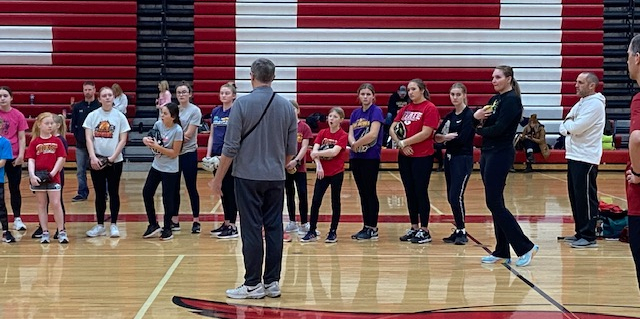
Coaching fastpitch softball can be a grueling grind. The seemingly never ending games, practices, organizational meetings, fundraising concerns, educational seminars, late night calls from concerned parents. etc. can all take their toll after awhile.
That’s why coaching burnout is such an issue and threat to everyone who is crazy enough to grab a clipboard (or tablet) and step onto a fastpitch softball diamond.
It’s easy to become overwhelmed by the sheer volume of work, not to mention the intensity of trying to help 12-15 players become the best versions of themselves as athletes and human beings. That’s a huge responsibility.
But underlying all of that is something else – something embodied in a great scene in the movie Star Trek Generations. (If you’re not familiar with it, this was the movie that handed off the film series from Star Trek the Original Series [TOS to you Trekkers out there] to Star Trek: The Next Generation [TNG]. I so rarely get to use the [square brackets] so what a treat for me.)

This scene takes place shortly after TNG’s Captain Picard runs into TOS’ Captain Kirk in a place called The Nexus, which is sort of a Field of Dreams for sci fi. In it, Captain Picard has been trying to convince Captain Kirk to come back to our reality and help him stop the bad guy who is killing billions of people in his attempt to get back into The Nexus.
At first Captain Kirk turns him down because he is perfectly content in The Nexus. No surprise there because it’s where your life can be whatever you want it to be.
But then Captain Kirk has a realization. (It takes a minute to get to the payoff in this clip but it’s worth it, trust me.)
If you didn’t bother to watch the clip, or weren’t able to, Captain Kirk’s realization is that while he was in Star Fleet he could make a difference in the world. Since he left, though, nothing he does really matters that much.
That’s what coaching enables you to do – make a difference in the lives of your players. And by extension their families.
None of us knows what goes on behind the scenes in the lives of others. So it’s easy to assume that everything is all hunky-dory with them, and that the face you see is indicative of what’s happening “under the hood.”
That may not be the case, however. I can’ remember who originally said it, but I once saw a statement that admonished coaches to remember that their practice might be the best part of their players’ day.
Maybe the player is struggling in school, or had a fight with her parents. Maybe she’s being bullied, or has had a close friend abandon her.
Maybe there is some food or housing insecurity in her family, or a favorite pet is on the brink of crossing the rainbow bridge. (Don’t click the link if you are in public and susceptible to emotional demonstrations.)

There could be hundreds of different things happening in your players’ lives. But when they get to your practice or game they have opportunity to set all of that aside and do something that makes them feel good about themselves and their lives, providing you’re doing it correctly.
The guidance you provide in helping your players overcome various softball hurdles is very likely to carry forward into the rest of their lives.
As a result, you can help a shy kid learn to make friends. You can help a kid who is always down on herself or feeling she isn’t good enough develop self-confidence.
You can help a kid who always follows the crowd (for better or worse) step up and learn to become a leader instead. Or at least learn to make better decisions rather than succumbing to peer pressure.
You can help a kid who has always been coddled and over-protected by her parents learn to manage adversity. You can help a kid with behavioral issues learn to work in a team setting.
You can help a naturally lazy kid develop a work ethic. You can help a kid who over-thinks everything learn to let go of her conscious thoughts (and fears) and trust her gut.
You can help a kid who feels like a failure learn what it’s like (and what it takes) to succeed. You can help a kid who feels unloved and unwanted at home to feel like she’s part of a family of sorts.
You might even prevent a kid from doing harm to herself or others. All while you are helping those kids learn to catch, throw, pitch, and/or hit a softball.
In other words, you can make a difference.
And you never know the ripple effect of making that difference either. Perhaps that kid you helped in some way goes on to cure cancer, or improve the environment, or become an elected official who enacts policies that make everyone’s life better.
Or even becomes a coach herself someday and pays what you did for her forward. Or maybe just grows into a great human being who has a family and/or contributes to society in some small but meaningful way.
All because you were there as her softball coach, making a bigger difference than you could have possibly realized.
Yes, coaching fastpitch softball, like any sport, can be a grind after a while. You definitely need to pay attention to your physical and emotional wellbeing if you’re going to help others. Just like how on a jet they tell you to put on your oxygen mask before you try to help others.
But when things get tough, keep in mind how empty your life would be if you weren’t coaching. Because as Captain Kirk says, while you’re in that chair you can still make a difference.
Make that difference for someone today.
Improvement Is Often Measured in Inches, Not Miles

In a perfect world, when a player walks out of practice she would be noticeably better than when she walked in. Her physical skills will have visibly improved, her understanding of the game (or a portion of it) will have grown measurably, and/or her confidence in her abilities will have increased exponentially.
That’s not what happens in the real world, however. At least most of the time.
The reality is most improvements in those areas are far more subtle. They are better-measured in inches, not miles (centimeters, not kilometers for my non-U.S. readers), which means the immediate gains are often barely perceptible.
But that doesn’t mean they’re not happening. They are; they’re just too small to notice on a day-to-day basis.
Think about how kids grow. If you see a child every day, you probably don’t notice how much they’re growing physically until you notice them compared to an object in the house – or they complain about their clothes or shoes not fitting anymore.

The gains they’ve made in height and/or weight have happened so gradually that you didn’t really see them until realized they are now four inches taller than when the summer started.
Now think about a kid you haven’t seen in a while. She also grew four inches since the last time you saw her.
But because there has been a huge gap between the last sighting and this one, you instantly recognize how much she’s grown.
That’s the way it often is with sports improvements as well. For example, a pitcher starts out awkwardly swinging her arm around and pushing the ball out slowly just trying to get it to and over the plate.
Then she starts working on her pitching mechanics. They don’t change immediately, but maybe in that first lesson she learns to relax a bit and let the ball come out of her hand instead of forcing it so much.
She still looks awkward in the big picture, but a little change has occurred. Over time, more of those changes occur and eventually she looks “like a pitcher” as she effortlessly flings the ball forward for fast strike after fast strike.
It isn’t until you reflect back on where she started, however, that you realize how far she’s come. Not all in one leap, but inch by inch, making subtle change after subtle change that over time work together to help her become the high-performer she is today.
It’s a shame that this concept isn’t better-understood, because I think the unrealistic expectations for improvement that are often set lead too many kids to give up on something they love before that cumulative effect has had a chance to kick in.
I have definitely seen this over the many, many years I have coached teams and taught lessons. When kids who started out behind the pack put in the work they often end up passing their peers and becoming stars on their respective teams.
Not all at once, mind you. But over time the learn and grow, their control over their own bodies improves, their understanding of the skills and the game increases, and suddenly people are talking about how lucky their parents are that the kid is such a “natural.” If only those people knew.
Sure, there are natural athletes who seem to pick things up quickly. But even they hit a point where improvement becomes more incremental and hard-won.
The truth is the players who make it the farthest aren’t necessarily the ones who start fastest out of the blocks. The successful players are the ones who keep plugging away at it, little by little, day by day, inch by hard-fought inch.
Even when it seems like they’re not getting anywhere.

Because if your daughter keeps moving forward, even just a little each session, over time you will be amazed to realize just how far she’s come.
Photo by Andrew Patrick on Pexels.com
Failure Is a Key Element in Player Development

Today’s topic was a suggestion from Tim Husted, who was the founder and guiding force behind the Danes fastpitch softball program, which gave players in Wisconsin and Minnesota the opportunity to play at the highest levels. Tim knows a thing or two about developing players so they can continue their careers in college, having done so for many young ladies while the program was active.
Tim was commenting on my post “Accuracy Without Speed = Batting Practice,” saying essentially that too many parents and coaches these days are focused on achieving short-term success rather working toward longer-term greatness. But, he added, it also shows up in parents being afraid to let their kids fail because they don’t understand that failure is an essential component of developing great players.
I know, it sounds counter-intuitive doesn’t it? No parent likes to see their kid(s) fail.
Our hearts bleed for them, and our kids’ pain becomes our pain – only amplified. It can be particularly debilitating for parents who are living vicariously through their kids’ sports careers.
The result is we do whatever we can to help our kids avoid failure, and the negative feelings associated with it.
Sometimes that means an “everybody gets a trophy” approach. Which I personally believe is ok at the younger ages to reward participation, but not after about the age of 10, and then only in rec leagues.
Sometimes that means jumping from team to team to find a starting spot rather than competing for one. There are definitely times when leaving a particular team is the right decision, such as when all positions are set and there is no opportunity to compete for a starting job.
That happens more than people like to admit too. But leaving in lieu of working hard is not a good solution.
And sometimes it means disgruntled parents starting their own teams or agreeing to coach with the express purpose of making their kid the star, whether it’s deserved or not.
Here’s the reality, however: failure is not necessarily a bad thing. In fact, it’s pretty rare to find anyone who is successful as an adult who did not face some level of failure earlier in his or her life.
Amanda Scarborough often talks about how early in her career she was not at the top of the pitching depth chart on her travel and high school teams. One of the all-time greats, three-time Olympic Gold Medalist Lisa Fernandez, says she walked 20 batters in her first pitching outing and was told by a well-known pitching coach in California that she’d “never be a pitcher.” Many other greats in all walks of life have similar backstories.
The thing is, they didn’t let failure or disappointment define them. Instead, they learned from it and used it as fuel.
This is what coaches, and especially parents, need to understand. Failure isn’t a bad thing. It’s an essential part of the learning process.
People who succeed all the time (if there is such a thing) don’t learn how to overcome obstacles. They aren’t driven to hone their skills to improve. They don’t gain the mental toughness required to play at the highest level.
The pain of failure drives us to not want to feel that way again. Which either means we stop doing the activity or we work to ensure (to the best of our abilities) that it doesn’t happen again.
And that’s where the development comes in. Failure doesn’t mean you’re not good enough. It means you aren’t good enough right now.
But that can change. While your DNA, which defines your base athletic ability, is what it is, mental and physical skills can be developed.
As a team coach and an instructor I’ve worked with many, many kids who didn’t start out as superstars, or even competent players for that matter. But with guidance and dedication they went on to pass more naturally gifted players in terms of performance on the field. And I know many coaches, including Tim, who have similar stories.
Failure helps point out the flaws in your game so you can work on them. It drives us to achieve more than success alone ever will.
Good players like to work on their strengths. Great players prefer to work on their weaknesses.
Then there’s the idea of failure as fuel, which I mentioned earlier. Sometimes failing at something is just the kick in the pants we as humans need to drive us to improve beyond what we may have done otherwise.
I know this from personal experience. My first year as a travel ball coach my oldest daughter’s team was very successful, winning the bulk of our games along with taking first place in the highly competitive travel league we were a part of.
I remember feeling really good about myself as a coach – until I found out half the team was leaving to join a new team in our organization coached by the dad of a girl who was more popular than my daughter. I was shocked and disappointed.
But rather than quit, or whine about it, I took that failure and used it to drive me to become the best coach I could be. I took classes, read books, watched videos, talked to other coaches, and did everything I could to become so good that no player would ever even consider leaving.
While I can’t say I fully achieved that goal – there will always be some attrition, and there’s always more to learn – it definitely made me a much better coach and put me on the path that I still follow today. I’m not sure the same would have happened had that first team all stayed.
Another benefit failure brings is that it makes success that much sweeter and more satisfying. It’s difficult to appreciate triumph if you’ve never experienced defeat.
Not to mention if you are afraid of failure you’re more likely to play weaker competition to ensure you’ll win. I’ve known teams like that.
Their coaches play teams they know they can beat, thinking a better won-loss record makes them look like better coaches. But all it really does is stunt the development of their players because those players aren’t being challenged.
If you’re going undefeated in every tournament and posting up 80-3 run differentials you’re not a great team. You’re playing in the wrong tournaments.
A 60% – 70% win rate will do far more to ensure player development than a closet full of trophies, medals, plaques and rings.
The bottom line is that while failure is painful, it can be a good kind of pain – like what you feel after a particularly grueling workout. It’s not something that should be feared and avoided at all costs.
Instead, it should be embraced as part of the learning process.
Failure doesn’t have to be a dead end. In fact, it can be the starting point for something much, much better.
The choice is yours.
Photo by Karolina Grabowska on Pexels.com
Plant the Seeds for Softball Success Early

It is Thanksgiving weekend here in the U.S. as I write this, and I have to say I love Thanksgiving.
It’s the quintessential American holiday. How can you not love a holiday whose sole purpose is to eat until you feel sick, take a break, then go back for dessert?
It’s no wonder American is the most obese nation in the industrialized world. U.S.A.! U.S.A.!
Even the decorating themes for Thanksgiving revolve mostly around food. Particularly the cornucopia, basically a horn with a bunch of vegetables, fruit or other healthy foods (ironically) falling out of it. I say ironically since vegetables are the thing least likely to be eaten at a Thanksgiving dinner.

Not a carb in the entire photo.
(Those of you reading this who are not from the U.S. really need to come here sometime and experience just what this holiday means. You will probably be blown away and appalled at the same time.)
Thinking about all of that food being prepared all over the U.S., however, got me thinking about how all those veggies get on the table in the first place. It’s not like they just suddenly appear out of nowhere. They all start out as seeds that must be planted and cultivated long before they’re actually consumed.
It’s the same with fastpitch softball skills. With rare exceptions, players can’t just walk out on the field and start performing. They also can’t start working on their skills a week or two before the season starts and expect to be able to play at their highest possible level.
Instead, the seeds need to be planted early. And like seeds, at first you may not see much happening.
But then those skills start to sprout a little. You notice little improvements, like throwing a little harder or getting to balls that were out of reach before.

Committing to the metaphor. Photo by John Lambeth on Pexels.com
As time goes on, if you continue to cultivate those skills they continue to grow until they’re ready to be harvested in a game.
On the other hand, if you plant the seeds then ignore the “field” for a while, the skills may appear somewhat but they’ll be smaller, scragglier and less bountiful than they could have been. Which means you’ll be left hungry, wishing you’d done more to ensure a cornucopia of performance that will last the entire season.
So keep that idea in mind as you decide whether you’re too tired, or too busy, or too whatever to start honing your skills right now. The season may seem far away, but it will be here before you know it. Make sure you’re ready.
To my friends and followers here in the U.S., I wish you a healthy, happy Thanksgiving. To those of you from outside the U.S., I also wish you those blessings even if it’s just a regular old Thursday.
Thank you to all of you for joining me on this softball journey. I am grateful to share my thoughts with you.
And remember U.S. friends, if your Thanksgiving celebration gets boring, just bring up politics. That’s sure to get the party started.
Main Thanksgiving image by Annalise Batista from Pixabay
Tryouts aren’t just about skills
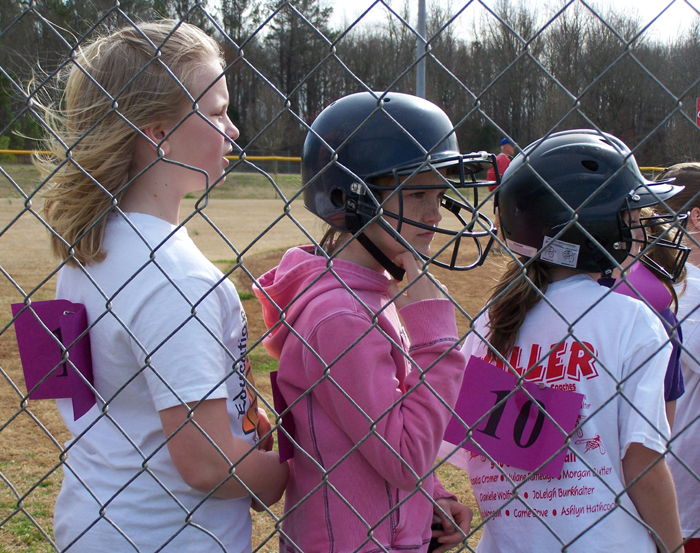
Time to bring back an “oldie but goodie” post because the advice is still relevant, and the topic is definitely timely with so many players (and coaches) in the midst of the tryout season.
Showing well at a tryout isn’t just about having great skills. It’s also about looking like you’d be a great fit on a team. Or as Herb Brooks says in Miracle:
Keep all of this in mind as you go through the tryout process. It may be a grind. But bringing your very best every time may just be the difference-maker.
It’s that time of year again. We’re in the midst of tryout season – that time when players try to show coaches what a great addition they would be to the team(s) of their choice.
While there’s no doubt it’s important to show your skills, there’s more to a tryout than skills alone. That’s coming from a coach who participated in tryouts for more than 15 years.
The reality is there are many very skilled players out there. In fact, if your skills are far above everyone else at that tryout, you’re probably trying out for the wrong team. So how do coaches make their decision?
Much of it comes down to character. One of the tests I used to give players I was interested in was to offer a bit of advice on how to do something.
Maybe they were having a bit of trouble hitting or fielding. I’d offer a suggestion on how to improve. But it wasn’t about whether they’d do better the next time. It was about seeing how they reacted. Were they coachable? Did they give it a try, or did they give me attitude instead?
I’d look at who was hustling. Not just during the drills but between the drills when they’d transition from one area to another. Also who seemed like they were enjoying playing as opposed to some who looked like they were forced to be there.
I’d also listen to them, especially those who sounded like they could be potential team leaders. Did they encourage others? Did they cheer for those who made good plays, such as diving for a ball? (Pssst – if you get the chance, definitely dive for a ball; it always makes a good impression.)
I loved watching what would happen after a player made a mistake. If she booted a ground ball, or missed a few pitches during a hitting session, did she put it behind her or have a meltdown?
Mistakes are a huge part of fastpitch softball, so you’d better have the mental toughness to deal with it. The last thing a coach wants in a tight game is a player who is so upset over an error or a strikeout in the previous inning that she isn’t focused on this one. That’s a sure recipe for disaster.
If we gathered the group together and one of the other coaches was talking, I’d take a look to see who was listening and who was looking off into the distance, or otherwise spacing out. It’s not that hard to pick out.
Here’s the thing. Tryouts are like a job interview. Theoretically everyone is on their best behavior, showing their best selves. If the self I’m seeing at a tryout doesn’t seem like what I’m looking for, it’s unlikely it’s going to get better once you’re on the team. In fact it’s probably going to get worse.
It’s pretty rare that a player’s skill level is so awesome that it can make up for a lot of poor character. Again, if you do stand out that much you’re probably not at the right tryouts.
These days teams are together for a long time – essentially 12 months. As a result, chemistry means more than ever.
If you want to increase your chances of making your first choice team, make sure you have your act together and can show the coaches you’re more than your ability to throw, catch, pitch, hit, run, etc. You’re the kind of quality person they want to be around – and who can perform no matter what the circumstances are.
Photo credit: Elizabeth Prata via Foter.com / CC BY-NC
The Importance of Consistency When Learning Fastpitch Skills

The once-funny and now just more generally creepy comedian and filmmaker Woody Allen has been quoted as saying “80% of success is just showing up” or something to that effect.
While most times ol’ Woody isn’t the person you want to take advice from in anything having to do with kids, in this statement he is most definitely correct. Especially when it comes to the early stages of learning fastpitch softball skills.
Let’s take hitting for example. Hitting even a decently fast pitch in fastpitch softball requires a series of movements that must be performed correctly individually, sequenced correctly, and timed correctly. Some of those movements and sequences aren’t necessarily intuitive.
Since the object of the skill is to hit the ball with the bat, it’s easy for young hitters to assume that they should focus on taking the bat to the ball first. If their body turns afterward, so much the better.
But that’s actually the opposite of what they should be doing. The proper sequence is hips-shoulders-bat. A good instructor will teach that sequence, which not only maximizes power but the time the hitter has to see the ball before committing to the swing and the ability to hit the ball in the proper zone.
If that young hitter who’s still learning only comes to lessons once every few weeks, however, there’s a very good chance she will forget all about the proper sequence and spend her time practicing a bat-first swing. Then her distraught parents will wonder why they’re paying all this money for lessons and not getting better.
It becomes even more important with windmill pitching because in my opinion there is so much that can go wrong – and failure is more obvious. If you have a bad swing but still manage to make contact with the bat you can get on base.
But if you’re not throwing strikes, or you’re throwing easy-to-hit strikes, you’re going to have a tough day. As I tell my students, the circle looks bright and shiny from the outside, but it can be a cold, dark place on the inside.
Again, with windmill pitching some of the movements aren’t necessarily intuitive. If they were, you’d see more rec league pitchers using good form.
But instead, most untrained pitchers tend to stay facing forward, take a short step off the pitching rubber, and proceed to push/guide the ball toward the plate. THAT is what feels natural and intuitive. But it’s not what great pitchers do.
If a newbie pitcher only goes to lessons now and then and then gets put into a game before she’s ready, she will likely find herself like Luke Skywalker in the cave on Dagobah.
To really get the maximum value out of lessons in the early stages, it’s important to receive consistent training. That’s because you’re setting the foundation for all that is to come.
My recommendation is once per week – no more, no less – although you can do it going every other week if necessary. It will just likely take a bit longer to get where you want to go.
That regularity – and the short time between reviews by the instructor – helps keep players from veering too far off the path to success. It’s easier to do a reset when the training is consistent.
Going sporadically, however, gives the illusion of training without the benefits. Too much can go wrong in the meantime, and we all know it’s a lot easier to develop bad habits than to break them.
Instruction always works better when you apply it properly. In the early stages especially, that requires consistency. Make the commitment, even when it’s challenging, and you’ll see the rewards a whole lot faster.
Thank goodness for Kyle Schwarber

Once again an odd title for a fastpitch softball blog, but bear with me. It’ll make sense.
Adversity is one of those things most fastpitch softball players have to face at one time or another. Our sport is hard, and it’s unforgiving.
Just a few inches either way on a pitch can mean the difference between a backward K and walking in the tying run. It can also mean the difference between a line drive single and a line drive out.
When too many bad things start to happen, it can quickly become overwhelming – especially for young players contending with all those hormones, social pressures, and other things we adults tend to forget about as soon as we can. It can definitely get players feeling bad about themselves, and into a mindset that they are the only ones it’s happening to.
So again, thank goodness for Kyle Schwarber. He was one of the heroes of the Cubs’ World Series win in 2016, coming back from a knee injury to play a key role in several victories. A guy who seemingly had it all knocked.
Well, if you don’t follow the Cubs you may not be aware that for the last couple of weeks he wasn’t with the Chicago National League ballclub . Instead, he was down on their AAA affiliate in Iowa.
The reason? After all his heroics and accolades, he’d lost his swing this year. Just couldn’t quite seem to get into a groove, relax and hit. So the Cubs thought they’d take some pressure off of him, let him go into the minors for a few games to get his swing back away from the glare of the spotlight in Chicago.
It seems to have worked, because he’s back with the Big Club now. (Glad I checked that – gotta love the Internet.) Hopefully he’s exorcised his hitting demons and will start tearing it up again.
The lesson here for young fastpitch softball players is that it can happen to anyone. Schwarber gets paid millions of dollars to play a game that bears a lot of similarities to ours. If he can lose his swing, what makes a fastpitch players whose parents are paying hundreds or thousands of dollars for them to play think it can’t happen to them?
Fastpitch players may not have a lower-level farm team to go to when they are in trouble, but they can certainly follow the same principles:
- R-E-L-A-X (mixing a little football in here, even if it’s from a team I despise) – The world isn’t coming to an end, and peace in our time isn’t riding on your next at bat. You already know you can do well because you’ve done it before. Worrying won’t help. Just get out of your own head for a bit and try to ease the tension.
- Go back to basics – Work on your fundamentals. If you’re having trouble hitting, jump on a tee and take some quality swings. If you’re a pitcher who has lost her control, work your way back from the end of the pitch and see where the problem is occurring.
- Stay positive – It’s easy to fall into the negative thinking trap. But having trouble doesn’t make you a bad player, or a bad person. It just makes you human. Try a little positive self-talk. Think about what it felt like when you were successful. Focus on the good and it will come back a lot faster.
- Know you will come through it – I remember reading about something called the Stockdale Paradox in the book Good to Great. If you want the long version, follow the link (I highly recommend it). Otherwise, here’s the short version. When you’re in a tough situation, you need to do two things. One is know you’ll come through it. The second is don’t put a timeline on when you will come through it, because if you don’t come out of your funk by the next day, or the next tournament, or the next whatever deadline, you’ll get more depressed and make your situation worse.
If a player like Kyle Schwarber can hit a point where he needs to take a step back in Iowa, it can happen to anyone. Just know you’re not alone, and remember that often the only way out is through.
Photo by Minda Haas, @minda33, Instagram minda.haas






 Life in the Fastpitch Lane