Blog Archives
What It Takes to Really Learn Something (or Unlearn Something)
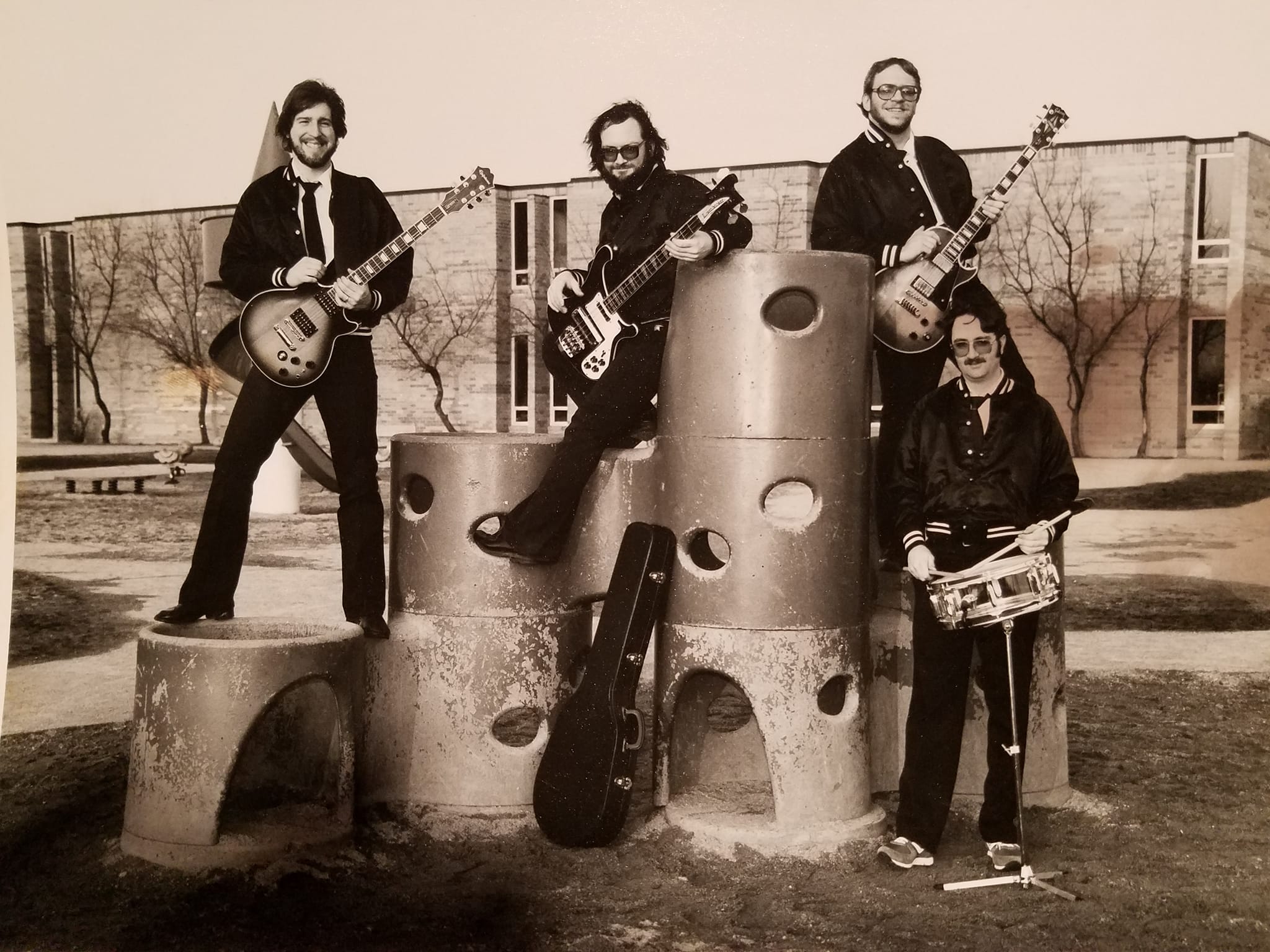
When I was but a lad heading into high school, my heart’s greatest desire was to learn how to play the guitar. Partially because I loved music, but also because I thought doing so would help me meet girls.
(Don’t judge, Eddie van Halen started on guitar for the same reason, although he did a little better than me on learning it.)

Anyway, for my 14th birthday (just as the summer started) my parents bought me the cheapest piece of junk available that will still work, a $20 Decca guitar from Kmart. But I didn’t care – I had a guitar, along with a little songbook with songs like Born Free and Red River Valley that had the little finger placement charts above every chord.
I pretty much spent the entire summer locked in my room for 4-6 hours a day every day, playing the same old songs over and over until they began to sound like actual songs. In a month I felt comfortable enough to play that guitar in front of my parents and a couple of their friends.
Within a couple of months of starting I bought my first “real” guitar for $100 out of my 8th grade graduation money – a Suzuki 12 string that I still own to this day. It’s not very playable anymore but I still keep it around for sentimental reasons.
I tell you this story to point out a valuable lesson: if you really want to get good at something, you can’t just dabble at it or put in time against a clock. You have to work at it deliberately, with a goal and a sense of purpose.
In other words, you have to know your “why” or you’re just going to spin your wheels.
So if you’re a pitcher who is trying to increase her speed or learn a new pitch, you can’t just go through the motions doing what you always did. You can’t just set a timer and stop when the timer goes off.
You have to dig in there and keep working at it until you make the changes you need to make to reach your goal.
If you’re trying to convert from hello elbow to internal rotation, you can’t just throw pitches from full distance and hope it’s going to happen. You have to get in close, maybe slow yourself down for a bit, and work on things like upper arm compression and especially forearm pronation until you can do them without being aware of them.
It might take a few hours or it might take a month of focused, deliberate practice. But you have to be willing to do whatever it takes to get there.
The same goes for hitters. If you’re dropping your hands as you swing or using your arms instead of your body to initiate the swing you’re not going to change that overnight by wishing for it.
You have to get in there and work at it, and keep working at it until you can execute that part of hitting correctly. No excuses, no compromises; if you want to hit like a champion you have to work like a champion.
There will sometimes be barriers that seem insurmountable, and no doubt you’ll get frustrated. But there is some little thing holding you back and you attack it with ferocity, with a mindset you won’t let it defeat you, sooner or later you will get it and be able to move on to the next piece.

When I first learned how to play an “F” chord it was really difficult. It requires you to use your fingers in ways other chords don’t, especially when you’re a beginner.
But I needed to master that “F” chord cleanly so I could play certain songs, so as physically painful as it was (especially on that cheap little Decca guitar) I kept at it for hours on end until it was just another chord among many in the song.
The same will happen for you if you work at it. The thing you can’t do today will become easy and natural, and that will put you in a better position to achieve your larger goals.
Yes, it takes a lot to make a change, especially if it’s from something you’ve been doing for a long time. Old habits die hard as they say.
But if you approach it with passion and purpose you’ll get there – and you’ll be better-positioned for your next challenge. .
BONUS CHALLENGE: Yes, one of those young fellows up there in the top photo is me. See if you can guess which one and put your choice in the comments below. (HINT: It may not be the one you think.)
Two Quick Tips to Help with Pitching Accuracy

One of the biggest deterrents to developing quality pitchers for the long haul is emphasizing accuracy over good mechanics in the early years. Yes, it’s tough to watch a young pitcher struggle with control, and it’s really tempting to tell her to just do whatever to get the ball over the plate so she isn’t walking everyone.
But that type of thinking places the emphasis on outcomes instead of the process. And as anyone who has ever taught anyone to be good at anything can you, if you keep your focus on the process the outcomes will take care of themselves.
Still, we’re at the time of the year where accuracy does, in fact, matter a lot. So how do you get your young pitchers to improve their strikes to balls ratio while keeping them focused on the process?
Following are a couple of tricks you can try.
Set up a barrier to block the problem area
This is one of my favorite. In fact, I’ve probably written about it before but it bears repeating here.
Let’s say your pitcher is throwing everything into the dirt in the batter’s box on her throwing side, e.g., a right handed pitcher throwing into the right hand batter’s box consistently.
Set up a hitting screen (or a ball bag or any other solid object) about 20 feet in front of her that allows full access to the plate but nothing more. You want it far enough away that if she hits it the ball won’t bounce right back at her, but close enough that any slight deviations from a good pitch will hit the screen or other object.

Then tell her to throw a pitch without hitting the screen without offering any instruction on how to do it.
At first she may plunk it a few times. She will probably get a little frustrated at first.
But in time (most likely sooner rather than later) her body and her brain will make some tiny adjustments on their own that allow her to get the ball over the plate without putting the object, herself, or her catcher in any danger.
After she does that a couple of times I like to say, “So you can throw the ball over the plate, you just weren’t doing it” or something to that effect as a way of helping them to an “Aha!” moment while keeping it light. But you do you.
Once the pitcher can throw consistently without hitting the screen, remove the screen and let her keep going. I would say 9 times out of 10 she will continue to throw successfully because she has made the adjustments required at a subconscious level.
If she hits one of those 1 out of 10 situations, pull the screen back in and have her work through it again.
I find this method works better than offering external cues such as “step more to your left” or “let go a little later” because the pitcher is able to find what works for her on her own, without a lot of conscious thought. These become internal cues that she can carry with her more easily into a game, and seem to have a more long-lasting effect.
Make sure her dominant/targeting eye can see the target
Each of us has one eye that is more dominant than the other. In ancient days its job was to home in on an enemy or a potential source of food to help the individual with survival.
Today the need isn’t quite so urgent for most of us but the biological reality of it still exists. You can use this fact to your advantage with your pitchers.
You want them to be sure that when they are getting ready to throw the pitch that their dominant eye is hyper-focused on the target. It doesn’t necessarily have to stay there throughout the pitch, but at some point when the brain is making its decision of how to throw the ball you want to use the dominant eye to help the brain understand the target is “here.”
So how do you know which eye is the pitcher’s dominant eye? Here’s a simple method I actually learned when my sons were at a sleepaway camp with the Cub Scouts. The instructors at the BB gun range would check for the dominant/targeting eye to know how the boys should set up to shoot.
Have the pitcher place her hands together in front of her with one overlapping the other to form a small opening in the space between the thumb and first finger on both sides. The opening must be small in order for the rest to work.
Once she has it, have her hold her hands in front of her at arm’s length and look at you through the hole. Whichever eye is looking at you is the dominant eye, I guess because when we can only use one eye we instinctively go to the dominant one.

If the eye is on the glove side there’s very little potential for problems. It will stay in front as the pitcher’s body opens so should have a good view of the target throughout the pitch.
If it’s on the throwing hand side, however, the pitcher will have to take a little more care to make sure that eye can see the target when it’s time to throw since it will be on the back side.
Eventually the pitcher won’t have to look at the target throughout the pitch. Many high-level pitchers look at the ground or the sky as they’re throwing because it helps them do what they need to do, although it’s likely they’ve already set the target with their dominant eye before they even start their motions.
For those who need a little more help, though, reminding the pitcher to use her dominant eye to focus on the target can help her brain and body make the movements that will deliver a better, more accurate pitch.
Keep it natural
Whenever a pitcher struggles to hit her target there will be no lack of suggestions from whoever is around on how to get more accurate. They all mean well, but like the folks who yell “Just throw strikes” as if the pitcher was trying to walk everyone, most of that advice is either unhelpful or can actually stunt that girl’s growth as a pitcher.
Using these two tricks while you’re practicing can help set good habits that carry over into games without interrupting the natural flow of the motion. If you have a pitcher who’s struggling with control, give these ideas a try.
And if you have others, please be sure to share them in the comments.
My good friend Jay Bolden and I have started a new podcast called “From the Coach’s Mouth” where we interview coaches from all areas and levels of fastpitch softball as well as others who may not be fastpitch people but have lots of interesting ideas to contribute.
You can find it here on Spotify, as well as on Apple Podcasts, Pandora, Stitcher, iHeart Radio, or wherever you get your podcasts. If you’re searching, be sure to put the name in quotes, i.e., “From the Coach’s Mouth” so it goes directly to it.
Give it a listen and let us know what you think. And be sure to hit the Like button and subscribe to Life in the Fastpitch Lane for more content like this.
Champions Never Take a Day Off

At first glance, today’s headline probably sounds like BS. I’m sure there are those among you who are saying “I see lots of high level coaches and healthcare experts who talk about the importance of rest and recuperation as part of an overall training strategy,” or something to that effect.
That is very true, and I am definitely an advocate of not only building some unscheduled time into the season but also taking time off post-season to recover both physically and mentally. But that’s not what I’m talking about here.
Today’s subject is more about the approach players need to take whenever they are practicing.
We tend to think about practice time in terms of quantity. A question coaches are often asked is “How often/how long should my daughter practice?”
The implication is if you fully fill out the practice time card you will magically get better. All you need to know then is what the numbers are.
But that’s not how it works. The real question is how focused are you in the time you do practice?
Think about two players. The first one is more oriented to the time-based approach.
She goes out for a half hour every other day to practice on her own in addition to attending two or three team practices a week.
Sounds like she ought to be seeing huge gains, doesn’t it? Yet her improvement is slow, and she gets frustrated because she’s investing all this time for very little reward.
Yet the answer lies in HOW she is practicing. When she’s on her own, she basically goes through the motions, doing what she has always done.
Maybe she’s a pitcher who needs to work on her leg drive. But that takes a lot of effort and concentration, which is hard, so instead she just continues to pitch the way she’s comfortable.
Yes, she is out there putting in time. But as far as effort goes she’s pretty much taking the day off.
Then she wonders why her speed isn’t going up the way she should.
Player B, on the other hand, is driven to get better all the time. When she goes out to practice, whether it’s on her own or with her team, she is legitimately trying to improve some aspect of her game all the time.
If she’s a pitcher who needs to improve her leg drive, she’s out there doing her assigned drills and pushing her body to the max with every repetition to try to see improvement. And she doesn’t try to throw a full-distance, full-motion pitch until she feels herself generating a higher level of energy.
If she’s a hitter who has a problem with dropping her hands to swing, she takes dry swing after dry swing with her hands in the proper position before she even thinks about hitting a ball. She starts slowly so she can get it right, and gradually builds the speed up, always being careful to ensure she continues to keep her hands up.
If they start dropping, she backs off a little on the speed, recovers the proper form, then starts increasing speed again.
The same is true with her approach to fielding, throwing, running bases, and every other softball skill. She tries to make every repetition count because she knows that the more she does things correctly, with intensity and a purpose, the better she will play when it’s game time.
And the better chance she will have of becoming a champion.
The reality is we are whatever we do repeatedly. If we are sloppy and lackadaisical in our approach to practice because we don’t feel like it today or it’s just easier, that sloppiness or lack of effort will show itself on game day.

But if we are focused and have a goal in mind for every minute of practice time every day, when game time comes around performing at a high level becomes much easier.
It’s easy to say you want to be a champion, win trophies, play for a particular high-level team, etc. The question is, are you willing to pay the price to get there?
True champions don’t take days off when they are practicing – or playing. They work on their weaknesses and give their all with every repetition, even when it’s frustrating.
The next time you go out to practice, give this approach a try. Dedicate yourself to accomplishing a goal, and be single-minded in your effort to achieve it.
And if you find you can’t give your all that day just stop, because you’re probably wasting your time at best and possibly even making yourself worse. Then come back when you’re ready to go 100% on every repetition again.
I think you’re going to like the results a whole lot better.

The “Whack-A-Mole” Approach to Coaching

The other night as I was setting up for lessons at an indoor facility where I teach, there was what I presume was a dad and his son in the next cage over. The dad was pitching to his son, who appeared to be about 10 years old, and chucking them fairly hard at him.
Dad was kind of loud in his instruction – not a crime in my book because the place was pretty noisy and you had to talk loud to be heard – but because of that I couldn’t help but overhear what he was telling the boy.
With each pitch, Dad offered some helpful critique. “You dropped your hands.” “Your front foot stepped out.” “You’re dropping your shoulder.” “You were late.” “Gotta get your hips through.” And so on. You get the picture.
I felt bad for the poor kid because while all the things Dad was saying may have been true (I didn’t stop to watch because I had other things to do) I doubt the boy could make much sense of them.
The problem was there was so much scattered information coming at him at once it’s unlikely any of it was getting through. The kid probably felt like this.

It was a prime example of what I call the “Whack-a-Mole” style of coaching. (It could also be called the “Magic Pill” style. My friend and pitching coach extraordinaire Anna Nickel from ElevatePitching calls it “Firefighter Coaching” because you’re constantly running from issue to issue trying to put out fires.)
You see an issue come up and you point it out, although you may or may not say how to correct it. On the next repetition, while the player is trying to fix whatever issue you pointed out, something else crops up so you immediately jump on that.
This pattern continues until the session comes to a merciful end. At which point the player is no further along, and perhaps even behind, where she was before.
There’s no doubt this is an easy pattern to fall into, especially if you’re personally invested in the player’s success. You see a problem and you want to fix it.
That’s human nature. I know I can be guilty of it myself (just ask my students), and constantly have to tell myself not to do it.

The problem with this approach is that even though everything being said is true, it’s not like you can fix an issue with one attempt. That’s where the magic pill concept comes in.
Just because a coach points out a flaw doesn’t mean a player can fix it right away. It takes many, many focused repetitions to replace an old habit with a new, better one.
Yet when you’re playing Whack-A-Mole, that whole focus thing goes right out the window. If you tell a player she’s dropping her hands, on the next swing she will (hopefully) work on keeping them up. Whack!
But then if you tell her she was late on her next swing (Whack!), her focus will switch to her timing. Since she hasn’t had time to fix the first issue, however, her hands will drop again as she concentrates on her timing (Whack!). Introduce a few more issues (Whack! Whack! Whack!) and her mind is probably somewhere else – quite possibly thinking she must be awful because there are so many things wrong with her, and maybe she should just give up the sport entirely. It happens.
A better approach is to choose one thing and work on that. Then, after the player gets the hang of it, you can try moving on to something else. But if the first issue crops up again immediately, you need to go back to working on that instead.
If you’re already aware of what needs to be fixed you can game plan ahead of time. Take the thing you believe to be the most glaring flaw, i.e., the one that is most likely to keep the player from having success, and work on that.
Only when it seems like the player can execute the new skill without having to hyper-focus on it should you try moving to the next one on the list.
If you don’t know the player that well, you’ll have to do the prioritizing on the fly. In that case, you should know what the most important issues are in general, in descending order, and just work through the checklist until you find what needs to be done.
For a pitcher, for example, you may see she has a very stiff arm from trying to make the circle too big. You might have her work on learning to loosen up the arm to allow it to work the way it should.
That approach will be much better than trying to have her learn to loosen up her arm, improve her drive mechanics and learn to hit her spots reliably.
The good news is, if you choose your priorities correctly, often fixing one issue will help with others as well. In the pitching example, loosening up the arm will enable the arm to whip, which will increase speed. It will also allow the momentum generated in the pitch to help guide the arm, impacting accuracy as well.
One other thing to keep in mind is that fixing skills such as hitting or pitching properly and permanently often requires you to focus on pieces rather than the full skill.
In the case of hitters, that might mean putting the player on a tee for a while rather than taking full swings. For a pitcher that may mean having her move up close and throwing into a wall or net rather than performing full pitches. The same with players who need to work on throwing.
For fielders, it could mean having balls sitting on the floor or ground, or rolling balls to them rather than hitting them. Some players may have a tough time with that approach at first, but they will benefit far more from it in the long run versus trying to fix problems within the full skill.
Whack-A-Mole may be a fun game to play at a carnival – especially if you have some pent-up aggression to work out, as we all seem to these days. But as a coaching approach it isn’t very effective.
Pick one thing to focus on and give your players time to learn it before moving on to something else. You’ll find you generate much better results – in far less time.
Learning to Fix One Issue at a Time

Photo by freestocks.org on Pexels.com
One of the best AND worst things to ever happen to fastpitch softball training has to be the ready availability of instructional videos on sources such as YouTube.
It’s one of the best things because it has made a whole world of knowledge available to parents (and coaches) that was never available before. Personally, I think it’s one of the big reasons there is far more parity in the sport than there used to be.
Prior to YouTube, much of the best knowledge was concentrated in Southern California among a small group of coaches. If you were lucky enough to live near one, you received high-level coaching. If you were on the other side of the country, maybe not so much.
But once better information started becoming more available on YouTube (and through the Internet generally), enthusiastic players, parents and coaches were able to learn from the best no matter where they lived. Not saying everyone took advantage of it – there’s still a lot of bad coaching out there – but at least the information became available.
So why do I think it’s also one of the worst things that happened? Because parents and coaches could see how their kids/players looked compared to the examples, and the top-level players, and many became obsessed with trying to get their kids/players to look like the ones they saw on video.
That in and of itself isn’t a bad thing either. But where it became a problem is they wanted to make it happen instantly. So rather than addressing one issue at a time, they started trying to fix everything at once. That is probably the least effective way to learn anything.
What does that mean? Take a pitcher for example. The parent/coach sees the pitcher doesn’t have enough leg drive, so he/she starts working on that. Then he/she notices the arm seems a little stiff. So rather than continuing to focus attention on the leg drive, the pitcher now starts focusing on keeping the arm loose.
Then the parent/coach sees the glove swimming out and… well, you get the idea.
All of those are valid corrections. But it’s difficult, if not impossible to make all of them at once. Or even all in one session.
(DISCLAIMER: I know about this from direct experience because I used to do it too. Probably still do now and then, but I try to catch myself before it gets out of hand.)
A better approach is to set priorities, and then work on those priorities – even if other parts of the skill aren’t up to par. Or even if they are affected by the changes you’re making right now.
The reason is despite all the talk and hype about it, science has shown us that there is no such thing as multitasking. (Sorry all you people who think you’re good at it.)
The human brain can only pay attention to one task at a time. And making corrections to softball mechanics, or anything else for that matter, takes time, no matter how much we wish that wasn’t true.
Enabling players to remain focused on making a single correction, then moving to the next, will produce far better results than trying to fix everything at once.
But what about the discussions on how random practice (doing different things each time) is better than block practice (doing the same thing over and over)? That is true after a certain point, once the player has acquired a certain level of proficiency in the skill. For example, fielding ground balls to the left, right and center, hard and soft without establishing a set pattern will help translate those infield skills to a game better than doing 10 to the left, then 10 to the right, etc.
But that presumes the player already knows how to field ground balls to the left, center and right, hard and soft. If not, the fielder must first acquire that skill, which is best accomplished through repetition and focus.
Giving players who are learning new skills, or replacing old skills with new ones, an opportunity to focus on one specific piece at a time (and without pressure for overall results, such as pitchers throwing strikes or fielders not making any errors) will create a better foundation and ultimately shorten the learning curve. Then, once the player has reached a certain level of at least conscious competence you can start moving into ensuring all the pieces are working the way they should.
Yes, there is a lot of great information out there (and plenty of bad too). And yes, it would be nice if you could just say things once and your kids/players would grasp it all right away. But that’s not how things work.
Avoid the temptation to “correction jump” (the coaching version of task jumping) and you’ll find you produce better long-term results – with far less frustration for you and your kids/players.
Bring a Little Fun to Corrections By Playing HORSE

Being a coach sometimes can feel like you’re stuck in the movie Groundhog Day. You offer a correction, the player makes it for a repetition or two, then goes back to what she was doing before. So you offer the correction again and the cycle repeats.
This pattern particularly shows up with younger players, but it can happen to anyone anytime. Obviously, two good repetitions followed by a few incorrect ones isn’t going to get anyone anywhere.
So how do you provide a little extra incentive to focus on doing it right every time? This is where taking advantage of the competitive nature of fastpitch softball players can come in handy.
Fastpitch softball is a tough sport full of difficulties and disappointments, so players really have to have some competitive fire to keep going with it. They also have to love a challenge. As soon as you press the “compete” button you almost always have their full and undivided attention.
One way I’ve done this is to borrow from the playground basketball game of HORSE. You know the one. You take a shot, then the player after you has to take the same shot. If he/she doesn’t make it, he/she gets a letter. You keep going until only one player hasn’t spelled out HORSE.
For Katie, the girl in the photo at the top of the post, the challenge was getting her to bring her back leg into her front leg to finish the pitch. She had the very common tendency of throwing the front leg out without using the back leg. As a result, the back leg was more of an anchor dragging behind her and cutting back on her speed and accuracy.
So I challenged her to a game of HORSE. The rules were simple. If her back leg finished by closing into her front leg (more or less) no letter was assigned. If, however, she finished with her legs spread apart (which usually caused her to bend forward as well) she received a letter.
Once we established those simple rules, it was game on! Suddenly, instead of the Groundhog Day loop of me telling her to finish, she was more on top of it. She still ended up getting an H-O, as I recall, but that was all in the 10 minutes we spent on it.
That was pretty good improvement, because it meant in all the pitches she threw she only failed twice. More importantly, rather than me telling her to fix the issue she was now dedicated to fixing it herself – because she didn’t want to lose the game!
I knew it really got through to her, though, when at her next lesson she asked if we could play HORSE again. I think she wanted to play because she knew she could win; she’d worked on it between lessons to gain the advantage.
But that’s ok with me – I want her to win, because then she’s improving her mechanics and using her body more effectively. By the way, there was no prize for winning or avoiding getting HORSE, although there certainly could’ve been. The game simply appealed to her competitive nature and got her attention.
In reality, this is a game/technique you can use to drive improvement for all kinds of techniques. Have a hitter who is dropping her hands or swinging bat-first? Play HORSE.
Have a fielder who isn’t getting her glove down on ground balls, or a catcher who isn’t keeping her glove on the ground while blocking? Play HORSE.
(I’m not just saying this to you, by the way. I am also making this as notes to myself, as I am definitely under-utilizing this idea.)
The one thing I would caution is focus the game on the process/skills, not the results. So use it to help a first baseman learn to scoop a ball in the dirt properly, but not to keep track of whether she actually got it or not. Or use it to help a hitter learn to swing hips-first rather than giving her a letter if she swings and misses.
If she learns the skill, the results will take care of themselves. But if you focus on the outcomes, you won’t drive the skills. Instead, you’ll probably reinforce bad habits as the player tries to avoid the error/failure instead of learning and internalizing the technique.
In any case, if you find yourself in a Groundhog Day-like loop, give HORSE a try. And if you do, or you’ve done the same thing yourself, let me know how it works for you in the comments below.
Getting Up for a Game When You’re Not Feeling It

Every fastpitch softball player faces this situation sooner or later: it’s game day, and you’re just not feeling it.
Maybe it’s been a long season and you’re tired. Maybe it’s hot and humid out and you don’t handle hot and humid well. Maybe all your non-softball friends are doing something and you wish you could do it too. Maybe you’re so nervous about a big game that you just don’t feel like yourself.
Whatever the cause, feeling that you’re not feeling it can definitely get in the way of your performance. That’s where it helps to take a lesson from some famous musicians.
I’ve read interviews with several famous musicians who were asked how they managed to put so much energy into their performances night after night despite the grueling toll it takes to go from city to city and play for months at a time.
The answer they give is typically something to the effect of: “Yes, it can be hard, and there are times in the hotel or backstage that I just don’t feel like playing. I think maybe I can get by giving it just the minimal amount of effort. But then I think about the fan who saved his/her money to come and see me play, and this will be his/her only chance this year. Maybe it’s a first date, or an anniversary, or a birthday or something else special. Maybe it’s just someone who needs a little lift in their life. When I think about that, I realize I owe it to that person to do the very best I can, if for no other reason than to thank them. And I want them to walk away feeling like it was more than worth the money they spent.”
What a great attitude. They realize that in the line of work they’ve gone into they’ve made a bargain, and they need to keep up their end of it.
For fastpitch softball players it’s a little different. In our case, yes, there are the fans who came out to see the team play. It might be someone’s grandma who finally made it out to a game and hopes her granddaughter’s team will win. Or a little sister who is going to draw her impressions of the game by what she sees on the field. Or the brother home on leave from the military who wants a little piece of home in his life before he goes back to wherever he’s stationed.
But there might also be a college coach, or someone connected to a higher-level team, watching as well. What that person sees, that day, will be his/her first and most lasting impression of you. A great performance might catch his/her eye for the future. A poor one might get in the way of your goals down the line.
Even if none of that is the case, however, think about your coach. He/she made a decision to put you on the team and give you an opportunity to play. You also owe that person your very best. Every. Single. Time. You. Play.
Always remember that putting on that uniform and taking the field is a privilege. A lot of things had to happen the right way for you to have that privilege – starting with being born in a country where playing fastpitch softball is even an option.
Learn to appreciate the opportunity you have and you’ll learn how to feel it even when you’re not feeling it at first. And that, more than anything, will help you become the player you’re destined to be.
Helping young fastpitch pitchers learn to focus

One of the fun but challenging aspects of working with very young fastpitch softball players (under about 10 years old) is getting them to focus for any length of time. There are usually lots of things going on in their heads at any given time, and the slightest activity anywhere else can distract them in a major way.
That can be a problem at any position. But it gets even more noticeable with pitchers. As a fastpitch pitcher you have to be able to dial in to the strike zone. Visualizing the pitch location before you throw it is helpful for improving accuracy. That’s tough to do, however, when the three ring circus is playing in your head.
This is where playing to the player’s competitive nature can be a real asset. Giving her something specific to do, with a prize attached, can help drive that focus level right up.
I actually stole this idea from Cindy Bristow at Softball Excellence. It came in one of her newsletters, which are a great source for drills and games.
Set up a tee on the plate, and place a ball on top of it. Then challenge the pitcher to knock the ball off the tee with a pitch. You’ll be amazed at how quickly she gets dialed in.
That’s what we did here with Kaitlyn, the girl in the accompanying video. She was having a bit of trouble focusing on this day, so I set up the tee and put a 14 inch ball on top of it. It probably would’ve been more fair to use a basketball or soccer ball, but I decided to challenge her.
In the beginning, I offered her a sucker if she knocked it off. Her mom immediately upped the ante and offered her a milkshake on the way home if she succeeded. We then spent the last 10 minutes of that lesson with her pitching balls at the tee. The rule was she had to hit it directly – no fair bouncing the ball into the tee so it falls off. Also she had to use good mechanics, not just aim the ball at the target any old way.
That first night she came close a bunch of times but didn’t quite get it. The following week her mom told me Kaitlyn was in a foul mood on the way home. She really wanted that milkshake.
The video is from that next lesson. We gave her 15 minutes this time. Kaitlyn ratcheted up the focus, and was right around it for much of that time. Thinking she needed a little extra help to succeed, I had her little sister stand directly behind the tee on the other side of the net. A few more throws and Bingo! Success!
Of course as Han Solo says, good against a remote is one thing. Good against the living is something else.
Today I heard Kaitlyn earned a game ball for her pitching. Two scoreless innings with a couple of strikeouts.
I wouldn’t say it was all in the drill. She put in a lot of hard work throughout the off-season. But I will say it helped.
If you have a pitcher who could use a little help zoning in during practice give this drill a try.
First base coaches have responsibilities
Earlier today I was out watching a fastpitch softball game where I had some students playing. I go to games to see them in action, provide support and see if there are things we need to work on that don’t show up in lessons.
Along the way, of course, I also get to see a game. For the most part the outcome of the game overall doesn’t matter to me – I don’t have a horse in the race per se, although I like to see a well-played game. But every now and then I see something that brings out the game coach in me.
Today it happened when I went over to the bleachers behind the first base dugout to kick back a bit. The team I’d come to watch was hitting. And that’s when I saw it.
The first base coach went out to her position, then proceeded to spend the entire half inning exchanging hair tips with the girls in the dugout. She stood close to the dugout and kept chatting away even when there were runners on base! Every now and then she’d yell “Back!” if she happened to notice that a ball had been hit foul or a runner had wandered a bit far. But for the most part the runners were on their own. She wasn’t watching the third base coach for signs or even offering any encouragement to the hitter.
So even though, again, I really had no horse in the race, I started to get irritated watching her. The picture that came to my mind was Herb Brooks in the movie Miracle, standing behind the USA bench while his team was playing Sweden in an early match, listening to them talking about the girls in the stands. “You don’t want to during the game, fine. We’ll work now.”
I know that traditionally most of the responsibility is placed on the third base coach, but the first base coach does have a function. It’s not the place where you should be exchanging hair care tips, or checking your fantasy football picks on your cell phone, or texting your bookie or otherwise being and causing distractions. You should be focused on the game and helping the runners any way you can.
I’ve had the privilege of working with some great first base coaches. They made sure the runner on first knew the situation, what to do in different circumstances, what to look for about the pitcher, letting them know if the team was susceptible to a delayed steal, things like that. They also made sure the runners were watching me for signs at third, and kept a watchful eye on each pitch to help the runner make a decision about whether to attempt advancing on a ball in the dirt or one that looked like it might get away. In short, they were in the game and worth their weight in gold.
The other thing they did was set an example of how the players should approach the game. How intensely they should be watching for anything that might give an advantage. As opposed to this coach, who essentially told her entire team that it wasn’t important to be in the game or in the moment – that it was ok to sit and chit chat about nothing.
It may seem like coaching first base is simple but it’s not. Like anything else it’s something you need to work at. If you don’t want to pay attention, or you want to chit chat during the game, the first base coach’s box is not the place to be. (Actually, if you want to prattle about nothing, the dugout is probably not the place for you either because you’re a distraction to the players, who should be paying attention to the game and trying to learn something about the opposing pitcher and defense.)
Hopefully one of the other coaches in the dugout says something to the head coach and a correction is made. Because you know if something bad happens it will come at the worst possible time – it always does.
If you’re in the first base coach’s box, be sure you take the responsibility seriously. You can contribute a lot – if you’re paying attention.






 Life in the Fastpitch Lane