Blog Archives
Compete Against Yourself First

The desire/urge to compete is pretty much baked into our DNA. Where originally it was a survival mechanism – those who were best at finding resources (or taking them from others) were the most likely to live – that drive lives on today in many forms, including the desire/urge to score more runs than an opponent.
It can be good thing, spurring us on to achieve more than we would have otherwise had we not had an example to compete against or a level of performance to aspire to. But it can also turn ugly when it moves from helping us establish goals to judging our self-worth by how we compare to others – either specific individuals or others in general.
The problem with these types of comparisons is they often don’t take into account the fact that the competition is often not occurring on a level playing field.
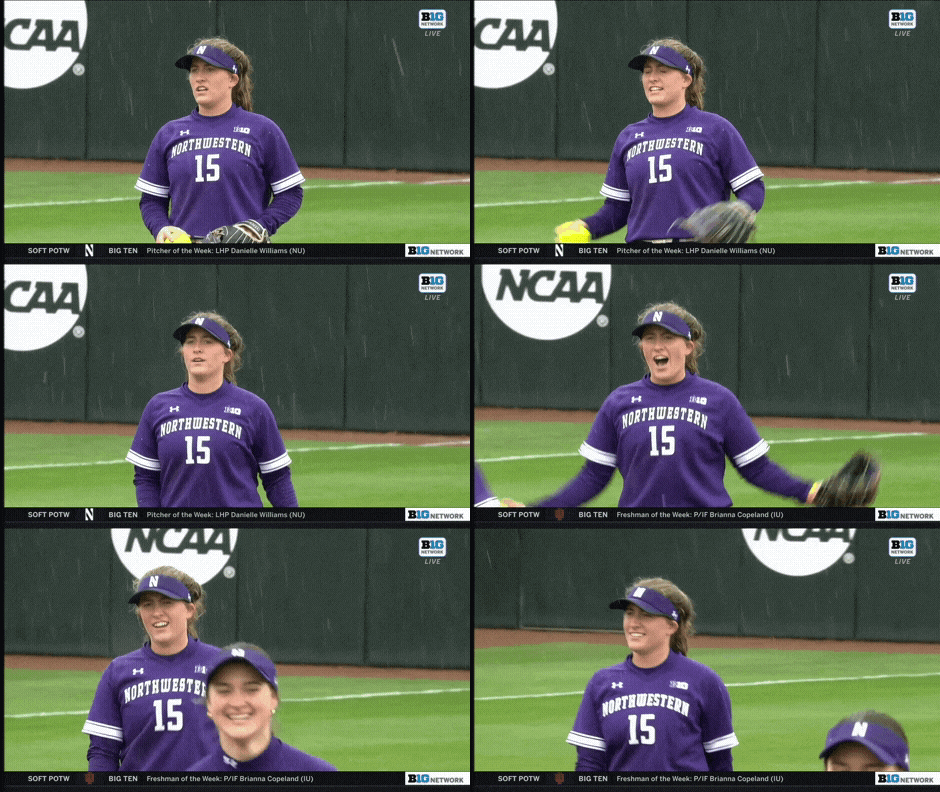
Take a couple of beginning pitchers for example. They both start learning at the same time, so it’s easy to think that they will progress at the same pace.
But maybe one is a little more naturally athletic or simply more coordinated than the other because physically they’re developing at different paces – each at her own pace, incidentally. The more athletic one is likely to jump out to an early lead, throwing harder, throwing more strikes, being ready for a second pitch, etc. before the other.
The one who falls a little behind may look at it and feel bad about herself. She can say, “I work just as hard and practice more, but I am not getting the same results. Therefore I must not be very good.”
That’s the wrong way to look at it, in my opinion. Rather than comparing herself to the other pitcher, the second girl should instead look inward to see if she is better than she was a week ago, a month ago, six months ago, etc. She might like what she sees a whole lot better.

Perhaps when the girl who’s feeling bad started out she was arcing the ball in, or having trouble making it to the plate. For an older girl, maybe she was throwing hard but it was anyone’s guess where it might go.
Now she is getting to the point where you could put her in a game when it matters. She may not be quite as spectacular as the other one (at this moment), but she is leaps and bounds better than she used to be.
And here’s the funny thing. Just because she’s behind right now doesn’t mean she will be forever.
Some kids are just naturally more coordinated than others at younger ages. Some kids have earlier exposure than others to quality coaching, which shortcuts the learning process. Some kids just take a little longer to grow or gain strength than others.
But when player two catches up, look out! She may just end up being the best of the bunch.
I recently heard a story about the legendary pitcher and Olympian Cat Osterman talking to a group of youth players at USA Softball’s High Performance Program (HPP) national player selection event. After watching the quality of the talent that was there, she told them that when she was their age there was no way she would have been invited to such an event, much less have been able to win a spot on the roster.
She didn’t become the Cat Osterman we know until a little later. She was tall and gangly and hadn’t quite figured out how to get those long arms and legs all moving together in a way that would dominate hitters.
Had she primarily been comparing herself to the other pitchers around her she might have become discouraged and given up. And the sport would have missed out on one of its all-time greats.
But instead, she just kept going, focusing on making herself better so she could get more opportunities to pitch. I’m sure at times she looked at who was ahead of her and thought, “If I can get better than her (or them) I’ll be pitching all the time.” She is a competitor, after all.
Yet she apparently never let the fact that she wasn’t as good right now discourage her from trying to become better. She kept plucking away at it, and eventually passed them all – to the point where she was good enough to compete and medal in the Olympics in 2004, 2008, and 2020. A pretty remarkable feat by any standards.
The bottom line is each of us has a path to walk, and we walk it at our own pace. You can’t control how good someone else is at any given point in time, but you can control your own progress toward your goals.
It’s ok to look ahead and say you want to beat this person or that person as a way of measuring progress toward those goals. But in the end remember the main person you’re competing against is yourself.
Keep trying to better yourself, little by little, day by day, step by step, without overly worrying that this person or that person is ahead of you right now. Keep walking the path and one day you’ll look back and be amazed at how far you’ve come.
The Importance of Intention in Achieving Fastpitch Success

As a private instructor, one of the questions I often get from parents of new students is, “How much should my daughter practice?” While well-intended (see what I did there?) the question is usually a tipoff that said new student generally doesn’t practice very much and the parent is looking for someone who isn’t them to make their daughter practice more.
My answer typically is, “As much as it takes.” I say that because practicing is not a time-based phenomenon. It’s goal-based.
Yes, it would be nice if you could quantify practice into increments of time, such as practice three times per week for a half hour and you will be great.
The reality, however, is it doesn’t quite work that way. Because basing practice on the amount of time ignores an essential ingredient to success in fastpitch softball, or any other endeavor for that matter: intention.
When you perform whatever skill it is you’re working on in practice or a game, you have to have an intention to do it at the highest, most focused, most energetic level you’re capable of on that particular day. The measurable outcomes will vary from day to day depending on factors such as whether you’re tired, hungry, stressed, injured, happy, inspired, “in the zone,” etc.
But the intention to do your best with whatever you have that day should always stay the same. Anything less and you’re basically cheating yourself.
Think of it this way: your ability to execute in a game is greatly affected by how you execute when you’re working on those skills.
If you base your practice on time alone it’s easy to walk through the motions without putting any major effort in. Ask any kid who was forced to take piano lessons from 150 year old nun who seemed to go out of her way to find the most uninteresting music every written for her students to play. Sorry, just had a traumatic flashback.

Back to our topic, let’s take a pitcher who is supposedly trying to increase her speed. Sure, she’s going to a pitching lane three days a week with her mom or dad and throwing for an hour.
But how is she throwing? Is she just throwing pitches from full distance in a way that is easy for her? Or does she have the intention of throwing harder and thus is doing things that might be less fun and less comfortable for her, such as working on her arm whip from a close distance into a net or trying to improve her leg drive by exploding out as quickly as she can without the ball?
Is a hitter just swinging the bat and knocking 100 balls off the tee because she heard somewhere that to improve you should take 100 swings a day? Or is she focused on trying to get her sequence correct and feeling the energy flow up through her body and out her bat with the intention of seeing the ball fly off and hearing a resounding crack?
One might drive minor improvement through sheer volume. The other will take an average or even good hitter and help her become a great hitter in a shorter amount of time.
That’s what having intention is all about. It’s not just about putting in time to check the box.
It’s about putting in real work to ensure that when the game is on the line you’re prepared to perform at the highest level of which you’re capable.
That doesn’t mean everyone has to practice like a maniac. If you’re playing softball for fun in your local rec league and not really too concerned about how you perform overall you don’t need to bring a whole lot of intensity to your practice routines.
As long as you’re doing something a couple of times a week you’ll probably improve enough by osmosis or sheer repetition to perform at an adequate level.

But if you’re a youth player and your goal is to play in college, or win a high school state championship, or dominate in travel ball (even if you don’t plan to play in college), or win one of the big tournaments, you need practice with intention.
If you’re already a college player and your goal is to get off the bench, or win a conference championship, or play in the Women’s College World Series, you’d better be bringing a whole boatload of intention not just to every practice but to every rep you take during that practice. Because if you don’t, someone else will, and they’ll be getting all the glory while you’re stuck watching from the sidelines.
The good news is intention is something you have complete control over. All you have to do is decide you want something bad enough and then put in the effort to get there. It doesn’t cost a cent and it’s readily available whenever you want it.
If you really, truly want to get better and become whatever qualifies in your mind as a top player, don’t just go through the motions and put in the “required” time. Starting cranking up your intention to perform at the highest level you can manage every single day and you’ll find improvement comes faster and more easily.
Today’s Goals Are Tomorrow’s Disappointments
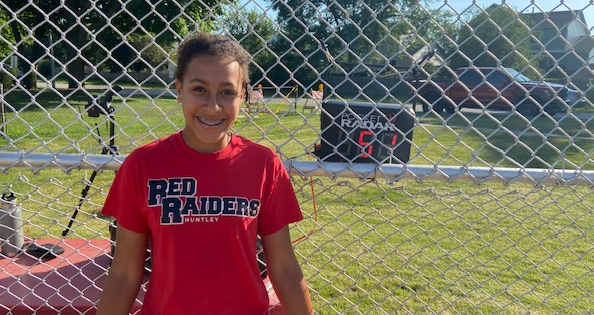
Setting goals is an important part of any sort of development, athletic or otherwise. Without them, it’s easy to meander your way through life. As the Cheshire Cat told Alice during her adventures in Wonderland, “If you don’t know where you’re going, any road will take you there.”
One phenomenon that isn’t often spoken of, however, is what happens to us mentally after a goal has been met. It’s amazing how it can turn around.
I’ve seen this particularly after I started setting up a Pocket Radar Smart Coach for virtually every pitching lesson. Each pitch thrown is captured, and the result is displayed on a Smart Display unit in bright, red numbers.
I call it my “accountability meter” because it shows immediately if a pitcher is giving anything less than her best effort. A sudden dropoff of 6 mph is a very obvious indication that a pitcher was slacking off on that particular pitch.
Here’s the scenario I’m addressing. Let’s say a young pitcher is working hard trying to move from throwing 46 mph to 50 mph. She’s been practicing hard, working on whatever was assigned to her, and slowly her speed starts creeping up.
She gets up as high as 49 once, but then falls back a bit again. She knows she can do it.
Then the stars align and voila! The display reads 50. Then it does it again. And again.
There are big smiles and a whoop or two of triumph! Goal met! Pictures are taken and high fives (real or virtual) are exchanged.
A few weeks later, the pitcher continues her speed climb and achieves 52. Once again, celebrations all around and she starts looking toward 60 mph.
The next lesson she throws a bunch of 50s, but can’t quite seem to get over that mark. What happens now?
Is there still the elation she had just a few weeks before? Nope. Now it’s nothing but sadness.
That 50 mph speed that once seemed like a noble, worthy goal is now nothing but a frustrating disappointment.
That would be the case for Ajai in the photo at the top. She was all smiles when we took this picture a couple of months ago. But if that was her top speed today she would be anything but happy.
But that’s ok, because it’s all part of the journey. We always want to be building our skills; goals are the blocks we use to do it.
But once they have been met, they are really of no more use to us. Instead, they need to be replaced with bigger, better goals. That’s what drives any competitor to achieve more.
So yes, today’s goals will quickly become tomorrow’s disappointments. But that’s okay.
Remember how far you’ve come, but always keep in mind there is more to go. Stay hungry for new achievements and you just might amaze yourself.
Practice the Key to Reaching Your Destination Faster

For those who are also geography-challenged, Los Angeles is roughly in the circle on the left, and New York is roughly in the circle on the right.
Sometimes getting a player to understand the value of practice can be difficult. Those who aren’t the most dedicated to fastpitch softball can find a hundred excuses not to practice. So here’s a fun way of explaining how they will benefit.
Whenever I start lessons with a new student, toward the end I like to ask them if they know where New York City and Los Angeles are on a map. Most the time they do – or at least say they do. I hear today’s students are a bit geography-challenged.
Anyway, once we’ve established they know where each is, I will ask them how many different ways there are to get from New York to LA. The student will then start naming off various modes of travel – plane, train, car, bicycle, jog, walk, etc. Some will even suggest a boat, which is possible but certainly not easy.
I then ask them which is the fastest way to make the trip, at which point they will almost always answer “plane.” Which is correct, at least until Star Trek transporters become a reality.
I will then explain if they practice regularly, and with their minds on what they’re doing, that’s like going from New York to Los Angeles in a plane. But if they only pick up a ball, bat, glove, etc. when they’re at a lesson, it’s like walking from New York to LA. You can still get there, but it’s going to take a whole lot longer and be a lot more painful.
At some point or another, if they want to be successful players must put in the time. There’s no way around that. They can either do it in a concentrated way, such as practicing 3-4 times per week, or they can stretch the same amount of practice over many weeks.
The thing is, if they choose the latter they may find they haven’t quite gotten to where they want to be by the time the season starts. At which point it will be difficult to make up the rest of the ground that was lost.
There’s also the retention issue. The more time that passes between attempts at a new skill, the more likely players are to forget exactly what they’re supposed to do or how they’re supposed to do it. That means at least part of the time of their next attempt is going to be spent trying to regain ground they’d already covered.
As General Patton says (at least in the movie) “I don’t like to pay for the same real estate twice.” But that’s exactly what you’re doing if you have to keep relearning things you already should know.
Whether you’re in-season or in the off-season, it’s in the player’s best interest to work regularly on learning whatever it is she’s trying to learn. Otherwise she should probably make sure she has a good pair of walking shoes – and a nice cushion for sitting on the bench.






 Life in the Fastpitch Lane