Monthly Archives: July 2017
Getting Up for a Game When You’re Not Feeling It

Every fastpitch softball player faces this situation sooner or later: it’s game day, and you’re just not feeling it.
Maybe it’s been a long season and you’re tired. Maybe it’s hot and humid out and you don’t handle hot and humid well. Maybe all your non-softball friends are doing something and you wish you could do it too. Maybe you’re so nervous about a big game that you just don’t feel like yourself.
Whatever the cause, feeling that you’re not feeling it can definitely get in the way of your performance. That’s where it helps to take a lesson from some famous musicians.
I’ve read interviews with several famous musicians who were asked how they managed to put so much energy into their performances night after night despite the grueling toll it takes to go from city to city and play for months at a time.
The answer they give is typically something to the effect of: “Yes, it can be hard, and there are times in the hotel or backstage that I just don’t feel like playing. I think maybe I can get by giving it just the minimal amount of effort. But then I think about the fan who saved his/her money to come and see me play, and this will be his/her only chance this year. Maybe it’s a first date, or an anniversary, or a birthday or something else special. Maybe it’s just someone who needs a little lift in their life. When I think about that, I realize I owe it to that person to do the very best I can, if for no other reason than to thank them. And I want them to walk away feeling like it was more than worth the money they spent.”
What a great attitude. They realize that in the line of work they’ve gone into they’ve made a bargain, and they need to keep up their end of it.
For fastpitch softball players it’s a little different. In our case, yes, there are the fans who came out to see the team play. It might be someone’s grandma who finally made it out to a game and hopes her granddaughter’s team will win. Or a little sister who is going to draw her impressions of the game by what she sees on the field. Or the brother home on leave from the military who wants a little piece of home in his life before he goes back to wherever he’s stationed.
But there might also be a college coach, or someone connected to a higher-level team, watching as well. What that person sees, that day, will be his/her first and most lasting impression of you. A great performance might catch his/her eye for the future. A poor one might get in the way of your goals down the line.
Even if none of that is the case, however, think about your coach. He/she made a decision to put you on the team and give you an opportunity to play. You also owe that person your very best. Every. Single. Time. You. Play.
Always remember that putting on that uniform and taking the field is a privilege. A lot of things had to happen the right way for you to have that privilege – starting with being born in a country where playing fastpitch softball is even an option.
Learn to appreciate the opportunity you have and you’ll learn how to feel it even when you’re not feeling it at first. And that, more than anything, will help you become the player you’re destined to be.
Fastpitch pitchers gotta pitch
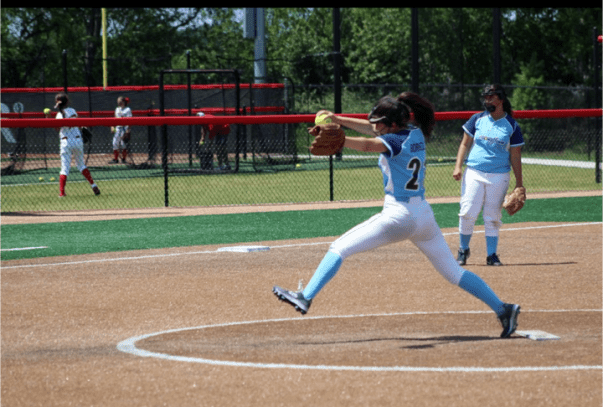
Right now we are coming up on what is probably the toughest time of the year in fastpitch softball – tryout season.
While the current playing season hasn’t quite concluded yet for most players, the finish line is definitely in sight for most. And that means they need to make a decision about next year, asking the musical question:
In some cases it may be whether a player should make the jump from rec ball to travel ball. In other cases it’s whether to stay with the current team or move to a new one, or whether to play up or stay down. So many decisions!
I’m asked my advice on this a lot, and I usually share it on a one-to-one basis because every situation is a little different. But there are a few common scenarios where I can pretty much make a blanket recommendation.
The biggest one is about seeking out opportunity, especially if you are (or your daughter is) a pitcher. As my headline says, pitchers gotta pitch. You can practice all you want, but the only way you’re going to know if you’re getting better is if you get the opportunity to pitch in games. Not just a few scrub innings here or there, but quality innings.
So let’s look at this typical scenario. (I’m going to say you to keep it simple, but you can also read “your daughter.)
You’re on a team that already has two good, established pitchers who get the bulk of the work. You started pitching a year ago, and while you’ve been working hard you haven’t had much opportunity to show your stuff. The coaches are too afraid they might lose a game with you in the circle.
Odds are that situation isn’t going to get any better next year. It’s probably time for you to seek your fortunes elsewhere, even if it’s with a team that isn’t as good overall, or isn’t as likely to win as many games as your current team.
What you need right now are game innings. So what if the team doesn’t play great defense and you take some losses. What you want is the opportunity to get in the circle, make yourself better, and see if you can make the team better to boot. Now, if you improve and the team doesn’t, next year will probably be a different story. But for now, your best bet is to go where the opportunity is.
Another tough one is whether a 10U pitcher should move up when her team goes to 12U or stay down at 10U. There’s no single answer for this one. If you’re rocking it at 10U, you can probably move up to the next level no problem. Especially if you’re a bigger 10U player. A smaller one might have trouble adjusting to the larger ball and extra five feet of pitching distance.
On the other hand, if you’re a developing 10U pitcher who hasn’t had much circle time, the jump to 12U might be pretty rough. If you get rocked a couple of times at 12U that might be the end of your pitching career. My recommendation in general would be to stay down, get a chance to dominate and build some confidence first. It will help ease the transition.
What about going from rec ball to travel ball? That can be a pretty big (and eye-opening) jump. To me, this is more about general attitude toward the game. If softball is primarily a social thing for you, it may not be a good idea. The increased practice and game schedules, even at the lower end of travel ball, might be too much for you.
On the other hand, if you’re a competitive type you’re very likely going to thrive in the travel ball world. You’ll enjoy the harder practices and tougher competition. And you (as well as your parents) will likely make friends for life.
On the other side of the stay/go coin is the desire to win trophies above all else. Yes, there are teams you can go to that will let you clutter your bedroom, and the living room, and the basement with plastic “hardware.” But will they help you become a better player?
Winning teams aren’t always run by great coaches. Sometimes they’re run by a parent who has a very talented daughter (who also has a few talented friends) or they are able to attract very talented, already-formed players and assemble them into a team. The coaches don’t make them better, they just act like NASCAR drivers; the drivers don’t build the cars, they just drive them. Not that it doesn’t take skill to drive a NASCAR vehicle, but it’s a different skillset than getting the car ready for race day.
The point is, you want to know that if you’re not already fully-formed and ready to rock that you will get the training you need to get there. A team that wins less but learns more is probably going to be your better bet.
There are other scenarios as well, but these should form a good start. If you look at what your needs and desires from the game are, you’ll have a lot better idea as where you should be playing next year. Good luck with it!
Oh, and if I missed any scenarios or you have questions, feel free to mention them in the comments below.
Thank goodness for Kyle Schwarber

Once again an odd title for a fastpitch softball blog, but bear with me. It’ll make sense.
Adversity is one of those things most fastpitch softball players have to face at one time or another. Our sport is hard, and it’s unforgiving.
Just a few inches either way on a pitch can mean the difference between a backward K and walking in the tying run. It can also mean the difference between a line drive single and a line drive out.
When too many bad things start to happen, it can quickly become overwhelming – especially for young players contending with all those hormones, social pressures, and other things we adults tend to forget about as soon as we can. It can definitely get players feeling bad about themselves, and into a mindset that they are the only ones it’s happening to.
So again, thank goodness for Kyle Schwarber. He was one of the heroes of the Cubs’ World Series win in 2016, coming back from a knee injury to play a key role in several victories. A guy who seemingly had it all knocked.
Well, if you don’t follow the Cubs you may not be aware that for the last couple of weeks he wasn’t with the Chicago National League ballclub . Instead, he was down on their AAA affiliate in Iowa.
The reason? After all his heroics and accolades, he’d lost his swing this year. Just couldn’t quite seem to get into a groove, relax and hit. So the Cubs thought they’d take some pressure off of him, let him go into the minors for a few games to get his swing back away from the glare of the spotlight in Chicago.
It seems to have worked, because he’s back with the Big Club now. (Glad I checked that – gotta love the Internet.) Hopefully he’s exorcised his hitting demons and will start tearing it up again.
The lesson here for young fastpitch softball players is that it can happen to anyone. Schwarber gets paid millions of dollars to play a game that bears a lot of similarities to ours. If he can lose his swing, what makes a fastpitch players whose parents are paying hundreds or thousands of dollars for them to play think it can’t happen to them?
Fastpitch players may not have a lower-level farm team to go to when they are in trouble, but they can certainly follow the same principles:
- R-E-L-A-X (mixing a little football in here, even if it’s from a team I despise) – The world isn’t coming to an end, and peace in our time isn’t riding on your next at bat. You already know you can do well because you’ve done it before. Worrying won’t help. Just get out of your own head for a bit and try to ease the tension.
- Go back to basics – Work on your fundamentals. If you’re having trouble hitting, jump on a tee and take some quality swings. If you’re a pitcher who has lost her control, work your way back from the end of the pitch and see where the problem is occurring.
- Stay positive – It’s easy to fall into the negative thinking trap. But having trouble doesn’t make you a bad player, or a bad person. It just makes you human. Try a little positive self-talk. Think about what it felt like when you were successful. Focus on the good and it will come back a lot faster.
- Know you will come through it – I remember reading about something called the Stockdale Paradox in the book Good to Great. If you want the long version, follow the link (I highly recommend it). Otherwise, here’s the short version. When you’re in a tough situation, you need to do two things. One is know you’ll come through it. The second is don’t put a timeline on when you will come through it, because if you don’t come out of your funk by the next day, or the next tournament, or the next whatever deadline, you’ll get more depressed and make your situation worse.
If a player like Kyle Schwarber can hit a point where he needs to take a step back in Iowa, it can happen to anyone. Just know you’re not alone, and remember that often the only way out is through.
Photo by Minda Haas, @minda33, Instagram minda.haas
4 Things to Include When Reaching Out to College Coaches

Guest post by Lindsay White, Let’sGetSigned.com, Instagram: @LetsGetSigned. For many young softball players, playing in college is the dream. They know they need to contact college coaches to make that dream happen, but beyond that they’re not sure what to say or do. This guest post from Lindsay White, who has been through the journey and now helps others, will provide some more specific guidance on how to achieve greater success in your hunt for a place to play in college.
So you want to play college ball but don’t really know where to start. Or maybe you’ve already started reaching out to some coaches but haven’t heard anything back. Trust me, you’re not alone. (And if you haven’t started reaching out yet, what are you waiting for? Go for it!)
Remember, coaches have busy schedules and aren’t always able to reply to your email at lightning speed. They’re probably sifting through their emails as we speak and will eventually get to yours. Don’t give up just yet.
I don’t know how many times I’ve been at a tournament speaking to girls and their parents and they say… “I just don’t know what to say in my emails,” or… “I wrote an email introducing myself but never heard anything back.” This happens a lot, trust me!
So today I’m going to help you out. I’m going to show you how to stand out in a coach’s in box and ACTUALLY get a reply by following the 4 tips below when reaching out to college coaches.
1. Include the Coach’s Name
This one might seem obvious, but I can’t stress its importance enough (and many times it’s overlooked). Make sure to include the coach’s NAME.
The absolute worst thing you can do is copy and paste the same email over and over again to 100 college coaches. And trust me, they can tell. Addressing them by name at the beginning of your email shows that you wrote this email specifically to them.
I don’t know how many times I’ve worked with a student athlete, taken a look at the emails they’ve been sending and I see this at the top of their email…
“To Whom It May Concern”
or… “Hey Coach”…
or… “Mr. Peterson”
First of all, “To Whom It May Concern” shows that you took absolutely zero time researching who you’re contacting. You might as well tell them you picked their team out of a hat.
Second, “Hey Coach” will have them wondering if you even know their name. Grab their attention by showing them you know EXACTLY who you’re contacting. That you reached out to them specifically because you’re interested in playing for them.
Last, “Mr. Peterson” is just weird; they aren’t your 3rd period history teacher. Have you ever been on the field and yelled to your coach… “hey! Mr. Peterson?” No. This will just catch them off guard and leave them a bit confused.
Make sure to start the email with “Hi Coach XYZ,”…
Do NOT miss this step!
2. Tell Them Specifically Why You Want to Play for Them
Again, coaches can tell when you’ve copied and pasted the same email over and over again. You want to show coaches that you know exactly who they are, know a bit about their program and why you want to play for them specifically.
Do you know how many emails these coaches are getting from girls a week? Do you know how many of them are probably copy and pasting the same email to tons of other coaches?
Most emails sent to college coaches are super generalized. Meaning, any coach could read it and it would apply to them. No, you want the coach to read it and realize that you reached out to them specifically, because you want to play for THEIR school in particular.
Take a look at this general email below:
“Hi there!
My name is Lindsay White and I’d love the opportunity to play for your team. I’m a center fielder and think I’d be great asset to your program. I live in Salt Lake City, Utah and will be graduating in 2019.
I look forward to hearing from you!
-Lindsay”
Now take a look at the email below where I tailor the email to this specific coach:
“Hi Coach Isakson!
First off, I want to say congratulations for winning your regional this year. That’s so exciting! You had such an awesome group of girls.
Anyway, I can’t help but notice that you’ll be losing 2 of your starting outfielders in 2019. I’m sure you’re already looking to fill those spots. It just so happens that I’m a center fielder and will be graduating high school in 2019 and would LOVE the opportunity to play for you and wear the Grizzly uniform
I look forward to hearing from you!
-Lindsay”
In the second email, I not only address the coach by name, I show that I know about his program and how they did this year (that I’ve done my homework), and I even mention their school mascot. This coach clearly knows I sent this email to him and only him.
3. Include A Player Profile
The best thing you can do is to keep your email short, simple and easy to read. Like I said, their inbox is probably overflowing. The last thing they have time for is to open a super long email and take out 10 minutes of their time just to read through it.
Make it so they can skip the boring stuff, and go straight to the good stuff… the stuff they’re actually looking for.
This is where your player profile comes in. What’s a player profile? It’s a simple document, ideally a single page, of all stuff softball. What position you play, when you graduate, any special awards you’ve received, where you’re from, etc.
This becomes their quick reference guide; you’ll want to attach it to your email as a PDF document. Now they can quickly print it off and add it to their stack of prospects, and can come back to it later if needed.
4. Your Game Schedule
Please don’t ever send an email out without including your summer game schedule and/or your high school game schedule. These coaches want to come watch you play (if possible). They can’t do that if you don’t let them know when and where you’ll be playing.
Often times these coaches will already be at your tournaments scouting (if you’re in the same area). But they’ll be SURE to make sure to come find you. You already reached out to them, told them you want to play for them, trust me, they’ll make time to come find YOU.
Sometimes coaches aren’t always able to make it, simply because you live far away or they’re busy. Trust me, they have connections everywhere. Sometimes a coach will send a friend, colleague, or another coach to scout you out.
A game schedule is overlooked way too often. Put it in the very first email you send them. That way, they have all the information all in one place and don’t have to come back to you asking for more info.
Making their job easier is your goal. And trust me, not many other girls are doing most or even any of these 4 things.
Use this post as a guideline when writing your next or even first email to a coach and you’ll be super happy with the results.
Have you already been reaching out to coaches? Leave a comment below and tell me how it’s going.
 Lindsay White played every varsity softball game in high school from freshman to senior year. She then went on to play in the SWAC conference, making All-Region 2 years in a row. She then got signed to Dixie State University where she graduated with a degree in Business. She now works with high school girls to help get them signed to play college softball on scholarship, with amazing success. Many of her girls have gotten signed within just a few months of implementing her strategies.
NOTE: This post was edited to remove an offer for templates that are no longer available.






 Life in the Fastpitch Lane