Blog Archives
Why Good Circle Visits Are So Critical to Pitchers’ (and Team) Success

One of the toughest decisions a coach has to make during a game is when to take a pitcher out. That decision is based on a lot of factors.
For example, it’s easier to leave a pitcher in a game to see if she can work her way out of trouble if the game doesn’t mean that much. On the other hand, if you’re in a big tournament, the pitcher is your #1 (and thus perceived to be your best chance at winning) and a loss means elimination, it can be very tempting to stick with her even if you know in your heart of hearts she’s done.
If you do decide the current pitcher needs to be replaced, however, one thing that shouldn’t be a difficult decision is deciding how to take her out. That should be handled by a circle visit, either by the head coach or the team’s designated pitching coach.
(ASIDE: If the pitcher is the head coach’s daughter, the visit should probably be handled by literally anyone else. That’s the voice of experience talking, folks.)

The reason I bring this up is I recently heard a story about a team where, when they want to change pitchers, there is no circle visit. The coach just sends the new pitcher out from the bench to tell the current one it’s time to take a seat.
That’s just wrong for so many reasons, not the least of which is the mental game wellbeing of the pitcher – a factor which will no doubt be of importance down the road. It’s also just rude.
A pitcher would have to be pretty unaware of her surroundings and what’s going on in the game to not realize she is struggling. I mean, if she’s walked the bases loaded in 12 pitches she probably has a pretty good clue that she’s not exactly on top of her game.
A circle visit gives the coach an opportunity to say, “Doesn’t look like today is your day,” or something to that effect.
If the pitcher was doing well up to that point the coach can say words to the effect of, “Looks like you’re having some trouble with the umpire. Let’s give her a different look and see if we can’t get out of this jam.” If she wasn’t, the coach can say something such as, “Rough one today. I think we need to change things up right now, but if you keep working there will be other opportunities.”
I’ve talked to many current and former players, and nearly all agree that girls are far more likely to think the worst of themselves and believe it when someone tells them they’re not very good. Even if they know it’s not true.
A few kind words when making a pitching change can help mitigate some of that thinking and bolster the pitcher’s base confidence level. And as we all know, confidence is a critical element to have when you’re playing the position that is most under the spotlight, and has so much impact on the team’s success.
But circle visits aren’t just for pitching changes. Getting out in front of problems, especially if they’re happening to your #1, can help you avoid having to make that tough decision later.
Sometimes when a pitcher starts to struggle she just needs a little positive reinforcement from the coach. Sometimes she needs the visit just to slow the game down and give her a chance to regain her composure, or her mojo. Sometimes she just needs to get out of her own head for a bit.
One time when one of pitchers was struggling I called time, walked to the circle, and said, “A horse walks into a bar and the bartender says, ‘Hey, why the long face?'” I then turned around and went back to the bench.
She was a bit stunned at first, I think, but then she realized my Dad joke was just a way of telling her A) don’t take all this too seriously, and B) you’re doing fine, just relax. It worked too – she pitched herself out of the inning with no more trouble.

A circle visit isn’t really a time to offer pitching instruction, although I was known to draw a power line or two in the dirt in my coaching days when I thought it would help. It’s a time to help pitchers deal with the mental side, whether it’s calming down so they can continue or softening the blow of taking them out so they know the situation is temporary, not permanent – and that coming out of a game mid-inning doesn’t make them a bad human being or a terrible pitcher. Everyone gets pulled sooner or later.
Now, I know at this point some of you keyboard warriors are thinking this point of view is soft, and that female pitchers need to not be such snowflakes. They need to toughen up Buttercup and just deal with it.
So for those who think this way let me ask you this: when was the last time you saw a Major League Baseball pitcher get taken out of a game without a coach coming out to the mound to do it? You can count those times on the fingers of one ear.
So if an MLB pitcher who is a fully grown adult and is getting paid millions, or tens of millions, of dollars per year to throw a ball needs a coach to come out and tell them personally that they’re done for the day, why shouldn’t a young or adolescent girl who is just playing for the love of the game be offered the same courtesy? Or a college pitcher for that matter.
If you’re a coach who is managing pitchers in-game, be smart about it. Get off your behind and talk with your pitchers when they need it – whether it’s to calm them down or make a change.
They may not like seeing you come out of the dugout but that feeling will be temporary. Because they will appreciate you showing you care about them as a person as well as a pitcher.
Fastpitch pitchers gotta pitch
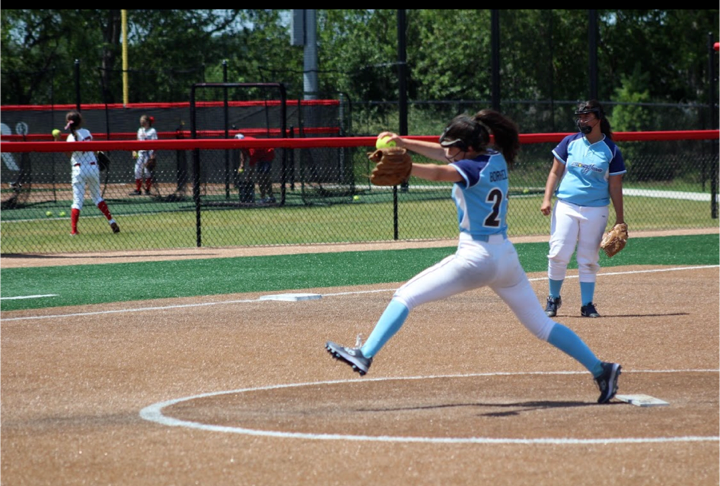
Right now we are coming up on what is probably the toughest time of the year in fastpitch softball – tryout season.
While the current playing season hasn’t quite concluded yet for most players, the finish line is definitely in sight for most. And that means they need to make a decision about next year, asking the musical question:
In some cases it may be whether a player should make the jump from rec ball to travel ball. In other cases it’s whether to stay with the current team or move to a new one, or whether to play up or stay down. So many decisions!
I’m asked my advice on this a lot, and I usually share it on a one-to-one basis because every situation is a little different. But there are a few common scenarios where I can pretty much make a blanket recommendation.
The biggest one is about seeking out opportunity, especially if you are (or your daughter is) a pitcher. As my headline says, pitchers gotta pitch. You can practice all you want, but the only way you’re going to know if you’re getting better is if you get the opportunity to pitch in games. Not just a few scrub innings here or there, but quality innings.
So let’s look at this typical scenario. (I’m going to say you to keep it simple, but you can also read “your daughter.)
You’re on a team that already has two good, established pitchers who get the bulk of the work. You started pitching a year ago, and while you’ve been working hard you haven’t had much opportunity to show your stuff. The coaches are too afraid they might lose a game with you in the circle.
Odds are that situation isn’t going to get any better next year. It’s probably time for you to seek your fortunes elsewhere, even if it’s with a team that isn’t as good overall, or isn’t as likely to win as many games as your current team.
What you need right now are game innings. So what if the team doesn’t play great defense and you take some losses. What you want is the opportunity to get in the circle, make yourself better, and see if you can make the team better to boot. Now, if you improve and the team doesn’t, next year will probably be a different story. But for now, your best bet is to go where the opportunity is.
Another tough one is whether a 10U pitcher should move up when her team goes to 12U or stay down at 10U. There’s no single answer for this one. If you’re rocking it at 10U, you can probably move up to the next level no problem. Especially if you’re a bigger 10U player. A smaller one might have trouble adjusting to the larger ball and extra five feet of pitching distance.
On the other hand, if you’re a developing 10U pitcher who hasn’t had much circle time, the jump to 12U might be pretty rough. If you get rocked a couple of times at 12U that might be the end of your pitching career. My recommendation in general would be to stay down, get a chance to dominate and build some confidence first. It will help ease the transition.
What about going from rec ball to travel ball? That can be a pretty big (and eye-opening) jump. To me, this is more about general attitude toward the game. If softball is primarily a social thing for you, it may not be a good idea. The increased practice and game schedules, even at the lower end of travel ball, might be too much for you.
On the other hand, if you’re a competitive type you’re very likely going to thrive in the travel ball world. You’ll enjoy the harder practices and tougher competition. And you (as well as your parents) will likely make friends for life.
On the other side of the stay/go coin is the desire to win trophies above all else. Yes, there are teams you can go to that will let you clutter your bedroom, and the living room, and the basement with plastic “hardware.” But will they help you become a better player?
Winning teams aren’t always run by great coaches. Sometimes they’re run by a parent who has a very talented daughter (who also has a few talented friends) or they are able to attract very talented, already-formed players and assemble them into a team. The coaches don’t make them better, they just act like NASCAR drivers; the drivers don’t build the cars, they just drive them. Not that it doesn’t take skill to drive a NASCAR vehicle, but it’s a different skillset than getting the car ready for race day.
The point is, you want to know that if you’re not already fully-formed and ready to rock that you will get the training you need to get there. A team that wins less but learns more is probably going to be your better bet.
There are other scenarios as well, but these should form a good start. If you look at what your needs and desires from the game are, you’ll have a lot better idea as where you should be playing next year. Good luck with it!
Oh, and if I missed any scenarios or you have questions, feel free to mention them in the comments below.
Defense can make a fastpitch pitcher look good – or bad
While it may same rather obvious on the surface, after watching the National Pro Fastpitch (NPF) championship game on TV I thought it might be worthwhile to bring it up again. It, of course, being the effect defense has on making a fastpitch pitcher look good or bad.
(By the way, kudos to my hometown team, the Chicago Bandits, for taking the title for the second year in a row.)
Normally at the NPF level you expect to see a lot of dominant pitching. While the pitching was good in this game, I wouldn’t call it dominant. The definition of dominant being a lot of strikeouts or weak infield hits. 
There were some of each, but there were also plenty of balls that got tagged pretty well; all three runs came off of solo home runs.
So in the absence of huge numbers of Ks, it becomes pretty obvious that the other 7 players who are not part of the battery had to step up to keep this a 2-1 game. If you watched the game you certainly saw that.
Which brings me to my point. The game ended 2-1, but the score could have easily been much higher were it not for some spectacular plays on both sides, both in the infield and outfield.
Those defenders made their pitchers look awfully good. And that’s ok, because I really believe the pitcher’s job isn’t to strike everyone out. That’s just fortunate when it happens. Instead, a pitcher’s job is to induce weak contacts that are easy to field.
In other words, the perfect inning isn’t 9 pitches for three Ks. It’s 3 pitches, all easy popups to 1st base so the first baseman can just pick up the ball and step on the bag if she drops it.
So contrast that defensive performance with others I’ve seen or heard about over the years, where the pitcher does her job. But instead of weak grounders or popups resulting in outs, they result in runners on base because of errors or lack of effort on the fielders’ part.
And what happens after a few of those? The coach calls time, heads out to the circle, and replaces the pitcher (who hasn’t made an error yet). It’s clearly not the pitcher’s fault, but I guess it’s easier to replace one pitcher than four defensive players.
So in the stats as well as in live action the pitcher ends up looking bad. Especially if those errors get marked as hits. (Anyone ever seen a box score that showed one error when you know there were at least 6? I sure have, especially in high school games.)
The thing is, having a porous defense doesn’t just have a short-term effect on the team, i.e., losing a game or a tournament. It also has a long-term effect. Because good pitchers don’t want to look bad, or have to work overtime every game to get three outs. So what happens? Good pitchers will leave, and tell other good pitchers why. Then it gets tough to get good pitchers, so the team has to settle for lesser pitchers, who give up more contacts that turn into even more baserunners. Then you’re in the death spiral.
Here’s another way to think of it. What coach would sign up for a tournament where the rules stated certain teams would be given 6 offensive outs per inning while theirs only got 3? You’d have to be crazy to agree to that. But that’s what happens when the team can’t play good defense behind their pitcher. And that makes it tough to win.
So while it’s easy to blame the pitcher, or give too much credit for that matter, the reality is the better your defense is the better your pitching will look. Just ask the world champion Bandits.






 Life in the Fastpitch Lane