Blog Archives
Believe It or Not, It’s Not All About Winning

Can’t believe I have to cover this topic yet again, but recently I’ve heard some stories that show me it’s still important to talk about.
What topic, you ask? The importance of giving young players, particularly those who are 14 years old or less, a chance to develop, even if it means your team’s win-loss record isn’t as sparkly as you and your ego would like.

Take a 10U pitcher who just started taking pitching lessons. She’s starting to get the hang of it, but maybe she just went through a growth spurt and doesn’t quite have full command of her arms and legs yet.
As a result, although she is trying really hard she tends to walk more batters than she gets out. In fact, the last time you put her in she walked 20 batters .
Now you have a decision to make. One option is you decide she’s just not good enough to pitch for your team, you tell her she just doesn’t have what it takes to be a pitcher, and you never put her in again. Because if you do put her in it will be tough for your team to overcome the freebies and win the game.
The other is you encourage her and look for opportunities to put her in (as long as she is continuing to work at it). Maybe you schedule some “friendlies” or scrimmages during the week and commit to giving her at least an inning no matter what. You can even put a run limit on each inning so the damage isn’t too bad.
If she’s a little further along but not quite ready for prime time maybe you put her in during pool play. Or you let her pick up innings when your team is either really far ahead or really far behind.
There are lots of ways to be creative and develop the players who need a little more of it while not driving away the players who are currently further ahead.
The same goes for position players and hitters. When you play scrimmage games, try moving the players who usually see one at bat per game up higher in the lineup so they can gain a little more experience.
Sure, it might cost you a few runs today. But we all know the softball gods are going to bring one of those girls up at a critical time in a game that does mean something and where you have no options but to let them hit. Wouldn’t it be nice to know they have a little more experience and thus a better chance of coming through in the clutch?
Or perhaps it turns out that the girl you keep trying to hide in right field actually is becoming a decent fielder, and by putting her at second base for a couple of innings she starts developing the confidence to become a more important contributor in the future.
That’s the funny thing about working with young players. They all develop at different rates, and some who seem kind of awkward at 9 or 10 years of age turn out to be pretty decent athletes by the time they’re 14 or 15.

You just never know. Take that pitcher who walks 20 hitters that I mentioned earlier.
That’s actually a true story. I’m sure there were “better” pitchers on her team, and it would have been easy for her to get discouraged and quit if no one gave her a chance in a game.
Fortunately, some coach did, which is how Lisa Fernandez eventually came to become a three-time Gold Medal winning Olympian and arguably the greatest female fastpitch player ever.
Yes, winning is more fun than losing. But if you truly are “in it for the girls” (as every promotional piece for every team that has ever come along says) sometimes it’s worth sacrificing a few wins here and there to help ensure ALL of your players develop into the best versions of themselves they can be.
Set your ego aside and find ways to give your players the opportunities they need to learn and grow. They just may surprise you.
Lead photo by Andrea Piacquadio on Pexels.com
Fastpitch Softball Returning to 2028 Olympics

The fastpitch softball world got some great news this week, as our sport will once again be included in the Olympic Games for 2028. I’m sure it comes as no surprise since the games will be held in Los Angeles and the U.S. is essentially home territory for softball.
Still, nothing is ever a given, so I’m glad to see our sport (as people like to say) will be part of the world’s biggest sports showcase. Hopefully we’ll be able to avoid another worldwide pandemic just prior to the Olympics so there can actually be fans in the stands to see the competition and cheer their teams on.
Of course, with every wish comes a curse. In this case, if past patterns hold, it means beginning this year USA Softball will divert nearly all of its attention to putting a team together to compete at the 2028 games and providing all the logistical support that requires.
The result is the youth levels (with the possible exception of the most elite players) as well as the men’s game (yes, for those of you who don’t know there actually still is men’s fastpitch softball too) will receive scant if any attention for the next five years.
Hope I’m wrong. But I wouldn’t bet against it if I were you.
In any case, as we look forward to watching softball return to the Olympics in 2028, here are a few things I’d like to see.
A new crop of players
Let’s be honest: as exciting as it was to see softball in the 2020 Olympics, it also kind of resembled an Old Timer’s game. Many of the marquee players on the top teams had actually participated the last time softball was in the Olympics.

No disrespect to those long-time players. They were and are tremendous athletes, inspirations, and ambassadors for our sport. I salute them all.
But there are many exciting young players who now deserve an opportunity to wear their countries’ jerseys and fulfill their dreams of competing in the most visible softball games in the world. I look forward to getting to know them throughout the games.
Softball actually be part of the Olympics
While technically softball was part of the 2020 games, the reality is the gold medal had already been awarded by the time all the other participants marched in the parade and lit the torch. It was kind of a slap in the face to our sport, in my opinion.
It was like saying, “Ok you can play, but you have to be done before the REAL Olympics begin.”
This time around I hope to see the games integrated into the two or so weeks that the rest of the events occur. Doing so will maximize the audience by bringing in more casual viewers (most people who watched softball in 2020 were us, the die-hard fanatics) and provide a little more validation of our sport’s place on the world stage.
Announcers who actually understand the sport and its nuances
Much as we love to see fastpitch softball on TV in any capacity, a lack of quality in the announcers covering the game can definitely take away from the enjoyment of the broadcast. At least for those of us who live and breathe the sport.
I’m sure it doesn’t bother the casual observer when, say, a high pitch with bullet spin is called a “riseball” when in fact it is just a high fastball. Or that same bullet spin ends up on the outside corner and it’s called a curve even though it didn’t break even an inch off its normal path.
But those of us who love the sport really would like to see a more accurate appraisal of what is going on.
To that point, I personally would like to see a little more honest analysis of what’s happening on the field instead of the boosterism that normally occurs.
If a knowledgeable expert in the booth thinks a team’s strategy is bad, say so! If an error is made because a player lost focus or made a poor decision, call it out.

That’s what the most popular announcers in all sports do. John Madden never hesitated to call out a boneheaded play (or play call) when he was doing NFL games. Bob Uecker made a career out of telling the (mostly) unvarnished truth during games.
That doesn’t mean announcers need to be hyper critical. But they don’t have to have the Pollyannaish approach we typically hear either.
If announcers call ’em like the see ’em, and make sure to do their homework so they really know what they’re talking about, I think it will be a better, more credible experience for everyone.
The USA change its offensive philosophy
Obviously this one is specific to my favorite team, and the host team, but the offensive approach in the 2020 games was a disaster. Mostly because it seemed to be stuck in the ’80s or ’90s.
It appeared to me that the starting lineup in 2020 was selected for its defensive prowess, as if the people making the selections were expecting a lot of 1-0 or 2-1 games.
Those days are gone. Better equipment, better skills training, better strength and conditioning, rules changes, and more have made today’s game one where you need to put at least a half dozen runs on the board if you plan to win.
That means no more automatically trying to sac bunt a runner to second when the first batter gets on base. IIRC, the U.S.A. team wasted its best hitter by having her bat in the two position and then automatically bunt when the leadoff hitter got on base.
When she finally got a chance to swing the bat she was putting up extra base hits consistently. Imagine if she had done that with a runner on first and no outs!
Having bats in the lineup also gives you a chance to come back if you fall behind. Playing the short game when you’re down three runs in the fifth inning just punches your ticket out faster.
The selection committee needs to invite players who can flat-out hit, and choose a coaching staff that understands how to let them do what they do best instead of trying to fit them into an outdated model.
A little spectacle
Fastpitch softball is a very fan-friendly sport. Much more so than watching athletes run around a track or chuck heavy objects (not that there’s anything wrong with that).
Let’s treat it that way. One of the things that keeps softball out of the Olympics is that some on the Olympic Committee feel it isn’t universal enough, i.e., viewers in non-softball countries won’t tune in to see it.
Give it a little extra pizzazz in the presentation, with some knowledgeable explanation of what’s happening and an eye toward showing non-softball countries how much fun it is to play, and maybe, just maybe, we won’t have to wait another eight or more years to see softball in the Olympics again.
Olympic rings image by Vusi vilanculos, CC BY-SA 4.0 https://creativecommons.org/licenses/by-sa/4.0, via Wikimedia Commons
Softball Takeaways from Simone Biles
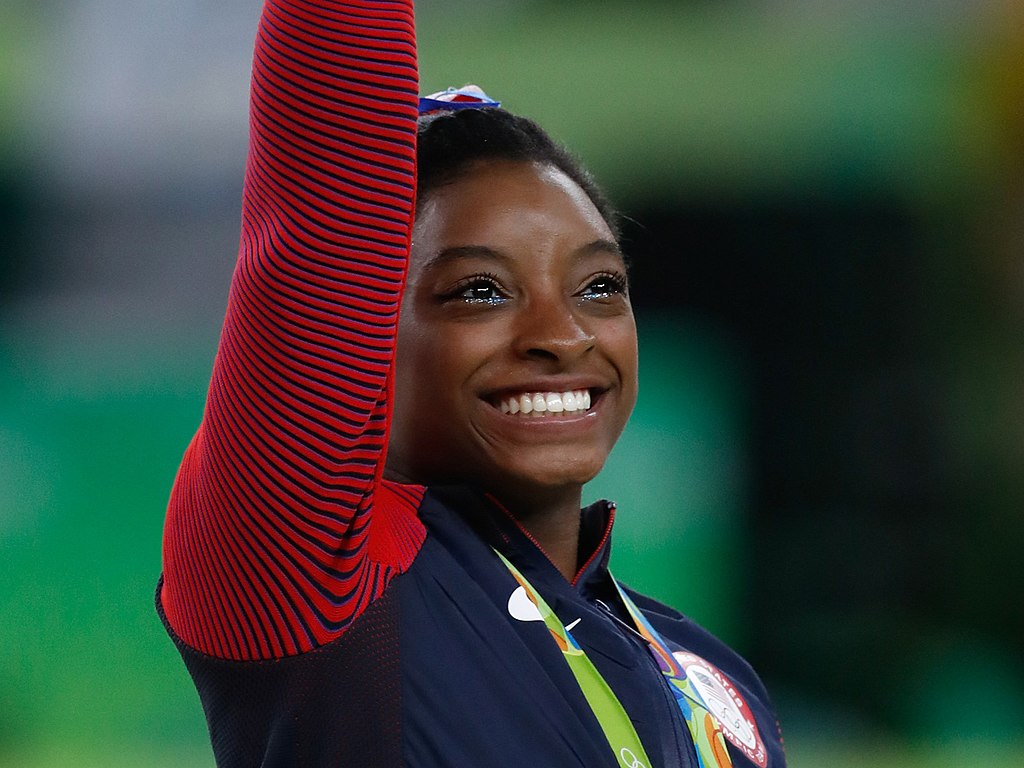
While the return of fastpitch softball to the Olympics was the big story for many of us who are fanatics for the sport, for the general populace of course one of the biggest stories was gymnast Simone Biles deciding not to compete in the team or most of the individual events. She did, of course, eventually take Bronze on the balance beam which is hardly her signature event.
It’s hard to imagine what a difficult decision that must have been for her. Here she has spent the last five years training for the opportunity to win more medals, presumably Gold medals, in her sport’s biggest showcase.
Yet when the time came something in her just snapped. She knew she couldn’t do it mentally at the level she needed, and that put her at risk of serious injury or perhaps even death given what she had planned to do. After one vault she decided it would be best to withdraw and give someone else a chance instead.
How did she get to that point? Part of it, of course, was relentless training. I doubt she’s taken many days off since she became a serious competitor, and that can take a physical and mental toll on you after a while.
While softball players don’t train at the same intensity or risk level as national team gymnasts (most of them anyway), it is possible to get so caught up in what you’re doing that you forget why you’re doing it. When softball starts to feel like more of a burden than an escape from life’s many real burdens, it’s time to take a little time off.
Another issue Simone Biles faced was a distinct lack of support, especially from people at the highest level of her sport. Those people loved showcasing her to the media to promote their own agendas, but when she told them about irregularities around the training they did their best to brush it under the rug and forget about it.
Parents, if your softball-playing daughter tells you physical or mental abuse is happening, don’t just tell her to suck it up or quit whining. Do all you can to find out if there is any reason to be concerned – even if it might mean losing a scholarship opportunity or being removed from a team that wins all its tournaments.
Your daughter’s safety and mental health are worth more, and not worth trading for any amount of money or plastic trophies. When she says something is wrong, be sure to listen.
Coaches, you have the same responsibility. If your player is suddenly having problems don’t get stuck thinking your job is simply putting a winning team on the field. Take an interest and find out what’s wrong.
Maybe she just has a softball version of the “twisties” and needs some help working through them. She’s lost confidence and needs someone to help her fill her confidence bucket back up.
Maybe she’s in a hitting slump and just needs someone to believe in her. The thing that prolongs most slumps is over-thinking the cause. Help her remember who she is and what she can do, even if it takes a little while. It will be worth the effort.
Or maybe, just maybe, something is going on at home or in her personal life that has her all off-kilter. You caring enough to find out and help her could have a lasting effect on her life that she will remember and appreciate long after she’s left her cleats at home plate.
Finally, when you’re performing at a high level there will always be haters – people who want to tear you down and then delight in your failure. Especially if you’re a female.
Many of the people leveling those criticisms have never put in the effort to do anything at a high level, But they’ll be more than happy to tell you why you’re weak and undeserving because you suddenly feel the pressure you were able to shut out before.
Players, don’t listen to them! Those ignorant couch potatoes know they don’t have the drive or dedication to be like you, so they want to drag you down to be like them.
Do what you need to do to get right in your own head – even if it means stopping for a bit to let it clear. This is the perfect time of year to do that, by the way.
The summer season is over, tryouts are over, and fall ball is still a few weeks away. Go to the beach or the movies or an amusement park. Listen to music all day, or sit and read a book or three. Hang out with friends who you don’t share a uniform with.
In other words, find something else to do with your day. Softball will still be waiting for you when you get back.
Anyone who has watched her career knows Simone Biles is the ultimate competitor. She’s never met a challenge she didn’t take head-on.
So when she says she has the “twisties” and the best way to deal with them is by pulling out of the Olympics it’s worth taking note.
If Simone Biles needs to walk away for a bit, the same can be said for any of us.
Take care of yourself, even if some around you don’t quite understand. Softball will be here when you’re ready. And you just may enjoy and appreciate it a little more.
Simone Biles photo from Agência Brasil Fotografias, CC BY 2.0 https://creativecommons.org/licenses/by/2.0, via Wikimedia Commons
A Few Post-Olympic Thoughts

Last week I wrote about some things to watch for as fastpitch softball made its return to the Olympic stage. If you haven’t read it already you may want to follow the link above and give it a look as it is both insightful and brilliant. Or at least marginally interesting.
Now that the tournament is finished I thought it might be a good idea to see what takeaways we might draw from what actually occurred while it was going on. There are definitely some lessons to be learned.
SPOILER ALERT: This post will refer to outcomes, so if you’re one of the few softball fanatics who have not watched the games and are trying to keep yourself from learning who won until you do, you may want to do that first – or explore other posts here on the blog.
Nice to see softball back in the Olympics
Let’s start with the obvious. After a 13 year absence it was great to see fastpitch softball back in the Olympics in any form.
The Olympic games draw a LOT of eyes and are considered to be a major international event. Yes, you have the Pan Am Games and the World Cup of Softball, but those are essentially “in the family” events. IOW, only softball people are interested in them.
The Olympics, on the other hand, allow people who have no real interest in softball to randomly stumble across them. This is also helped by the fact that they appear on a major network (in this case NBC), even though in reality the games were on offshoot networks rather than NBC proper.
Plus the Olympics have built-prestige of their own despite all the problems and scandals of recent years. It’s great for popularizing the sport and exposing it to new potential fans. Lots of good things about it.
That said…
The tournament format was awful
Really? Five pool play games and then you go straight to the Gold and Bronze Medal games?
I would expect more from a local rec league tournament.
Anyone who knows anything about this sport knows a game can turn on a single hit, a bad bounce, a single throwing error, an umpire’s call, etc. At the highest level the margins are even more razor-thin.
Take the U.S. v Australia game. It was won by one fortunate, well-timed hit by the U.S. It could have easily gone the other way.
We also know teams can bounce back from a bad or unfortunate game to come back and take it all.
It should have been a double elimination tournament. I’m sure there were financial reasons it wasn’t, but the format they had made it look like the International Olympic Committee (IOC) just caved to pressure and let it in with the minimal effort possible. Softball was the red-headed stepchild of these Olympics.
This is further evidenced by the fact that half of the pool play occurred BEFORE the opening ceremonies, which most people consider to be the beginning of the Olympics. Which means they were less likely to stumble into the games on TV.
If you wanted to “prove” that not enough people are interested in softball to include it in the future, this was the way to do it.
The U.S. Team’s Offensive Plan Was Poor
If the goal was to prove that softball is an international sport and the U.S. doesn’t dominate it anymore, then mission accomplished. If the goal was to put together a team and a game plan to keep U.S. scoring to the minimum required to get into the Gold Medal game, then well done.
Yes, I realize the pitching is the best in the world (at least in theory), and great pitching beats great hitting. But other teams didn’t seem to have as much trouble scoring runs against each other.
Yet the U.S. managed a measly nine (9) runs in six (count ’em 6) games, and no more than two (2) in any single game. That’s pathetic.
I’m guessing part of that strategy was to support dominating pitchers with the best defense they could, then count on being able to scratch a couple of runs together to win 1-0 or 2-1. So forget worrying about finding big hitters and just get defensive stars.
The problem with that is it’s not 1996 anymore. Softball players work harder these days at hitting overall, and the bat technology is way better than when the Louisville burgundy bottle bat was THE bat to have. You wouldn’t use that in practice now.
A game can turn on a single swing, and if you get behind by a couple of runs early it can be tough to come back if you don’t have players who can hit the gaps for extra bases. As the U.S. found out in the Gold Medal game.
Then there was the offensive philosophy, which was incredibly predictable. As soon as the U.S. got a runner on first, the next hitter up was required to sacrifice bunt. Every. Stinking. Time.
That meant that a hitter like Jamie Reed, who tripled in the first inning of the Gold Medal game against the worlds best pitcher, spent most of the tournament laying down bunts instead of trying to drive runs in.
Even a fly ball to the fence could have advanced the runner on first as effectively as a bunt, with the added benefit that it might hit the fence or go over, resulting in a better offensive position.
I haven’t seen the stats, but to the best of my recollection the number of runs that were manufactured by sacrifice bunts was zero. In the meantime, the U.S. gave up a whole bunch of outs that might have come in handy later in the game.
Yes, I am prejudiced against the sac bunt anyway, and have been for a long time. It’s a waste in most cases. This just proved the point.
The other downside of being so predictable was that opposing teams, Japan in particular, could just sit on it and use it to their advantage. Like by pulling the corners in and pulling off a double play against a sac bunt.
Keep in mind the U.S. win against Japan in pool play came off a home run. They needed more of that.
Especially since, according to the announcers, Japan has spent the last few years trying to put MORE offensive firepower into their game. If Japan is your Gold Standard (no pun intended) the U.S. may want to look for players who can bang the ball – and then let them do it.
The defense was unreal
In my last post I talked about watching the speed of the game. These games did not disappoint.
The defense across the board was incredible. So many great plays by so many players on all teams. That is an aspect everyone got right.
The whole thing looked like an old timer’s game
Perhaps the oddest thing about these Olympics were how old many of the players were. Especially in the circle.
Monica and Cat for the U.S. are both mid- to late-30s. Yukiko Ueno is 39. Team Canada had several recognizable names from the past. All of them played in the last Olympic games.
It’s almost as if the people in charge felt they owed it to these players to let them play in one more Olympics. Not that they didn’t perform – they did.
But in a sports culture obsessed with youth it’s hard to believe there weren’t younger players who could have done just as well. Have we done such a poor job of training the next generation that the last generation had to step in? Or were they just trying to go with glory names from the past?
The problem with that is you lose the younger audience who didn’t grow up watching Cat and Monica and the others dominate the sport. I think a lot of younger fans want to see the names they’ve been watching in the Women’s College World Series – players they know and can relate to.
In my very informal survey of my students, most did not watch the Olympics. They had little interest. If you can’t get current players to watch the game played at that level how are you going to grow softball as a spectator sport?
From a marketing standpoint it’s time to leave the past behind and start focusing on the future. We apparently have eight years to get it right. Let’s do it.
It was essentially an American tournament
For those who still complain about U.S. dominance of the sport, they do have a point. Despite the different names on the jerseys, many of the players – especially for Italy, Canada and Mexico – were either U.S. citizens or played college ball in the U.S.
I think that was less true for Australia, but I believe they had a few too.
About the only team that wasn’t made in America essentially was Team Japan.
It’s great that more deserving players get an opportunity to play in the Olympics by going with teams representing their heritage instead of where they were born and/or raised. But if softball is going to become a permanent part of the Olympics we need more locally raised players for these teams.
Especially the European teams, because their Olympic Committees hold a lot of sway over how the Olympics are run.
Hopefully softball can generate enough publicity to get girls in these countries interested in playing softball at a high level against each other as well as against U.S. players. I guess we’ll see.
So there you have it – a few of my observations. Now it’s your turn.
Did you watch? If so, what did you think? Leave your observations in the comments below.
What to Watch for In the Olympic Softball Games
As you may have possibly heard as a fastpitch softball fanatic, our sport is back in the Olympics for the first time since 2008! This is a rare moment to watch the best players in the world compete on a huge stage with presentation budget of a major network production.
It’s also the last time for the next eight years as the sport is not included in the 2024 Paris Olympics. It is expected to return in 2028 and 2032 when the games flip to the U.S. and Australia. Who knows what will happen after that?
So since this is such an unusual opportunity you’ll want to make the most of it. Not just to sit back and enjoy the games (although that’s great) but also to learn all you can while you have the opportunity.
So to help with that, here are a few pointers on some things to pay closer attention to. The Speed of Play.
The Speed of Play
I’m not talking about pitch speeds, although they are incredible too. I’m talking about what happens when a ball is put in play.
Look at what happens on a ground ball. It is scooped up and on its way to first in a “blink and you’ll miss it” fashion. There is no double-clutching, no calmly standing up and then casually firing it over. It’s there and gone.
Or look at the baserunners. Even the ones you would think are more powerful than fleet are incredibly fast. If a ball is hit between two fielders in the outfield there’s a good chance the runner on first is going to third. Bobble it at all and she’s heading for home.
Everything is amazingly fast. If you want to know what to work on in your/your daughter’s/you players’ games, work on that.
For example, don’t just hit them ground balls. Run a stopwatch and challenge them to make the play in less than three seconds. I find blowing an air horn when the stopwatch hits three seconds provides a pretty good indicator of whether they were successful enough.
Work on just pure running too. I know most people get into softball because they don’t like all the running in other sports, but it’s something that does need to be addressed.
While you can’t make everyone fast you can help them get faster. The faster your team is the more pressure it puts on the defense and the more runs you can score when you need them.
Here you can start by making sure your players are running on their toes instead of heels or flat feet. Then do a lot of short, quick sprints.
Run down a hill. Have two or more players run against each other, perhaps letting one player start in front of the other. Have them play tag around the basepaths. Anything to get the feet and arms moving faster.
Watch the Pitching Mechanics
The coverage I have seen so far has been amazing at showing pitching mechanics. We are getting great closeup shots of what is happening at release on great pitchers such as Cat Osterman, Monica Abbott, and Yukiko Ueno.
Notice how close they are to their bodies at release, to the point where their forearms brush against their hips. Note how on a curve ball the hand kind of wraps around the back hip instead of being out and away.
Watch how they release the ball with a smooth, whipping motion. Note that they are vertical or leaning slightly back instead of being bent forward.
Also watch how they seem to glide on their back leg, like they’re riding a skateboard, until the front foot lands. Then they go into whip and release.
While you’re watching that, also note that they don’t drag their back legs behind them like zombies. The leg stays under them, which is what allows that skateboard-like movement.
It’s really a Master Class on pitching, happening pitch after pitch.
Listen to the Communication
With no crowd noise to speak of you can hear what’s going on down on the field more clearly. While at first you may list to the description of the play, maybe watch a second time and listen to what’s happening on the field.
They’re not down there keeping to themselves. Those players are communicating.
They’re talking before the play to make sure everyone knows their responsibilities. They’re talking during the play to help direct throws and avoid confusion. And they’re talking afterward to clean up any issues and pick up their teammates if something went wrong.
The more you communicate the better you’ll play as a team. Learn from the best.
What Happens Away from the Ball
The initial camera work is going to follow the ball. That makes sense because that’s where the main action is.
But during replays from other angles, look at what other players are doing. Who is backing up at a base? What is the right fielder doing on a throw from center to third?
If there is a steal or a bunt, who is fielding it and what are the other players doing?
For example, with a runner on first, if the third baseman fields the ball who goes to cover third in her place when the ball is bunted? Is it the shortstop, leaving second uncovered?
Unlikely since they may want to go for the lead runner. So is it the catcher? Pitcher? Left fielder?
The more you see how Olympic teams operate in particular situations the better idea you’ll have of what your team/daughter should be doing. Or at least learning.
How Tough Hitting Is Against Great Pitching
So far there hasn’t been a ton of offense in most of the games. That’s to be expected with such great pitchers.
Maybe it will change as the tournament goes on and the hitters get used to the high level of pitching they’re seeing. But right now it does demonstrate how challenging hitting can be – even for the best players in the world.
That’s something to keep in mind when your daughter goes 0 for 8 on a Saturday, or your team hits a collective .225. No matter how hard you work, a lot of good things have to happen to succeed at hitting.
That said, practicing properly (and often) gives you your best chance to succeed. Each of the players you’re watching works incredibly hard to do what she does.
Imagine where those hitters would be without all that hard work.
Softball is a game built on failure. It’s those who can push past it who will ultimately succeed.
They Make Mistakes Too
I think this is an important lesson for parents (and some coaches) to learn. These are the very best players in the world, presumably. But at some key moments, usually when their team can afford it the least, you will see a player here or there make an error.
It happens. It’s unfortunate but it does, even to the best. Especially in a pressure situation.
What parents (and some coaches) need to take away from that is these things are going to happen occasionally so you can’t freak out or get down on your daughter/player or scream at her in a way that makes her feel bad about herself.
This applies not to just physical errors but mental errors. If you’re a coach, make the correction in a non-judgmental way and move on. Believe me, she didn’t do it just to make you look bad or ruin your day.
If you’re a parent, be supportive. She’s probably already feeling horrible about it. Instead of making it worse help her learn from the experience so she doesn’t repeat it.
Realizing even the best players in the world make mistakes now and then will help you enjoy your daughter’s/players’ playing more and avoid turning one bad play into a bad inning – or a bad game.
Anyway, those are a few of the things I think you should be watching for as you enjoy softball in the Olympics. Any other thoughts? Leave them in the comments below,
Photo by Anthony on Pexels.com
Softball back in for the 2020 Olympics
Just saw the news that softball (and baseball) have officially been voted back in for the 2020 Olympics. Not too surprised given where they will be held.
Japan is as fanatical about fastpitch softball as the U.S. – maybe more. And they have a gold medal to defend, despite the fact that it’s likely most of the players on that last team probably won’t be on the 2020 team.
I know a lot of people are really ecstatic about it. For me, I’m more “meh.”
Don’t get me wrong. I love watching the games on TV, especially the medal games. It’s exciting to see the best players in the world going head-to-head, and even though the Olympic rings have lost some of their luster it’s still a pretty big stage. And for me personally at least there’s now something interesting to watch.
But many of those who are so excited have a belief that having softball in the Olympics will drive participation and give female softball players something to dream about. For whatever it’s worth I disagree.
I don’t think young female softball players, as a whole, care that much about the national team. Just ask any you know who is on the national team right now. You’ll probably get a blank stare. Or ask who was ever on the Olympic team for the U.S. You might get a couple of good guesses, but beyond the high-visibility pitchers most probably won’t know.
When I’m doing lessons I will often ask students if they have heard of this top-level college player or that high-profile pro. Most have not. They just don’t care. They’re more focused on their own performance.
If participation overall is down I don’t think it’s because there was no Olympic team to aspire to. I would say cost is much more of a factor now. It used to be you could join a team and play all summer for around $500. Now it’s more like $1,500 to $2,000 on the low end, and $20,000+ on the high end for a bigtime exposure team that travels around the country.
That puts softball out of the reach of a lot of families, especially in the current economy. They’ll either find a cheaper sport, or they’ll find another activity that doesn’t cost them as much.
As far as the hopes and dreams go, let’s be honest. There are precious few spots on the Olympic roster to being with. You have to be a top-level college player (current or former) to have any hopes of making it (Crystal Bustos excepted).
It may be an incentive for a precious few. And good for them. But for most, reality will likely set in at a young age as they realize they’re not destined to become one of the greatest fastpitch softball players in the U.S.
I’m glad it’s back in, and I’m glad our sport will get more exposure. But is it a game changer? I don’t think so.






 Life in the Fastpitch Lane