Blog Archives
Giving Players the Chance to Work Through Adversity

One of the most common phrases you will hear in all of sports is “player development.” Whether it’s a 10U girls fastpitch softball team coached by volunteers or a multi-billion dollar NFL franchise, everyone likes to talk about how important player development is for the short- and long-term success of the team and the organization.
That is, of course, until somebody makes a mistake or a problem arises. Then all that talk about letting players develop goes out the window as the coach unceremoniously removes said player from the game so the team doesn’t face the unthinkable prospect of possibly losing a game because of that one play.
Yeah, I’m getting a little hyperbolic but it’s to make a larger point: how in the world will players develop when the minute something bad happens they are removed from the situation?
We’ve all heard the phrases “iron sharpens iron,” “steel is forged in heat,” and “diamonds are lumps of coal that stood up to pressure.” But none of those great outcomes happen if you remove the object from the situation the second any stress occurs.

That’s why, if you are actually committed to seeing your players develop, you have to leave them in to face their greatest difficulties or fears, even if it means you might lose a few more games here or there rather than pulling them something starts to go wrong. By giving them a chance to work their way out of a difficult situation, even if they ultimately fail today, you will help them become better-prepared for the next time they face similar pressure.
Take a pitcher, for example. Maybe she is fairly new to pitching, or has been sidelined for a while with an injury.
She starts the game and does ok in the first inning, but then she walks a couple of hitters on 8 or 9 total pitches. Time to pull her, right?
Not necessarily. If you’re in an elimination Sunday game maybe.
But if you’re playing a meaningless weekday friendly, or a showcase where no college coaches are there to see someone specifically, or a pool play game (especially where seeding will be decided by a blind draw) a better strategy for the player and the team might be to go out and talk to her, try to reinforce her confidence, then leave her in there to try to work her way out of the situation.
She just might surprise you. And even if she doesn’t, who cares?

Losing that game doesn’t really affect anything but your ego around your team’s record. But giving that pitcher a chance to work her way through difficulty might be just the boost she needs to help her contribute more to the team down the road.
After all, pitchers need innings if they’re going to be effective. Taking them out of the game because you panic at the first sign of trouble (or are more worried about wins than giving your players a chance to develop) will just set them back further on their own journeys – and could even cost you players who become great when someone else shows a little more faith.
The same is true for fielders and hitters. If you pull a fielder after one or even two errors rather than giving her a chance to recover she’s not going to learn very much – except that you have no faith in her.
If you constantly DH for a hitter because you don’t want to give up an out, or put in a pinch hitter any time the situation is remotely tense, it’s unlikely she’s going to develop the confidence it takes to swing the bat effectively.
Then, one day when she comes to the plate in a meaningful game where you have no other options, you’ll have no one to blame for her failure but yourself.
Ok, so does this mean I think you should never pull a pitcher or make another substitution? Of course not.
There are times when it has to be done. If you’re in a “win or go home” situation and your pitcher is starting to struggle, you’re probably going to want to look to the bullpen sooner rather than later.
Although even then, if you truly believe in that pitcher, you might consider leaving her in a little longer with the understanding you may not win this lesser tournament in order to make sure she’s ready for a more important one down the road.
Same with the fielder or hitter. If the fielder looks like she’s not mentally focused, or is herself panicking over the error(s), and there is a risk of elimination (or even dropping needlessly into the loser’s bracket), you may have to take her out.
But if you do, don’t just send her to Purgatory. Talk to her, try to reinforce her confidence, and assure her she’ll get more opportunities. Today is just a tough day.
If you have to DH or pinch hit for a hitter, let her know it’s not the end of the world. This particular situation needed a change, but she will have more opportunities to work herself back into the batting lineup, because the change is situational, not permanent.
Then live up to it.
Bottom line is there are times when hard decisions have to be made and players need to come out. But all too many times, coaches are making those decisions for the wrong reasons.
Instead of making a knee jerk decision at the first sign of trouble, give those players an opportunity to face the tough challenges and work their way out of an issue for a little longer than you might be comfortable. You never know when it will be just the thing to spur the creation of your team’s next superstar.
And help you build a reputation as a genius at handling players.
My good friend Jay Bolden and I have started a new podcast called “From the Coach’s Mouth” where we interview coaches from all areas and levels of fastpitch softball as well as others who may not be fastpitch people but have lots of interesting ideas to contribute.
You can find it here on Spotify, as well as on Apple Podcasts, Pandora, Stitcher, iHeart Radio, or wherever you get your podcasts. If you’re searching, be sure to put the name in quotes, i.e., “From the Coach’s Mouth” so it goes directly to it.
Give it a listen and let us know what you think. And be sure to hit the Like button and subscribe to Life in the Fastpitch Lane for more content like this.
Top photo by Kindel Media on Pexels.com
Making Sure You’re Prepared for the Storm

June 1 marked the beginning of the hurricane season on the Atlantic coast of the US according to the National Oceanic and Atmospheric Administration’s (NOAA) National Weather Service. So far so good, as there haven’t been any hurricanes yet, but you know they’re coming – even if you don’t know when.
I bring up this fact because of a conversation Jay Bolden and I had a few months back with Shawnee Harle, a mental toughness coach, on our From the Coach’s Mouth podcast. This link goes to that specific episode, although you’re always free to browse all the content we’ve created to date.
In that episode Shawnee made the statement that even when things are going well athletes must always “prepare for the storm, because the storm is always come.” What an awesome way to approach it, don’t you think? That’s why I thought today why not dig into that analogy a little further?
Think about what is (or at least should be) happening right now along the Gulf of Mexico and the entire Eastern seaboard. So far there hasn’t been much hurricane or even tropical storm activity.
Yet NOAA is predicting a 60% chance of an above-normal hurricane season. If that occurs it means tremendous risk to life, health, and property in the affected areas.
The people in those areas should know by now how bad things can get, so if they’re smart right now they are laying in supplies such as bottled water, non-perishable food (including pet food for those who have pets, or just prefer the taste themselves I suppose), cleaning supplies, toilet paper, batteries, flashlights, candles, and other essential goods that could be in short supply should a hurricane hit their area.
They should also be checking to ensure the bungees they use to tie down outdoor furniture are in good working order, that their plywood is ready to cover the windows, and that other precautions are available and accessible. There isn’t a storm right now to deal with, but they know a storms is inevitable and that they should be fully prepared for when it comes.

The same is true for athletes in general and fastpitch softball players in particular. Fastpitch softball is a game built on failure, designed to break your heart.
Or to paraphrase Billy Bob Thornton in the Bad News Bears remake, “(Softball’s) hard, guys. I mean, it really is. You can love it but, believe me, it don’t always love you back. It’s kind of like dating a German chick, you know?”
Even when things are going great, there’s always a monster lurking around the corner, waiting to take you down. You’re on a hot streak hitting and then suddenly, for no reason, you’re striking out, popping up, and grounding out on a regular basis.
You didn’t change anything in your swing or your approach. The game just decided you needed some humbling.
Or you’re a Gold Glove-level shortstop who one day misses a ground ball on a bad hop and the next thing you know you’re fumbling easy chances or throwing the ball into the parking lot instead of to first base. Things that were once routine are no more, and you end up with the “yips” to the point where you’re hoping the ball goes anywhere on the field except to you.
Or you’re a pitcher who suddenly can’t find the strike zone with her best pitches, and instead of dominating the dish you’re worried about walking or hitting batters. And the more you worry and try to fix it, the worse it gets.
When those or similar things happen – and they do to even the best players – that’s not the time to try to figure out what to do about it.
Instead, you want to prepare in advance for the storm, according to Shawnee. When things are going well, and you’re calm and thinking straight, THAT is the time to start preparing your plan for when things go South on you. Because sooner or later they will, and if you’re not ready you’ll see your mental lawn furniture flying by the window and you’ll be wishing you had some drinking water and at least a few granola bars to get you through the next few days.

Of course, most of us don’t do that. It’s like back pain.
We rarely do any of the stretches or exercises we should to prevent back pain. Instead, we don’t think about it until we suddenly can’t move, then desperately start looking for a chiropractor or massage therapist who can give us instant relief from our months or years of neglect.
By preparing ahead of time you will have a game plan available that you can execute when things start to go bad instead of waiting until you feel like you’re drowning.
For example, most mental game coaches will talk about how you need positive self-talk in a playing crisis so you can chase away the negatives. But it’s hard to come up with anything positive to say when you’re 0-for-the tournament and you’ve made three errors.
You’re far more likely to tell yourself that you stink and to worry incessantly that you’re going to be benched – to the point where it becomes a self-fulfilling prophecy.
But if you start writing down some positive thoughts when you’re on top of the world and tuck them away for when the storm hits, perhaps you’ll be able to push those negative thoughts out and get back on track faster.
Another idea is to create a highlight reel you can use to remind yourself of how good you really are. These days, game clips are all over the place, from parents, family friends, social media, GameChanger and other sources.
Rather than waiting until the storm is battering your psyche and then trying to find some good ones, capture a few and put them together as they happen. That way your highlight reel is just a click away and you can remember what it feels like to be on top of the game instead of under its heel.
You can put together a series of tension-relievers that will help you manage the moment too. Breathing exercises are good; rituals are good; visualization of success is good; techniques such as picking up a clump of infield dirt, squeezing all your fears, anxieties, and negative thoughts into it and then throwing them away is good.
There are lots of ways to gain control over the storm. If you’re not good at it yourself, seek out the help of someone like Shawnee who not only knows what to do but can be a calm, impartial guide who helps you face whatever demons you have and learn how to get rid of them before they take over you brain.
The key is to understand that no matter how good or great you are, the storm is coming – because it’s always coming. Just ask Simone Biles.
What you need to do is face that fact and, just like the people in the Gulf and on the Eastern Seaboard, make sure you’re prepared for that storm long before it hits.
It won’t keep the storm from hitting you. But it will sure help minimize the damage so you can get back to normal as quickly as you can again.
Hurricane photo by Pixabay on Pexels.com
Preparing for the Inevitble Storms

On this week’s episode of the From the Coach’s Mouth podcast, Jay Bolden and I spoke with Shawnee Harle, 2X Olympian with the Canadian Basketball National Team and now a Mental Toughness Coach with her own business called Winning Matters. While Shawnee had a lot of great insights into the mental game, there was one concept in particular that has been on my mind today: preparing for the storm.
Shawnee said that what most athletes and coaches miss is that there is always a storm coming – kind of like Florida during hurricane season. It’s not a question of if, but rather than of when.
Through experience, most people in Florida have learned that when a hurricane is on its way it’s best to put up the plywood over the windows, lock down anything that can be easily lifted (such as patio furniture), and lay in supplies such as food, water, toilet paper, and bandages so they’re ready for when the storm hits.

If it’s not that bad that’s ok – all they lost was a little time and a little storage space for supplies they didn’t need after all (but can use later). If it is bad, however, they have what they need to get through it until the storm passes and things get back to normal.
Unfortunately, many coaches and athletes like to pretend that the storm isn’t going to hit them. “I’ve put in the work,” they say, or “the negatives won’t hit me if I just stay positive.” But that’s a fool’s position.
According to Shawnee, the storm hits everyone sooner or later. Pitchers have a rough outing or two, or suddenly lose their best pitch for no apparent reason. Hitters go into slumps out of nowhere.
Catchers suddenly can’t throw baserunners out or start having pitches they’d normally catch glance off their gloves. Fielders start making fielding errors or sailing balls high instead of throwing to the base.
No one knows why the softball gods suddenly become angry and throw their wrath at a particular player. They just do, and it happens to everyone.
So knowing that, the question is what are you doing to prepare yourself (or your players)? Have you thought about how you’re going to deal with it and get back on track or are you going to allow yourself to get caught by surprise and then try to ride it out?
Now, some coaches will take the “Suck it up buttercup” approach. They see a problem and think if they tell players to “toughen up” or to “get your head in the game” they will solve the problem.

In reality, they will most likely make it worse.
The better approach is to heed the old saying “In times of peace, prepare for war” and start getting your mental game toolkit together before you need it. Just like smart Floridians gather up their supplies ahead of the hurricane rather than during the middle of it.
There are plenty of resources out there that can help you learn how to prepare for the coming storm. A mental toughness coach such as Shawnee is certainly a good one, especially if you’re playing on a bigger stage where the pressure is extreme.
But there are plenty of self-help options out there. The book Heads-Up Baseball: Playing the Game One Pitch at a Time is a great starting point in my opinion. It’s easy to follow, with great exercises that help you learn to control yourself and understand what else you can or cannot control.
There are many other books, videos, and training tools as well, all designed to address the storms that are inevitable in sports as well as in life.
The key, though, is not to wait until you’re facing the storm but to get out ahead of it. You wouldn’t suddenly try to learn how to hit or pitch or perform any other skill in the middle of a season.
You shouldn’t wait until you’re in the middle of a crisis to try to develop the skills you need to get out of one either.
If you polled 1,000 coaches and athletes and asked them how important the mental game is to success, I’d bet the overwhelming majority, like 90%+, would say “very important.” Ask that same 1,000 how much time they spend on it, though, and you’d probably get an answer of 5% of their time or less.
Face the facts: the storm is coming. It might not be today, or even tomorrow, but sooner or later it will hit. Start preparing for it now and you’ll find you’ll get through it faster and stronger.
Surviving “One More” Syndrome

Friends, today we are gathered to address one of the most dreaded issues in all of fastpitch softball practice. Of course, I am talking about “One More” Syndrome.
It’s an issue that affects nearly every player at all levels at one time or another. You may not know it by name, but you know its effect.
There you are, working on hitting, pitching, fielding, or some other skill. You’ve had a very successful session when the coach (or a parent) announces “one more,” as in one more pitch to a hitter, one more ground ball to a fielder, one more rep of a particular pitch.
Suddenly it is as if you’ve never seen a softball before in your life, much less have hit, caught, or thrown one. Whatever skill you were executing with tremendous ability has completely abandoned you, leaving you flapping around the field like a drunken penguin.

This is a topic that came up during a lesson last night with a pitcher named Brooklyn. She was cruising along pretty well working on her changeup when I said, “Ok let’s throw one more” – at which point she totally tanked the pitch.
Brooklyn looked at me, smiled, shrugged, and asked, “What is it about saying one more that makes things go bad?” I had to admit I didn’t know, but it does seem to happen a lot. That’s when we came up with the idea of One More Syndrome.
So what can you do about it? One thing is not to put too much worry into it.
For whatever reason, this seems to be a very common affliction. If it was odd that would be one thing. But it pretty much happens to everyone sooner or later.

If you really want to put a stop to it, though, your best bet is probably just not to think about the fact that it’s the last whatever. Just treat it like one more rep and you’ll most likely be fine.
Worst case, just ask the coach or parent not to announce it’s the last one – at least all the time. That way you can work up to the mental toughness not to be affected so you can keep things moving along quickly.
“One More” syndrome is real. But it doesn’t have to be a terrible issue.
Just laugh about it and get on with your practice. Eventually you’ll get to the point where hearing “let’s do one more” will be just another ordinary phrase.
Keep Pursuing Your Dreams – Even When It’s Tough

This was the scene at a small bar and restaurant in December of 1961. An ambitious but pretty much unknown band arrived for a gig only to discover there were just 18 people in the place.
They could have been discouraged by the lack of attendance, and they could have decided to just hang it up after such a disappointing turnout. But they continued to believe in themselves, and knew that all that work they were putting in at obscure venues with hardly anyone watching would pay off eventually.
Most fastpitch softball players know the feeling. It can be a real grind.
Practicing in freezing cold barns in the winter and hot, smelly barns or outdoors on hot, humid days in the summer. Hours spent in private lessons, then many more hours practicing on your own.
Then you go out to a game and you stink up the field. You strike out at the plate.
You miss your spots as a pitcher or hang a pitch that gets driven toward South America. You boot a routine ground ball and follow it up by throwing the ball into the parking lot, or drop a can of corn fly ball that you should be able to catch with both eyes closed.
You begin to wonder if it’s worth it – all the time spent, all the energy expended, all the heart and soul poured into a game that doesn’t seem to love you back. You think maybe you’d be better served finding something else to do with all those hours and days.
Don’t worry, those feelings actually very normal. It can be difficult to work that hard at something only to see it go bad anyway.
The thing to remember, however, is that failure (or near-failure) is only temporary. It’s also an opportunity to learn and grow.
If you struck out, whether once or every time, figure out why. Was your timing off? Were you dropping your hands and looping your swing (even though you’ve been working on not doing that)?
If you struggled as a pitcher did you focus on your mechanics when you practiced or did you just throw the ball for a prescribed period of time? Did you demand more of your pitches or did you just say “good enough” and move on?
If you had trouble fielding or throwing did you put in extra time or just stick to the minimums?
The reality is whether you do well or not is largely in your own hands. Yes, it helps to have quality coaches and/or quality training, and it certainly doesn’t hurt to be blessed with an abundance of athletic ability. None of those things are within your control.
But what is under your control is your approach to getting better. You can decide how hard you work.
You can decide how you spend your time each day, each practice. You can decide how you will react to things that are outside of your control.
And most of all, you can decide whether you are willing to do the things that are necessary to achieve your dreams or will give up at the first sign of adversity.
My recommendation, of course, is if you love fastpitch softball find a way to fight through the tough times and keep an eye on your goal. Because again, failure is only permanent if you let it be.
You can get better if you want to – and are willing to pay the price. It won’t be easy. But nothing worthwhile ever is.
As for that obscure little band from a rough-and-tumble working class city not exactly known for its contribution to the arts, things definitely did get better for them after that sparsely attended performance on a cold winter’s night in December 1961.
By December the following year they had secured a recording contract and released their first single. It didn’t do especially well but it was a start.
Within another few months they would see their next single reach #1 on the pop charts, and things would keep getting better from there. Eventually they would change the world – more than once.
Here’s a better look at that band from December 1961.

Everyone starts somewhere. The ones who make it are the ones who keep plugging away.
There’s Always Someone Watching

A few weeks ago one of my students pitched in a tournament. The game didn’t go particularly well, she said, as her team lost 8-0.
Not exactly the type of outcome that makes you a legend. So what happened next was very cool.
Her dad ran into the coach of the winning team in one of the common areas, and the coach was very complimentary.
“Your daughter pitched a great game,” the coach said. “What happened on the scoreboard wasn’t her fault. Her team just made too many errors.”
The pitcher’s dad thanked him for the kind words. But then came the shocker.
“Has your daughter committed to a team yet for next year?” the coach asked. “If not, I’d love to offer her a spot on my team.”
Think about that. The opposing team tapped that girl for eight runs and the coach of that team offered her a roster spot right there.
What this proves is a simple fact. As they say in the Ocean’s 11 remake, there’s always someone watching.
What that coach saw, I assume, was not a pitcher who was losing a ballgame but instead a pitcher who was battling to try to keep her team in it, even if the rest of the team was shooting itself in the foot. She didn’t give up, or complain, or do the things many athletes do when things aren’t going their way.
Instead she showed strength of character (as well as quality of performance) to a degree that impressed the coach enough to want her on his team.
That is something every athlete in every sport should keep in mind as they play. It’s easy to be happy or “up” or “fierce” when your team is winning and you’re performing well.

But the ones who really stand out are the players who can do it in the face of adversity – like giving your opponents extra outs on a hot Sunday afternoon. Not because someone might be watching but because that’s who they are.
But the someone watching part is important. It could be, as in this case, the coach of a future travel team who can offer a better opportunity.
It could be the local high school coach checking out the incoming freshmen. It could be a college coach who is looking for the right players to help their team win a conference championship and go to a post-season tournament.
Heck, it might even be a future employer who just happens to be out watching their daughter play ball.
Whoever it is you just never know who might be watching. And who might be very impressed with how you handle yourself when things aren’t going well.
So keep that in mind on your tough days. Instead of sulking, or complaining, or just giving up, keep on playing. Do your best every time no matter how roughly things are going.
Because there’s always someone watching who could make a huge difference in your life.
How Many Lessons Until My Kid Is Awesome?

Today’s blog post was suggested by my friend and fellow pitching coach Shaun Walker of Next Level Softball. Shaun is an incredible pitching coach and an innovative thinker who has opened me up to a whole new world around human movement and how it affects athletic performance at a core level.
Don’t let the West Virginia accent fool you either. He may talk funny (as he says) but you better pay attention when he’s doing it or you will miss something great. (If you’re in the Man, W. Va. area and are interested in quality instruction definitely look him up.)
In any case, Shaun told me about getting contacted by the parent of a prospective student who asked him the question I’m sure is on the minds of many parents: how many lessons will it take? The implied part, of course, is until my daughter is a star.
Wow, talk about a loaded question. As Shaun says, that’s like asking how many licks until you get to the center of a Tootsie Roll Pop. There is no easy answer.
NOTE: While we will be talking about pitching specifically in this post, the principles apply to all skills, all positions, and all sports and activities.
One obvious reason is that different players have different builds, athletic abilities, work ethics, time available to them, levels of experience, practice spaces, levels of mental toughness, and other factors. They are also different ages which factors into it more than many of us might want to admit.
For example, an 8 year old will generally have a very different ability to focus for long periods of time than a 14 year old. That’s just biology.
Sure, there are plenty of distracted 14 years old, and the occasional hyper-focused 8 year old. But for the overall population this is true.
With the result that the 8 year old will be able to pay attention for part of the lesson until the circus in her head takes over whereas the 14 year old should be able to focus for the entire lesson. Particularly if she is personally motivated to learn.

Athletic build is a pretty obvious factor. A big, strong player will likely experience more success early than a scrawny little peanut who is in danger of being blown away by the next strong breeze.
That doesn’t mean it will stay that way forever, though. The peanut will grow and mature, and eventually gain the muscle mass needed – particularly if she works at it – to catch up to her larger peers. With the added benefit her mechanics may be cleaner because they had to be.
But it’s going to take her longer to achieve the same level of success. Again, that darned biology.
This brings us to work ethic, which I’m sure Shaun (and many others) would agree is the greatest X factor of them all.
Take two girls of similar native ability. The only time the first one picks up a ball is when she has a lesson. Or maybe an hour before she has that lesson.
The second one practices diligently. Not just putting in time, but actually working on the things that were assigned to her in her last lesson (whether that was with a live pitching coach, a team coach, a parent, or an online session).
Which one is more likely to advance faster? I think the answer is pretty obvious.
But there is no way the coach being asked “How long will it take” will know these players well enough to make that evaluation before ever working with them.
And even then, the lack of natural athletic ability or comfort with body movement may hold the harder worker back longer — for a while. Eventually, though, that work ethic will overcome just about any obstacle.
Another factor that can contribute is how long it takes to overcome previous bad teaching.
I’ve talked a lot, especially recently, about the benefits of internal rotation (IR) over hello elbow (HE) pitching, especially when it comes to using the body the way it’s designed to work. One of the biggest issues HE generates is teaching pitchers to turn the ball back toward second base, make the arm as straight as possible, and push the ball down the back side of the circle.
When you do that you lose any ability to accelerate (whip) the ball through the release zone, affecting both speed and accuracy. That’s why many pitchers who are taught HE, and do the HE drills, still manage to find their way to some form of IR when they actually pitch.
Still, those ingrained habits can be difficult to break. So a pitcher who has taken lessons for five years from an HE coach may find it takes her longer to unlearn those mechanics and get on the right path than one who has never had instruction before or maybe even who has never pitched.
So again, how long it takes to achieve the results you’re looking for is difficult to predict. It all depends on how long it takes to learn to face the ball forward, maintain a bend in the arm, and accelerate the ball into release by leading the little finger rather than pushing it from behind.
Last but definitely not least is the mental toughness factor. Many of the skills in softball are incredibly difficult to learn, and pitching is certainly no exception.
It can be frustrating, even soul-sucking at times. There will be days when nothing seems to work right, or weeks when it feels like zero progress is being made because the speed on the radar gun isn’t changing or the strike percentages aren’t going up significantly or the spin direction on the ball isn’t what it should be.
Pitchers need to have the mental toughness to accept it and keep working anyway. If they’re learning the right techniques, and practicing diligently, it will happen. As my favorite quote from Remember the Titans says, “It’s like Novocain. Give it time, it always works.”

Those who can hang in there when the going gets tough will see the rewards. Those who can’t will find it difficult to achieve their dreams.
Just like in life.
So how long will it take? As long as it takes.
There are things you can do to shorten the process, but it’s only shortening your process, because we’re all different.
Keep an eye on the prize, understand it’s a marathon, not a sprint, and all those other sports clichés. If you keep at it you will eventually reach the chewy center.
Oh, and if you have a topic you’d like me to address, feel free to suggest it in the comments below. I’m always looking for new ideas that will resonate with your interests and concerns.
Right Now Is A Great Time to Work on the Mental Game

Ask any coach, especially one whose teams play at a high level, how important the mental game is on a scale from one to 10 and you’ll probably get an answer of between eight and 10. Of course if you then follow up by asking them what percentage of practice time they spend working on their team’s mental game, the answer will likely be 10% or less.
Because while everyone will agree the mental game is important, spending practice time fielding ground balls and doing hitting drills, or doing anything physically active, just “feels” more like practice.
Now that Zoom sessions have replaced physical practices in many areas, however, it may be time to re-think what you’re doing. It’s the “making lemonade out of lemons” approach.
When you think about it, Zoom (or whatever communication tool you use) sessions actually lend themselves even better to the mental game than the physical game. With the physical game you have to set up a camera or phone and hope the players stay in range as they move around, doing drills. But with the mental game, most of what you need to do can be accomplished while sitting comfortably in a chair.
For example, you can quiz your team to see how well they understand the rules. The quiz can be an oral quiz on the spot, or you can email a document to all your players, have them fill it out in advance, and then go over the answers on the call. Some technologies even have polling features that can be adapted to a live quiz.
Another way to work the mental game is by doing a screen share of diagramming software such as this one or this one or this one to go over various plays. You can show new plays, or describe the situation and the hit and then ask your players what their responsibilities are.
A Zoom call is also great for helping players learn how to manage stress. There are all kinds of techniques, such as those found in Heads Up Baseball (one of my favorite books on the subject) that you can go over and have your players practice applying. For example, you can teach them the stoplight analogy and how to do it to keep themselves from getting out of control.
Another way to use a Zoom call to good advantage is to have them work on visualization. Studies have shown that visualization can be as powerful as physical practice in helping players improve their physical skills, yet when was the last time you took time out of practice to help your players learn to visualize success? Now you can.
If you need more ideas, just do a quick Internet search on “mental game exercises,” or follow this link to the search I did. There are tons of ideas out there that can help you develop mentally tough players, even from a distance.
Of course, in addition to developing your players’ mental game you can also use Zoom calls to build cohesiveness within the team. There are plenty of games and exercises you can use to help your players get to know each other better and create the sort of bonds that keep high-level teams performing at a high level.
As Steve Martin says in the underrated movie My Blue Heaven, “You guys see a problem. I see an opportunity.”
Take some of those Zoom sessions where you’re struggling to find a way to run a regular practice and focus instead on the mental game. You’ll be amazingly pleased with the results come next spring – or whenever you start playing regularly again.
Photo by Andrea Piacquadio on Pexels.com
Be As Water

Photo by Pixabay on Pexels.com
One of the most well-known pieces of advice from the late, great Bruce Lee was a simple three-word statement: be as water. For those interested in more of what he meant, or who are just wondering who the heck Bruce Lee was, here’s a video:
While Lee’s advice was ostensibly meant to encourage martial artists to give up their old, rigid approach to movement in favor of one that was more free-flowing, I find it’s also great advice for fastpitch softball players. Here are a few examples.
Pitchers
When pitchers want to throw harder, they tend to tighten up their muscles and become very stiff. They also do it when they’re trying to guide the ball to a location (even if it’s just the general strike zone). Yet that’s the worst possible thing to do in each situation.
If you’re trying to gain speed, remember tight muscles are slow muscles. You can swing your arm around much faster if you relax and let it go versus trying to force it around.
Being stiff when trying to gain better control also works against you, and actually makes it more difficult. If you are tight and off-line somewhere in your circle, you will stay there and the ball will go somewhere you don’t want it to.
But if you are loose, a gentle nudge is all it takes to get back on-line. Plus, you have momentum working for you, because if you are loose and using good mechanics (i.e., those that follow the natural way the body moves) it’s a lot easier to follow the natural line.
To improve as a pitcher, be as water.
Hitters
The same things about tight versus loose apply to hitters. If you try to muscle up on the ball you’ll lose the whipping action of the bat into the hitting zone, costing you valuable bat speed.
Being tight also makes it difficult to react and adjust to pitch speeds, spins and locations. A rigid swing will tend to continue going wherever it started to go; a relaxed swing allows you to make adjustments without losing bat speed.
Then there’s the mental aspect. If you are uptight generally (aka in your own head) you are going to be worried about far too many outside factors, such as your last at bat or the fight you had with your mother before the game, to bring your swing thought down to “see ball, hit ball.”
There will be no flow to your swing, just a sort of panicked flail as the ball comes in. You may even start seeing things that aren’t there, or lose your perspective on exactly where the strike zone is. Much can happen.
To improve as a hitter, be as water.
Fielders
As a fielder, you want to be able to move smoothly to the ball. You want your throws to be easy and sure.
That’s going to be tough if you are tight and rigid. The word “flow” is frequently used to describe a great fielder. And what water does.
Being rigid or mechanical in your movements is a sure ticket to many more errors than you should be making. And if you are that way because you are AFRAID of making errors and being pulled out of the game, it only gets worse. Forget about all that.
To improve as a fielder, be as water.
Approach to the Game
Perhaps the area Bruce Lee’s advice applied to most is your general approach to the game. In the video, he says that if you pour water into a cup it becomes the cup. If you pour it into a teapot, it becomes the teapot.
Fastpitch softball players need that type of flexibility as well. You may be asked to play a position that isn’t your usual one. You can either resist or go with it.
Yes, playing outfield rather than catcher or shortstop may not be your preference. But if you go with it and prove yourself in the role you were asked to play you are far more likely to get the opportunity to show what you can do in the position you want to play. I’ve seen it happen.
You may not like your coach’s coaching style. Understood – there are some bad coaches out there. But often it’s not a matter of good or bad, it’s just different than you prefer.
Rather than bracing yourself against it like a rock, be as water. Adjust your expectations and get as much as you can out of the experience. Everyone has something to teach – even if it’s just not to be like they are in the future.
You may not be getting the playing time you want or feel you deserve. That may be true. But before you just blame the coach and jump ship, ask yourself if you’re doing all you can do to earn the spot you want.
Are you diving for balls in practice? Are you displaying a positive attitude? Do you go to the weight room, take extra batting practice or bullpen work, ask for one more ground ball if you pooch one in practice, help clean up team equipment at the end of practice or a game, etc.?
Maybe the answer is yes and you’re just not getting a fair shot. It happens. But before you decide that, determine whether you have been trying to shape yourself to the program the way water shapes itself to the cup or wishing the program would shape itself to you.
Final Question
So after all of this, if I were to ask you which is stronger, the rock or the water, what would you answer?
Many would say the rock. Not a bad answer on the surface, because if you place a rock in a stream or river, the water will be forced to go around it.
Over time, however, the water will wear away the rock and any other obstacle in its path until it can once again flow smoothly.
So I ask you again: which is stronger, the rock or the water?
Be as water, my friend.
How To Build A Reputation As A Warrior

Last weekend once I was done with lessons I went out to watch a tournament where some of my students were playing. It was a gorgeous day for softball and I had plenty of time, so clearly life was good that day!
I arrived in the middle of a game where one of my students, Ally, was pitching, and she did a masterful job. Which, of course, always makes it fun to watch. I also enjoyed watching a couple of other students, Abby and Kylie, during the game as well.
During that game, though, one of the parents mentioned that another student, Maddy, had been pitching in a game earlier and had taken a hard line drive to her right shin. I learned later she’d thrown roughly two or three pitches, got hit, and had to come out of the game it hurt so bad. (Good incentive, by the way, to keep the ball off the middle of the 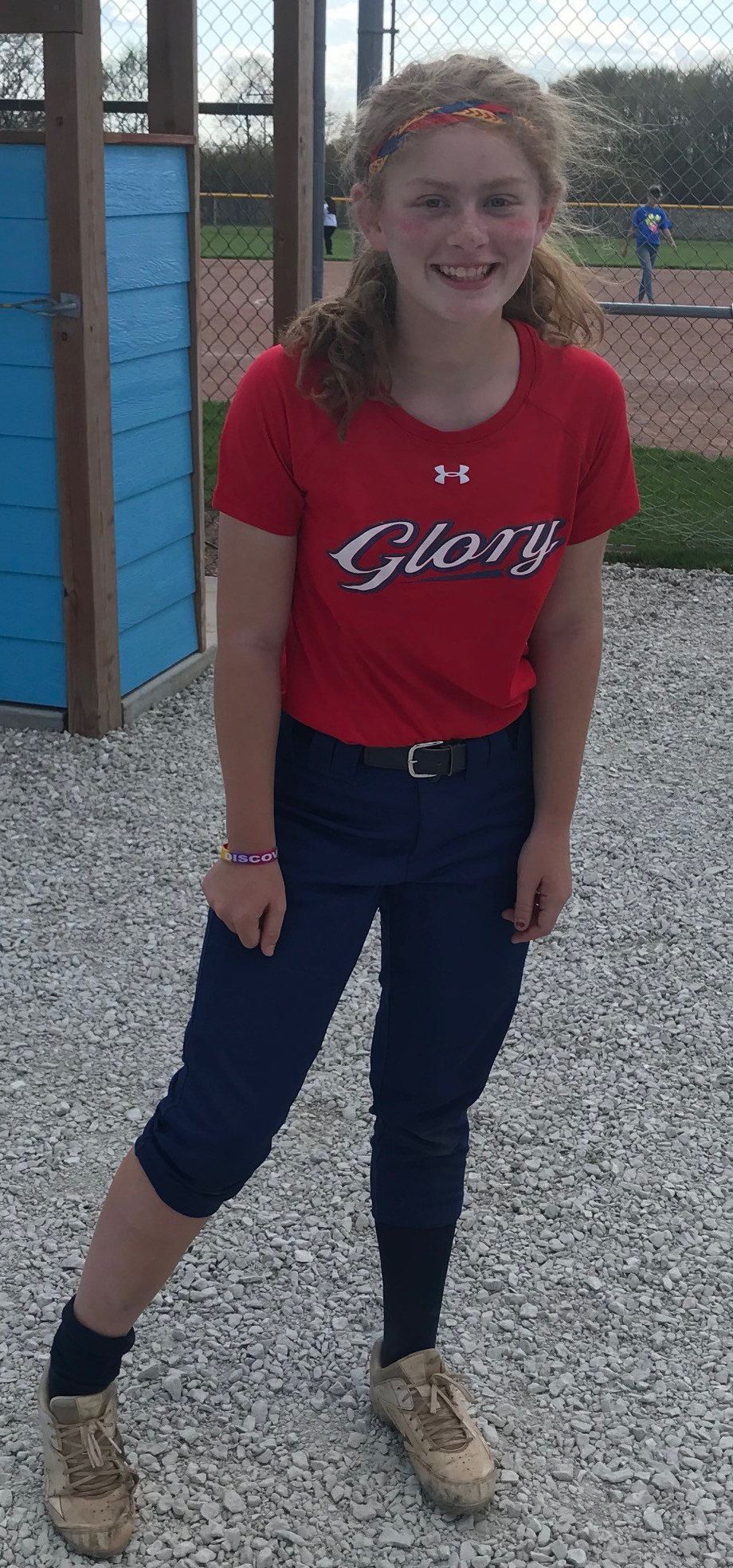 plate.)
Once that game concluded with a win, the next game started up (after some time to re-set the field). Maddy came out to pitch that game, which I was glad to see. It’s not often I get to see two students pitch the same day.
Maddy struggled a bit in the first inning, and her team struggled to field the onslaught of bunts their opponents unleashed on them early-on. They ended up down 6-0 before they ever got a chance to hit.
After that rough start, however, Maddy took control, didn’t give up any more runs, and ended up with 7 Ks over 5 innings as I recall. Gotta love time limits.
While she was pitching, however, I did mention that she looked a bit uncomfortable physically. Nothing major, but if you were paying attention you could see something was not quite right.
After the game (which her team ended up losing, eliminating them) I stuck around to talk to her a bit afterward. That’s when I saw what she had just accomplish.
The poor girl couldn’t put much weight on her right foot. She was limping pretty badly too. What I saw as “kind of uncomfortable” actually turned out to be pretty painful. I actually asked if she needed me to carry her to the car but she just laughed and said no.
That’s how you get a reputation as a warrior, though. It had to be incredibly painful, especially as the game wore on. She also had to be at least a little worried about having it hit again too. I know I would’ve been.
But she just gritted her teeth, said “The team needs me” and gutted it out.
I’m not big on players playing on injuries where they can make things worse. If you sprain your ankle, or pull a muscle, or get a concussion, or do something else that would make it dangerous to your health to continue, don’t.
Sometimes, though, it’s not dangerous, just painful. If you can “rub some dirt on it” as we used to say and fight your way through it, you clearly have ample helpings of mental toughness. And that’s going to serve you well not just in softball, but throughout your life.
And sometimes, parents can be a little quick to try to keep their daughters from experiencing adversity. Luckily, Maddy’s parents aren’t, and gave her the opportunity to show what she can do.
Congrats, Maddy, on a job well done!
Update: Thought I would share this photo of Maddy’s leg from a week later. It reminds me of a saying I saw on a t-shirt once: scars are tattoos with better stories. Although I  expect this one will heal eventually. Still, you could see the knot through her sock. It should probably come with one of those disclaimers they have before TV shows about not being appropriate for younger or more sensitive viewers!






 Life in the Fastpitch Lane