Blog Archives
Losing Doesn’t Build Character – It Reveals It

Today’s post was actually suggested to me by my partner in podcasting Jay Bolden of BeBold Fastpitch. Not sure why he didn’t keep it for himself since he writes some great posts on his own Facebook page, but I will definitely take it. Thanks, buddy!
I think we’d all agree that it’s easy to look like a good coach, and a good person, when your team is winning., because it’s true that winning covers up a lot of other problems. You may be the most clueless coach in the world, but if your team is winning a lot more than it’s losing no one is likely to have any complaints.
That’s understandable. As Nuke LaLoosh says, winning is a lot more fun than losing.

Where you truly see the measure of a coach, however, is when things aren’t going so well. When the team is having a rough season, or maybe just going through a rough patch, how the coach reacts reveals a lot about who he or she really is.
First, let’s talk about how a good coach will or should handle losing, just to do a little level-setting.
No one likes losing. I know I sure don’t, and especially didn’t when I was coaching teams. I was one of those “I hate losing more than I like winning” types.
So with that in mind, you have to look at WHY you’re losing. The first place a good coach will look is in the mirror, asking questions such as:
- Have I been training my team well enough?
- Have I been making good decisions about who is on the field?
- Have I been putting together the most potent batting order, based on facts, not feelings?
- Have my in-game decisions been good ones?
- Are we playing the right level of competition?
- Are our strategies appropriate for the personnel we have?
- Have I built an atmosphere where players are playing with confidence or with fear?
That’s a great starting point. But the truth is you could be doing all the right things and the team is still losing. The softball gods are funny that way, and when you make them angry for some reason you may have to sacrifice a chicken to get back on track.

If you noticed, all of the above had the coach looking inward, at him or herself first, to ensure that the problem isn’t staring him or her in the mirror.
Now let’s talk about what bad coaches do: they blame. They will:
- First and foremost blame their players for not playing well enough or trying hard enough.
- Blame their facilities or their budgets for not giving them enough money to be better.
- Blame the administration for not supporting them.
- Blame the parents (yes, even in college) for expecting too much, or questioning the coach, or I suppose for not having better DNA.
- Blame the umpires for not calling a fair game.
- Blame whoever happens to be out of earshot at the time.
- Blame whoever happens to be in front of him or her.
I’ve heard stories where a coach’s idea of coaching is to essentially yell at her players to “play better.” That’s the sum and total of her advice.
No advice on HOW to play better after a problem, such as stay down on a ground ball, or go for the lead runner first, or you have to look up to see where the ball is before trying for another base, or anything else helpful like that, So it’s no surprise when the same problems keep coming up. Thanks, coach.
We’ve also all seen the coaches who scream at their players, telling them how bad they are after they make a mistake. No attempt to build a positive atmosphere, or encourage them instead of letting them get down on themselves. Just constant berating.
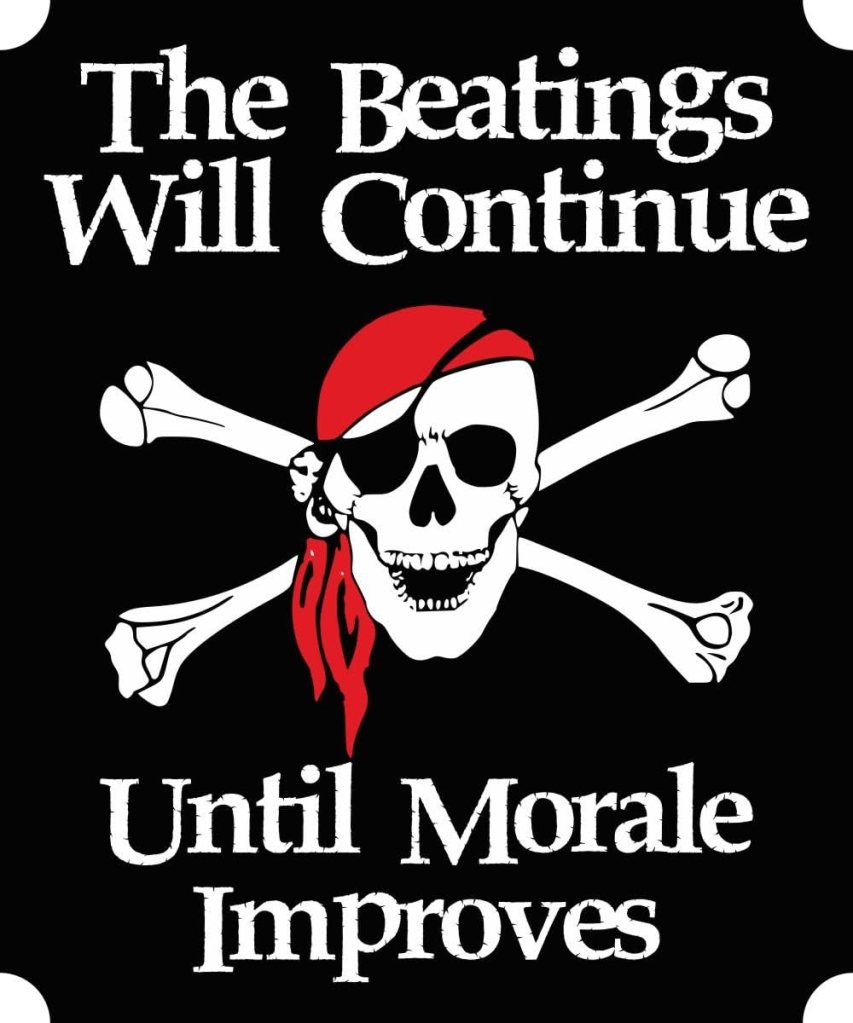
And do things get better? Maybe by luck sometimes. But for the most part, that type of approach is counter-productive for one simple reason: it’s addressing the wrong problem.
Look, no one likes to lose. Some take it harder than others (like me) but no one actually likes it.
So screaming about it or blaming others doesn’t address the core issue. It’s an attempt to cover it up with bluster instead.
So what types of things does losing reveal about a coach’s character? One is their maturity level.
Good coaches will attempt to work the problem and maybe change the atmosphere or the mindset if needed to try to change the outcomes. They will look to support their players, and look for solutions to the problems the team is facing.
Bad coaches will deflect the problems and substitute anger and noise for a thoughtful approach. They don’t know what to do to change things so they throw tantrums in the moment in an attempt, I suppose, to hide their lack of a viable solution.
Losing also reveals their ability to see the larger picture. Good coaches know they will get through the current series of loses, and develop a plan to help expedite that process.
Bad coaches let their emotions take over and focus on the immediate.
Then there’s the worry about what others think of them. Both good and bad coaches will often have that concern. I mean, after all, we all want to be thought of as being good at what we do.
But good coaches understand they have to set those temporary perceptions aside; after all, if all else was the same except for the won-loss record, those people calling for their heads would instead be scheduling a parade.
Good coaches realize they have to separate themselves from the current unfortunate circumstances and think about times when their teams were winning so they can clear their heads and address whatever the causes are. If they truly believe in what they’re doing, and stay true to it, they know the wins will come again.
Bad coaches, on the other hand, will try to cover up their insecurities by directing their anger and blame at others, never stopping to think about the fact that they may need to change what they’re doing or how they’re approaching the team in order to flip the script and back on track. And the more they let those negative thoughts creep in, the worse things are going to get for them.
As we often say, softball is a game filled with failure and adversity. There’s absolutely no reason to think those things will affect you as a coach at some point, or more likely many points, in your coaching career.
How you handle losing when it comes, though, will say a lot about who you are and what you truly believe in. It is entirely a test of character, graded on a pass-fail scale.
Be sure you’re ready to pass that test. Not just for the sake of your players, or your program, but for yourself.

Character Matters for Coaches Too

We often hear about how fastpitch softball players need to be good teammates and people of good character. Coaches will talk about what they look for during tryouts and recruiting beyond skills, and how they need to be able to hold their players to high standards.
But what about the coaches themselves? Shouldn’t being a person of good character matter for them as well?
What brings up this topic is an article my friend Jay Bolden of BeBold Fastpitch, who is a tremendous pitching coach by the way, passed along the other day. It’s one of several great things Jay has shared lately, so if you’re not following him on Facebook you really should.
The article was about a head coach at a D1 college who was recently arrested for shoplifting and possession of a controlled substance without a prescription. What’s really sad is the shoplifting amounted to less than $70, and she only had a couple of the pills in her possession.
Not the amount matters that much for our purposes – right is right and wrong is wrong no matter the scope – but if you’re going to get caught committing an alleged crime that could cost you your job you would think it would be for an amount that would have people say, “I get it.”
Regardless, though, the real issue here is one of character and leadership.
There is more to coaching than than teaching skills, making up lineups, and running plays. Especially when we are talking about youth and amateur sports, which includes college.
The measure of a great coach isn’t just wins and losses, although that aspect is definitely important, particularly in the college ranks. It’s also whether the coach is making a positive impact on those players, helping them become better people who are prepared to live their best lives.
That’s hard to do when you yourself are not exhibiting good character. There’s an old proverb that says a fish rots from the head down.

I have definitely seen that to be true, not just in softball or sports but in the business world as well. Poor leadership and questionable ethics will lead others in the organization to follow their own worst instincts, or at least make decisions that may not be in anyone’s best interests.
Another example of poor leadership is shifting blame to players for poor performance to cover the fact that the coach really doesn’t know what he or she is doing.
I recently heard about a coach complaining that her team wasn’t hitting the ball well enough and wasn’t scoring enough runs. Rather than try to help them solve the root issue(s), however, the coach merely said, “You guys need to hit better. Figure it out.”
How is that helpful? It’s not. It’s just a coach worried that her players’ lack of performance will make HER look bad.

That’s a sign of poor character. Even if the coach doesn’t know what to do technically, she should either bring in someone who does or at least try to bolster her players’ confidence at the plate so they’re not making things worse by tightening up and making poor swing decisions in the hopes that something good will happen (it usually doesn’t).
I think most teams have a code of conduct of some sort that they expect their players to abide by. Coaches should be held to at least that standard, if not a higher one.
Some simple things coaches can do to demonstrate strong character:
- Not smoking, drinking alcohol, or using other substances in the dugout or parking lot, or really anywhere their players are in uniform
- Not playing favorites with certain players; everyone earns their playing time based on merit, even if the coach doesn’t especially like certain players
- Not talking about some players to other players on the team, or to their parents, whether in-person, through direct communication, or on social media
- Not establishing “overly personal” relationships with anyone on the team;
- Enforcing team rules fairly and equally, don’t treat the rules as rules for non-starters and merely suggestions for starters
I remember hearing a great example of this last point being demonstrated several years ago by Mike Candrea, the former head coach at Arizona.
One of his star players broke a team rule a few days before the team was scheduled to play I believe in Regionals. She was seen as critical to the team’s success, and obviously the game they were about to play wasn’t a throw-away game.
Coach Candrea told the player she would not be joining the team on the trip, which may have come as a shock to the player and probably a whole lot of other people. When asked about it he said the rules are the rules, and they apply to everyone.
That had to be hard, especially because if I recall correctly Arizona did end up losing. But Coach Candrea demonstrated to every player on that team that fairness and integrity are (or at least should be) higher priorities than winning, even if the game is “important.”
It takes a lot of character to make that decision. When asked later if he had any regrets about it Coach Candrea emphatically answered, “No.”
That decision set a standard to which we should all aspire. What a tremendous life lesson for his players, and really everyone who has heard that story.
We are all products of our decisions, good and bad. But when you’re a coach you’re not the only one affected by them.
Hopefully whatever drove the coach in the opening story to do what she allegedly did can be overcome with some help and she can make better decisions in the future. But it does create a learning opportunity.
Just as we demand excellence from our players, so must we coaches also set higher expectations for ourselves as well. While it might be tempting to take a shortcut, or cheat a little here or there, or fudge the facts, or pass the blame onto others it’s important to take responsibility and demonstrate the qualities we want our players to exhibit on and off the playing field.
Character matters.
Photo by Anastasiya Gepp on Pexels.com
Recruiting Advice: Remember There’s Always Someone Watching
In the 2001 remake of Ocean’s 11 (not to be confused with the Rat Pack movie from 1960), robbery target Terry Benedict tells Danny Ocean that “In my hotel, someone is always watching.”

Parents and softball players would be wise to remember that statement as they go about the business of attempting to get recruited by the team of their choice. Especially now, since as I write this we are in the midst of “Showcase Season,” the big opportunity for college coaches to watch potential recruits in action.
This lesson was reinforced on a Zoom with a couple of D1 coaches as part of the National Fastpitch Coaches College (NFCC) Course 401. Both coaches said there is far more to who they, and most of their contemporaries, select than just on-field talent.
One of them went on to talk about a player who is the #1 prospect in his state. Yet neither his school or the other major D1 college in his state has extended an offer to her. Why not?
It’s simple. It comes down to character. Not just of the player but of the parents.
I’ve heard many college coaches talk about this. When they go to watch a game they don’t just watch what happens on the field.
They also watch what happens off of it. Like how the parents act during the game and how the player speaks to her parents.
In the former case, college coaches want to steer clear of any parents who seem like they will be “those parents.” You know the ones – nothing is good enough for them, their daughter is always getting shortchanged by the coaches, the umpires are idiots who need to be called out at every opportunity, etc.
If you see them acting this way now there is no reason to think they won’t act this way if their daughter is on the collegiate team. And since the pressure is magnified in college, willingly taking on a major headache doesn’t seem like a good strategy.
Unless they are incredibly desperate, most coaches would rather take a player with a little less talent and a lot less baggage. Especially those who have a wide choice of players, i.e., your Power 25.
As far as player interactions with their parents (as well as coaches and teammates), that can be another huge red flag. Players who speak disrespectfully to their parents are likely to do the same to college coaches. Who needs that?
They’re also more likely to break rules, get into academic trouble, or become a cancer on the team if they don’t get their way. It doesn’t take much to send a season south, so again coaches will quickly write those players off their lists.
So it might seem like the best solution is for parents and players to be on their best behavior when college coaches are around. The problem with that is you don’t always know they’re there.
Sure, some coaches will wear their team shirts and sit right behind the backstop in the “scouting” section. But others will be a whole lot less obtrusive.
The aforementioned coach said he likes to hang in the background and listen. He wants to hear if parents are running down the coach, or constantly questioning strategies or decisions, or putting down other players.
If they’re doing it now, there’s no reason to think they won’t do it if their daughter is playing at that school. Hard pass.
No, the real solution, and I know this will be a shocker for some, is to be people of good character. Parents, be supportive of the whole team. Not because someone is watching but because it’s the right thing to do.
Players, be great teammates. Be the person who picks up others, encourages the girl who made an error or struck out, and does little things like grabbing a bat that gets tossed toward the dugout or picking up garbage in dugout after the game.
Because college coaches notice that stuff too. And they like it.
While this should be an automatic, it’s not. It’s a learned behavior for some. So learn it.
Be a good person on and off the field. Because remember, there’s always someone watching.
Great story about character

For me, one of the best parts about coaching fastpitch softball is the opportunity to meet (and work with) so many girls I would have never otherwise known. Today I’d like to share one of those stories since I think we could all use some good news right about now.
It’s about a wonderful young lady named Emma Borrelli. Emma is an 8th grader, and just one of the nicest and most upbeat people you’ll ever want to meet. I work with her on both pitching and hitting, and it’s always fun because I can say the meanest, most insulting things to her to make a point (all in jest) and she just smiles or laughs. She’s also one of the hardest-working girls I’ve ever worked with.
Anyway, her dad Mike forward an email that her homeroom teacher sent to him a few weeks back telling a kind of “under the radar” story that describes her character perfectly.
It seems that in her homeroom class there is a boy with special needs. Every day, on her own, she helps the boy at his locker, walks him to his homeroom, and says goodbye to him after homeroom.
No one asked her to do it. She’s not doing it to try to win an award or add something to player resume. She just does it because she is a good person. Or maybe there’s just something in the name Emma.
What makes this so interesting is that Emma is not an outcast or a fringe kid. From what I understand she is pretty popular in the school, with a large circle of friends. She could easily walk right past this boy and no one would think twice about it.
Yet she passes on hanging out with them before school to be with this boy instead, which her teacher says makes his day.
Sometimes us older folks shake our heads at the younger generation and wonder what’s going to happen when the world is in their hands. Based on what I see and hear about Emma, as well as so many others, the world is going to be just fine. Maybe even better.






 Life in the Fastpitch Lane