Blog Archives
Fastpitch Players: Adopt the Confidence of a Cat
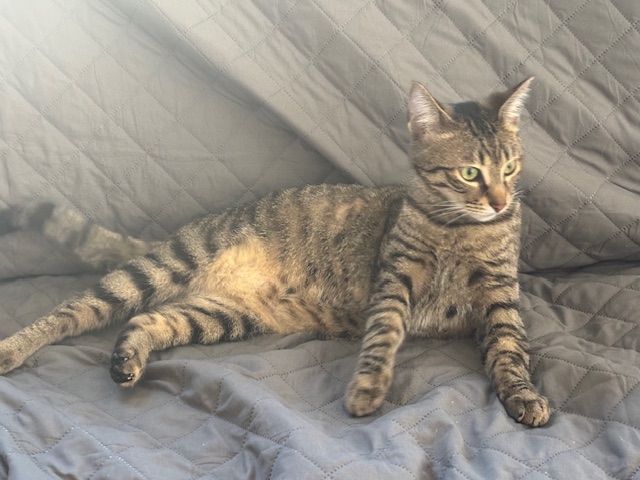
Anyone who has a cat, or who hangs out at the home of someone who has a cat, knows this scenario: The cat is walking along a precarious path, such as the back of a couch or a very thing shelf. Suddenly, the cat loses its footing and lands on the next surface below.
No matter how ridiculous the cat looked when it was falling, or how awkwardly it landed, it will always have the same reaction: it will get up (if it didn’t land on its feet as they usually do), straighten itself out, and look around the room with an expression that says, “I meant to do that.”
Fastpitch softball players can learn a lot from that reaction. All too often, when a player makes a mistake (such as a pitcher sailing a pitch into the backstop or a hitter swinging at a pitch that, um, went sailing into the backstop), the player will react as though she just accidentally published her most private thoughts on her Instagram account.

Once she’s had that reaction it gets into her head. Sometimes it affects the next few pitches or plays; sometimes it affects the rest of the game, the day, or the weekend.
This doesn’t just happen at the youth levels either. College players can suffer from this debilitating reaction as well.
Once it starts it’s hard to stop. And it can also have a ripple effect, especially if it’s a pitcher who does it. The rest of the team usually takes its cue from the pitcher, so if the pitcher is freaking out you can bet that at some level the rest of the team is freaking out as well.
So what to do about it? You have to train it, like anything else.
Because while cats react with a superior air instinctively; athletes generally do not.
Coaches and parents can help their athletes overcome those tendencies by not overreacting themselves. Remember that no one sails a pitch or bobbles a grounder or drops a popup or swings at a bad pitch on purpose.
It just happens. Staying positive in the moment, or at least not going nuclear, can help players move past a mistake faster so one issue doesn’t turn into multiple issues.
Ultimately, though, it’s up to the players themselves to take on this attitude. While it may come naturally to some, most will probably worry too much about letting down their team, their coaches, their parents, as well as looking bad generally.
They have to learn that errors or other miscues happen to everyone, and have to have the confidence to keep going even when they want to shrink or crawl into a hole.
In my opinion this attitude is particularly important for pitchers, because the rest of the team often takes its emotional cues from the girl in the circle. If she gets frustrated, or upset, or off her game in any way, it’s very likely she’ll take most if not all of the team down with her.
Which means the team behind her will under-perform just when she needs them to be better to pick her up.
Anyone in a captain’s or other leadership role also must take on that cat-like attitude. Remember that the characteristic that makes you a leader is that people will follow you. So you have to decide where you want to lead your followers – into a deeper hole or beyond any problems.
Taking on an “I meant to do that” attitude, even when everyone knows they didn’t, will give everyone else the confidence that everything is fine so they can play without fear of failure. Isn’t that the definition of what leaders do?
For those who don’t have access to a cat themselves, the Internet is filled with cat videos that demonstrate this behavior. Check some out and see how they react to the biggest miscues.

Then have your favorite players adopt that attitude for themselves. You’ll be amazed at the difference it makes.
Coaching, Bearded Dragons and Relationship Building

It was yet another oppressively hot, very humid day here in the Midwest – the type we used to associate with Mississippi but now is happening here on a regular basis.
My first lesson of the afternoon, a young 10U pitcher we’ll call Hermione (for reasons that will become obvious shortly), had the look of someone who wanted to be anywhere but a pitching lesson.
“Jump some rope to warm up,” I told her, and she slowly shuffled over to the fence where the rope was hanging before giving it a half-hearted effort. Then she went out to throw with her mom, and could barely get the ball there despite the fact they weren’t more than 15 feet apart.
This was the second time in a row she had come out that way. “Maybe she just doesn’t want to pitch,” I said to her mom. That’s ok, I said, but then no sense torturing her with a lesson.
Mom left it up to Hermione and she said she wanted to do it so we continued – after I talked to her for a few minutes.
“I know it’s hot,” I told her, “but there’s nothing we can do about that. But attitude is a choice. You can choose to put the effort in or not – it’s totally in your control.”
That worked about as well as you’d expect it to work on a 10U player, but we continued anyway.
“She may be tired,” her mom offered. “We went to the zoo yesterday.”
“Really?” I replied, thinking we might have a different way to approach things. “What zoo?” I asked Hermione.
“Mmph,” she said.
“Milwaukee,” her mom added.
“I love the Milwaukee Zoo,” I said to Hermione. “What are your favorite exhibits?”
“Mmph,” she replied again.
Then mom stepped in again. “We went to the small mammals, (something else I don’t remember), and reptiles.”
“Reptiles?” I said. That’s an unusual choice if you’re only seeing three.
“I like reptiles.” Hermione offered.

Aha! An actual response. I dug into it a little more, and then came the turning point. Her mom said the reptile house didn’t have any bearded dragons.
“Oh, you like those?” I asked.
“Yes,” she said with some enthusiasm. “I have a bearded dragon in my room.”
From then on it was like someone flipped a switch. Instead of looking like someone in a hostage video she became quite animated as we talked about beardies in general (that’s what the “in the know” people call them) and hers in particular.
Over the course of the lesson I learned her beardy’s name as Phoenix Firebolt (for Dumbledore’s pet and Harry Potter’s broomstick), which of course meant I also learned she liked Harry Potter. I learned that beardies eat grain and bugs, and that bugs are a lot more expensive than grain.
I learned she liked to dress Phoenix up in costumes, and that Phoenix wasn’t exactly a fan.
“I just have a couple,” she told me. “A lot of people do it all the time.
I also learned she liked to take Phoenix for walks, and that if she took the leash off outside without an adult present Phoenix would try to escape. A lesson discovered the hard way.
Throughout all of this conversation Hermione continued to pitch. Her throws got harder and more accurate.
I would make corrections here or there, but quickly follow that up with a beardy question. The lesson flew by, with Hermione making tremendous progress.
It was a good reminder for me. There is a saying that players don’t care how much you know until they know how much you care.
In other words, your ability as a coach to build a relationship with a player on her terms is critical to your success.
Whether it carries over automatically to next week remains to be seen. But hopefully, at least with this one player, I have a key to unlock her resistance or reluctance and help her enjoy her pitching lessons instead of just enduring them.
That’s the challenge for all coaches. Get to know your players, especially at the younger ages. Find out what floats their boats.
Because if you can establish some common ground there, they just might let you in a little faster to help them become the players they’re meant to be.
Bearded dragon photo by Saketh Upadhya on Pexels.com
First Impressions Aren’t Always Right

Most people have probably heard the old cliche “You never get a second chance to make a first impression.” And while that’s technically true, it doesn’t mean you should always cling to your first impression of a player (or coach for that matter) because you may find there’s more there than is on the surface.
That was my experience recently with a young 12U player named Jazmin. Her mom contacted me after getting a recommendation from the father of a teammate.
She told me Jazmin was brand new to softball, and that she would like to get her some hitting lessons. That alone is pretty interesting.
Usually parents don’t look into lessons until after a few games, or maybe even a couple of seasons, so that fact that she wanted to start with lessons right away was surprising but in a good way. I think she was a little concerned that everything would be so new with her daughter but I reassured her it could be a good thing because she wouldn’t have any bad habits to unlearn.
Then came Saturday morning and the day of our first lesson. Jazmin walked up and right away my Spidey-sense started tingling, because honestly I have seen happier looking faces in a hostage photo.
We started the lesson and things didn’t get any better. She seemed very unhappy to be there and as a result it was a struggle to get her to do anything.
I finally stopped and asked her if she wanted to be there. I wasn’t trying to be mean, I was actually trying to be kind, because there is no sense in making yourself miserable just to do something. That’s what work is for.
She mumbled something or other, which may have been “yes” but meant no. Finally her mom, who had been watching her from behind the backstop, called her over and talked to her for a while. Mom did not like that attitude at all and let her know.
I think we tried going on a little more but nothing had really changed so I suggested we stop about halfway through the scheduled lesson. I told her mom there would be no charge – we tried it, it didn’t work.
But mom asked if we could try again the next Tuesday. I give her a lot of credit for that, by the way. A lot of parents would have just chalked it up to a bad idea and been done with it.
I agreed, a little reluctantly, but told her if we had to stop again I would be charging for that lesson. It was only fair, she agreed.
Then came Tuesday. Admittedly I was a bit concerned about how things would go this time given the last experience, but I was willing to give it one more try.
Mom reminded Jazmin to start by apologizing for her prior attitude, which she did, and from that point on it was like aliens had come to Earth, taken away the Jazmin I’d met on Saturday, and replaced her with a new and improved version.
What I discovered was Jazmin is a blast to teach. She has a great sense of humor, and not only laughs at my jokes but throws a few in on her own too – including a couple of good-natured digs at me, which I appreciate.
She’s been all smiles at every lesson since (we’ve only done a few) and has thrown herself into learning how to hit. We’ve only been working on the tee so far but she is coming right along and should be ready to start front toss in the next lesson or two.
Not bad for a totally inexperienced beginner. Hopefully we have a long instructor/student relationship and someday we will have a good laugh about it when she comes back from her college team for a tune-up.
So that’s the lesson for today. Had I assumed that first impression was all there was to Jazmin I would never have booked the second lesson and I would have missed out on a wonderful new student. That would have been a shame for both of us.
On the other side, players, you need to understand that the first impression you make with a coach at a tryout or a conversation after a game or other event could cause you to miss out on an opportunity.
Sure, you could just be having a bad day (as Jazmin apparently was). But you may not get the chance to correct the coach’s impression later. I was very close to saying “no” to the second lesson because I had serious doubts anything would change. Fortunately I was wrong.
In our hyperspeed world, it’s easy to make quick judgments and move on. But every now and then it’s worth taking a chance that your first impression wasn’t the correct one. You never know what you’ll find on the other side.






 Life in the Fastpitch Lane