Learning v. relearning a pitch
Here’s a phenomenon I’ve seen more than a few times since I started teaching lessons. Sometimes it takes longer for a pitcher to re-learn a pitch that has gone away than it did to learn the pitch originally.
Last year I had a couple of pitchers suddenly lose their curveballs. For no apparent reason they couldn’t couldn’t get the spin, couldn’t get the movement, couldn’t throw the pitch. We went back over all the steps, lesson after lesson, breaking it down. But the result was still the same — very little improvement. It probably took four times as long to get it back as it did to acquire it originally.
Tonight the same thing happened with a pitcher and her changeup. I first taught it to her during a tryout for my team, actually. It took her about five minutes to pick up the basics then. Tonight I was giving her a tune-up and she just couldn’t get it for the longest time. I tried all my usual tricks but they just didn’t seem to work. She finally did get it back, but it was a struggle.
I’m not sure why that happens. Perhaps when it’s new a pitcher is more open to change. But when it goes away, it goes away because the mechanics have deteriorated over time. At that point the “wrong” mechanics have become more ingrained (since she’s been using them) and thus they are tougher to overcome. Even moreso if she’s been successful in spite of the pitch not working at its optimum level, i.e. a changeup that’s too fast or a curveball that is angling in the right direction but not really breaking.
Whatever the reason, it’s probably a good indication of how important it is to be pristine in your practicing or games, lest you take yourself out of a pitch. ‘Cause once you lose the feel, it can be a long, tough road back.
The changeup smells fear
Had this discussion tonight with one of my students. I’d watched her a couple of weeks ago, and at that time it looked to me like she was telegraphing her changeup. The main way was slowing down as she threw it. It got hit most of the time, so I think it was a pretty good bet.
Tonight she and her dad came in, and the priority was the change. It’s a good pitch for her, and it just wasn’t working. I watched her throw one, then told her to try to go faster and throw it harder. That’s all it took. Boom! It was back and better than ever.
This is something I see a lot. Pitchers who are afraid the changeup won’t work tend to hesitate, which throws off the timing. At that point it won’t work, or at least it won’t work well.
That’s why I say the changeup smells fear. If you throw it with fear it won’t work. But if you put those doubts out of your mind and throw it hard, it will treat you right.
Playing the game the way it was meant to be played
I have discussed the case of a young lady named Hillary on the Discuss Fastpitch forum in the past. She is a high school senior who was cut from her high school’s varsity team and placed on the JV team because she had the gall to participate in a school activity other than softball, and thus would miss a couple of early practices while competing with the show choir. This despite the fact that the school traditionally elevates all seniors to varsity regardless of ability, and the fact that she had been a varsity starter last year. Seems like the Principal would want to have a say regarding school organizations working together instead of against each other, but she has not to date.
But that’s the background. Today I want to talk about this young lady and how she has handled this personal slap in the face.
Many (dare I say most?) players probably would have quit, or at least have shown a poor attitude. Not Hillary, though. I had the opportunity to watch her play recently and you would think it was the opportunity of a lifetime for her instead of an embarrassing demotion. She sprinted out to her position (left field) each inning. When she hit the ball she hustled up the baseline. When another hitter put the ball in play, Hillary ran the bases hard and slid hard. She did everything you would’ve asked of any player, and did it with a smile on her face.
Hillary didn’t bother thinking about what had been done to her or how unfair life was. She was there to play ball.
We coaches always talk about how the only two things you can control are yourself and how you react to everything you can’t control. In my opinion, her demotion to JV was a classless act by a self-center, ignorant coach who long ago forgot that the game is about the players, not about him. But Hillary has handled the situation with tremendous class and dignity. She sets an example for all of us, and really lives what most of us only talk about.
Getting into ground ball position
Watch the typical youth player working on fielding ground balls. More often than not, what you’ll see is a bend at the waist, with the arms hanging down like an orangutan and the ball being fielded at the feet.
There are any number of reasons for this poor technique. One is actually some of the coaching we do. We tell our fielders to get their gloves on the ground. So they follow those directions, taking the shortest distance between two points — a straight line. And that straight line is directly below her belt.
What we need to do instead is tell them to lower their hips. When their hips are lowered the glove will also get onto the ground, but a little more forward, forming the point of a triangle. (The feet are the base of the triangle.) Lowering the hips also allows the head to stay up so fielders can watch the ball all the way in — as opposed to bending at the waist, which causes the head to point down.
Try it. Get in the athletic position with the hands in front, then move down by lowering the hips. You’ll be in a much better position to both see and field the ball. And the nice thing is it’s a very specific instruction.
What a little experience and confidence can do
Last night I had one of those experiences that puts your heart in your throat at first, but then makes you glad you’re a coach.
One of my students, a girl named Lauren, told me she pitched again since the last time I’d seen her. (More on that in a minute.) Lauren has been taking lessons for a couple of years but never had much chance to pitch in games. Most of the time it was due to joining teams where they already had established, experienced pitchers, although she missed an opportunity in middle school because she was too shy to speak up and say she pitched.
As anyone who’s coached anything knows, at some point you just have to get in there and do it. This year, on her freshman HS team, Lauren finally got that opportunity. She throws hard, but was having some control trouble in practices that I would attribute to nerves as much as anything. The other pitchers on her team had game experience, but she didn’t have much.
Anyway, I went out to watch one of her games. She was the third pitcher in when her team was blowing out their opponents. She was a little amped up, and a little nervous, and had some trouble. Most of it was throwing high. She was bringing heat — looked to me that she was the fastest on either team — but she gave up a couple of walks early before finally settling down. I was a little worried that a risk-averse coach would decided he didn’t want to take the chance on another outing. Fortunately, that wasn’t true.
She told me she’d actually pitched twice since last week. The first game she got a couple of innings in. She walked a couple to start off, but then settled in and struck out the side, so no harm no foul.
She finally got a start after that. She told me she did well. Her mom, Brenda, however corrected that statement: she pitched a no-hitter. Lauren dismissed it because the team they played didn’t hit very well, but I told her a no-hitter is an accomplishment against anyone. Usually even a bad team has one or two kids who can hit, and even if they don’t some duck snort or ground ball with eyes leaks through.
So that’s very cool. It’s a testament to Lauren and her willingness to stick with it, even in the face of adversity and a lack of opportunity. When the opportunity came, she made the most of it.
By the way, the reason my heart was in my throat was when she started to describe her outings she made it seem like she did poorly. Totally suckered me in with that. I was quite relieved to hear she did well. I fully expect with some experience and confidence in her back pocket that she’s at the start of a long and successful career.
Where can I buy the Book?
Someone please tell me where I can find a copy of the book that says when you get a runner on first you have to bunt her over to second. I have been searching online, especially Amazon.com, but they don’t seem to have it.
I’m assuming there is a book. Every coach I’ve been watching lately seems to do it automatically. Doesn’t matter what the score is, what inning it is, or whether there are no outs or one out. They can’t all be coming to that same conclusion by themselves. There has to be a book that has this requirement in there.
Or could it be they simply don’t have any other ideas. Here’s a suggestion. Let the kids hit now and then. Fake bunt and slap. Fake a slap and steal the base. You increase your chances of scoring a runner from second if you don’t make an out to get her there. It gives you an extra out for something good to happen.
I’m just sayin’.
Screaming doesn’t help
Heard about this one yesterday. It happened at a 14U game on Wednesday. A team with some girls I know (not part of our program, though) went to play a practice game against another team. Practice game, mind you.
According to the person who was there, the coach of the other team was a screamer. He said the coach was screaming at his girls pretty much from the time they hit the parking lot on.
Doesn’t seem like it did him much good. The team with the girls I know beat that team, and beat them pretty handily. From what I heard, the girls on the losing team didn’t have much fun either.
Once again I don’t get it. Why would parents sign their kids up to play with someone who thinks coaching is about beating your players into submission verbally? I’ve found as a general rule that the more the coach screams, the less he or she knows. Often those types of coaches bluster and blow to cover up the fact they are clueless. Some think they know the game, but it becomes pretty obvious that their knowledge is both limited and outdated.
There’s a big world out there. When it comes to travel softball you have a choice. If parents would simply opt out of teams like that, pretty soon those coaches who feel the need to scream won’t have teams and they’ll be rooted out of the game. And everyone will be the better for it — especially the players.
Everybody’s a pitching coach
Had an interesting one last night. One of my students mentioned that her HS coach (freshman level) wants her to use a different grip than the four-seam grip I’ve had her using. He (I think it’s a he) wants her to grip the ball along the runs instead. When I asked her why he wants her to do it to see if she’d been given an explanation she wasn’t sure at first. But then she remembered he’d said it would cause the ball to tail in or out.
All well and good. If you do it right that will work. But getting the ball to move away from the plate has not been the goal so far. Getting it to go where she intends it to go has been the challenge.
You see, although she is in high school she is just now learning to pitch. She’d taken lessons from someone or other a couple of years ago, but had to stop because it was hurting her wrist. (Too much emphasis on a forced wrist snap is my guess.) In any case, she has been taking lessons sporadically for the last three months or so. Most of that time was spent getting her to learn to throw the ball straight rather than having it go way out to the right every time. It was a battle, but she has finally gotten to the point where she can throw it for a strike consistently, and actually pitched a complete game not long ago.
My priority at this point is for her to develop speed to go along with it. It’s not that we haven’t emphasized that or worked toward it, but so far she hasn’t really gotten to the point mentally where she can just let go and throw. She’s still somewhat tentative. It’s getting better, but she can certainly drive her body harder and faster.
So the bottom line is, we’re still working on some fundamental issues. Encouraging her to change her grip to one that is less reliable in its result is only going to set her back, get her frustrated, and discourage her.
What her coach isn’t taking into account by showing this grip he probably heard in a clinic or saw on the Internet is her development level. It’s very important for an inexperienced pitcher to build confidence through success. As she becomes more confident she will go harder and become even more successful. And that means keeping it simple. New pitchers don’t need a lot of variables — like a ball that randomly tails off sometimes. They need to know where the ball is going when they throw it. The two-seam grip is much more appropriate for pitchers who already have good control, not those who are hoping for it.
By the way, this particular girl has a natural drop to her basic fastball. That’s probably more worth pursuing than in and out movement anyway.
So, the windmill pitching motion may not be as safe as everyone thought
A couple of people (including Frank Morelli) pointed me toward this article today from the Chicago Tribune. It’s about a recently completed study performed by a researcher at Chicago’s Rush University Medical Center that looked at the windmill pitching motion and injuries. The results absolutely contradict the prevailing notion that it’s ok for a 12 year old (or a 21 year old) to throw 80 innings in a weekend because the windmill pitching motion is natural and/or safe.
According to the study, it’s not. Dr. Nikhil Verma studied several pitchers, including some from the NPF’s Chicago Bandits, and concluded that the motion itself, particularly with unlimited repetition, can and does cause injuries. The most common is front shoulder pain driven by problems with the biceps tendon. 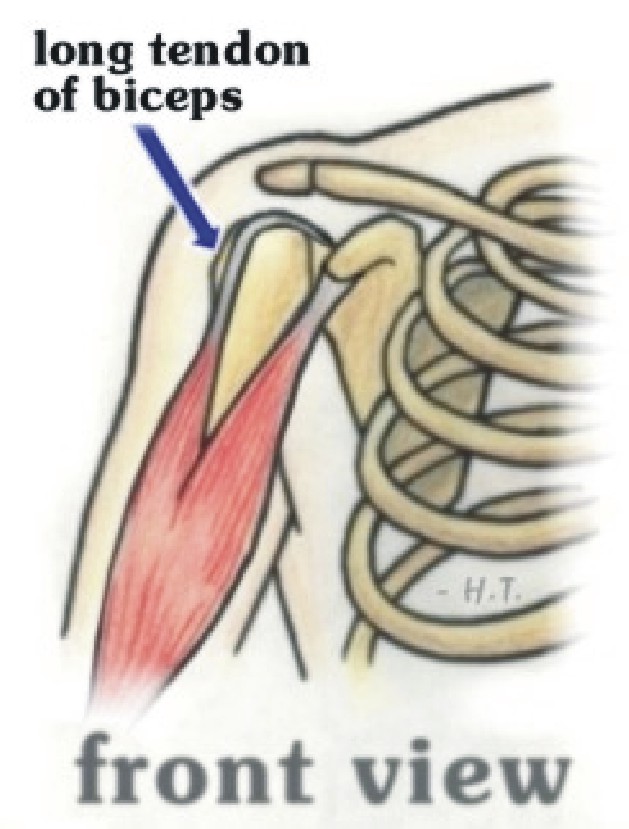
The article does a great job of explaining the study and what it found. I won’t rehash that here. But what I will say is that it’s no surprise. As I’ve said before, any repetitive motion is bound to cause wear and tear on the parts being used. If it didn’t, there wouldn’t be any Carpal Tunnel Syndrome. But that’s pretty common in office workers using a computer mouse. So it stands to reason that a violent, ballistic movement like windmill pitching would also cause damage and pain if repeated over and over. You’d have to be in total denial not to think so.
Every parent of a fastpitch pitcher should reach this article, print out a copy, and keep it handy on tournament weekends. Trophies are nice and all, but they’re not worth ruining a player’s career for, or leaving her with shoulder pain the rest of her life. I don’t care how good a shape you are in, or how gifted you are with good DNA. Repeating the same movements over and over and over, especially over a short period of time, is neither healthy nor smart. If you’re the parent of a 10U or 12U player especially, and your daughter’s coach wants to pitch her four or five games every weekend because “the team needs her” or “she’s our best chance to win,” you may want to rethink your team options.
Although the doctor believes it’s the motion itself that is the issue, I’m not so sure about that. A poor motion, yes. A pitcher who is trying for another two miles an hour by putting her body into an awkward position to get a little extra whip, yes. But a pitcher with good mechanics shouldn’t be in danger unless she simply repeats the motion so much she wears out the body parts involved.
Be smart. And remember: if your daughter pitches her team to glory at the expense of her shoulder this year, the coach will probably just go out and find some other kid to take her place next year. It happens.
More than one way…
Last night one of my students had one of those breakthroughs that make coaching so rewarding. Before I get into the breakthrough, allow me to give you a little background.
Rae Ann is a lefty who has been with me for a few years. Up until this year, I had her throwing a peel drop and a “cut under” curve among other pitches. The drop was ok, although it would often tend to come in a little low. She had good movement on it, though. But she really struggled to get the proper spin on the curve. She just couldn’t quite seem to get the hang of getting her arm into the proper position to get under it.
About halfway through the off-season I suggested we try throwing a curve where the hand comes over the ball instead of under. From what I saw, it seemed like that would work a little better. So we tried it. I told her flat out I didn’t have as much experience with this version, so we’d be learning together. My daughter Stefanie threw that curve when she was pitching, but I never paid much attention to the technique since I was just a bucket dad back then.
The first thing that happened is we wound up switching Rae Ann to a rollover drop. The first time she tried the curve she wound up throwing an awesome drop. It had great movement, very sharp, and came in more at the knees. She’s been throwing that ever since. But we still couldn’t quite get the sideways spin on the curve. We couldn’t really even get a drop curve spin. She pretty much came right over the top of the ball no matter what we tried.
Then last night I had an idea. We slowed down her motion, and I told her to imagine she had four foot long fingernails. Take those fingernails and trace an arc on the ground as she throws. The idea was to help her get around the ball rather than over it.
At first it had a minor effect. But as I let her work through it while I talked to her dad Matt, suddenly it came together. We got both proper spin and movement on the pitch. The cue of tracing the arc had helped her understand and visualize what she needed to do. I tried telling her before to come around the ball, but she didn’t feel it and it never helped. Having something visual, however, did seem to work.
So there you go. As a coach you’re constantly challenged to communicate techniques, ideas and other things to your players. You can’t just settle for what’s worked before. With a little persistence, and a little imagination, there’s always a way. You just have to find it. Expecting players to just “snap to” to what you’re saying is a bad way to go. Work with what they can understand and you’ll see the results.






