Monthly Archives: May 2025
Parent Catchers: Please Take a Seat

Let’s get this out of the way right away: I’m not trying to tell you not to catch for your daughters. That time behind the plate as your daughter is learning to pitch is some of the best time you’ll ever spend with her.
No, I’m talking about the position you’re in as you take your place behind the plate. This advice is based on a phenomenon I’ve noticed over the years, but particularly recently, and especially with younger pitchers just learning control.
Parents who catch for their daughters are colloquially referred to as “bucket dads” or “bucket moms” because of their habit of sitting on a bucket to catch. The term is sometimes used self effacingly when giving advice (“I’m just a bucket dad but I think…”) or as a derogatory term (“if we could just get all the bucket moms to keep quiet…”).

But it turns out, that position on the bucket might just be the best thing for pitchers who are struggling with throwing high.
Over the winter I had a few parents who decided not to use the bucket. But rather than squatting down behind the plate (which can be a challenge for some), they decided to just bend at the waist.
I began to notice that those pitchers were tending to throw high. So, I started asking the parents to either sit on a bucket or squat and whaddya know? All of a sudden pitches that were going high started coming in hot in the strike zone instead.
It makes sense. When a parent (or any catcher) is standing up, the target or focal point of the pitcher’s eyes tend to stay up with it. The eyes are critical to throwing at a target (especially the dominant eye), so if the eyes are being drawn upward due to the catcher’s posture the pitcher will tend to throw high – even if the glove is hanging down.

By squatting or sitting, the pitcher’s eyes are drawn into the strike zone, making it easier for her to throw strikes.
If you have a pitcher who can’t quite seem to bring the ball down or hit low locations while you’re standing up, grab a bucket and give this trick a try. It just might help her build better habits that translate into better results in a game.
My good friend Jay Bolden and I have started a new podcast called “From the Coach’s Mouth” where we interview coaches from all areas and levels of fastpitch softball as well as others who may not be fastpitch people but have lots of interesting ideas to contribute.
You can find it here on Spotify, as well as on Apple Podcasts, Pandora, Stitcher, iHeart Radio, or wherever you get your podcasts. If you’re searching, be sure to put the name in quotes, i.e., “From the Coach’s Mouth” so it goes directly to it.
Give it a listen and let us know what you think. And be sure to hit the Like button and subscribe to Life in the Fastpitch Lane for more content like this.
Product Review: Cimmaron Safety Net and Frame Makes BP Safer
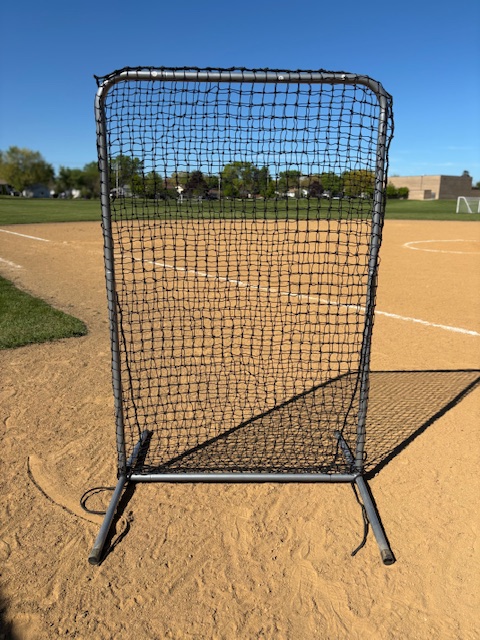
Whenever I see a coach doing front toss at practice from 15 feet away without a net to hide behind, my first thought is always “That coach must not have much faith in him/herself as a hitting coach.”
But the reality is (most of the time anyway) that they would use a screen if they had access to one. Sure, you could try using a Bownet or similar product but the blowback on a hard-hit ball directly into the net would probably negate any value in setting it up.
Effective protection, even from some 10 year olds, requires a much sturdier protective screen – the type you see at high schools, colleges, batting cages, and professional stadiums. The trouble there is your typical youth coach, or even a high school coach who has to practice at an off-campus field, can’t exactly cart around a heavy-duty screen with a heavy-duty net, nor do they have the time to assemble and disassemble it with all the nuts and bolts that are required.
For years I had that problem solved with the old Jugs Snap-Together Screen. It was the perfect solution – a heavy-duty net that slipped over a heavy-duty frame that was easy to put up and take down. The push–in snapping mechanism meant you could slide the pieces together, then have the snaps hold them in place. Then, when it was time to leave the field, I could quickly pull it all apart and put it back in the carrying bag, ready to transport anywhere I needed it.
All good things must come to an end, however, and last fall that screen gave up the ghost. Some of the snaps didn’t work anymore, and the net was beginning to fray, which increased the risk of a hard-hit ball breaking through.
Since Jugs doesn’t offer that product anymore I searched and searched for something similar to replace it, That’s when I came across the Cimmaron 6×4 #42 Safety Net and Screen at Epic Sports.
It’s a little smaller than the Jugs screen was, but it was still big enough to hide behind after throwing a pitch. (One time when it pays to be a little under 6 feet tall.)
The description mentioned a snapping mechanism but there weren’t any closeup photos to show if what they meant and what I thought of were the same. But with no other viable alternatives I figured I’d give it a try and made the purchase.
I’m happy to report it’s everything I hoped it would be.

The 1-1/2 inch steel tubular frame is lightweight yet very strong and confidence-inspiring. The net, made from #42 nylon, has held up well after take some direct hits; I have full confidence in it.
It’s also a little easier to assemble than my old protective screen was, probably because it’s a little smaller than the old one so there are fewer pieces to assemble. There are three pieces that comprise the bottom, two along the sides, and three that form the top and the upper part of the sides.
All parts have a number sticker on them that correspond to the supplied diagram that shows you how to put it together. The first time I did it I had a little trouble figuring out what went where but that was due to operator error.
I didn’t bring the diagram with me to the field, and I then assumed the two pieces that form the top corners worked the same way as the Jugs screen, i.e., the long part goes across the top and the short part goes down to join the side. When that didn’t work it was easy enough to figure out how to put it together properly and it’s been a breeze ever since.

The net is also easy to put on. It has a pillowcase-type of structure – the top and sides are closed while the bottom is open, so you can quickly slip it on and off the assembled frame. There is also a nylon rope at the bottom that allows you to secure the bottom of the net so you don’t catch a hard ground ball to the feet.
Unlike the Jugs net, there is no hole in center to pitch through. That’s ok, though, because I am used to turning L-screens with the tall side to the right and pitching around it, so it’s essentially the same.
It’s even a plus in some ways because a ball with a little tail to it won’t come across the frame, unlike the hole-type where I got clipped a few times with a line drive even though I swear I wasn’t standing in the hole.
The only downside I see to this product is that it doesn’t come with a carrying back. That seems like an oversight given that the quick up-and-down construction makes me think it was designed for portability.
Fortunately I still had the Jugs screen carrying bag so I’m using that. I also tried a speaker stand carrying bag from Sweetwater, which worked ok too. Neither one is quite deep enough to fully close because of the design of the two base pieces, but they are both wide enough and will both work as long as you’re careful getting it in and out of the vehicle.
I’m guessing the manufacturer opted not to offer a bag to keep the price down, but it sure would be nice for one to be offered even if it’s a separately purchased accessory for those of us who need to cart it in and out on a regular basis.
Speaking of price, the Cimmaron protective screen is relative bargain in my opinion. It’s just $179 for the frame and net. When compared to the cost (and time) of a visit to the emergency department or immediate care facility after taking a line drive to the head it’s definitely worth it.
And if you want to add padding around the frame it costs a little more but if your goal is to put it up and take it down the same day it feels to me like you’re better off without the padding.
So if you’re a coach who is pitching front toss with real balls to your team and want to feel a little safer while doing it, check out the Cimmaron 6×4 #42 Safety Net and Frame. In my opinion it’s worth every penny. And yes, I paid for my own.
My good friend Jay Bolden and I have started a new podcast called “From the Coach’s Mouth” where we interview coaches from all areas and levels of fastpitch softball as well as others who may not be fastpitch people but have lots of interesting ideas to contribute.
You can find it here on Spotify, as well as on Apple Podcasts, Pandora, Stitcher, iHeart Radio, or wherever you get your podcasts. If you’re searching, be sure to put the name in quotes, i.e., “From the Coach’s Mouth” so it goes directly to it.
Give it a listen and let us know what you think. And be sure to hit the Like button and subscribe to Life in the Fastpitch Lane for more content like this.
Two Quick Tips to Help with Pitching Accuracy

One of the biggest deterrents to developing quality pitchers for the long haul is emphasizing accuracy over good mechanics in the early years. Yes, it’s tough to watch a young pitcher struggle with control, and it’s really tempting to tell her to just do whatever to get the ball over the plate so she isn’t walking everyone.
But that type of thinking places the emphasis on outcomes instead of the process. And as anyone who has ever taught anyone to be good at anything can you, if you keep your focus on the process the outcomes will take care of themselves.
Still, we’re at the time of the year where accuracy does, in fact, matter a lot. So how do you get your young pitchers to improve their strikes to balls ratio while keeping them focused on the process?
Following are a couple of tricks you can try.
Set up a barrier to block the problem area
This is one of my favorite. In fact, I’ve probably written about it before but it bears repeating here.
Let’s say your pitcher is throwing everything into the dirt in the batter’s box on her throwing side, e.g., a right handed pitcher throwing into the right hand batter’s box consistently.
Set up a hitting screen (or a ball bag or any other solid object) about 20 feet in front of her that allows full access to the plate but nothing more. You want it far enough away that if she hits it the ball won’t bounce right back at her, but close enough that any slight deviations from a good pitch will hit the screen or other object.

Then tell her to throw a pitch without hitting the screen without offering any instruction on how to do it.
At first she may plunk it a few times. She will probably get a little frustrated at first.
But in time (most likely sooner rather than later) her body and her brain will make some tiny adjustments on their own that allow her to get the ball over the plate without putting the object, herself, or her catcher in any danger.
After she does that a couple of times I like to say, “So you can throw the ball over the plate, you just weren’t doing it” or something to that effect as a way of helping them to an “Aha!” moment while keeping it light. But you do you.
Once the pitcher can throw consistently without hitting the screen, remove the screen and let her keep going. I would say 9 times out of 10 she will continue to throw successfully because she has made the adjustments required at a subconscious level.
If she hits one of those 1 out of 10 situations, pull the screen back in and have her work through it again.
I find this method works better than offering external cues such as “step more to your left” or “let go a little later” because the pitcher is able to find what works for her on her own, without a lot of conscious thought. These become internal cues that she can carry with her more easily into a game, and seem to have a more long-lasting effect.
Make sure her dominant/targeting eye can see the target
Each of us has one eye that is more dominant than the other. In ancient days its job was to home in on an enemy or a potential source of food to help the individual with survival.
Today the need isn’t quite so urgent for most of us but the biological reality of it still exists. You can use this fact to your advantage with your pitchers.
You want them to be sure that when they are getting ready to throw the pitch that their dominant eye is hyper-focused on the target. It doesn’t necessarily have to stay there throughout the pitch, but at some point when the brain is making its decision of how to throw the ball you want to use the dominant eye to help the brain understand the target is “here.”
So how do you know which eye is the pitcher’s dominant eye? Here’s a simple method I actually learned when my sons were at a sleepaway camp with the Cub Scouts. The instructors at the BB gun range would check for the dominant/targeting eye to know how the boys should set up to shoot.
Have the pitcher place her hands together in front of her with one overlapping the other to form a small opening in the space between the thumb and first finger on both sides. The opening must be small in order for the rest to work.
Once she has it, have her hold her hands in front of her at arm’s length and look at you through the hole. Whichever eye is looking at you is the dominant eye, I guess because when we can only use one eye we instinctively go to the dominant one.

If the eye is on the glove side there’s very little potential for problems. It will stay in front as the pitcher’s body opens so should have a good view of the target throughout the pitch.
If it’s on the throwing hand side, however, the pitcher will have to take a little more care to make sure that eye can see the target when it’s time to throw since it will be on the back side.
Eventually the pitcher won’t have to look at the target throughout the pitch. Many high-level pitchers look at the ground or the sky as they’re throwing because it helps them do what they need to do, although it’s likely they’ve already set the target with their dominant eye before they even start their motions.
For those who need a little more help, though, reminding the pitcher to use her dominant eye to focus on the target can help her brain and body make the movements that will deliver a better, more accurate pitch.
Keep it natural
Whenever a pitcher struggles to hit her target there will be no lack of suggestions from whoever is around on how to get more accurate. They all mean well, but like the folks who yell “Just throw strikes” as if the pitcher was trying to walk everyone, most of that advice is either unhelpful or can actually stunt that girl’s growth as a pitcher.
Using these two tricks while you’re practicing can help set good habits that carry over into games without interrupting the natural flow of the motion. If you have a pitcher who’s struggling with control, give these ideas a try.
And if you have others, please be sure to share them in the comments.
My good friend Jay Bolden and I have started a new podcast called “From the Coach’s Mouth” where we interview coaches from all areas and levels of fastpitch softball as well as others who may not be fastpitch people but have lots of interesting ideas to contribute.
You can find it here on Spotify, as well as on Apple Podcasts, Pandora, Stitcher, iHeart Radio, or wherever you get your podcasts. If you’re searching, be sure to put the name in quotes, i.e., “From the Coach’s Mouth” so it goes directly to it.
Give it a listen and let us know what you think. And be sure to hit the Like button and subscribe to Life in the Fastpitch Lane for more content like this.
Welcome to the 2025-2026 Season – Wait, What?

A couple of weeks ago as I was busy wasting time scrolling through Facebook I came across something that made me think I must have fallen asleep in front of the TV and not woken up for three months. It was an announcement from a couple of teams about “open workouts” (translation: tryouts) for the 205-2026 season.
“Wait, what?” I thought. I mean, the high school season is still in high gear everywhere high school softball is played in the spring, and travel teams are still working their way through their “shake off the rust” tournaments in preparation for the travel season to begin in earnest.
So why in the name of Carol Hutchins are travel teams already looking for players for the next freaking season??? (You know I’m not happy because I used three question marks instead of one.)
This is just insane. Coaches should be focused right now on the players in front of them and helping each and every one of them reach their potential this season, not out looking for new players so they can unceremoniously dump anyone on their roster they don’t think measures up.
But of course, that’s one of the problems in today’s game. There aren’t as many coaches as there used to be, at least by what I would define as a coach.
Instead, they have been replaced by “managers” who, instead of developing the players they have, are always on the lookout to acquire players someone else has taken the time and effort to coach up. Like Pokemon cards, if you collect enough of those already-baked players you can just throw them on the field and watch them bring home the trophies/rings/banners/whatever is being given away to tournament winners these days.

So now it’s a race to see who can get to those high-level players first.
Now, admittedly, that’s nothing new. I remember when teams used to hold tryouts after the current season was over.
There were always a couple of programs that would try to jump the gun, either by playing in sanctions that ended earlier so they technically were into next season or by holding “special tryouts” maybe a week before their season ended. These organizations would pressure the kids who tried out to make a decision right then and there so they could lock up the talent before anyone else had a chance, although if someone better came along the original offer might be rescinded anyway and then those kids would have to scramble to find a new team.
But even those shenanigans occurred right around the end of the season for everyone.
Now they’re looking for next year’s team while this year’s team is just getting going with their season. And people wonder why players don’t seem to be as loyal to their teams or coaches as they used to be.

In my opinion, and the opinion of a lot of coaches I know whom I respect immensely, the focus during this season should be on helping the players you have now get better rather than finding their replacements. That’s the way to build a winning culture and create a positive experience.
Holding public workouts for next year’s team, before you even know what players or positions you may need, is a sure way to create divisiveness and negativity within the current team. It could even drive some of your current “good” players out because they’re not feeling valued or loved by the organization or the coaching staff.
It’s also a bad idea because you never know who is going to step up during this season and surprise you. If you listen to current high-level college players talk about their early days in the sport, you’ll find many of them were not studs right out of the gate.
Many, in fact, sat the bench a lot (although that’s a travesty in and of itself). Some of the best pitchers today were the #4 or #5 pitcher on their travel teams before they grew, or the mechanics from their lessons kicked in, or someone just gave them a chance to pitch some quality innings and it all came together for them.
It just seems wrong to me for teams and organizations to be ignoring who they have in front of them right now in search of some mythical team for the future. At least if they really believe in the stuff on their website that says they’re “in it for the girls.”
There will be plenty of time for tryouts or other events to convince top talent that they would be better served with a new team that’s “more at their level” than the one they’re on now. I wouldn’t even object so much if you did it right before the end of the season, although don’t be surprised if a few of your “lesser” players on the current team decide not to spend the time and money going to whatever nationals you’re heading to if they’re feeling like you’re planning to cut them once the last out is recorded.
But seeking out new players at the beginning of your primary season? That’s just ludicrous.
Run with the players you have now and help them finish the season better than they started. You just might find you don’t need as many new players as you thought.
Take One More Look Around the Dugout
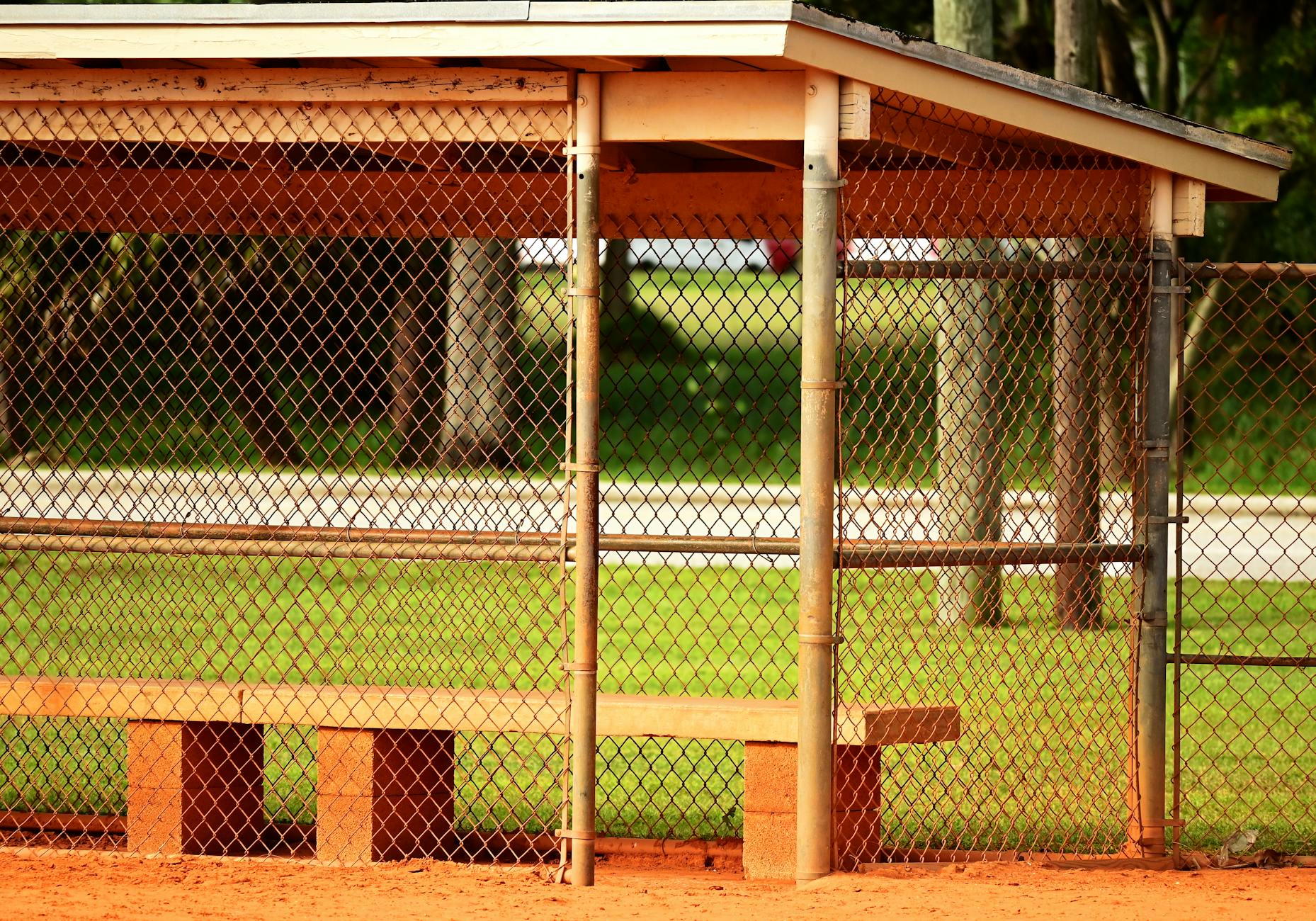
I’m not sure if it’s just human nature or perhaps a cultural thing, but it certainly seems like it’s common for most people to be always looking ahead to the future.
As graduation approaches, high school seniors look forward to starting a new era of freedom in college or their careers; college seniors look forward to starting their first jobs; older adults look forward to their next jobs or even retirement.
Yet at this time of the year, it’s important for players, parents, and coaches who are leaving the sport of fastpitch softball to take one more look around the present to appreciate all the good things that have been a part of the experience for the last several (or many years).
Players and parents can think about the first time those players grabbed a glove or bat, put on a uniform with their team’s name on it, and stood in the dirt.

They probably had no idea about the journey on which they were about to embark; they just knew they were excited to feel the sun on their faces and the breeze in their hair as they stood there waiting for someone to teach them where to go and what to do.
Along the way they made friends and established rivalries – some of them friendly, some of them not so much. At times those friendships and rivalries shifted as they joined different teams or went to different schools.
But always, always, there was the thrill of competition and the quest to get a little bit better so they could feel the thrill of external praise or the inner satisfaction of a job well done.
From those first days where they could barely lift the ball or the bat or take it in the right direction to the days when others marveled at their skill, they kept at it, game after game, week after week, year after year. Sometimes that meant waking up at zero dark thirty in a strange hotel room to get to a distant field, spending 12, 14, 16 hours at the ballpark through chilly, damp, foggy mornings followed by blistering heat followed by cool, damp night air, all in search of a championship trophy, ring, bat, or other memento.
Then, when it was done, making that long car ride home.

Or it meant enduring an uncomfortable, noisy ride in a bus that smelled like sweat socks, stale snacks, and the occasional vomit to play in freezing cold temperatures on rain-soaked or snow-soaked fields for the opportunity to represent their school and perhaps earn a conference title or perhaps a state tournament berth.
On the coaching side there was all the preparation and planning and looking for new drills or new ideas or new techniques that could give your team an edge. There were the unseen hours taking care of a field, planning lineups, reviewing stats, pricing and purchasing equipment, taking part in live or online coaching clinics, all to have every move you made on the field questioned by everyone who hadn’t done any of that.
For the parents it was all the hours spent sitting on a bucket or hitting ground/fly balls or pitching batting practice or chasing after balls that had been hit or driving one child to practice or lessons while trying to manage everything for your other children. Then feeling your breath catch and your blood pressure soar every time your favorite player toed the rubber or had a ball hit to her or stepped up to the plate.
Sometimes it seemed like it would never end. Yet now it has, or is about to.
The last out comes to us all. Some experience it sooner, some experience it later, but we all experience it.
When that final out comes to you, my advice is not to just rush off like it’s another game in a long line of games, because it’s not. It’s the end of a part of your life that was probably pretty important.
Before you pack up, take a little time to look around the dugout and the sidelines and experience as many of the sensations as you can one more time.
The refreshing touch of a cool breeze on a hot, hot late spring or summer day.
The sound of cleats clattering on concrete and scrunching in the dirt as the team goes to take the field. The music of balls popping sharply into gloves or cracking off a bat. Someone yelling “heads up” as you frantically try to avoid being plunked by an errant foul ball from another field. Or the low din of dozens of camp chairs and pop-up tents all being folded up at once.
The smell of hot dogs and hamburgers grilling in the distance, that whiff of a quick afternoon rain shower making its way toward you, or that unmistakable aroma of a new glove or fresh ball. Not to mention the fragrance of freshly mowed grass intertwined with the morning or evening dew, lying like a comfy blanket over the entire area.
Mostly, though, take a moment to remember all the souls that touched yours, and that you in turn touched, along the way.
Some may have been along for the whole journey. Others may have been there for a fleeting moment.
In reality, though, most were only there in your life because you shared a common interest in fastpitch softball. How lucky you were to have spent time with each and every one of them – even the ones you didn’t particularly care for.
Because they all had an impact, large or small, on shaping you into the person you are today.
You will move on to other challenges and adventures happy times and sad times, triumphs and failures. You may even go on to play other sports. I hear pickleball is popular now.
But there will never be anything like the thrill of competing (or watching your child/team compete) for all the marbles on a fastpitch softball team.
Hope you enjoyed it while it was happening. And if you’re not quite to that point, you can also take heed to appreciate it now, in the midst of all the craziness, because one day you’ll miss it all.
To all of those who have played, watched, or coached their final out, or are about to, I salute you. Thanks for your contributions to this great sport, and good luck to you whatever the future brings!
Just remember to take that last look around before you leave. You’ll be glad you savored the moment.
My good friend Jay Bolden and I have started a new podcast called “From the Coach’s Mouth” where we interview coaches from all areas and levels of fastpitch softball as well as others who may not be fastpitch people but have lots of interesting ideas to contribute.
You can find it here on Spotify, as well as on Apple Podcasts, Pandora, Stitcher, iHeart Radio, or wherever you get your podcasts. If you’re searching, be sure to put the name in quotes, i.e., “From the Coach’s Mouth” so it goes directly to it.
Give it a listen and let us know what you think. And be sure to hit the Like button and subscribe to Life in the Fastpitch Lane for more content like this.
Dugout photo by Nelson Axigoth on Pexels.com






 Life in the Fastpitch Lane