Blog Archives
Be Willing to Go Backward to Move Forward
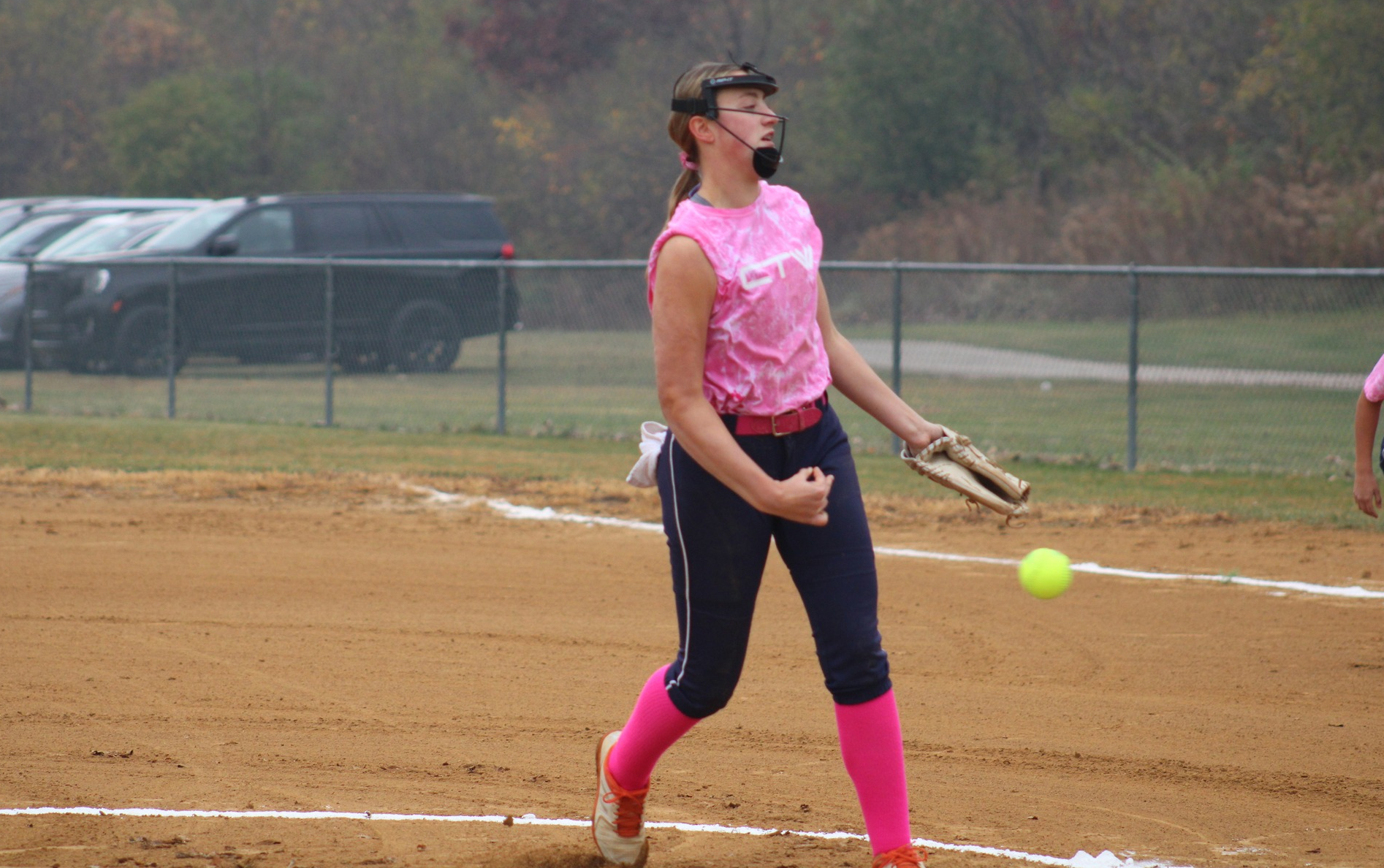
It sure would be nice if getting better at fastpitch softball was a linear progression upward. You start at one point, put in some time, and your performance (measurable and intangible) just keeps on getting better.
Unfortunately it doesn’t always work that way. In fact, often times it can go the other way for a while.
This is especially true if you’re trying to make fundamental changes to your skills after doing reasonably well doing what you’ve been doing.
For those who haven’t been doing particularly well it’s not much of an issue. If you’re a hitter who has been striking out for most of your at bats, and popping up or grounding out weakly when you don’t swing and miss, you don’t have much to lose by making a change.

Worst case you don’t get any better. Anything beyond that will be an improvement.
But if you’ve been getting on base now and then there’s a little more risk involved. It’s possible you may struggle a bit more at the plate for a little while before you start seeing the work you’re putting in pay off.
In fact, your batting average, slugging percentage, etc. may go down first before it goes up.
Why is that? Simple: whatever you’ve been doing, even it isn’t great, you’re comfortable with it and can execute it without thinking about it. Those mechanics may not be great but they’re serviceable enough to let you get by.
Now you’ve decided you no longer want to get by but want to be a top hitter. So you start making changes and find yourself kind of between worlds for a little while.
You’re not comfortable with your swing, or your timing, or some other aspect and as a result you’re not able to execute it with full energy. You might even start over-thinking it and throwing yourself off completely. Next thing you know your performance begins to fall and you feel like you’re moving backward.
That’s ok. If you’re making the right changes your performance will improve as you become more comfortable in your new “skin.”
As old bad habits are replaced by new better ones you’ll discover how to get the bat to the ball more efficiently and the ball will start finding its way to (or over) the fence more often.
This process doesn’t just apply to hitters by the way. Pitchers may lose a little speed and/or accuracy as they replace old habits with new ones, such as moving from “hello elbow” to internal rotation mechanics or changing the way a particular pitch is thrown to improve the spin.
If the new techniques are being taught properly, however, any setbacks will be temporary and the gains will be well worth the pain of getting there.

The same goes for fielding or throwing or really any other fastpitch softball skill. There will probably be a period where you wonder whether you would have been better off staying with what you were doing rather than learning something new and supposedly better.
If you’re focused only on the short term it may seem like you would have been better off sticking with what you know. If you’re focused on your long-term career, though, making these changes will help keep you from bumping up against artificial ceilings so you can become the player you’re meant to be.
Of course, the caveat here is you have to be careful about the timing of these changes. With fastpitch softball now being a 12-month (or almost 12-month) sport it seems like there is always a game coming up that causes you to feel like it’s a bad time for a major change.
But there are holes in the schedule, such as the period between tryouts and fall ball, or certain points over the winter, where there is reduced risk in starting changes. And if your performance isn’t where you want it, or where you need it to be to reach your goals, then the sooner you get going the sooner you can start moving forward again.
Making big changes isn’t easy, and sometimes they can result in temporary setbacks. Don’t let that discourage you.
If you’re making those changes for the right reasons the reward will be worth the risk.
Happy New Year! Time to Set New Goals

As John Lennon once sang, another year over, a new one just begun. (Or about to in any case.)
For most of us, the turning of a new year is filled with hope and anticipation. It also marks a great time to at least think about making changes.
We make all the usual resolutions – lose weight, get more exercise/join a gym (not always the same thing) quit smoking, quit or cut back on drinking, learn a language, etc. There’s just something about the finality of one year ending and a new one starting that makes it seem like a great time to do a little personal upgrading.
Of course, as U2 sang, “Nothing changes on New Year’s Day.”
Yet if those changes are going to happen they’re not going to happen magically. You have to make them happen. A big part of this for fastpitch softball players, coaches, and parents revolves around your goals.
Hopefully you’ve written those goals down and posted them where you can see them. Nothing like a visual reminder of where you want to go.
But even if you haven’t you probably know in your heart what they are.
So here’s my question for you: When was the last time you really thought about those goals? And more importantly, do they still apply?
Maybe it’s been a few months, or a year, or more, since you set your original goals. But you’re a different person now than you were then, with additional experiences and knowledge under your belt.
Is what you wanted six months or a year ago the same things you want now? If so, can you add some specificity to them?
For coaches
For example, if you’re a coach perhaps you had a goal of increasing your knowledge about the sport. You took some online classes and attended a couple of coaches clinics, and are now a better coach than you were.
So you’ve achieved that general goal. But are there areas where you could still do better? Perhaps it’s time to change your goals to address those areas.
In my personal experience I always felt like I was good at teaching the technical aspects of the game, along with the rules and what to do in specific situations. But I also felt like I wasn’t as good at the strategic aspects as I should be.
So my goal became to learn more about different strategies and how to apply them and when to apply them. It became a difference-maker for me.
Coaches, make an honest evaluation of your strengths and weaknesses. Where do you tend to lose games or players? How would you attack your team if you were an opposing coach?
Then seek out courses, or a mentor, or some other means that can help you shore up that area.
For players
If you’re a player, think about the major aspects of the game: offense and defense. Then think about the sub-groups.
For offense, you’re basically looking at hitting (including the short game) and baserunning. For defense, it’s fielding and throwing – overhand and underhand for pitchers.
Then break it down further into what you do well and what you don’t. In some cases also take into consideration what you can’t really change and how you can work around it.
Baserunning is a great example. If you’re fast you have a natural advantage. But are you smart?
If you can recognize opportunities sooner, and understand when it’s time to take chances and when it’s time to lay up even if you *think* you can make it, you’ll be a lot more successful. I’ll take average speed with intelligence over blazing speed without a clue pretty much every time.
What if you’re not fast? In fact, what if you’re a complete turtle? There are still things you can do.
Seek out a running coach who specializes in sprinters. He/she may not be able to make you fast, but he/she can probably make you faster than you are now by teaching you how to run better technically and how to condition yourself to run better. Every tenth of a second you can shave off your time going from one base to the next will help.
Then make sure you learn everything there is to know so you’re the smartest baserunner on your team. That’s especially important when you’re the trail runner.
I remember a situation where my team had runners on second and third. Kaity, the runner on second, was one of the slowest on a team that wasn’t too fast to begin with.
A ground ball was hit into the infield and I was entirely focused on getting the runner on third home. I watched the play from the third base coach’s box like a spectator.
Fortunately, Kaity was smart. She didn’t wait for any instructions from me, so when I looked back toward her (finally) she was already standing on third.
I said, “At least one of us was paying attention.” She replied, “Don’t worry Coach, I’ve got your back.”
Over the last six months or a year you’ve probably made many improvements to your game. Think about where you may fall short, or what you’d like to do better, and set that as your new goal.
For parents
Here we’re assuming non-coaching parents. Probably one of the biggest goals you can set for yourself is learning when to keep your mouth shut. Which is probably most of the time.
Just kidding, although in some cases it probably applies. But there are things you can do based on your player’s goals.
For example, if your daughter wants to play in college, and seems like she’s serious about it rather than thinking wishfully about it, start educating yourself about the whole recruiting process. It can be beastly, so the sooner you learn about it the better off you’ll be (and the less likely you are to make a critical mistake).
Step one is to talk to the parents of older players who have already been recruited. Find out what they did, what helped them the most, and what mistakes they made. Softball parents who have been through it can be an invaluable and impartial resource to guide you through it.
There are also tons of resources online. Some are better than others, and some are really just blatant commercials to buy their services.
That’s why you probably want to talk with other parents or coaches who have gone through the process first to give you some background. But those outside resources can help you make better decisions, especially if your player isn’t a can’t-miss P5 prospect.
Outside of that, learning more about the game and pieces of it related to what your player does can help you make better decisions when it comes to selecting teams and private coaches if you so choose. These days softball is a big investment so you want to be sure your money is being spent wisely.
As with players and coaches, think about what’s most important for you to improve on this year and set it as a goal. It’ll improve not only your experience but your player’s as well.
Keep moving forward
Always remember that goals should be concrete and realistic. Not necessarily easily achievable, but achievable.
Once you’ve set those goals, take the time (like now) to periodically evaluate them to determine if you’ve achieved them or even if you want to achieve them. Then adjust your goals accordingly.
The more you keep your smaller goals focused on achieving the bigger ones, the better chance you’ll have of ending up where you want to end up.
Happy New Year to all, and let’s make it a good one!
Photo by cottonbro studio on Pexels.com






 Life in the Fastpitch Lane