Blog Archives
How to Increase Your Coaching ROI
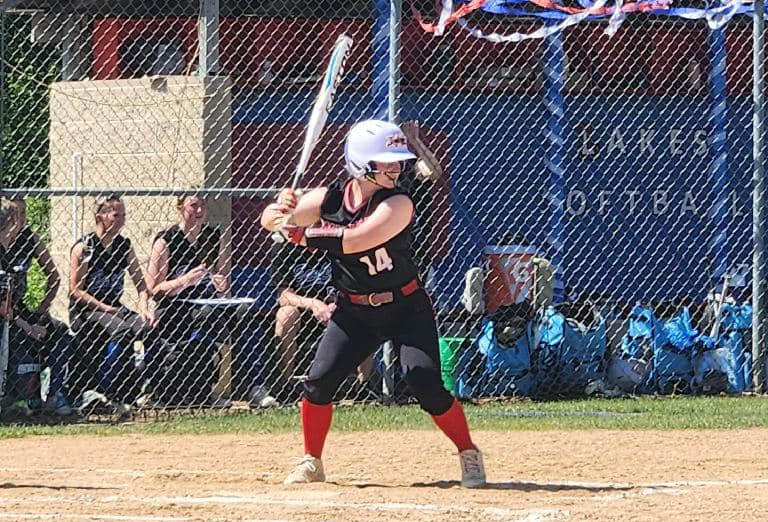
If there’s one thing just about every coach complains about when talking about coaching challenges it’s that they simply don’t have enough time.
It seems like there’s always a hundred things to go over in every practice and about 20 minutes to go over them. Hopefully things aren’t really that bad, but it can certainly feel that way.
So with that type of work/time pressure it’s important for coaches to invest their limited time where it will do the most good. Unfortunately, human nature being what it is, many seem to do the opposite of what they ought to be doing.
What mistake is it that so many make? Spending too much time trying to “fix” their best players, i.e., the ones who are performing best on the field, while ignoring or giving scant time to every one else.

I see it and hear about it all the time. Let’s say you have your top three hitters, all of whom are hitting the ball for average and power.
Their batting averages are above .333, which is pretty darned good unless the teams you’re playing are pretty darned bad, and their on base percentages (OBP) and on base plus slugging (OPS) are equally on the high end.
Then you have the bottom part of the order that can’t hit water if they fell out of a boat. (Thank you Bull Durham – one more funny line to add to last week’s blog post.)
Every time one of them comes to the plate in a tight game you suddenly rediscover religion, hoping and praying that somehow they manage to put the bat on the ball, even if it results in a duck snort or a swinging bunt, so for once you can move those runners along and score a little more than you usually do.
So where do you think you will get the best return on investment for your time and effort in practice?
To me, logic says that if you can improve those bottom few players and get them to go from poor to even below average, you’re going to score more runs and win more games. That would be a huge gain that would continue to pay dividends throughout the season.
Ok, now, answer this: where do most coaches tend to spend the bulk of their time? Unfortunately, it’s trying to make incremental improvements with their top three hitters.
Why do they do that? Because A) it’s more fun to work with a good or great player than with one who seems to barely know which end of the bat to hold and B) they often want to get a share in the glory that comes with seeing a player they’ve coached go on to do well. In other words, they want to stake their claim that they helped that player become the star she is today – even if their suggestions were actually getting in the way of that great player playing great.

The reality is it isn’t that hard for a bad coach to screw up a high-performing player. All he/she has to do is give bad advice and then insist that it be followed.
For example, the coach can tell a top-performing hitter that she should widen her stance and not stride, even though her narrower stance and normal stride have been resulting in her hitting bombs. Then the coach stands there during batting practice and forces the hitter to follow the advice he/she gave until that hitter is dragged down to the level of everyone else.
Or there’s the case of the coach who thinks he/she knows everything about pitching and decides to have all his/her pitchers do a certain set of drills he/she saw at a coaching clinic instead of realizing that the top pitcher(s) got that way by doing whatever it is they’ve been doing.
Throwing in an arbitrary set of drills just because he/she can could end up hurting the top pitcher’s performance on the field, creating unnecessary losses. If the coach feels he/she has to contribute to the pitchers, do it with the ones who are already struggling. They have far less to lose – and so does the team.
As the high school and college seasons end and the rec and travel ball seasons begin in most of the country, please keep this idea in mind: You will gain far more benefit by investing the bulk of your time bringing your least-performing players up to an average level than you will by trying to wring a little more performance out of players who are already playing at a high level.
This is a team sport, after all, and no single player, no matter how good they are, can make up for eight others who are below average. But bring the rest, or even a few of the rest, up to a higher level than they were and you’ll stand a much better chance of putting more Ws on the board.
One last thought: don’t assume you know who your best players are just by gut feel. Look at their stats too.
You may just be pleasantly surprised – and it will help you narrow down where you spend your limited time.
Don’t Just Put In the Time – Put In the Effort

One of the most common questions coaches get at the end of a lesson or practice session is, “How long and how often should my daughter practice?”
While it’s a legitimate concern – parents want to their daughters get the full benefit and they get a better return on their investment – I tend to think they’re asking the wrong question. Here’s the reason: practicing is not actual time-based; it’s quality-based.
Take two players who are at the same skill level and have been assigned the same drill(s) as “homework:”
- One diligently does the homework, being mindful of her movements and attempting to execute the skill the way she has been taught. She does this for 20 minutes three times before she has her next lesson.
- The other goes out to practice for a half hour three days a week between lessons. But she doesn’t like doing drills because it’s “boring,” so she instead just decides to pitch from full distance or take full swings or field ground balls hit by a partner etc. the whole time.
Which one do you think will show improvement in the aspect that needs the most help as well as in the overall skill?
Player two put in more time – an extra half hour to be exact. If time were the only factor that counted she should do better at the next lesson.
But I will tell you from experience, and bet you dollars to donuts, that player two will be the one who is most likely ready to advance further at the next lesson. She may not have put in as much time, but she put in more effort to solve her biggest issues – the one that is most limiting her.

So if she’s a pitcher who was straightening out her arm on the back side of the circle, she is now far more likely to have a nice elbow bend or “hook” as her arm gets ready to throw the ball. If she is a hitter who was dropping her hands straight to her waist before swinging, she’s far more likely to be keeping them up and turning the bat over to get the ball.
That’s because she mindfully worked at changing what she was doing. She is serious about improving so she put in the effort to make those changes.
Player two, on the other hand, actually put herself further away from her goals by practicing as she did, because all she did was reinforce the poor mechanics she should be trying to move away from.
Yes, she put in the time and could mark it down on a practice sheet, but she didn’t put in the effort. Without the effort to improve, the time is pretty much meaningless.
She would have ended up in exactly the same place at best if she hadn’t practiced at all. And she may have ended up further behind because now those extra reps with the wrong techniques will make it that much more difficult to get her to the right path.

If your daughter is going to spend her valuable time on practicing her softball skills, or anything else for that matter, make sure it’s on something that will help her advance her abilities forward.
Have her make the effort to concentrate specifically on the areas that need improvement rather than spending all her time making full pitches, full swings, etc. and you’ll see faster progress that leads to greater softball success.
P.S. For any parents of my students who may think I’m talking about their daughter, don’t worry. I’m not. It’s a big club. But do keep it in mind as you work with your daughter anyway!






 Life in the Fastpitch Lane