Blog Archives
Take One More Look Around the Dugout
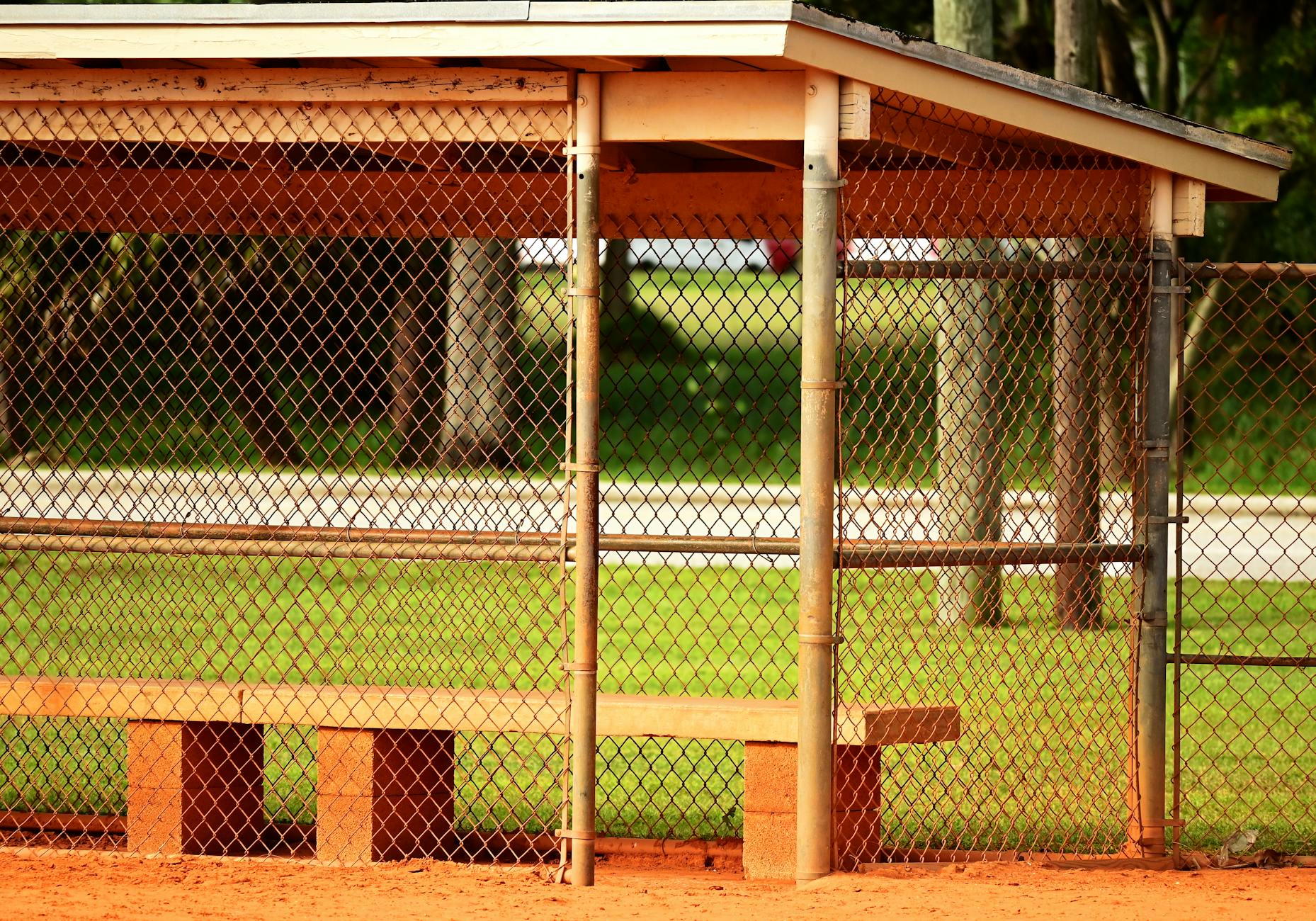
I’m not sure if it’s just human nature or perhaps a cultural thing, but it certainly seems like it’s common for most people to be always looking ahead to the future.
As graduation approaches, high school seniors look forward to starting a new era of freedom in college or their careers; college seniors look forward to starting their first jobs; older adults look forward to their next jobs or even retirement.
Yet at this time of the year, it’s important for players, parents, and coaches who are leaving the sport of fastpitch softball to take one more look around the present to appreciate all the good things that have been a part of the experience for the last several (or many years).
Players and parents can think about the first time those players grabbed a glove or bat, put on a uniform with their team’s name on it, and stood in the dirt.

They probably had no idea about the journey on which they were about to embark; they just knew they were excited to feel the sun on their faces and the breeze in their hair as they stood there waiting for someone to teach them where to go and what to do.
Along the way they made friends and established rivalries – some of them friendly, some of them not so much. At times those friendships and rivalries shifted as they joined different teams or went to different schools.
But always, always, there was the thrill of competition and the quest to get a little bit better so they could feel the thrill of external praise or the inner satisfaction of a job well done.
From those first days where they could barely lift the ball or the bat or take it in the right direction to the days when others marveled at their skill, they kept at it, game after game, week after week, year after year. Sometimes that meant waking up at zero dark thirty in a strange hotel room to get to a distant field, spending 12, 14, 16 hours at the ballpark through chilly, damp, foggy mornings followed by blistering heat followed by cool, damp night air, all in search of a championship trophy, ring, bat, or other memento.
Then, when it was done, making that long car ride home.

Or it meant enduring an uncomfortable, noisy ride in a bus that smelled like sweat socks, stale snacks, and the occasional vomit to play in freezing cold temperatures on rain-soaked or snow-soaked fields for the opportunity to represent their school and perhaps earn a conference title or perhaps a state tournament berth.
On the coaching side there was all the preparation and planning and looking for new drills or new ideas or new techniques that could give your team an edge. There were the unseen hours taking care of a field, planning lineups, reviewing stats, pricing and purchasing equipment, taking part in live or online coaching clinics, all to have every move you made on the field questioned by everyone who hadn’t done any of that.
For the parents it was all the hours spent sitting on a bucket or hitting ground/fly balls or pitching batting practice or chasing after balls that had been hit or driving one child to practice or lessons while trying to manage everything for your other children. Then feeling your breath catch and your blood pressure soar every time your favorite player toed the rubber or had a ball hit to her or stepped up to the plate.
Sometimes it seemed like it would never end. Yet now it has, or is about to.
The last out comes to us all. Some experience it sooner, some experience it later, but we all experience it.
When that final out comes to you, my advice is not to just rush off like it’s another game in a long line of games, because it’s not. It’s the end of a part of your life that was probably pretty important.
Before you pack up, take a little time to look around the dugout and the sidelines and experience as many of the sensations as you can one more time.
The refreshing touch of a cool breeze on a hot, hot late spring or summer day.
The sound of cleats clattering on concrete and scrunching in the dirt as the team goes to take the field. The music of balls popping sharply into gloves or cracking off a bat. Someone yelling “heads up” as you frantically try to avoid being plunked by an errant foul ball from another field. Or the low din of dozens of camp chairs and pop-up tents all being folded up at once.
The smell of hot dogs and hamburgers grilling in the distance, that whiff of a quick afternoon rain shower making its way toward you, or that unmistakable aroma of a new glove or fresh ball. Not to mention the fragrance of freshly mowed grass intertwined with the morning or evening dew, lying like a comfy blanket over the entire area.
Mostly, though, take a moment to remember all the souls that touched yours, and that you in turn touched, along the way.
Some may have been along for the whole journey. Others may have been there for a fleeting moment.
In reality, though, most were only there in your life because you shared a common interest in fastpitch softball. How lucky you were to have spent time with each and every one of them – even the ones you didn’t particularly care for.
Because they all had an impact, large or small, on shaping you into the person you are today.
You will move on to other challenges and adventures happy times and sad times, triumphs and failures. You may even go on to play other sports. I hear pickleball is popular now.
But there will never be anything like the thrill of competing (or watching your child/team compete) for all the marbles on a fastpitch softball team.
Hope you enjoyed it while it was happening. And if you’re not quite to that point, you can also take heed to appreciate it now, in the midst of all the craziness, because one day you’ll miss it all.
To all of those who have played, watched, or coached their final out, or are about to, I salute you. Thanks for your contributions to this great sport, and good luck to you whatever the future brings!
Just remember to take that last look around before you leave. You’ll be glad you savored the moment.
My good friend Jay Bolden and I have started a new podcast called “From the Coach’s Mouth” where we interview coaches from all areas and levels of fastpitch softball as well as others who may not be fastpitch people but have lots of interesting ideas to contribute.
You can find it here on Spotify, as well as on Apple Podcasts, Pandora, Stitcher, iHeart Radio, or wherever you get your podcasts. If you’re searching, be sure to put the name in quotes, i.e., “From the Coach’s Mouth” so it goes directly to it.
Give it a listen and let us know what you think. And be sure to hit the Like button and subscribe to Life in the Fastpitch Lane for more content like this.
Dugout photo by Nelson Axigoth on Pexels.com
When Designing Your Scheme, Be Sure It Fits Your Players

Today’s topic may seem completely self-evident to some of you – to the point where you say “Duh!”
Yet I can’t tell you how many times I’ve watched a game (in person on TV) or spoken with players and/or parents and realized what should be a cardinal rule of softball has been violated yet again.
This rule is particularly important in middle school or high school ball, where coaches don’t get to choose their teams from a vast pool of players but instead must make the best out of whoever goes to that school. Sometimes those coaches win the lottery, and other times they end up with a donkey.

But even if you do have a wider range, ultimately you have to look at the skillsets and physical attributes of your players and make decisions accordingly. Here’s an example.
For a long time, slapping and the short game was the key to winning, especially in college. As a coach you may love to create chaos on the basepaths and force the other team into making mistakes. But if you look at your team in the huddle and what you see more closely resembles a nest of baby turtles, you’re going to have to find another way to score runs.

The reverse is also true on offense. If you roughly weigh more yourself than all your players put together, you’re probably not going to be going deep with any regularity. So while you may love the way college teams like Oklahoma and Arizona State launch bombs on a regular basis, you’re probably going to need your players to master techniques such as bunting, slug bunting, and the ol’ hit-and-run. At least if you want to win ballgames.
The same is true of your pitching staff. If you have one or more dominant pitchers who can rack up 10, 12, 14 strikeouts a game, with the mental toughness to get critical strikeouts when needed, you can probably give up a few more defensive errors, or put a weak glove in the lineup if it means one more strong bat. If, however, your pitchers are more along the lines of letting hitters get weak hits and counting on your defense to get the outs, you’d better have strong gloves out on the field.
You can always use the big hitter/weak glove as a DH or pinch hitter. With the added benefit in the latter case of having that big bat available on demand rather than having to hope you get to her.
Speaking of defense, the type of players you have will (or at least should) affect the types of defense you play as well. Let’s take the outfield for example.
If you have speedy outfielders who are good at going back on fly balls, you can afford to play them in a little closer to the infield to try to cut off the Texas Leaguers and duck snorts that seem to plague your team and no one else’s. That is, unless your pitcher is prone to give out moon shots the way Olive Garden gives out breadsticks.

Your players’ capabilities will (or should) also affect scheme decisions such as bunt coverages. In fastpitch softball it’s standard to have the first and third basemen crash the plate on bunts.
But if your first baseman isn’t particularly good (or even adequate) at fielding balls on the ground, or making a quick throw from a bent over position, or is the biggest turtle in the conference or the complex, having her try to field a bunt up the first base line may be your ticket to an early ulcer.
You may want to consider having your pitcher field anything up the line. Unless, of course, she is a hot mess fielding as well, in which case you can either try pulling your second baseman up next to the pitcher in obvious bunt situations or have a track coach work with your third baseman so she can try to cover everything up-close.
The bottom line is you may have done X, Y, or Z when you played, or seen a particular approach on TV, or attended a coaches clinic where a Power 5 coach with a multi-million dollar budget that includes a huge scholarship pool said “This is what we do.” Or gotten your butt beaten by a vastly superior team whose success you’d very much like to copy.
But before you pull the trigger on introducing your new scheme, ask yourself honestly if you have the players who can pull it off.
If so, great. Have at it.
But if not, it’s better to take a look at what you DO have and build your schemes accordingly. You’ll ultimately produce WAY better results.






 Life in the Fastpitch Lane