Blog Archives
Why You Shouldn’t Let Today’s Setbacks Define You

Not sure who needs to hear this story today but I have no doubt there are some who do – and others who may in the future. So I thought I’d share it, courtesy of my friend Tim Boivin who first shared it with me.
Hopefully the link works and you can read the full story. But just in case I will summarize it here.
Today we all know Mike Trout as an 11-time Major League Baseball All-Star and a standout hitter and outfielder ow playing for the Los Angeles Angels. Even those who don’t follow baseball closely have probably heard the name.
He’s definitely one of the top current players in the game and will likely make the Hall of Fame in either his first or one of his first years of eligibility. His career stats include a batting average of .299, on base percentage of .410, slugging percentage of .510 and on base + slugging (OPS) at a hefty .991.
Back in 2008, however, Trout was invited along with 99 other players to try out for the USA Baseball National team. You would think someone with his skill and athletic ability, demonstrated over years at the highest level of the game, would be a lock for something like that.
But he wasn’t. He was kind of an unknown going in and didn’t have the hype some of the other players did.
So when the powers that be assembled the final 18-player roster, Mike Trout’s name wasn’t on it.
I’m sure it hurt, to come that close and not make it. But he didn’t let it deter him.
Instead, Mike Trout continued to work on his game and play his heart out, and he eventually rose to outshine all those players who were selected instead of him.
You see, that’s the thing. It really doesn’t matter where you start the race, only where you finish it.
I mean, the world is full of stories like this – Michael Jordan not making his high school varsity basketball team as a sophomore, The Beatles being turned down by every major record label in Britain, and so forth.
So maybe you tried out for a team and didn’t make it. Or maybe you’re on a team but not getting many opportunities to show what you can do.
It’s easy to get discouraged and give up in that type of situation. But instead of hanging your head and letting others define you, keep working at it.
You may only have so much natural ability or athleticism but you can have a boundless supply of desire, determination, and positive attitude if you want it. Use those qualities to lift yourself up and someone will recognize it.
At some point, you will get an opportunity to show what you can do somewhere. When that happens, make sure you’re prepared to take advantage of that opportunity.
Give it all you’ve got and good things will happen.
And always remember sometimes the things we desire most may not be the things that are best for us in the long run. But as they say in Harold and Kumar Go to White Castle, the universe tends to work out the way it should.

So if you’re facing disappointment today, shed a few tears or overturn a few tables or deal with it however you deal with it. Then get back to work.
And someday you may find someone writing an inspirational story about you.
Keep Dancing Until It Rains

There is a proverb (or an anecdote, or a story, I’m not sure which) about a Native American medicine man who was particularly renowned for his ability to overcome droughts by performing a rain dance.
One day he decides to retire and so takes on an apprentice to whom he can teach all his secrets. He shows the younger man a whole variety of treatments and such, but of course the younger man is particularly interested in learning the skill for which the medicine man is most famous.
Finally, the younger man just flat-out asks him, “Teacher, what is your secret for being so successful in performing the rain dance?” The medicine man gives him a sideways look, then says, “It’s simple: you have to keep dancing until it rains.”

This is the aspect many young softball players (and their parents) miss when it comes to improving their games. All too often they are looking for that quick fix – do a one-day clinic, take a handful of lessons, stay after practice for an hour one day, etc. and then they’ll be great.
It would be nice, and for an ultra-gifted athlete that may be all they need. But for the overwhelming majority improvement isn’t going to come that fast.
Instead it will happen in small, often unnoticeable increments that add up over time. If the player (and her parents) are willing to keep chipping away at it, they will see the results. Mostly because they kept working until the results showed up.
Take a story I heard the other day. The father of a couple of my students who is also a head coach was telling me about another girl I work with on his team.
When I first got her she struggled with hitting. A lot of strikeouts, and when she did hit the ball it was usually an easy ground ball or pop-up in the infield.
We worked at it and she got better, but it wasn’t exactly a straight line. If she was away from lessons for a few weeks due to being a multi-sport athlete who had other commitments we’d see a lot of backsliding and often have to start all over again.
When that happened I could see the sadness in her face. She was frustrated with the results, and probably frustrated with me that I was telling her she had to go backwards and re-learn how to hit.
Honestly, I thought I was going to lose her at least a couple of times. But she kept dancing.
Fast forward to the other night. The coach told me this girl was raking the ball in practice. I wasn’t surprised because she’d been doing that lately in our lessons too.

The key difference, though, was that although she had taken a few weeks off again, when she came back we were no longer going back over the basics. She had locked them in so all I was left to do was make little tweaks here and there to help her elevate her hitting to a level above where she’d been in the past.
If you looked at her swing now you’d probably think, “Wow, what a natural.” She is smooth and powerful (despite still having what I would call a slight build) and she is bringing the bat with authority. And she’s able to hit the ball hard in multiple zones, not just when it’s thrown down the middle.
None of that would be happening now if she had just given up when things got discouraging, i.e., when the swing mechanics reverted to her old ways. Instead, she kept working at it not just until she could do it right but until she couldn’t do it wrong. And boy is she having fun at the plate now.
Of course, not all roads lead to success. If you’re a parent, coach, or parent/coach you still have to do your due diligence to see if what your daughter is being taught lines up with what you see the majority of high-level players doing – whether that’s hitting, pitching, throwing, or some other skill.
If, however, you are sure of the mechanics or techniques, then keep working at them. Persistence pays off, and eventually it will rain.
Otherwise you may find yourself like the person who invented 6UP, wishing you would have hung in there just a little bit longer.
Rain photo by Aleksandar Pasaric on Pexels.com
Persistence Pays Off as Jenna Kosnoff Signs Her NLI
Today’s story is for every fastpitch softball player who may be a little undersized (for now), or perhaps struggles a bit to get all the body parts moving properly, or somehow doesn’t quite measure up to her teammates at the moment. It shows what you can do if you want it bad enough.
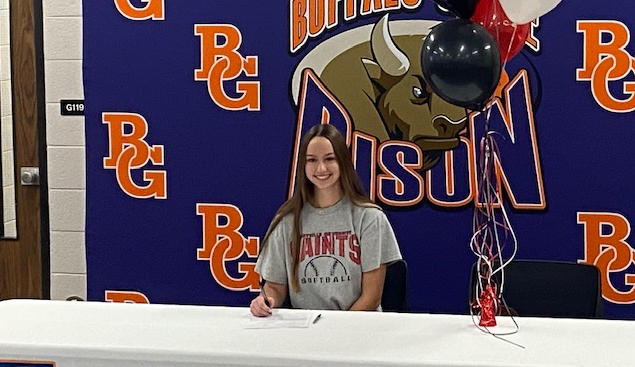
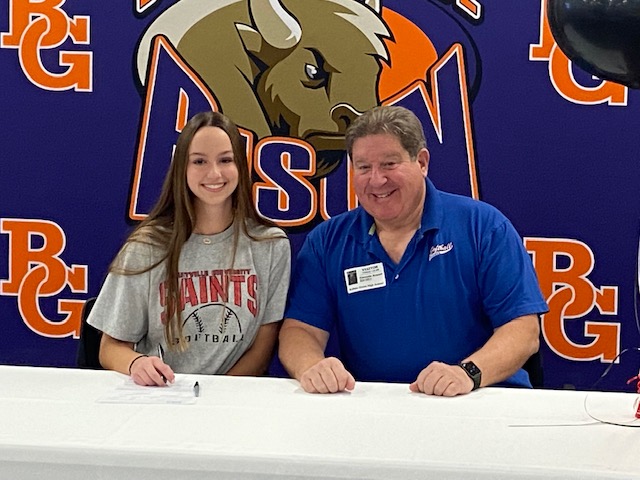
First though, I don’t want to bury the lede: earlier this week Jenna Kosnoff signed her national letter of intent to play for Maryville University in St. Louis. She will be pitching for them, yes, but when she’s not pitching she will likely play the field because she has a great glove and a powerful bat.

I’ve worked with Jenna since she was 10 years old. We started out with pitching, then added hitting later at her request.
Over the last few years she has racked up a lot of wins and a lot of strikeouts as a pitcher, and consistently delivered an amazingly high batting average, on base percentage, and on base plus slugging (OPS) in PGF tournaments. If you were to watch her play today it would be easy to say that she is clearly hugely talented so it’s no wonder she’s doing all that.
But the reality is it wasn’t that long ago that she was struggling great. When I first started working with her Jenna was a scrawny little thing with sticks for arms and legs. You would wonder if she would blow away if a stiff breeze came up.
Jenna never let her size define her, however. She was always determined to be a top player – to the point her dad Gary would tell me when they got home from a lesson she would often go down to their basement or in the garage to continue working on whatever we’d just gone over.

One of the things Jenna struggled with was turning the ball back toward second base and pushing it down the back side of the circle. For those who don’t know that is a weak position for the arm, and one that totally eliminates any chance of getting acceleration and whip into release.
I was convinced that if she could get that corrected she’d start throwing a lot harder, so I finally recommended we shut her down completely from pitching (in the middle of the season) so she could focus on that movement. At that time Jenna was the #4 pitcher on a team where at least two of the others are also going to play college ball so it wasn’t much of a loss for the team. Her coach may have even been relieved because he was nice enough to give her innings even when she was under-performing.
It took about four months as I recall to make the fix. A lot of our lessons at that time never got past the K position. But Jenna never gave up or complained. She just worked it and worked it until we could see she was getting great arm bend and lag.
And just as I had said at the beginning of the process, her speed started going up. Her movement pitches also started working better, and she climbed the ladder to become a #1 pitcher who now throws in the low 60s.
To be honest, it wasn’t just the mechanics change. Jenna grew quite a bit too and worked out like a fiend to develop muscle.
She’s still on the slim side but her arms and legs no longer look like sticks. Still, without the mechanics change, and her determination to make it, I don’t think she’d be where she is today.
The other thing she did was learn to put everything she has into every pitch and every swing. When I went out to watch her play in one of her early games I saw her pitching with an arc – something she didn’t do in lessons.
She had to overcome the mentality of being careful to “just throw strikes.” Now, though, she’s the poster child for giving it all you’ve got every time.
So congratulations to Jenna on this tremendous accomplishment. She has definitely earned it.
And for all of you out there right now who may be being told you’re not enough, keep working. Good things will happen.
A Tale of Persistence

First of all, congratulations to the Crush Tidal Waves (CTW) 18U JS team for taking it all in the recent USA Softball (formerly ASA for you old die-hards) Chicago Metro. The Metro is always a tough tournament with strong teams, so winning it is definitely an accomplishment.
But it’s the way they won it this year that makes this story worth sharing, in my opinion. And since Life in the Fastpitch Lane is my blog, I get all the votes. No pretense here.
Basically, the CTW did it the hard way. First, it was a very hot and humid weekend in the Chicago area. Temperatures were in the mid-90s for most of it, and with the sun beating down it felt even hotter. I know, because I was outside for much of it.
CTW started out with two wins in pool play on Friday before beginning bracket play Saturday. They won their first game, then fell 5-2 in their second game of the day. That put them in the loser’s bracket in the double-elimination tournament, with a long way to go to get back to the championship game.
Still, they persisted. The challenge now was to win 7 games in a row – two more on Saturday in the brutal heat, then three on Sunday to get into the championship game. After that, they’d have to face a team that hadn’t lost in bracket play and was well-rested as they waited for all the other teams to beat each other up. And, of course, they had to win twice.
The first of those two games was a real nail-biter, with CTW leaving it all on the field to gain a 3-2 victory. You would think they’d have felt pretty good by then, having taken the top team to the what-if game after all that. No one would have blamed them if they had come out a little flat for the final match-up.
But again, they persisted, and instead they came out strong and took the final game (and the trophy) 5-1. Not sure where they found the reserves of strength after all of that, but they did.
Battered but not broken, exhausted but elated, and probably ready to jump head first into the nearest swimming pool, the CTW 18U JS team came out victorious.
So it does go to show that if you’re determined enough, and persistent enough, and just not willing to lose you can come back to win a big tournament like that.
Congratulations to the players, coaches, parents and fans. But mostly to the players and coaches for never giving up.
(A special shout-out goes to Katie Armstrong, a long-time player for CTW and one of my  pitching and hitting students. Savvy readers may recognize Katie from my vlog on hitting off a pitching machine, among other mentions. Katie did all this with a hip injury that will require surgery after the season, which has limited her pitching time this year. But I think you’ll agree she thought it was worth it.)
I imagine for a lot of the players this season is the end of their travel ball careers, and for those who aren’t playing in college it’s the end of their entire softball careers. But what a memory they gained!
It’s also the kind of story they can tell future employers who say “Tell me about a time when you faced incredible difficulties but managed to succeed.”
Eating the Elephant

Photo by Pixabay on Pexels.com
A question I will often pose to my fastpitch softball students is “How do you eat an elephant?” Regardless of age, the first time they hear it they tend to look at me as if I have completely lost my mind.
The correct answer, of course, is “One bite at a time.”* That’s a critical lesson for anyone trying to learn a new skill, or even make improvements to existing skills.
What it means in realistic terms is you don’t have to learn (or master) the skill all in one big gulp. You’re far more likely to have success (and far less likely to give up too soon) if you give yourself permission to learn whatever you’re trying to learn a little bit at a time.
This is particularly true of complex skills such as hitting and pitching that have a lot of moving parts. Trying to learn all the mechanics (or fix all the problems) at once is going to be extremely difficult if not impossible. Our brains simply don’t function that way.
But breaking the skill into smaller components, prioritizing them so you know what to work on first, and then focusing on each of those areas in order will enable you to create a progression where success builds on success.
For example, when I’m working with a new pitching student I like to use a technique called “backward chaining.” That’s a more sophisticated way of saying you start at the end of the skill and work your way backwards, because if you don’t get the end right nothing else you’ve done up until then matters.
So for pitchers we’ll work on starting the ball overhead, palm facing the catcher, bringing the upper arm down until it contacts the ribcage, and pulling the ball through into the release zone so the lower arm whips and the wrist snaps itself. (That’s a simplified version of what goes on and what I look for, but will suffice for now.)
Most young pitchers will tend to want to bring the entire arm through at once, get behind the ball too early, and push it through the release zone. Heck, some have even been taught to turn the ball backwards and push it down the back side of the circle, which is definitely what you don’t want to do.
So it takes a bit for them to learn to relax and let the arm work in two pieces. That’s why we focus on helping them get that feel, because it will serve them well as they get into the full pitch.
But if we tried to do that, plus get a proper launch, plus worry about getting into the right position at each point during the motion, etc. the odds are they wouldn’t learn anything. Especially how to whip the ball through.
The other element that enters this discussion, of course, is the impatience of players themselves. It’s understandable.
They are growing up in a world where they have instant access to everything – information (via smartphones and the Internet), food (microwave and fast food meals), transportation (no need to walk, we’ll drive you!) and so forth. The idea of having to wait for something they want is often foreign to them.
So, they try to eat the elephant like a python – unhinge the jaw and try to swallow it whole.
Again, it doesn’t work that way. As a result, realistic expectations have to be set.
They have to understand that doing this drill or taking a couple of lessons here and there won’t turn them into instant superstars who are mechanically perfect. Progress will come incrementally. Sometimes in increments so small it’s hard to tell it’s being made.
But if they keep working at it, the cumulative effect will take hold and eventually that big ol’ elephant will be gone.
The lesson for coaches (and parents) is don’t try to fix everything at once. It’s been tried. It doesn’t work.
Focus on one thing at a time, adding each new piece to what you’ve already done, and you’ll save a lot of heartache for you and the player.
For players, the lesson is to be patient and, as Bobby Simpson says, get a little better each day. Remember if you want to walk a mile you just need to start putting one foot in front of the other. Eventually you’ll get there.
So grab a fork and dig in! The sooner you get started, the sooner you’ll reach your goals.






 Life in the Fastpitch Lane