Blog Archives
Offseason Games: The Perfect Time to Try New Skills
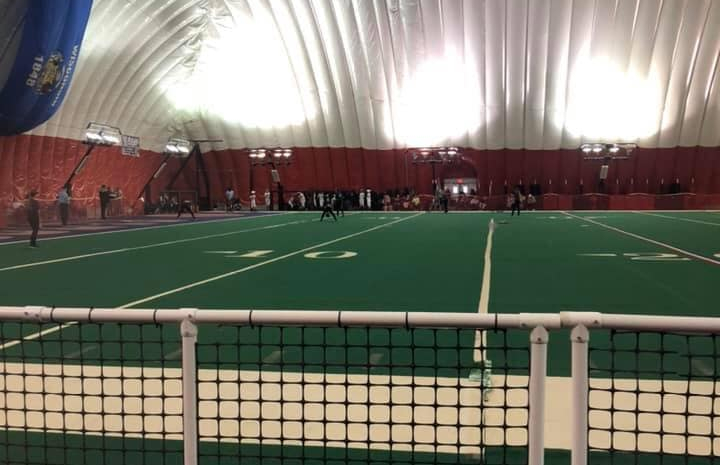
Fall ball 2023 is now behind us for most teams, or will be after this weekend.
For many that will mean a welcome break from organized team activities (OTAs), at least until after the first of the year. For the rest, it will probably mean more of a maintenance schedule (e.g., once a week instead of three times) to give everyone (including coaches) a chance to unwind and refresh themselves for 2024.
Of course, that doesn’t mean that the game schedule will come to a complete halt until the summer, or until high school ball kicks in for those who play in the spring. These days, the proliferation of domes and other large structures in the northern climes means teams still have an opportunity to get some games in once or twice a month. (Southern states just carry on as usual.)
So for those who will be playing throughout the cold, dark months of winter, I have a suggestion on how to get more benefit from these essentially meaningless games. Are you ready for it? Here it is:
Try something new.
Brilliant in its simplicity, isn’t it?
Wait, you don’t understand what I mean?
During the offseason many players work on new developing new skills. For example, a naturally left-handed hitter may learn how to slap in addition to swinging for power. Or a right-handed hitter may get turned around to the left side to take advantage of her speed.
A pitcher may learn a new pitch. An infielder may learn how to throw sidearm from a crouch on a bang-bang play.
A catcher may learn how to throw from her knees. A coach may attend a coaching clinic, such as the ones offered by the National Fastpitch Coaches Association, and learn a new offensive strategy or defensive sets.
But then when they actually play in an offseason game, the slap, the new pitch, the new throwing motion, the new strategies, etc., get stuck in the back pocket in favor of what the player or coach is most comfortable with.
That’s a missed opportunity in my mind. What better time to experiment with something that could be very valuable next summer than when you’re basically just playing for fun or to break up the boredom of practice?
Back when I was coaching teams, that was actually fall ball. You’d basically scrape a few double headers or round robins together on a Sunday, or maybe if you were lucky you’d find a local tournament or two that would give you a chance to play beyond the summer.
Today, fall ball is basically equivalent in importance to the summer. If you’re of recruiting age it may even be more important due to all the college showcase events around the country.
No one wants to risk looking bad in that atmosphere. So even if they’re learning new things they’re reluctant to trot them out on a stage where they could embarrass themselves mightily.
Winter/offseason ball doesn’t have that same level of risk. It’s perhaps the last bastion of “who cares about the outcome?” left in our sport.
So again, what better time to put on the big girl (or big boy in the case of coaches) pants and try something you’ve been working on but haven’t executed in a game yet?

Sure, it could be disastrous. A slapper could end up striking out every at-bat, including in a situation that causes her team to lose.
A pitcher could try out her new riseball and watch as it sails into the upper reaches of the net, scoring not just the runner on third but the runner on second as well. A coach could try a suicide squeeze only to watch in agony as the bunt is missed and the runner is hung out to dry.
Again I say unto you, so the heck what?
Yes, it would be temporarily sad. But it would also break the seal on using those skills or strategies in a game situation.
It would become a learning experience as well, helping the player or coach do better with them the next time. Do it a few times over the course of the offseason and the player or coach just might have the experience – and confidence – to execute them effectively and subsequently become better than they were before.
Remember, if you do what you always did you get what you always got. You’re spending considerable time, and perhaps money, to learn new things. Those new things don’t do you any good if they never get out of your back pocket.
Take full advantage of games without real pressure or consequences to try out new things and get more comfortable with them. If you’re a coach, find out what your players are learning and make them give it a try.
Because that little pebble you toss now may have a significant, positive ripple effect for you next year.
Throw It Like You Know It

So, you’re a fastpitch pitcher and you’ve added a new pitch to your arsenal. You’ve worked weeks, or months, to learn the nuances and perfect it to the point where you throw it pretty reliably in practice.
But then, when you go to trot it out in a game, it turns into a hot mess.
If it’s a drop ball it rolls in like you’re playing bocce ball. Changeups go sailing high and wide, riseballs go over the backstop, and curveballs end up forcing your catcher to lay out after them like a wide receiver catching a pass from the third-string quarterback.
So what happened?
There’s a pretty good chance the problem isn’t from the neck-down; it’s from the neck-up. Because instead of just relaxing and throwing the pitch you practiced, you got nervous that it wasn’t going to work and started tying yourself in knots trying to make sure it did.

How did that work out for you?
That’s why, when you go to introduce a new pitch to your gametime routine, you need to clear your mind of thoughts about it being your first time, you hope it works, it was really bad last time, etc. and just throw it like you know it.
There’s a pretty good chance if you’ve been pitching for a while you don’t think much about throwing your fastball – or whatever your base pitch is. You’ve done it thousands of times by now, and you already know you can do it.
Doesn’t mean it will be perfect every time – no one’s is, not even the high-level pitchers you admire. But you’re not worried because you know if this one doesn’t work quite right the next one will.
Well, it’s the same with a new pitch. Let’s take a changeup.
You told your coach you’ve been working on it and want to throw it this game. You’ve gotten the speed and location to be right in practice but have little to no experience with in games.
When the call comes in, however, your muscles tense, your mouth gets dry, and you start to breathe a little harder and more rapidly.
There’s really no reason for that reaction, however. First of all, hopefully your coach is smart enough to call it in a situation where the outcome doesn’t matter, such as no one on base and you’re ahead in the count 0-2 or 1-2.
At that point, what’s the worst that can happen? You throw a ball and it’s now 1-2 or 2-2. You’ve thrown balls before with the fastball, so why should this particular one be treated any differently?
Oh, but you’re worried you’re going to embarrass yourself by rolling it in or sailing it over your catcher’s head. So what’s the difference here?
The count is still 1-2 or 2-2, just as it would be if you had barely missed the strike zone. No runners advanced, no one walked, a shadow didn’t fall upon the earth, seas didn’t begin to boil, the ground didn’t rupture. no one died. It’s just a ball.

Only now you’ve thrown one in a game, you know a little more what it feels like, and you’ve just taken another step forward in your pitching career. Someday, when throwing a changeup is as natural to you as breathing, you’ll probably laugh about it.
So given all that, why worry about it at all?
The better approach is to pretend like you’ve been throwing this new pitch for years and just chuck it in there – i.e., throw it like you know it. With a more positive approach like that you’re far more likely to have success, and avoid all the negative outcomes you were worried about originally.
By the way, this concept isn’t just for pitchers. Hitters should apply their new hitting mechanics rather than relying on their old ways.
Slappers, particularly converted righties, should go after their slaps as if they’ve been doing it for years. Fielders should try that new sidearm tilted toss as though it’s been part of their routine all along. And so on.
If you take the “throw it like you know it” approach you’ll find you build your confidence quickly and your game will improve exponentially. You’ll also find you’re having a lot more fun in the process.
Just Like Novacaine

One of my favorite lines in the movie “Remember the Titans” is the one where Coach Boone (Denzel Washington) is describing his offense. “I run six plays, split veer” he says, “It’s like Novacaine. Just give it time, it always works.”
Here’s the actual scene, just for fun.
That’s the way it is when you’re working on developing good fastpitch softball mechanics.
Sometimes it may not seem like you’re headed in the right direction. It’s rarely an instant fix – nice as that would be.
But if you’ve done your homework and know you’re trying to learn the mechanics top players use, there’s no need to panic. Give it sufficient time and it will work.
That’s often a problem for players, parents, and even coaches these days, however. They don’t want to give it time. They want it to work now.
One of the challenges, of course, is that they usually need those skills right away. There isn’t much of an off-season these days, even up in the frozen north, so it seems like there’s always a game coming up.
It could take weeks or months before a player is comfortable with new mechanics after a significant change, and can execute them without thinking (or over-thinking) about them. In the meantime, she’ll have some success and some failure.
Pitchers will struggle with control and consistency. Hitters will miss balls they might have otherwise hit. Catchers will drop a ball or two when trying to throw a runner out on a steal, fielders will overthrow bases, and so on. It can be frustrating, and everyone will wonder if maybe the player wasn’t better off before.
But again, if she’s learning the right mechanics the answer is yes. Once she locks them in, she’ll be a far better player than she was before.
So keep that in mind. Learning new things takes time. But if you’re learning the right things, there’s no doubt about it. It always works. Just like Novacaine.






 Life in the Fastpitch Lane