Blog Archives
Product Review: Cimmaron Safety Net and Frame Makes BP Safer
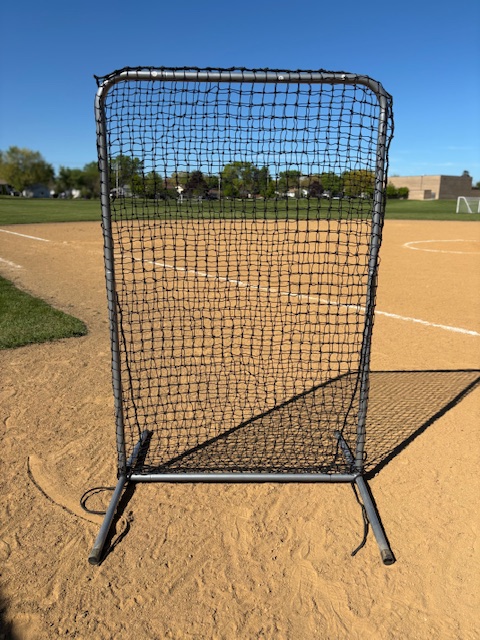
Whenever I see a coach doing front toss at practice from 15 feet away without a net to hide behind, my first thought is always “That coach must not have much faith in him/herself as a hitting coach.”
But the reality is (most of the time anyway) that they would use a screen if they had access to one. Sure, you could try using a Bownet or similar product but the blowback on a hard-hit ball directly into the net would probably negate any value in setting it up.
Effective protection, even from some 10 year olds, requires a much sturdier protective screen – the type you see at high schools, colleges, batting cages, and professional stadiums. The trouble there is your typical youth coach, or even a high school coach who has to practice at an off-campus field, can’t exactly cart around a heavy-duty screen with a heavy-duty net, nor do they have the time to assemble and disassemble it with all the nuts and bolts that are required.
For years I had that problem solved with the old Jugs Snap-Together Screen. It was the perfect solution – a heavy-duty net that slipped over a heavy-duty frame that was easy to put up and take down. The push–in snapping mechanism meant you could slide the pieces together, then have the snaps hold them in place. Then, when it was time to leave the field, I could quickly pull it all apart and put it back in the carrying bag, ready to transport anywhere I needed it.
All good things must come to an end, however, and last fall that screen gave up the ghost. Some of the snaps didn’t work anymore, and the net was beginning to fray, which increased the risk of a hard-hit ball breaking through.
Since Jugs doesn’t offer that product anymore I searched and searched for something similar to replace it, That’s when I came across the Cimmaron 6×4 #42 Safety Net and Screen at Epic Sports.
It’s a little smaller than the Jugs screen was, but it was still big enough to hide behind after throwing a pitch. (One time when it pays to be a little under 6 feet tall.)
The description mentioned a snapping mechanism but there weren’t any closeup photos to show if what they meant and what I thought of were the same. But with no other viable alternatives I figured I’d give it a try and made the purchase.
I’m happy to report it’s everything I hoped it would be.

The 1-1/2 inch steel tubular frame is lightweight yet very strong and confidence-inspiring. The net, made from #42 nylon, has held up well after take some direct hits; I have full confidence in it.
It’s also a little easier to assemble than my old protective screen was, probably because it’s a little smaller than the old one so there are fewer pieces to assemble. There are three pieces that comprise the bottom, two along the sides, and three that form the top and the upper part of the sides.
All parts have a number sticker on them that correspond to the supplied diagram that shows you how to put it together. The first time I did it I had a little trouble figuring out what went where but that was due to operator error.
I didn’t bring the diagram with me to the field, and I then assumed the two pieces that form the top corners worked the same way as the Jugs screen, i.e., the long part goes across the top and the short part goes down to join the side. When that didn’t work it was easy enough to figure out how to put it together properly and it’s been a breeze ever since.

The net is also easy to put on. It has a pillowcase-type of structure – the top and sides are closed while the bottom is open, so you can quickly slip it on and off the assembled frame. There is also a nylon rope at the bottom that allows you to secure the bottom of the net so you don’t catch a hard ground ball to the feet.
Unlike the Jugs net, there is no hole in center to pitch through. That’s ok, though, because I am used to turning L-screens with the tall side to the right and pitching around it, so it’s essentially the same.
It’s even a plus in some ways because a ball with a little tail to it won’t come across the frame, unlike the hole-type where I got clipped a few times with a line drive even though I swear I wasn’t standing in the hole.

The only downside I see to this product is that it doesn’t come with a carrying back. That seems like an oversight given that the quick up-and-down construction makes me think it was designed for portability.
Fortunately I still had the Jugs screen carrying bag so I’m using that. I also tried a speaker stand carrying bag from Sweetwater, which worked ok too. Neither one is quite deep enough to fully close because of the design of the two base pieces, but they are both wide enough and will both work as long as you’re careful getting it in and out of the vehicle.
I’m guessing the manufacturer opted not to offer a bag to keep the price down, but it sure would be nice for one to be offered even if it’s a separately purchased accessory for those of us who need to cart it in and out on a regular basis.
Speaking of price, the Cimmaron protective screen is relative bargain in my opinion. It’s just $179 for the frame and net. When compared to the cost (and time) of a visit to the emergency department or immediate care facility after taking a line drive to the head it’s definitely worth it.
And if you want to add padding around the frame it costs a little more but if your goal is to put it up and take it down the same day it feels to me like you’re better off without the padding.
So if you’re a coach who is pitching front toss with real balls to your team and want to feel a little safer while doing it, check out the Cimmaron 6×4 #42 Safety Net and Frame. In my opinion it’s worth every penny. And yes, I paid for my own.
My good friend Jay Bolden and I have started a new podcast called “From the Coach’s Mouth” where we interview coaches from all areas and levels of fastpitch softball as well as others who may not be fastpitch people but have lots of interesting ideas to contribute.
You can find it here on Spotify, as well as on Apple Podcasts, Pandora, Stitcher, iHeart Radio, or wherever you get your podcasts. If you’re searching, be sure to put the name in quotes, i.e., “From the Coach’s Mouth” so it goes directly to it.
Give it a listen and let us know what you think. And be sure to hit the Like button and subscribe to Life in the Fastpitch Lane for more content like this.
The Way You’re Training Your Players Could Be Hurting Their Performance – And Health

We’ve all been there. We have a player who turns out to be great, or we watch what great players do, and we study them intensely to figure out what they’re doing so we can replicate it with all our other players.
But then when we try to apply what we’ve learned we find it works really well for some, pretty well for others, and little or not at all for the rest. Some even see their performance level go down or even get hurt trying to implement what we’re telling them.
How can that be? we wonder. We did our due diligence and we know what we’re saying works. We’ve seen it work. So why isn’t it working here?
The answer is very likely to be related to something called “motor preferences®,” which can be simply defined as working with the way each body is designed to move from birth.
This is a concept I have been dabbling with for the last few months since learning about it from my friend and colleague Linda Lensch over at Greased Lightning Fastpitch. (If you’re in the Jersey Shore area she’s definitely the person to see about fastpitch pitching.)
I had previously taken an online course offered by Volodalen, a French organization that has performed 20 years of research into motor preferences and how they help athletes in all sports perform at a higher level while reducing injuries. But last weekend I had the opportunity to join a couple dozen of the best pitching coaches in the country for a two-day, in-depth, in-person training clinic hosted by James Clarke at United Pitching Academy in Centerville, Indiana. (Again, James is the guy to see in that area.)
The clinic was led by David Genest of Motor Preferences Experts, the only organization in North America authorized by Volodalen to teach how to identify and take advantage of motor preferences in this part of the world. To say it was mind-blowing and potentially game-changing is still greatly understating the impact that understanding your players’ motor preferences can have.
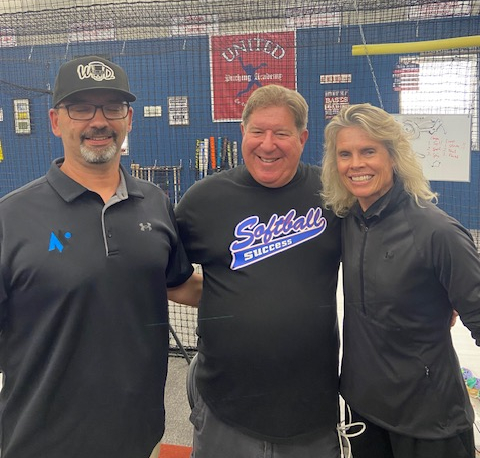
I’m not going to go into a lot of detail here, but I’m going to share some of these concepts to help you get a better feel for how learning about your players’ motor preferences can help you train them better.
One of the core concepts is that athletes can be classified into one of two groups: aerials and terrestrials. These are not black and white classifications but, as David told us, more 50 shades of gray.
So while some players may be totally aerial or terrestrial, most will fall somewhere along a spectrum in-between those two extremes.
Aerials tend to move rather light and bouncy, especially when they run. They like being up in the air, with their center of balance leaned more forward. Think of a kangaroo.

Terrestrials, as the name implies, tend to be more earthbound. Their center of balance tends to sit further back, and they pull themselves forward rather than bound forward. Think more like an elephant.
Those are two very different movement patterns. So you can see why, if you tell an aerial to spring forward when they move you’ll get great results, while telling a terrestrial to spring forward will probably not get the success you’re looking for. One is designed to do it, the other is not.
Another key factor is which side of the body favors being in extension and which side favors being in flexion. All of us have one of each, and it’s built into our DNA.
So if you have, say, a catcher who can block well to her right but struggles to get to her left, it could be her left leg is her extension leg, which is good at pushing/extending, while the right flexion leg is not so much.
There are many other motor preferences, such as a preference for red or blue, that need to be taken into consideration to develop a complete, individualized profile of a player, but you get the idea. The more you understand how their body is designed from birth to move, the better you can train them to take advantage of what they can do easily while avoiding what will be more difficult for them to do..
Now, I don’t claim to be an expert in motor preferences. While I am now certified in motor preferences use by MPE as well as Volodalen, I am still very early in this journey.

But I have already seen results within a single lesson after testing a few students and making suggestions based on the outcomes. For example, a hitter who hitting pop flies on front toss suddenly started hitting bombs after we adjusted her swing to use her motor shoulder more effectively.
I’ve also seen a pitcher improve her stability and pick up a couple of mph in a lesson after changing how she launches. Several pitching coach friends who were at the clinic are reporting similar improvements just through understanding their students’ motor preferences better.
If you are serious about helping your players become the best they can be – whatever that ceiling is – I highly recommend signing up for a Motor Preferences Experts clinic. You can find a list the upcoming dates and locations here.
I will tell you it’s not cheap. Attending a clinic is a $900 investment, although you can then attend additional clinics for a refresher at no charge, at least as of this writing. But in my opinion it is well worth the expense, especially if you plan to keep coaching or teaching for a while.
If you want to get started but can’t make it to a live clinic right now you can also do the Volodalen online course as I did. That will be a $990 cost (which cannot be applied to the cost of live clinics in case you were wondering because they are offered by separate organizations). It is not as complete as the live training, nor as valuable in practical application in my opinion, but you do get videos you can refer back to again and again.
Either way you go, however, spread that cost out over a few years, and compare it to the benefits you and your players will receive, both in terms of improving their performance and helping them prevent unnecessary injuries, and I think you’ll find as I did that it is an incredible bargain.
And you’ll better understand not only why things that work with some players don’t work with others but also how to change what you’re teaching to what WILL for those players. You can’t put a price on that.
When Scheduling, Leave Time for Practice

The other night as I was wrapping up from lessons I got into a conversation with my friend Dave Doerhoefer. In addition to being a private instructor, Dave is a long-time fastpitch softball coach with the Vernon Hills Stingers travel organization as well as Vernon Hills High School.
The question Dave asked was my feelings about the obsession many travel teams today seem to have with squeezing as many games as they possibly can into the brief summer season. It is not uncommon for travel teams – even those that only play a couple of months in the summer due to spring high school softball – to set a goal of playing 100+ games.
I’ve blogged about this before (actually back in 2012), and it only seems to have gotten worse. So much for me being an influencer.
Both Dave and I agree that teams that focus on playing a crazy amount of games are doing their players a disservice on several levels.
No time for practice
Probably the biggest issue is that if you’re scheduling 2-3 nights of games per week, plus playing tournaments every weekend, you’ve left little time for practice.
That’s a problem because games aren’t where you get better. That’s where you measure where your skills are currently. Practice is where you get better.
In practice you can field 100 ground balls or catch 100 fly balls, which allows you to really hone your skills. Especially if the coach is smart enough to make those balls just slightly outside your current level of competence and continues to raise the difficulty level as your skills improve.
In a game, you’re lucky if you get 7-10 touches on a batted ball. Most players will get far fewer, or perhaps not any, especially if you have dominant pitchers with good strikeout numbers playing in five inning games due to time limits.
Younger players playing in timed games, who are the ones that generally need the most repetitions, may only see three innings of play. It’s tough to get better when nothing happens.
Add the need to teach all the various situations and permutations a player needs to know to make the good, instant decisions required to play at a high or even decent level and the problem of not getting enough practice time grows exponentially.
Reducing the number of games to allow for more touches/repetitions and instruction time in practice will do more to grow a player’s skills and softball IQ than just throwing them out on the field and leaving it to random chance.
Keeping the excitement
When you play games practically every day what should be a happy diversion from normal life quickly turns into a job. And how happy are people with their jobs?
Research shows that while 65% of workers surveyed are happy with their jobs, only 20% are actually passionate about them. Translating that into teams, if you have a team of 12 players it means only 8 will actually be happy with the team, and just 3 will be passionate about it, if playing softball starts to feel like a job.
You never want playing to feel routine. You always want your players to be excited and ready to give their all – at least if you want to win.

Cutting back on the volume of games will help keep those you do play more special. It will also give the parents a little more time to keep those uniforms looking spiffy.
Reducing burnout
Burnout is a huge problem in today’s youth sports. In fact, research shows 40% to 50% of youth athletes report experiencing some level of burnout.
That doesn’t mean they stop playing necessarily. But they may not have the same level of enthusiasm for playing they once did, and that can lead them to dropping out of the sport entirely eventually.
We have to remember that while we may have big dreams and aspirations for these young athletes, they are still kids. A few may want to play all the time rather than pursuing other activities, but most need other stimuli to help them full enjoy their lives and reach their human (not just their softball) potential.
More general free time, or even more time spent in practices rather than game situations, can help them grow their social skills more effectively as well, which will also help prevent burnout.
Making time for multi-sport athletes
There is much talk about how college coaches love multi-sport athletes, and how being a multi-sport athlete is better for the youth athlete’s health. The cross-training of playing multiple sports can help prevent injuries, especially those caused by repetitive movements. It can also help prevent the burnout discussed above.
Yet it’s awfully tough to fit another sport into your schedule when your softball team is playing nearly every day as well as all weekend.
Of course, this isn’t just a fastpitch softball problem. EVERY sport seems to think they need their athletes playing an incredibly heavy schedule of games in order to compete, and they plan their years accordingly.
At some point nearly all athletes need to choose a sport to specialize in if they want to play at a higher level, i.e., college. But that doesn’t have to be prior to about 15 years old.
Younger teams that reduce their game schedules give their athletes the opportunity to pursue other sports, at least at some level, to help them fully develop their bodies and potentially reduce the chance of injury. In return, they get athletes who are better conditioned and mentally sharper, helping improve their performance on the softball field.
More is not always better
Yes, it’s easy to get caught up in the idea that more is better when it comes to scheduling games. But the reality is it’s not.
It’s time to bring some sanity back into the process. As you plan your 2024 game schedule, don’t get caught up in the “arms race” of which team in your area plays the most games.
Think strategically and prioritize quality of schedule (including the factors listed here) over raw quantity of games. I think you’ll find your results improve – and your athletes will have a better overall experience.
Scheduling photo by cottonbro studio on Pexels.com
5 Common Softball Injuries & How to Prevent Them
Guest post by Chris Salise

Photo by rawpixel.com on Pexels.com
Everyone likes a good game of fastpitch softball, but no one likes to be taken out of it prematurely due to an avoidable injury. Unfortunately, whether it’s due to improper stretching and calisthenics, or faulty equipment, too many people find themselves laid up before they can round the corner to home.
Don’t let it happen to you. What follows is a list of the 5 most common softball injuries and how to avoid them. A little preparation and a good dose of common sense are all you need to keep you in the game and playing at your best.
Tendinitis
Tendinitis is most commonly associated with wrist injuries, but in its most literal form, it’s simply an inflammation of a tendon. This means that pretty much any part of your body where bones connect to muscles is vulnerable to tendinitis. For softball players, that mostly means the wrist, shoulder, and elbow.
Tendinitis can most easily be avoided by doing the proper stretches before a game. Increasing the endurance of your muscles through strength training can also lower the odds of straining your tendons. But in both cases, make sure you’re doing your exercises in proper form—stretching and lifting out of whack can cause tendinitis all by itself!
Ankle Sprains
Ankle sprains are annoyingly common and a big risk for softball players. This is because whether you’re running the bases or trying to catch a pop fly, softball requires a lot of sudden stops and starts in your lower extremities. This puts sudden strain and weight on your ankle joints and can cause them to buckle without warning.
It may surprise you to learn that one of the main causes of ankle sprains in softball, however, is sliding into bases. As such, observing proper sliding techniques can heavily decrease your chances of spraining your ankle. And, of course, don’t forget to stretch!
Rotator Cuff Injuries
The rotator cuff is a series of muscles between the shoulder blade and the upper arm bone. Injuries to this part of the arm are common in fastpitch softball players because the overhand throwing motion puts a lot of stress and pressure here. Most rotator cuff injuries are one-time deals, but they can chronically weaken your shoulder if not treated properly.
To avoid these types of injuries, it’s important to learn and maintain good form, warm up before each game, and always make time for rest and recovery between sessions. Good conditioning is also essential, so don’t neglect your exercise, training, and practice. These simple habits won’t just help prevent shoulder injuries; they’ll improve your game as well!
Hamstring Injuries
Hamstring tears are already pretty common among the general population, but even more so for sports players and especially softball athletes. If you’re dehydrated, if you don’t stretch properly or if you’re wearing shoes that aren’t catered to the shape of your feet, all of these will contribute to the chances of you tearing a hamstring before you even make it to first.
Besides keeping hydrated and stretching, a big help for reducing the chances of tearing your hamstring is to make sure both your hamstring and quadriceps have the same level of strength. Ensuring that each part of your leg is as strong as the other will make it so that one muscle doesn’t have to take on more of a burden than the other. You don’t know how right they are when they tell you not to skip leg day at the gym!
ACL Tears
These thankfully aren’t quite as common in softball as in sports such as soccer, volleyball, and basketball, but they do tend to occur more frequently in female athletes than their male counterparts, largely due to differences in the angle at which the hips connect to the thigh bones (aka Q angle). Still, they can be terrible to deal with when they do happen.
Tears in your ACL most often occur when you rapidly shift directions while running. These injuries are extremely painful and can cause long-term damage.
You can help prevent ACL tears by training with plyometric exercises to get your body more used to bursts of activity. It’s also a good idea to train with a wobble board to improve your balance. Endurance and coordination are the keys to not falling prey to an ACL injury.
You also might want to avoid injury by taking shorter practice sessions and making sure your goals and exercises are evenly paced. Softball injuries happen all the time, but they don’t have to be a fact of life.
Chris Scalise is a freelance writer and fitness enthusiast from Los Angeles, California who writes about sports and health topics for a wide range of publications and brands, including SportsBraces.com.
For A Proper Fastpitch Softball Warmup, Get Dynamic!

Just about everyone knows how important it is to warm up before undertaking any athletic activity, both to prepare for the best performance and to reduce the risk of injury. (I would say “everyone,” but I still hear horror stories of players being thrown into games or or having their pitch/overhand throw speed measured at camps without any warmups at all.)
What apparently isn’t as well-known is that the type of warmup you do can have a significant impact on both performance and injury prevention.
There are basically two types of warm-ups: static and dynamic. Static warmups involve standing still and pulling on muscles. One example is shown in the (staged) photo at the top of this post, where a player lays her arm across her chest, places her wrist just above the elbow of that arm, and either presses on the arm or tries to pull it a bit. (This, by the way, is one of the most useless “stretches” you can do because it really doesn’t stretch anything.)
Other examples include all the players sitting in a circle with their legs stretched out in front of them, attempting to grab their toes while they sit and chit chat about their day, rolling up on your back and trying to touch the ground behind your head with your toes, and the ever-popular point your elbow to the sky and try to pull it past your head with the other hand.
Dynamic warmups involve stretching the muscles by increasing the range of motion as you make different movements. A few examples are butt kicks, cherry pickers, torso rolls, and shoulder circles. You can see a few more examples in this video from Jason Domnanovich, a trainer for the Chicago Bandits (courtesy of the NFCA):
What’s the difference? Probably the most important is that static stretching actually turns off your nervous system, making it more difficult to perform at a high level. In other words, instead of preparing you for competition it hurts your preparation. This process of turning off the connection between the mind and muscles also makes you more prone to injury.
Dynamic warmups do the opposite. They activate the muscles so they’re ready to perform. Muscles that are activated can run faster, throw harder, more laterally more quickly, rotate more powerfully – all the things we want do on a softball field. Warming up dynamically also prepares the muscles for the stresses they will face during a game or practice session, helping reduce the chance of injury.
I know from personal experience the difference dynamic stretches can make. When I was still coaching teams, we moved from static to dynamic stretching before all activities and rarely experienced an injury. Not that we had a lot to begin with, but the number of injuries fell even further. That’s good, because healthy players will contribute a lot more to your success than injured ones.
Does that mean you should never perform static stretches? No, not at all. They’re fine after the game or practice to help the muscles relax after being taxed and prevent them from tightening up as they recover. In fact, it’s recommended. Just don’t do it before the game or practice.
So how do you go about making the transition to dynamic warmups? What exercises/activities should you do?
This video provides an excellent, softball-specific resource. It’s the one I used to learn more about it, and to build a dynamic warmup routine. (No, I have no financial stake in you buying the video, I just know it’s good.)
There are plenty of others as well. Just search on “dynamic stretching softball” and you’ll find a wealth of resources that will help you build a warmup that will actually help your team gain a little extra edge while preventing injuries.
If you (or your team) is still standing motionless, tugging on muscles before the game, stop it! Make the transition to dynamic warmups. You’ll be glad you did.
Oh, and if you have any stories to share about dynamic versus static warmups, be sure to add them in the comments below. While you’re at it, be sure to hit the Like and Share buttons, and take some time to subscribe to Life in the Fastpitch Lane so you never miss a post again.






 Life in the Fastpitch Lane