Blog Archives
Thank You and Farewell to Retiring Coaches

As the travel ball season winds down (that went fast!) some of you out there are coaching your final games. Whether your daughter is done with her fastpitch softball career, is going to a team with so-called “professional” coaches, your organization is making a change in how it selects coaches, you’ve just decided coaching is something you no longer want to do, or there is some other reason, the next couple of weeks (or so) will no doubt be bittersweet.
Well, I for one, want to thank you for taking on what is often a thankless job and doing your best to help the players you served as either a head or assistant coach.
As your last team plays its last few games, be sure you take a little time to reflect on the journey that brought you here. Because coaching youth sports is both one of the most difficult and most rewarding ways an adult can spend his/her time (if you are truly in it for the right reasons).
You’ve weathered countless storms of parents angry about their daughter’s playing time, the position she’s played, where she is in the batting order, decisions you made on the field, the caliber of teams you’ve played (either too hard or too soft), when and where you set up practice, some random comment you made that someone took personally, your selection of white pants, and how you enforced the team rules that were CLEARLY spelled out at the parent meeting you held right after tryouts were held and offers were accepted.
You’ve endured countless sleepless nights the night before the start of a tournament, going over batting orders, field lineups, contingency plans, and other things no one else had to worry about. You got to the hotel before everyone else so you could drive from the hotel to the tournament site to make sure the time Google maps says it will take your team to get to the field is the time it will actually take.

You’ve made sure someone is arranging meals and snacks. You’ve checked and re-checked the med kit to make sure you have everything you may need in case of injury.
You’ve carried around a 20 lb. bag of miscellaneous objects such as glove lace (and glove lacing tools), duct tape, spare sunglasses, a measuring tape, drying towels, cooling towels, and more to ensure you’re ready for every contingency. You’ve say through countless pre-tournament meetings while everyone else was off having a meal and/or an adult beverage or swimming in the pool.
And now that part is all over, and you may feel a little sense of relief. But you’re feeling something else too.
You know you’re going to miss working with your team, running drills and walking through situations to help your team learn this very complex and often heartbreaking game. You’re going to miss the challenge of facing an opponent that on paper looks to be better than you but that somehow your team manages to overcome.
You’re really going to miss the thrill of seeing a player who came to you barely able to put her glove on the correct hand suddenly blossom into regular contributor to your team’s success. And you’re going to miss the camaraderie that comes with spending so many hours with a group of people you really like as you work toward a common goal.
Come this fall if you don’t have a daughter playing anymore it’s going to feel strange to wake up at 8:00 am on a Saturday morning with nowhere to be and nothing to do.
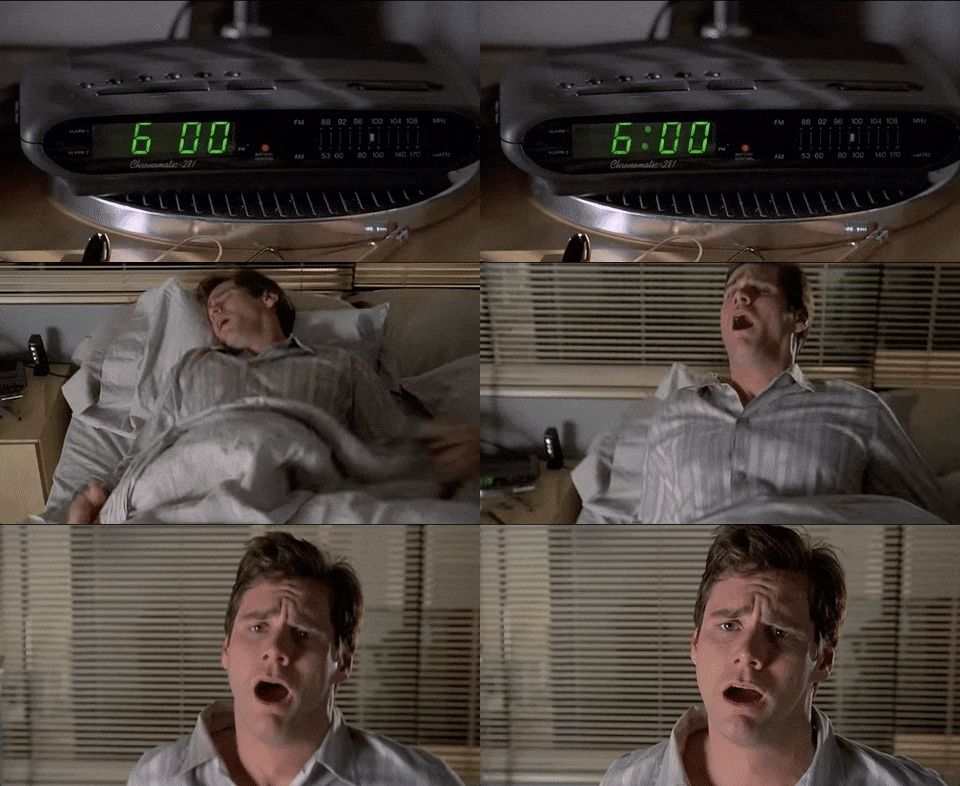
If you do have one playing for someone else, it will still be odd to be sitting on the sidelines in your camp chair drinking coffee instead of tossing batting practice, fungoing ground and fly balls, or sitting in the dugout agonizing over a lineup.
So thanks for the hundreds of hours you’ve spent working with your players, attending live clinics and online classes to learn how to coach your players better, and missing out on events with family and friends because your team had a game to play. Thanks for always looking out for your players’ best interests, even when it felt like they may have conflicted with your own.
And most of all, thanks for caring about your players as people rather than just chess pieces to be pushed around a board. You may not realize it now, but the impact you made on at least some of their lives is probably immeasurable.
So as things wind down, take a moment to savor all that was great about being a coach. Linger a little longer after practice, and especially after your last game, and think about the good times you’ve had and the lives you have touched by saying “yes” when many others would have said and did say “no.”
Thank you Coach and farewell! You have made a difference in a lot of lives.
Main photo by Kindel Media on Pexels.com
When Timing Pitches, Focus on the Future

One of the things that makes hitting so difficult is you not only have to develop great swing mechanics; you also have to time them to the speed, direction, and movement of the pitch.
Since there are no style points in softball (i.e., no judges holding up cards reading 9.5 for a beautiful swing) the only thing that matters is how well you hit the pitch. Yes, having great mechanics contributes to being able to hit the pitch well, but they have to be timed properly to get the best effect.
And that’s something many hitters struggle with. One of the big reasons, at least in my experience, has nothing to do with athleticism or ability.
Instead, it’s a fear of looking bad, or of being yelled at otherwise chastised for swinging at a bad pitch. So, those hitters will wait too long to ensure the pitch is good, putting themselves behind and thus letting the ball get too deep on them before they initiate their swings.

How do you overcome that fear? One way is to teach hitters to think “yes-yes-yes-no.”
In other words, they’re always swinging until they actually see it’s a bad pitch instead of waiting to swing until they see it’s a good pitch.
Still, if they’re really worried about looking bad they may still hesitate. So here’s another way to explain it to them.
Ask them whether they can affect things in the past, present, or future. Unless they’ve skipped every science class ever they will likely tell you the present and future.
Then take a ball and hold it either even with their bodies or a little behind. Explain to them that this ball is in the past.
Therefore swinging at it is pointless because they can’t change the outcome. It’s by them and it’s done.
Then hold the ball at the proper contact point and tell them this pitch is in the present and they can do a lot with it. Then hold it further in front and say it’s in the future.
Now, if they start swinging at the future ball (too early) can they still make an adjustment and get on-time? It may not be easy depending on HOW early they are, but it is possible, especially if you have a ell-sequenced swing.
So with that in mind, is it better to be a little too early or a little too late? Too early, of course, because you can still change it. Once you’re late it’s all over – unless you happen to have a time machine handy, in which case quit playing softball and go back in time to buy some Microsoft, Apple, and Amazon stock.

It’s all about keeping it simple. Hitters may not understand some of the complexities of proper timing, but pretty much everyone can relate to the idea of past-present-future.
Get them focused on affecting the present and future and they’ll spend a lot less time regretting their decisions in the past.
Photo by Pixabay on Pexels.com






 Life in the Fastpitch Lane