Blog Archives
Losing Doesn’t Build Character – It Reveals It

Today’s post was actually suggested to me by my partner in podcasting Jay Bolden of BeBold Fastpitch. Not sure why he didn’t keep it for himself since he writes some great posts on his own Facebook page, but I will definitely take it. Thanks, buddy!
I think we’d all agree that it’s easy to look like a good coach, and a good person, when your team is winning., because it’s true that winning covers up a lot of other problems. You may be the most clueless coach in the world, but if your team is winning a lot more than it’s losing no one is likely to have any complaints.
That’s understandable. As Nuke LaLoosh says, winning is a lot more fun than losing.

Where you truly see the measure of a coach, however, is when things aren’t going so well. When the team is having a rough season, or maybe just going through a rough patch, how the coach reacts reveals a lot about who he or she really is.
First, let’s talk about how a good coach will or should handle losing, just to do a little level-setting.
No one likes losing. I know I sure don’t, and especially didn’t when I was coaching teams. I was one of those “I hate losing more than I like winning” types.
So with that in mind, you have to look at WHY you’re losing. The first place a good coach will look is in the mirror, asking questions such as:
- Have I been training my team well enough?
- Have I been making good decisions about who is on the field?
- Have I been putting together the most potent batting order, based on facts, not feelings?
- Have my in-game decisions been good ones?
- Are we playing the right level of competition?
- Are our strategies appropriate for the personnel we have?
- Have I built an atmosphere where players are playing with confidence or with fear?
That’s a great starting point. But the truth is you could be doing all the right things and the team is still losing. The softball gods are funny that way, and when you make them angry for some reason you may have to sacrifice a chicken to get back on track.

If you noticed, all of the above had the coach looking inward, at him or herself first, to ensure that the problem isn’t staring him or her in the mirror.
Now let’s talk about what bad coaches do: they blame. They will:
- First and foremost blame their players for not playing well enough or trying hard enough.
- Blame their facilities or their budgets for not giving them enough money to be better.
- Blame the administration for not supporting them.
- Blame the parents (yes, even in college) for expecting too much, or questioning the coach, or I suppose for not having better DNA.
- Blame the umpires for not calling a fair game.
- Blame whoever happens to be out of earshot at the time.
- Blame whoever happens to be in front of him or her.
I’ve heard stories where a coach’s idea of coaching is to essentially yell at her players to “play better.” That’s the sum and total of her advice.
No advice on HOW to play better after a problem, such as stay down on a ground ball, or go for the lead runner first, or you have to look up to see where the ball is before trying for another base, or anything else helpful like that, So it’s no surprise when the same problems keep coming up. Thanks, coach.
We’ve also all seen the coaches who scream at their players, telling them how bad they are after they make a mistake. No attempt to build a positive atmosphere, or encourage them instead of letting them get down on themselves. Just constant berating.
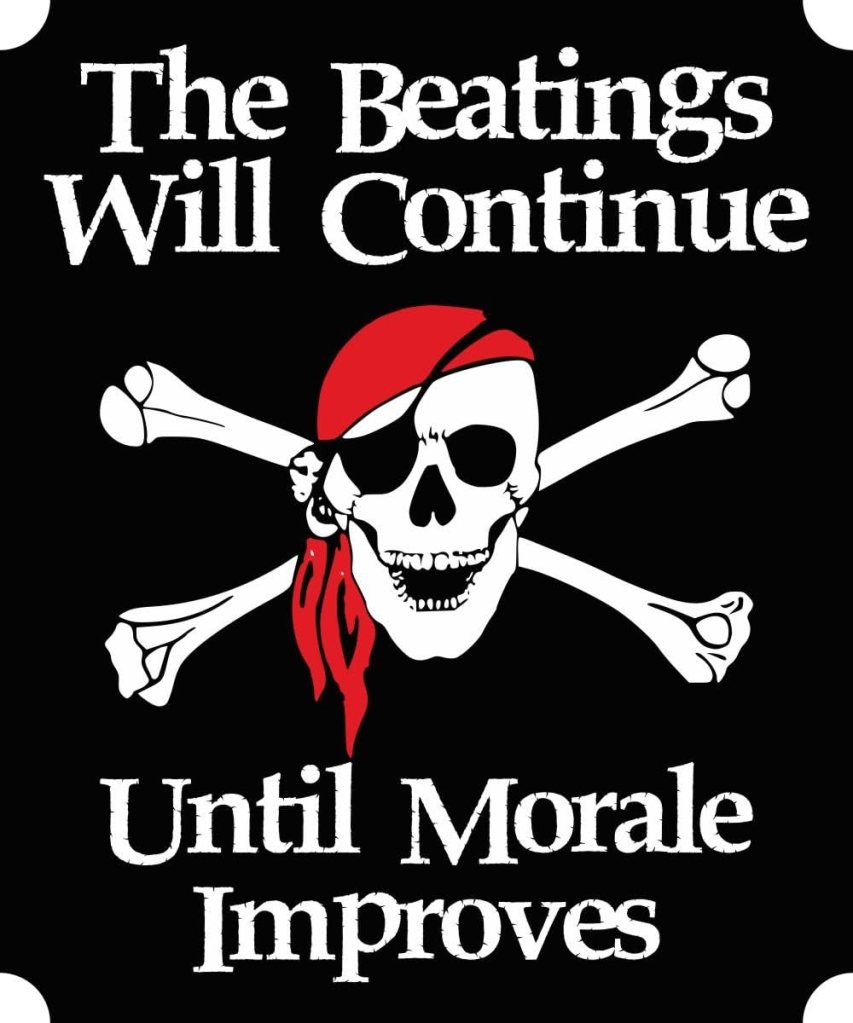
And do things get better? Maybe by luck sometimes. But for the most part, that type of approach is counter-productive for one simple reason: it’s addressing the wrong problem.
Look, no one likes to lose. Some take it harder than others (like me) but no one actually likes it.
So screaming about it or blaming others doesn’t address the core issue. It’s an attempt to cover it up with bluster instead.
So what types of things does losing reveal about a coach’s character? One is their maturity level.
Good coaches will attempt to work the problem and maybe change the atmosphere or the mindset if needed to try to change the outcomes. They will look to support their players, and look for solutions to the problems the team is facing.
Bad coaches will deflect the problems and substitute anger and noise for a thoughtful approach. They don’t know what to do to change things so they throw tantrums in the moment in an attempt, I suppose, to hide their lack of a viable solution.
Losing also reveals their ability to see the larger picture. Good coaches know they will get through the current series of loses, and develop a plan to help expedite that process.
Bad coaches let their emotions take over and focus on the immediate.
Then there’s the worry about what others think of them. Both good and bad coaches will often have that concern. I mean, after all, we all want to be thought of as being good at what we do.
But good coaches understand they have to set those temporary perceptions aside; after all, if all else was the same except for the won-loss record, those people calling for their heads would instead be scheduling a parade.
Good coaches realize they have to separate themselves from the current unfortunate circumstances and think about times when their teams were winning so they can clear their heads and address whatever the causes are. If they truly believe in what they’re doing, and stay true to it, they know the wins will come again.
Bad coaches, on the other hand, will try to cover up their insecurities by directing their anger and blame at others, never stopping to think about the fact that they may need to change what they’re doing or how they’re approaching the team in order to flip the script and back on track. And the more they let those negative thoughts creep in, the worse things are going to get for them.
As we often say, softball is a game filled with failure and adversity. There’s absolutely no reason to think those things will affect you as a coach at some point, or more likely many points, in your coaching career.
How you handle losing when it comes, though, will say a lot about who you are and what you truly believe in. It is entirely a test of character, graded on a pass-fail scale.
Be sure you’re ready to pass that test. Not just for the sake of your players, or your program, but for yourself.
Helping Players Feel Good about Themselves More Critical Than Ever

In February of this year the Centers for Disease Control and Prevention (CDC) revealed the most recent results of its survey on the mental health of youths, along with a 10-year analysis of trends in that area. The news, in many cases, isn’t good – especially for teenage girls
The Youth Risk Behavior Survey Data Summary & Trends Report: 2011-2021 showed that 57% of teenage girls reported feeling a persistent sense of sadness or hopelessness in the last year. That’s an all-time high, and a full 21 percentage points increase over 10 years ago. Additionally, 41% of teenage girls reported experiencing poor mental health in the last 30 days, and nearly one-third (30%) considered suicide over the last year versus 19% in 2011.
These are disturbing figures to say the least, and they are definitely trending in the wrong direction. So what can fastpitch softball coaches do to help the situation? Here are a few suggestions.
Create a Positive, Welcoming Atmosphere
Most of your players probably won’t show that they are experiencing feelings of sadness or hopelessness at practice or at games, but that doesn’t mean those feelings aren’t there.
Many may see playing softball as the best part of their day. It can be a refuge from all the rest of the turmoil of social media, peer pressure, grade pressure, etc. they’re facing.
But if practices and games consist of a lot of yelling, screaming, brutal criticism, and punishment, softball can quickly become one more burden contributing to the downhill spiral.
Instead of taking a command and control approach try being more positive with your players. Try to catch them doing good instead of always commenting on what they’re doing wrong.
I’m not saying you have to turn practice into a birthday party without the cake. There is certainly a time for correction and a need to hold players accountable.
But don’t make it all negative. Look for the positives and help players feel good about themselves when they perform well – or even make an effort to do things they couldn’t before.
You never know when a kind word or a metaphorical pat on the back might be the thing that keeps one of your players from becoming another sad statistic.
Pay Attention to Warning Signs
It’s unlikely any of your players will come out and say they’re feeling unhappy or having difficulty. People with depression in particular get really good at covering it up – at least until the dam breaks.
One thing to look for is a change in the way they interact with their teammates. If they are suddenly quiet and withdrawn where they were once boisterous and interactive it could be a sign something is going on with them.
It may just be a problem with a teammate or two, but it could also be a sign of something deeper. Either way, you’ll want to know about it and address is sooner rather than later.
This also applies to how they interact with you. If a player used to speak with you on a regular basis but has now become withdrawn it could be a sign of something deeper going on in their lives.
You can also look for a change of eating habits. If you’re doing team meals, or even just handing out snacks to keep your players fueled through a long practice, take not if someone suddenly stops eating or just picks at their food.
Pay attention to how they manage their equipment. Now, some players are just slobs who throw everything in their bags haphazardly. That doesn’t mean they’re experiencing sadness. In fact, some of the happiest players I’ve ever known have earned the name “Pigpen.”
If, however, a player used to take better care of her equipment but is now letting it stay dirty or putting it away in a random manner, you may want to initiate a conversation to check in on her mental health.
You may also notice a sudden loss of focus, such as a player making mentals errors she didn’t used to make. If she is having difficulty coping with her life she may not be able concentrate her efforts on the task at hand. Instead of just yelling “focus!” you might want to check if there is something deeper going on.
Finally, pay attention to whether a player is suddenly reporting more injuries or illnesses than she did before. That could be the case, or it could be a sign of her not being able to muster the enthusiasm to participate and using injury/illness as an excuse.
If it seems to be becoming a habit you may want to sit her down and find out if there is something more going on.
Offer a Sympathetic Ear
Many teens who experience these feelings of sadness or hopelessness tend to feel like there is nowhere they can go to discuss them. They’re afraid of their peers finding out, and some may be uncomfortable talking to their parents about it.
Make sure your players know they can always come to you to talk about what’s going on in their lives. That doesn’t necessarily mean you should try to solve them, however.
In simple cases you can offer some friendly advice and encouragement. Often times teens simply have a desperate need to be heard or to get what they’re feeling out in the open.
But if you suspect something deeper is happening in their lives you’ll want to refer them to a qualified, Board-certified mental health professional. That person will be trained to help teens work through their feelings and recognize deeper issues that could have a profound effect on their physical and mental health in the future.
Just showing you care in a meaningful way, however, can be just the boost that player needs to take the next step to getting past her issues.
Not “Soft”
There is a temptation for some among us to blame these mental health issues on kids today being “soft” or “snowflakes.” “Back in my day,” they like to say, “we didn’t have these problems.”
Actually you did, but no one talked about it. They just suffered in misery, and some took their lives, because no one was recognizing the problem.
It’s also true that life today is very different than it was 10, 15, 25 or more years ago. The pace is faster, and the exposure to impossible standards is relentless.
In softball terms that can mean seeing pitchers your age (or younger) throwing harder than you in social media posts and feeling like you’re not good enough. Never mind that you’ve added a few mph over the last several months and are doing well in your games. You’re still be compared to everyone in the country.
Or it can mean seeing all these hitters blasting home runs while you’re hitting singles, or seeing a list of “Top 10 12 year olds” and not seeing your name on the list.
None of that existed in the so-called “good old days.” But it does now.
That’s why it’s important to be aware of what’s happening with your players and do whatever you can to give them a great experience. You may not just change a game outcome or two. You could change a life.
Photo by Randylle Deligero on Pexels.com
Softball Takeaways from Simone Biles

While the return of fastpitch softball to the Olympics was the big story for many of us who are fanatics for the sport, for the general populace of course one of the biggest stories was gymnast Simone Biles deciding not to compete in the team or most of the individual events. She did, of course, eventually take Bronze on the balance beam which is hardly her signature event.
It’s hard to imagine what a difficult decision that must have been for her. Here she has spent the last five years training for the opportunity to win more medals, presumably Gold medals, in her sport’s biggest showcase.
Yet when the time came something in her just snapped. She knew she couldn’t do it mentally at the level she needed, and that put her at risk of serious injury or perhaps even death given what she had planned to do. After one vault she decided it would be best to withdraw and give someone else a chance instead.
How did she get to that point? Part of it, of course, was relentless training. I doubt she’s taken many days off since she became a serious competitor, and that can take a physical and mental toll on you after a while.
While softball players don’t train at the same intensity or risk level as national team gymnasts (most of them anyway), it is possible to get so caught up in what you’re doing that you forget why you’re doing it. When softball starts to feel like more of a burden than an escape from life’s many real burdens, it’s time to take a little time off.
Another issue Simone Biles faced was a distinct lack of support, especially from people at the highest level of her sport. Those people loved showcasing her to the media to promote their own agendas, but when she told them about irregularities around the training they did their best to brush it under the rug and forget about it.
Parents, if your softball-playing daughter tells you physical or mental abuse is happening, don’t just tell her to suck it up or quit whining. Do all you can to find out if there is any reason to be concerned – even if it might mean losing a scholarship opportunity or being removed from a team that wins all its tournaments.
Your daughter’s safety and mental health are worth more, and not worth trading for any amount of money or plastic trophies. When she says something is wrong, be sure to listen.
Coaches, you have the same responsibility. If your player is suddenly having problems don’t get stuck thinking your job is simply putting a winning team on the field. Take an interest and find out what’s wrong.
Maybe she just has a softball version of the “twisties” and needs some help working through them. She’s lost confidence and needs someone to help her fill her confidence bucket back up.
Maybe she’s in a hitting slump and just needs someone to believe in her. The thing that prolongs most slumps is over-thinking the cause. Help her remember who she is and what she can do, even if it takes a little while. It will be worth the effort.
Or maybe, just maybe, something is going on at home or in her personal life that has her all off-kilter. You caring enough to find out and help her could have a lasting effect on her life that she will remember and appreciate long after she’s left her cleats at home plate.
Finally, when you’re performing at a high level there will always be haters – people who want to tear you down and then delight in your failure. Especially if you’re a female.
Many of the people leveling those criticisms have never put in the effort to do anything at a high level, But they’ll be more than happy to tell you why you’re weak and undeserving because you suddenly feel the pressure you were able to shut out before.
Players, don’t listen to them! Those ignorant couch potatoes know they don’t have the drive or dedication to be like you, so they want to drag you down to be like them.
Do what you need to do to get right in your own head – even if it means stopping for a bit to let it clear. This is the perfect time of year to do that, by the way.
The summer season is over, tryouts are over, and fall ball is still a few weeks away. Go to the beach or the movies or an amusement park. Listen to music all day, or sit and read a book or three. Hang out with friends who you don’t share a uniform with.
In other words, find something else to do with your day. Softball will still be waiting for you when you get back.
Anyone who has watched her career knows Simone Biles is the ultimate competitor. She’s never met a challenge she didn’t take head-on.
So when she says she has the “twisties” and the best way to deal with them is by pulling out of the Olympics it’s worth taking note.
If Simone Biles needs to walk away for a bit, the same can be said for any of us.
Take care of yourself, even if some around you don’t quite understand. Softball will be here when you’re ready. And you just may enjoy and appreciate it a little more.
Simone Biles photo from Agência Brasil Fotografias, CC BY 2.0 https://creativecommons.org/licenses/by/2.0, via Wikimedia Commons
Very proud of one of my students
A rare double post from me today, but this is worth calling out. Tonight I had a lesson with one of my hitting students, a high school junior named Emma. We had a great session – she ought to have an amazing season crushing the ball – and after I got home I texted her mom to let her know how well Emma was doing. That’s when I heard a story that trumped softball.
After her lesson, Emma stopped at Starbuck’s before heading home. While she was there an elderly woman pulled in and parked in the middle of the parking lot. She seemed confused, so Emma stopped to talk to her.
Emma quickly recognized the woman was having trouble, and contacted the police to get some help. Turns out the woman suffers from Alzheimer’s and didn’t know where she was – or how to get home. Emma stayed with her until the police came, talking with her and comforting her.
We hear a lot about what’s wrong with the younger generation. We sometimes focus too much on how well a kid can hit or pitch a yellow ball. Tonight shows the world is going to be alright as long as there are people like Emma in the world. She’s a winner no matter what she does on the field this season.






 Life in the Fastpitch Lane