16U team in southern Wisconsin looking for players
Received a note the other day from a 16U coach who is suddenly finding himself in need of a couple more players for the 2011 season, so I told him I would pass the word along. The team is the Wisconsin Lightning, who are based out of Salem, WI on the border of Illinois and Wisconsin.
He says they have a combined 14U/16U team that plans to play at the B level in 15U or 16U. It could be a great opportunity for either a 14U or 16U player looking to have fun while playing at a competitive level.
Here are a few more details from the coach:
“We are presently @ 9 players. We practice 2-3 times a week and have our own indoor hitting/Pitching facility. I’m not looking for “Studs” ( wouldn’t turn them down though) just girls with potential and a good work ethic”.
If that sounds like a fit for you, or someone you know, contact Pat Saltzberry at psaltzbe@gmail.com for a tryout.
It’s not about getting knocked down; it’s about getting up again
Saw the “mini-essay” below in the Liberty Mutual “Candrea on Coaching” email from ASA and Liberty Mutual and thought it was worth passing along. According to the email the author is anonymous. But it really speaks to the attitude you need to bring both to fastpitch softball and to life in general. In fact, the two are so closely tied that it’s one of the beauties of our sport.
Like softball, life can knock you down, and when it does you’re likely to feel bad. But what separates the winners from the losers isn’t that the winners don’t get knocked down. It’s that they get up again. Here’s the essay. I also liked the kite quote at the end.
Get Up
It has been said that your success is insured when you’re willing to get up at least one more time than you get knocked down. Hey, we all get knocked around. Like it or not, it’s just a part
of everyday life. No one, not the most or least talented among us, are exempt from the trials and tribulations of day to day living. But it’s how we respond to these temporary setbacks that will
in large measure determine how far we go and how high we fly in life.
When life deals you a crushing blow, you must condition yourself to quickly pick yourself up off the canvas and get back into the game. Winners always do. They realize that it’s OK to get
knocked down and that it’s perfectly normal to feel saddened hurt or disappointed about being knocked down. Lets face it, nobody likes to lose or encounter difficulty. But the winners also
recognize that the getting up part is ninety percent of overcoming any adversity placed in their paths.
Don’t worry about getting knocked down. Since it’s going to happen regardless of whether we like it or not, especially when we’re passionately and enthusiastically chasing your dreams, we should vow to keep getting up each and every time. Laying there, moping and feeling sorry for themselves, isn’t going to get them to the winners circle.
Never lose sight of the fact that you were placed here for a reason. There is a song in you that desperately needs to be sung. There are just too many good times, good things and great people out there to enjoy to ever allow a temporary setback to hold you down or hold you back. When you vow to get up every time you get knocked down, you’re well on your way to living the life others only dream about.
“Do not fear the winds of adversity. Remember: A kite rises against the wind rather than with it.”
Book review: The Talent Code
Here we go, as-promised, my review of the book The Talent Code by Daniel Coyle. Its premise is that talent isn’t something you’re born with — it’s something you acquire over time. High performers are the result of practicing a particular way (deep practice) for 10,000 hours, or roughly 10 years.
I had heard about the book a couple of years ago, and then again recently. Howard Carrier (aka Hitter) recommended it to me too, so I figured it was time to take the plunge and added it to my Christmas list.
The book examines three parts of being a high performer. The first is the deep practicing I just mentioned. High performers tend to practice differently than most. They break down a skill into pieces, and work through the individual pieces. When they practice, the part of their body that is most fatigued at the end is their brains because of the effort they go through to understand what they’re doing. They make mistakes as part of the learning process, and each mistake takes them closer to their ultimate goal of performance.
The second part is ignition — getting the performer to perform. Getting him/her excited in a way that leads to the desire for that performance level. The final part is master coaching — someone pointing the way and helping them along.
It really is a fascinating study of the way people learn, and the way performance is brought out in some and not in others. Coyle spent a lot of time visiting talent hotspots — Brazillian soccer training, musicians on the east coast, baseball players in the Caribbean — in an attempt to look for the commonalities and see if there are particular things that make it happen.
He also looks at research that has been done on how people learn as additional datapoints. Some of it is the same as I read in Talent is Overrated, which covers some of the same ground. But each book presents a facet of the jewel, helping the reader gain a better understanding of the factors behind great performers.
The book is an easy read. Coyle’s style is to illustrate by telling stories rather than lecture, and he makes it easy to move from one topic to the next. He also adds some personal insights from his own life and family that show he not only took the intellectual pursuit, but also applied the principles himself.
If you are interested in what drives high performers to achievement, or you want to improve your own coaching to help your players, I highly recommend this book. It will give you a whole new perspective on practicing.
Strikeouts happen
I was having a discussion with one of my students last week about hitting and her approach to the plate when she admitted, “If I strikeout, it really bums me out. It’s tough to go up and hit again.” (I doubt she really said bums me out, but that’s the way my 54 year old brain remembers it.)
I understand that. No one likes to go to the plate and strikeout. It’s the ultimate failure — you had three (or more) shots at hitting the ball and missed on all of them. But really, strikeouts are a part of the game. Since all of fastpitch softball is essentially built on failure and your ability to overcome it, hitters have to learn to get past the immediate feeling and go on with the rest of the game. Otherwise they’re not going to have too much fun. Unless it’s becoming a habit, in which case they probably need to work on seeing the ball better.
So to help her gain a little perspective, I gave her a Babe Ruth quote: Every strikeout brings me one at bat closer to my next home run.
That got me to thinking. I know the Bambino hit 714 homes runs in his career, a record that stood for many years and was considered unbreakable until Hank Aaron broke it. But how many times did The Sultan of Swat strikeout? The answer, according to the Baseball Almanac , is 1,330. Or almost twice as many times as he hit home runs.
That’s a lot, isn’t it? Must put him pretty close to the top of the list, right? Not even close. The Babe actually sits at #95, just behind Dean Palmer and just ahead of Deron Johnson. Which of course begs the question who are your all-time leaders? Surely they must be some pretty bad players.
Well, first of all in order to make the list you had to have a lot of at bats, which really bad players don’t get. That narrows it down some. In truth, the top 10 all-time includes some names you might recognize. In order, they are: Mr. October Reggie Jackson (with a whopping 2,597); Jim Thome; Sammy Sosa; Andrews Galarraga; Jose Canseco; Willie Stargell; Mike Schmidt; Fred McGriff; Tony Perez and Mike Cameron. Lots of Hall of Famers on that list. Thome and Cameron are still active too, so they have a chance to move up.
Right behind these guys is a player whose swing is often used as the model youth baseball and softball players should follow: good ol’ A-Rod, Alex Rodriguez. That’s probably not news to you Yankees fans. Other prominent names in the top 50 include Lou Brock, Mickey Mantle, Adam Dunn, Derek Jeter, Barry Bonds (the current career home run record holder) and Willie Mays. Even Pete Rose, who holds the all-time record for hits in a career with 4,256 struck out 1,143 times.
If you’d like to see the full list, you can find it here. It definitely puts things into perspective as you check out your favorite superstars and see how often they struck out too.
The point, though, is they didn’t let it get them down. They just put it behind them and went on to the next at bat. That’s what fastpitch hitters have to do too. You can say you’re taking your cue from the Hall of Famers, and the greatest to ever play the game.
How to know you’re getting through
In my last article for Softball Magazine, I used one of my favorite little teaching devices to talk about the importance of commitment to what you’re doing. The article focused on what is the difference between bacon and eggs. The answer, of course, is that the chicken is involved, but the pig is committed. I finished, as I do in lessons or team practices, by telling readers they should be the pig. 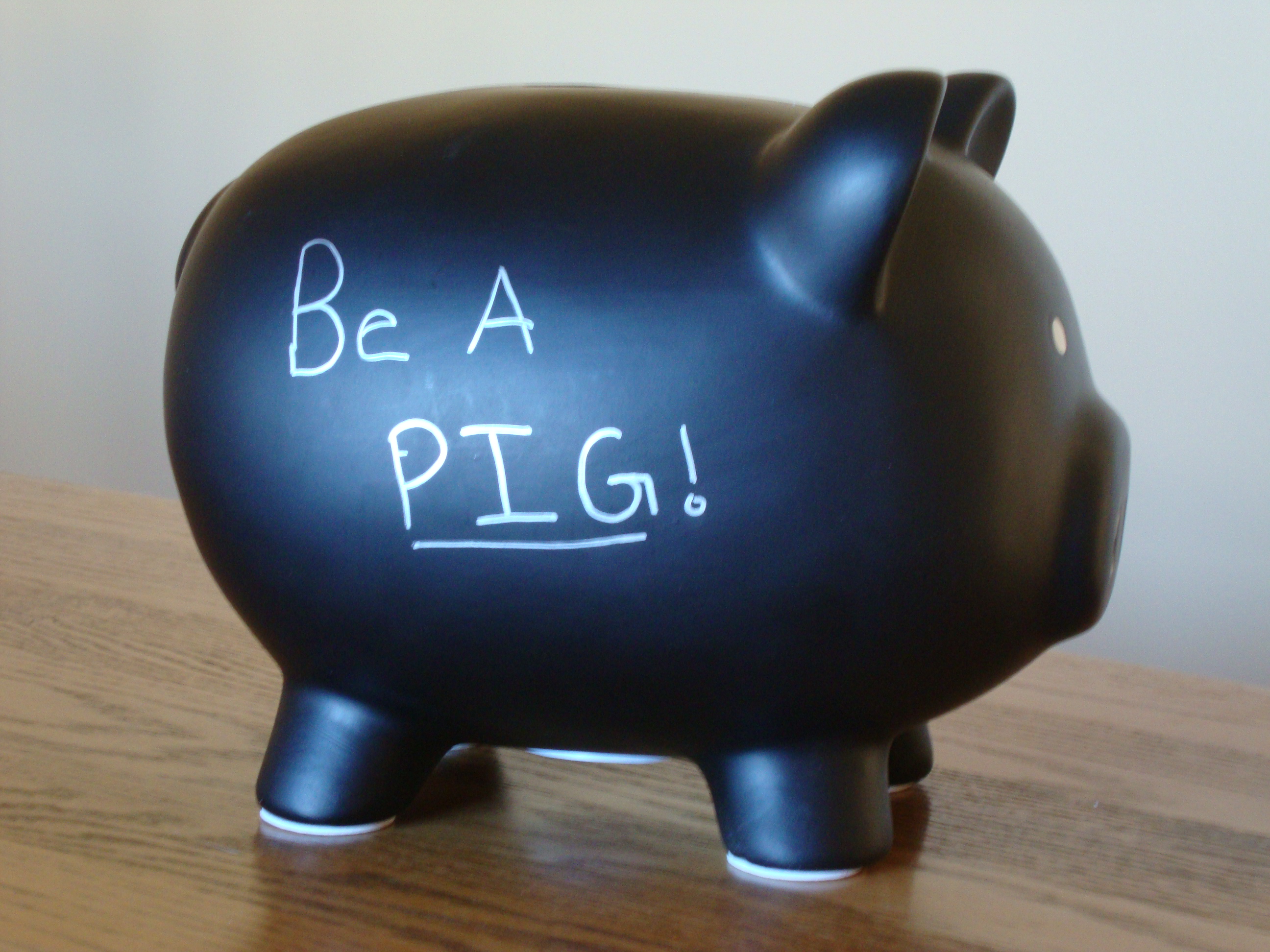
I do know that message got through to at least one of my students. I usually get a box of extra Softball Magazines when they come out, so I will distribute them to my students. This one was no exception. Each of my students received a copy of the magazine, including a girl named Erin who is new with me this year.
Well, lo and behold, right before Christmas she comes to her lesson toting a good-sized red shopping bag, and inside the bag is the piggy bank shown in the picture. She had customized it with the saying “Be A Pig.”
Obviously the article made an impression on her and her family. Hopefully she’s living it too! But this was so cute I just had to share. I love it when a plan comes together!
So, what did Softball Santa put under your tree?
Now that we’re a few days past Christmas/Channukah/Kwanzaa/Winter Solstice, I’m wondering what Softball Santa brought you. Would love to get a little dialog going on this topic. I’ll start.
I received a dozen Jugs Lite Flite balls and a dozen TCB balls . The Lite Flites are actually for vision training, not hitting. I will be marking them with the numbers 1-4 in black and red Sharpie and adding them to the ones I already have. That way the girls won’t be able to cheat by remembering which balls have already gone by and guessing by process of elimination.
The way we’ll use them is to shoot them through a Jugs pitching machine and have the girls try to identify the color and the number on the ball as it whizzes by. Sounds impossible, but actually it’s not.With a bit of practice and effort you can actually see the number as well as the color. It’s a nice, cheap imitation of the expensive Vision Trak training that uses tennis balls and a specially designed machine.
The TCB balls are for hitting, obviously. I’ve heard a lot of good things about them. If you hit them square they fly well. If you’re off a bit, they deform momentarily and you know you need to improve your bat path. I’m anxious to try them out at the next practice.
The other thing I received is a copy of the book The Talent Code . It’s about how top performers are made, not born with innate ability — and how you can create them too. Watch this space for a more detailed review.
So that’s me. What did you get? And what are you still looking to get?
Difference between coaching boys and girls – part two
We’ll skip the intro here. If you want that explanation, see this post . Let’s get right to it.
Yesterday I was using a blackboard to create a list of factors that can affect a play. I didn’t have chalk at first so I’d written the list on a piece of paper as the team called out different answers. Then when the chalk got there (thank you Pat Foley for finding it) I tried to quickly transfer the answers to the board.
As you might expect, most of the handwriting was pretty sloppy and hasty. But then, I continued to write, one of the girls said, “Look at that. It’s a perfect U.” I looked up and sure enough it was. Several of them commented on the high quality of the U, a brief discussion ensued, and all I could do was smile and shake my head.
Only girls would notice something like that.
Incidentally, they also could not get over how much my hastily scribbled “g”s looked like “s”s. Oh well. At least they liked the U.
Difference between coaching girls and boys
As pretty much any experienced fastpitch softball coach will tell you, there is a definite difference between coaching girls and boys. In fact, I’d bet anyone who has done both will agree with that.
Last night I saw another amusing example of one of those differences. I was in the middle of a lesson with a pitcher when I looked up and saw one of my hitting students (Kaylee) getting ready for her lesson, which would start in about 10 minutes.
She put up her hair, which is to be expected. But then she pulled out a small mirror to check it before putting on her helmet. That is definitely a girl thing.
I couldn’t help but smile to myself. I mentioned it to her when the lesson started. She just smiled and shrugged her shoulders.
With boys you’re lucky if they’ve showered in the last couple of days. But girls have a whole different mindset.
So what’s your favorite “coaching girls” story?
Fun drill for softball hitting vision training
Got this softball hitting vision training drill when I was the NFCA Coaches College in Minneapolis back in November. We tried it today and it was a lot of fun, both for the girls and the parents who participated.
The only equipment you need is a bucket of wiffle balls. You need at least two colors, although the balls should be predominently one color. It’s really easy to do this in batting cage because you can go from side to side. Here’s how it works.
Have a player stand with her back to one side of the cage. Set the wiffle balls on the ground on the other side of the cage, with one or two people kneeling. I used two parents today, which allowed them to be involved while freeing me to work with other players.
The tossers begin tossing a barrage of balls at the player. She knocks away all but one color of ball. Those she catches, and tosses back into the mix. The faster the barrage of balls goes, the more difficult (and fun it is). Having two tossers makes the barrage come faster, and from more directions, adding to the challenge.
For ours today, I had white, blue, purple and yellow balls. The girls had to catch the four yellow balls out of the two dozen coming at them.
It really forces hitters to ignore distractions and focus on the ball — exactly what you want to have happen at the plate. It also helps them work on their hand-eye coordination, as catching the ball under those conditions isn’t easy.
It’s definitely a way to energize your practices too. Give it a try!
Good service project/team building activity
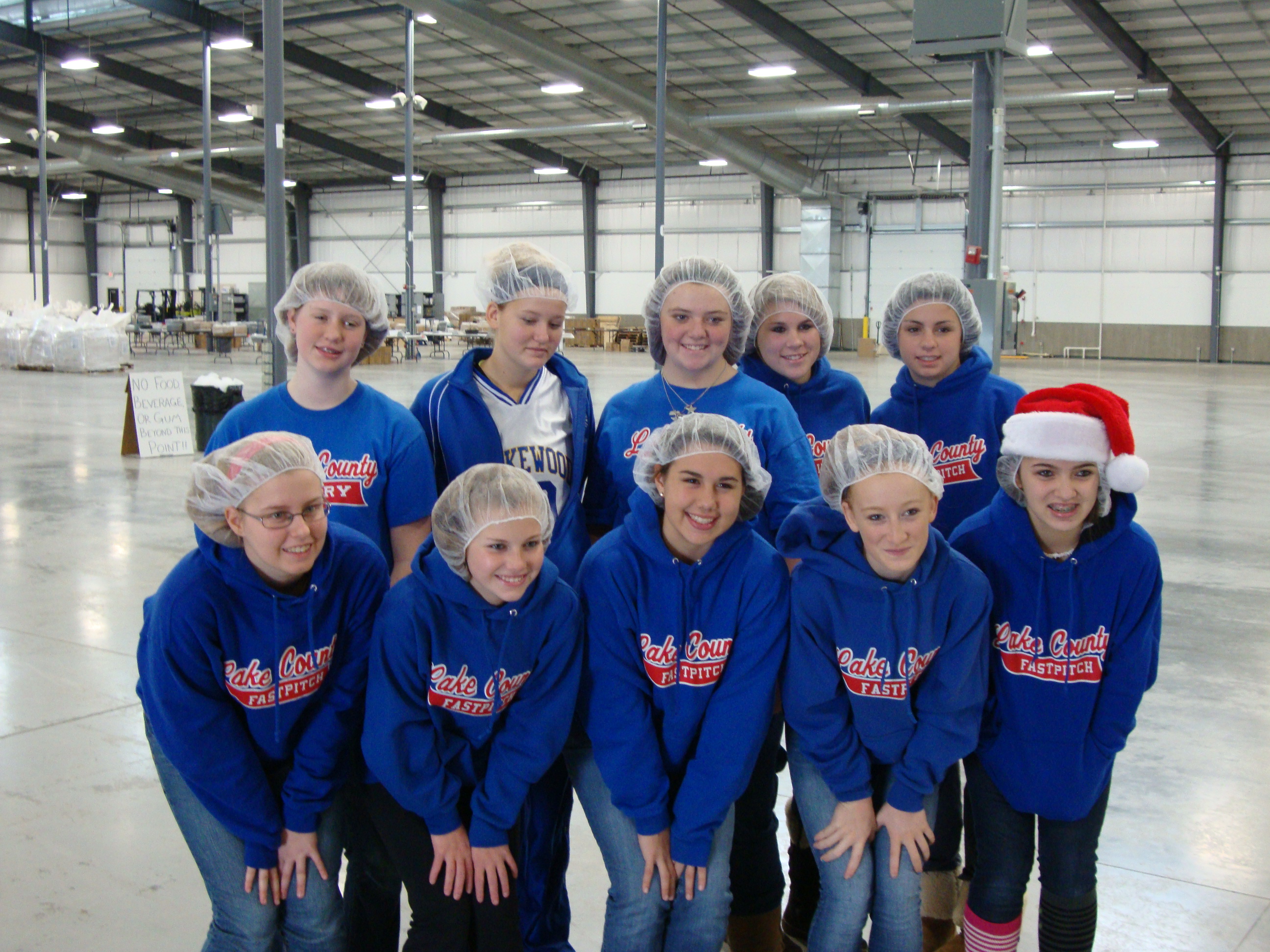
Just got back from a very cool service project that doubled as a team building event. It was with an organization called Feed My Starving Children. Essentially, you pack dried food into bags, seal them, then pack the bags into a box that could be shipped to hungry children pretty much anywhere in the world.
I was looking for a service project for our players, a way for them to give back to the community (or in this case the world). One of our parents suggested it, as she has participated before. This one was extra meaningful because it was to benefit kids like them. It’s amazing that one of those packets, which is a little larger than a packet of brown sugar, can feed six children or four adults for a day. 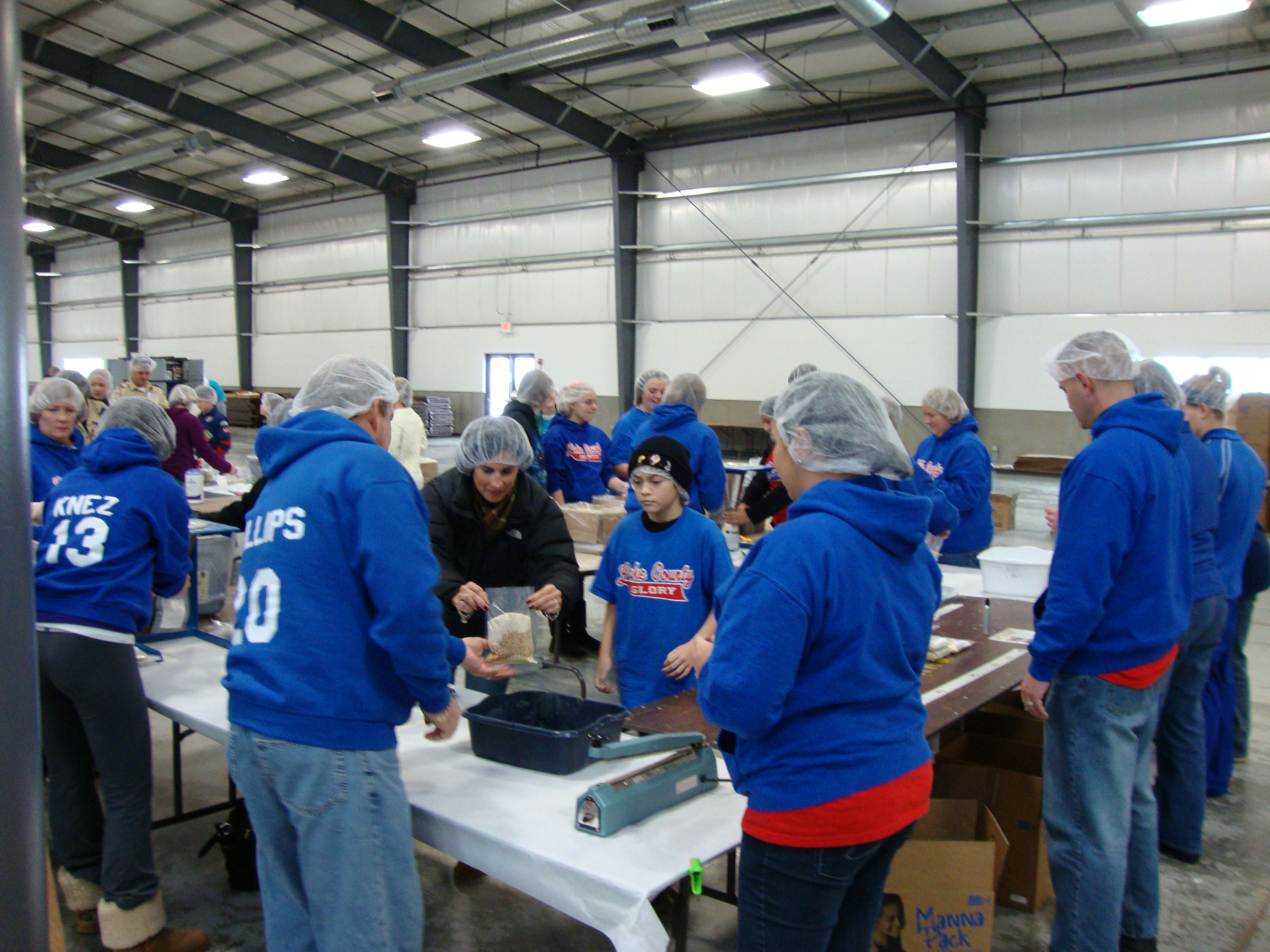
The other nice thing about this project is its team building effects, both for the players and any parents who participate. It’s essentially a mini production line, so everyone has to work together to keep things flowing. Once you get into a rhythm it’s amazing how quickly you can get things going. Our girls were having a good time, talking and working together. So were the parents, friends and sibilings who also participated.
The shift we participated in packed 257 boxes, which accounted for 55,512 daily meals — enough to feed 152 children for an entire year. That’s a pretty good feeling.
If you’re looking for something non-softball for your team to do in order to understand how fortunate they are, and to help them grow into good citizens as well as good softball players, I highly recommend this one. Several of our parents walked out at the end of our two-hour shift saying they plan to do it with their neighborhood, church or some other group. Looks like it will be an annual event for us!