Category Archives: Pitching
Pitching: hitting your spots not the be-all and end-all
 Back to focusing on softball with something that’s been on my mind for a little while. It never ceases to amaze me how obsessed coaches often are with whether their pitchers hit their spots. Especially at the younger ages.
It’s almost like that’s the only thing they know about pitching. Anytime a pitcher gives up a hit (or even comes close to it) some coach is likely to yell “you need to hit your spots.”
There are a couple of flaws in that thinking. The first is that the value of hitting a particular spot when it’s called is directly proportional to how good the person calling the pitches is at setting up hitters.
I’ve known of coaches who basically call low and outside fastballs 90% of the time. I’ve heard about coaches that call screwball after screwball because, well, they saw screwballs work on TV. I’ve seen coaches refuse to call the changeup because they prefer that their pitchers throw heat.
The problem with that is predictability. If you’re throwing to the same location all the time it probably won’t take long for hitters to figure it out and adjust. Speed kills, but as we saw in the last WCWS, even a 70 mph pitch isn’t enough alone to overcome good hitters. So sure as shootin’ a 45 or 55 mph pitch won’t be. You need a mix of speeds and locations.
There’s also an art to setting up a hitter. It takes time and effort to learn how to do it. For example, when a hitter fouls a ball straight back, a good follow-up pitch is a changeup. Of course, if you do it every time you become predictable.
When you get ahead in the count 0-2, you don’t want to throw a strike – you want to throw a ball that looks like a strike. Maybe a curve, maybe a high fastball or rise. But again, you need to mix it up to keep hitters from settling in.
An inexperienced coach often doesn’t know that. So they’ll call that favorite pitch even when it isn’t appropriate. The pitcher would actually be doing the coach a favor by missing the spot, truthfully. I’ve seen more than one coach saved by a pitcher who didn’t throw what was called.
The other reason hitting spots is often overrated is that it isn’t the best measure of a pitcher. Coaches like it because it can be quantified. They also like it because they can use it as justification for elevating one pitcher over another – i.e., pitcher A hits her spots and pitcher B doesn’t, so A must be better than B.
But the truth is the single best measure of a pitcher is whether she can get hitters out. She may not put the ball exactly where the coach called it, but if she’s getting hitters out what difference does it make? Hitting spots alone doesn’t get hitters out. You get no credit for that from the umpire, just as having a perfect swing doesn’t entitle you to get on base. I’ll take a sloppy pitcher who can get hitters out over a precise one who can’t any day of the week.
That’s not to say pitchers shouldn’t work on hitting their spots – they should. If for not other reason than they may play for a coach who actually does know how to call a game – or better yet how to teach a catcher to call one. If they can put the ball right where they want it they can really take command.
But coaches, don’t let it become your determining factor. See the whole picture and give some space to the pitchers who can get people out.
Softball skills are analog, not digital
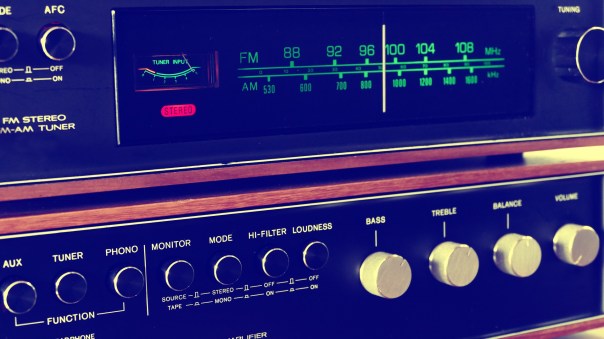
All of the players, and probably most of the parents by now, are too young to remember when radio dials were analog. Getting your favorite station tuned in was an art. You’d move the dial quickly to get it close, then move it very slowly until it sounded just right. Better radios also had a “fine tuning” knob that let you make smaller adjustments.
Where it really compares to softball is that once you had the station tuned in perfectly, there was no guarantee it would stay tuned in. The analog signal could “drift” a bit, at which point you’d have to re-tune it in. As compared to today’s digital radios where you set the correct numbers and they radio does all the work to lock it in and keep it locked in.
That’s why I say softball skills are analog. It would be nice if they were digital – you tune them in and they stay with you automatically. But the reality is your technique can slip just a bit, especially during the long season when there may not be time to practice and hone things as much as you’d like. You get off a bit, you start to worry and guess at corrections, and before you know it you’re further off than before. Soon it’s nothing but static.
That’s where a little in-season correction can help. Whether you do it yourself or go to see your coach for that particular skill, taking a little time to re-tune the skills can make a huge difference.
The value of using a private coach is he/she can take a look from the outside and compare what you’re doing to what you ought to be doing. It’s a little faster and easier than trying to diagnose it yourself. But the key is that comparison.
If you’re trying to do it on your own, don’t think about what you’re doing. Think about what you should be doing, and try to get back to that. Find the sweet spot on the “dial” and tune your skills to that. Before you know it you’ll be back on track.
Again, it would be nice if softball skills were digital. But they’re not. Everyone needs a little fine tuning now and then. Understand that they’re analog and make adjustments accordingly. You’ll have a much happier season.
Product Review: Pocket Radar Ball Coach
If you are into pitching at all, or work with pitchers, you’ve probably heard about the Pocket Radar. It’s a device about the size of a mobile phone that makes it easy to gun pitch speeds, overhand throws, exit speed of the ball off the bat and (allegedly) the speed of car w hizzing through your neighborhood.
I recently upgraded from the original Pocket Radar to the new Ball Coach version. While it’s an $100 more expensive than the original, I feel like it’s worth the extra money. The Pocket Radar Ball Coach retails for $299, which is still considerably less that a Jugs or Stalker gun – and it does a very comparable job.
The thing that got me to upgrade (other than a $100 rebate being offered for sending the old one back) was the ease of use. With the original Pocket Radar you had to time pushing the button just right to get the maximum speed. It was as much an art as it was a science.
The new version takes that timing issue out of it. In other words, it’s radar speed measurement for dummies. With the Ball Coach version, you point the unit at the source of the pitch, hold down the big blue button (as opposed to a red button on the original) and keep holding it until you get a speed reading. Nothing could be simpler.
When I first got the new version I immediately tried it next to my Jugs gun. While they didn’t always match exactly, they were always within 1 mph of one another. Sometimes the Pocket Radar read higher, sometimes the Jugs gun did. But close enough for my purposes.
The real acid test, though, came this past weekend when I took it to a couple of games and (somewhat) discretely timed the pitchers from behind the backstop. In one case I was well behind it. But it seemed to give me good readings on all the pitchers.
Another advantage to the Pocket Radar Ball Coach is the ability to have it automatically take up to 25 reading in automatic mode. You can set it up on a tripod or a mobile phone holder, click through to automatic mode, and it will give you the readings. You can then page through to see what the player got – which is great for batting practice, pitching practice or whatever.
If you’re reading this in Canada, or anywhere else that uses the metric system, you’ll be glad to know the Pocket Radar Ball Coach can be switched to read in kilometers per hour. The instructions explain how.
The Pocket Radar Ball Coach comes with a handy soft shell pouch that clips onto your belt. That’s another nice upgrade over the original, which came with a hard shell case you had to keep in your pocket. I still kept mine in my pocket, but it takes up less space. In addition to the case it also comes with a wrist strap and a pair of AA batteries (Eveready alkaline batteries, not those cheap no-name ones that often come with many electronics these days.
If you’re at all interested in measuring speed I can highly recommend the Pocket Radar Ball Coach. With its (relatively) low cost, high accuracy and ease of use it’s a great investment.
Gorilla Gold now approved for high school play
Hard to think of outdoor high school games with all the snow on the ground in much of the country, but sooner or later the temperatures will get warmer and the snow will melt. Right? The National Federation of State High School Associations (NFHS) has included Gorilla Gold Grip Enhancer, the world’s leading producer and marketer of resin-tackified grip towels, as an approved drying agent that can be kept in a pitcher’s pocket. The approval aligns the organization with the majority of softball governing bodies including the NCAA, the American Softball Association (ASA), the International Softball Federation (ISF), as well as others. The NFHS has also approved Gorilla Gold for use by baseball pitchers.
When the games do start, pitchers now have another option for improving their grip. I received a notification that Gorilla Grip has now been approved for play by the National Federation of State High School Associations (NFHS). From their press release:
So there you go. Hopefully pitchers all over the country will get a chance to try it out soon.
In the current ruling, pitchers cannot have residue on the ball. Like rosin, Gorilla Gold does not affect the ball, only the fingers or hands to which the drying agent is first applied.
Tips for calling pitches in fastpitch softball
I imagine that calling pitching in baseball is similar to doing it in fastpitch softball, but since I only have experience with the latter, and this is a softball blog, we’re going to focus there. You baseball folks can let me know if it’s the same in your world.
In any case, calling pitches in fastpitch softball is definitely an art. Some people seem to have a natural feel for it, while others tend to struggle making the right calls.
Having charts on hitters’ tendencies makes it somewhat easier, although even at that you never know. Maybe that hitter worked on her game in the off-season and doesn’t have the same weaknesses she had before.
Of course, if you’re a travel coach facing many different teams throughout the season the odds are you’re not going to have much information on most of the hitters you face. Which means you’re going to be doing a fair amount of guesswork.
No matter whether you have a lot or little information, here are a few tips to help make it easier. We can debate who makes these calls — the catcher or a coach — another day.
1. Mix it up
Mixing pitches is the cardinal rule of pitch calling. I don’t care how good you are or how well or hard the pitcher throw a particular pitch. If you give the hitters a steady diet of the same pitch, or location, or speed, sooner or later they’re going to figure it out and start sitting on it.
Think about hitters hitting off a pitching machine. You can crank it up to its max speed, which will seem overpowering at first. But eventually, if the machine is throwing the same speed to the same location the hitters will start hitting it.
A smart pitch caller will go up and down, in and out, and will certainly mix changeups or off-speed pitches in. You can walk up the ladder — starting low and working your way higher as you go. Or throw inside, inside and then outside or vice versa. You want the hitter worried about the entire strike zone, not just a portion of it, and about looking bad being ahead of an off-speed or change.
You’ll also want to mix in pitches the pitcher is struggling with, just to keep the hitters honest. For example, if the pitcher is having trouble with her changeup you still want to throw it now and then – if for no other reason than to make her other pitches look faster. But mostly, you just don’t want the hitters getting comfortable.
2. Avoid predictability
This is a corrollary to #1. When you’re mixing pitches you don’t want to fall into predictable patterns. One of the classics, of course, is throwing a changeup on an 0-2 count. You can do it now and then, but if you do it every time, a smart hitter will just concede the first two strike to get to the meatball. (A strategy my oldest daughter Stefanie was very good at, by the way.)
You can have a couple of pre-set patterns, but you don’t want to use them over and over. The more predictable your pitch calling is the easier it is for smart hitters (or their coaches) to zero in on a particular pitch on a particular count and send it toward South America.
3. Know your pitchers’ strengths
Every pitcher has pitches they throw well, and those they don’t. That’s something that can change from day to day, too.
It’s one of those funny things – a particular pitch might decide to hide on a particular day. But assuming all is well, it’s important to know what the pitcher’s best pitches are, and which the weaker ones are, so you can call the game to the pitcher’s strengths while using the weaknesses as filler or for contrast.
For example, if your pitcher has a great curve but a weak drop, calling the drop over and over is unlikely to yield the results you’re hoping for – unless the result you’re hoping for is a lot of hits and/or a frustrated pitcher.
Knowing your pitchers’ strengths is especially important deep in the count. You want to know what the pitcher can throw to get hitters out reliably. Sure, sometimes your pitchers’ strengths will be the same as the hitter’s strength. But more often than not you’re going to want to match strength to strength and let the one who wants it most win.
4. Don’t assume what you see is what you’ll get
You’ve probably seen the charts that tell you “if the hitter does this then throw this.” For example, if the hitter is standing close to the plate, throw a screwball or inside fastball.
Yes, that might work. But the hitter might also be standing in close to the plate because her strength is inside pitches. And maybe she has trouble with outside pitches, so standing in close turns them more into middle pitches.
One other thing a hitter might be doing is standing up there to bait the inside pitches so she can back off a bit and drive the heck out of the pitch because she hates outside pitches. So don’t assume the charts are right – pay close attention and make adjustment to whatever is in front of you.
5. Remember Einstein’s definition of insanity
Einstein’s definition of insanity is doing the same thing over and over and expecting different results. It doesn’t matter what else you make think or believe philosophically.
If you’re calling a particular pitch and it’s getting hit consistently, don’t be a fool. Call something else.
6. Work with your pitchers, not against them
Remember as a coach that your job first and foremost is to put your players in a position to succeed. A big part of that is building their confidence and setting your own ego aside.
You may want a particular pitch in a situation, but if your pitcher isn’t confident in that pitch it’s unlikely she’ll throw what you think she’ll throw and that you’ll be happy with the result. Personally, I’d rather see a pitcher shake off a pitch she can’t throw with absolute confidence than meekly go along and get hammered.
Confident players are successful players. Help your pitchers develop confidence in themselves and they’ll have more confidence in you.
Ok, what did I miss? What other tips do you have for calling pitches?
Contemporary way of explaining explosion to a pitcher
One of the biggest challenges of working with young fastpitch players is they continue to be young while I continue to get older. What that often means is that my frame of reference to explain things isn’t necessarily the same as theirs. Not to mention male v female — any references to Star Wars, The Lord of the Rings and similar fare usually meets with blank stares. But I digress.
Tonight I was working with a high school pitcher named Maty. Getting the hang of leg drive has been a challenge for her because she didn’t use any for most of her pitching career. She’s improved quite a bit, but I know there’s still more leg drive (and speed) left in her.
I was trying to think of a way to explain the idea of being explosive when an idea popped into my head I thought she could relate to. I told her she needs to come off the rubber like she’s doing a photobomb. She laughed, but she got it.
So there you have it. A good photobomb usually requires a quick move to get in right as the photo is shot.
Never stop thinking!
Video of the backwards curve ball drill
A week or so ago I had a request to provide some video of the fastpitch backwards curve ball drill. It’s the one I mentioned in a previous post, where you stand with your back to the catcher, then turn and throw the curve without moving your feet.
Well, you ask and I provide. Here’s a view of the drill from the front of the pitcher, demonstrated by Lake Forest College’s Kristi Gandy (who incidentally loves this drill):
And here’s another look from the side:
Hope that helps make it clear!
Update: I finally figured out how to embed the video. Had to cheat and go on the software’s forum, though.
Another way to explain finishing the change
At our last practice I set up a station to work with pitchers. We only had 15 minutes per pitcher, so I had each pitcher select one pitch to work on in that time.
The first pitcher was Emily, and she chose the changeup. It’s been troubling her for at least a year – to the point where she really doesn’t like to throw it. Yet it’s critical to her success, so that’s what we went after.
After some warm-ups Emily threw a few. And that’s when I spotted something in her finish. I always tell pitchers to drag the ball through the release zone, and she did to an extent. But it was happening too late. So I told her to drag it starting from behind her and then all the way through.
It was a night and day difference. All of a sudden it was coming in low and slow, floating the way we like it. And, she was able to mix it in with other pitches on command.
For me, it’s one of the things that keeps teaching most interesting — finding new ways to explain the same core concepts. I’ve never thought of telling a pitcher to drag the ball that way. But that day it seemed like the right thing to do.
For you coaches out there, never stop learning or finding new ways to teach. If what you’ve always said isn’t working, find a new way to say it. The more options you have, the better you’ll be able to help your players.
Zip Balls definitely help fastpitch pitchers learn
 Recently I had the opportunity to see Cindy Bristow demonstrate the use of Zip Balls, a training aid she developed to help fastpitch softball players learn to pitch, hit and field better. It was at the NFCA Coaches College course on team practices; she was working with some D1 pitchers, and used the Zip Balls as part of the training.
I had seen Zip Balls advertised for a while, but wasn’t really sure if they would be worth it. I’m not big on gimmicks and gadgets, so I always tend to look at such things a bit skeptically. But I can tell you now from first-hand experience that they are definitely worth the investment.
If you’re not familiar with them, Zip Balls are little softballs. They are slightly larger than golf balls, with full seams and all, but they weigh as much as regular balls. It’s a little disconcerting the first time you pick them up.
The object of using them is to feel how the fingers are used on the ball. Because they’re so small you’re forced to use the finger pads to throw them.
I’ve used them with several different pitchers and have found them to be great for teaching all sorts of things. For example, with a beginner who was having trouble getting the feel of the basic motion, Zip Balls helped her learn to use her arm properly. With the small ball she was able to relax and lead her elbow then pull her hand through the release zone.
Where they really seemed to be effective, though, was with more experienced pitchers learning movement pitches. For some it was a matter of feeling how to position the hand properly. When Cindy demonstrated them she said to tell the pitcher to be very aware of what her hand is doing. It usually takes a few times before they can actually do it, but they do start feeling it.
With one of my most accomplished pitchers we were able to really sharpen her movement pitches, especially her curveball. She already had good break on her curve, but after using the Zip Ball it broke quicker, sharper and more dynamically.
If you purchase a dozen you also get a DVD that shows you more uses for Zip Balls. Most are pretty intuitive – you can use them for hitting, fielding, training catchers, etc. — but it’s worth a look anyway.
Zip Balls are definitely a good investment, especially for pitchers. Just one word of caution — they can get through the netting on typical batting cages very easily. If you’re using them indoors, be sure there’s a tarp so something behind the catcher or someone outside may get hurt!
Fighting ignorance
I saw a “fact check” website yesterday that had a great motto. The first part was “Fighting ignorance one day at a time” or something to that effect. Then in parentheses under that it said “It’s taking a lot longer than we thought.”
I know the feeling. I’ve spent a lot of time and effort studying, evaluating and re-evaluating the optimum techniques for executing fastpitch softball skills, I’ve also had a number of years’ experience teaching those skills to players of varying levels of athletic ability. So I have a pretty good idea of what works and the way things ought to be done.
I won’t say I know everything — there’s always more to be learned and new information comes out all the time — but I do my best to remain current, and confirm my thinking with what other top coaches are doing. That’s what I share here on Life in the Fastpitch Lane and other places as well.
Yet sometimes it can get awfully frustrating when I hear that there are still people teaching drills and techniques come from the era when mullets were in style, i.e. the ’80s. Especially when they try to foist that junk on one of my students.
I’ve seen it happen with hitting, where some team coach will start telling girls who can really rip the ball to squish the bug, take the knob of the bat to the ball, swing down on the pitch and other stuff that will actually prevent them from continuing to hit well.
Recently it happened with one of my pitchers. She was at a practice with her new team, which is connected to one of the local high schools, when the team’s “pitching coach” came over and started talking to her about snapping her wrist and pointing her elbow at the catcher (aka using “hello elbow”). I put “pitching coach” in quotes because the guy’s only qualification is that his daughter pitches at that school and he’s worked with her some.
Luckily the girl’s dad texted me right away, and he’s going to talk to the head coach, who said he knows some players have private coaches and let him know if there are conflicts. Still, until it’s resolved you have yet another person who doesn’t have a clue about how top pitchers actually pitch offering advice that was either told to his daughter at some point or that he got off some VHS tape.
People, listen up! Focusing on forcing a hard wrist snap is a gigantic waste of time! I can’t emphasize that enough. There are no muscles in the wrist. The muscles run from the elbow through the forearm to the hand. The wrist’s primary contribution is flexibility and quickness, not power.
What’s viewed as the wrist snap occurs as the result of a pronation (turning in) of the lower arm as it passes the elbow during release. It’s nothing you have to or even want to try to do, especially if you are also achieving brush contact. Trying to force a hard wrist snap actually gets in the way of the wrist making its contribution because it slows it down. It’s not where power comes from. The best the wrist can do is add a little bit. But if you make it the focus – for example doing endless wrist flips — you’ll actually defeat the whipping motion and slow the pitch down.
If you don’t believe me, how about seeing what NFCA Hall of Famer Cindy Bristow, one of the fastpitch world’s most accomplished coaches and instructors has to say about it? Or what about Bill Hillhouse, a former men’s National Team fastpitch pitcher and another highly sought-after pitching coach thinks about the wrist snap? If those two authorities tell you don’t waste your time on it, why would you continue to do it? Or listen to anyone who says you should?
The same goes for the hello elbow. It’s completely unnecessary as well as unnatural. Follow-throughs should be long and loose. You don’t need to touch your throwing-side shoulder after you pitch. You don’t need to point your elbow at the catcher. Again, that kind of stuff will get in the way of maximizing the pitcher’s potential.
For my part, I guess all I can do is keep trying to bring good information to people as best I can, and teach my students to remain strong and steadfast in their commitment to learning why we do the things we do. We’ll continue to fight ignorance one day at a time – even if it takes a lot longer than we thought.