Category Archives: Hitting
Helping young hitters with a fear of the ball
Ran into this issue with a 9 year old I recently started working with. She was pretty raw in her fastpitch hitting mechanics when we first started, but with some good tee work (and practice) she was coming along.
Unfortunately, we were started working together at the beginning of the season so there was some urgency to get her game-ready. Which meant moving to front toss to give her some experience with a ball coming at her.
Once we started with that, it became obvious she had some fear of getting hit by the ball since her first move would be to step away and sort of lean away from the pitch. That makes it tough to swing effectively.
(In her defense, given what I’ve heard about the caliber of pitching she’s been facing it’s understandable. Lots of, shall we say, randomly thrown pitches.)
Still, that’s not good. So I started thinking about how to help get her re-focused on attacking the ball rather than being attacked by it. The weather helped me come up with a good answer.
It had rained most of the day when we were getting together for a lesson, so we were stuck using the outfield for front toss. It was pretty soggy out there too, so I thought it might be better to pitch Whiffle balls at her. I figured it would give her less to fear from the pitches as well as prevent my regular softballs from getting waterlogged.
It worked well, and she hit with enthusiasm as I’ve reported previously. She was actually having fun, and seeing that she could hit.
The next step was to mix in the Whiffles with regular softballs at our next lesson. I told her I would throw a Whiffle, then a regular ball, which is what I did. At first she was a little tentative on the regular softballs, but the longer we alternated the more confident she grew.
So much so, in fact, that she nearly took my head off with a couple of line drives with the regular balls, and did nail me in the thigh with one. I hadn’t bothered to set up my Jugs protective screen – I mean, really, she’s nine and just learning to hit. I can handle that, right? But you can bet the next time I met with her the screen was there.
Speaking of the next time, that session was all regular balls. I’m happy to report that the fear was gone (along with the stepping out), replaced by a girl who was looking to do some damage. Hopefully that will carry over into her games too. If it does, I hope that little pitcher she’s facing is wearing a mask.
If you’re working with a hitter who is uncomfortable in the box and afraid of getting hit, give this a try. If you can replace that defensive mindset with one where she is focused on taking aggressive swings it can do wonders.
The fun of working with younger players
Sometimes when you’re used to working with older players (high school age or close to it), going back to working with younger girls can take some adjustment. They don’t have as much body awareness, and attention spans can be a bit short. It can also take them a bit longer to truly retain everything you’re working on. But there are also some upsides.
I experienced one of those tonight. I was doing a hitting lesson with a 10U player named Isabella. We’ve been working on the basics, and she’s coming along. Her father mentioned that in her tournament over the weekend she’d been backing out of the box some, and seemed reluctant to try out her new swing.
So, I figured that after we did some tee hitting I would try pitching some Whiffle balls to her instead of regular balls.
Good idea on my part. Isabella started getting the hang of it and taking more aggressive swings. She started hitting those Whiffles hard too.
But the best part was what happened when the bucket emptied. I said “let’s pick ’em up” and she immediately asked “Can we do it again?” We still had time so of course I said “sure.” When we finished that bucket she asked if we could do another. Clearly she was having fun – and building confidence in her swing.
Honestly, I think if I hadn’t finally called it we’d still be out there.
You have to love that enthusiasm. And that’s the fun of it. Certain aspects may take more work, but when the light bulb comes on and the excitement is there it makes it all worthwhile.
Beware of an over-reliance on gimmicks
You see them everywhere – in magazines, on websites, in YouTube videos and everywhere else fastpitch softball folks look for information. “They” are all the devices that promise to make your players better.
I call them “gimmicks” because often times that’s how they’re presented. The impression you’re given is that for $29.95 (plus shipping & handling), or $79.95 or $249.95 you can buy better performance. Gang, I can tell you that it just ain’t so.
I’m not saying these devices can’t help. Many of them can be useful in the right hands. But in order for yours to be the right hands, you first need to understand how a particular skill needs to be performed, and to a reasonably deep level.
A favorite example of mine comes from tryouts a few years ago. Three other coaches and I were observing pitching tryouts for a 16U team. One of the other coaches had a device that measures the spin rate of the ball and was using it to measure the revolutions per second of a pitcher’s curve ball.
“Ooooh” one of them exclaimed as a pitcher threw a pitch. “21.” “22.” And so on. They were all so focused on the device and what it supposedly told them that not a single one of them was watching the actual pitch. If they had, they would’ve noticed that the “curve ball” was spinning pretty close to 12 to 6 (fastball or drop ball spin) and wasn’t moving at all. Even down.
By the standards of the device, this pitcher was throwing an awesome curve. But in the real world, she wasn’t even throwing a decent one. And last time I checked, hitters hit pitches thrown in the real world.
As an instructor I see this all the time. Some coaches have an entire bag full of gimmicks, and they just move from one to the next. Especially hitting coaches for some reason. Some I’ve seen just love to bring out the devices.
But if you don’t understand what you’re trying to achieve, the effectiveness of the device is pretty much wasted at worst, or randomly effective at best. It’s like plopping down $300 for the world’s best hammer when what you really need is a $3 screwdriver.
If you really want to help your players/daughter(s) improve you don’t need a duffel bag full of stuff. At least not right away. Instead, first take the time to learn how those skills should be performed. Study college games on TV. Look for video on the Internet. Invest in DVDs and books. Attend training seminars/coaches clinics where an accomplished coach with a history of success breaks down the skill in detail. Go to http://www.discussfastpitch.com and read the discussions there. In other words, first seek out information.
Once you have a feel for what the skill should look like, and how it should be executed, you’ll be in a better position to decide which devices can really help you teach those skills and make improvements in your players and which ones will end up sitting on a shelf on in a duffel bag in your garage collecting dust.
What makes me say that? I have my own collection of devices that I bought when I started coaching, hoping to find the magic one. Some were worthwhile, many were not. The more I learned, the better I was able to see which ones might be helpful and which ones would be relegated to the Island of Misfit Softball Toys.
That goes for choosing a coach too, whether it’s a private instructor or a team coach. Someone who’s pulling out gimmick after gimmick instead of having your daughter work on actual pitching, hitting, fielding, throwing or whatever skill it is she’s trying to learn may not be your best choice. Devices are no substitute for knowledge.
Ultimately the value of a device goes up in direct proportion to your understanding what you’re trying to accomplish with it. Become competent at that first and you’ll make better decisions on how to spend the rest of your cash.
You have to take opportunities when they come
Last night I was watching Texas and Arkansas on the SEC network. It was a good game, with great plays and the lead changing a few times. I got to see an Arkansas home run record set and two teams playing all out.
Also saw a pitcher get her first-ever start for Arkansas. I didn’t catch the back story, but apparently she’s is normally an outfielder. But due to some sort of circumstances she was pressed into action. I think she’d been a high school or travel ball pitcher, but at Arkansas she’s an outfielder. Good for her for stepping up when the team needed her.
The thing that struck me, though, was what happened in the bottom of the 7th. Arkansas, the home team, was down a run. The leadoff batter went to first after being hit by pitch, and the next hitter – a power slapper – drove a ball just out of reach of the center fielder. The runner on first scored and the batter ended up on third.
So Arkansas was in a tie game with a runner on third an no outs. Oh, and all-important momentum on their side too. I thought for sure they were going to pull off a victory. All they needed was a ground ball with eyes, or a sac fly. Statistically, the run expectancy in this situation is at least one run for the inning.
Of course, that’s why they still have to play the game. The next hitter popped up. The one after that grounded out weakly to the pitcher, who held the runner at third. The next batter struck out, stranding the runner on third. Texas scored in the top of the eighth and held on to win the game.
Which brings me to my point. In this sport, especially when you’re the underdog, you have to find a way to capitalize on your opportunities. I’m sure the three hitters on Arkansas didn’t purposely try to make outs, but make outs they did. By not scoring that one more run they made it more difficult on themselves.
Maybe they were nervous, or trying too hard. Maybe they were thinking too much about outcomes (or the result of messing up) and took themselves out of it. Or maybe the Texas pitcher, faced with a tough situation, rose to the occasion. All I know is Arkansas had a great chance to pull off an upset but couldn’t quite get it done.
If you’re in that situation, it’s important to focus on the task at hand. If you’re the hitter, do your best to relax and just try to hit the ball hard – same as you always do. Because you may not get that chance again next inning, which means you have to take your opportunities when they come.
You might want to lay off that first pitch a little more
Saw this post over on the Fastpitch Analytics blog and thought I would share. This one is a quick visualization of another post which provides more depth behind the numbers. Both are worth reading.
What you’re looking at is an analysis of the slugging percentage for NCAA D1 hitters in 2014 based on pitch count. The author of the study says slugging on contact percentage was used rather than batting average because SLUGCON correlates better to runs scored. And since that’s the name of the game it makes sense.
Much of what you’ll see here is obvious, such as 3-1 is a great hitter’s count and 0-2 is not. But what’s really interesting is when you look at what happens after a 0-0 count.
Let’s say you take the first pitch. If it’s a strike you go to 0-1, and SLUGCON drops from .503 to .492 – a .011 drop. If it’s a ball, however, SLUGCON rises from .503 to .538 – a .035 improvement. In other words, your chances of getting the type of hit that scores runs goes up much more than it goes down by not swinging.
What does that mean in real terms? That you shouldn’t swing at the first pitch? Not really. That may be the best pitch you get in the entire at bat.
What it does mean, though, is that you shouldn’t feel the need to swing at any strike. Instead, you should be looking for a pitch you can hit hard. If it’s not in that zone, lay off of it. For example, if you struggle with the low and outside pitch and that’s the first pitch, you may want to let it go and see if the pitcher doesn’t come back with something more in your preferred range.
Of course, if she’s throwing everyone low and outside to start, you may want to crowd the plate and turn that low outside pitch into a low middle pitch and drive it.
Ground balls v. line drives
For many of you this is probably old news. But I still hear it enough from my students and other players I know that it bears repeating. When it comes to hitting, the goal should not be a ground ball. It should be a line drive.
Back in the day, when the ball was white with white seams, college and HS age pitchers stood 40 feet away, fielders weren’t as athletic through the field, bats were made out of basic low-grade aluminum and hitters taking lessons were few and far between, ground balls were the goal. Well, to be honest putting it in play was the goal.
A lot of games wound up 1-0 or 2-1, so anything you could do to get the bat on the ball was acceptable. Hitting a ground ball stood you a good chance of getting on base too because many of the fielders didn’t have the range or arms that today’s players do. All you had to do was sneak it through and you were on base.
Not so today. Athletes of today, as a whole, train harder. They are bigger, stronger, faster. In nearly 20 years of coaching I’ve seen a definite upgrade in that area. So what used to get you on base back in the 1990s will probably get you thrown out today.
Then there’s the bat technology. They have big sweet spots with trampoline effects. If you time it just right, even a checked swing could end up going deep. That may be an exaggeration but not a big one. Better bats plus hitters who train as seriously in the off-season as pitchers do have had a huge impact on the game.
And that’s why your best strategy is a line drive – preferably one that finds a gap, although you can’t control that. A rising line drive that clears the fence is even better. Basically, why settle for one base when you can get two, or three – or four?
You don’t want to swing down on the ball. You don’t want to pound it into the ground. Instead, you want to get a little under it, get a little lift, and drive it hard into the outfield. That’s the way to win in today’s game.
Oh, and what about fly balls? That depends. If you can hit them 210 feet on a field with a 200 foot fence they’re perfectly fine. If you’re hitting them 180 feet, best to try to bring them down a bit unless the winning run is on third with less than two outs.
That’s my take on it. What about yours? Coaches, are you still stuck on ground balls or are you encouraging more line drives? Players, what are your coaches looking for out of you at the plate?
Softball skills are analog, not digital
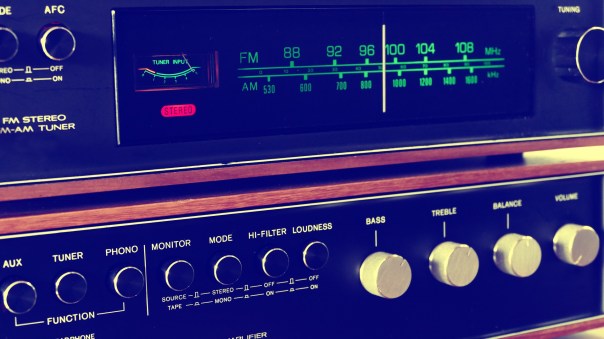
All of the players, and probably most of the parents by now, are too young to remember when radio dials were analog. Getting your favorite station tuned in was an art. You’d move the dial quickly to get it close, then move it very slowly until it sounded just right. Better radios also had a “fine tuning” knob that let you make smaller adjustments.
Where it really compares to softball is that once you had the station tuned in perfectly, there was no guarantee it would stay tuned in. The analog signal could “drift” a bit, at which point you’d have to re-tune it in. As compared to today’s digital radios where you set the correct numbers and they radio does all the work to lock it in and keep it locked in.
That’s why I say softball skills are analog. It would be nice if they were digital – you tune them in and they stay with you automatically. But the reality is your technique can slip just a bit, especially during the long season when there may not be time to practice and hone things as much as you’d like. You get off a bit, you start to worry and guess at corrections, and before you know it you’re further off than before. Soon it’s nothing but static.
That’s where a little in-season correction can help. Whether you do it yourself or go to see your coach for that particular skill, taking a little time to re-tune the skills can make a huge difference.
The value of using a private coach is he/she can take a look from the outside and compare what you’re doing to what you ought to be doing. It’s a little faster and easier than trying to diagnose it yourself. But the key is that comparison.
If you’re trying to do it on your own, don’t think about what you’re doing. Think about what you should be doing, and try to get back to that. Find the sweet spot on the “dial” and tune your skills to that. Before you know it you’ll be back on track.
Again, it would be nice if softball skills were digital. But they’re not. Everyone needs a little fine tuning now and then. Understand that they’re analog and make adjustments accordingly. You’ll have a much happier season.
Pitching around the big hitter
Tonight I was watching a high school softball playoff game. It was a great game – a real seesaw battle where the lead changed several times. Each time you thought one team was down something would happen and momentum would change.
While it was entertaining, it also brought up a situation worth discussing – whether or not to pitch to the other team’s big hitter.
As I recall, it came up three times during the game. The team in the field held a one- or two-run lead, while the offensive team had runners on second or second and third (depending on the inning) when their best hitter came to the plate. This is a girl who is a total gamer and can really put the bat on the ball.
I was standing with a few of the other spectators, and we all agreed the smart thing to do with first base open and less than two outs is walk this girl and pitch to the next one. Time after time, though, the coach decided to pitch to her. Each time the hitter went 0-2, then knocked a hit that score a run or two. The offensive team went on to win by three runs – which was fewer than the total number of RBIs that hitter had.
I can understand maybe taking a chance and pitching to her early in the game – match strength for strength. (Although in reality the defensive team wasn’t throwing their #1 pitcher, who I think was injured.) But after getting burned once, it seems that discretion is the better part of valor.
In my mind, if you’re going to lose, make someone else beat you. Not the other team’s best hitter, especially in a playoff game. If the bag is open, put that big hitter on and take your chances with the next one. It doesn’t always work out, but your odds are better. If you’re really worried, maybe even walk her with bases loaded. Better to give up one run than two or three – or four.
What do you think? Would you go intentional walk? Or would you gut it out and pitch to that hitter?
Softball hitting: being early to be late
In the past I’ve written about the need to get your front foot down on time when hitting. It’s critical to ensuring you can drive through the ball, because if you’re late you end up defending against the ball instead of attacking it. Which is pretty common, especially when the pitcher can really bring it.
Product Review: Pocket Radar Ball Coach
If you are into pitching at all, or work with pitchers, you’ve probably heard about the Pocket Radar. It’s a device about the size of a mobile phone that makes it easy to gun pitch speeds, overhand throws, exit speed of the ball off the bat and (allegedly) the speed of car w hizzing through your neighborhood.
I recently upgraded from the original Pocket Radar to the new Ball Coach version. While it’s an $100 more expensive than the original, I feel like it’s worth the extra money. The Pocket Radar Ball Coach retails for $299, which is still considerably less that a Jugs or Stalker gun – and it does a very comparable job.
The thing that got me to upgrade (other than a $100 rebate being offered for sending the old one back) was the ease of use. With the original Pocket Radar you had to time pushing the button just right to get the maximum speed. It was as much an art as it was a science.
The new version takes that timing issue out of it. In other words, it’s radar speed measurement for dummies. With the Ball Coach version, you point the unit at the source of the pitch, hold down the big blue button (as opposed to a red button on the original) and keep holding it until you get a speed reading. Nothing could be simpler.
When I first got the new version I immediately tried it next to my Jugs gun. While they didn’t always match exactly, they were always within 1 mph of one another. Sometimes the Pocket Radar read higher, sometimes the Jugs gun did. But close enough for my purposes.
The real acid test, though, came this past weekend when I took it to a couple of games and (somewhat) discretely timed the pitchers from behind the backstop. In one case I was well behind it. But it seemed to give me good readings on all the pitchers.
Another advantage to the Pocket Radar Ball Coach is the ability to have it automatically take up to 25 reading in automatic mode. You can set it up on a tripod or a mobile phone holder, click through to automatic mode, and it will give you the readings. You can then page through to see what the player got – which is great for batting practice, pitching practice or whatever.
If you’re reading this in Canada, or anywhere else that uses the metric system, you’ll be glad to know the Pocket Radar Ball Coach can be switched to read in kilometers per hour. The instructions explain how.
The Pocket Radar Ball Coach comes with a handy soft shell pouch that clips onto your belt. That’s another nice upgrade over the original, which came with a hard shell case you had to keep in your pocket. I still kept mine in my pocket, but it takes up less space. In addition to the case it also comes with a wrist strap and a pair of AA batteries (Eveready alkaline batteries, not those cheap no-name ones that often come with many electronics these days.
If you’re at all interested in measuring speed I can highly recommend the Pocket Radar Ball Coach. With its (relatively) low cost, high accuracy and ease of use it’s a great investment.






 Life in the Fastpitch Lane