Author Archives: Ken Krause
A Practical Fastpitch Softball Tips Grab Bag!

Normally posts in Life in the Fastpitch Lane revolve around a central theme. Today, though, I thought we’d try something a little different.
There are plenty of topics that don’t rate a post by themselves but are still important to the overall experience. I know this because I see many of these topics asked over and over on different softball forums and Facebook groups.
So I figured why not gather them together in a sort of grab bag of ideas? Hopefully you’ll find one or more valuable, and that you’ll have a little fun along the way.
Ok, let’s get to it.
How to clean white uniforms
I have to tell you I loves me a white uniform. It’s a classic, elegant look that just screams “Champions.” When I was coaching teams I always preferred my players to wear the all-white uniform for bracket play.
But I also know why softball parents, especially moms, hate them: they’re hard to clean. Particularly the pants.

If you get dirt on gray, or black, or green, or pretty much any colored pants, really all you have to do is get rid of most of it. On white pants, though, it’s all or nothing, because any little bit of leftover dirt (or other substances) that are left just make them look bad.
Ordinary laundry detergents don’t really work. But there is something that does.
Fels-Naptha is your best friend. It may not be available at your local grocery store but you can find it all over in hardware stores and home centers such as Ace and Home Depot. Pick up a supply and you’ll make your life a whole lot easier.
Get your daughter a good metal bat
Yes, it’s true that your best bang for the buck (literally as well as figuratively) comes from a composite bat. An Easton Ghost or equivalent can turn even your 98 pound weakling of a daughter into a potential power hitter (if she can just get the bat on the ball).
The problem with those bats is they’re only good down to about 60 degrees. After that, the manufacturers will tell you not to use them because they are likely to break much more easily.
So what do you do if you live in an area (or are traveling to an area) where spring and fall gametime temperatures are likely to be closer to 40 than 80 degrees?
You can roll the dice and take your chances, but don’t complain if a manufacturer refuses to honor the warranty. A better alternative is to invest in a quality metal bat.
They’re still around. Bats such as the Anderson Rockettech will give you plenty of pop in cold weather without the risk of seeing it crack in half the first time your daughter makes solid contact on a 50 degree day. And if she really likes it, those bats perform just fine in warmer weather too.
At one time, back in the early 2000s, Rockettechs were THE bats to own – before composite bat technology became what it is today.
As a bonus, metal bats tend to hold up better when hitting pitching machine balls as well. I wouldn’t necessarily use one at a commercial cage, where the balls are more focused on lasting longer instead of the effect on bats. But for the rest, you can save yourself a lot of time and trouble by having a good metal bat in the ol’ bag.
Pack extra hair ties – and sunglasses
Yes, your daughter should be responsible and think ahead to ensure she has them in her bag. No, she won’t always do it. Or maybe she did, but it broke.
No matter, these are little things that can make a big difference during a game.
Take a hair tie for example. If your daughter needs one and doesn’t have one, it’s likely to be a huge distraction to her.
Her hair will blow with every breeze, and if there is any truth to Murphy’s Law it will blow in her eyes right as she’s trying to catch a fly ball or field a ground ball with runners in scoring position. My kingdom for a hair tie!
For the sunglasses, perhaps it was cloudy before the game so your daughter didn’t think she’d need her sunglasses and didn’t pack them. But then the sun broke through and suddenly she’s squinting directly into it.

Having an extra pair of sunglasses in your softball “go bag” will be a lifesaver. And may save you a few hours in the ER if she loses a ball in the sun.
BONUS TIP: Keep some duct tape handy too. As any good Southerner will tell you, duct tape can fix anything.
Keep a charged power block with you
This is especially true for parents with multiple daughters playing at different fields.
You’re going to want to check on your other kids’ games via GameChanger or a similar app. It’s only natural.
What you may not realize is these apps keep running in the background by design, so while you may have closed them they’re still sucking up battery power. If you have a long day at a tournament you may find yourself running out of power before the day is done.
Grabbing a high-quality power block will give you enough spare juice to keep going no matter how long the day goes on. Even enough to power your phone’s GPS to get you to the out-of-the-way restaurant the other parents chose for a team bonding meal at the end of the day.
Spend a little more to get a comfy chair
The same parents who will spend several hundred dollars to buy their daughter a bat, then several hundred more on another one in case the first one breaks, are often the ones who decide to save money by purchasing a cheap chair for themselves. Don’t do it.
A good quality chair that provides adequate space and good support, plus a strong cupholder or two, is worth every penny.
You’re probably going to spend more time at a field than at home on softball weekends. Be sure you have comfy chair to do it in.
For skills training, hire a coach
I’m not just saying that because I am one. It really does make a difference.
Not necessarily on the basis of knowledge either. You may have a lot of personal expertise and be fully capable of training your daughter yourself
But the parent/daughter dynamic is a tricky one. I have seen it in action often.
For example, you might tell your daughter to do things the same way that I tell her. When she hears you say it, though, she hears her father or mother criticizing her and shuts down.
When I tell her, she’s all about whatever I said – because I’m her coach, not her parent. And if she isn’t interested in it, you can just walk away from the lessons. Not so if she’s going home with you.
I have trained and continue to train the daughters of people who work with other people’s kid on hitting, pitching, catching, etc. They find it a relief to just sit on the bucket instead of having every session turn into a battle of wills.
Besides, there’s always the practice sessions between lessons where they can interject. But they can say “remember what Coach Ken said” to soften the blow.
The bag is full
Hopefully I covered some topics that you’re interested in or always wondered about. If you have other experience-based knowledge to share, or want to suggest a future topic to cover in another grab bag article, leave it below in the comments.
Grab bag photo by Angela Roma on Pexels.
Proper Form? The Shadow Knows!

You’ve no doubt heard that different people learn best in different ways. The four basic learning styles are visual (watching the skill performed), audible (listening to instruction about the skill), kinesthetic (learning by doing), and reading/writing (using written words to understand).
Fastpitch softball instruction typically uses audible (coach explains) or visual (coach demonstrates, or at least tries to) learning, then expects that to translate into kinesthetic as the player tries to emulate the instruction. The idea is to get the “feel” of the movements so they can be carried forward later.
While this is important, some players have difficulty moving from visual/audio to kinesthetic learning. They are trying, but they can’t quite get the feel of it and thus go right back to old habits.

A great example is a pitcher trying to learn to keep an elbow bend down the back side of the circle to allow her arm to whip at the end. She may be trying to bend it, but as she goes into the back side her elbow straightens out and the arm becomes stiff, which means no whip.
One solution is to video the player so she can see what she is doing. Sometimes it helps, but often she has trouble translating what she sees into what she does.
A better approach is to use a mirror so she can see what she’s doing AS she tries to feel it. The combination of the two is very powerful, and often helps shortcut the learning curve.

But what if you are outside and don’t have access to a mirror? Not to worry – there is another solution: her shadow!
If you place the pitcher with her back to the sun, her body will cast a shadow. She can then watch that shadow as she moves to see if she is maintaining elbow bend or coming out of it over the top.
This quick, crude video demonstrates how that works:
Note how rather than reaching back with the hand I pulled the upper arm or elbow down, maintaining bend that leads into release. By watching the shadow while moving her arm, your pitcher can begin to feel where her arm needs to be as she practices.
She can continue to observe as she builds up speed, first without a ball and then throwing a ball into a net or screen. Over time she will feel it more and more until she no longer needs the visual cue – at which point you can really turn her loose.
This is just one example of how you can use a player’s shadow to enhance learning. For example, if she tends to drop her hands or flatten out her back too early while hitting, her shadow will show it, enabling her to make that adjustment.
If she is pulling her hand straight back while throwing instead of retracting her elbow with her scap and then letting her hand rotate behind her, that will be easy to spot in a shadow too.
Next time you’re outdoors on a sunny day and a player struggles to get the feel of a skill, give this idea a try. It’s quick, easy, and free – and the shadow always knows!
Fear of the Ball? They’re Not Wrong!

Every coach knows that being afraid of the ball, whether said ball is being hit, pitched, or thrown at a player, is one of the greatest performance-killers. It’s kind of like Maslow’s Hierarchy of Needs: players need to feel safe before they put all their energy into whatever activity it is they’re trying to do.
Those who have coached the littles know exactly what I’m talking about. You can see it when they step sideways to catch a thrown or fly ball, or automatically back out of the batter’s box when they’re hitting, or do the “matador” as they try to field a ground ball.

This isn’t just a problem with the littles, however. Many older players also harbor some level of fear of the ball; they’re just better at hiding it.
The typical coach reaction when these things happen is to yell at the player to “stay in there” or “stay in front of it.” But given a choice between being yelled at and actually feeling physical pain, it’s pretty obvious what their subconscious is going to opt for.
I think the thing coaches with players who are afraid of the ball have to acknowledge is that in many or even most cases those kids aren’t wrong. If the ball hits them instead of their bat or glove, it’s going to hurt. That’s just science.
So if you want to get your daughter or your players past moving away from the ball preemptively it’s going to take more than telling them “don’t do that.” Here are some tidbits that may help you with that task.
The Fear Is Often Worse Than the Reality
A lot of the kids who are afraid of the ball haven’t necessarily experienced the pain before. Their brains are simply making assumptions based on other past experiences.
Take a hitter who backs out of the box when the ball is pitched. She’s never been hit by a pitch before. But…
She has been hit by other flying objects before. Maybe a sibling threw a toy at her with sufficient force that it caused bruising or bleeding.

She also knows from picking it up that the ball is hard. So even though she has never actually been hit with a ball while hitting she is afraid of similar pain.
Once she has been hit by the ball, however, she’ll then have a frame of reference for it and it won’t seem so bad after that.
Does that mean you should throw balls with the intention of hitting your players? Of course not. But you can toss them lightly into their arms to help them start overcoming their fear.
You can also give them some incentives. When I pitch to girls who like to automatically step back I tell them if they do it again I will start throwing behind them, and may even toss one back there (lightly) to give them more reason to stay in.
If you’re going to do that, however, be careful. I have hit one or two unintentionally because I didn’t get it far enough behind them. It worked to solve the problem, but it’s not exactly the way to build the player-coach relationship.
Take the Reason for Fear Out
Most of the time a fear of the ball is driven by a lack of confidence that the player can avoid being hit. She feels like she doesn’t have the skills to catch the ball, for example, so she sidesteps to avoid any mishaps that may result from that lack of skill.
The solution here is to give them something less threatening to work with. For example, have players who are afraid play catch with foam balls like a Jugs Lite Flite ball.
The light weight and softer texture will make the entire process less threatening to them. And unless they’re hit right on the nose by a hard-thrown ball at close distance – something you should control in practice – being hit by the ball won’t produce any pain.
When they realize that they will be less inclined to bail out right away, enabling them to build proper skills so they are more confident when a real ball is introduced again.
SIDE BENEFIT: The lighter weight will also encourage them to adopt better throwing mechanics because you don’t need as much strength to throw them.
Be Smart With Practice Reps
One of the temptations coaches have when hitting ground balls is to hit them as hard as they can so the girls “are ready” for hard-hit balls in games.
The problem is, an adult coach (male or female) can hit a ground ball a lot harder than a 99% of 10 year olds will at that age. So rather than teaching their players to get in front of the ball and move into it, they’re teaching their players to sit back and try to avoid getting nailed with the ball.
This approach not only instills fear, it also teaches them to wait on the ball rather than charging it if it’s not hit hard. I don’t know how it is where you live, but the majority of ground balls in a 10U game in my area require being charged.
A better approach in my opinion is to start easy and let them build the confidence in their glove skills – especially if you’re playing on a dirt field that hasn’t been laser-leveled and groomed. Then gradually build the speed until it’s realistic for what they’re going to face.
You might even want to start by rolling balls to them rather than hitting them so they can put their entire focus on learning how to field and make the throw properly. THEN get into hitting them.
This isn’t just for the littles by the way. College and even national team-level teams do this all the time to refine their skills.
Obviously they’re not dealing with fear of the ball at that level (at least hopefully not). But this approach works for both.
Acknowledge the Fear
As an adult it’s really easy to think players should just ignore their fear of the ball. You have 2X, 3X, maybe even 4X as much experience dealing with the issue.
But try to think of it from your players’ experience. As mentioned above, maybe they’re never been hit and so have built the outcome up in their minds more than the reality will be.
Maybe they have been hit and it’s the worst pain they’ve experienced so far in their young lives. You know may know that getting by the ball is nothing compared to a kidney stone or an automobile accident injury, but they don’t. It’s all a matter of scale.
Whatever the reason, it’s not a monster under the bed you can tell them to ignore. It’s very real.
Be understanding and help them work through it little by little. If they feel safe with you they’ll overcome the fear quickly – and could turn out to be your best players in the long run.
Pros and Cons of New Pitching Rule on Leaping
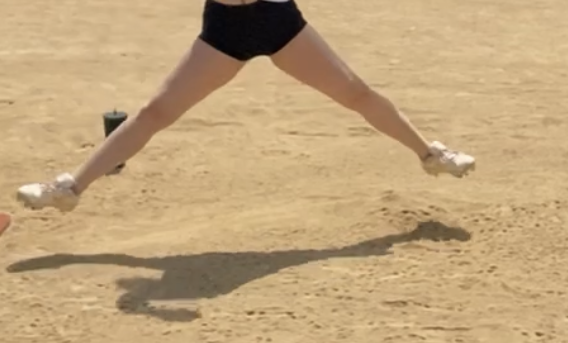
By now you’ve no doubt heard about a very significant change to the fastpitch softball pitching rules in the NCAA, NFHS, and various travel ball level organizations. The rule involves leaping, i.e., having both feet in the air during the stride-out portion of the pitch.
Up until this rule change leaping was illegal, which meant if a pitcher was called for it the batter would automatically be credited with a ball, even if the pitch came in fat and happy down the middle. That collective sigh of relief you heard a few weeks ago came from pitchers, their parents, their grandparents and other relatives, their team coaches, their pitching coaches, and other interested parties when it was announced that leaping will now be allowed.

Of course, no change occurs in the fastpitch softball world without some level of angst being generated, and this rule change is no exception. Some are in favor, some are against, but whatever their point of view most are passionate about whatever they think.
That’s why I thought it might be a good idea to go through the pros and cons of leaping while pitching in a more dispassionate way to help everyone understand this change a little more.
But First – Leaping v Crow Hopping
Before we get into the pros and cons I think it’s important to distinguish between leaping, which is now legal, and crow hopping, which remains illegal, because many use the terms interchangeably. Especially coaches who are complaining about an opposing pitcher.
Leaping is what happens when a pitcher strides off the pitching rubber, her back foot loses connection with the ground, and both feet are in the air at the same time until the front foot lands. Often this is the result of a late push or drive off the pitching rubber by the drive leg.
Most people consider there to be no particular advantage to leaping, and in fact it might actually reduce a pitcher’s speed a little. Leaping is now allowed since the rule change.
Crow hopping starts out the same way as a leap, with both feet off the ground. The difference, though, is that the drive leg lands first AND THEN there is a second push-off. This gives the pitcher an advantage because she is essentially starting her pitch from a much closer distance – generally six to eight feet.
This shorter closing distance gives the batter less time to react, essentially making the pitcher appear to be faster than she actually is. Crow hopping is still not allowed by the rules.
Pros of the Leaping Rule Change
The biggest pro of the change to allow leaping IMHO is it theoretically eliminates opposing coaches trying to get a successful pitcher pulled out of a game, or get into a pitcher’s head to the point where she is no longer effective, by complaining that she is leaping (or crow hopping as most say). Because what can be better than a grown man or woman playing head games with a 12 year old?
Think of all the time and animosity that will be saved by not arguing about whether a pitcher is legal or illegal because her back foot came an inch or two off the ground. In today’s world of timed games that alone will be a plus.
Another pro is it gives pitchers the opportunity to learn their craft without having to worry about whether their back foot is coming off the ground. Pitching is hard enough; removing a meaningless obstacle to learning it enables budding pitchers to focus on the mechanics that will help them develop and grow.
Finally, it saves the umpires (especially the ones working solo) from having to watch for and call pitchers for leaping. With that off their plates they can focus on things that are far more important to the outcome of the game – such as calling balls and strikes or runners leaving early on a steal or a fly ball.
Again, in my opinion and the opinions of many other pitching coaches there is no real advantage gained by a leap, so it’s essentially no harm, no foul.
Cons of the Leaping Rule Change
The biggest con to the rule change is that leaping is kind of a gateway to crow hopping. If you stop calling leaping, umpires may eventually quit calling crow hopping, which will then give pitchers an unfair advantage.
We’ve seen this in the men’s game. Many of the top men’s pitchers crow hop and don’t get called for it because umpires seem to have given up worrying about it.
Will that happen in women’s fastpitch as well? Time will tell.
Another con to leaping is that mechanics are not as efficient, which means pitchers may actually be giving up a little speed, accuracy, or movement. Many will not be able to transfer as much energy into the ball because their posture or timing (or both) is off, and they may not be able to get their arms and/or hands into the optimal position for delivery.
If no one is worried about proper leg drive because pitchers won’t be called for leaping it could lead to pitchers not achieving their full potential. Pitching coaches will quit looking for it and pitchers will never make the effort to correct it.
I fully believe that a pitcher who can keep herself stacked properly over the back side will pitch better than if she strides in a way that pulls her back foot off the ground prematurely. That’s just biomechanics and physics.
Finally, there is the health and safety issue. Pitchers who leap, especially if they go after with with enthusiasm because it’s no longer illegal, will put themselves at greater risk of ankle, knee, hip, and back injuries, particularly in the lower lumbar region.
The weight-forward, body-forward posture most leapers have will cause more strain as they collide with the ground. Over time, those repetitive out-of-balance landings can lead to injuries that could put a pitcher out of action for a month, several months, a year, or even longer.
And then she’ll have to relearn proper technique anyway to avoid future injuries. Why not just start from a safer technique and go from there?
Choose Wisely
The bottom line for me is that the rule change is a good thing from a practical, in-game point of view, but it shouldn’t be considered carte blanche to use poor technique.
I will still strive to teach my students how to drive more efficiently, with their drive foot on the ground. But if they do come up a little, I’m glad to know it’s not going to cost them the game anymore.
Don’t Just Put In the Time – Put In the Effort

One of the most common questions coaches get at the end of a lesson or practice session is, “How long and how often should my daughter practice?”
While it’s a legitimate concern – parents want to their daughters get the full benefit and they get a better return on their investment – I tend to think they’re asking the wrong question. Here’s the reason: practicing is not actual time-based; it’s quality-based.
Take two players who are at the same skill level and have been assigned the same drill(s) as “homework:”
- One diligently does the homework, being mindful of her movements and attempting to execute the skill the way she has been taught. She does this for 20 minutes three times before she has her next lesson.
- The other goes out to practice for a half hour three days a week between lessons. But she doesn’t like doing drills because it’s “boring,” so she instead just decides to pitch from full distance or take full swings or field ground balls hit by a partner etc. the whole time.
Which one do you think will show improvement in the aspect that needs the most help as well as in the overall skill?
Player two put in more time – an extra half hour to be exact. If time were the only factor that counted she should do better at the next lesson.
But I will tell you from experience, and bet you dollars to donuts, that player two will be the one who is most likely ready to advance further at the next lesson. She may not have put in as much time, but she put in more effort to solve her biggest issues – the one that is most limiting her.

So if she’s a pitcher who was straightening out her arm on the back side of the circle, she is now far more likely to have a nice elbow bend or “hook” as her arm gets ready to throw the ball. If she is a hitter who was dropping her hands straight to her waist before swinging, she’s far more likely to be keeping them up and turning the bat over to get the ball.
That’s because she mindfully worked at changing what she was doing. She is serious about improving so she put in the effort to make those changes.
Player two, on the other hand, actually put herself further away from her goals by practicing as she did, because all she did was reinforce the poor mechanics she should be trying to move away from.
Yes, she put in the time and could mark it down on a practice sheet, but she didn’t put in the effort. Without the effort to improve, the time is pretty much meaningless.
She would have ended up in exactly the same place at best if she hadn’t practiced at all. And she may have ended up further behind because now those extra reps with the wrong techniques will make it that much more difficult to get her to the right path.
If your daughter is going to spend her valuable time on practicing her softball skills, or anything else for that matter, make sure it’s on something that will help her advance her abilities forward.
Have her make the effort to concentrate specifically on the areas that need improvement rather than spending all her time making full pitches, full swings, etc. and you’ll see faster progress that leads to greater softball success.
P.S. For any parents of my students who may think I’m talking about their daughter, don’t worry. I’m not. It’s a big club. But do keep it in mind as you work with your daughter anyway!
Throw It Like You Know It

So, you’re a fastpitch pitcher and you’ve added a new pitch to your arsenal. You’ve worked weeks, or months, to learn the nuances and perfect it to the point where you throw it pretty reliably in practice.
But then, when you go to trot it out in a game, it turns into a hot mess.
If it’s a drop ball it rolls in like you’re playing bocce ball. Changeups go sailing high and wide, riseballs go over the backstop, and curveballs end up forcing your catcher to lay out after them like a wide receiver catching a pass from the third-string quarterback.
So what happened?
There’s a pretty good chance the problem isn’t from the neck-down; it’s from the neck-up. Because instead of just relaxing and throwing the pitch you practiced, you got nervous that it wasn’t going to work and started tying yourself in knots trying to make sure it did.

How did that work out for you?
That’s why, when you go to introduce a new pitch to your gametime routine, you need to clear your mind of thoughts about it being your first time, you hope it works, it was really bad last time, etc. and just throw it like you know it.
There’s a pretty good chance if you’ve been pitching for a while you don’t think much about throwing your fastball – or whatever your base pitch is. You’ve done it thousands of times by now, and you already know you can do it.
Doesn’t mean it will be perfect every time – no one’s is, not even the high-level pitchers you admire. But you’re not worried because you know if this one doesn’t work quite right the next one will.
Well, it’s the same with a new pitch. Let’s take a changeup.
You told your coach you’ve been working on it and want to throw it this game. You’ve gotten the speed and location to be right in practice but have little to no experience with in games.
When the call comes in, however, your muscles tense, your mouth gets dry, and you start to breathe a little harder and more rapidly.
There’s really no reason for that reaction, however. First of all, hopefully your coach is smart enough to call it in a situation where the outcome doesn’t matter, such as no one on base and you’re ahead in the count 0-2 or 1-2.
At that point, what’s the worst that can happen? You throw a ball and it’s now 1-2 or 2-2. You’ve thrown balls before with the fastball, so why should this particular one be treated any differently?
Oh, but you’re worried you’re going to embarrass yourself by rolling it in or sailing it over your catcher’s head. So what’s the difference here?
The count is still 1-2 or 2-2, just as it would be if you had barely missed the strike zone. No runners advanced, no one walked, a shadow didn’t fall upon the earth, seas didn’t begin to boil, the ground didn’t rupture. no one died. It’s just a ball.

Only now you’ve thrown one in a game, you know a little more what it feels like, and you’ve just taken another step forward in your pitching career. Someday, when throwing a changeup is as natural to you as breathing, you’ll probably laugh about it.
So given all that, why worry about it at all?
The better approach is to pretend like you’ve been throwing this new pitch for years and just chuck it in there – i.e., throw it like you know it. With a more positive approach like that you’re far more likely to have success, and avoid all the negative outcomes you were worried about originally.
By the way, this concept isn’t just for pitchers. Hitters should apply their new hitting mechanics rather than relying on their old ways.
Slappers, particularly converted righties, should go after their slaps as if they’ve been doing it for years. Fielders should try that new sidearm tilted toss as though it’s been part of their routine all along. And so on.
If you take the “throw it like you know it” approach you’ll find you build your confidence quickly and your game will improve exponentially. You’ll also find you’re having a lot more fun in the process.
Champions Never Take a Day Off

At first glance, today’s headline probably sounds like BS. I’m sure there are those among you who are saying “I see lots of high level coaches and healthcare experts who talk about the importance of rest and recuperation as part of an overall training strategy,” or something to that effect.
That is very true, and I am definitely an advocate of not only building some unscheduled time into the season but also taking time off post-season to recover both physically and mentally. But that’s not what I’m talking about here.
Today’s subject is more about the approach players need to take whenever they are practicing.
We tend to think about practice time in terms of quantity. A question coaches are often asked is “How often/how long should my daughter practice?”
The implication is if you fully fill out the practice time card you will magically get better. All you need to know then is what the numbers are.
But that’s not how it works. The real question is how focused are you in the time you do practice?
Think about two players. The first one is more oriented to the time-based approach.
She goes out for a half hour every other day to practice on her own in addition to attending two or three team practices a week.
Sounds like she ought to be seeing huge gains, doesn’t it? Yet her improvement is slow, and she gets frustrated because she’s investing all this time for very little reward.
Yet the answer lies in HOW she is practicing. When she’s on her own, she basically goes through the motions, doing what she has always done.
Maybe she’s a pitcher who needs to work on her leg drive. But that takes a lot of effort and concentration, which is hard, so instead she just continues to pitch the way she’s comfortable.
Yes, she is out there putting in time. But as far as effort goes she’s pretty much taking the day off.
Then she wonders why her speed isn’t going up the way she should.
Player B, on the other hand, is driven to get better all the time. When she goes out to practice, whether it’s on her own or with her team, she is legitimately trying to improve some aspect of her game all the time.
If she’s a pitcher who needs to improve her leg drive, she’s out there doing her assigned drills and pushing her body to the max with every repetition to try to see improvement. And she doesn’t try to throw a full-distance, full-motion pitch until she feels herself generating a higher level of energy.
If she’s a hitter who has a problem with dropping her hands to swing, she takes dry swing after dry swing with her hands in the proper position before she even thinks about hitting a ball. She starts slowly so she can get it right, and gradually builds the speed up, always being careful to ensure she continues to keep her hands up.
If they start dropping, she backs off a little on the speed, recovers the proper form, then starts increasing speed again.
The same is true with her approach to fielding, throwing, running bases, and every other softball skill. She tries to make every repetition count because she knows that the more she does things correctly, with intensity and a purpose, the better she will play when it’s game time.
And the better chance she will have of becoming a champion.
The reality is we are whatever we do repeatedly. If we are sloppy and lackadaisical in our approach to practice because we don’t feel like it today or it’s just easier, that sloppiness or lack of effort will show itself on game day.

But if we are focused and have a goal in mind for every minute of practice time every day, when game time comes around performing at a high level becomes much easier.
It’s easy to say you want to be a champion, win trophies, play for a particular high-level team, etc. The question is, are you willing to pay the price to get there?
True champions don’t take days off when they are practicing – or playing. They work on their weaknesses and give their all with every repetition, even when it’s frustrating.
The next time you go out to practice, give this approach a try. Dedicate yourself to accomplishing a goal, and be single-minded in your effort to achieve it.
And if you find you can’t give your all that day just stop, because you’re probably wasting your time at best and possibly even making yourself worse. Then come back when you’re ready to go 100% on every repetition again.
I think you’re going to like the results a whole lot better.
Be Willing to Go Backward to Move Forward

It sure would be nice if getting better at fastpitch softball was a linear progression upward. You start at one point, put in some time, and your performance (measurable and intangible) just keeps on getting better.
Unfortunately it doesn’t always work that way. In fact, often times it can go the other way for a while.
This is especially true if you’re trying to make fundamental changes to your skills after doing reasonably well doing what you’ve been doing.
For those who haven’t been doing particularly well it’s not much of an issue. If you’re a hitter who has been striking out for most of your at bats, and popping up or grounding out weakly when you don’t swing and miss, you don’t have much to lose by making a change.

Worst case you don’t get any better. Anything beyond that will be an improvement.
But if you’ve been getting on base now and then there’s a little more risk involved. It’s possible you may struggle a bit more at the plate for a little while before you start seeing the work you’re putting in pay off.
In fact, your batting average, slugging percentage, etc. may go down first before it goes up.
Why is that? Simple: whatever you’ve been doing, even it isn’t great, you’re comfortable with it and can execute it without thinking about it. Those mechanics may not be great but they’re serviceable enough to let you get by.
Now you’ve decided you no longer want to get by but want to be a top hitter. So you start making changes and find yourself kind of between worlds for a little while.
You’re not comfortable with your swing, or your timing, or some other aspect and as a result you’re not able to execute it with full energy. You might even start over-thinking it and throwing yourself off completely. Next thing you know your performance begins to fall and you feel like you’re moving backward.
That’s ok. If you’re making the right changes your performance will improve as you become more comfortable in your new “skin.”
As old bad habits are replaced by new better ones you’ll discover how to get the bat to the ball more efficiently and the ball will start finding its way to (or over) the fence more often.
This process doesn’t just apply to hitters by the way. Pitchers may lose a little speed and/or accuracy as they replace old habits with new ones, such as moving from “hello elbow” to internal rotation mechanics or changing the way a particular pitch is thrown to improve the spin.
If the new techniques are being taught properly, however, any setbacks will be temporary and the gains will be well worth the pain of getting there.

The same goes for fielding or throwing or really any other fastpitch softball skill. There will probably be a period where you wonder whether you would have been better off staying with what you were doing rather than learning something new and supposedly better.
If you’re focused only on the short term it may seem like you would have been better off sticking with what you know. If you’re focused on your long-term career, though, making these changes will help keep you from bumping up against artificial ceilings so you can become the player you’re meant to be.
Of course, the caveat here is you have to be careful about the timing of these changes. With fastpitch softball now being a 12-month (or almost 12-month) sport it seems like there is always a game coming up that causes you to feel like it’s a bad time for a major change.
But there are holes in the schedule, such as the period between tryouts and fall ball, or certain points over the winter, where there is reduced risk in starting changes. And if your performance isn’t where you want it, or where you need it to be to reach your goals, then the sooner you get going the sooner you can start moving forward again.
Making big changes isn’t easy, and sometimes they can result in temporary setbacks. Don’t let that discourage you.
If you’re making those changes for the right reasons the reward will be worth the risk.
Navigating the Maze of Fastpitch Skills Development

People often talk about the “path to greatness” when it comes to fastpitch softball skills development. But when you think about it, it’s not really a path – it’s more of a maze.
Everyone starts out in the same place – at the entrance. Everyone knows the end goal is excellence.
But it’s really not a straight-line journey, i.e., you hire a coach, join a team, or try to try to train your daughter yourself. Instead, the journey can be full of twists, turns, blind alleys, and dead ends.
Go the wrong way and you’re going to spend a lot of your time backtracking or trying to get your bearings again. Get in deep enough and you may never find your way back to a lane that will take you to your goal.

Take pitching for example. There are those who believe it doesn’t really matter what you teach to budding pitchers; they say eventually those pitchers will find their way to the mechanics that will lead to success.
I can tell you wholeheartedly that that is not true. Yes, some can overcome learning “hello elbow” (HE) when they start out, replacing them with more body-friendly internal rotation (IR) mechanics as they mature. They are usually exceptional athletes.
But that is not the case with everyone. I’ve acquired many pitching students who were taught turn the ball back toward second and push it down the back side of the circle who struggled to unlearn that early, sub-optimal teaching.
It can take them months just to learn how to keep the ball facing forward at the top of the circle (and just past it) so they can set themselves up to whip the ball through release. It’s not that they’re bad pitchers or poor athletes.
It’s just that the habit has been so ingrained into them that it’s difficult to break. They essentially got deep into the maze and then have to find their way back to nearly the beginning to get on the right track.
Hitters can have this too. They’re taught to “squish the bug” or “throw their hands/knob of the bat” at the ball or over-use their arms, or some other outdated concept.
Or maybe they’re just allowed to swing the bat however they want because they are big enough and strong enough at the younger ages that the techniques they use really aren’t important.
However they get there, they follow that path thinking they’re on their way, only to discover after their habits become ingrained that it’s been a series of blind alleys once again leading to a dead end. The other players have matched (or surpassed) them in size and strength, and suddenly what made them look like studs when they were young has them seeing more bench time today.
Just like in an actual maze, it’s important to start out in the right direction early. So how do you know which way to go when you’re just starting out so you ensure you don’t waste a whole lot of time and money that you will never recover?
Fortunately, unlike an actual maze there are plenty of signs and guideposts that will help you find the most expedient path to your goal. Some of those include:
- Watch high speed video of what actual high-level players do, then match that up to what potential coaches are teaching. If they’re not closely aligned you probably don’t want to go that way.
- Research the topics that interest you on the Internet. Yes, the Internet has as much bad information (or more) than good, but if you’re really interested in doing what’s right it shouldn’t take you too long to separate the gold from the garbage.
- Ask other parents, especially those whose daughters stand out, about their journey and what their daughter is being taught now They can help you avoid the pitfalls they themselves fell into.
- Try what’s being taught yourself to see if it makes sense. Many people actually seem to miss out on this simple test. See what it feels like to move your body the way it’s being described. Be aware of what you feel and whether it feels natural or forced. The goal is for it to feel natural and easy, because it means you’re working with your body instead of against it.
- Once you’ve gathered the data, think through it carefully to see what makes sense. Don’t just accept what Famous Player A says, because Famous Player A may not have a clue as to what she does on the field. She was probably one of those who found her way to good mechanics DESPITE what she was taught. Yet when it comes to teaching herself, she just goes back to what she was told when she was young because that’s all she consciously knows.
Starting down the wrong path in the beginning, or taking a bad detour along the way isn’t unrecoverable. But it definitely makes achieving one’s playing goals a lot more difficult because there’s going to be a lot of backtracking (and angst) before you can move forward again.
Take the time to determine which path will lead you through the maze of softball skills development more efficiently and you’ll find the entire journey to be a lot more enjoyable.
Maze photo by Tom Fisk on Pexels.com
Where Have All the Pitchers Gone?

Yes, I know, it sounds like a folk song but it’s a legitimate question. Especially now that we are hot and heavy into the softball tryout season.
If you’re following softball-oriented Facebook groups or forums such as Discuss Fastpitch you’re probably seeing this plea a lot, particularly in the older age groups: Impossibly great team looking for one more bracket pitcher to complete our outstanding roster.
With all the 8-10 year olds jumping into the pitching pool you would think there would be a cornucopia of pitching at every level. It’s not unusual to see box scores on GameChanger that show four or five pitchers each getting an inning of work on a regular basis. And it’s been that way for long before GameChanger existed.
So what happened to all those pitchers?

Well, somewhere along the way they stopped pitching. Or maybe even playing the game entirely.
Sure, some probably found that they just didn’t care for the pressure of being in the circle. And some probably found that they didn’t like all the extra work that goes with being a pitcher. All legit, and to each her own.
But I can’t help but think that the rapid shrinking of the pitching pool might in many cases also be driven by team coaches and parents who are more focused on winning 10U or 12U games or trophies than they are on ensuring their players develop properly.
Take the coach who has 5 pitchers on his/her roster but gives 90% of the innings to the #1 pitcher. Yes, it’s nice to win games and tournaments, but if you’re only really giving one pitcher an opportunity to pitch regularly the others won’t develop.
Then they won’t develop, they’ll fall farther behind, get discouraged by their lack of progress as well as their lack of opportunity, and eventually stop pitching. So now four more are out of the pitcher pool for the future.
Oh, and in the meantime the #1 develops an overuse injury and may end up not pitching either.
Then there are the coaches who set impossible standards for their young, developing pitchers. They tell them in order to pitch they need to “hit their spots” 80% of the time.
Not because it’s necessary – really the only “spots” that are important at the 10U level are ball and strike – but because they heard on TV or read an article that said that’s what college pitchers do. Or because they want to use the vague “hit your spots” as an excuse not to pitch a girl who isn’t going to walk in and dominate every game.
So again, she doesn’t get circle time, falls behind, and eventually gives it up because what’s the point of taking lessons and practicing if you never get to pitch, even in “friendlies” or pool play?
Pitching coaches who say they’re teaching 10 or 12 year olds to throw seven pitches aren’t much help either.

Most 10U and 12U pitchers have enough to do mastering a fastball and and a changeup. Having them work on five other pitches – especially with some of the crazy mechanics I’ve seen them try to use – is a recipe for disaster.
Those pitchers never master their fundamentals. So when the hitters get better all those so-called different pitches turn out to be bullet spin fastballs to different locations that are fairly easy to hit. And then they’re out of the pitching pool because they’re getting hammered all the time.
And the list goes on. If we really want to have more pitchers available at 16U and 18U, parents and coaches have to do more to encourage greater success for more pitchers at the younger levels.
Keep them pitching, keep them developing, and give them opportunities to learn their craft – even when they’re bad at it. Then maybe there won’t be so many teams begging for pitchers or fighting over the same ones at the older levels.






 Life in the Fastpitch Lane